Best multi-tool for fishing trips
There's nothing quite like the feeling of being out on the water in West Virginia, whether you're chasing smallmouth bass on the New River or casting for trout in a cool mountain stream. But inevitably, every angler faces those little frustrating moments: a split ring needs prying, a stubborn knot needs cutting, or a hook is buried just a little too deep for your fingers to manage. This guide is all about helping you cut through the clutter and find the absolute best multi-tool to make your fishing trips smoother, safer, and much more enjoyable.
Why a Multi-Tool is Essential for West Virginia Anglers
When you're out fishing, especially in the rugged and wild beauty of West Virginia, you quickly realize that situations can change in a heartbeat. What seemed like a calm morning can turn into a frantic scramble to fix a piece of gear, adjust a rig, or even handle an unexpected emergency. Carrying a dedicated multi-tool isn't about being overly cautious; it's about being practical and prepared for the diverse challenges that angling throws your way. It’s the kind of item that often lives at the bottom of your tackle bag or strapped to your belt, rarely thought of until it becomes absolutely indispensable.
Beyond Just Cutting Line
Many anglers start with a simple pair of line nippers, and for good reason—cleanly cutting line is paramount. But a good multi-tool takes this foundational need and expands upon it exponentially. Think about those tiny split rings that are nearly impossible to open with bare fingers when you want to change out a treble hook on a favorite crankbait or replace a rusty one. A multi-tool with a dedicated split-ring plier tip makes this a breeze.
Then there are the hooks. Whether you're trying to carefully extract a deeply set hook from a feisty fish you plan to release, or unfortunately, from your own finger after an accidental jab, the right pliers on a multi-tool can make all the difference. It provides the leverage and precision you just can't get with your fingers or a basic pair of pliers that aren't designed for angling tasks. Even tightening a loose screw on a reel handle or getting leverage on a stubborn knot that's cinched down too tight can be handled easily.
Unexpected On-Water Repairs
Let's face it, gear breaks. Zippers get stuck, rod guides come loose, and small components on your tackle box or kayak might need a quick adjustment. Imagine you're Kayak Fishing Techniques for West Virginia Rivers on a remote stretch of the Greenbrier River and a bolt on your kayak seat starts to work itself loose. Without the right tool, that could mean an uncomfortable or even cut-short trip. A multi-tool with various screwdriver bits can be a lifesaver in these scenarios, allowing you to tighten things up and keep going.
Perhaps you're fishing from a small jon boat on Summersville Lake, and a wire on your trolling motor starts to fray or a cleat needs re-securing. A good multi-tool often includes wire cutters, files, and sometimes even small saws that can help you jury-rig a temporary fix until you can get back to shore for a proper repair. It’s about minimizing downtime and maximizing your time on the water, ensuring that a small hiccup doesn't derail your entire day.
Safety and Preparedness
Beyond the convenience of repairs, a multi-tool plays a crucial role in safety and preparedness. If you ever find yourself needing to quickly cut through braided line that's tangled around a propeller, or even free yourself or a fishing buddy from a snagged line in an emergency situation, a sharp blade is indispensable. This is especially true when Operating a Boat Near an Angler in West Virginia in crowded areas, where quick action might be needed.
For personal safety, consider a small, portable first aid kit that complements your multi-tool. If you get a splinter, a sharp pair of tweezers often found on multi-tools can remove it. If a hook gets stuck in clothing or skin, the pliers can help manage the situation carefully. It’s a small addition to your essential gear that provides a surprising amount of utility and peace of mind, allowing you to focus on the joy of fishing rather than worrying about minor mishaps.
Key Features to Look For in a Fishing Multi-Tool
Not all multi-tools are created equal, especially when it comes to the specific demands of fishing. The perfect multi-tool for an angler needs to prioritize certain functions and exhibit durability against the elements. You're not just looking for a general-purpose tool; you're looking for a specialized companion for your angling adventures across West Virginia's diverse waters.
Pliers: The Heart of the Tool
For many anglers, the pliers are the absolute most critical component of a fishing multi-tool. You'll want to pay close attention to the plier jaws. Needle-nose pliers are incredibly versatile, allowing you to reach into a fish's mouth for hook removal, bend wire for custom rigs, or retrieve small dropped items. Look for models with serrated jaws that offer a secure grip on slippery hooks or wires, even when wet.
Another vital feature is a split-ring plier tip. This small, often overlooked detail can save you immense frustration when changing hooks on lures. Some multi-tools integrate this directly into the plier tip, while others might have a dedicated split-ring tool. Consider how robust the pivot point is; cheap pliers can quickly become misaligned or break under pressure, especially when trying to remove a stubborn hook. For Best Muskie Gear for West Virginia Rivers, robust pliers are non-negotiable for managing those toothy critters.
Blades: Sharp and Ready
A sharp blade is another non-negotiable feature for any fishing multi-tool. You'll use it for everything from cleanly cutting various types of fishing line (monofilament, fluorocarbon, braid) to preparing bait or even slicing through packaging. Some multi-tools offer multiple blades: a fine-edge blade for delicate tasks and a serrated blade for tougher materials like rope or thick plastic.
The quality of the steel used in the blades is paramount. Look for stainless steel, as it offers better corrosion resistance against water, humidity, and the general dampness associated with fishing environments. While "super steels" might be overkill, a decent quality stainless will hold an edge well and resist rust. Ease of opening and locking mechanisms are also important; you want a blade that deploys smoothly and locks securely for safety, especially if you're trying to use it with one hand.
Specialized Fishing Functions
Beyond the universal tools, the best multi-tools for fishing trips often incorporate features specifically designed for anglers. A good pair of scissors can be incredibly useful for cutting braided line cleanly, trimming skirts on jigs, or preparing various baits. Many standard multi-tool scissors struggle with braid, so seek out models with micro-serrated edges or a design proven to handle it.
Other specialized tools might include:
- Hook removers/disgorgers: Essential for safely unhooking fish, especially those with smaller mouths or deep-set hooks.
- Fish scaler: While not everyone scales fish on the spot, it's a handy feature if you do.
- Awl or spike: Great for clearing out knot eyes, poking holes, or untangling deeply knotted lines.
- Ruler: A small ruler marked on the handle can be surprisingly useful for quickly measuring fish against West Virginia Bag and Possession Limits by Species or setting lure depths.
The inclusion of these thoughtful, fishing-specific additions can elevate a generic multi-tool to an angler's indispensable companion.
Durability and Corrosion Resistance
West Virginia's fishing environments can be tough on gear, from humid summer days to icy winter mornings, and from pristine mountain streams to the murky waters of larger rivers like the Ohio. This means your multi-tool needs to be built to withstand moisture, mud, and general wear and tear. Best Waders for West Virginia Trout Streams need to be rugged, and so does your multi-tool.
Look for tools made from high-quality stainless steel (e.g., 420HC, 154CM) for all components. Some manufacturers even offer specialized coatings or treatments for enhanced corrosion resistance. Pay attention to the construction: tight tolerances, solid pivots, and secure locking mechanisms all contribute to overall durability. Even the sheath or carrying case matters; a well-designed sheath can protect your tool from external damage and keep it secure when not in use. You might find great options for robust, water-resistant multi-tools at stores like Bass Pro Shops or online platforms like Amazon, where product reviews often highlight real-world durability.
Types of Multi-Tools Best Suited for Fishing
Just like there are different types of fishing, there are different styles of multi-tools, each with its own advantages and disadvantages. Understanding these categories can help you narrow down your choices and find the perfect fit for your angling style and the specific West Virginia waters you frequent.
Full-Size Multi-Tools
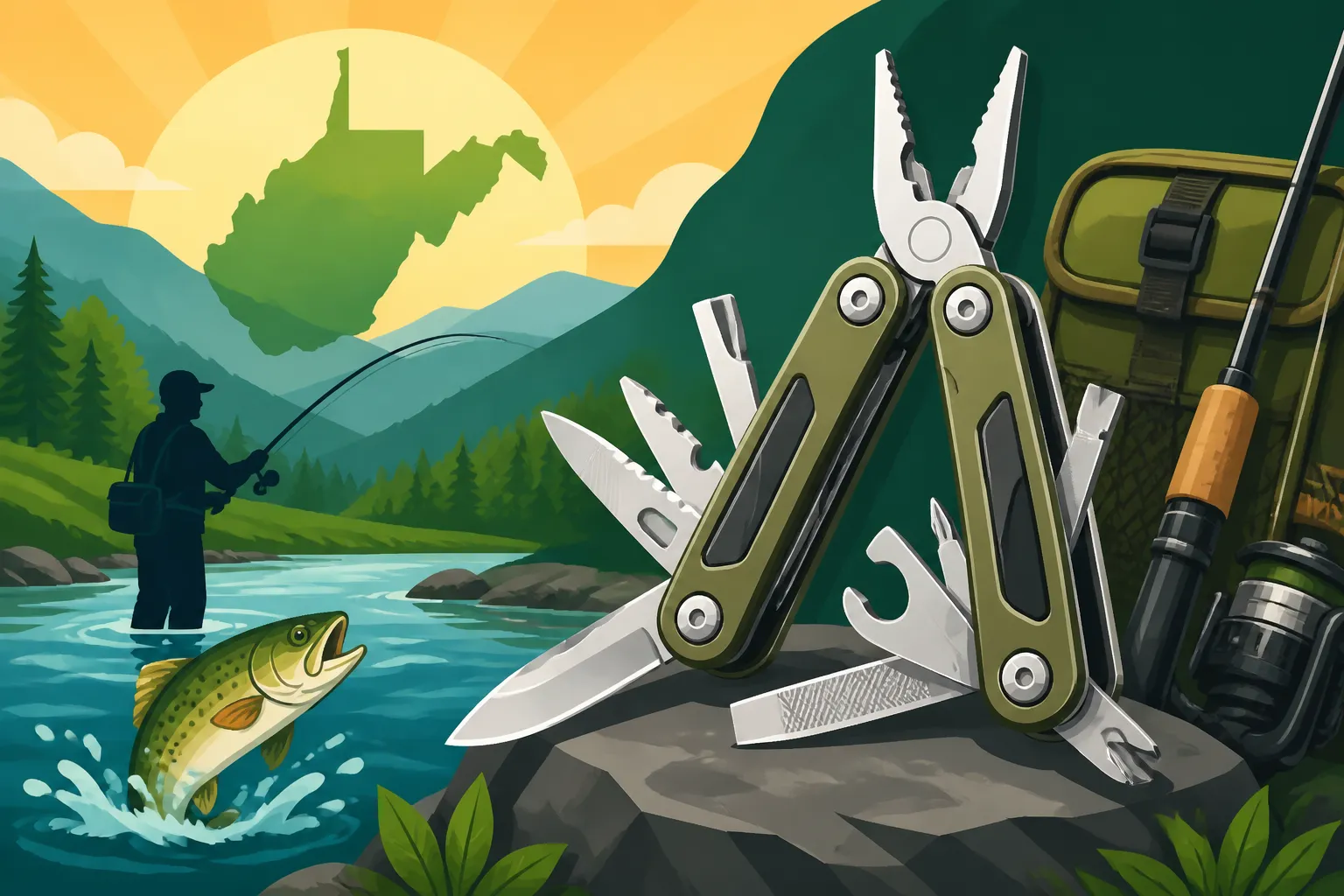
These are the workhorses of the multi-tool world, often resembling a beefed-up folding knife with pliers as the central feature. They typically offer a wide array of tools, including multiple blades, various screwdrivers (flathead, Phillips), saws, files, can openers, and of course, robust pliers. Their strength lies in their versatility and ability to handle a broad spectrum of tasks, from minor tackle adjustments to more significant repairs.
For anglers who spend a lot of time on boats or in situations where they might need a wide range of tools, a full-size multi-tool is an excellent choice. It’s like having a mini toolkit right at your fingertips. Brands like Leatherman and Gerber are well-known for their durable and feature-rich full-size multi-tools. However, their larger size and weight might be a drawback for minimalist bank anglers or fly fishermen who prioritize light gear for Fly Fishing for Trout in West Virginia. You'll often find a great selection of these robust tools, complete with reviews, on Amazon.
Fishing-Specific Pliers/Tools
Moving beyond general-purpose multi-tools, there's a category specifically designed with anglers in mind. These often emphasize high-quality pliers with specialized features like split-ring tips, robust line cutters (especially for braid), and sometimes even integrated crimpers or hook sharpeners. They might forgo some of the less-used tools found on full-size multi-tools in favor of streamlining and optimizing for core fishing tasks.
These fishing-specific pliers are often made from corrosion-resistant materials like anodized aluminum or titanium, making them ideal for both freshwater and brackish environments. They are lighter and often come with a lanyard or sheath for easy access on a belt or around the neck. For focused tasks like How to Catch Smallmouth Bass in West Virginia Rivers where quick lure changes and hook management are frequent, these specialized tools excel. They are often the primary tool for many serious anglers who already carry other specialized gear.
Compact & Keychain Options
Sometimes, you just need the basics, or you want a backup tool that's always with you. This is where compact multi-tools and keychain options shine. These tiny titans might offer a small knife, a bottle opener, a mini-screwdriver, and sometimes even a rudimentary pair of pliers or scissors. While they won't replace a full-size multi-tool for heavy-duty tasks, they are perfect for quick, simple fixes.
Think about trimming a tag end of line, opening a stubborn package of soft plastics, or tightening a loose screw on your sunglasses. For a minimalist approach, or as an always-present backup, a compact multi-tool can be surprisingly useful. They're often so small you won't even notice them until you need them, making them a great addition to a fishing vest pocket or attached to your wading belt. They might not be the hero of your tackle box, but they can certainly save the day in a pinch.
Choosing the Right Multi-Tool for Your West Virginia Adventure
Selecting the perfect multi-tool isn't a one-size-fits-all decision. West Virginia offers an incredible diversity of fishing experiences, from remote mountain streams to vast lakes and mighty rivers. Your ideal multi-tool will depend heavily on how and where you fish. Considering your primary angling pursuits and the specific conditions you'll encounter will guide you to the best choice.
River Wading vs. Lake Boating
The environment you fish in dictates many of your gear choices, and a multi-tool is no exception. If you're a passionate river wader, chasing Best Trout Streams in West Virginia or targeting smallmouth in the New River, every ounce of gear matters. You'll likely prioritize a lighter, more compact multi-tool that can be easily clipped to a vest or wader strap. Quick, one-handed operation for tasks like knot tying, hook removal, and line cutting is essential when standing in current. You might lean towards a fishing-specific plier-style tool that is streamlined and readily accessible.
On the other hand, if your adventures primarily involve boating on larger lakes like Summersville or Stonewall Jackson, you have more flexibility. You can afford a larger, full-size multi-tool with a broader array of features. When you're in a boat, weight isn't as critical, and having those extra screwdrivers, saws, or even a can opener for lunch can be a real luxury. Boat anglers also often face a wider range of potential gear malfunctions, from engine issues to anchor problems, making a comprehensive tool more valuable.
Freshwater vs. Brackish/Boundary Waters
Most of West Virginia's fishing is in freshwater, but if you venture into boundary waters like the Ohio River, which can sometimes have slightly different conditions or larger, toothier species, corrosion resistance becomes even more paramount. Even pure freshwater can be corrosive over time due to minerals and mud, so never skimp on this feature.
When evaluating multi-tools, always check the material specifications. Stainless steel is standard, but some brands offer enhanced treatments or use higher grades of stainless steel that are more resistant to rust. If you frequently fish the Ohio River for species like sauger and walleye, or anywhere saltwater exposure is possible (perhaps on a vacation, though not typically in WV), consider tools specifically marketed as "marine grade" or those made from materials like anodized aluminum or titanium. These will hold up much better against the constant dampness and potential for corrosion, ensuring your tool remains functional for years to come.
Budget and Brand Considerations
Multi-tools range widely in price, from budget-friendly options to premium, high-performance models. It's tempting to grab the cheapest thing you see, but with multi-tools, you often get what you pay for in terms of steel quality, construction, and durability. A multi-tool that rusts after a few trips or breaks when you apply a little pressure isn't a bargain in the long run.
Consider reputable brands known for their quality and warranty. Leatherman, Gerber, SOG, and Victorinox (SwissTool) are leaders in the full-size multi-tool market. For fishing-specific pliers, look into brands like Boomerang Tool Company, P-Line, or specific models from major tackle manufacturers. You can often find great deals and a wide selection from retailers like Bass Pro Shops, Cabela's, or online at Amazon, where detailed product descriptions and user reviews can help you make an informed decision. Remember, a good multi-tool is an investment in your fishing enjoyment and safety, so prioritize quality over rock-bottom pricing.
| Feature Area | River Wader Priority | Lake Boater Priority |
|---|---|---|
| Size & Weight | Compact, lightweight, easily accessible | Full-size, more features, less concern for weight |
| Pliers | Fine tip for smaller hooks, good line cutters for braid | Robust jaws for larger hooks, wire cutters |
| Blades | Sharp, quick-access blade for line & emergencies | Multiple blades, possibly saw for wood/larger materials |
| Corrosion Resist. | High priority, constant exposure to water | Important, but less critical than for waders |
| Other Tools | Minimalist, focus on fishing-specific | Screwdrivers, can opener, file, often more diverse |
| Accessibility | Sheath for belt/wader strap, one-handed operation | Often kept in boat storage, easy access still good |
Maintenance and Care for Your Fishing Multi-Tool
Even the most durable, high-quality multi-tool needs a little love and attention to ensure it performs reliably trip after trip. Neglecting your tool can lead to rust, stiffness, and ultimately, failure when you need it most. A small investment of time in proper care will extend its lifespan significantly and keep it ready for any angling challenge you face on West Virginia's diverse waters.
Cleaning After Every Trip
This is arguably the most crucial step, especially if your multi-tool has been exposed to water, mud, or bait residue. Even if you've only used it minimally, a quick clean is a good habit. For freshwater use, simply rinse the tool under warm, fresh water to remove any dirt, mud, or fish slime. Pay close attention to the pivot points and crevices where gunk can accumulate.
After rinsing, dry the tool thoroughly. You can use a towel, or for hard-to-reach areas, a blast of compressed air works wonders. If you've been in brackish water or notice any stickiness, a light scrubbing with a small brush (like an old toothbrush) and mild soap can help. Once dry, a very light application of a water-displacing lubricant, like WD-40, followed by a general-purpose oil (like gun oil or specialized multi-tool oil), can protect against rust and keep the mechanisms moving freely. Remember to wipe off any excess oil before storing it to avoid attracting dirt.
Sharpening and Lubrication
Over time, even the best blades will dull with use. A dull blade is not only inefficient but can also be dangerous, requiring more force and increasing the risk of slips. Invest in a small, portable sharpening stone or ceramic rod specifically designed for knives. Most multi-tool blades can be easily sharpened with a bit of practice. Keep the angle consistent, and only take off enough material to restore a sharp edge.
Lubrication goes hand-in-hand with cleaning. The pivot points and joints of your multi-tool are where friction occurs, and a lack of lubrication can lead to stiff action or even seizing up. After cleaning and drying, apply a tiny drop of light oil to each pivot point and work the tools back and forth to distribute the lubricant. This will keep everything moving smoothly and prevent wear. Just a small drop is usually enough; you don't want to over-oil and create a sticky mess.
Proper Storage
How you store your multi-tool when it's not in use is just as important as how you clean it. Never store a wet or dirty multi-tool; always ensure it's clean and dry before putting it away. The ideal storage location is in a dry environment, away from extreme temperatures and humidity. Many multi-tools come with a custom sheath, which is great for protection and accessibility.
If your multi-tool didn't come with a sheath, consider purchasing one, or simply keep it in a dedicated pocket in your tackle bag or boat console. Avoid leaving it loose in a tackle box where it can get scratched, collect debris, or even damage other items. Proper storage prevents accidental damage, keeps it organized, and ensures that the next time you grab it for a West Virginia Fishing License Guide for 2026 trek or a West Virginia Gold Rush Golden Rainbow Trout Event Rules outing, it's in perfect working order, ready for anything West Virginia's waters can throw at you.
Disclaimer
This article is for general informational purposes only and does not constitute professional advice. Laws, prices and regulations vary by location and change over time. Consult a qualified professional for guidance on your specific situation.