Best drop shot weight for river current
Trying to keep a drop shot rig perfectly vertical or slowly drifting in the relentless tug of a strong river current can be incredibly frustrating. You want your bait to hover tantalizingly in the strike zone, but instead, it's either swept away downstream too fast, rolling uncontrollably, or constantly snagging on the bottom. This guide is here to demystify the art of selecting the absolute best drop shot weight for those tricky West Virginia river currents, helping you present your bait effectively and feel those subtle bites.
Understanding River Current and Its Impact on Your Drop Shot
Before we even talk about weights, it's crucial to truly grasp what you're up against in a river environment. Not all currents are created equal, and understanding the nuances will inform every decision you make about your tackle. Rivers like the New River, the South Branch Potomac, or even smaller creeks can have vastly different flows depending on recent rainfall, dam releases, and the specific section you're fishing. It's not just about how fast the water looks like it's moving on the surface.
Factors Affecting Current Strength and Direction
Several elements contribute to how a river's current behaves, and by extension, how your drop shot weight needs to perform. Think about the complexity of a river system: it's a dynamic, ever-changing environment. You might have a lazy flat pool one minute and a ripping current around a rock garden the next, all within a hundred yards.
A major factor is recent precipitation. A heavy rain upstream can turn a docile stream into a raging torrent overnight, significantly increasing the water volume and velocity. Conversely, a prolonged dry spell can reduce flow to a trickle in many smaller tributaries. Dam operations, too, play a massive role, particularly on larger rivers in West Virginia. When a dam opens its gates for hydropower generation or flood control, it can create powerful surges and currents downstream that require substantial adjustments to your fishing approach. Always check local river gauges and dam release schedules if you're fishing waters affected by them.
The riverbed composition and contour also dictate how current behaves. A smooth, sandy bottom offers less resistance, allowing water to flow faster. But once you introduce boulders, ledges, logs, or gravel bars, the water starts to churn, create eddies, and form powerful current seams. These underwater structures can provide ambush points for fish, but they can also be notorious snag traps for your rig if you're not using the right weight or technique. Understanding how water flows around and over these features will help you predict where your weight needs to be heavy enough to hold, or light enough to drift naturally without getting instantly hung up.
Why Standard Drop Shot Weights Struggle in Flowing Water
Many anglers start with standard teardrop or round drop shot weights designed for stillwater lakes or very calm reservoirs. And while these are fantastic for those conditions, they often prove to be a nightmare in a strong river current. The primary issue is their hydrodynamic profile. A round or teardrop weight, while efficient for casting and sinking in calm water, presents a significant surface area to the current when it's lying on the bottom or being drifted.
This large surface area means the current has more to push against, leading to several problems. First, it's much harder for the weight to hold its position. It will either roll downstream too quickly, making it impossible to keep your bait in the strike zone, or it will tumble and constantly get wedged between rocks. Second, the constant tug of the current on a poorly shaped weight can reduce your sensitivity. You'll struggle to distinguish between the bottom composition, a subtle bite, or just the weight rolling with the current. This leads to missed fish and endless frustration. The whole point of a drop shot is precise bait presentation, and a weight that can't cope with current defeats that purpose.
Choosing the Right Drop Shot Weight Material and Shape for Rivers
When you're battling river currents, your choice of drop shot weight material and shape becomes a strategic decision, not just a casual pick from your tackle box. This is where you can gain a significant advantage in control and sensitivity.
Lead vs. Tungsten for River Current
The material of your drop shot weight significantly impacts its performance, especially in current. You've got two main contenders: lead and tungsten.
Lead weights have been the traditional choice for decades, and they certainly have their place. They are generally much more affordable, making them a good option if you know you're going to lose a lot of weights to snags in a particularly tricky river section. You can grab a whole assortment of lead drop shot weights without breaking the bank at your local Bass Pro Shops or a bait and tackle store. However, lead's lower density means that for a given weight, a lead sinker will be larger than a tungsten one. This larger profile can be a disadvantage in current, as it presents more surface area for the water to push against, increasing the chances of it rolling or snagging. Furthermore, lead isn't as sensitive as tungsten, making it harder to feel subtle bites or distinguish between rock and gravel on the riverbed.
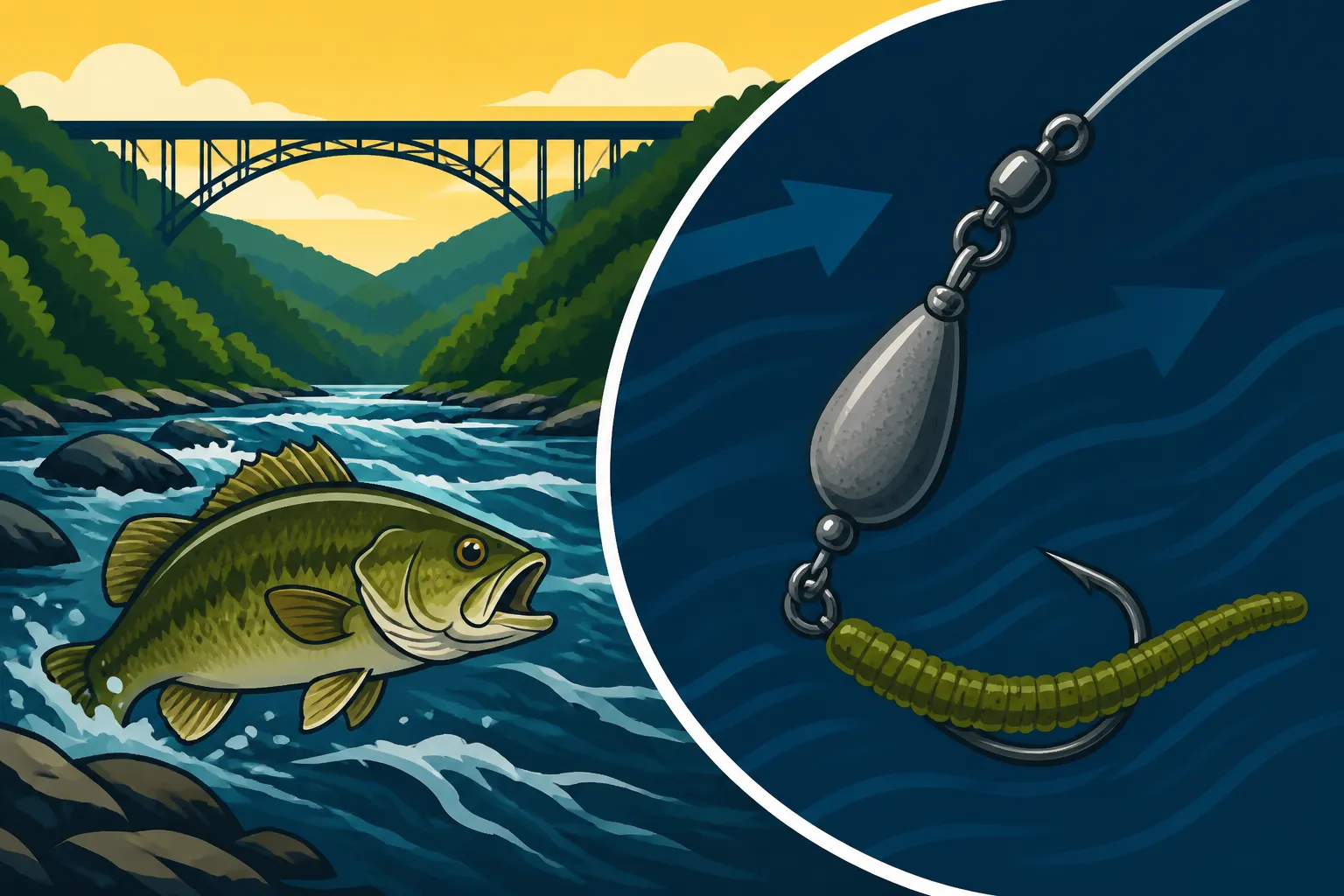
Tungsten weights, on the other hand, are the undisputed champion for river fishing, despite their higher cost. Tungsten is significantly denser than lead, often twice as dense. This means a tungsten weight can be much smaller for the same ounce rating. For example, a 1/2 oz tungsten weight will be considerably more compact than a 1/2 oz lead weight. This smaller profile offers several critical advantages in river current:
- Reduced Drag: Less surface area means the current has less to grab onto, allowing the weight to hold its position better and resist rolling.
- Increased Sensitivity: The dense, hard nature of tungsten transmits vibrations through your line much more effectively. You'll feel every tap, every rock, every subtle shift in bottom composition, which is absolutely vital for detecting light bites in noisy current.
- Better Snag Resistance (with the right shape): A smaller, denser weight, especially in a cylindrical or pencil shape, can slip through cracks and over rocks where a larger lead weight would get wedged.
While tungsten can be a bigger investment upfront, the benefits in terms of performance, sensitivity, and reduced snagging often outweigh the cost, especially for serious river anglers. Many anglers find their tungsten weights last longer because they don't get snagged as often. You can find a wide variety of tungsten options available from online retailers like Amazon.
The Best Shapes for River Drop Shotting
The shape of your drop shot weight is arguably even more critical than its material when dealing with current. The right shape can mean the difference between effortless fishing and constant frustration.
Let's break down the most common shapes and their suitability for flowing water:
Round Weights: These are your classic bullet-shaped or spherical weights.
- Pros: Good for casting distance due to their aerodynamic shape.
- Cons: In current, they are highly prone to rolling. Their rounded surface gives the water an easy path to push them along, and they tend to wedge into cracks or roll between rocks, leading to frequent snags. Definitely not ideal for anything but the lightest current.
Teardrop Weights: Slightly elongated with a tapered end.
- Pros: A step up from round weights in terms of snag resistance in some scenarios, as the taper can help it pivot over obstructions. Still decent for casting.
- Cons: Like round weights, they still present a fair amount of surface area to the current, making them susceptible to rolling and being swept away in moderate to strong flow. They are better than round for some situations but not the ultimate solution for heavy current.
Cylindrical (Pencil) Weights: These are long, slender weights, often resembling a pencil or a small stick.
- Pros: This is often the best shape for river current. Their elongated, thin profile presents minimal surface area for the water to push against, allowing them to slice through the current rather than being pushed by it. When they hit an obstruction, their slender form often allows them to slip between rocks or slide over logs, drastically reducing snags. They are excellent for maintaining contact with the bottom without rolling.
- Cons: Their less aerodynamic shape can slightly reduce casting distance compared to round or teardrop weights, but this is a minor trade-off for the superior performance in current.
Stand-Up Weights: These weights typically have a flat or wide base designed to keep the weight upright on the bottom, with the line tie often at the top.
- Pros: They are designed to "stand up" on the bottom, minimizing the chance of rolling and providing a natural presentation for your bait just above the riverbed. This can be excellent for light to moderate current, giving your bait more action.
- Cons: In very strong current, they can still be pushed or tumble if not heavy enough. Their wider base can also get wedged in rocky bottoms if the current is too aggressive.
For most West Virginia rivers with noticeable current, the cylindrical (pencil) weight made of tungsten will be your go-to choice. It offers the best combination of minimal drag, maximum sensitivity, and superior snag resistance.
Here's a quick comparison:
| Weight Type | Material | Shape | Current Suitability | Snag Resistance | Sensitivity | Cost |
|---|---|---|---|---|---|---|
| Standard Drop Shot | Lead | Round/Teardrop | Light to None | Poor to Fair | Fair | Low |
| River Optimized | Tungsten | Cylindrical/Pencil | Moderate to Strong | Excellent | Excellent | Higher |
| River Specific (hybrid) | Tungsten | Stand-Up | Light to Moderate | Good | Good | Moderate/Higher |
Matching Weight to Specific West Virginia River Conditions
Choosing the right drop shot weight isn't a one-size-fits-all situation. The ideal weight for a gentle eddy on the Greenbrier River is going to be wildly different from what you need to hold bottom in the main channel of the New River. It's about calibrating your gear to the specific conditions you encounter on any given day.
Light Current Conditions
Even rivers with a generally fast flow will have areas of lighter current. Think about those beautiful, subtle eddies behind large boulders, the slower moving water along an undercut bank, or the inside bends of a sweeping curve. These are often prime holding areas for smallmouth bass and other river species, as they can rest out of the main flow while still having access to passing food.
For these lighter current situations, you don't need to go excessively heavy. Starting with weights in the 1/8 oz to 1/4 oz range is usually a good bet. A smaller, lighter weight allows for a more natural drift and subtle presentation. My preference here would still be a tungsten cylindrical or teardrop weight. Even in light current, tungsten offers superior sensitivity, letting you feel those incredibly soft takes that fish often make when they're not aggressively feeding. If you're fishing a very clean bottom with minimal snags, a tungsten teardrop might give you a slightly better cast. However, if there's any uncertainty about the bottom, the cylindrical shape is safer. The key is to use the lightest weight possible that still allows you to maintain contact with the bottom without your rig getting swept away too quickly. This "lightest possible" approach is fundamental to effective drop shotting, as it maximizes natural movement and feel. This technique is often effective in areas like the slower pools of the Elk River Trout Fishing sections or the less turbulent stretches of the Greenbrier River Fishing Guide.
Moderate Current Conditions
This is where many West Virginia rivers spend a good portion of their time – a steady, noticeable flow that demands a bit more from your tackle. These conditions are common in the average runs and riffles of rivers like the South Branch Potomac or the middle sections of the Cheat River. The current is strong enough to move a lighter weight, but not so powerful that it's impossible to fish.
For moderate current, you'll want to step up your weight considerably, typically into the 3/8 oz to 1/2 oz range. Again, tungsten cylindrical weights are your best friend here. Their slender profile cuts through the water, allowing them to hold bottom much more effectively than bulkier lead weights. If you're drifting your rig, the cylindrical shape will tumble less and glide over obstructions more easily. You'll find that even at these heavier weights, tungsten still transmits bottom composition and bites with incredible clarity. The goal is to feel that distinct "tick-tick-tick" as your weight bounces along the riverbed, indicating you're in contact. If your weight is dragging or rolling smoothly without much feedback, you might need to go heavier or adjust your presentation. This is particularly important when targeting Smallmouth Bass Habits on the New River.
Heavy Current Conditions
When the river is really ripping – think about the main channels of the New River after significant rainfall, or powerful tailwater sections below dams during high-flow periods – you're dealing with a whole different beast. This is where most anglers give up on drop shotting, but with the right weight, it's still a deadly technique. Targeting fish that hug the bottom in strong currents can be highly productive because they are often concentrated and waiting for food to be swept to them.
For these truly heavy currents, you might need to use drop shot weights in the 5/8 oz to 1 oz (or even heavier) range. Yes, that sounds like a lot for a drop shot, but it's essential to maintain contact with the bottom. And once more, tungsten cylindrical weights are indispensable. A 3/4 oz tungsten cylindrical weight, due to its density and shape, will hold bottom much better than a 1 oz lead teardrop and offer far greater sensitivity. It's truly remarkable how much difference the material and shape make at these extreme weights.
When fishing heavy current, your casting angle also becomes crucial. Instead of casting directly upstream, which allows the current to immediately grab your line and rig, try casting slightly upstream and across the current. This allows your weight to sink more vertically and reduces the amount of line exposed to the current's drag, giving you better control. You'll likely need to use a heavier rod and stronger line to handle these heavier weights and the powerful fish that often inhabit these turbulent zones. For more information on fishing specific challenging waters, consider checking out the New River Gorge Fishing Guide.
Tips and Tricks for Drop Shotting in River Current
Beyond just selecting the right weight, there are several techniques and considerations that can dramatically improve your success when drop shotting in West Virginia's rivers. It's a combination of gear, presentation, and feel that makes all the difference.
Line Management and Presentation Angles
Effective line management is paramount when dealing with river current. The more line you have in the water, the more drag the current can exert on your rig, pulling it off course or reducing your sensitivity.
When casting, aim to land your bait slightly upstream of your target area. This gives the weight a chance to sink and settle before it reaches the prime strike zone. As your rig drifts, try to keep your rod tip high and maintain a tight, but not overly taut, line. The goal is to minimize slack without "leading" your weight too much, which can make it bounce unnaturally. You want the weight to tick along the bottom, not drag. Sometimes, a gentle "lift and drop" retrieve, barely moving the weight a few inches at a time, can be very effective. This mimics a baitfish or crawfish trying to swim against the current.
Consider your presentation angle. If you're fishing from a boat, positioning your vessel slightly upstream and casting downstream can give you more control, allowing the current to help "present" your bait naturally. If you're bank fishing, casting slightly upstream and letting the current bring your bait down to you, while reeling in just enough slack, can also be productive. The key is to find the angle where you feel the most connection to your weight and can best interpret what's happening on the riverbed. Using fluorocarbon line for your leader, or even your main line in some cases, can help due to its lower stretch and invisibility underwater, enhancing both feel and stealth. For more insights on line choices, explore Best Fluorocarbon Line for Clear River Water.
Reading the Water and Adjusting on the Fly
Rivers are dynamic, and what worked in one spot or at one time of day might not work in the next. Being able to read the water and make quick adjustments is a hallmark of a successful river angler. Look for current seams, which are the visible lines where fast-moving water meets slower water. Fish often stack up in these seams, facing upstream, waiting for food to be delivered. The transition zone from fast to slow water is a prime area to present your drop shot.
Also, pay attention to depth changes and underwater structure. If you feel your weight dragging excessively or constantly snagging, it might be an indication that you need a heavier weight, a different shape, or to adjust your casting angle. Don't be afraid to experiment with different weights in your tackle bag. Start with a weight you think is appropriate, and if it's not performing, immediately switch to something heavier or lighter until you find the sweet spot where you can maintain consistent bottom contact and feel. This adaptability is critical on waters like the New River Gorge National Park Fishing Access Points, where conditions can change rapidly.
The Role of Your Rod and Reel
While weight is the star of this discussion, your rod and reel play crucial supporting roles in drop shotting in current. A sensitive rod is absolutely essential. You want a rod with a fast or extra-fast action tip that can transmit those subtle bottom bumps and light bites, but with enough backbone in the lower section to handle heavier weights and fight strong river fish. A medium-light to medium power spinning rod is a popular choice for drop shotting, offering a good balance of sensitivity and fighting power.
Your reel should have a smooth drag system, as river fish, especially smallmouth bass, can make powerful runs. The gear ratio isn't as critical as it might be for power fishing, but a reel that allows for smooth, controlled retrieves and quick line pickup can be beneficial for managing slack in current. Pairing your drop shot setup with Best Spinning Rods for Smallmouth Bass or Best Rod and Reel Combo for Beginners can make a huge difference in your success.
The table below summarizes ideal weight ranges for different current conditions:
| Current Strength | Recommended Weight Range (Tungsten Cylindrical) | Typical West Virginia River Examples | Common Species Targeted |
|---|---|---|---|
| Light Current | 1/8 oz – 1/4 oz | Eddies, slow pools on Elk River, Greenbrier River, smaller creeks | Smallmouth, Trout, Panfish |
| Moderate Current | 3/8 oz – 1/2 oz | Average runs and riffles on South Branch Potomac, Cheat River, smaller New River sections | Smallmouth, Walleye |
| Heavy Current | 5/8 oz – 1 oz+ | Main channels of New River, powerful tailwaters, large rapids after rain | Trophy Smallmouth, Muskie |
Remember, these are starting points. Always let the river tell you what weight it needs on any given day.
Disclaimer
This article is for general informational purposes only and does not constitute professional advice. Laws, prices and regulations vary by location and change over time. Consult a qualified professional for guidance on your specific situation.