Best treble hook size for crankbaits
One of the most common frustrations anglers face, especially when throwing crankbaits, is losing fish at the boat or having them throw the hook during a fight. Often, this isn't due to a bad retrieve or a soft bite, but rather an ill-suited treble hook size on your lure. This guide is here to untangle the complexities of treble hook sizing for crankbaits, helping you ensure a solid hookset and bring more of those feisty West Virginia fish to the net.
Understanding Treble Hook Basics for Crankbaits
Before we dive into the nitty-gritty of choosing the right size, it’s really helpful to understand what we’re even talking about when it comes to treble hooks. They might seem simple, just three points fused together, but there's a lot more going on that affects their performance on your favorite crankbaits. Getting a handle on these basics can make all the difference in your fishing success, whether you're targeting smallmouth on the New River or walleye in one of our larger reservoirs.
The Anatomy of a Treble Hook
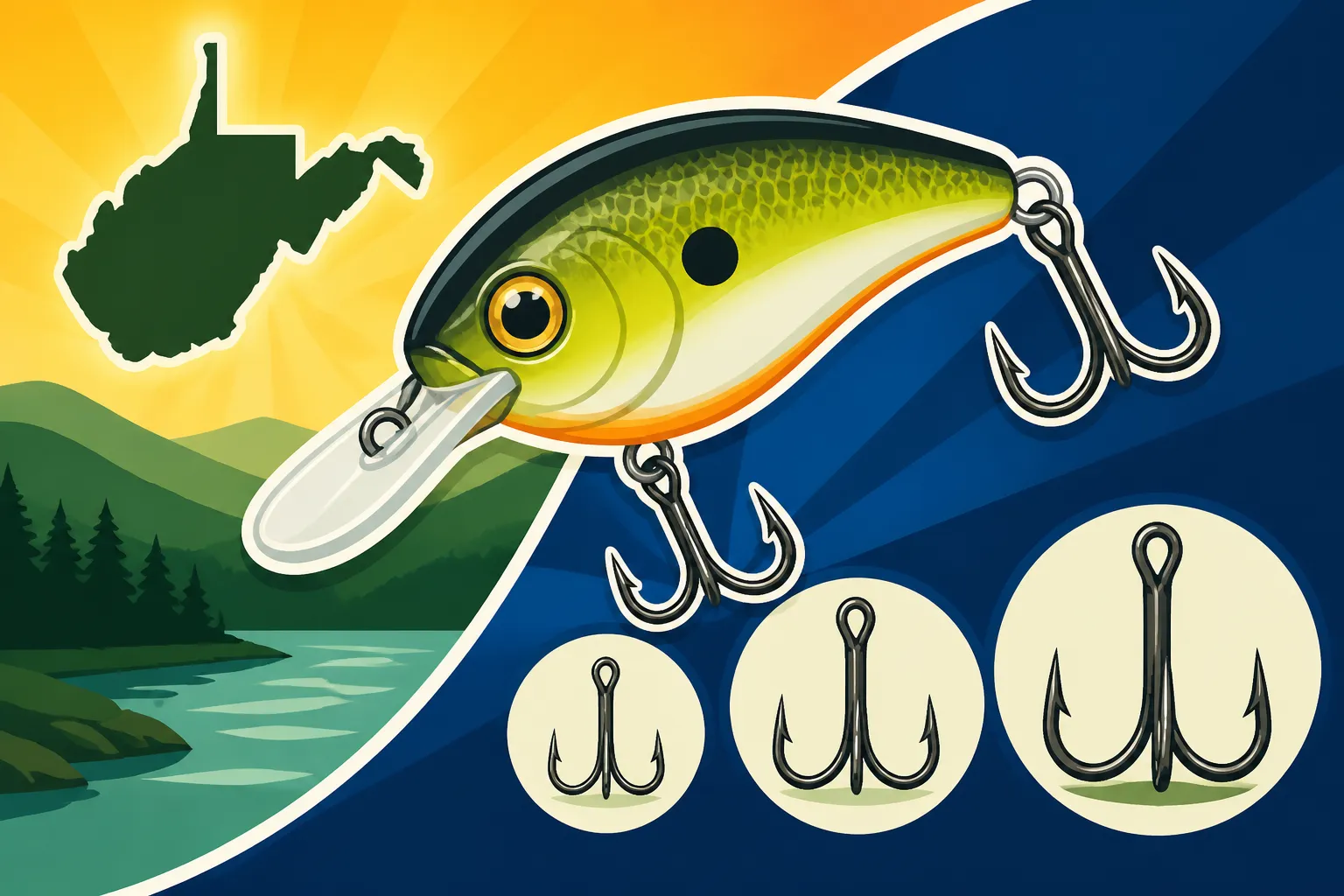
A treble hook, in its essence, is three individual hooks sharing a common shank, with an eye at one end for attachment. Each of those individual points is designed to pierce and hold. Think about the geometry involved – three points increase the chances of a hookup, especially with erratic-moving lures like crankbaits. The gap, the shank length, and the wire diameter are all critical components. A wide gap means more of the hook is exposed to catch the fish's mouth, while a longer shank might provide more leverage but could also interfere with the lure's action. Wire diameter, too, is key; a thinner wire can penetrate more easily, but a heavier wire is necessary for larger, more powerful fish that can bend or break hooks. For West Virginia anglers chasing big muskie, for instance, a heavy-duty wire is non-negotiable, while a trout angler might opt for a finer wire to avoid tearing delicate mouth tissue.
The way these elements combine directly impacts how your crankbait swims and how effectively it hooks and holds fish. A hook that's too heavy can make a shallow-diving crankbait run deeper or alter its wobble. Conversely, hooks that are too light might straighten out when a strong fish like a big river smallmouth clamps down. It's a delicate balance, and often the hooks that come stock on your crankbait, while good for general purposes, aren't always optimized for the specific conditions or fish you're targeting. This is why many experienced anglers routinely upgrade their hooks right out of the box.
Common Sizing Standards and What They Mean
Hook sizing can be a bit confusing at first glance because it uses a somewhat counterintuitive numbering system. For most treble hooks, the sizes range from small numbers like #18 (tiny) up to #1 (medium), and then it switches to "aught" sizes like 1/0, 2/0, 3/0, and so on (larger). The smaller the number (e.g., #18), the smaller the hook. Once you hit #1, the next size up is 1/0, and then the numbers increase with size (e.g., 2/0 is larger than 1/0). It’s like a weird inverse scale that then flips! A #6 treble hook is a common, versatile size for many medium-sized crankbaits, while a #10 might be better for smaller finesse crankbaits. Conversely, a 4/0 treble would be something you'd put on a substantial muskie plug.
This system isn't just arbitrary; it reflects historical conventions in fishing. What's most important to remember is that you're aiming for proportionality with your crankbait. The hook points should extend past the body of the lure but not so far that they foul each other, causing the lure to swim improperly or preventing a good hookset. Different manufacturers might have slight variations in their hook dimensions even if they're labeled the same size, so it's always a good idea to visually compare them. You can pick up a variety of sizes from places like Bass Pro Shops or even online through retailers like Amazon to get a feel for the differences firsthand. Understanding these common sizes is the first step in confidently making choices that will improve your catch rate.
Factors Influencing Treble Hook Size Choice
Choosing the "best" treble hook size isn't a one-size-fits-all answer. There are several dynamic factors at play that will influence your decision each time you tie on a crankbait. Ignoring these can lead to lost fish, snagged lures, and a whole lot of frustration that could be easily avoided with a little thoughtful consideration.
Crankbait Size and Profile
This is arguably the most critical factor. The size and profile of your crankbait dictates the general range of hook sizes you should be considering. A tiny crappie crankbait, perhaps two inches long, is going to need a much smaller hook than a five-inch deep diver designed for West Virginia Walleye Daily and Possession Limits. The goal is to match the hook size so that the points are exposed and clear of the lure body, but also not so large that they tangle with each other or impede the lure's action. If your hooks are too large, they can actually touch or cross during the retrieve, which is known as "fouling" and makes the lure swim awkwardly and makes it impossible to hook a fish.
A good rule of thumb is to ensure the hook gap (the distance from the point to the shank) is appropriate for the lure's body. The hooks shouldn't extend much beyond the widest part of the crankbait's body, nor should they be so small that they disappear beneath it. If you're switching out hooks, hold the new hook next to the original one that came with the lure. A slight increase or decrease in size is often fine, but a drastic change will likely alter the lure's balance and action. For instance, a small, square-bill crankbait for shallow bass fishing might use #4 or #6 hooks, while a larger lipless crankbait for casting long distances could handle #2 or even #1 trebles without issues.
Target Species and Mouth Size
The type of fish you're pursuing also plays a massive role in hook selection. A massive muskie has a different mouth structure and power than a delicate trout. For species with large, bony mouths like muskie or big hybrid striped bass, you'll want strong, heavy-gauge hooks that won't bend or break. These fish can put immense pressure on tackle. Conversely, if you're targeting panfish like bluegill or crappie with a tiny crankbait, a smaller, finer wire hook, perhaps a #10 or #12, will penetrate their softer mouths much more easily and cause less damage. Using too large a hook on these smaller fish often results in poor hooksets or hooks that tear free.
Consider the strength of the fight as well. A smallmouth bass from the New River Smallmouth Bass Fishing can be incredibly acrobatic and powerful, often leaping and shaking its head violently. For these fish, a slightly stronger, sharper hook within the appropriate size range can prevent them from throwing the lure. For more docile species, hook strength might be less of a concern than penetration. Always think about the fish's anatomy and fighting style when making your final decision.
Fishing Pressure and Water Clarity
Believe it or not, how pressured a body of water is and how clear the water can actually influence your hook size choice. In heavily pressured lakes or rivers, fish can become "hook shy." This means they're warier of artificial lures and might shy away from anything that looks unnatural. In such situations, downsizing your treble hooks by one size (e.g., from a #4 to a #6) can sometimes make your crankbait look more subtle and appealing, leading to more bites. This subtle adjustment can be just enough to trick a wary bass.
Clear water also magnifies everything. In crystal-clear mountain streams where you're fly fishing for trout or even in calm, clear lake conditions for walleye, fish have a better view of your presentation. Large, bulky hooks can look unnatural. Again, opting for a slightly smaller, finer wire hook might increase your chances. Conversely, in stained or muddy water, fish rely more on vibration and scent, and a slightly larger, more visible hook might not deter them as much. It's all about presenting the most natural and effective profile given the conditions.
Cover and Snag Resistance
West Virginia offers a lot of incredible fishing, but it also features plenty of challenging terrain—rocky rivers, submerged timber, thick brush. Fishing crankbaits in these areas means you're almost guaranteed to get snagged occasionally. The type of cover you're fishing in can influence your hook size and style choices. If you're constantly bumping through heavy wood or thick grass, larger, heavier gauge hooks might be more prone to snagging because their points are more exposed. Sometimes, switching to a slightly smaller hook can reduce snagging, especially if you also opt for round bend hooks over wide gap models, as their points tuck in a bit more.
However, there's a trade-off. While smaller hooks might snag less, they might also be too weak for the big fish hiding in that cover. This is where strategic hook upgrades come in. You might choose to use stronger, short-shank hooks of the same size, which offer better snag resistance than long-shank counterparts while maintaining strength. Some anglers even experiment with single-point hooks on crankbaits in extremely heavy cover, though this significantly alters the lure's hooking efficiency. Balancing snag resistance with hookup potential is a constant challenge, but understanding how hook size interacts with cover is key.
Matching Hook Size to Crankbait Type and Target Species
Now that we've covered the basics and the influencing factors, let's get down to some practical recommendations based on the size of your crankbait and the fish you're hoping to fool in the Mountain State's beautiful waters.
Small Crankbaits for Panfish and Trout
When you're tossing those dainty little crankbaits, often under 2 inches long, for species like crappie, bluegill, or West Virginia's stocked trout, hook size is critical. These fish have smaller, more delicate mouths.
Typically, you'll be looking at treble hook sizes from #10 to #14, sometimes even #16 for truly tiny micro-crankbaits. The goal here is easy penetration and minimal damage. A size #8 or #10 treble is a fantastic all-around choice for many small crankbaits designed for panfish. These hooks are often made with finer wire, which allows them to pierce the fish's mouth with less effort. If you try to put a larger, heavy-gauge hook on one of these small lures, it will completely throw off its balance and kill its action, turning it from a tempting treat into a lifeless chunk of plastic.
Imagine you're fishing for stocked rainbows in a small pond or stream after a fresh stocking. A tiny Rapala Countdown or Berkley Flicker Shad in the smallest sizes can be incredibly effective. If these lures come with hooks that seem too large or dull, upgrading them to a sharp, high-quality #12 or #10 treble can significantly improve your hookup ratio. The smaller hook also allows the fish to inhale the lure more completely, reducing the number of short strikes where they just nip at the tail. Just be sure the hooks don't tangle with each other or the line during the cast.
Medium Crankbaits for Bass and Walleye
This is probably the most common category for many West Virginia anglers, as medium-sized crankbaits are workhorses for both largemouth and smallmouth bass, as well as walleye. These lures typically range from about 2.5 inches to 4.5 inches in length and include popular styles like square bills, lipless cranks, and medium-diving models. For these versatile lures, you'll generally be working with treble hook sizes from #6 to #2.
A size #4 or #6 treble hook is often the sweet spot for many medium bass crankbaits, offering a good balance of size and strength. If you're fishing for feisty smallmouth in the New River, for example, a sharp #4 hook can make all the difference in keeping those head-shaking acrobats pinned. For slightly larger profile baits, or if you're specifically targeting bigger, toothier walleye in lakes like Summersville or Stonewall Jackson, a #2 might be more appropriate. Walleye have sandpaper-like mouths and can be tough to penetrate with dull or undersized hooks.
When upgrading hooks on these lures, consider the specific model. A lipless crankbait, like a Rat-L-Trap or a Westin Platypus, typically has two large belly hooks and often benefits from a strong #2 or #1 treble. A shallow-diving square bill, designed to deflect off cover for Best Bass Fishing Techniques for Summersville Lake, might do best with #4 hooks to reduce snagging while still providing ample hook gap. Experimentation is key, and having a selection of different hook sizes on hand from a brand like Owner or VMC, available at places like Bass Pro Shops, allows you to fine-tune your setup.
Large Crankbaits for Muskie and Pike
Now we're talking about serious hardware! When you're chasing the true titans of West Virginia's waters—muskie, often referred to as "the fish of 10,000 casts"—your hooks need to be up to the monumental task. These lures are typically 5 inches and longer, sometimes much, much longer, and are designed to tempt fish with huge mouths and incredible power. For these monsters, you're looking at treble hook sizes in the "aught" range, from 1/0 up to 5/0 or even larger.
The biggest concern here is not just getting a hook in, but keeping it there against the incredible force a muskie can exert. How to Catch Muskie in West Virginia requires robust tackle, and that includes the hooks. You'll want heavy-duty, high-strength trebles, often made from 2X or 3X strong wire, to prevent them from straightening out during the fight. A 3/0 or 4/0 treble is common on many large muskie plugs. It’s not uncommon for anglers to replace stock hooks with even stronger options, especially on expensive, custom baits. You can find specialized muskie hooks through fishing gear suppliers or even on Amazon.
Imagine you've just hooked into a truly massive muskie on the Little Kanawha River. That fish is going to try everything in its power to spit that lure, including violent head shakes and powerful runs. A weak hook will bend or break, and you'll be left with a story of "the one that got away." Therefore, don't skimp on hook quality or size when targeting these apex predators. Best Lures for Muskie Fishing in West Virginia often come with decent hooks, but an upgrade to the toughest, sharpest trebles you can find in the appropriate 2/0 to 5/0 range is always a wise investment for muskie anglers.
| Crankbait Size | Typical Length | Target Species | Suggested Treble Hook Size Range | Common Hook Characteristics |
|---|---|---|---|---|
| Small | < 2.5 inches | Panfish, Trout | #16 to #10 | Finer wire, sharp point |
| Medium | 2.5 – 4.5 inches | Bass, Walleye | #8 to #2 | Medium wire, good strength |
| Large | 4.5+ inches | Muskie, Pike, Striper | 1/0 to 5/0 | Heavy duty, strong wire, wide gap |
Practical Tips for Upgrading or Changing Hooks
So, you’ve decided it’s time to upgrade those factory hooks or change them based on the conditions. That’s a smart move that can significantly boost your angling success. But how do you actually go about it without making a mess of your lures or, worse, yourself? There are a few tools and techniques that make this process much smoother and safer.
Tools and Techniques for Swapping Hooks
First and foremost, safety glasses are a must! Those treble hooks are incredibly sharp, and springs can fly. The primary tool you’ll need is a good pair of split ring pliers. These aren't regular pliers; they have a small tooth on the tip designed specifically to pry open the split rings that attach hooks to lures. Trying to use regular pliers will only damage the split rings and frustrate you. You can find excellent split ring pliers at most tackle shops or from online retailers like Amazon. Having a couple of sizes can be beneficial, as some split rings are smaller than others.
The technique is straightforward:
- Open the Split Ring: Use the tooth of your split ring pliers to gently open one end of the split ring.
- Remove Old Hook: Slide the old hook off the split ring. It helps to have a small container nearby for the old hooks so they don’t end up in your carpet or, worse, your foot.
- Add New Hook: Orient the new hook correctly (points usually facing away from the lure body on the belly, and sometimes towards the body on the tail, depending on the lure). Slide the eye of the new hook onto the split ring in the same way you removed the old one.
- Close the Split Ring: Guide the new hook fully around the split ring until it’s closed. Make sure the split ring is completely seated and the hook is free to pivot.
This might take a little practice, but once you get the hang of it, you’ll be swapping hooks with ease. It's a fundamental skill for any serious crankbait angler.
Considering Hook Material and Design
Beyond just size, the material and design of your treble hooks have a huge impact on their performance. There are generally two main types of wire: standard and heavy-duty. Standard wire hooks are great for smaller fish or finesse presentations where penetration is key. However, for bigger, stronger fish or when fishing in heavy cover, you'll want heavy-duty hooks (often labeled 2X, 3X, or even 4X strong) made from thicker wire. These are much less likely to bend or break. For example, if you're trying to land a trophy smallmouth from a snaggy river, a 2X strong hook will give you more confidence than a standard wire hook.
Hook design also matters. Some hooks have a round bend, while others have a wider gap. Round bend hooks tend to be good all-around options that provide a strong hold. Wide gap hooks, on the other hand, can offer better hook exposure and penetration, especially for fish that might swipe at a lure. There are also different points—some are straight, some are needle-sharp, and some are "cutting points" designed to slice through tough tissue. High-quality hooks from brands like Gamakatsu, VMC, or Owner come incredibly sharp right out of the package, which is essential for good hooksets. You can spend a little extra on these, but the increased hookup ratio and fewer lost fish are usually well worth the investment. Think of it as investing in bringing more fish to hand, rather than just buying another piece of tackle.
When to Downsize or Upsize
Knowing when to adjust your hook size is a subtle art that comes with experience, but here are some guidelines:
- Downsize (smaller hook):
- Finicky Fish/High Pressure: When fish are striking short or seem to be inspecting your lure too closely. A smaller hook can make the lure seem more natural.
- Clear Water: To reduce the visual bulk of the hook in very clear conditions.
- Increased Action: Sometimes, a slightly lighter hook can allow a crankbait to have a more erratic or pronounced wobble, which can trigger bites. Just ensure it doesn't negatively affect the retrieve depth.
- Reduced Snagging: In areas with light cover, a slightly smaller hook might help avoid hang-ups.
- You might find that a West Virginia Trout Stamp Cost for Residents and Nonresidents is a small price to pay for the joy of catching trout, and smaller hooks are often essential for those delicate bites.
- Upsize (larger hook):
- Aggressive Strikes/Larger Fish: When fish are aggressively hitting your lure, but you're losing them frequently. A larger hook provides a wider bite area and a stronger hold.
- Heavy Cover: If you're consistently bending out hooks or breaking them on larger fish in heavy cover. Switch to a heavier wire gauge and potentially a slightly larger size if the lure can handle it.
- Targeting Trophy Fish: For those truly massive fish, a larger hook increases your chances of a solid, deep hookset. For species like muskie, upsizing is almost standard practice.
- Altering Buoyancy/Depth: Occasionally, a heavier hook can make a suspending crankbait suspend more effectively or help a shallow runner dive just a hair deeper. This is a nuanced adjustment, but it's one tool in the toolbox.
Always test your lure's action after changing hooks. A good way to do this is in clear, shallow water where you can observe its retrieve. If it's wobbling incorrectly, running off-center, or just doesn't look right, you might need to adjust the hook size or weight again. Understanding West Virginia Fishing Regulations Explained and proper catch and release practices is also crucial, especially when making modifications to your gear that could impact fish handling.
Disclaimer
This article is for general informational purposes only and does not constitute professional advice. Laws, prices and regulations vary by location and change over time. Consult a qualified professional for guidance on your specific situation.