Best strike indicator for nymph fishing
Nymph fishing in West Virginia's beautiful, but often tricky, rivers and streams can be one of the most rewarding ways to catch trout and smallmouth, but let's be honest, it can also be incredibly frustrating when you're missing bites you didn't even know you had. Those subtle takes underwater are nearly impossible to see with the naked eye, leading to a lot of wasted casts and missed fish. This guide is all about cutting through that frustration and helping you pick the perfect strike indicator to become a more effective and successful nymph angler in the Mountain State.
The Essential Role of a Strike Indicator in Nymph Fishing
If you've spent any time on a West Virginia stream watching a dry fly float downstream, you know how exhilarating it is to see a fish rise and take your fly. But what about when the fish are feeding below the surface? That's where nymph fishing shines, and it's also where many anglers struggle without the right tools. A strike indicator isn't just an accessory; it's a vital piece of your nymphing setup.
Why Nymph Fishing Demands Precision
Think about a smallmouth bass or a rainbow trout gently sipping a mayfly nymph off the riverbed. They're not always aggressively attacking it. Often, it's a super subtle nudge, a slight hesitation, or a barely perceptible sideways movement of their head. If you're relying solely on feeling that bite through your fly line and rod, you're going to miss 90% of those takes, especially in a swift current. The water itself is constantly moving, creating drag and making it nearly impossible to discern a fish's subtle intentions from the natural drift of your line.
This is where the frustration really sets in. You might be fishing a prime run on the Elk River, convinced there are fish there, but you're just not hooking up. It feels like you're doing everything right—proper depth, good fly pattern—but the fish just aren't interested. In reality, they might be incredibly interested, but their subtle takes are simply going unnoticed. A good strike indicator is designed to amplify those almost invisible interactions into something you can clearly see, turning missed opportunities into landed fish.
How a Strike Indicator Acts as Your "Eyes" Underwater
Imagine a tiny, buoyant cork tied to your leader. When your nymph drifts naturally downstream, the indicator floats along with it, mirroring its movement. But the moment a fish takes your nymph, even lightly, that "cork" tells a story. It might pause, dip slightly, move sideways against the current, or accelerate unnaturally. These are all visual cues that tell you, "Hey, something just happened down there!"
The indicator essentially becomes an extension of your visual field, translating the invisible world beneath the surface into a clear signal above it. It's not about the fish pulling hard enough to make the indicator disappear; often, it's about the indicator's drift being interrupted in any way. This direct visual feedback allows you to react instantly, setting the hook before the fish has a chance to spit out your artificial offering. It allows you to maintain a drag-free drift, which is absolutely crucial for presenting nymphs naturally. When you can consistently achieve that perfect drift and detect the slightest strike, your hook-up rates will soar, and the sheer joy of nymphing becomes infinitely more rewarding.
Understanding the Different Types of Strike Indicators
Just like there are different flies for different situations, there are various types of strike indicators, each with its own strengths and weaknesses. What works wonders on a wide, slow pool might be a hindrance in a tight, fast riffle. Understanding these differences is key to making the best choice for your West Virginia adventures.
Yarn Indicators: Versatility and Sensitivity
Yarn indicators are a long-time favorite for many seasoned nymph anglers, and for good reason. They are typically made from a synthetic polypropylene or natural wool fiber, often treated with a floatant to make them shed water and ride high. The beauty of yarn lies in its incredibly soft and sensitive nature. When a fish takes your fly, even if it's just a whisper, that yarn indicator will show a subtle twitch or hesitation before anything else.
One of the big advantages is their light weight and soft landing. They don't create a big splash when they hit the water, which is fantastic when you're targeting spooky fish in clear, calm sections of streams like the upper reaches of Dry Fork Fishing Access Points. They're also incredibly easy to adjust for depth; you can simply slide them up or down your leader without kinking or damaging your line. Plus, their soft texture means they don't spook fish as much if they happen to brush against them. However, they can absorb water over time, requiring re-floatant applications, and on very windy days, they might be harder to cast or keep track of if they're too small. You can often find good quality yarn for indicators at your local fly shop or even on general sporting goods websites like Bass Pro Shops.
Foam Indicators: Buoyancy and Visibility
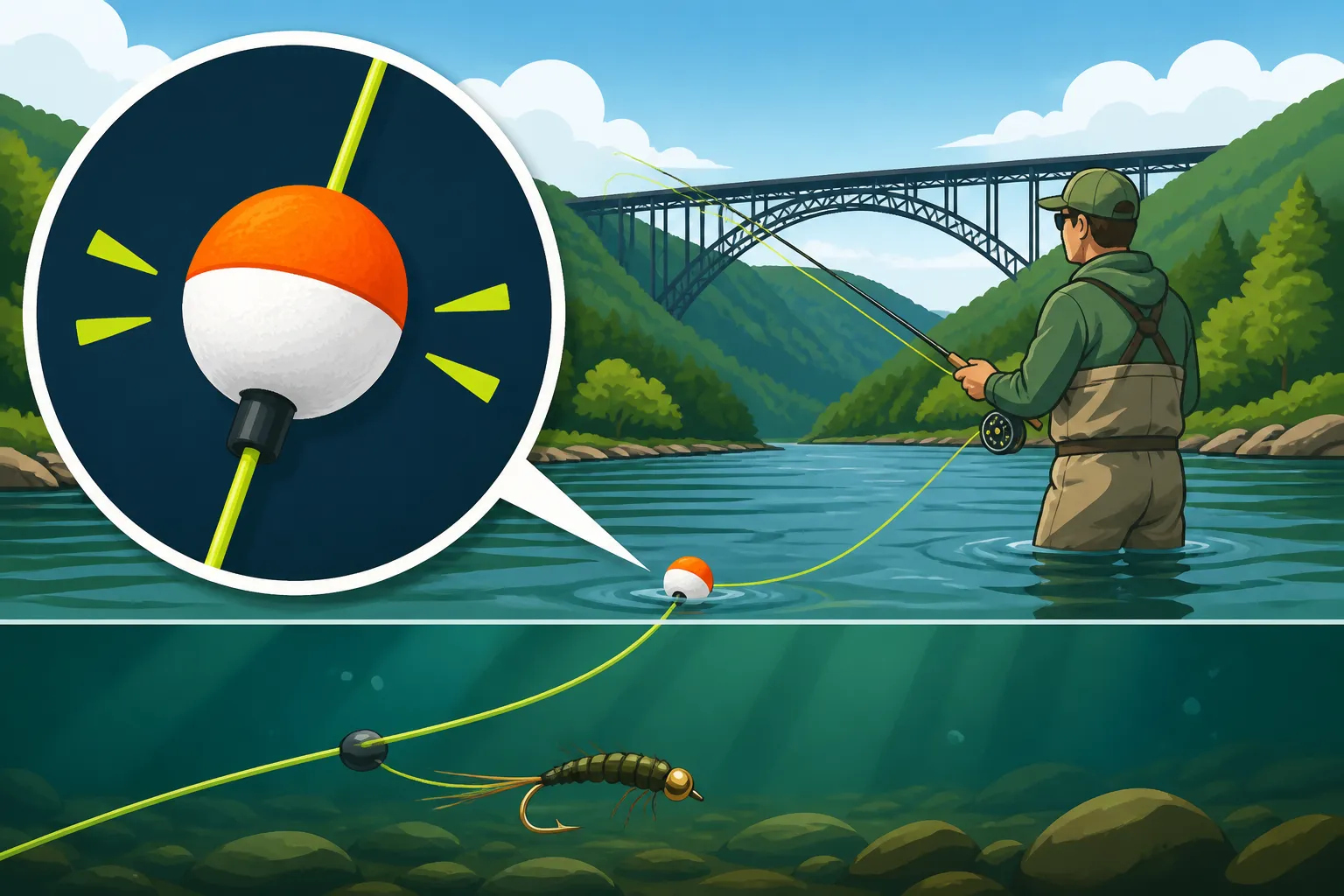
When you need something that really stands out and can support a heavier nymph rig, foam indicators are your go-to. These indicators come in various shapes and sizes, from small round "Thingamabobbers" to more elongated, football-shaped designs. They are usually made from high-density closed-cell foam, offering exceptional buoyancy.
Their primary advantages are their high visibility and ability to suspend multiple nymphs or heavier flies, even in faster, deeper currents. If you're fishing a strong, turbulent section of the New River or probing deeper runs on the Kanawha River Fishing Spots, a foam indicator will stay afloat and visible where a smaller yarn indicator might get pulled under. They're also very durable and don't require floatant. The downside is that they can create a bit more splash when they land, potentially spooking nearby fish, especially in shallow, clear water. Some styles, particularly those that clamp onto the leader, can also put a slight kink in your line if you're not careful. Still, for many situations in West Virginia, especially when conditions are a bit tougher, foam indicators are incredibly effective.
Pinch-On Indicators: Quick and Convenient
Pinch-on indicators, sometimes called "New Zealand style" or "putty" indicators, are designed for ultimate convenience and quick adjustments. These usually consist of a small piece of a soft, moldable material that you simply pinch onto your leader. The material adheres to itself, forming a small, buoyant ball.
The biggest pro here is how rapidly you can change your nymphing depth. See a deeper hole? Pinch on a new indicator further up the leader in seconds. Moving to a shallow riffle? Slide it down. This makes them incredibly versatile for covering varied water types quickly. They also offer decent buoyancy and are fairly visible. The main drawbacks are that they can sometimes slip on very thin leaders, and if you squeeze them too tightly, they can potentially weaken or damage your line. While not as universally popular as yarn or foam, they have a dedicated following for their ease of use, particularly for anglers who are constantly adapting their rig. You can often find these in various colors and sizes through online retailers like Amazon or specialized fly shops.
Sighter Material (Leader Indicators): The Stealthy Approach
For the angler who craves the utmost stealth and direct connection to their flies, sighter material is the indicator of choice, particularly for Euro nymphing techniques. Instead of a separate buoyant device, this method involves using a section of brightly colored monofilament or braided line, often coiled or tied in specific patterns, as the "indicator." This section is typically incorporated directly into your leader, just above your tippet.
The advantages are clear: absolute minimal splash, no external object to spook fish, and a direct, unhindered connection to your flies, allowing for unparalleled sensitivity. Every subtle tic, pause, or hesitation of your line is transmitted directly to your rod tip. This is incredibly effective in ultra-clear waters or when targeting highly educated trout that have seen every other indicator under the sun. However, it comes with a steep learning curve. Detecting strikes requires intense focus and practice, especially in choppy water or low light conditions, and it's not ideal for heavy, multi-nymph rigs that need significant buoyancy. Despite the challenge, mastering sighter material can unlock a whole new level of precision and stealth in your nymph fishing game, especially on technical waters like the Cranberry River Fly Fishing.
Choosing the Right Indicator for West Virginia's Diverse Waters
West Virginia offers an incredible variety of fishing environments, from tiny mountain trickles to broad, powerful rivers. The "best" strike indicator really depends on the specific water you're fishing and the conditions of the day.
Freestone Streams and Mountain Creeks
Our beautiful freestone streams and mountain creeks, often found winding through the Monongahela National Forest, are typically clear, relatively shallow, and feature rapidly changing currents. Think of the pristine waters where you might find native brook trout, or places like Shavers Fork brook trout fishing. The fish here, especially the wild trout, can be incredibly spooky and wary of anything unnatural.
For these environments, yarn indicators often reign supreme. Their light weight and soft landing minimize splash, preventing fish from being alarmed. Their sensitivity is paramount when dealing with the subtle takes of smaller, wild trout in broken water. You want something that blends in and doesn't create a disturbance. For the truly dedicated and skilled angler, incorporating sighter material into your leader setup offers the ultimate in stealth and direct contact, allowing for ultra-fine presentations in these often technical waters. You're trying to fool fish that are acutely aware of their surroundings, so a low-profile, highly sensitive indicator is key.
Larger Rivers and Tailwaters
West Virginia also boasts magnificent larger rivers and tailwaters, like the legendary Elk River below Sutton Dam or sections of the New River, where the currents can be stronger, the water deeper, and the fish potentially much larger. These waters present different challenges: more current to contend with, greater depths to reach, and often more wind.
Here, foam indicators really shine. Their superior buoyancy is crucial for suspending heavier nymph rigs, especially if you're fishing multiple flies or weighted patterns to get down to those deeper holding lies. The high visibility of a foam indicator also makes it easier to track in turbulent or choppier water, which is a common occurrence on large rivers. For situations where you're constantly changing your depth—perhaps moving from a deep hole to a shallower riffle downstream—pinch-on indicators can be incredibly efficient due to their rapid adjustability. The sheer size and power of these rivers often demand an indicator that can withstand more abuse and remain visible from a distance, making foam a robust choice. Fishing the Elk River Trout Fishing often means needing that extra buoyancy and visibility.
Stillwaters and Ponds
While West Virginia is famous for its rivers, we also have numerous ponds and smaller lakes, many of which are regularly stocked with trout or hold healthy populations of panfish and bass. Waters like the trout pond at Watoga State Park Fishing or various small impoundments offer a different nymphing challenge: minimal current, often crystal-clear conditions, and fish that can be extremely observant.
In stillwater, stealth is even more important, as there's no current to hide a splashy indicator. Yarn indicators are an excellent choice here for their soft landing and sensitivity to even the gentlest takes. You're often making longer casts, so a lightweight indicator that doesn't hinder your casting stroke is also a plus. If you need a bit more buoyancy for a heavier rig or if the light conditions demand better visibility, a small, streamlined foam indicator can work well, provided you cast it gently to minimize disturbance. The key is to match the indicator's size and weight to the subtlety of the fish and the clarity of the water, ensuring it helps you detect bites without alarming your quarry.
Practical Tips for Using Strike Indicators Effectively
Having the right strike indicator is only half the battle; knowing how to use it effectively is what truly makes a difference. Proper setup, keen observation, and good maintenance will elevate your nymph fishing game significantly.
Proper Setup and Placement
The placement of your strike indicator on your leader is crucial. A general rule of thumb is to set your indicator at about 1.5 to 2 times the estimated depth of the water you're fishing. For example, if a run looks to be 4 feet deep, place your indicator 6 to 8 feet above your lead nymph. This ensures your flies have enough time and slack to sink to the fish's feeding zone. However, this isn't a hard and fast rule; you might need to adjust it more frequently than you think. In fast-moving water, you might need to place it a bit closer to your flies to ensure they sink quickly and don't get swept up by surface currents. In slower water, you can afford to place it a bit further, allowing for a longer, more natural drift.
When attaching any indicator, always be mindful of your leader. Foam indicators that use rubber bands or pinch-on styles can potentially weaken your leader if clamped too tightly. Yarn indicators often have small plastic rings or sleeves that slide onto the leader; ensure these are snug but not overtight, allowing for easy adjustment without damaging the line. The goal is a secure, adjustable setup that doesn't compromise the integrity of your leader.
Detecting the Strike: More Than Just a Dip
Many beginners assume a strike indicator will only dip dramatically when a fish bites. While that certainly happens with aggressive takes, the majority of nymph strikes are far more subtle. You need to train your eyes to look for any interruption in the natural drift of your indicator. This means watching intently for:
- A slight pause: The indicator suddenly stops or slows down while the surrounding current continues to move.
- A sideways movement: The indicator drifts off to the left or right, seemingly against the current flow.
- An unnatural acceleration: The indicator speeds up briefly.
- A subtle twitch or dip: A quick bob or wiggle that isn't due to the water's surface tension.
- Disappearance: Of course, if it goes completely under, set the hook!
The key is to maintain a drag-free drift. This means mending your line upstream as the indicator floats downstream, keeping your fly line relatively straight between your rod tip and the indicator. Any unusual movement, no matter how small, warrants a hook set. Many experienced anglers operate on the "if in doubt, set the hook" principle because those subtle takes are often the biggest fish. Practice watching your indicator and reacting quickly; it becomes second nature over time. How to fish a run and pool trout stream techniques often involve precise indicator management.
Maintenance and Care
Just like any other piece of fishing gear, your strike indicators will perform best with a little care. For yarn indicators, consistently re-applying a quality floatant throughout the day is essential to keep them riding high and visible. If they get waterlogged, they lose sensitivity and can be difficult to see. After a day on the water, you can gently rinse them to remove any stream grime.
Foam and pinch-on indicators are generally more durable, but it's still a good idea to inspect them periodically. Check for any tears in the foam, especially if you've been snagged, or any wear on the attachment points. If a pinch-on indicator starts to lose its adhesive quality or consistently slips, it's time for a replacement. Keeping a variety of fresh indicators in your tackle box means you'll always have the right tool for the job. You don't want to be caught on a pristine section of the Cranberry River with a waterlogged or broken indicator when the fish are actively feeding.
| Indicator Type | Pros | Cons | Ideal West Virginia Scenario |
|---|---|---|---|
| Yarn Indicators | Highly sensitive, soft landing, easy to adjust, less likely to spook fish. | Can get waterlogged, requires floatant, can be harder to cast in wind. | Clear, shallow freestone streams (e.g., Shavers Fork brook trout fishing), technical fishing, spooky trout. |
| Foam Indicators | Excellent buoyancy, highly visible, durable, supports heavy rigs. | Can create splash, sometimes less sensitive, can kink leader if clamped too tight. | Deeper, faster rivers and tailwaters (e.g., Elk River Trout Fishing), windy conditions, larger nymphs. |
| Pinch-On Indicators | Super quick to attach and adjust depth, good buoyancy, highly visible. | Can slip on thin leaders, can damage leader, can create splash. | Frequently changing depths, varied water types, quick rig adjustments on the fly. |
| Sighter Material | Ultimate stealth, no splash, direct fly connection, unparalleled sensitivity. | Difficult to see in choppy water/low light, requires practice, not for heavy rigs. | Ultra-clear water, highly educated fish, technical Euro nymphing techniques. |
Disclaimer
This article is for general informational purposes only and does not constitute professional advice. Laws, prices and regulations vary by location and change over time. Consult a qualified professional for guidance on your specific situation.