Best streamer rod setup for big brown trout
Trying to target those elusive, trophy-sized brown trout in West Virginia with streamers can feel like an exercise in futility if you're not properly equipped. You find yourself struggling with casts, losing fish to inadequate gear, or just plain feeling undergunned against the strong currents and even stronger fish. This guide is all about helping you assemble the ideal fly rod setup specifically designed to handle big streamers and the formidable brown trout that chase them in our mountain state.
Understanding the Streamer Rod: More Than Just a Trout Rod
When you're chasing bigger brown trout with streamers, you're not just throwing tiny dry flies or delicate nymphs. You're often slinging larger, weighted patterns that mimic baitfish—think chunky Sculpzillas, heavy Clousers, or articulated D&D's. This kind of fishing demands a different kind of fly rod, one with the backbone to punch through wind, turn over heavy flies, and ultimately, subdue a powerful fish. Many anglers try to make do with their standard 4- or 5-weight trout rods, only to find themselves fatigued, frustrated, and missing opportunities. It’s a common pitfall; you learn quickly that a specialized tool is necessary for specialized work.
Rod Weight: Powering Through the Cast
The first and most critical decision for a streamer setup is the rod's weight. Forget your delicate 3-weights here; we're talking about putting some muscle into it. The heavier line weights are designed to efficiently load the rod with larger, air-resistant flies, making casting much less of a chore.
- Optimal Weights for Streamers: For most West Virginia rivers, a 6-weight or 7-weight rod is your sweet spot. A 6-weight offers a fantastic balance for throwing medium to large streamers, giving you enough power without feeling like you're casting a tree trunk all day. If you're consistently throwing truly massive, articulated streamers, or if you plan to fish in particularly windy conditions or on larger rivers like the New or the larger sections of the Cheat, stepping up to a 7-weight will make a noticeable difference in your ability to cast accurately and powerfully. It’s better to be slightly over-gunned than under-gunned when a hefty brown decides to commit.
- Why a Heavier Weight Matters: Beyond just casting the fly, a heavier rod weight provides crucial leverage when fighting a larger fish. Imagine a 20-inch brown trout digging into the current of the Elk River Trout Fishing. Your lighter 4-weight would be bent to the cork, putting immense strain on your tippet and greatly extending the fight, which is stressful for the fish. A 6 or 7-weight allows you to apply more pressure, steering the fish more effectively and landing it quicker, improving its chances of survival. This is especially important for those magnificent wild brown trout you might encounter.
Rod Length: Reaching and Controlling
Rod length might seem secondary to weight, but it plays a significant role in line control, casting distance, and handling fish, especially in a river environment. Most fly rods are 9 feet long, and for streamers, this is generally a fantastic starting point.
- The Versatility of 9 Feet: A 9-foot rod offers a good compromise between casting distance and maneuverability. It provides enough length to manage line effectively, mend line over complex currents, and keep your fly tracking where you want it. This is invaluable when you're trying to work a streamer through a specific seam or around a submerged log. For West Virginia's varied trout streams, from the wider Cheat to the tighter sections of the Cranberry, a 9-foot rod will serve you well.
- Considering Longer Rods: Some anglers prefer rods up to 9.5 or even 10 feet for streamer fishing, particularly when wading deep or fishing from a drift boat. The extra length can give you an edge in reaching further, picking up more line on the backcast, and even subtly "jigging" your streamer with greater control. However, these longer rods can become cumbersome in brushy areas or when casting in tight quarters, which you'll definitely encounter on some of our more overgrown mountain streams. It's a trade-off, and for most situations, 9 feet is the practical champion.
Rod Action: Finding the Sweet Spot Between Power and Feel
Rod action describes where the rod bends when put under pressure. For streamer fishing, you generally want a rod with a fast action. This means the rod bends mostly in the tip section, providing plenty of power in the butt section.
- Fast Action for Streamers: A fast-action rod excels at generating high line speed, which is critical for turning over heavy, wind-resistant streamers. It allows for tight loops, which helps with accuracy and punching through the wind. When you’re trying to hit that small pocket behind a boulder in a rushing river, that fast action is your best friend. It also provides the backbone needed to haul a larger fish out of strong current or prevent it from getting into snags.
- The Balance of Feel: While fast action is preferred, some rods can feel overly stiff, almost like a broomstick. The trick is to find a fast-action rod that still offers some feel and responsiveness in the tip. This allows you to feel subtle takes from a trout that might just "mouth" the streamer and provides better feedback during the cast. Brands like Orvis, Sage, and Scott offer excellent fast-action rods that strike this balance beautifully, giving you both the power you need and the sensitivity you appreciate. When you're spending all day casting, a rod that feels good in your hand makes all the difference.
Reel and Line System: The Engine and the Lifeline
Your reel and line are just as vital as your rod. The reel isn't just a line holder; it's a drag system and a counterweight. The line is your direct connection to the fly and the fish, and for streamer fishing, it needs to be specialized to perform. Skimping on the line, in particular, is a common mistake that can undermine even the best rod.
Reel Selection: Balancing Act and Dependable Drag
For streamer fishing, your reel needs to do more than just hold line. It needs to balance your rod, withstand the fight of a strong fish, and have a smooth, reliable drag system.
- Matching the Rod Weight: The most important thing is to match the reel to your rod's weight. A 6-weight rod needs a reel designed for 6-weight line, and so on. This ensures proper balance, which reduces fatigue over a long day of casting and makes the whole setup feel cohesive. A reel that's too heavy will make the rod feel sluggish and tip-heavy, while one that's too light will make it feel unbalanced.
- Large Arbor and Smooth Drag: Look for a reel with a large arbor design. This means a larger diameter spool, which retrieves line faster and reduces line memory (the coils that form in your line). When a big brown makes a run, that quick retrieve and reduced line memory can be crucial. More importantly, ensure the reel has a smooth, sealed drag system. Streamer fishing often means sudden, powerful takes and runs, so a drag that can be set precisely and delivers consistent pressure without stuttering is non-negotiable. Reputable brands like Lamson, Ross, and Abel produce reels with excellent drag systems that will handle even the most aggressive West Virginia browns. You can often find great options at a local fly shop or on sites like Bass Pro Shops.
- Enough Backing: Don't forget backing! While you might not spool out 100 yards every time, having ample backing (typically 100-150 yards of 20 lb dacron) is peace of mind. A large brown trout in a strong river current can spool a surprising amount of line in a hurry, and you don't want to be caught short.
Fly Line: The Key to Effective Streamer Presentation
This is where many anglers overlook a critical component. A standard floating weight-forward line, while versatile, isn't always the best choice for consistently getting streamers down to where those big browns lurk.
- Weight Forward Taper: Regardless of floating or sinking, always opt for a weight-forward (WF) taper. This design puts more weight in the front section of the line, making it easier to load the rod and turn over heavy flies, especially in windy conditions.
- Sinking Tips or Full Sinking Lines: For streamer fishing, particularly in deeper pools or faster runs, sinking tips or full sinking lines are often superior.
- Sinking Tip Lines: These lines have a floating running line but a sinking section at the front (the tip). They allow your fly to get down quickly while keeping the main portion of your line floating on the surface, making mending and line control a bit easier. Different sink rates (e.g., 3ips, 6ips, 9ips – inches per second) are available, allowing you to match the depth and current speed. A 200 or 300-grain sinking tip is a versatile choice for many West Virginia streamer situations.
- Full Sinking Lines: As the name suggests, the entire line sinks. These are fantastic for getting streamers deep in large pools or fast, deep runs, especially when fishing from a boat or bank and needing to maintain contact with the fly at depth. They offer the most direct connection to the fly and the deepest presentation but can be a bit harder to mend.
- Overlining for Aggressive Casting: Some anglers choose to "overline" their rod by one line size (e.g., putting a 7-weight line on a 6-weight rod). This makes the rod load more easily, especially for shorter, aggressive casts with heavy flies. Experiment to see what feels best for your casting style and the flies you're using.
Leaders, Tippet, and Connections: The Unbreakable Link
Your leader and tippet are the weakest link in your system, but with the right choices and knots, they don't have to be. For big brown trout and heavy streamers, you need something stout and reliable. Forget your delicate 4x or 5x leaders here; we're in big fish territory.
Leader Construction: Short, Strong, and Tapered
The typical long, delicate leader used for dry flies or nymphs won't cut it for streamers. You need something shorter and much stronger to turn over bulky flies and withstand the shock of a hard strike.
- Short and Powerful: Aim for leaders in the 4-7 foot range. A shorter leader helps transmit casting energy directly to the fly, making it easier to turn over those weighted streamers. It also reduces hinge points and allows for better contact with your fly, which is vital for detecting subtle takes and setting the hook quickly.
- Heavier Butt Section: The butt section of your leader should be substantial, connecting smoothly to your fly line. You want it to be thick enough to transfer energy efficiently.
- Integrated Taper: Many companies make specialized "streamer leaders" that are designed with a heavy butt and a short, aggressive taper to a strong tippet. These are excellent choices and simplify your setup.
- Building Your Own Taper: Alternatively, you can build your own tapered leader using heavier monofilament or fluorocarbon. A common formula might be 3 feet of 20 lb test, 2 feet of 15 lb test, and then your final tippet section. This gives you control over the exact length and strength.
Tippet Strength: Don't Be Afraid to Go Big
This is often where anglers get cold feet, afraid of "spooking" fish with heavy tippet. While trout can be leader shy, a large, aggressive brown trout chasing a streamer is usually less concerned with leader diameter and more concerned with getting its meal.
- Fluorocarbon for Strength and Stealth: Always opt for fluorocarbon tippet when streamer fishing. Fluorocarbon is nearly invisible underwater, much more abrasion-resistant than monofilament (crucial when fishing around rocks and logs), and sinks, helping your fly get down faster.
- Stronger Sizes: For most West Virginia streamer fishing, you'll want to use 0X, 1X, or even 2X fluorocarbon tippet. That translates to 11.5 lb, 13.5 lb, and 15 lb breaking strength, respectively, for many popular brands. This might seem heavy, but it's essential for a few reasons:
- Turning Over Large Flies: Thicker tippet helps turn over heavier, wind-resistant streamers, preventing tangles.
- Fighting Big Fish: When you hook a large brown, you need the strength to apply pressure and keep it from running into snags. You don't want to snap off a trophy fish because you were worried about a lighter tippet.
- Abrasion Resistance: Streamer fishing often means bouncing flies off rocks and timber. The extra diameter of heavier tippet provides crucial abrasion resistance.
- Connecting Your Tippet: Use strong, reliable knots. The blood knot or triple surgeon's knot are excellent choices for connecting sections of tippet or leader. For attaching your fly, a Lefty's Loop Knot or a non-slip mono loop knot allows the streamer to move more freely in the water, giving it a more natural, lifelike action, which can be a huge trigger for aggressive fish.
Essential Accessories: Completing Your Streamer Arsenal
Having the right rod, reel, and line is foundational, but a few key accessories can significantly improve your streamer fishing experience and increase your success rate in West Virginia. These aren't just luxuries; they're tools that make your day safer, more comfortable, and more productive.
Landing Net: Handling Your Trophy Responsibly
Landing a big brown trout with a streamer setup is exhilarating, but the job isn't done until the fish is safely in the net. A proper net protects both you and the fish.
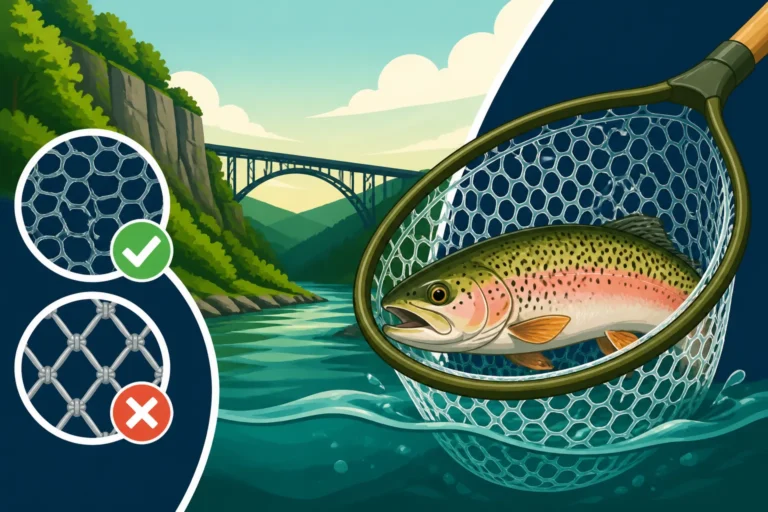
- Rubber Netting: Insist on a net with rubber or "ghost" netting. This material is incredibly gentle on fish scales and fins, minimizing damage to their protective slime coat. It also prevents treble or large single hooks from getting tangled, which saves you a lot of frustration and reduces handling time for the fish.
- Size Matters: For big brown trout, you need a net with a generous hoop size and depth. A small trout net simply won't cut it for a 20-inch-plus fish. Look for a net designed for larger trout or even bass. The extra size makes it easier to scoop up a strong, thrashing fish, especially when you're wading in current. Many guides prefer a net with a longer handle that can be stowed on their back or easily reached from a boat. Best Landing Net for Trout provides more details on what to look for.
Wading Gear: Staying Safe and Comfortable
West Virginia's best brown trout streams often require wading to access prime lies. Good wading gear is essential for comfort and, more importantly, safety.
- Breathable Waders: Even if you're fishing in cooler water, breathable waders are almost always preferable to neoprene. They manage moisture much better, keeping you comfortable whether the air is cool or warm. Look for durable construction with reinforced knees and seat, as you'll be doing a lot of walking, kneeling, and navigating rough terrain. Brands like Simms, Orvis, and Redington offer excellent options that last for years.
- Wading Boots with Good Traction: This is critical. West Virginia rivers are notoriously rocky and slick. Look for wading boots with excellent ankle support and aggressive rubber soles. Many anglers also prefer studded soles for extra grip on slippery rocks. Felt soles are also an option, but be aware of local regulations regarding their use, as they can sometimes transport invasive species. Best Waders for West Virginia Trout Streams has more information on choosing the right pair.
- Wading Staff: A collapsible wading staff is an absolute non-negotiable safety item. It provides an extra point of contact and helps you gauge depth and stability in strong currents or on unknown bottom. Don't leave home without one when wading our mountain streams.
Fly Boxes and Storage: Protecting Your Streamers
Streamers are often bulky and can be difficult to store in standard small fly boxes. You need dedicated storage that keeps them organized and prevents them from getting crushed or tangled.
- Large Compartment Fly Boxes: Look for fly boxes with larger, deeper compartments or sturdy slotted foam that can hold bigger flies without deforming their materials. Some boxes even have specific designs for articulated flies. This prevents your meticulously tied patterns from getting squashed or their hackle and tails from becoming matted.
- Accessibility: Choose boxes that are easy to open and close, especially with cold or wet hands. You don't want to be fumbling around when you've spotted a feeding fish or need to quickly change patterns. Having a dedicated "streamer box" keeps your larger flies separate and readily accessible, saving you time and frustration on the water. You can find a wide variety of practical fly boxes at fishing retailers like Bass Pro Shops or on Amazon.
Practical Tips for Streamer Success in West Virginia
Having the right gear is a huge step, but knowing how to use it effectively is what truly puts big brown trout in your net. West Virginia's rivers and streams present unique challenges and opportunities for streamer anglers.
Reading the Water for Brown Trout
Big brown trout are often ambush predators, and they'll hold in specific lies where they can easily dart out to intercept baitfish or other prey. Learning to read the water effectively is paramount.
- Ambush Points: Focus on current seams, the edges of faster water, behind large boulders, submerged logs, undercut banks, and deep pools. These are classic ambush points where a brown trout can lie in wait, expending minimal energy while still having easy access to passing food. Pay close attention to eddies or slower water adjacent to fast currents, as these are often prime holding spots.
- Tailwaters and Larger Rivers: On West Virginia's larger rivers and tailwaters, like the New River Gorge or sections of the Elk below a dam, these spots are often more pronounced. The sheer volume of water and larger structure means big browns can hold in places that might seem too aggressive for smaller trout. Don't be afraid to cast into seemingly rough water; those are often the spots that hold the biggest fish. Consider checking New River Smallmouth Bass Fishing for related river reading tips, as smallmouth often inhabit similar structures.
Casting and Presentation Strategies
Casting a large streamer isn't like casting a delicate dry fly. It requires more power and a different approach to presentation.
- The Roll Cast and Water Haul: When you have a heavy streamer, especially one that's wet and soaked, picking it up off the water with a traditional backcast can be exhausting and dangerous (flies can catch on your rod or hit you). Master the roll cast or, even better, the water haul. A water haul uses the water resistance on your line to load the rod, making it much easier to lift and cast a heavy fly with minimal effort. It's a game-changer for streamer fishing.
- Swinging and Stripping: There are two primary ways to present a streamer:
- Swinging: Cast across and slightly downstream, then let the current swing the fly across the river, mimicking a baitfish swimming naturally. As it swings, impart subtle twitches with your rod tip. This is incredibly effective in riffles and runs.
- Stripping: Cast upstream or across, let the fly sink to the desired depth, and then retrieve it with short, aggressive strips, imitating a fleeing baitfish. Vary your strip speed and length until you find what triggers a strike. Sometimes a long, steady pull works, other times a quick, erratic twitch. Don't forget to pause occasionally; often, the strike will come on the pause.
- Mending and Line Control: Despite using heavier lines, effective mending is still crucial to get your streamer down and keep it in the strike zone for as long as possible. High-sticking can also help keep your line off the water and control your fly's depth and speed, especially when wading.
Fight and Landing Tactics
Hooking a big brown on a streamer is a rush, but the fight is far from over. These fish are powerful and savvy.
- Set the Hook Hard: When a brown trout attacks a streamer, it's usually aggressive. However, you need to set the hook with authority. Don't just lift the rod; make a strong, strip-set by pulling the line sharply to the side. This ensures the hook penetrates the tough mouth of a big trout.
- Keep Pressure On: Once hooked, keep constant pressure on the fish. Use your rod's backbone (that fast action rod comes in handy here!) to steer the fish away from snags and out of strong currents. Don't let it rest in heavy current, as this can prolong the fight and exhaust the fish.
- Landing Quickly and Safely: Work the fish to your net as quickly and efficiently as possible. Minimize its time out of the water. With your large, rubber-mesh net ready, scoop the fish headfirst. Once in the net, keep the net in the water as much as possible while you unhook the fly. Take a quick photo if you wish, and then release it gently, allowing it to recover in the current. Remember, these are valuable fish, and responsible handling ensures they can fight another day.
| Rod Component | Recommended for Big Brown Trout Streamers | Why It Matters |
|---|---|---|
| Rod Weight | 6-weight or 7-weight | Powers through casting heavy, wind-resistant flies; provides leverage for fighting large fish in strong currents. |
| Rod Length | 9 feet (9.5-10 feet for specific situations) | Versatile for casting distance, line control, and maneuverability in varied river environments. |
| Rod Action | Fast Action (with some tip feel) | Generates high line speed for turning over bulky streamers, provides backbone for fighting fish, and aids accuracy. |
| Reel Size | Matches rod weight (6-weight reel for 6-wt rod) | Ensures proper balance with the rod; critical for reducing fatigue during long casting sessions. |
| Reel Features | Large Arbor, Smooth Sealed Drag | Fast line retrieve, reduces line memory; reliable, consistent pressure during strong runs from big fish. |
| Fly Line | Weight Forward Sinking Tip or Full Sinking Line | Gets streamers down to the fish's depth quickly; efficient energy transfer for casting heavy flies. |
| Leader Length | 4-7 feet | Shorter length helps turn over heavy flies; better contact with the fly for detecting strikes. |
| Leader Material | Fluorocarbon, aggressively tapered | Near invisibility underwater, abrasion resistance, sinks well; stout butt section for energy transfer. |
| Tippet Strength | 0X, 1X, or 2X Fluorocarbon (11.5-15lb test) | Essential for landing big fish, turning over heavy flies, and abrasion resistance around structure. |
Building a dedicated streamer rod setup for big brown trout in West Virginia isn't just about accumulating gear; it's about making deliberate choices that directly address the challenges of this exciting style of fishing. With the right rod, reel, line, and accessories, you'll be well-prepared to tackle our beautiful, wild rivers and connect with the trophy browns they hold. So gear up, head out, and get ready for some exhilarating action on the water.
Disclaimer
This article is for general informational purposes only and does not constitute professional advice. Laws, prices and regulations vary by location and change over time. Consult a qualified professional for guidance on your specific situation.