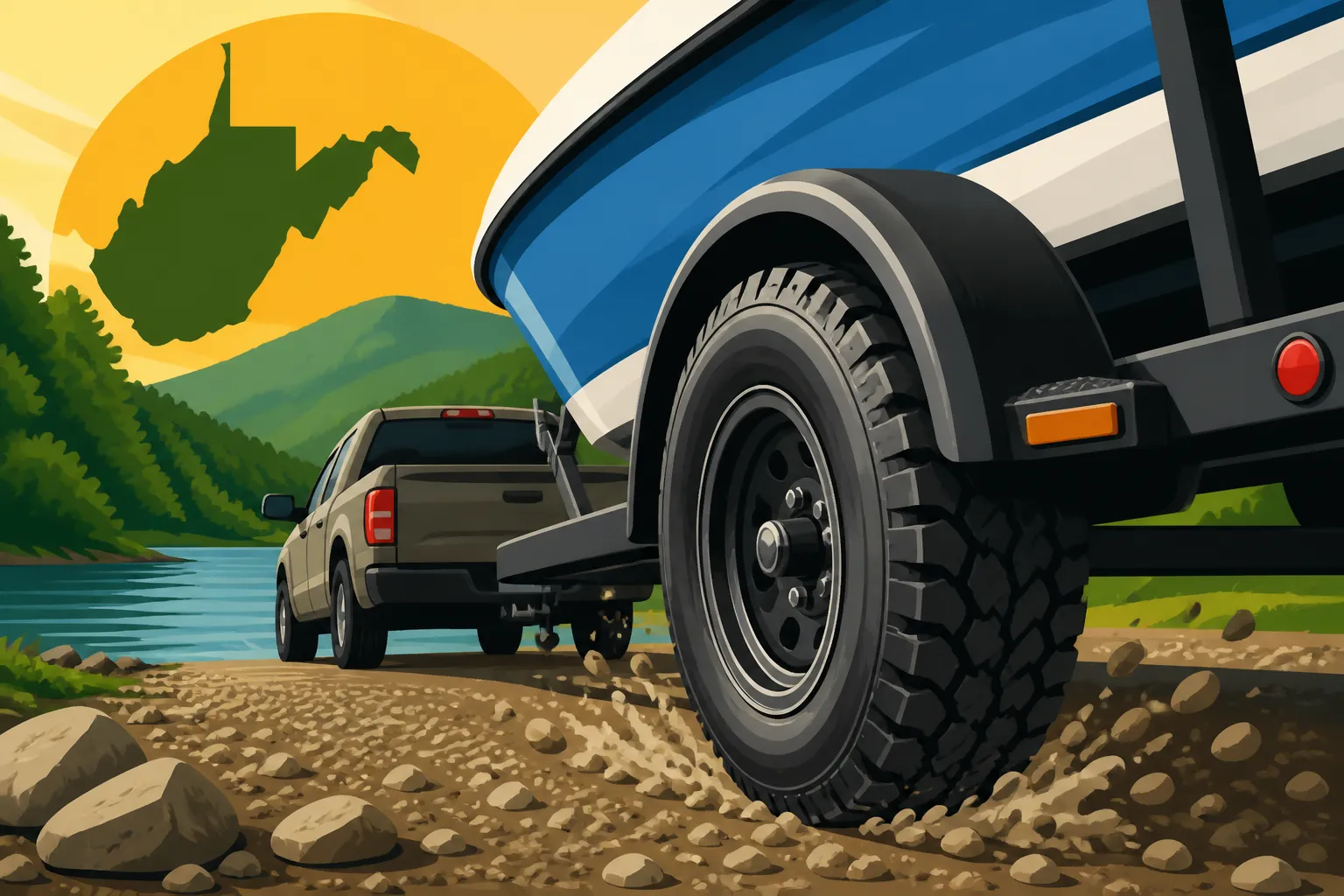
Best boat trailer tires for gravel launches
There’s nothing quite like the feeling of anticipation when you’re backing your boat down a ramp, ready for a day of fishing on one of West Virginia’s gorgeous lakes or rivers. But that feeling can quickly turn to dread if you’re pulling your trailer onto a rough, unmaintained gravel launch, especially when you start worrying about whether your tires can handle the abuse. Many of us have faced the frustration of a flat tire or a damaged sidewall miles from anywhere because we underestimated the challenge of those wild and wonderful gravel access points. This guide is here to help you understand what makes a great boat trailer tire for navigating West Virginia's often unforgiving gravel launches, ensuring your trips start and end smoothly.
The Unique Challenges of West Virginia's Gravel Launches
West Virginia is renowned for its stunning natural beauty and incredible fishing opportunities, but accessing some of these pristine spots often means venturing off the paved road. Our gravel launches and access roads, while charming, present a unique set of challenges for boat trailer tires that demand more than your average highway-rated rubber.
The Potholes and Sharp Rocks Reality
Anyone who's spent time exploring West Virginia knows that "gravel road" can mean a lot of different things. Sometimes it's a well-maintained, smooth surface, but more often, especially closer to the water's edge, it’s a rugged path strewn with sharp, jagged rocks, deep ruts, and surprisingly large potholes. These aren't just minor annoyances; they're tire destroyers waiting to happen. The constant impact from sharp stones can chip away at tread, while driving through deep ruts can put immense stress on tire sidewalls, leading to punctures or blowouts. It's a stark contrast to the smooth asphalt you might be used to, and it requires tires built to withstand relentless punishment.
Imagine you're heading to a remote section of the New River Gorge Fishing Guide or a lesser-known launch on the Greenbrier River Fishing Guide. These picturesque locations often come with access roads that haven't seen a fresh layer of gravel in years, if ever. The sharp, embedded stones act like tiny knives, constantly trying to slice into your tire's rubber. A standard, thin-walled trailer tire designed primarily for highway use simply isn't engineered to handle this kind of continuous abrasion and impact.
Weathering the Elements: Impact on Tire Performance
West Virginia’s weather can be as unpredictable as its terrain, and these fluctuating conditions significantly impact how your boat trailer tires perform on gravel. A dry, dusty gravel road might kick up a lot of grit, causing microscopic abrasions, while a sudden downpour can turn that same road into a slick, muddy mess. Mud not only reduces traction but can also trap small stones, which then get flung against your trailer or lodge in your tire treads, potentially causing damage later.
Then there’s the freeze-thaw cycle we experience through much of the year. This constant expansion and contraction of water in the ground is what creates those notorious potholes. Driving over these frozen, jagged edges or through soft, thawed mud places immense strain on your tires. High summer temperatures can also soften rubber, making it more susceptible to cuts and punctures from sharp gravel. Conversely, extreme cold can make rubber brittle, increasing the risk of cracking. You need tires that can maintain their integrity, grip, and durability through blazing summer heat, torrential spring rains, and icy winter mornings, especially if you're chasing winter catfish or early spring trout.
Key Tire Features for Gravel Durability
When selecting boat trailer tires for West Virginia's gravel launches, you need to think beyond just the size and load rating. Several key features are critical for ensuring durability and reliability on rough terrain.
Tread Design and Depth
The tread of your trailer tire is its first line of defense against the harsh realities of gravel. For consistent gravel use, you want a tread pattern that is aggressive enough to provide grip on loose surfaces but also designed to resist chipping and tearing. Large, interlocking tread blocks are ideal because they can dig into loose gravel for traction without getting packed with mud or small stones. Wide grooves between these blocks help to shed debris and maintain grip in muddy conditions.
Beyond the pattern, tread depth is crucial. Deeper treads provide more rubber to wear away before the tire becomes compromised, and they also offer better protection against punctures from sharp objects. Tires with shallow, highway-oriented treads will quickly get chewed up and lose their effectiveness on rough gravel roads. Think of it like this: a tire with good, deep tread can "float" a bit over smaller, sharper stones, dispersing the pressure, while a shallow tread takes the direct hit. This is especially true when navigating those often-rutted paths down to the water, where you need every bit of traction and durability you can get.
Ply Rating and Sidewall Strength
If there's one area where gravel launches wreak havoc, it's the tire's sidewall. A low ply rating means a thinner, more flexible sidewall that is highly susceptible to cuts and punctures from sharp rocks or rubbing against curbs and obstacles at the launch. The ply rating indicates the tire's load-carrying capacity and, generally, its resistance to punctures. For heavy-duty use on gravel, you should look for tires with a higher ply rating, often 8-ply or even 10-ply, depending on the weight of your boat and trailer.
A strong sidewall isn't just about ply count; it also involves specialized construction. Some trailer tires are designed with reinforced sidewalls featuring extra layers of rubber or internal cords to resist lateral forces and impacts. This reinforcement is invaluable when you're maneuvering your trailer on an uneven gravel surface, trying to back a boat into a tight spot, or when a tire briefly rubs against a sharp rock or embankment. A robust sidewall can mean the difference between getting to the water's edge and being stranded with a blowout. This added protection is a lifesaver, particularly if your Best Boats for West Virginia Rivers and Lakes requires a heavier trailer.
Rubber Compound for Toughness
The type of rubber compound used in a tire's construction plays a significant role in its ability to withstand gravel conditions. Standard highway trailer tires often use compounds optimized for rolling resistance and fuel efficiency on smooth pavement. While great for long highway hauls, these compounds can be too soft or brittle for the continuous abuse of gravel.
For gravel launches, you want a rubber compound that is inherently tougher, more resistant to chipping, cutting, and abrasion. Manufacturers might use specialized polymer blends or incorporate additives to increase the rubber's tear strength and durability. These compounds are designed to flex and resist tearing when they encounter sharp edges, rather than easily succumbing to a puncture. While such tires might not offer the absolute lowest rolling resistance on the highway, their enhanced durability on gravel far outweighs that minor trade-off when your priority is reaching those remote fishing spots without incident. When you're looking for replacement tires, check the specifications for terms like "chip-resistant," "cut-resistant," or "heavy-duty compound."
Types of Trailer Tires Best Suited for Gravel
Navigating the world of trailer tires can be a bit overwhelming, but understanding the basic types can help you make an informed decision when it comes to tackling West Virginia's gravel launches.
Bias-Ply vs. Radial Tires on Gravel
This is one of the most fundamental distinctions in tire construction.
- Bias-Ply Tires: These tires are constructed with plies (layers of cord) laid diagonally from bead to bead, crossing each other. This construction typically results in a stiffer sidewall and a more rigid overall tire.
- Pros for Gravel: Their stiff sidewalls make them quite resistant to punctures from the side. They can also handle heavy loads well and are often more affordable. For short, rough hauls to a gravel launch, their puncture resistance can be an advantage.
- Cons for Gravel: The stiff construction can lead to a rougher ride, and they tend to generate more heat at highway speeds, which can accelerate wear on long trips. Their tread can also be more prone to flat-spotting if stored for long periods.
- Radial Tires: These tires have plies running perpendicular to the direction of travel, with a separate belt package under the tread. This allows the sidewall and tread to work independently.
- Pros for Gravel: Radials typically offer a smoother ride, better heat dissipation, and a longer tread life on the highway. Their flexible sidewalls allow the tread to remain more consistently in contact with the road, offering better traction. When designed with robust construction, they can still be very effective on gravel.
- Cons for Gravel: Traditionally, radial sidewalls have been more susceptible to punctures than bias-ply, though modern radial trailer tires with reinforced sidewalls have significantly closed this gap.
For frequent gravel use in West Virginia, a well-built radial tire with strong sidewall construction and an aggressive, durable tread pattern often provides the best balance of on-road comfort, heat dissipation, and off-road resilience. However, if your hauls are primarily short distances on very rough, sharp gravel roads, a heavy-duty bias-ply tire might still be a cost-effective and durable option.
Light Truck (LT) Tires for Heavy-Duty Trailers
For those with larger boats and heavier trailers, especially those hitting consistently rough gravel roads or making longer trips to diverse Best Fishing Lakes in West Virginia and Best Fishing Rivers in West Virginia, considering Light Truck (LT) tires specifically designed for trailers can be a game-changer. While standard trailer (ST) tires are engineered to withstand the unique vertical loads and towing forces of trailers, LT tires offer a different class of robust construction.
LT tires are built for the heavy demands of trucks carrying and towing significant weight. This often translates to:
- Superior Ply Ratings: Many LT tires come standard with higher ply ratings (e.g., Load Range E or F, equivalent to 10 or 12 ply) compared to typical ST tires, providing exceptional puncture resistance and load capacity.
- Rugged Sidewalls: Their sidewalls are designed to withstand the abuses encountered in light truck applications, which often include off-road driving and heavy loads, making them incredibly resilient against gravel-induced cuts and impacts.
- Aggressive Tread Options: While not all LT tires are "off-road" tires, many offer more aggressive, deeper treads than standard highway ST tires, improving grip and durability on loose, uneven surfaces.
The downside is that LT tires might be more expensive and can sometimes be harder to find in traditional trailer tire sizes, but the peace of mind they offer when towing a substantial rig over challenging West Virginia gravel can be invaluable. Always ensure the load rating of the LT tire meets or exceeds your trailer's Gross Vehicle Weight Rating (GVWR) and that it is suitable for trailer use (though most LT tires are fine, a dedicated ST tire is often specifically designed for trailing forces).
All-Terrain (AT) or Off-Road Inspired Trailer Tires
For the ultimate in gravel and off-road capability, some anglers are exploring trailer tires with designs inspired by All-Terrain (AT) vehicle tires. These aren't always explicitly marketed as "trailer tires," so careful attention to load ratings and construction is paramount. However, certain manufacturers do offer trailer tires that incorporate aggressive, open tread patterns and heavy-duty construction reminiscent of AT tires.
- Benefits: These tires excel in providing maximum traction on loose gravel, mud, and uneven terrain. Their deep, widely spaced lugs are fantastic at shedding mud and debris, preventing packing that can lead to lost grip. The robust construction and fortified sidewalls common in these designs offer top-tier protection against punctures and tears. If your destination involves truly primitive access points or unimproved tracks, these tires will instill confidence.
- Considerations: They can be noisier on the highway, and their aggressive tread might have slightly higher rolling resistance, potentially impacting fuel economy on long paved stretches. Finding the correct size and load rating for your specific boat trailer can also be more challenging than with standard ST tires.
If you frequently venture to remote areas like the less-traveled spots of the Monongahela National Forest high-elevation trout streams or other wild destinations where the access road is more of a suggestion than a maintained path, investing in AT-style trailer tires could prevent a lot of headaches. Brands like Carlisle often have models designed with more aggressive patterns that still meet trailer tire specifications, and you can often find a good selection at retailers like Bass Pro Shops or even online through Amazon.
Here's a quick comparison of these tire types:
| Tire Type | Gravel Performance | Sidewall Strength | Highway Performance | Cost | Best Use Case |
|---|---|---|---|---|---|
| Bias-Ply ST | Good | High | Fair | Lower | Short, rough gravel hauls; budget-conscious. |
| Radial ST | Good to Excellent | Good to High | Excellent | Medium | Balanced performance for mixed gravel/highway use. |
| Light Truck (LT) | Excellent | Very High | Excellent | Higher | Heavy trailers, very rough gravel, long distances. |
| All-Terrain (AT) | Best | Very High | Good | Highest | Extreme off-road access, very challenging gravel. |
Maintenance and Best Practices for Gravel Launch Tires
Even the best boat trailer tires for gravel launches won't last if they're not properly maintained. A little proactive care can save you a lot of trouble and expense down the road, especially when you're out enjoying West Virginia's waterways.
Proper Inflation and Load Management
This is perhaps the single most critical factor in tire longevity and performance, regardless of the terrain. Under-inflated tires are a disaster waiting to happen on gravel. They generate excessive heat, which degrades the rubber, and their sidewalls flex more, making them far more vulnerable to punctures and blowouts from sharp objects. Conversely, over-inflated tires can have reduced contact patch, leading to less traction, and can be more susceptible to impact damage from potholes because they lack flexibility.
Always check your tire pressure before each trip, ideally when the tires are cold. Consult the tire manufacturer's recommended pressure, which is usually stamped on the tire's sidewall or found in your trailer's owner's manual. Don't just guess! A portable air compressor is a wise investment, allowing you to top off tires at the launch if needed.
Load management also plays a huge role. Never exceed your trailer's Gross Vehicle Weight Rating (GVWR) or the maximum load rating of your tires. Overloading puts undue stress on every component, particularly the tires, increasing the risk of failure on any surface, but especially on rough gravel. Evenly distribute weight in your boat and trailer to prevent excessive stress on individual tires. For example, knowing the proper Best trailer hitch setup for a small jon boat is important, but balancing the load on the trailer itself is equally critical for tire health.
Post-Launch Inspection Ritual
After you've successfully launched your boat and parked your trailer, take a few moments to perform a quick but thorough inspection of your tires. This isn't just for peace of mind; it's a critical step in identifying potential issues before they become major problems.
Look for:
- Cuts, Punctures, or Bulges: Carefully examine the tread and especially the sidewalls for any signs of damage. A small cut today could become a dangerous bulge or slow leak tomorrow.
- Embedded Rocks: Gravel roads are notorious for embedding small, sharp stones in tire treads. Use a screwdriver or a dedicated tire tool to carefully pry out any rocks you find. Left unchecked, these can work their way deeper into the tire, eventually causing a puncture.
- Valve Stem Condition: Ensure your valve stems are not bent, cracked, or leaking. A simple rubber valve cap can go a long way in protecting the stem from dirt and debris.
- Lug Nut Tightness: While not directly a tire issue, it's good practice to quickly check that all lug nuts are tight, especially after driving on rough roads.
Making this a routine part of your fishing trip, whether you're at a busy boat ramp or a quiet gravel launch, will help you catch minor issues before they become trip-ending headaches. It's an extra minute that can save you hours of frustration.
Seasonal Considerations and Storage
West Virginia’s diverse climate means your trailer tires face different challenges throughout the year.
- Winter: If your boat is stored for the winter, especially outdoors, consider covering the tires to protect them from UV rays and extreme cold, which can accelerate rubber degradation. Store the trailer on blocks if possible to take the weight off the tires, or at least move it periodically to prevent flat spots. For those who brave the cold for winter fishing, be extra diligent with tire pressure, as cold weather causes pressure to drop.
- Summer: High temperatures can lead to increased tire pressure, so recheck and adjust as needed. The intense UV radiation from the sun can also dry out and crack rubber over time. Tire covers are a great investment for preventing this, particularly if your trailer sits in direct sunlight for extended periods.
Regular cleaning of your tires, especially after a muddy gravel launch, can also prevent corrosive elements from sitting on the rubber and steel components. Remember that even when not in use, tires slowly lose air, so a monthly check is always recommended. This comprehensive care will not only extend the life of your specific gravel-ready tires but also ensure your whole trailer setup, from its West Virginia boat registration renewal period to its Best boat cover for winter storage, remains in top condition for countless fishing adventures.
Choosing the right boat trailer tires for West Virginia's gravel launches isn't just about avoiding a flat; it's about investing in peace of mind and ensuring you can reliably reach all those incredible fishing spots. By focusing on robust construction, proper tread, and diligent maintenance, you'll be well-equipped to tackle whatever the road (or lack thereof) throws your way.
Disclaimer
This article is for general informational purposes only and does not constitute professional advice. Laws, prices and regulations vary by location and change over time. Consult a qualified professional for guidance on your specific situation.