Best sling bag for bank fishing
Nothing quite dampens a promising day of bank fishing in West Virginia like wrestling with a bulky, ill-fitting tackle box or fumbling for gear when the fish are biting. We’ve all been there: trekking along a beautiful stretch of the New River or a quiet lake shore, only to realize that every step is a struggle because your equipment is cumbersome and constantly getting in the way. This guide is all about finding the perfect fishing sling bag, a truly transformative piece of gear that lets you move freely, keep your hands clear, and have instant access to your lures and tools, ensuring your focus stays on the water, not on your gear.
Why a Sling Bag is a Game Changer for West Virginia Bank Anglers
For years, many of us relied on traditional tackle boxes or backpacks, thinking they were the only options. But anyone who’s spent time navigating the rugged terrain of West Virginia’s riverbanks or hiking to a remote trout stream knows the limitations of those old standbys. A sling bag isn't just another way to carry gear; it's a fundamental shift in how you approach bank fishing, designed to enhance mobility and efficiency.
The Struggle of Traditional Tackle Boxes
Let's be honest, those big, clunky tackle boxes might work fine on a boat or from a stationary pier, but try hauling one along the rocky banks of the New River or through the dense undergrowth lining a remote creek. They're heavy, unbalanced, and constantly bang against your legs, making every step a chore. You find yourself setting it down every fifty yards, rummaging through it, and then picking it up again, interrupting your rhythm and often scaring off potential catches. It's a logistical nightmare that quickly turns an enjoyable outing into an exhausting one.
Imagine you're trying to work your way along a section of the Greenbrier River, casting into promising eddies. With a traditional tackle box, every time you need to change a lure, you have to stop, put down your rod, open the box, find what you need, close it, pick up your rod, and then resume fishing. This isn't just inconvenient; it’s a huge time-waster, and in the dynamic world of river fishing, those lost moments can mean missing a prime bite window. Plus, carrying it across uneven ground, like the shale banks common in many of West Virginia's rivers, becomes an outright hazard.
Even standard backpacks, while better for distribution, often require you to take them off entirely to access anything in the main compartments. You're kneeling, digging through a pile of stuff, and by the time you've got your new jig tied on, that school of smallmouth bass might have moved on. The frustration isn't just about comfort; it's about being prepared and responsive to what the fish are doing, which is incredibly difficult when your gear is effectively locked away on your back.
The Freedom and Efficiency of Sling Bags
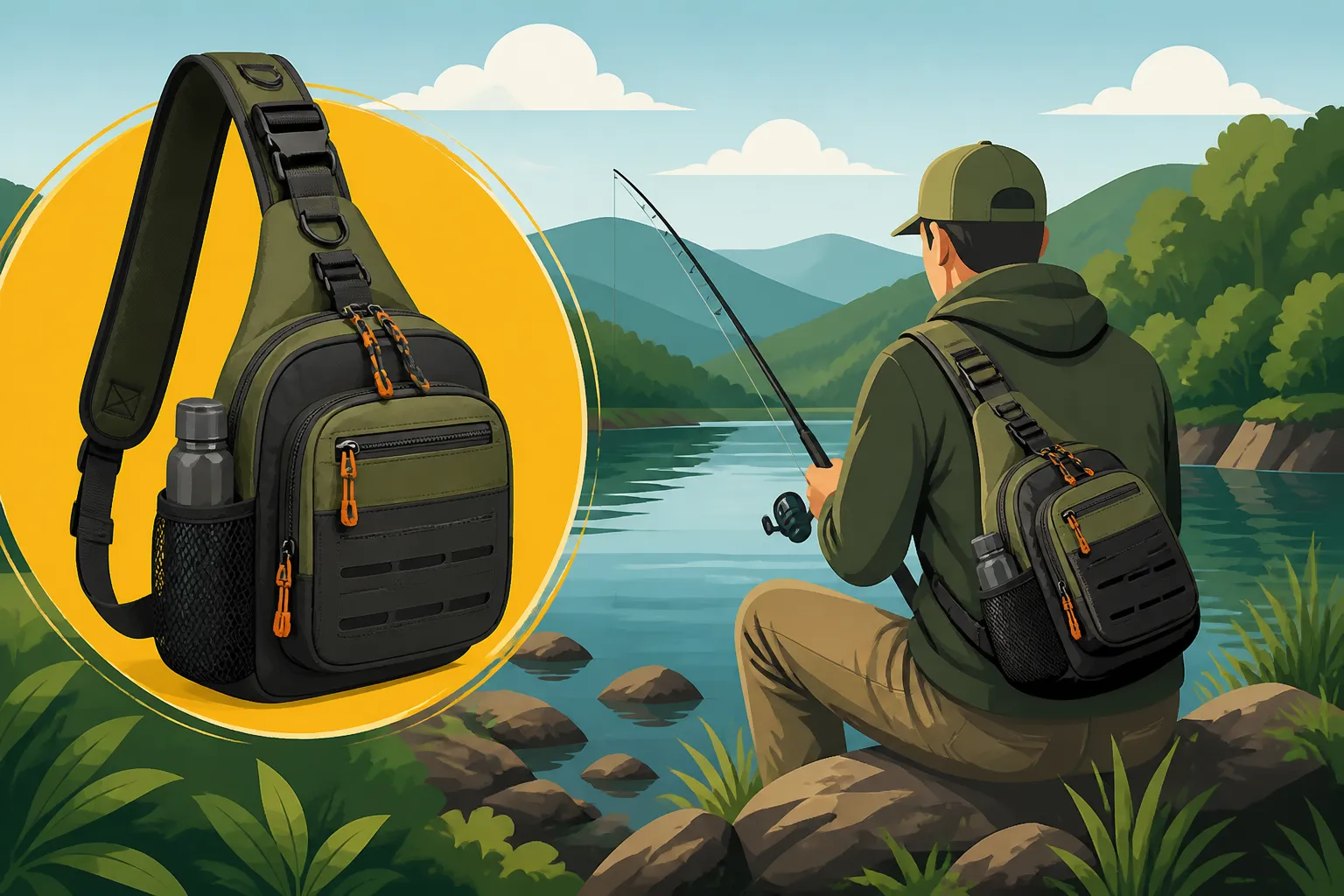
This is where the sling bag truly shines. Designed to be worn over one shoulder, typically across your back, the magic happens when you need to access your gear. With a simple, fluid motion, you can swing the bag around to your front, turning it into a mobile workstation right at your fingertips. Your main compartments and most-used pockets are now facing you, allowing you to grab a new lure, snip some line, or re-tie a knot without ever taking the bag off your body or setting down your rod. This hands-free, quick-access design is a revelation for bank anglers.
Picture yourself wading upstream in a West Virginia trout stream, like those found in Elk River Trout Fishing areas. You're constantly moving, reading the water, and making precise casts. A sling bag keeps all your fly boxes, tippet, and tools securely on your back, out of the way, until that moment you need to switch to a different nymph pattern. A quick swing, a seamless change, and you're back to fishing in seconds. This means more casts, less fumbling, and ultimately, a more productive and enjoyable day on the water.
Beyond the immediate access, sling bags offer a superior level of comfort and mobility compared to other options for foot-based anglers. Because they often ride high and snug against your back or side, they don't impede your movement as much as a backpack or traditional box. Many are designed with padded, ergonomic straps that distribute weight effectively, making long hikes to remote stretches of Best Fishing Rivers in West Virginia or secluded coves in Best Fishing Lakes in West Virginia far more manageable. This freedom to move, cast, and react without constantly engaging with your gear is what makes a sling bag a truly indispensable tool for the dedicated bank angler.
Key Features to Look For in a West Virginia Bank Fishing Sling Bag
Choosing the right sling bag isn't just about picking one that looks cool; it's about finding a practical partner for your fishing adventures. West Virginia's diverse fishing environments, from rugged mountain streams to sprawling lake shores, demand specific features to ensure comfort, functionality, and durability. Let's break down what really matters.
Comfort and Ergonomics for Long Hauls
When you're trekking across uneven terrain, scrambling over rocks, or hiking a few miles to get to a prime spot like certain access points within New River Gorge Fishing Guide, comfort is paramount. A good sling bag will feature a wide, padded shoulder strap that won't dig into your shoulder, even when the bag is fully loaded. Look for designs that incorporate breathable mesh on the back panel and the underside of the strap. This helps prevent sweat buildup and chafing, especially during warmer months or on strenuous climbs. The way the bag distributes weight is also crucial; some bags are designed to hug your body, keeping the load stable and preventing it from bouncing around as you move.
An adjustable, ambidextrous strap is a huge bonus, allowing you to switch shoulders or wear it on your preferred side for casting. Many effective sling bags also include a secondary, smaller stabilizer strap that clips around your waist or chest. This strap prevents the bag from swinging forward unintentionally when you bend over or cast aggressively, keeping your gear secure and stable while you focus on fishing. Without these ergonomic considerations, even the most organized bag can quickly become a hindrance, turning a peaceful hike to the water into an exercise in discomfort. You want a bag that feels like an extension of your body, not a burden.
Storage Capacity and Organization
The whole point of a fishing bag is to hold your gear, but a great sling bag goes beyond just holding; it organizes. You'll want a main compartment that's spacious enough to comfortably fit one or two standard tackle trays, commonly referred to as Plano 3600 or 3700 series-sized utility boxes. These trays are essential for keeping your lures, hooks, and weights neatly sorted. Beyond the main compartment, look for intelligently designed secondary pockets. These are perfect for smaller, frequently used items such as spools of leader material, a multi-tool or fishing pliers, a small first-aid kit, a headlamp for Night Fishing Techniques for West Virginia Lakes, and maybe even a granola bar or two.
Many sling bags also feature external attachment points, like D-rings, MOLLE webbing, or elastic cords. These are incredibly useful for securing items you need immediate access to or don't want inside the bag, such as a water bottle, a small landing net, or a pair of unhooking pliers. Some models even have dedicated rod holders or sleeves, which can be a lifesaver when you're navigating dense brush or carrying an extra rod. When browsing options at a local tackle shop or through online retailers like Bass Pro Shops or Amazon, pay close attention to the number, size, and type of pockets to ensure it matches your personal gear loadout and fishing style. A well-organized bag means less time searching and more time fishing.
Durability and Weather Resistance
West Virginia weather can be unpredictable, and our fishing spots often involve scrapes with rocks, branches, and mud. Your sling bag needs to stand up to these challenges. Look for bags constructed from robust materials like ripstop nylon or heavy-duty polyester, which offer excellent resistance to tears and abrasions. The stitching should be reinforced at stress points, ensuring the bag won't fall apart under the weight of your gear or the rigors of frequent use.
Beyond brute strength, water resistance is critical. Many quality sling bags feature a water-repellent coating (often DWR – Durable Water Repellent) on the exterior fabric, which will cause light rain or splashes to bead up and roll off, keeping your contents dry. Some even incorporate waterproof or highly water-resistant bases, preventing moisture from seeping in when you set the bag down on wet ground or in a shallow puddle. Pay attention to the zippers as well; corrosion-resistant, self-healing zippers (often YKK brand) are a sign of quality and will ensure smooth operation even after exposure to damp conditions. After all, nothing's worse than pulling out a rusty hook or a soggy sandwich because your bag failed to protect its contents.
Size and Weight Considerations
The beauty of bank fishing is its mobility, and your sling bag should enhance, not detract from, that mobility. This means carefully considering the bag's size and weight. An overly large sling bag, while offering maximum capacity, can quickly become bulky and defeat the purpose of being lightweight and agile. Think about the type of fishing you do most often. If you're primarily a minimalist trout angler, heading to streams with special regulations like those near Dry Fork Fishing Access Points, a compact bag designed for a couple of fly boxes and a few tools might be perfect.
On the other hand, if you're targeting larger species like muskie or spending a full day chasing smallmouth bass on a big river, you'll likely need a mid-sized to larger sling bag that can accommodate more tackle, heavier lures, and perhaps a larger water bladder. The key is to find a balance between carrying everything you need and avoiding the temptation to bring everything you might possibly need. A lighter, more streamlined bag will allow you to cover more ground, reach those tucked-away spots, and stay comfortable throughout your entire fishing expedition, even if it's a multi-species pursuit requiring various Best Tackle for West Virginia Smallmouth Bass or Best Gear for West Virginia Trout Fishing.
Top Picks for West Virginia Bank Fishing Sling Bags (General Categories)
When you're eyeing a new sling bag for your West Virginia adventures, it helps to think in terms of categories, because what's perfect for a quick trout stream jaunt isn't always right for a full day on the Ohio River. Different anglers have different needs, and thankfully, the market offers a range of options to suit various styles and gear requirements.
Lightweight & Minimalist Options
For those quick strikes, the "run-and-gun" anglers, or anyone targeting species like brook trout in smaller, easily wadeable streams, a lightweight and minimalist sling bag is your best friend. These bags are designed to carry just the essentials without being cumbersome. Think of them as extensions of your pockets, but far more organized and comfortable. They typically feature one main compartment, just enough for a small tackle box or a few fly boxes, a leader spool, and a couple of essential tools like nippers and forceps.
The advantage here is pure freedom. You hardly notice you’re wearing it, allowing for unhindered casting and agile movement through dense woods or along slippery stream banks. They’re ideal for a short evening trip after work, or for exploring lesser-known tributaries where you don't need a huge arsenal of tackle. These smaller bags are perfect for a trip to some of the pristine West Virginia stocked trout waters where you'll be moving frequently to find the best spots. When you're just focused on a handful of proven lures or flies, why weigh yourself down with anything more? Many excellent options in this category can be found browsing reputable fishing gear retailers, both in physical stores and online.
Mid-Size & Versatile Sling Bags
This category represents the sweet spot for the majority of West Virginia bank anglers. Mid-sized sling bags offer an excellent balance between generous storage capacity and manageable portability. They're designed to comfortably hold two to three standard tackle trays, giving you enough versatility to target multiple species or to have a good range of options for a full day of fishing. This size is perfect if you’re planning on spending several hours chasing smallmouth bass on the Greenbrier River Fishing Guide or hitting up a local lake for crappie and bluegill.
These bags usually come equipped with multiple internal and external pockets, allowing for superior organization of everything from soft plastics and crankbaits to a small lunch and a water bottle. Many feature external straps or pockets specifically designed for items like a small net, a pair of pliers, or a multi-tool, ensuring quick access without opening the main compartments. They often boast a more robust construction than their minimalist counterparts, with slightly thicker materials and more ergonomic padding for extended wear. For most anglers looking for a reliable, all-around bank fishing companion, a versatile mid-size sling bag found at a place like Bass Pro Shops or a wide selection on Amazon will hit the mark.
Heavy-Duty & Feature-Rich Sling Packs
For the dedicated angler who might be tackling challenging conditions, targeting larger species like muskie, or simply spending an entire day in a remote area requiring more gear, the heavy-duty, feature-rich sling pack is the ultimate choice. These are the workhorses of the sling bag world, built for maximum capacity and resilience. While they lean more towards "pack" than "bag" in terms of size, they retain the crucial sling design for quick rotation and access. They can often accommodate three or more larger tackle trays, along with substantial space for rain gear, a full hydration bladder, and a wider array of tools and accessories.
These larger packs are often constructed from the toughest materials, with reinforced seams, rugged zippers, and sometimes even a rigid, waterproof bottom to protect against damp ground. They’ll have an abundance of external loops, straps, and pockets for specialized gear like large muskie baits, extra spools of line, or even a compact camera. While heavier, their superior padding and often a more comprehensive stabilization system (like an additional waist strap) ensure that the weight is distributed as comfortably as possible during long treks to remote spots. If your West Virginia fishing adventures demand a serious amount of gear and maximum preparedness, exploring the high-end offerings in this category will provide the robust solution you need.
| Sling Bag Category | Capacity (Tackle Trays) | Ideal Use Case | Key Features | Typical Mobility |
|---|---|---|---|---|
| Lightweight/Minimalist | 1-2 small | Quick trips, small streams, wade fishing | Essential pockets, compact, light materials | Very High |
| Mid-Size/Versatile | 2-3 standard | Day trips, varied species, river/lake banks | Multiple pockets, external attachments, comfort padding | High |
| Heavy-Duty/Feature-Rich | 3+ standard/large | Long excursions, muskie, large rivers, all-weather | Robust construction, hydration, extra tool loops, advanced stabilization | Moderate to High |
How to Pack and Use Your Sling Bag for Maximum Efficiency
Having the best sling bag means very little if you don't pack it smartly and use it effectively. The goal is to create a system that allows for seamless access to your gear, keeps you comfortable, and ultimately enhances your time on the water. A poorly packed bag can quickly become just as frustrating as a traditional tackle box.
Strategic Gear Placement
Think about what you use most often. Those items should be in the most accessible pockets when you swing the bag to your front. For instance, your line cutters, pliers, and perhaps a small box of frequently changed hooks or jig heads should go in a readily available external pocket or attached to a D-ring on the strap. Less frequently used items, like spare line spools, a small first-aid kit, or snacks, can reside in deeper, more secure compartments. Your tackle trays, which hold the bulk of your lures, should be stacked in the main compartment in a logical order, perhaps by lure type (topwater, crankbaits, jigs) or by target species.
When it comes to weight, it's a good rule of thumb to place heavier items closer to your body and higher up in the bag. This helps with overall balance and reduces strain on your shoulder and back. For example, a water bottle in a side mesh pocket might be heavier than a soft plastic bag, and placing it closer to your body's center of gravity will feel more comfortable. Practicing a few times at home, packing and unpacking, and swinging the bag around can really help you dial in your personal optimal setup. This kind of thoughtful organization ensures that when you're on the water, whether it’s a calm lake or a rushing tributary, every movement you make is purposeful.
Adjusting for Comfort and Mobility
A sling bag is designed to be worn, not just carried, so proper adjustment is crucial for both comfort and mobility. Start by adjusting the main shoulder strap so the bag sits snugly against your back without sagging or bouncing excessively. It shouldn't be so tight that it restricts movement, but loose enough that you can swing it to your front with ease. The bag should ride high enough that it doesn't hit your legs when you're walking or wading, especially important if you’re navigating slippery rocks or steep embankments.
If your bag has a secondary stabilizer strap, make sure to utilize it. This small strap, often clipping around your waist or chest, is a game-changer for keeping the bag from shifting or swinging wildly as you cast, bend down, or navigate difficult terrain. It essentially converts your single-strap sling into a more stable, albeit temporary, two-point system. Practice the "swing motion" several times: reach back, grab the bag, pull it to your front, access your gear, and then swing it back. You want this to become second nature, a smooth, fluid movement that doesn't interrupt your fishing flow. This mastery of the bag's mechanics is key to truly enjoying the hands-free benefits of the sling design.
Essential Bank Fishing Accessories to Carry
Beyond your core tackle, there are a handful of accessories that can make or break a bank fishing trip in West Virginia. Many of these are small enough to tuck into external pockets or clip onto attachment points. Always carry a good pair of line cutters or small scissors and a pair of long-nose pliers or forceps for hook removal. A small, waterproof first-aid kit, containing band-aids, antiseptic wipes, and pain relievers, is non-negotiable for minor cuts or scrapes when you're away from the car.
Hydration is key, so a reusable water bottle or even a small hydration bladder in a dedicated pouch is essential, especially during warmer months. Sunscreen and insect repellent are also vital, depending on the season and location. For early morning or late evening trips, a compact headlamp will prove invaluable, not just for rigging up but also for safe navigation. If you plan to keep any fish, a small, collapsible measuring tape and a portable digital scale are great additions. And of course, don't forget your West Virginia fishing license, whether it's a physical copy or stored digitally on your phone, as covered in Printing or Carrying a Digital Fishing License in West Virginia, along with a copy of West Virginia Fishing Regulations Explained for quick reference.
Disclaimer
This article is for general informational purposes only and does not constitute professional advice. Laws, prices and regulations vary by location and change over time. Consult a qualified professional for guidance on your specific situation.