Best anchor for fishing moving river current
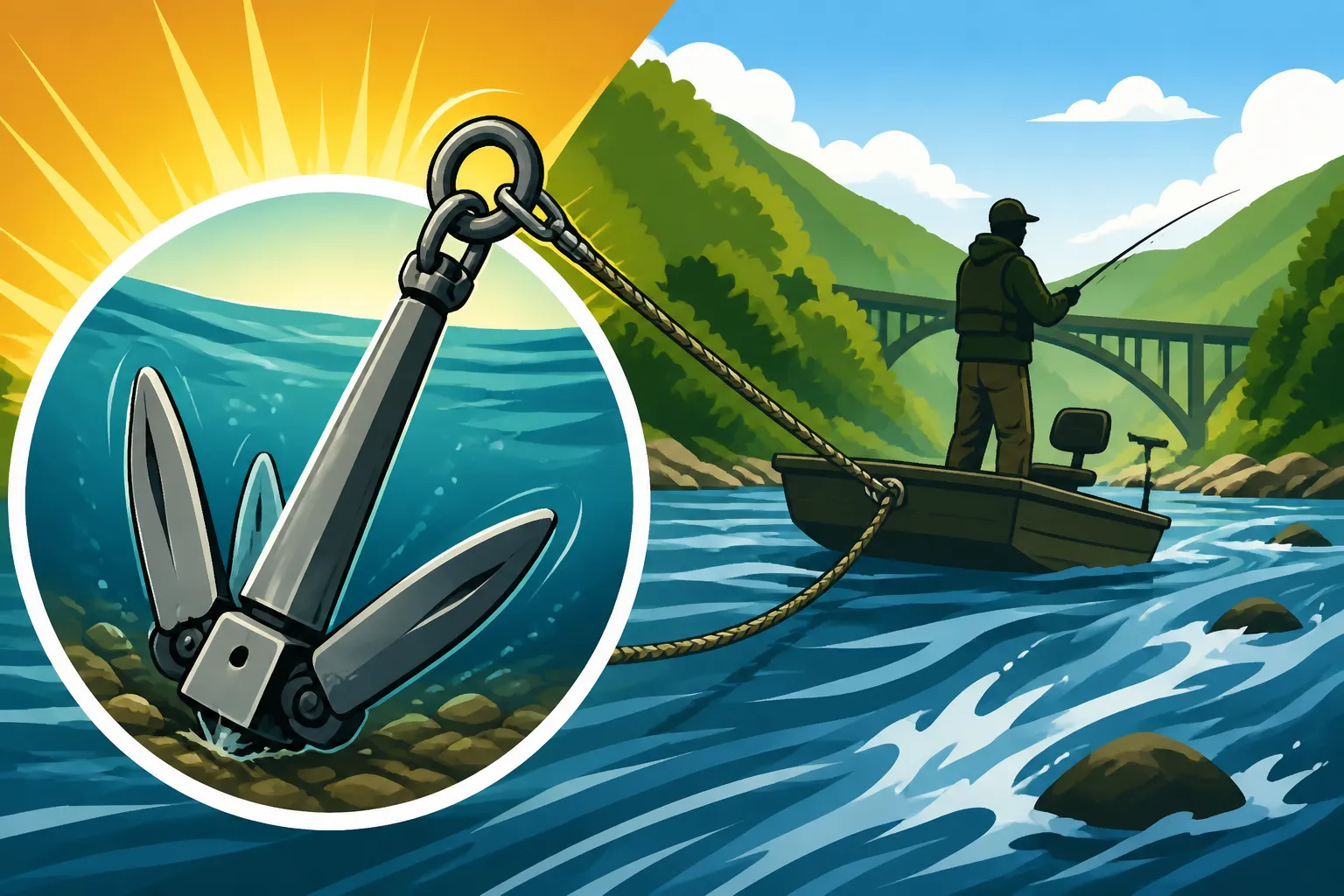
If you've ever tried to hold your position in a West Virginia river, whether it's the swift currents of the New River or the steady flow of the Ohio, you know the frustration. Your boat slips, your lure drifts out of the strike zone, and you spend more time repositioning than fishing. This guide is all about helping you find the perfect anchor system that will grip the varied river bottoms of our beautiful state and keep you exactly where you want to be, so you can focus on reeling in that trophy catch.
Understanding the Dynamics of Moving Water
Fishing in a river isn't like fishing a placid lake; the constant flow adds a whole new layer of challenge to staying put. West Virginia is blessed with an incredible network of rivers, from roaring whitewater sections to lazy, meandering stretches, and each presents its own unique set of anchoring considerations. It's not just about dropping something heavy over the side and hoping for the best; it's about understanding the forces at play and choosing the right tool for the job.
The Challenges of Varied Flow and Bottoms
Our rivers, like the New River, the South Branch of the Potomac, or even the mighty Ohio River, don't just have one type of current. You'll encounter swift rapids, eddy lines, deep channels, and slow-moving backwaters, sometimes all within a short stretch. This variability means an anchor that works perfectly in one spot might be useless or even dangerous in another. Picture trying to hold a small jon boat in the main current of the Kanawha River with a tiny mushroom anchor – it's just not going to happen, and you could easily find yourself in a tricky situation.
Beyond the current, the riverbed itself is a constantly changing puzzle. You might have stretches of solid bedrock that an anchor can't penetrate, or areas with loose gravel, sand, mud, or even large boulders and submerged timber. A standard claw anchor, fantastic for sandy lakebeds, will often slide uselessly across rocks or get hopelessly snagged in submerged roots in a river. Understanding the likely bottom composition of your chosen fishing spot is paramount to selecting an anchor that will actually dig in and hold. This is especially true when exploring different sections of our Best Fishing Rivers in West Virginia.
Prioritizing Safety in River Anchoring
Safety isn't just a suggestion; it's the golden rule, especially when dealing with moving water. An improperly deployed or chosen anchor can turn a peaceful fishing trip into a terrifying ordeal in a heartbeat. Imagine your anchor getting irrevocably snagged in fast current, potentially swinging your boat broadside into an obstacle or even capsizing it. That's a nightmare scenario that no angler wants to face.
Always ensure your anchor line is in good condition, free of frays, and long enough to provide adequate scope (more on that later). Never tie your anchor line directly to the stern of your boat in a strong current, as this can pull the transom under, leading to swamping. Instead, use a bow cleat or, even better, an anchor trolley system that allows you to shift the pull point. And of course, always wear your life jacket, especially when anchoring in areas with significant current. Understanding West Virginia Boating Laws for Anglers is also key to safe river navigation.
Exploring Different Anchor Systems for Moving Water
When it comes to anchoring in a river, you've got more options than just a basic grapple or mushroom anchor you might see on a small lake boat. The unique challenges of current and varied bottom types have led to some specialized designs that are far more effective. Let's break down the main contenders you'll want to consider for your West Virginia adventures.
Purpose-Built River Anchors
For serious river anglers, especially those in drift boats or larger jon boats, specialized river anchors are often the go-to. These aren't your average lake anchors; they're designed with heavy current and rocky or gravelly bottoms in mind.
One of the most effective types is the pyramid anchor or a similar "box" or "wreck" anchor. These are typically made of heavy cast iron or lead, shaped like a pyramid or a box, and have a very low center of gravity. Their design allows them to dig into soft bottoms like sand and gravel, but more importantly, their heavy, compact shape helps them wedge between rocks and boulders on harder riverbeds. They don't have flukes that can easily break or bend, and their smooth sides make them less prone to snagging on sharp edges, although snags are still a possibility. Many river anglers swear by these for their ability to hold steady in strong flows. You can often find a good selection of these heavy-duty anchors at outdoor retailers like Bass Pro Shops or even through online vendors like Amazon, just be sure to check the weight ratings for your specific boat size.
Another option, particularly if you're dealing with very muddy or silty bottoms, might be a fluke anchor with aggressive, sharp flukes, but these are less common and often less effective in mixed rocky riverbeds compared to their pyramid counterparts. The key for river anchors is weight and a design that can either penetrate or wedge securely without having too many protrusions that become snag magnets.
Drag Chains and Spud Poles: Specialized Alternatives
Sometimes, a traditional anchor isn't the best solution, or you need something to complement it. This is where drag chains and spud poles come into play, offering different approaches to holding position.
Drag chains are exactly what they sound like: a heavy length of chain, often 15-30 feet or more, that you simply deploy off the bow or stern. They don't "anchor" in the traditional sense by digging in. Instead, they create immense drag against the river bottom, slowing your drift significantly or even stopping you in moderate currents. They are fantastic for precisely controlling your drift speed when fishing seams or long runs, allowing you to present a lure or fly at just the right pace. The beauty of a drag chain is its simplicity and its relative resistance to snagging. While it might get caught momentarily, the flexible nature of the chain usually allows it to pull free with a change in boat angle. They're particularly popular with kayakers and smaller craft navigating our Best Kayaks for West Virginia Fishing spots, offering an elegant solution for subtle current control.
Spud poles, also known as stake-out poles, are essentially long, rigid poles that you push directly into the riverbed to hold your position. They are most effective in shallower water with soft bottoms (sand, mud, muck), making them ideal for small boats, kayaks, or canoes in quieter river sections or backwaters. The advantage is silent, instant anchoring and easy repositioning without dealing with ropes or lines. The main downside is their limitation to shallow water and soft bottoms; you won't be spudding down in a deep, rocky channel. Many Best Jon Boats for Shallow Rivers utilize internal spud pole systems for quick, quiet stops. They're incredibly useful when you're working a specific weed bed or structure in an eddy.
Essential Considerations for Choosing Your River Anchor
Selecting the right anchor isn't a one-size-fits-all decision, especially when you're tackling West Virginia's diverse rivers. There are several critical factors that need to weigh into your choice, impacting both the effectiveness and safety of your anchoring system. Ignoring these can lead to frustration, lost gear, or worse.
Matching Anchor to Boat Size and Weight
This is perhaps the most fundamental consideration. A small kayak or canoe weighing a few hundred pounds wet needs a vastly different anchor than a 16-foot jon boat with a motor and gear, or a larger drift boat. Trying to use a lightweight 3-pound anchor for a substantial boat in moving water is like trying to hold an elephant with a string – it's just not going to work.
For kayaks and very small craft (up to 12-14 feet), a 3-5 pound folding grapple anchor or a small 8-10 pound pyramid anchor might suffice in moderate current. However, as you scale up to 14-16 foot jon boats, larger canoes, or light drift boats, you'll need to increase that weight significantly. Think in the range of 15-25 pounds for a pyramid or river anchor, possibly more for very strong currents or larger vessels. The general rule is: when in doubt, go a little heavier, especially for river conditions. A heavier anchor provides more holding power and stability, reducing the chances of dragging.
Bottom Composition: The Riverbed's Secret
As we touched on earlier, the type of material at the bottom of the river is a huge determinant of an anchor's effectiveness. West Virginia rivers offer a mosaic of bottom types, and your anchor needs to be able to interact with them effectively.
- Rock/Gravel: This is common in many of our mountain streams and larger rivers. Fluke anchors often won't dig in and will just slide. Pyramid or box anchors are excellent here because their weight and shape allow them to wedge securely between rocks. A drag chain also works well by creating friction across the uneven surface.
- Sand/Silt/Mud: In slower sections, eddies, or some of the larger river systems like parts of the Ohio, you'll find softer bottoms. A fluke anchor can work here, but often a pyramid anchor or a heavier mushroom anchor will also embed well. Spud poles are ideal for shallow, soft bottoms.
- Submerged Timber/Weeds: These are the bane of any angler's existence when it comes to anchoring. Most anchors will get hopelessly snagged. This is where breakaway anchor systems become invaluable. A drag chain might work by pulling over some obstacles, but always be prepared for the possibility of getting stuck.
The Power of Scope: It's All in the Angle
"Scope" refers to the ratio of your anchor rode (rope + chain) length to the depth of the water. This is perhaps the most misunderstood aspect of anchoring, and it's absolutely critical for an anchor to hold properly, especially in current. A short scope means your anchor line pulls too vertically, lifting the anchor off the bottom instead of allowing it to dig in horizontally.
The general recommendation for anchoring in moving water is a scope of at least 7:1, meaning for every 1 foot of water depth, you need 7 feet of anchor rode deployed. If you're in 10 feet of water, you should have at least 70 feet of line out. In very strong currents, you might even need more. Many anglers add a short length of heavy chain (5-10 feet) between the anchor and the rope, known as the "leader chain." This chain helps the anchor lie flat and dig in, prevents chafe on the rope, and provides additional weight for a better holding angle. Skimping on scope is a surefire way to have your anchor drag, no matter how heavy or well-designed it is.
Retrieval Methods and Snag Avoidance
The joy of a perfectly deployed anchor can quickly turn to despair when it refuses to come up. Snagging your anchor is a common and frustrating problem in rivers with rocky or debris-laden bottoms. Losing an anchor isn't just an inconvenience; it's an environmental hazard and an unnecessary expense.
Consider anchors with a trip line attachment point or a breakaway system. A trip line is a separate, lighter line attached to the crown (the top) of the anchor, allowing you to pull it from the opposite direction if it gets snagged by the flukes. A breakaway system uses a weak link (like a zip tie) at the crown, with the main rode attached there, and a stronger line running back to the shank. If it snags, you break the weak link, and pull the anchor free from the crown. These systems can be game-changers, saving you time, money, and preventing environmental pollution. Brands like Bass Pro Shops and Amazon often sell anchor retrieval rings and kits that can help convert a standard anchor into a more snag-resistant setup.
Here’s a quick comparison of common anchor types for river fishing:
| Anchor Type | Ideal Bottoms | Pros | Cons | Best For |
|---|---|---|---|---|
| Pyramid | Rock, Gravel, Sand, Mud | Excellent holding power; wedges well | Heavy; can still snag in severe debris | Jon boats, drift boats, large kayaks in rivers |
| Grapple | Rock, Weeds, Sand | Folds for storage; good in lighter current | Flukes can bend; prone to snags | Kayaks, canoes, small boats in moderate current |
| Mushroom | Mud, Silt, Weeds | Simple, inexpensive | Poor holding in current, especially on rock | Small kayaks in very slow water/backwaters |
| Drag Chain | Any bottom | Controls drift, minimal snagging | Doesn't truly "anchor"; only slows drift | Kayaks, canoes, small boats for drift control |
| Spud Pole | Soft Mud, Sand (shallow) | Silent, instant stop, easy repositioning | Limited to shallow, soft bottoms | Kayaks, small boats in backwaters/shallow areas |
Recommended Anchor Systems for West Virginia River Anglers
Okay, so we've talked about the challenges and the different types of anchors out there. Now let's get down to some practical recommendations for making sure you stay put in the currents of our beautiful West Virginia waterways. What works best for holding your craft steady against the relentless pull of a river?
The Dependable Pyramid Anchor for General River Use
For most anglers navigating West Virginia's medium to large rivers in a jon boat, drift boat, or even a larger fishing kayak, the pyramid anchor (or a similar rectangular box-style river anchor) is often the unsung hero. Its design is deceptively simple but incredibly effective. The heavy, compact shape allows it to dig into softer bottoms like gravel and sand, but where it truly shines is on those rocky riverbeds you'll encounter everywhere from the Cheat River to the Gauley. Its flat sides and concentrated weight allow it to wedge securely between rocks and boulders, providing a stable hold that a fluke anchor simply can't match.
I've personally seen these anchors hold strong in some pretty feisty currents on the New River, keeping anglers locked onto prime smallmouth bass habitat. When choosing one, focus on the weight, as that's your primary holding power. For a typical 14-16 foot jon boat, look for something in the 15-25 pound range. Kayakers might opt for a 10-15 pound version, depending on their kayak's weight and the current strength. You can find these readily at reputable marine or outdoor stores. Sometimes, a quick search on Amazon or a trip to your local Bass Pro Shops can yield excellent options, often at competitive prices. Don't forget to pair it with a good length of quality anchor rope and a few feet of heavy chain to ensure proper scope and maximize its holding potential.
Grapple and Folding Anchors for Lighter Craft
If you're primarily fishing from a kayak, canoe, or a very small johnboat, especially in less extreme currents or needing something compact, a grapple anchor, sometimes called a grapnel or folding anchor, is a fantastic choice. The beauty of these anchors lies in their portability and versatility. Their multiple prongs are designed to hook into rocky crevices or grip onto vegetation, providing a decent hold without excessive weight.
They fold up neatly, taking up minimal space in your Best Kayak for the New River or canoe, which is a huge bonus when storage is at a premium. While they might not offer the brute holding power of a heavy pyramid anchor in a raging torrent, they are more than adequate for many of West Virginia's fantastic smaller rivers and streams. They're also less likely to get permanently snagged compared to a traditional fluke anchor, as their prongs can sometimes be bent free. Just be sure to always carry a sturdy anchor retrieval ring or a dedicated breakaway system, because even these can get stuck in the wrong spot. For light duty, they are hard to beat.
Enhancing Your System: DIY Solutions and Breakaway Rigs
Sometimes, even the best store-bought anchor needs a little help, or you might find yourself needing a specialized solution. This is where clever anglers get creative, often focusing on making their system more snag-resistant.
One popular DIY enhancement is a breakaway anchor rig. This involves attaching your main anchor line to the crown of your anchor (the top part, where the shank meets the flukes or head) with a weak link, like a heavy-duty zip tie or a piece of light mono fishing line. Then, you run a shorter, stronger piece of line from the anchor's shank (the main eye) up along the anchor's body and connect it to your main anchor line above the weak link. If your anchor gets snagged, you simply pull harder, breaking the weak link at the crown. This allows you to retrieve the anchor by pulling it out backward, flukes first, which often frees it from whatever it was stuck on. This simple modification can save you countless anchors and a lot of frustration, especially when fishing tricky spots.
Another simple but effective enhancement is adding more heavy chain to your anchor rode. Even if you have a pyramid anchor, a longer section of heavy chain (say, 10-15 feet for a larger boat) will help your anchor lay flatter, increasing its effective scope and making it dig in more aggressively. It also provides extra weight to keep the anchor down and prevent it from "bouncing" in heavier current. These small additions, while not always glamourous, make a world of difference when you're trying to keep your boat precisely positioned to hit those fish-holding pockets. Remember, a robust Best Anchor System for River Fishing is a combination of the right anchor, adequate rode, and smart rigging.
Disclaimer
This article is for general informational purposes only and does not constitute professional advice. Laws, prices and regulations vary by location and change over time. Consult a qualified professional for guidance on your specific situation.