Best landing net size for trout
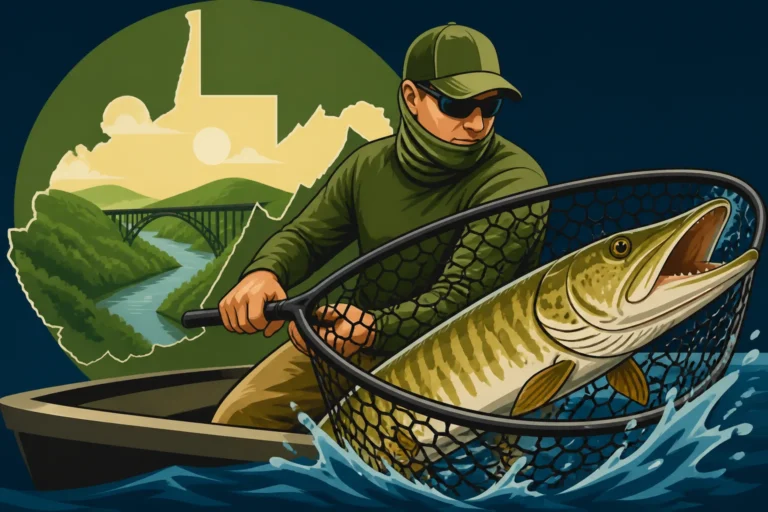
There's nothing quite as frustrating as finally hooking into a beautiful West Virginia trout, playing it perfectly, only to realize your net is either too small to safely scoop it or so unwieldy it spooks the fish entirely, leading to a disheartening loss. Choosing the right landing net isn't just about convenience; it's about ethical angling and ensuring a smooth, stress-free release, especially with West Virginia's delicate wild and stocked trout. This guide will help you navigate the often-overlooked world of trout net sizes and features, ensuring you're perfectly equipped for your next mountain stream or lake adventure in the Mountain State.
Why Net Size Matters More Than You Think
When you're out on a scenic West Virginia stream, the last thing you want to be thinking about is whether your gear is up to snuff, especially when that trophy fish is on the line. But the truth is, your landing net plays a far more critical role than just scooping up your catch. It’s an integral part of responsible angling, influencing everything from the fish's health to your personal success and enjoyment on the water.
Ethical Catch and Release: Protecting Our Wild Trout
Many of us in West Virginia practice catch and release, especially when we're pursuing native brook trout or the larger, wily brown trout that call our pristine streams home. An undersized or improperly designed net can cause significant stress and harm to a fish you intend to release. When a fish thrashes in a small net, or gets tangled in abrasive mesh, it can strip away its protective slime coat, leading to infections, or cause fin and gill damage. The goal is a quick, efficient, and gentle landing that minimizes handling time and trauma. A net that's appropriately sized for the fish you expect to encounter allows you to cradle the fish securely, giving you control without crushing it, and facilitating a swift, safe release back into the water. This is especially true for delicate trout species. For more on this, check out West Virginia Catch and Release Rules for Trout.
The Frustration of an Undersized Net
Picture this: you've spent hours hiking into a remote section of the Cranberry River, carefully presenting flies, and finally, a gorgeous, fat rainbow trout takes your offering. You fight it patiently, bringing it close, only to find your small, backpack-style net is barely big enough to contain its head, let alone its entire body. The fish flaps wildly, bounces off the rim, and with a splash, it's gone. We've all been there, and it's absolutely heartbreaking. An undersized net means less control, more frantic thrashing from the fish, and a much higher chance of losing your prize right at the critical moment. It can lead to tangled lines, hooks embedded in the net, and even broken rods if the fish makes a last-ditch run while partially netted. It's an unnecessary gamble that can turn a triumphant moment into a profound disappointment.
The Burden of an Oversized Net
On the flip side, bringing a net that's far too large for the average trout in the waters you're fishing can be just as problematic, though for different reasons. Imagine trying to navigate a tight, overgrown rhododendron tunnel along a small mountain stream with a net that feels like it belongs on a bass boat. It snags on every branch, gets tangled in your pack, and constantly interferes with your casting arm. When wading, a massive net creates a lot of drag in the current, making it difficult to maneuver and tiring to carry. It can even spook fish if you have to awkwardly wrestle it into position. While a big net might seem like a "better safe than sorry" approach, it often leads to frustration, inefficiency, and can detract from the serene experience of being on the water. Balance is key, and portability for your specific fishing style in West Virginia is paramount.
Understanding Trout Net Dimensions: What the Numbers Mean
To make an informed decision about your next trout net, it helps to understand the terminology and what the various measurements actually refer to. This isn't rocket science, but knowing the specifics can help you visualize how a net will perform in different situations.
Hoop Size and Shape: The Business End
The "hoop" is the frame of the net, and its size and shape are arguably the most crucial dimensions. This is where the fish goes! You'll typically see measurements expressed as width and sometimes length.
- Width: This refers to the widest part of the net's opening. For small mountain streams and pan-sized stocked trout, a hoop width of 8-10 inches might be perfectly adequate. These are ideal for the average rainbow or brook trout you'll encounter in many West Virginia creeks. If you're targeting larger holdover trout or brown trout in bigger rivers like the Elk or the South Branch of the Potomac, you'll want something in the 10-14 inch range, or even 16 inches for genuine trophy potential. This extra width gives you a larger target and more margin for error when a fish makes its final surge.
- Shape: Hoops come in various shapes:
- Round: Classic, simple, and effective for general use.
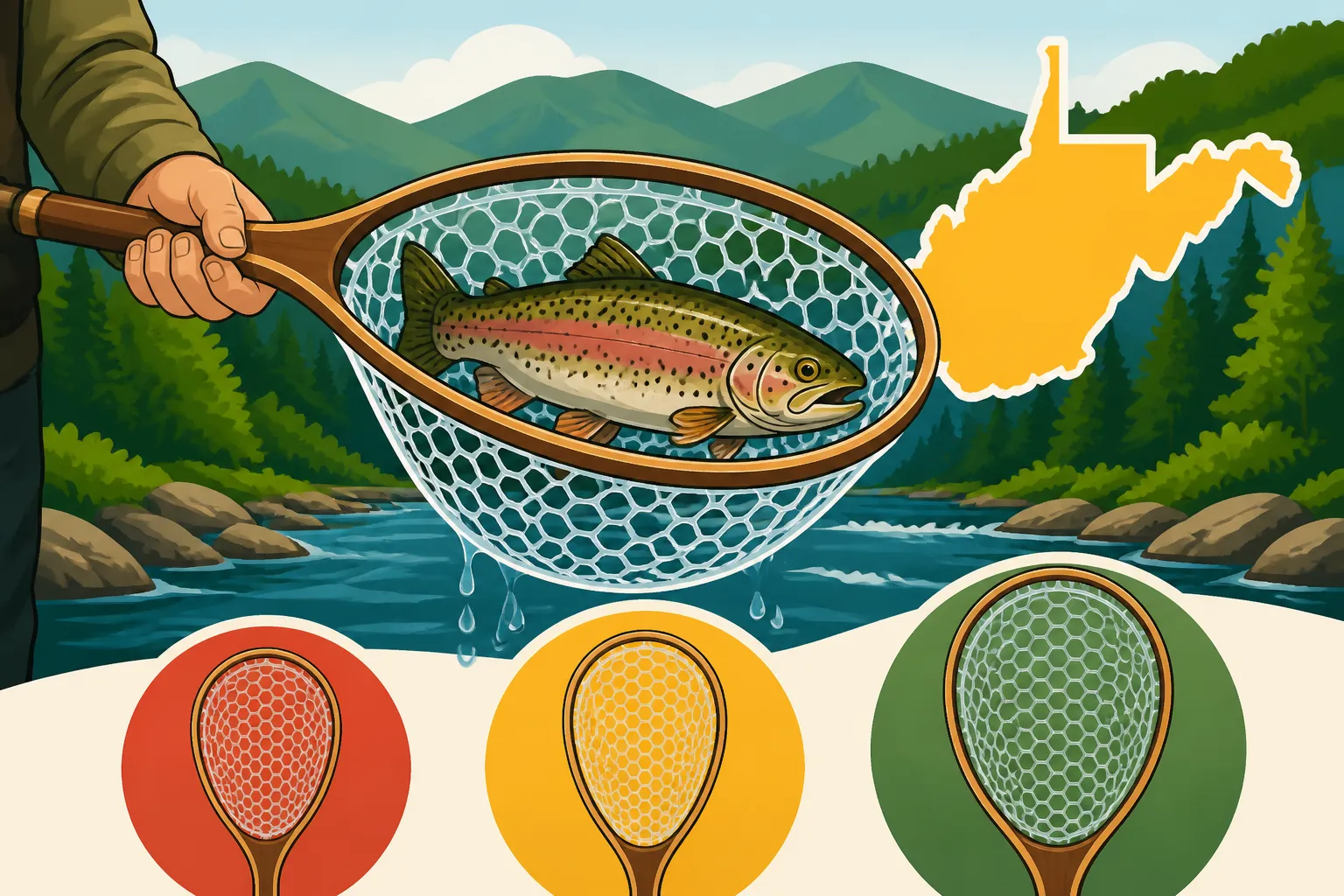
- Teardrop/Pear: Tapers towards the bottom, offering a slightly longer reach and often fitting better against your body when carried. Many wading nets are this shape.
- Rectangular/Square: More common for boat nets or larger bass/walleye nets, less so for dedicated trout nets due to their bulk.
When considering hoop size, think about the average size of the fish you're likely to catch, but also leave a little room for that unexpected lunker. A net that can accommodate 90% of your catches comfortably is a good starting point.
Handle Length: Stream vs. Bank vs. Boat
The handle length dictates how you'll carry and deploy your net, directly impacting your mobility and reach.
- Short Handles (6-12 inches): These are the workhorses for wading anglers in smaller streams or rivers. They're compact, lightweight, and can be easily tucked into a wading belt, clipped to a D-ring on your vest, or carried with a magnetic release on your back. They offer great maneuverability in tight quarters and are perfect for quickly scooping fish near your feet. For targeting brook trout in high-elevation streams, a short-handled net is almost always the way to go.
- Medium Handles (12-24 inches): A bit more versatile, these handles offer slightly more reach, which can be beneficial when fishing from a bank with a gentle slope or in a slightly wider river where you might need to lean out a bit further. They can still be carried while wading, though they might feel a little less nimble than their shorter counterparts.
- Long/Extendable Handles (24 inches up to several feet): If you frequently fish from a boat, a high bank, or steep rocky shorelines, a net with a long or telescoping handle is indispensable. These provide the leverage and reach needed to land fish that are further away or below you. While less practical for aggressive wading, they are perfect for lake fishing at places like Summersville Lake or Bluestone Lake, especially if you're targeting larger trout or hybrid striped bass that might be cruising deeper. Many longer handles will have an extendable feature, allowing them to collapse for easier transport and extend when needed.
Netting Material and Depth: The Gentle Touch
The material and depth of the net itself are crucial for fish health and preventing frustrating tangles.
- Rubberized/Silicone Netting: This is the gold standard for trout fishing, especially for catch and release. Rubberized mesh is incredibly soft, protecting the fish's delicate slime coat, which is its primary defense against disease. Hooks rarely get tangled in rubber, making for incredibly fast and smooth de-hooking and release. They also don't absorb water or fish odors like traditional nylon nets. This is truly the best option for trout, hands down.
- Knotless Nylon Mesh: A step up from knotted mesh, knotless nylon still offers decent protection and fewer tangles than older styles. It's lighter and often more affordable than rubber, but still not quite as gentle on the fish.
- Knotted Nylon Mesh: Best avoided for trout, particularly if you intend to release them. The knots can scrape off slime, damage fins, and hooks often get hopelessly snagged, leading to prolonged handling and stress for the fish.
- Net Depth: The depth of the net bag should be sufficient to completely encompass the fish once it's in. A shallow net allows a struggling fish to flop right back out. A deep, generous bag, particularly with rubberized mesh, cradles the fish securely, preventing escapes and giving you ample time to remove the hook gently. For a 12-16 inch trout, a net depth of at least 10-12 inches is usually adequate.
Matching Your Net to Your West Virginia Trout Fishing Style and Target Species
West Virginia offers such a diverse range of fishing experiences, from tiny brook trout streams to large impoundments, that a one-size-fits-all net rarely works for every situation. Tailoring your net choice to your specific angling adventure will enhance your effectiveness and the health of the fish.
For Small Mountain Streams and Brook Trout
When you're bushwhacking through dense rhododendron thickets to reach those hidden pockets where native Brook Trout: West Virginia's Native and State Fish dart among mossy rocks, portability is paramount. You'll be doing a lot of wading and navigating tight cover.
- Ideal Net: A compact, lightweight net with a short, fixed wooden or composite handle (6-10 inches) and a hoop size in the 8-10 inch range. The netting must be rubberized or clear silicone. These nets are designed to be carried comfortably on your back with a magnetic release or clipped to your wading belt, staying out of the way until needed. They're perfect for quickly scooping a colorful 6-10 inch brook trout from a tight plunge pool. Brands like Fishpond and Rising often make excellent nets for this scenario, and you can often find great options on Amazon or at a specialty fly shop.
For Stocked Trout Streams and Medium-Sized Rivers
Most West Virginia anglers will spend a good amount of time on the popular stocked trout streams like Shavers Fork, Williams River, or catch-and-release sections of the Cranberry. Here, you're likely to encounter a mix of freshly stocked rainbows, browns, and golden rainbow trout, often in the 10-16 inch range. You might be wading, but often also fishing from accessible banks.
- Ideal Net: A slightly larger net with a hoop size of 10-14 inches and a handle length between 12-24 inches, possibly with a short extension. A teardrop or pear-shaped hoop is very common here. This size offers enough capacity for larger stocked fish while still being manageable for wading. A rubberized or silicone net is still the top choice for fish health and hook-free handling. If you’re targeting these waters, consider reading up on Spring Trout Fishing Techniques for West Virginia Streams for more specific advice. A good all-around option would be something found at your local Bass Pro Shops or online that offers a comfortable, non-slip grip, perfect for wet hands.
For Trophy Trout Waters and Larger Fish
West Virginia does have its share of trophy trout waters, particularly in some of the larger rivers and impoundments where brown trout can grow to impressive sizes, or in lakes where large rainbows and golden rainbows thrive. Think about the potential for true lunkers in the Elk River's trophy section, or the larger fish found in lakes like Sutton or Summersville.
- Ideal Net: For these scenarios, you'll want a more robust net. Look for a hoop size of 12-16 inches, potentially larger if you're genuinely pursuing state record contenders. A longer handle, perhaps 24-48 inches with a telescoping feature, will give you the reach needed to land bigger fish from a boat or steep bank. The netting should absolutely be deep, rubberized, and strong to handle powerful, heavy fish. While you might sacrifice a bit of portability, the added capacity and reach are crucial. When considering equipment for these bigger fish, it's a good idea to research Best Gear for West Virginia Trout Fishing to ensure your whole setup is prepared. If you're specifically thinking of the Elk, Elk River Trout Fishing has some great tips.
General Purpose vs. Specialized Nets
Many anglers start with one net and try to make it work for everything. This is fine for beginners, but as you become more experienced and explore diverse West Virginia waters, you might find yourself gravitating towards a more specialized approach.
- General Purpose: A mid-sized net (10-12 inch hoop, 12-18 inch handle) with rubberized mesh can cover a lot of ground, from smaller stocked streams to moderate rivers. It's a versatile choice if you're not always targeting giants or tiny natives.
- Specialized: For those who pursue specific fish or fish in distinct environments, having a smaller, ultra-light net for remote wild trout streams and a larger, longer-handled net for big rivers or lakes can make a world of difference. Think of it as having different tools for different jobs; you wouldn't use a wrench to hammer a nail.
Here's a quick comparison of general net sizes and their recommended uses for West Virginia trout fishing:
| Fishing Scenario | Target Species | Recommended Hoop Size (Approx. Width) | Recommended Handle Length (Approx.) | Netting Material |
|---|---|---|---|---|
| Small Mountain Streams (Wading) | Brook, Small Rainbow | 8-10 inches | 6-12 inches (fixed) | Clear Rubber/Silicone |
| Stocked Rivers (Wading/Bank) | Rainbow, Brown, Golden | 10-12 inches | 12-24 inches (fixed or short extendable) | Clear Rubber/Silicone |
| Trophy Trout Lakes/Rivers (Boat/Bank) | Large Brown, Rainbow, Golden | 12-16 inches | 24-48 inches (extendable) | Rubber/Heavy Duty Rubber |
| Fly Fishing (General) | All Trout | 10-12 inches | 10-24 inches (fixed or short extendable) | Clear Rubber/Silicone |
Features to Look For Beyond Size: Enhancing Your Trout Fishing Experience
While size is crucial, a good trout net has several other features that contribute to its effectiveness, durability, and ease of use. Paying attention to these details can elevate your entire angling experience.
Netting Material: Rubber is King for Trout
We've touched on this, but it bears repeating: for trout, especially if you're practicing catch and release, rubberized or silicone netting is non-negotiable.
- Protection of Slime Coat: The most significant advantage is the minimal impact on the fish's protective slime coat. Unlike abrasive nylon, smooth rubber doesn't strip this vital barrier, which helps prevent infections and diseases once the fish is released. This is particularly important for species like rainbow and brown trout, which can be sensitive to handling.
- Hook-Friendly: Hooks, whether trebles from spinners or single flies, rarely get tangled in rubber mesh. This means less time wrestling with a flopping fish and a snagged hook, and more time getting the fish safely back into the water. This rapid de-hooking is crucial for fish survival. You can often find a great selection of these specialized nets, sometimes even in unique colors, at a large retailer like Bass Pro Shops.
- Weight and Water Absorption: Rubber nets shed water instantly, making them lighter to carry and preventing them from getting waterlogged. They also don't absorb fish scent as much as fabric nets, which can be a small but appreciated detail on a long day. If you want to know more about the specifics of net mesh, refer to Best landing net mesh for catch and release.
Handle Construction and Grip
The handle of your net needs to be comfortable, durable, and provide a secure grip, even when wet or slimy.
- Materials:
- Wood: Often favored by fly anglers for its aesthetic appeal, wood handles are classic. They can be beautiful, but require some care to prevent warping or cracking, especially if exposed to harsh elements or left wet.
- Aluminum/Composite: These materials are incredibly durable, lightweight, and resistant to the elements. They are often found on more modern nets, especially those with telescoping features. They stand up well to bumps and scrapes on rocks or brush.
- Fiberglass/Carbon Fiber: The lightest and often strongest options, these are typically found on higher-end nets.
- Grip: Look for a handle with a comfortable, ergonomic grip. Cork, foam, or textured rubber provide excellent traction, even with cold, wet hands. Some handles even feature grooves for a better hold. A good grip prevents accidental drops, especially when you have a lively fish in the net.
- Lanyard/Retention: Many nets come with a lanyard, elastic cord, or a magnetic release system. This is invaluable for preventing accidental loss in fast currents or deep water. A magnetic release allows you to quickly detach the net from your vest or pack, use it, and then reattach it with ease, keeping it out of the way while you're fishing. When you're out there Wading Techniques for West Virginia Trout Streams, a secure net is a must. You can explore a variety of these attachment systems on Amazon.
Portability and Carrying Options
How you carry your net is almost as important as its size, particularly for wading anglers who cover a lot of ground.
- Magnetic Release: As mentioned, this is a popular option for wading nets. A strong magnet clips to your vest or pack, holding the net securely against your back. A short cord prevents loss if the magnet accidentally detaches. This keeps the net completely out of your way while casting and hiking.
- D-Ring Clip/Carabiner: Many nets have a D-ring or loop that can be clipped to a carabiner on your wading belt, vest, or backpack. This is a simple and effective method for keeping the net accessible.
- Built-in Sheath/Holster: Some nets are designed to slide into a sheath or holster integrated into a backpack or wading system. This is an excellent option for anglers who want a very streamlined setup, particularly when exploring remote areas.
- Sling Systems: Some larger nets, or those with longer handles, might be carried using a shoulder sling or a specialized fishing pack that incorporates a net slot. This distributes the weight and keeps the net accessible when moving between spots. Your choice of carrying method should align with your fishing activity; a large, heavy net might be fine on a boat, but a complete burden when hiking to a secluded stretch of the Cranberry River.
Ultimately, the best landing net size for trout in West Virginia is the one that comfortably and safely lands the fish you're likely to catch, fits your fishing style, and allows for quick, ethical release. Consider the average size of your target trout species, the environment you'll be fishing in, and how you prefer to move and operate on the water. With the right net in hand, you'll be ready for those unforgettable moments on West Virginia's beautiful trout waters.
Disclaimer
This article is for general informational purposes only and does not constitute professional advice. Laws, prices and regulations vary by location and change over time. Consult a qualified professional for guidance on your specific situation.