Best pedal kayak for hands-free fishing
One of the biggest frustrations for many kayak anglers in West Virginia is the constant juggle between paddling and fishing. Just when you've got your line in the perfect current seam or are working a promising weed bed, you find yourself drifting away, forced to drop your rod and grab the paddle again. This guide is all about solving that problem by exploring the best pedal kayaks for hands-free fishing, allowing you to stay on the fish longer and more effectively.
Why Pedal Power Changes the Game for West Virginia Anglers
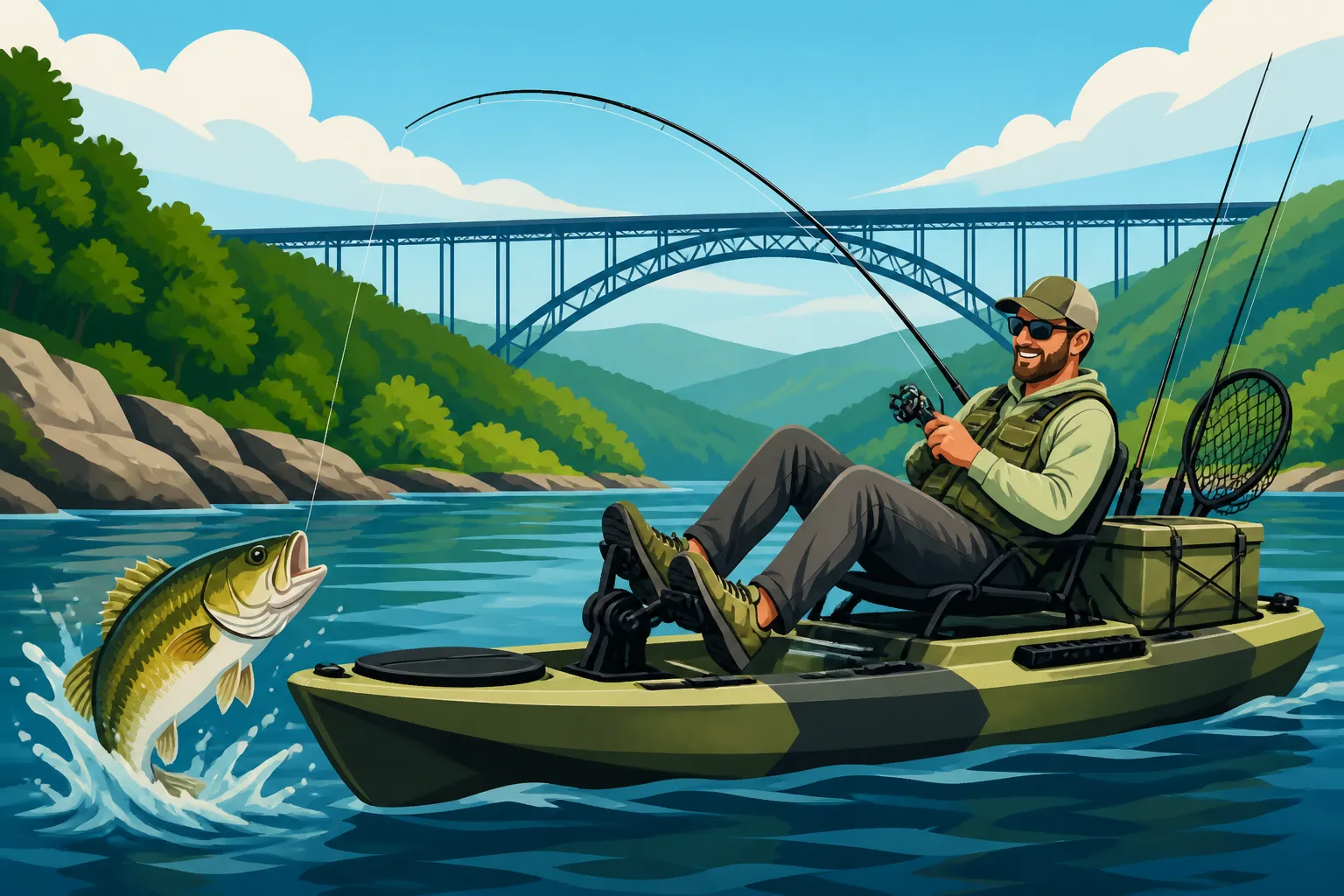
Imagine being able to cast, retrieve, set the hook, and fight a feisty smallmouth bass or a trophy muskie, all while subtly adjusting your position with your feet. That's the hands-free revolution that pedal kayaks bring to the water, fundamentally changing the kayak fishing experience in a state renowned for its incredible, yet often challenging, aquatic environments.
The Hands-Free Advantage on Mountain Lakes and Rivers
The beauty of West Virginia's fishing lies in its diversity, from the rushing currents of the New River to the sprawling reservoirs like Summersville Lake. Conventional paddle kayaks demand constant attention to maintain position, especially in moving water or on windy lakes. You might be drifting too fast past that prime log jam on the Elk River, or struggling to hold your position while trying to sight fish for a cruising walleye. A pedal kayak eliminates this issue entirely. Your hands are free to focus solely on your rod and reel. This means more precise casts, better lure presentation, and a quicker response when a fish strikes. For many anglers, it's the difference between a frustrating outing and a truly immersive, productive one. It's about being able to work a jig through a deep channel, then immediately backpedal to retrieve it if you feel a snag, all without missing a beat.
Enhanced Control and Efficiency
Beyond simply freeing your hands, pedal drive systems offer a level of control and efficiency that traditional paddling can't match. Navigating tricky currents, holding against a stiff breeze, or maneuvering around submerged structure becomes intuitive. You can easily pivot in place, move silently forward or backward, and even turn almost on a dime, making it incredibly effective for targeting specific cover or following a schooling fish.
Consider targeting muskie on the Little Kanawha River. These predatory fish often hold in tight spots, and being able to subtly adjust your kayak's position with foot power allows for more accurate casts and better follow-up presentations. You can stay in the strike zone longer, increasing your chances of hooking into one of these elusive giants. For covering vast expanses of water on bigger lakes, the sustained speed and reduced fatigue offered by pedal propulsion mean you can explore more areas and reach distant honey holes without exhausting yourself before you even start fishing. You'll find yourself able to extend your fishing day, exploring spots you might have otherwise skipped due to the effort involved with a paddle.
Key Features to Look For in a West Virginia Pedal Kayak
Choosing the right pedal kayak for West Virginia fishing means understanding the nuances of the different systems and features available. Not all kayaks are created equal, and what works best on a calm lake might be a nightmare on a swift river.
Drive System Types: Propeller vs. Fin
This is arguably the most critical decision when selecting a pedal kayak, as it dictates how your kayak interacts with the water and the types of environments it's best suited for.
- Propeller Drives: These systems typically use a propeller that spins beneath the kayak, much like a small outboard motor, powered by your pedaling motion. They generally offer excellent speed and efficiency in open water, making them fantastic for covering long distances on larger lakes such as Summersville Lake Fishing Guide or Tygart Lake. Many propeller drives also offer reverse, which is a game-changer for precise positioning, backing out of snags, or turning quickly. However, the propeller often hangs down significantly, making them more prone to snagging in shallow, rocky rivers common throughout West Virginia, or getting tangled in heavy vegetation. Maintenance can also be a bit more involved due to moving parts.
- Fin Drives (like Hobie's MirageDrive): These systems use fins that flutter back and forth like a penguin's wings, propelling the kayak. They excel in shallower water and weedy environments because the fins can often retract flush with the hull, or fold up easily if you hit an obstruction. This makes them ideal for exploring the shallower sections of rivers or working through lily pads and grass beds without getting constantly hung up. While generally not as fast as propeller drives in open water, they offer incredible maneuverability and are often praised for their quiet operation, which can be a huge advantage when sneaking up on wary fish. Most fin drives also offer a reverse function, adding to their versatility.
When considering West Virginia's diverse waters, if you primarily fish deep lakes and slower rivers, a propeller drive might offer the speed and cruising comfort you desire. However, if your adventures often take you to shallower streams, rocky rivers like the Greenbrier River Fishing Guide, or areas with abundant aquatic vegetation, a fin drive might save you a lot of headaches and provide more peace of mind.
Stability and Stand-Up Fishing
West Virginia anglers encounter all sorts of conditions, from calm mornings to sudden afternoon chop. A stable fishing platform is not just about comfort; it's about safety and effectiveness. Many modern pedal kayaks are designed with wider beams and specific hull shapes (often similar to pontoon or catamaran styles) to maximize stability. This allows anglers to confidently stand up to cast, stretch their legs, or gain a better vantage point for spotting fish or structure.
Standing greatly improves your ability to deliver accurate casts, especially when sight fishing for smallmouth bass on the New River Smallmouth Bass Fishing. It also gives you more leverage when fighting larger fish, preventing you from being pulled around by a powerful muskie. When you're browsing kayaks, look for models that specifically tout their stand-up stability. Reviews or demo videos from Bass Pro Shops or online retailers on Amazon often showcase anglers standing and casting, which can give you a good visual sense of a kayak's real-world stability. The last thing you want is to feel tippy when you're far from shore on a vast body of water.
Storage, Rigging, and Comfort for Long Days
A day on the water in West Virginia can mean packing for variable weather, multiple tackle options, and enough food and water to last. Your pedal kayak needs to be able to accommodate all of this, and keep you comfortable throughout.
- Storage: Look for ample, easily accessible storage. A large stern tankwell with bungee cords is essential for securing a cooler, tackle crates, or a dry bag. Bow hatches or center consoles provide space for smaller items, electronics, and personal gear. Some kayaks even offer internal rod storage, keeping your rods safe when moving through dense cover or during transport.
- Rigging Options: Modern fishing kayaks come equipped with accessory tracks (often called "gear tracks" or "VersaTracks") that allow you to easily mount rod holders, fish finders, camera mounts, and other accessories without drilling into the hull. This modularity is a huge plus, letting you customize your setup for different fishing scenarios. Consider the placement and number of pre-installed rod holders as well.
- Seating: This is often overlooked but becomes crucial on long days. A comfortable, adjustable seat that provides good back support and is elevated off the deck can make a world of difference. Many premium pedal kayaks feature stadium-style seats that are breathable and allow you to sit higher for better visibility and easier standing transitions. Being able to adjust your seat for different pedaling postures can also reduce fatigue.
Top Considerations for West Virginia's Diverse Waters
West Virginia offers an incredible array of fishing environments, from serene mountain ponds to powerful rivers. The "best" pedal kayak isn't one-size-fits-all; it depends heavily on where you plan to spend most of your time.
Navigating Rivers and Currents
Fishing West Virginia's rivers like the Cheat, Greenbrier, or the iconic New River presents unique challenges. Strong currents, shallow riffles, and rocky bottoms are common. For river fishing, you'll want a pedal kayak that prioritizes durability, maneuverability, and the ability to operate in varying depths.
- Durability: A robust hull material is key. Scrapes against rocks are inevitable, so look for high-density polyethylene that can take a beating. Some kayaks feature replaceable skid plates on the keel for added protection.
- Maneuverability and Reverse: The ability to instantly reverse direction is incredibly valuable in river current, allowing you to back off a snag or hold position upstream of a promising eddy. Look for responsive steering and a kayak that tracks well without being overly long, which can make tight turns difficult. A shorter, wider kayak will generally be more nimble in swift water.
- Drive System Choice: As discussed, a fin drive system might be advantageous for its shallower draft and ability to retract if you hit a rock garden. However, some propeller drives are designed with protective skegs or higher-riding props to mitigate this. Make sure you understand the drive's operating depth.
Imagine yourself on the New River, targeting smallmouth bass in the swift currents. Being able to instantly reverse to work a seam more thoroughly, or to hold your ground against the flow while you battle a fish, is an invaluable asset. Operating a Boat Near an Angler in West Virginia also outlines regulations for safe boating around other anglers, which pedal kayaks excel at observing due to their precise control.
Lake Fishing: Covering Water and Stability
West Virginia's lakes, from the large recreational reservoirs to smaller state park impoundments, offer different opportunities and require different kayak characteristics. Here, covering distance, stability in open water, and ease of deployment are often top priorities.
- Speed and Tracking: On a large lake like Summersville or Stonewall Jackson, you'll want a kayak that can maintain a good cruising speed and track straight across open water, especially if you're targeting roaming species like hybrid striped bass or walleye. Longer, narrower kayaks generally offer better speed and tracking.
- Stability for Rougher Water: While stability is important everywhere, it's particularly crucial on large lakes where boat wakes or wind-generated chop can quickly make conditions uncomfortable or even unsafe. Look for designs that prioritize secondary stability – how stable the kayak feels when leaned on its side.
- Fish Finder Integration: Lakes often involve fishing deeper water and structure, making a fish finder almost essential. Consider kayaks with dedicated transducer ports or easy mounting options for electronics. Best Fish Finders for West Virginia Lakes provides a deeper dive into these devices. Many quality units can be found at Bass Pro Shops or through online retailers like Amazon.
Portability and Transport
Let's be realistic: not every fishing spot in West Virginia has a pristine boat launch. Many require cartopping, using less-than-ideal ramps, or even portaging short distances. The weight and size of your pedal kayak directly impact how easy it is to get it to and from the water.
- Weight: Pedal kayaks are inherently heavier than traditional paddle kayaks due to the drive system and often beefier construction. Consider your ability to lift it onto your vehicle, whether you fish solo or with a partner, and if you'll need a kayak cart. Lighter models (often around 70-90 lbs without the drive) are much easier to handle than those exceeding 100 lbs.
- Length and Width: A longer kayak will generally track better and be faster, but it's harder to transport and store. A wider kayak is more stable but can be cumbersome to maneuver through tight spaces or load. Measure your vehicle's roof rack or truck bed to ensure compatibility.
- Breakdown Options: Some pedal drive systems are easily removable, reducing the overall weight you need to lift and protecting the drive during transport. Look for kayaks that allow for quick removal of the seat and drive system. If you're frequently accessing remote spots or smaller, less developed launches, a slightly smaller or lighter model can significantly reduce setup time and effort.
| Feature | Propeller Drive | Fin Drive (e.g., Hobie MirageDrive) |
|---|---|---|
| Speed | Generally faster in open water | Good, but often slightly less top-end speed in open water |
| Shallow Water | More prone to snagging/damage in very shallow areas | Excellent for shallow water; fins often retract/fold |
| Weedy Water | Can get tangled in dense vegetation | Excellent for weeds; fins push through or can clear easily |
| Reverse | Common, often instant | Common, often instant (e.g., Kick-Up Fins) |
| Quietness | Can be slightly noisier due to rotating prop | Generally very quiet, great for stealth |
| Maintenance | Propeller, shaft, gears may require more upkeep | Simpler mechanism, durable, often self-cleaning |
| Durability | Robust, but propeller can be exposed to impact | Highly durable, fins designed to 'kick up' on impact |
| Best for WV Waters | Large lakes (Summersville, Cheat), wide, slow rivers | Rivers (New, Greenbrier), shallow coves, weedy areas, smaller impoundments |
Important Accessories for Your Pedal Kayak Fishing Setup
Once you've picked out your dream pedal kayak, don't forget the essential accessories that complete the hands-free fishing experience. These items enhance safety, convenience, and your overall success on West Virginia's waters.
Essential Safety Gear
Safety should always be your number one priority, especially when you're out on the water. Even with the best intentions, things can happen quickly.
- Personal Flotation Device (PFD): This isn't just a recommendation, it's a legal requirement in many situations and a non-negotiable for smart anglers. Choose a comfortable, USCG-approved PFD that fits well and doesn't restrict your movement while casting or pedaling. Inflatable PFDs are a popular choice for their low profile and comfort. Always wear it, don't just stow it. Life Jacket Requirements for West Virginia Boaters covers the specifics.
- Whistle or Air Horn: A simple signaling device to alert other boaters or rescuers in an emergency.
- Navigation Lights: If you're planning on being on the water before sunrise or after sunset, navigation lights are crucial for visibility and often legally required. A 360-degree white light is typically sufficient for kayaks.
- First-Aid Kit: A compact kit with essentials for minor cuts, scrapes, or other common injuries.
- Paddle: Even with a pedal drive, a breakdown paddle is your essential backup. If your drive system malfunctions, or you enter extremely shallow water where the pedals are impractical, you'll need a way to get back to shore.
Electronics and Navigation
Modern fishing is often enhanced by technology, and a pedal kayak provides the perfect platform for integrating sophisticated electronics.
- Fish Finder: A quality fish finder can dramatically improve your success by showing you depth, bottom structure, and even fish. With your hands free, you can constantly monitor the screen while actively fishing. Look for units with GPS capabilities for marking waypoints (your secret hot spots!) and navigating back to launch. Many options are available from reputable brands at Bass Pro Shops or on Amazon. Best Fish Finders for West Virginia Lakes delves into selecting the right one.
- GPS Device: Whether integrated into your fish finder or a standalone unit, GPS is invaluable for navigation, especially on large lakes or unfamiliar river stretches. It helps you stay oriented, avoid restricted areas, and track your path.
- Power Source: For your electronics, you'll need a reliable power source. Many anglers use small, sealed lead-acid or lithium batteries designed for marine use. Ensure your battery is properly secured and waterproofed.
Rod Holders and Storage Solutions
Having your gear organized and within easy reach is paramount for a productive day on the water.
- Additional Rod Holders: Most fishing kayaks come with flush-mount rod holders, but external, adjustable rod holders mounted on accessory tracks offer greater versatility. These allow you to troll with multiple lines, keep a ready-to-cast rod close at hand, or simply store rods safely while pedaling.
- Tackle Management System: A durable tackle crate or bag that fits securely in your stern tankwell is essential. Look for systems that are waterproof or water-resistant and have multiple compartments for organizing lures, tools, and spare line.
- Dry Bags: Protect your valuable electronics, extra clothing, snacks, and keys from water intrusion with a good quality dry bag. These can be secured in hatches or lashed down in the tankwell. Best Dry Bag for Kayak Fishing offers guidance on selecting the right one.
Disclaimer
This article is for general informational purposes only and does not constitute professional advice. Laws, prices and regulations vary by location and change over time. Consult a qualified professional for guidance on your specific situation.