Best rod power for muskie fishing
One of the most common frustrations for anglers targeting the elusive muskie is feeling under-gunned or, conversely, over-prepared with their equipment. Picking the right rod for these toothy giants is absolutely critical, and it all starts with understanding "rod power." This guide is going to meticulously break down what rod power means for muskie fishing in West Virginia, helping you make informed decisions so you can confidently tackle these apex predators.
Understanding Rod Power for West Virginia Muskie
When you're looking at a fishing rod, "power" isn't about how strong you are; it's about how much force it takes to bend the rod blank. It's essentially the rod's lifting strength or backbone. For muskie fishing, where you're often throwing heavy lures and battling powerful fish, understanding rod power is paramount. If your rod is too light, you won't be able to effectively cast your lures or control a big muskie. Too heavy, and you might lose the feel for your bait or wear yourself out quickly.
Defining Rod Power Ratings
Rod power is typically described with terms like "light," "medium," "medium-heavy," "heavy," "extra-heavy," and even "XXH" (extra-extra heavy). These classifications indicate the rod's stiffness and how much pressure it can withstand before bending significantly.
- Medium-Heavy (MH): While great for big bass or smaller pike, an MH rod is often considered on the lighter side for dedicated muskie fishing, especially when throwing anything but the smallest muskie lures. It might feel "whippy" with heavier baits and could struggle to set hooks effectively in a muskie's bony mouth.
- Heavy (H): This is where many muskie anglers start. A heavy power rod offers a good balance for a range of common muskie lures and provides ample backbone for fighting fish. It's often a good choice for smaller bucktails, medium-sized jerkbaits, and some topwater presentations.
- Extra-Heavy (XH): Stepping up to an extra-heavy rod gives you a significant increase in lifting power. This is ideal for larger bucktails, heavier crankbaits, and swimbaits where more leverage is needed to work the lure and subdue a big fish. Many anglers consider an XH rod their workhorse for general muskie applications.
- Extra-Extra Heavy (XXH) or Magnum: These are specialized rods designed for the biggest, heaviest muskie lures, like double-10 bucktails, massive glide baits, or giant rubber baits. They are incredibly stiff and require a lot of effort to cast, but they give you the maximum power to handle true trophy muskie and their corresponding heavy tackle.
Why Rod Power is Crucial for Muskie
Muskie are not your average fish. They are powerful, aggressive predators with hard, bony mouths. A proper rod power ensures you can:
- Cast Heavy Lures: Muskie lures are notoriously large and heavy. Without enough rod power, you'll struggle to launch these baits accurately and efficiently, leading to fatigue and poor casting distance. A rod with insufficient power will feel overloaded and might even break under the strain of casting a heavy lure repeatedly. Imagine trying to throw a baseball with a tennis racket – it's just not going to work well.
- Achieve Solid Hooksets: Muskie have tough mouths. A strong, decisive hookset is critical to penetrate bone and cartilage. A rod with adequate power allows you to drive the hook home, ensuring a secure connection. If your rod is too soft, too much energy is absorbed in the flex, and the hook won't fully penetrate, leading to missed fish or lost battles. This is especially true when dealing with larger treble hooks common on muskie baits.
- Control a Fighting Fish: Once hooked, a muskie will make powerful runs and headshakes. A rod with proper power provides the leverage to turn the fish, steer it away from snags, and eventually bring it to the net. You need to be able to dictate the fight, not the fish. Trying to control a feisty muskie with an underpowered rod feels like trying to pull a truck with a rope made of spaghetti – frustrating and ineffective. This control is vital when fishing in river systems like the New River Gorge Fishing Guide where current and structure can quickly turn a good fight into a heartbreak if you can't keep the fish from wrapping you up.
Matching Rod Power to Muskie Lures and Techniques
The heart of choosing the "best" rod power lies in understanding that there isn't one universal answer. It all depends on what you're throwing and how you're fishing. West Virginia's diverse muskie waters, from the broad Ohio River Fishing Guide for West Virginia Anglers to the wild Little Kanawha River Muskie Fishing, demand a thoughtful approach to gear selection.
Lure Weight and Rod Power Correlation
Every fishing rod has a recommended lure weight range printed on its blank, usually near the handle. This is your guiding star. Ignore it at your peril!
- Small to Medium Lures (1-4 oz): For lures like smaller bucktails (single bladed #5-#8), smaller jerkbaits (e.g., 6-inch Gliders), and lighter topwater plugs, a Heavy (H) power rod is generally a good starting point. This power level provides enough backbone to cast these baits effectively and handle the muskie that might strike them. You'll still get good feedback on your retrieve, allowing you to feel how the lure is running.
- Real-world scenario: You're casting a 1.5 oz crankbait along a weed line on Burnsville Lake. An H power rod allows for smooth casts and retrieves, and when a muskie smashes the bait, you have the authority to set the hooks and steer it clear of the weeds.
- Medium to Large Lures (3-8 oz): This category covers a huge range of popular muskie baits: medium to large bucktails (double #8s, single #10s), larger jerkbaits, mid-sized swimbaits, and most common glide baits. For these, an Extra-Heavy (XH) power rod truly shines. The increased stiffness handles the casting weight with ease, reduces fatigue over a long day of throwing, and provides the necessary power for aggressive retrieves and solid hooksets. Many anglers consider an XH rod their all-around muskie workhorse.
- Real-world scenario: You're slinging a 6 oz double-bladed bucktail on the Kanawha River Fishing Spots for hours. An XH rod manages the heavy lure, allowing you to cover water efficiently. When that big river muskie hits, the rod's power ensures you can lean into the fish and keep it from burying itself in cover. Many experienced anglers will browse options at stores like Bass Pro Shops or online platforms like Amazon for a wide selection of XH rods designed for muskie.
- Magnum Lures (8 oz+): When you venture into the world of truly massive muskie lures – think double #10 or #12 bucktails, oversized rubber baits (like large Medusas), or very heavy deep-diving crankbaits – you need serious hardware. An Extra-Extra Heavy (XXH) or "Magnum" power rod is the only way to go. These rods are beasts, designed for maximum lifting power and durability. They're not for the faint of heart, but they are essential for safely and effectively fishing these trophy-hunting baits.
- Real-world scenario: It's late fall on Stonewall Jackson Lake, and you're targeting a giant muskie with an 11 oz rubber lure, hoping for that one big bite. An XXH rod, though tiring to cast, is the only rod that can launch and work such a heavy bait effectively. When a monster muskie finally engulfs it, you've got the backbone to move that fish and land it. For these specialized rods, comparing different brands and models on Amazon can often yield great results, allowing you to read reviews from other dedicated muskie anglers.
Techniques and Rod Power
Different muskie fishing techniques also influence rod power selection:
- Casting Bucktails: This is perhaps the most common muskie technique. For medium bucktails, an H power rod works well. For larger bucktails (double #10s), an XH or even XXH is preferred. The rod needs to load efficiently on the backcast and unload with force to propel these wind-resistant baits.
- Jerkbait Fishing: Jerkbaits require specific rod action (often faster) and power to impart the correct erratic retrieve. For smaller jerkbaits, an H power rod might be suitable. For larger, heavier "pounders," an XH rod will give you the necessary stiffness to make the lure jump and dart without the rod absorbing too much of your twitch.
- Trolling: While less common for dedicated muskie anglers in some areas, trolling big crankbaits or swimbaits is effective. For trolling, you often want a rod with a more moderate action and substantial power (H to XH) to absorb the constant pressure of the lure running and handle a strike at speed. The rod acts more as a shock absorber.
- Topwater: Muskie hitting topwater is exhilarating! For smaller topwater baits, an H rod can provide decent casting distance and hookset power. For bigger, heavier topwater lures, an XH rod prevents the rod from collapsing on the cast and ensures you can drive those large hooks home when a muskie explodes on your bait.
Considering Muskie Size and Fishing Conditions
While lure weight is the primary driver for rod power selection, the potential size of the muskie you might encounter and the specific fishing conditions in West Virginia waters also play a significant role. You wouldn't use the same rod for a 30-inch "ski" as you would for a legitimate 50-inch plus trophy.
Targeting Trophy Muskie
West Virginia boasts some fantastic muskie fishing, with potential for true giants. If you're specifically targeting trophy fish – those elusive 45-inch plus monsters – you'll want to err on the side of more power. A strong rod means you can exert more pressure, wear the fish out quicker, and reduce the fight time, which is crucial for a healthy release. Remember, a muskie's size dictates the size of the lures you'll likely throw, naturally pushing you towards heavier rods.
- Impact on Fight Time: Long fight times are detrimental to muskie survival post-release, especially in warmer water. A rod with sufficient power allows you to land the fish more quickly, minimizing stress. This is particularly important when adhering to responsible catch-and-release practices common in muskie fishing.
- Confidence in the Battle: Knowing your rod can handle the stress of a truly large fish gives you a huge mental advantage. You won't be worried about equipment failure when that once-in-a-lifetime muskie finally strikes. When you're dreaming of that state record muskie, found in places like Best Muskie Waters in West Virginia, you want every piece of gear to be up to the task.
River vs. Lake Fishing Environments
The environment you're fishing in also influences your choice.
- Rivers (e.g., New River, Elk River): Rivers present unique challenges, primarily strong currents and abundant structure (submerged timber, rock ledges). When a muskie hits in a river, the current becomes an ally to the fish, significantly increasing the drag and fighting power. You need a rod with ample backbone (XH to XXH) to turn the fish against the current and steer it away from snags that could result in a lost lure or, worse, a broken line. The ability to quickly gain line and control the fish's movement is paramount. Check out Best Fishing Rivers in West Virginia for specific challenges.
- Example: Fishing the New River for a smallmouth bass might allow a medium-heavy rod, but for muskie, even if you're throwing a relatively "small" muskie lure, the river's power might warrant an XH rod just for the control aspect.
- Lakes (e.g., Summersville Lake, Tygart Lake): While lakes typically lack strong currents, they can have deep weed beds, standing timber, or rock piles where a muskie can dive. You still need good power to extract fish from cover, but perhaps less emphasis on fighting against overwhelming current. An XH rod is still a very common choice for lake muskie, providing versatility for various lures and depths.
- Example: On a calm lake, an H rod might handle a certain lure weight fine, but if you hook a big muskie near a submerged brush pile, you'll immediately wish you had the additional leverage of an XH rod to pull it out.
Line and Leader Considerations
Your choice of fishing line and leader also works in conjunction with rod power. Generally, muskie anglers use heavy braided line (65-100 lb test) paired with a heavy fluorocarbon or wire leader.
- Matching Line to Rod: An overly powerful rod paired with too light a line can lead to line breaks before the rod even begins to flex properly. Conversely, an underpowered rod with heavy line might not allow the rod to load correctly, hindering casting and hooksets. Your rod power, line strength, and reel drag settings should form a cohesive system capable of handling the force exerted by a muskie. A detailed guide like Best Line Weight for Muskie Fishing can further inform your decision.
The Ideal Muskie Rod Power: A Practical Breakdown
Alright, let's put it all together. What is the "best" rod power for muskie fishing? It's really about having the right rod power for the specific lures and conditions you're facing. However, if you're looking for general recommendations or trying to build your arsenal, here’s a practical breakdown.
The Versatile Workhorse (XH)
If you're only going to buy one muskie rod, a well-built Extra-Heavy (XH) power rod in the 8'6" to 9' range is often the most versatile choice for West Virginia muskie anglers.
- Why it's the go-to: An XH rod can comfortably handle a wide range of popular muskie lures, typically from 3 to 8 ounces, which covers most bucktails, medium to large jerkbaits, and average-sized swimbaits. It provides excellent casting distance and accuracy with these baits, while offering the backbone needed for decisive hooksets and effective fish control in both rivers and lakes. This power level strikes a good balance between casting heavy baits and still having enough feel for the lure. Many anglers start their muskie journey with an XH rod and find it serves them well for years.
Building a Muskie Rod Arsenal
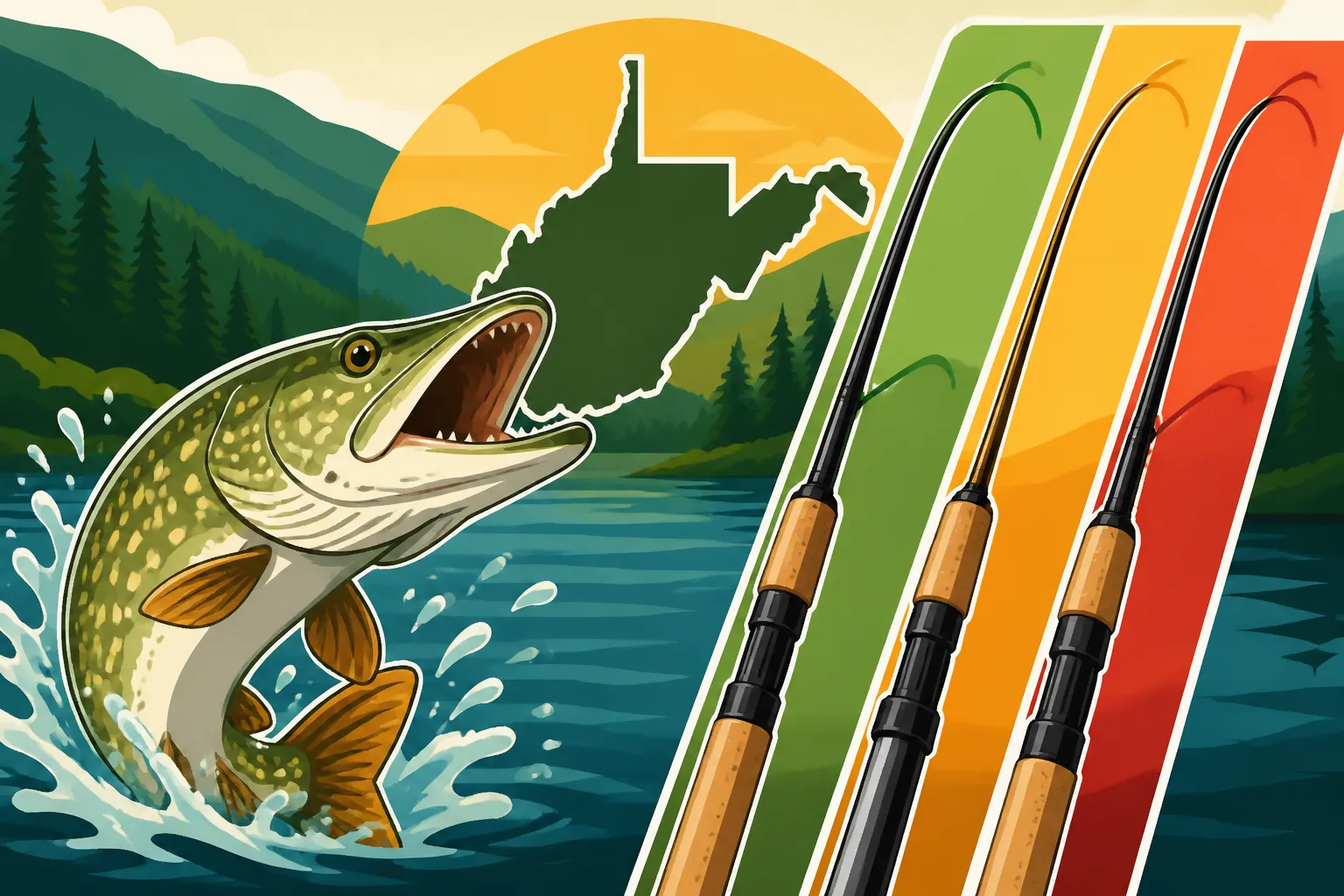
For the truly dedicated muskie angler, a small arsenal of rods with varying powers will allow you to optimize for every situation.
- Rod 1: Heavy (H) Power (for smaller baits): Ideal for smaller bucktails, topwaters, and finesse jerkbaits (1-4 oz). This rod will provide better feel and make casting smaller baits less fatiguing.
- Rod 2: Extra-Heavy (XH) Power (the all-rounder): Your main rod for most bucktails, jerkbaits, and swimbaits (3-8 oz). If you're going out and aren't sure what the muskie will want, this is the rod you pick up first. You can find excellent options for this category at retailers like Bass Pro Shops.
- Rod 3: Extra-Extra Heavy (XXH) Power (for magnum baits): Essential for slinging those really heavy double-10 bucktails, big rubber baits, and deep-diving cranks (8 oz+). This rod is a specialized tool for targeting the biggest muskie with the biggest baits. Comparing prices and features for these heavy-duty rods on platforms like Amazon is a smart move.
Here's a quick reference table to help visualize these choices:
| Lure Weight Range | Recommended Rod Power | Typical Lures | Key Advantages | When to Use |
|---|---|---|---|---|
| 1-4 oz | Heavy (H) | Small Bucktails, Light Jerkbaits, Smaller Topwaters | Better feel, less fatigue with lighter baits | When muskie are keying on smaller forage, or in calm conditions. |
| 3-8 oz | Extra-Heavy (XH) | Most Bucktails, Mid-Large Jerkbaits, Average Swimbaits, Crankbaits | Most versatile, excellent all-around power and casting | General muskie fishing, covers a wide range of presentations. |
| 8 oz+ | Extra-Extra Heavy (XXH) | Magnum Bucktails, Large Rubber Baits, Heavy Glide Baits | Maximum lifting power, handles heaviest baits | Targeting trophy muskie, using oversized baits, battling strong currents. |
Choosing the right rod power is a critical component of successful muskie fishing. It ensures you can effectively present your lures, achieve solid hooksets, and ultimately land these powerful fish. While personal preference and physical strength play a role, always prioritize matching the rod's power to the lures you intend to throw and the conditions you expect to face. Don't be afraid to invest in quality gear; a reliable rod is your best friend when chasing West Virginia's apex predator. For more detailed information on specific gear, check out articles like Best Muskie Gear for West Virginia Rivers or Best Baitcasting Reels for Muskie Fishing.
Disclaimer
This article is for general informational purposes only and does not constitute professional advice. Laws, prices and regulations vary by location and change over time. Consult a qualified professional for guidance on your specific situation.