Best Wading Staff for Fast Current
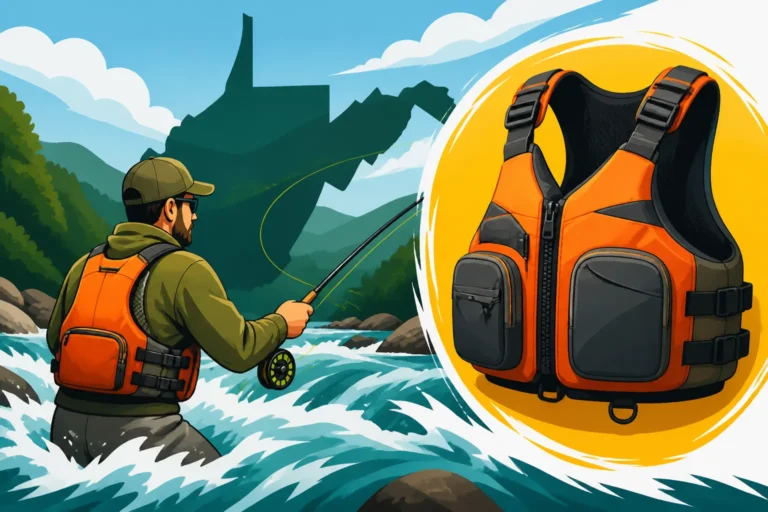
Oh, the sheer joy of standing in a clear, rushing West Virginia river, line in the water, the anticipation of a bite! But let's be real, that serene image can quickly turn into a heart-stopping moment when the current shifts, or your foot finds a slick rock you didn't see. We've all been there, that little wobble, that quick prayer, "Please don't let me go for a swim with my phone in my pocket!" Navigating those beautiful, wild currents safely is absolutely paramount, and that's exactly why we need to talk about one of the most underrated pieces of gear in an angler's arsenal: the wading staff. This guide is all about helping you pick out the best wading staff to keep you upright and confident in those notoriously fast West Virginia currents.
Why a Wading Staff is Non-Negotiable in West Virginia's Fast Currents
Many of us, especially when we're new to river fishing, might think a wading staff is just for older folks or those with mobility issues. Boy, are we wrong! I used to be that person, grabbing a random stick from the bank and thinking I was prepared. That changed quickly after a couple of near-tumbles in the New River that could have ended a whole lot worse than just wet socks. West Virginia's rivers are magnificent, but they demand respect, and a solid wading staff is a huge part of showing that respect to the water and to your own safety.
The Hidden Dangers of River Beds and Swift Water
You step into a river, and from the bank, the bottom looks pretty benign. Maybe some smooth stones, a little gravel. But once you’re in, it’s a whole different ballgame. West Virginia's river bottoms are a patchwork of challenges. You'll encounter everything from algae-covered, bowling ball-sized rocks that are slicker than ice, to loose cobble that shifts underfoot, to sudden, unforgiving drop-offs that appear out of nowhere. The bottom might be solid here, then a soft patch of silt, then a pile of jagged rocks just a few feet away. This unpredictable terrain is a recipe for disaster without a reliable third point of contact.
And then there's the current itself. It might look gentle, but swift water has an incredible, relentless power. Just a few inches of fast-moving water can knock you off your feet. Once you lose your footing, the river can become a conveyer belt, dragging you downstream and potentially into deeper, faster water, or against obstacles like submerged logs or boulders. A wading staff acts like an extra leg, providing that crucial stability and allowing you to probe the riverbed ahead of you, identifying dangers before your foot lands on them. It’s not about being weak; it’s about being smart and safe in environments that can be genuinely perilous if you're not properly equipped.
Beyond Safety: Enhancing Your Fishing Experience
While safety is undeniably the primary reason for carrying a wading staff, its benefits extend far beyond simply preventing a dunking. Think about it: when you're constantly worried about where your next step is going to land, your focus isn't on the fish. It's tough to concentrate on subtle strikes or make that perfect cast when you're performing a delicate ballet to stay upright. A wading staff gives you immense confidence, freeing your mind to truly enjoy the act of fishing.
With a staff providing stability, you can stand more firmly in the current, giving you a better platform for casting. Imagine trying to make a precise roll cast in a strong current, or attempting to mend your line with one foot sliding. It's nearly impossible. A staff allows you to plant yourself, control your body, and execute those fishing techniques with far greater efficiency. It also enables you to access spots that you might otherwise deem too risky, opening up more prime fishing locations. Wading Techniques for West Virginia Trout Streams often hinge on confident, stable movement, and a staff is central to that. Plus, when you're not constantly bracing yourself, you conserve energy, allowing for longer, more enjoyable days on the water.
Key Features to Look for in a Wading Staff for Fast Current
Choosing a wading staff isn't as simple as grabbing the first one you see. Just like picking out the right rod or reel, there are features that make a huge difference, especially when you're dealing with the dynamic conditions found in West Virginia's fast currents. You want something that's not just functional, but reliable, comfortable, and easy to use when you're battling a current or a fish.
Material and Durability: Aluminum, Carbon Fiber, and Beyond
The material of your wading staff directly impacts its weight, strength, and durability – all critical factors when you're wading through rushing water.
Aluminum Staffs: These are often the most common and budget-friendly option. Aluminum is robust, offering excellent strength-to-weight ratio, and can take a beating from rocks and falls. A good quality aluminum staff will resist bending or breaking under pressure, which is vital when you're relying on it for support in a strong current. They can be a bit heavier than their carbon fiber counterparts, but for many anglers, the added durability and lower cost make them a great choice. The main drawback might be the slight increase in weight, which can be noticeable on long hikes to remote sections of river. However, for everyday use on popular rivers like the Elk or the South Branch Potomac, they are perfectly adequate.
Carbon Fiber Staffs: If you're looking for the ultimate in lightweight performance, carbon fiber is your answer. These staffs are incredibly strong for their weight, often feeling like they're barely there when packed away. This makes them ideal for anglers who cover a lot of ground, hike into backcountry spots, or simply prefer to shave every possible ounce from their gear. The trade-off, however, is typically a higher price point. While very strong, some carbon fiber designs might be more susceptible to impact damage (think a sharp blow against a jagged rock) compared to aluminum, though modern carbon fiber manufacturing has made them remarkably tough. For those who frequently trek to the High-elevation trout streams in the Monongahela National Forest, the weight savings of a carbon fiber staff can be a game-changer.
Other Materials: Less common but worth mentioning are staffs made from specialized alloys or even sturdy wood. While wood might offer a classic aesthetic, it generally won't provide the consistent strength, lightweight nature, or durability of modern aluminum or carbon fiber, especially when wet and repeatedly subjected to force. Stick to aluminum or carbon fiber for reliable performance in West Virginia's demanding environments.
Grip, Handle, and Ergonomics for Optimal Control
Having a secure, comfortable grip on your wading staff is not just about comfort; it's about control and safety. When you're leaning into a powerful current, your hand needs to be locked onto that staff without slipping, even when wet.
Grip Materials: Look for handles made from materials like cork, foam, or textured rubber. Cork provides a classic feel, absorbs sweat, and offers decent grip, even when wet. Foam grips are lightweight and comfortable, providing good insulation in colder conditions. Textured rubber or synthetic grips offer excellent non-slip performance and durability, often with ergonomic shaping that fits the hand naturally. Avoid smooth, hard plastic handles, as these can become very slick when wet or cold, significantly increasing your risk of losing your grip.
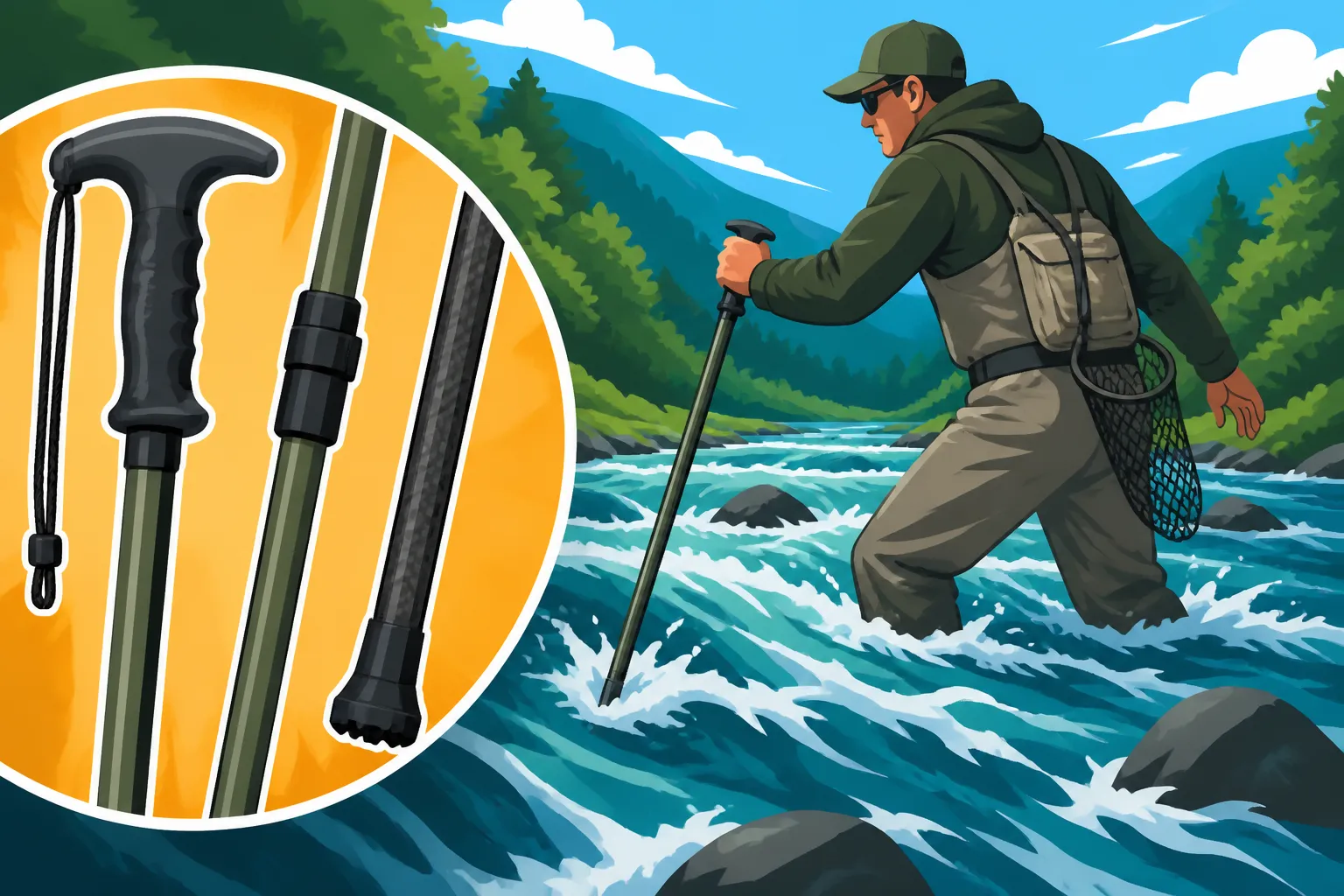
Handle Styles: You'll typically find a few handle styles. A "T-handle" or "trekking pole" style handle allows for a natural, comfortable grip, similar to how you'd hold a hiking pole. Some staffs feature a "pistol grip" or contoured handle that is ergonomically shaped to fit the palm, which can provide a very secure hold. The best choice often comes down to personal preference, but ensuring it feels secure and comfortable in your hand is key. Test different styles if you can, perhaps at a local outdoor retailer like Bass Pro Shops, to see what feels most natural.
Wrist Lanyard: This feature is absolutely critical. A sturdy wrist lanyard prevents you from losing your staff if you momentarily lose your grip or stumble. Imagine losing your staff in a fast current – not only do you lose your support, but now you have to retrieve it, potentially putting yourself in even greater danger. Ensure the lanyard is adjustable and made from a strong, durable material that won't chafe your wrist. It should be comfortable enough to wear all day without distraction, yet secure enough to keep the staff tethered to you.
Tip Design and Traction: The Foundation of Stability
The very tip of your wading staff is where the rubber (or carbide) meets the riverbed, and its design is crucial for stability and grip on diverse underwater terrain.
Rubber Tips: Many staffs come standard with a durable rubber tip. These are excellent for protecting the riverbed, reducing noise, and providing good traction on smooth, relatively flat rocks or gravel. They're also great for areas where you want to minimize impact, such as delicate aquatic habitats. However, on extremely slick, algae-covered rocks or loose, shifting gravel, a plain rubber tip can sometimes struggle to dig in and provide maximum grip.
Carbide Tips: For superior grip on almost any surface, especially those treacherous, algae-laden rocks or compacted mud, a carbide tip is hard to beat. Carbide is an incredibly hard material that bites into surfaces, offering exceptional purchase and preventing slips. Many high-quality staffs will feature a carbide tip, sometimes integrated into a rubber boot that can be removed. These are invaluable for West Virginia's varied river bottoms, which can range from solid bedrock to loose shale.
Combination Tips or Baskets: Some staffs offer interchangeable tips, allowing you to swap between rubber and carbide as needed. Others might have a small, integrated "basket" near the tip, similar to a trekking pole. These baskets help prevent the staff from sinking too deep into soft mud or getting wedged between rocks, further enhancing stability in varied conditions. For navigating the diverse riverbeds of the New River Gorge Fishing Guide, having a versatile tip setup is incredibly beneficial. Always consider the types of river bottoms you'll most frequently encounter when making your choice.
Folding vs. Telescoping: Portability and Deployment Speed
How easily your wading staff can be stored and deployed is a major factor in its practicality, especially when you're moving between fishing spots or hiking to the river.
Folding Staffs: These staffs typically break down into three or four shorter sections, connected by an internal elastic cord. Think of them like tent poles. When folded, they are incredibly compact, often fitting neatly into a backpack, a large tackle bag, or clipped to the side of your vest. This is fantastic for anglers who hike a good distance to their fishing spots or those who want to keep their staff out of the way when not actively wading. Deployment is usually quick: simply pull the sections apart, and the elastic cord snaps them into place. The main consideration here is ensuring the locking mechanism between sections is robust and doesn't develop play over time, as a wobbly staff is a dangerous staff. For ease of transport, especially for something like Kayak Fishing Techniques for West Virginia Rivers where space is at a premium, a folding staff is often the preferred choice.
Telescoping Staffs: These staffs collapse into themselves, much like an old-school antenna, with sections sliding into one another. They offer a good balance of adjustability and portability. You can often fine-tune their length, which is a great advantage if you're wading in varying depths or have different users. When collapsed, they are generally longer than folding staffs but still relatively compact. Deployment involves extending the sections and locking them into place, usually with twist-locks or lever-locks. The key here is the reliability of the locking mechanism. Cheap twist-locks can slip under pressure, which is unacceptable in fast current. Look for robust lever-locks or high-quality twist-locks that hold firm. While perhaps not quite as compact as some folding models, they are often quicker to adjust on the fly if you frequently encounter different depths.
Ultimately, both styles have their merits. If ultra-compact storage and quick snap-assembly are your priority for long hikes, a folding staff is likely best. If you value on-the-fly length adjustment and a simpler, often more robust, single-piece feel when extended, a telescoping staff might suit you better.
Top Wading Staff Options for West Virginia Anglers
When you're looking at the myriad options out there, it can feel a bit overwhelming. But based on our experiences in West Virginia's diverse waters, certain types of wading staffs consistently rise to the top for reliability, features, and value. We're not talking about specific brands with price tags, but rather categories of staffs that offer distinct advantages depending on your needs and budget.
Collapsible Aluminum Wading Staffs: Reliable and Economical
For many West Virginia anglers, a collapsible aluminum wading staff strikes the perfect balance of performance, durability, and affordability. These are often the workhorses of the wading world, proving themselves time and again in diverse conditions, from the freestone streams to larger rivers.
The beauty of a well-made aluminum staff is its robustness. These things are built to take a beating, which is exactly what you need when you're navigating slippery rocks and strong currents. You can lean on them with confidence, knowing they'll hold your weight and provide that critical third point of contact. While not as feather-light as carbon fiber, the slight increase in weight often translates to a feeling of solid stability, which can be reassuring when you're in a tricky spot. Many models feature comfortable foam or rubber grips, often with a T-handle design that feels natural in your hand, along with an essential wrist lanyard.
When it comes to tips, most good aluminum staffs will offer either a durable rubber tip for general use or a carbide tip for aggressive grip on super slick surfaces. Some even come with a removable rubber cap over a carbide tip, giving you the best of both worlds. You can often find these reliable options at well-stocked sporting goods stores or online retailers. Many anglers find great value in these staffs, offering peace of mind without breaking the bank. They're a fantastic choice for those who fish frequently in places like the Cheat River or the Greenbrier, where variable bottom conditions are the norm.
Lightweight Carbon Fiber Wading Staffs: For the Serious Backcountry Angler
If you're the kind of angler who measures success by how many miles you put on your boots to reach untouched water, then a lightweight carbon fiber wading staff is going to be your best friend. These are the premium options, designed for minimal weight and maximum performance, especially when every ounce counts on a long hike.
The primary advantage of carbon fiber is its incredible strength-to-weight ratio. A carbon fiber staff feels almost ethereal in your hand, reducing fatigue during long days of hiking and wading. This allows you to carry more essential gear, or simply feel fresher at the end of a strenuous outing to those remote brook trout streams. Despite their light weight, high-quality carbon fiber staffs are surprisingly rigid and strong, providing unwavering support when planted in a current. They typically come with ergonomic grips, often featuring a blend of foam and rubber, and robust locking mechanisms (either lever locks or high-quality twist locks) that maintain the staff's rigidity even under heavy load.
The tips on these staffs are usually top-tier, often featuring aggressive carbide points for superior traction on difficult terrain. While they command a higher price, the investment is worthwhile for anglers who prioritize lightweight gear, frequently venture into the backcountry, or simply appreciate the finest in fishing equipment. If you're planning a multi-day trip into the wilderness areas of the Monongahela National Forest, or regularly tackle steep trails to access your favorite fishing spots, a carbon fiber staff offers unmatched portability and performance. You'll often find these high-end options from specialized outdoor and fly-fishing brands, readily available through online platforms like Amazon.
Specialty Wading Staffs: Built-in Features and Unique Designs
Beyond the standard aluminum and carbon fiber staffs, there's a smaller niche of specialty wading staffs that incorporate unique features to cater to specific needs or preferences. These aren't always necessary for everyone, but for some anglers, these added functionalities can be quite appealing.
Some specialty staffs might integrate useful tools directly into their design. For example, you might find staffs with a built-in measuring tape printed along the shaft, allowing you to quickly check the length of a fish for catch-and-release records without fumbling for a separate tool. Others might feature a small compass in the handle, or even a basic camera mount for those who like to capture their adventures. These integrated features can add convenience, reducing the number of separate items you need to carry, though they might add a bit to the staff's overall weight or cost.
Another area of specialization can be in the deployment or locking mechanisms. Some staffs boast unique quick-release systems, allowing for near-instant deployment with a single flick of the wrist. Others might focus on hyper-adjustable lengths or specialized tips designed for extremely particular conditions, such as deep mud or loose scree. While these specialty features can be useful, it’s important to ensure that the core function of the staff – providing stable, reliable support in fast current – isn't compromised. Always evaluate if the extra features truly benefit your fishing style in West Virginia's rivers, or if a more straightforward, robust staff would serve you better.
How to Properly Use and Maintain Your Wading Staff
Having the best wading staff in the world won't do you much good if you don't know how to use it effectively or how to keep it in prime condition. A wading staff is a tool, and like any tool, it performs best with proper technique and consistent care. Mastering its use will not only keep you safer but also allow you to move through the water with greater efficiency and less disturbance, making you a better angler.
Mastering the Three-Point Contact Technique
The "three-point contact" method is the golden rule of safe wading, and your staff is the crucial third point. This technique ensures that you always have at least two points of contact (your feet) and one point of contact (your staff) or two points of contact (one foot, one staff) and one foot moving forward, firmly on the riverbed at all times. This dramatically reduces your risk of slipping or losing your balance.
Here's how it generally works:
- Assess the water ahead: Before moving, use your staff to probe the riverbed immediately in front of you. Feel for depth changes, soft spots, or slick rocks. Don't just visually assume; truly feel with the tip of your staff. This is especially important in unfamiliar water or when visibility is poor.
- Plant your staff: Once you've identified a safe spot, plant your staff firmly on the riverbed, slightly ahead and to the side of your lead foot. The staff should be angled slightly upstream, so the current pushes it into the riverbed, increasing its stability.
- Move one foot: Keeping your staff and one foot firmly planted, slowly move your other foot forward to a new, stable position. Don't lift both feet at once! Keep your weight distributed across your two planted points of contact.
- Shift weight and repeat: Once your moving foot is secure, shift your weight to create a new stable base (two feet and staff, or one foot and staff). Then, lift and move your staff to a new position, followed by your other foot. It's a methodical, deliberate process: staff, foot, foot.
- Always face slightly upstream: When wading across a current, always try to face slightly upstream. This presents a smaller profile to the current, making you less likely to be pushed downstream, and allows you to better see and brace against the force of the water.
This technique might feel slow at first, but with practice, it becomes second nature, allowing you to move with confidence and purpose, even in the fastest West Virginia currents.
River Reading for Safe Wading
Beyond the physical act of using your staff, developing your "river reading" skills is essential for safe wading. This means understanding how water moves and where potential hazards lie before you even step in. The staff can then confirm your visual assessment.
Identify Slow Water: Look for seams, eddies, and slack water on the downstream side of large boulders or bends in the river. These areas often offer safer, shallower crossings. Fast, smooth-looking water can be deceptively deep and powerful. Often, the choppier, disturbed surface indicates shallower, faster water, while a smooth, unbroken surface can mean deeper, slower water – but also slicker conditions.
Observe Bottom Composition: Try to identify the color and texture of the riverbed where you plan to wade. Dark, mottled areas can indicate algae-covered rocks. Light, uniform areas might be gravel or sand. Use your staff to confirm what you see. Best Wading Boots for Rocky Streams combined with good river reading skills will make a huge difference. Pay attention to how the current is moving; a powerful current often scours out softer bottoms, leaving behind larger, more stable (but potentially slick) rocks or creating deeper channels.
Beware of Obstructions: Keep an eye out for submerged logs, large boulders, or anything that could create a pinch point for the current or trip you up. Your staff can help you probe around these obstacles to find a clear path. Also, recognize that heavy rains can significantly change river conditions, increasing current speed and obscuring familiar hazards. Before wading, always check current conditions, especially after heavy rainfall, which can transform even a familiar stream into a raging torrent.
Care and Storage for Longevity
Your wading staff is a piece of safety equipment, and like all safety gear, it needs proper care to function reliably season after season. Neglecting it can lead to premature wear, or worse, failure when you need it most.
After Every Use:
- Rinse thoroughly: After each trip, especially if you've been in murky or silty water, rinse your staff with fresh water. Pay close attention to the locking mechanisms and joints of folding or telescoping staffs, as grit and debris can get lodged in these areas and impair their function.
- Dry completely: This is crucial. Extend telescoping staffs completely or unfold folding staffs and allow them to air dry thoroughly before collapsing or storing. Moisture trapped inside can lead to corrosion, especially in aluminum staffs, or promote mildew growth on grips.
- Inspect the tip: Check the rubber or carbide tip for excessive wear or damage. If the tip is worn down or chipped, consider replacing it. A compromised tip means compromised traction.
Regular Maintenance:
- Lubricate (if applicable): For telescoping staffs with twist-locks, a tiny amount of silicone-based lubricant can help keep the sections moving smoothly. Avoid oil-based lubricants, which can attract dirt. Always check the manufacturer's recommendations.
- Check lanyards and straps: Over time, wrist lanyards can fray or show signs of wear. Replace them at the first sign of weakening, as this is a vital safety feature.
- Store properly: When not in use, store your staff in a dry place, ideally uncollapsed or extended to allow air circulation. Avoid storing it in a hot, damp garage or trunk for extended periods, as this can accelerate wear. If it came with a storage bag, use it to protect the staff from dust and scratches.
By taking these simple steps, your wading staff will remain a dependable partner on your West Virginia fishing adventures for many years to come.
Alternatives to Dedicated Wading Staffs (and Why They Fall Short)
It’s tempting, especially for newer anglers or those on a budget, to look for ways to cut corners. "Do I really need a dedicated wading staff?" you might ask. "Can't I just use a sturdy stick, or my fishing rod?" I've seen it, and I've even done it myself in my younger, less-wise days. But from years of navigating West Virginia's unpredictable rivers, I can tell you unequivocally that these alternatives are a false economy, often leading to increased risk and, ironically, less enjoyable fishing.
The "Found Stick" Method: A False Economy
Ah, the trusty river stick. It's free, it's natural, and it's right there on the bank! What could be wrong with that? Plenty, my friend, plenty. Relying on a random piece of driftwood as a wading staff is a gamble you really don't want to take in fast current.
First, unpredictable strength and integrity. You have no idea how strong that stick truly is. It might look sturdy, but it could be rotten on the inside, have hidden cracks, or be a species of wood that’s naturally brittle. The moment you put your full weight on it to brace against a current, it could snap, sending you tumbling. This isn't just an inconvenience; it can be incredibly dangerous. A manufactured wading staff, whether aluminum or carbon fiber, is designed and tested to bear weight and withstand the forces encountered in a river.
Second, lack of proper grip and tip. That smooth, wet bark on a river stick? It's going to be slick. Your hand will slide, especially if you're cold or wet. There's no ergonomic handle, no wrist lanyard to keep it tethered to you. And the tip? It's just wood. It won't have the biting traction of a carbide tip on slick rocks, nor the stability of a broad rubber foot on gravel. It'll just slide, offering minimal purchase. While it might work in extremely shallow, slow water, it's utterly inadequate for the challenging currents of West Virginia's rivers like the New or the Gauley. Don't compromise your safety for a "free" solution that isn't really a solution at all.
Fishing Rods and Landing Nets: Not Designed for Weight Bearing
This is another common mistake, often made in a moment of desperation. An angler loses balance, instinctively reaching for whatever is at hand – a prized fly rod or a trusty landing net – to regain footing. While the impulse is understandable, using these pieces of gear as a wading staff is a recipe for broken equipment and still, potentially, a nasty fall.
Fishing Rods: Your fishing rod, whether it's a delicate fly rod or a stout spinning rod, is designed to cast lines and fight fish, not to bear your body weight. The thin, flexible graphite or fiberglass blanks are incredibly strong in certain directions (flexing under a fish's pull), but they are extremely vulnerable to lateral pressure or sudden impacts. Leaning on your rod in a fast current will almost certainly snap it. I've seen it happen. Imagine shattering your expensive Best Fly Rods for West Virginia Trout Streams just to prevent a splash, only to still fall because the rod couldn't support you. It's a lose-lose situation. Beyond the damage, a fishing rod also lacks a proper grip or tip for wading, making it even less effective than a found stick.
Landing Nets: A landing net, particularly one with a longer handle, might seem like a more robust option than a fishing rod. After all, it's designed to scoop heavy fish. However, the handle of a landing net is typically not engineered for the axial load of a human body leaning on it. It might bend, crack, or twist under pressure. Furthermore, the net hoop itself can catch in the current, becoming a liability rather than an asset for stability. Like a fishing rod, it lacks the proper grip and a suitable tip for maintaining purchase on varied river bottoms. While a net is indispensable for landing fish safely, especially when practicing Muskie catch and release survival tips, it should never be considered a substitute for a dedicated wading staff. Each piece of gear has its specific purpose, and safety equipment should always be treated as such.
Making the Right Choice: Matching a Staff to Your West Virginia Adventures
So, we’ve covered why you need a wading staff and what features make one effective. Now, how do you translate all that information into choosing the right one for your specific fishing adventures across West Virginia? It really boils down to considering your personal wading habits, the types of waters you frequent, and your budget.
Assessing Your Typical Wading Conditions
Think about where you usually fish in West Virginia. Are you mostly exploring the smaller, boulder-strewn mountain streams, like those fed by the Cranberry River, where quick, agile movements and light gear are key? Or are you more often in the broad, powerful currents of a larger river like the New, where sheer stability and grip are paramount?
Small, Technical Streams: If your adventures typically take you to tighter, faster mountain streams with lots of slippery rocks and frequent upstream/downstream movements, you might prioritize a lightweight, highly maneuverable staff. A compact folding carbon fiber staff could be ideal here, easily stowed when not needed, and quickly deployed for those tricky crossings. The ability to quickly put it away when bushwhacking through dense rhododendron to the next pool is a huge plus. Traction on slick, moss-covered rocks will be a major concern, so an aggressive carbide tip is a must.
Large Rivers and Tailwaters: For the immense power of rivers like the New, or the consistent, strong flows below a dam on a tailwater, unwavering stability is the name of the game. You'll likely be leaning heavily on your staff for extended periods, making durability and tip traction paramount. A sturdy aluminum staff, perhaps a telescoping model for on-the-fly length adjustments, with a robust carbide tip, would be an excellent choice. The slight extra weight of aluminum often translates to a feeling of solid, immovable support against relentless currents. Consider also the length of the staff; in deeper, wider rivers, a slightly longer staff can provide better reach and stability. For New River Smallmouth Bass Fishing, where conditions can vary wildly, a dependable staff is a fundamental piece of gear.
Mixed Conditions: If you fish a variety of waters, as many of us do across West Virginia, then a versatile staff is your best bet. Look for a robust aluminum folding or telescoping staff with a good, comfortable grip and an excellent, aggressive tip. The ability to handle both slick stream beds and powerful river currents will be key. This might mean investing in a slightly higher-quality aluminum staff that offers the best features of both worlds.
Budgeting for Safety and Performance
Let's face it, fishing can be an expensive hobby, and it's always tempting to save a few bucks. However, when it comes to safety equipment like a wading staff, it's truly an item where you get what you pay for. This doesn't mean you need to buy the absolute most expensive model out there, but it does mean being realistic about what a cheap alternative will actually provide.
Entry-Level (but reliable) Options: You can find perfectly functional and safe aluminum wading staffs that offer good value without breaking the bank. These might have simpler grips or fewer advanced features, but they should still be well-constructed, have a secure locking mechanism, and a decent tip. These are a great starting point for anglers who are new to wading or only wade occasionally, but still want that essential safety net. Always prioritize the core functions: stability, grip, and durability.
Mid-Range (balancing value and features): This is often the sweet spot for many West Virginia anglers. In this range, you'll find higher-quality aluminum staffs or even some entry-level carbon fiber models. These will typically feature more ergonomic grips, more robust locking mechanisms, and better tips (often carbide). They offer a significant step up in comfort and confidence for regular use and are a wise investment for anyone spending considerable time in moving water. You might find excellent options at outdoor retailers or through online platforms like Amazon, where reviews can help guide your choice.
Premium (for ultimate performance and weight savings): If you're a serious angler who spends countless hours wading, covers vast distances, or demands the lightest possible gear for backcountry excursions, then investing in a premium carbon fiber staff is worth considering. These are designed for peak performance, offering maximum strength-to-weight ratio, advanced ergonomics, and often specialized tips. While a larger upfront cost, the longevity, comfort, and confidence they provide can make them invaluable over years of use. For the dedicated angler, the difference in fatigue and overall enjoyment can be substantial.
Here's a quick comparison of wading staff types to help you weigh your options:
| Feature | Aluminum Folding Staff | Carbon Fiber Folding Staff | Telescoping Aluminum Staff |
|---|---|---|---|
| Material | Durable Aluminum Alloys | Lightweight Carbon Fiber | Durable Aluminum Alloys |
| Weight | Moderate (typically 12-18 oz) | Very Light (typically 7-12 oz) | Moderate (typically 15-20 oz) |
| Portability | Excellent (breaks into short sections) | Excellent (breaks into short sections) | Good (collapses, but longer than folding) |
| Deployment | Quick (snaps together via elastic cord) | Quick (snaps together via elastic cord) | Moderate (extend and lock sections) |
| Tip Options | Rubber, Carbide (often interchangeable) | Carbide (most common), Rubber options | Rubber, Carbide (often interchangeable) |
| Durability | Very Good, impact resistant | Excellent strength, can be prone to sharp impact damage | Very Good, impact resistant |
| Adjustability | Fixed length when deployed | Fixed length when deployed | Fully adjustable length when deployed |
| Price Point | $$ | $$$$ | $$$ |
| Pros | Robust, cost-effective, compact storage | Extremely lightweight, strong, compact | Good stability, adjustable length |
| Cons | Heavier than carbon fiber, fixed length | Higher cost, can be less impact resistant | Less compact than folding, lock mechanism can fail |
| Best For | Regular wading, mixed conditions, budget | Backcountry, long hikes, ultimate light gear | Frequent depth changes, robust general use |
Ultimately, the best wading staff is the one that you'll consistently carry and use. If it's too heavy, too cumbersome, or too difficult to deploy, it might end up staying in your car. Invest in a staff that gives you confidence and makes you feel secure, allowing you to truly focus on the joy of fishing in West Virginia's incredible waters.
Disclaimer
This article is for general informational purposes only and does not constitute professional advice. Laws, prices and regulations vary by location and change over time. Consult a qualified professional for guidance on your specific situation.