Best Fish Finders for West Virginia Lakes
Oh, the sheer frustration of casting into what looks like a perfect spot on a West Virginia lake, only to come up empty-handed time and time again! It feels like you're fishing blind, doesn't it? Our beautiful Mountain State waters, from the deep clear reservoirs to the sprawling rivers, hold incredible fish, but finding them can be like searching for a needle in a haystack. This guide is here to unravel that mystery for you, explaining how the right fish finder isn't just a gadget, but a crucial piece of equipment that will literally show you the underwater world, transforming your fishing success on West Virginia lakes.
Why a Fish Finder is a Game-Changer for West Virginia Lakes
Let's be honest, fishing in West Virginia is a special experience, but it also comes with its own set of unique challenges. Our lakes and rivers are incredibly diverse, often with dramatic depths, hidden structures, and fish that can be elusive. Without a way to peek beneath the surface, you're essentially guessing where the fish might be, relying on old tales or sheer luck. This is where a fish finder steps in, not as a luxury, but as a vital tool that shifts your approach from hopeful casting to strategic targeting.
Think about it: how many times have you anchored in a spot, convinced it had to hold fish, only to find out later it was nothing but a flat, barren bottom? A fish finder eliminates that guesswork. It provides real-time information about what's directly beneath and around your boat, showing you changes in depth, bottom contours, submerged timber, rock piles, and, most importantly, the fish themselves. It's like having x-ray vision for the water, turning a vast, unknown expanse into a readable map of potential hotspots.
For anglers venturing out on our popular lakes like Summersville Lake, Stonewall Jackson Lake, or Bluestone Lake, the ability to quickly locate drop-offs, humps, and baitfish schools is invaluable. These waters hold incredible largemouth, smallmouth, walleye, and muskie, but they don't just hang out anywhere. They relate to structure and forage, and a fish finder is your key to finding those precise locations, saving you countless hours of unproductive casting and helping you put more fish in the net.
Understanding West Virginia Lake Topography
West Virginia's lakes aren't your typical flat-bottomed ponds; many are impoundments of river valleys, meaning they possess incredibly complex and varied underwater topography. You'll encounter ancient river channels, old roadbeds, submerged forests, steep rock bluffs, and gradual points. Without knowing these nuances, you're at a distinct disadvantage.
Imagine trying to navigate a dense forest blindfolded – that's often what fishing without a fish finder feels like. Our lakes can have dramatic depth changes, with shallow flats quickly plunging into deep channels. Fish often congregate along these transitions, using them as ambush points or travel corridors. A good fish finder will paint a clear picture of these underwater landscapes, showing you exactly where those contours and structural elements lie.
Understanding the topography revealed by your fish finder helps you predict where different species might hold. Bass often relate to cover and structure, while walleye might be found on deep humps or near the bottom of channels. By seeing the underwater world, you can develop a mental map and patterns, making you a much more efficient and successful angler. It's about knowing why you're fishing a spot, not just that you are.
From Guesswork to Precision: How Sonar Works
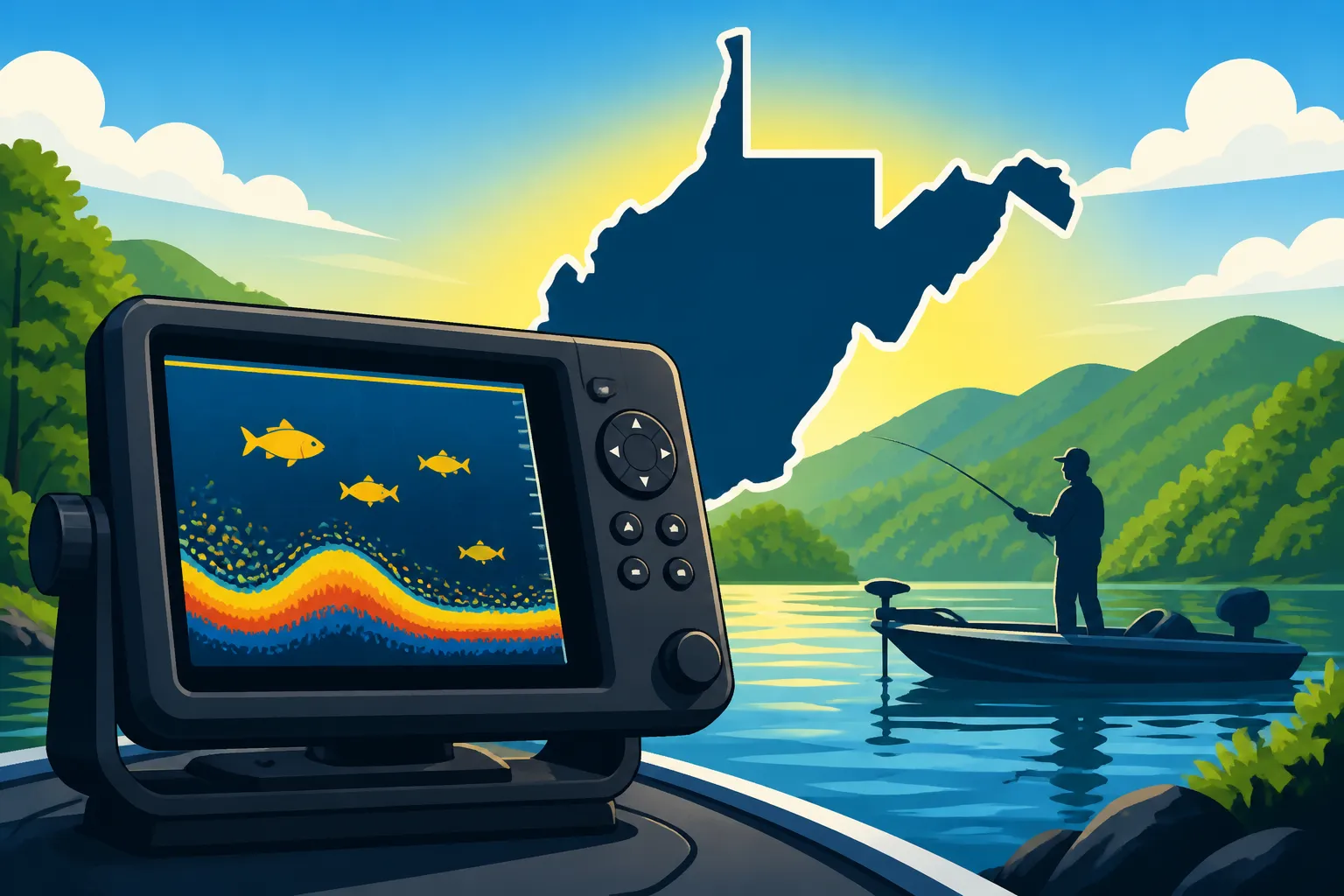
At its core, a fish finder uses sonar (Sound Navigation and Ranging) technology to create a visual representation of what's beneath your boat. It works by sending sound waves down into the water from a transducer, which then "listens" for the echoes that bounce back. These echoes are then translated into images on your screen, revealing depth, bottom composition, structure, and, crucially, fish.
The speed at which the sound waves return indicates the depth, while the intensity of the echo helps determine the hardness of the bottom or the density of an object. A soft, muddy bottom will return a weaker echo than a hard, rocky bottom. Fish and other suspended objects like bait balls will also return echoes, appearing as arches or distinct shapes on your display. This technology takes all the guesswork out of locating fish, transforming it into a precise, almost scientific endeavor.
Moving from simply hoping for a bite to actively targeting fish on your screen is a revelation. Instead of casting aimlessly, you can see a school of crappie holding tight to a brush pile, or a lone muskie lurking near a fallen tree. This precision allows you to choose the right lure, cast to the exact spot, and increase your chances of a hook-up significantly. It truly changes your entire approach to fishing, making every cast more intentional and every catch more satisfying.
The Advantage on Popular Lakes
West Virginia is home to some fantastic fishing lakes, each with its own character and challenges. Summersville Lake, for example, is famous for its incredible clarity and deep, rocky structures, making it a prime spot for smallmouth and walleye. Summersville Lake Fishing Guide highlights its diverse offerings. However, that depth and clarity also mean fish can be harder to locate without the right tools. A fish finder with good depth penetration and detailed imaging becomes indispensable here, allowing you to scan those deep rock piles and ledges where big fish lurk.
Stonewall Jackson Lake is renowned for its trophy largemouth bass, often found relating to submerged timber and expansive creek channels. Stonewall Jackson Lake Fishing emphasizes the need to find these hidden features. Imagine cruising over what appears to be open water, but your fish finder reveals a dense submerged forest teeming with bass – that's the advantage we're talking about. You can then position your boat perfectly to pitch jigs or soft plastics right into their hiding spots.
Even smaller, shallower lakes and ponds benefit from fish finder use. They can reveal subtle bottom changes, small weed beds, or depressions that hold panfish or bass. For anglers exploring our many Best Fishing Lakes in West Virginia, a fish finder is the eye that helps you uncover their secrets, saving you time and dramatically improving your catch rate. It's about maximizing your time on the water, turning unproductive stretches into productive fishing grounds.
Types of Fish Finders: Which One Fits Your Angling Style?
The world of fish finders can seem a bit overwhelming at first glance, with so many different technologies and features. But don't worry, it's not as complicated as it appears. Understanding the basic types and what they excel at will help you narrow down the best option for your West Virginia fishing adventures. From traditional sonar to advanced imaging, each technology offers a unique way to view the underwater world, catering to different fishing styles and budgets.
Whether you're primarily fishing from a large bass boat, a nimble kayak, or even from the bank, there's a fish finder designed with your needs in mind. The key is to match the technology to the type of water you fish most often and the species you target. For instance, deep, clear lakes might benefit from more powerful, high-frequency units, while shallow, turbid rivers might do better with different settings or a simpler display.
Considering how you typically fish is also crucial. Do you spend most of your time trolling open water, or are you meticulously picking apart structure? Do you need a unit that also provides navigation, or are you purely interested in seeing fish? These questions will guide you toward the right type, ensuring you invest in a tool that genuinely enhances your time on the water, rather than one that frustrates you with features you don't need or lack features you do.
Traditional 2D Sonar: The Reliable Workhorse
Traditional 2D sonar, often simply called "sonar" or "broadband sonar," is the foundational technology in all fish finders. It works by emitting a cone-shaped sound wave directly beneath your boat and displaying the returns as arches or lines on your screen. This is the classic "fish arch" you've probably seen – it represents a fish that has moved through the sonar cone.
This type of sonar is excellent for general depth finding, identifying significant structures like humps, drop-offs, and rock piles, and, of course, marking fish. It's typically very reliable, works well in various water conditions, and is often the most affordable option. For many anglers, particularly those just starting out or those who prefer a straightforward display, traditional 2D sonar is more than sufficient for finding fish in most West Virginia lakes.
While it might not offer the photographic detail of some newer technologies, its simplicity and effectiveness make it a go-to for many. It's also less susceptible to interference in some conditions and generally easier to interpret for beginners. For understanding basic depth, bottom composition, and the presence of fish directly below, 2D sonar remains an incredibly potent tool that continues to help anglers catch fish every day.
Down Imaging and Side Imaging: A Whole New Perspective
If 2D sonar is like an x-ray, then down imaging and side imaging are like ultra-high-resolution photographs of the underwater world. These technologies use higher frequencies and thinner, fan-shaped beams to create incredibly detailed, picture-like views.
-
Down Imaging (or DownScan): This technology sends a very thin beam directly beneath your boat, providing a clear, photographic image of structure and fish directly below. You can often discern individual tree limbs, rock crevices, and even the type of baitfish schooled up. It's phenomenal for dissecting specific structures you're fishing, showing you exactly how fish are relating to cover. If you see a cluster of arches on your 2D sonar near a submerged tree, down imaging can show you if those are indeed fish sitting right on the branches.
-
Side Imaging (or SideScan): This is arguably the biggest game-changer for covering water and finding hidden spots. Side imaging sends beams out to the sides of your boat, scanning up to several hundred feet on either side. It creates a panoramic view of the bottom, allowing you to quickly survey vast areas for structure, cover, and fish that would be impossible to find with traditional sonar alone. Imagine cruising across Summersville Lake and spotting a submerged roadbed or an old foundation hundreds of feet to your port side – that's the power of side imaging. This is particularly useful for finding those subtle, often overlooked features that hold trophy fish.
These imaging technologies are particularly valuable on West Virginia's larger lakes and reservoirs where there's a lot of water to cover and many hidden features. They allow you to understand the full context of a fishing spot, not just what's directly beneath your hull. Brands like Humminbird and Garmin offer excellent versions of these imaging technologies, dramatically enhancing your ability to locate and target fish.
Chirp Technology: Enhanced Clarity and Target Separation
CHIRP (Compressed High-Intensity Radiated Pulse) sonar is a more advanced form of 2D sonar that transmits a range of frequencies (like a musical chord) instead of a single frequency. When these multiple frequencies return, the fish finder processes them to create an image with significantly better clarity, target separation, and depth penetration.
What does this mean for you on the water? Well, imagine trying to distinguish two fish swimming very close together on an older 2D sonar – they might just look like one big, blurry blob. With CHIRP, you're much more likely to see them as two distinct fish, even if they're only inches apart. This improved target separation is critical for identifying individual fish in a bait ball or discerning a bass holding tight to a tree branch.
CHIRP also provides cleaner, less noisy images, making it easier to interpret what you're seeing, especially in deeper water. For anglers targeting species like walleye or lake trout in the deeper sections of our larger reservoirs, CHIRP technology offers a distinct advantage in accurately marking fish and understanding the subtle nuances of the bottom. Many modern fish finders integrate CHIRP into both 2D sonar and their down/side imaging capabilities, giving you the best of all worlds.
Portable and Castable Units: Flexibility for Bank and Kayak Anglers
Not everyone fishes from a large bass boat, and that's perfectly fine! West Virginia offers incredible opportunities for bank fishing, wading, and kayak fishing. Thankfully, technology has evolved to provide excellent fish-finding solutions for these more mobile or minimalist approaches.
-
Portable Fish Finders: These units typically consist of a small display and a self-contained transducer that can be temporarily mounted to a kayak, canoe, or even clamped to a boat rented for the day. They often run on their own small battery and are designed for quick setup and portability. Many offer traditional 2D sonar, and some even include GPS. These are perfect for anglers who want the benefits of a fish finder without the permanent installation or cost of a larger, fixed unit. If you're exploring Best Kayak Fishing Spots in West Virginia, a portable unit can make a huge difference.
-
Castable Fish Finders: These are truly revolutionary for bank anglers or those in kayaks who want minimal equipment. A castable fish finder is a small, buoyant ball or pod that you cast out with your rod. It connects wirelessly to your smartphone or tablet, which then acts as the display. These units typically provide 2D sonar and sometimes even basic down imaging. They're fantastic for scouting new areas from shore, checking depths around docks, or finding fish in small ponds. They offer incredible flexibility and allow anglers to bring fish-finding technology into situations where it was previously impossible. You can easily find these types of devices from brands like Deeper or some of the smaller units offered by Garmin, often available on Amazon or through specialty retailers like Bass Pro Shops.
Key Features to Look For in a West Virginia Lake Fish Finder
When you're ready to invest in a fish finder, it's easy to get lost in a sea of acronyms and specifications. However, focusing on a few key features will help you make a smart decision that genuinely enhances your fishing experience on West Virginia's diverse lakes. These are the elements that directly impact how clearly you see the underwater world, how accurately you navigate, and how effective your fishing becomes.
Think about the conditions you typically fish in: Are you often out in bright sunshine? Do you fish deep water frequently? Do you need to mark specific locations and return to them later? Your answers to these questions will guide your choices. Remember, the "best" fish finder isn't necessarily the most expensive or feature-rich; it's the one that best suits your needs and your fishing environment.
Here's a breakdown of what to prioritize:
| Feature Category | Key Considerations for WV Lakes | Why it Matters |
|---|---|---|
| Screen | Size (7-12 inches recommended for dedicated units), Resolution (HD, 800×480 pixels or higher), Color Display (essential for differentiating targets and bottom types), Brightness (for sunny days), Touchscreen vs. Buttons | Larger, higher-resolution screens offer clearer, more detailed images, making it easier to interpret complex structures and distinguish fish from clutter, especially in bright sunlight or for aging eyes. Color helps identify fish arches, bottom hardness, and vegetation. |
| Transducer/Sonar | Frequencies (Dual/Multiple frequencies like 83/200 kHz for 2D; 455/800 kHz or 1.2 MHz for imaging), CHIRP capability, Down Imaging, Side Imaging, Cone Angle (narrower for depth, wider for coverage) | Matching frequencies to water depth/clarity is crucial. CHIRP improves target separation. Down and Side Imaging provide photographic views. Consider the type of fishing (e.g., deep walleye requires good depth, wide search for muskie needs side imaging). |
| Navigation | GPS (internal receiver), Mapping (preloaded LakeVü, Navionics, C-MAP), Chartplotter functionality, Waypoint marking, Route planning, AutoChart Live/Genesis Live (custom mapping) | GPS is essential for marking hot spots, dangerous shoals, and navigating back to productive areas. Detailed mapping reveals contours and helps you stay within legal boundaries. Custom mapping lets you create your own detailed charts of uncharted or frequently fished areas. |
| Power Output (RMS) | Higher RMS wattage (500W-1000W+ for deep water), Lower wattage for shallow water/portable units | Higher RMS power allows the sonar signal to penetrate deeper and return stronger echoes, which is vital for seeing clearly in deep West Virginia reservoirs and for maintaining clarity at speed. |
| Connectivity | Wi-Fi (for castable units), Bluetooth (for remote control/app integration), NMEA 2000 (for network integration with other marine electronics) | For portable units, reliable wireless connection to a smartphone is key. Networking capabilities are important for larger boats that want to share data between multiple displays or integrate with a trolling motor. |
Screen Size and Resolution: Seeing Clearly Matters
Imagine trying to read a detailed map on a tiny, pixelated screen while bouncing across a choppy lake in bright sunlight. Frustrating, right? This is why screen size and resolution are paramount when choosing a fish finder for West Virginia lakes. A larger screen with high resolution means you can actually see and interpret the subtle details that make all the difference.
For dedicated boat-mounted units, a screen size of 7 inches or more is highly recommended. This provides ample real estate to display multiple sonar views simultaneously (e.g., 2D sonar alongside side imaging) without everything looking cramped. A minimum resolution of 800×480 pixels, or even better, HD quality, ensures that fish arches are sharp, structures are clearly defined, and you can distinguish between a snag and a school of baitfish. In our sometimes murky or deep waters, clarity is king.
Brightness is another often-overlooked aspect. On a sunny summer day on Summersville Lake, a dim screen will be practically useless. Look for units with strong backlight capabilities and anti-glare coatings to ensure visibility in all lighting conditions. The ability to clearly see your screen, even with polarized sunglasses, is a feature you'll appreciate every time you hit the water, allowing you to react quickly to what the sonar is showing you.
Transducer Type and Frequencies: Matching Depth and Detail Needs
The transducer is the heart of your fish finder – it's the part that sends and receives the sonar waves. The type of transducer and the frequencies it uses are crucial for getting the best performance on West Virginia's varied waters.
-
Frequencies: Generally, lower frequencies (like 50 kHz or 83 kHz) penetrate deeper into the water, making them great for deep reservoirs where you're trying to mark fish or structure far below. Higher frequencies (like 200 kHz, 455 kHz, 800 kHz, or 1.2 MHz) provide much finer detail and better target separation but don't penetrate as deeply. For down and side imaging, very high frequencies are used to create those photographic-like views. Many modern fish finders offer dual-frequency or multiple-frequency transducers, giving you the flexibility to switch between deep penetration and high detail as needed. For example, using 200 kHz for detailed views of shallower structure and 83 kHz for scanning deep channels.
-
Cone Angle: This refers to the width of the sonar beam. A wider cone (e.g., 60 degrees) covers a larger area but offers less detail, while a narrower cone (e.g., 20 degrees) provides more detail but scans a smaller footprint. For 2D sonar, a wider cone is generally good for searching broad areas, while a narrower cone can be useful for pinpointing specific targets in deep water. Imaging technologies use very narrow, fan-shaped beams to achieve their detail. Understanding how different frequencies and cone angles work together allows you to tailor your sonar view to specific situations, whether you're searching for West Virginia Walleye Daily and Possession Limits in deep water or pitching to bass in shallow coves.
GPS and Mapping Capabilities: Navigating and Marking Hotspots
A fish finder without GPS and mapping capabilities is like having a powerful telescope without a star chart. While it can show you what's down there, it can't tell you where "there" is or how to get back to it. For serious anglers on West Virginia's larger lakes, integrated GPS and detailed mapping are absolutely non-negotiable features.
GPS allows you to precisely mark waypoints – those hidden brush piles, productive humps, or secret creek channels that you discover. This means you can return to them again and again, rather than trying to remember a vague landmark. It also enables you to create and follow routes, which is incredibly helpful for navigating unfamiliar waters or safely returning to the boat ramp in low light. When you find a school of West Virginia Black Bass Limits and the New River Slot Limit on a particular rock pile, you want to be able to drop a pin and come back.
Modern fish finders often come preloaded with incredibly detailed mapping for our lakes, showing depth contours, navigational aids, and sometimes even points of interest. Some advanced units, like those from Garmin or Lowrance, offer "AutoChart Live" or "Genesis Live" features. These allow you to create your own custom, high-definition bathymetric maps in real-time as you motor across the lake. Imagine discovering a subtle, unmapped ridge on Summersville Lake that's holding fish, and instantly adding it to your personal map – that's a true game-changer for finding Best Bass Fishing Spots in West Virginia that others might miss.
Power Output (RMS) and Cone Angle: Deeper Water, Wider Coverage
The power output, measured in RMS (Root Mean Square) wattage, of your fish finder directly relates to how effectively it can penetrate deep water and how clear its returns will be at speed. Think of it as the "volume" of the sonar signal. A higher RMS wattage means a stronger pulse, which can travel deeper and still return a clear echo.
For fishing the deep reservoirs of West Virginia, like Summersville or Cheat Lake, a fish finder with an RMS power output of 500 watts or more is highly recommended. This ensures you get crisp, clear images even when scanning depths of 100 feet or more. Lower wattage units might struggle in these deep environments, producing weaker, less reliable returns. If you're often fishing shallower rivers or ponds, a lower wattage might be sufficient, but more power is rarely a bad thing.
As for the cone angle, we touched on this briefly, but it's worth reiterating its importance. The cone angle determines the area of the bottom that the sonar beam covers. A wider cone provides greater coverage, making it easier to find fish and structure over a broad area as you move. However, a wider cone also spreads the sonar energy over a larger area, reducing the detail and target separation. A narrower cone focuses the energy, providing greater detail and depth penetration but covering a smaller footprint. Many transducers offer dual-cone options, giving you the best of both worlds – a wider cone for scanning and a narrower cone for detailed analysis of specific targets. Understanding this balance helps you fine-tune your search for elusive fish.
Installation and Setup: Getting Your Fish Finder Ready for Action
So, you've chosen your fish finder – congratulations! Now comes the exciting part: getting it installed and ready to help you find more fish on West Virginia's waters. This isn't just about screwing it onto your boat; proper installation is crucial for optimal performance. A poorly mounted transducer or inadequate power supply can lead to frustratingly bad readings, making your expensive new toy feel useless.
Many anglers get intimidated by the installation process, but with a little planning and patience, it's a perfectly manageable DIY project for most. The key is to understand the different components and how they interact to give you a clear picture of the underwater world. Don't rush this step; taking the time to do it right will save you headaches and ensure you get the most out of your investment.
Remember, every boat is a little different, and what works perfectly on one might need adjustments on another. Consider your boat's hull type, speed, and how you typically launch it. Whether you're running a small jon boat on the Greenbrier River or a big bass boat on Summersville, a solid installation lays the groundwork for accurate fish finding.
Transducer Mounting Options: From Transom to Trolling Motor
The transducer is the most critical component for clear sonar readings, and its mounting location can make or break your fish finder's performance. The goal is to get it into clean, undisturbed water, free from air bubbles or turbulence.
-
Transom Mount: This is the most common and easiest installation for most small to medium-sized boats. The transducer mounts to the boat's transom, typically on the starboard side (away from the propeller if you have an outboard). It's designed to be slightly submerged in the water, providing clear readings at both slow and moderate speeds. The key here is to find a spot clear of prop wash and other obstructions. You'll need to drill holes, so make sure you use marine-grade sealant to prevent leaks. Many units, especially those from brands like Lowrance and Humminbird, come with transom-mount transducers.
-
Trolling Motor Mount: For anglers who primarily use a bow-mounted trolling motor, mounting the transducer directly to the trolling motor's lower unit is an excellent option. This places the transducer in very clean, undisturbed water, providing superb readings, especially at trolling speeds. This is popular among bass anglers who spend a lot of time on the front deck. Some trolling motors even come with built-in transducers, offering a very clean, integrated setup.
-
Thru-Hull Mount: This is typically found on larger, faster boats, especially those with inboard engines. The transducer is literally mounted through a hole drilled in the hull, placing it directly in the water. This offers excellent high-speed performance but requires professional installation and is a more involved process.
-
In-Hull (Shoot-Thru) Mount: For fiberglass boats, some transducers can be mounted inside the hull, shooting the sonar signal directly through the fiberglass. This offers protection for the transducer and requires no drilling into the exterior hull, but there can be some signal loss, and it's not suitable for all hull types (especially aluminum or cored hulls). This is a great option if you want to avoid drilling holes.
Powering Your Unit: Battery Considerations
A fish finder, especially a powerful one with a bright screen and advanced imaging, needs a reliable power source. Most units operate on 12-volt DC power, typically supplied by your boat's deep-cycle battery.
It's absolutely crucial to have a dedicated marine battery for your electronics, separate from your starting battery if possible. Fish finders can draw a fair amount of power, and you don't want to accidentally drain your starting battery while trying to locate that perfect drop-off. Ensure your wiring is properly sized for the length of the run and fused appropriately to protect your unit and your boat's electrical system. Poor wiring can lead to voltage drops, causing your fish finder to dim, reboot, or give inconsistent readings.
For kayak anglers or those using portable units, smaller, lighter 12-volt batteries (like SLA or lithium iron phosphate batteries) are ideal. These offer long run times in a compact package. When considering battery life, look at the amp-hour (Ah) rating of the battery and the current draw of your fish finder (usually listed in its specifications). A larger Ah battery will give you more hours on the water before needing a recharge. Always carry a fully charged spare battery if you plan on long days or multi-day trips.
Initial Settings and Adjustments: Optimizing for West Virginia Conditions
Once your fish finder is physically installed and powered up, the next critical step is to dial in its settings for optimal performance on West Virginia's unique waters. This isn't a "set it and forget it" process; conditions change, and your settings should adapt.
Start with the basics:
- Sensitivity/Gain: This controls how strong of an echo the unit displays. Too low, and you'll miss faint returns (like small baitfish or subtle bottom changes). Too high, and you'll get a lot of clutter and noise on your screen. Start around 70-80% and adjust in small increments. For clear lakes like Summersville, you might be able to run higher sensitivity; in murkier waters, you might need to back it off slightly.
- Depth Range: Set this to auto initially, but manually adjust it if you're focusing on a specific depth zone (e.g., if you know fish are holding between 20-30 feet). This helps zoom in on the relevant part of the water column.
- Scroll Speed: This determines how quickly the sonar history scrolls across your screen. A faster speed gives you more detail of what's happening in the immediate vicinity, while a slower speed shows more history. Experiment to find what works best for your boat speed and fishing style.
- Noise Rejection/Surface Clarity: These settings help filter out interference from boat engines, electrical systems, and surface clutter. Adjust these carefully, as too much filtering can also remove legitimate targets.
Spend time on the water experimenting with these settings. Drive over known structures, watch how fish appear, and make small adjustments. The more you play with the settings, the better you'll understand how your specific unit interprets West Virginia's underwater world, helping you hone your skills in Best Sonar settings for finding structure on Summersville Lake.
Interpreting Your Fish Finder: Reading the Underwater World
Having a fish finder is one thing; understanding what it's telling you is another entirely. Many anglers buy a unit, turn it on, and then stare at a colorful screen, unsure if they're looking at a monster walleye or just a piece of debris. Learning to interpret the various displays is arguably the most important skill you'll develop, turning abstract lines and colors into actionable information. It's about translating those sonar echoes into a mental picture of the underwater landscape and the life within it.
Think of your fish finder as a sophisticated underwater language. Initially, it might sound like gibberish, but with practice and understanding the "vocabulary," you'll start to discern patterns, identify key features, and ultimately, find more fish. This isn't just about spotting "fish arches"; it's about understanding the entire context – the bottom, the structure, the bait, and how it all relates to your target species.
The beauty of modern fish finders is their ability to show you multiple views at once, often in vibrant color. This provides a comprehensive understanding that no single view could offer. By learning to cross-reference your 2D sonar, down imaging, and side imaging, you'll develop an incredible intuition for what's happening beneath your boat, allowing you to make smarter, more informed decisions about where and how to fish.
Identifying Fish Arches and Structures
The classic "fish arch" on 2D sonar is what most people associate with a fish finder. These arches are created when a fish passes through the cone-shaped sonar beam. A full, strong arch indicates a fish that passed directly through the center of the cone, while partial arches suggest a fish on the edge. The thickness and size of the arch can give clues about the size of the fish – a thick, dark arch usually means a larger fish, while thin arches are smaller ones.
However, fish don't always appear as perfect arches. If a fish is stationary beneath the boat, it might appear as a straight line or blob. Schools of baitfish will often show up as dense clouds or blobs, usually higher in the water column. It's crucial to differentiate these from actual game fish.
Beyond fish, identifying structure is equally important.
- Bottom Contour: Look for changes in depth. Sharp drops, ledges, and gradual slopes will be clearly visible. Fish often relate to these transitions.
- Humps and Bumps: These are elevated areas on the bottom, often productive hotspots.
- Submerged Timber/Brush: On 2D sonar, this might appear as vertical lines or fuzzy blobs extending from the bottom. Down imaging will give you a much clearer, photographic view, often allowing you to pick out individual branches.
- Rock Piles/Boulders: These will appear as strong, often distinct returns on 2D, and as clearer, textured shapes on down imaging.
- Weed Beds: These will often show up as softer, irregular masses rising from the bottom, with different densities indicating thick or sparse vegetation.
Combining these observations is key. For example, if you see large arches within a submerged tree on your down imaging, that's a much more confident fish ID than just a random arch over a flat bottom.
Understanding Lake Bottom Composition
Your fish finder doesn't just show you fish; it can also reveal valuable information about the composition of the lake bottom. This is incredibly useful for predicting where different species might hold, as fish often prefer specific types of substrate for feeding, spawning, or cover.
- Hard Bottom (Rock, Gravel, Clay): These will typically produce a strong, thick, and bright return on your 2D sonar, often with a distinct "second echo" (a faint reflection of the bottom appearing below the main bottom reading). This indicates a hard surface that sound waves bounce off very efficiently. Many game fish, like smallmouth bass and walleye, prefer hard bottoms for foraging.
- Soft Bottom (Mud, Silt): A soft bottom will produce a thinner, less intense, and often fuzzier return on your 2D sonar, with little to no second echo. The sound waves are absorbed more readily by the soft material. While some fish, like catfish, are often found on soft bottoms, many other species avoid them.
- Vegetation: As mentioned, weed beds appear as irregular masses rising from the bottom. The density and height can tell you a lot. Dense, healthy grass is often a magnet for bass and panfish.
By observing how these returns look on your screen, you can start to differentiate between a productive rock pile and a barren mud flat. This helps you narrow down your search and focus your efforts on areas more likely to hold fish. It’s also crucial for understanding how certain lures will interact with the bottom – you wouldn't want to drag a crankbait through thick mud if you're targeting rock-loving fish.
Locating Thermoclines and Bait Balls
Beyond the bottom and individual fish, your fish finder can reveal critical information about the water column itself, such as thermoclines and bait balls. These are often overlooked but incredibly important for understanding fish behavior, especially in deeper lakes.
-
Thermoclines: In deeper lakes, especially during summer, the water often stratifies into layers of different temperatures. The thermocline is the distinct boundary between the warmer upper layer (epilimnion) and the colder, deeper layer (hypolimnion). Fish often congregate around the thermocline because it's where they find optimal temperature, oxygen levels, and food. On your 2D sonar, a thermocline will appear as a distinct, often fuzzy horizontal line or band across the screen. Below this line, you'll typically see fewer fish, as oxygen levels often decrease. Locating the thermocline can instantly narrow down your search for species like walleye, crappie, or even deep-holding bass.
-
Bait Balls: Game fish follow their food, and a fish finder is excellent for locating schools of baitfish. These will typically appear as dense, amorphous clouds or blobs on your 2D sonar, often suspended in the mid-water column or near structure. If you see larger fish arches or marks around or within these bait balls, you've found a prime feeding zone! Many fish finders can even help you differentiate between different types of baitfish based on their typical schooling patterns or location in the water column. Finding the forage is often the fastest way to find the predators, making bait ball identification a key skill for any serious angler.
Advanced Tips for Maximizing Your Fish Finder on West Virginia Lakes
You've got the basics down, you know how to read your screen, and you're starting to find more fish. But there's always another level, isn't there? Maximizing your fish finder isn't just about spotting fish; it's about integrating it into your overall fishing strategy, using its advanced features to gain an even deeper understanding of West Virginia's underwater world. This is where your fish finder truly becomes an indispensable partner in your angling adventures, unlocking secrets and patterns you might otherwise never discover.
Think beyond simply finding fish in the moment. How can you use this technology to plan future trips? How can it help you adapt to changing conditions? The answers lie in leveraging features like custom mapping, networking, and understanding seasonal fish movements in relation to what your sonar reveals. These advanced techniques transform your fish finder from a simple locator into a powerful analytical tool.
By pushing the boundaries of what your unit can do, you'll not only catch more fish but also become a more knowledgeable and efficient angler. It's about taking that raw data on your screen and turning it into a comprehensive understanding of the entire aquatic ecosystem, allowing you to consistently put yourself in the right place at the right time.
Creating Custom Maps and Waypoints
One of the most powerful advanced features available on many modern fish finders is the ability to create your own custom contour maps. Brands like Lowrance with Genesis Live or Garmin with Quickdraw Contours allow you to literally map the bottom in high definition as you drive your boat. This is an absolute game-changer for finding subtle humps, ditches, and ledges that might not appear on standard preloaded charts, especially on less-frequented areas of our larger lakes.
Imagine exploring a new cove on Bluestone Lake, and as you idle along, your screen is painting incredibly detailed depth contours in real-time. You spot a small, unmapped rock pile – boom, mark a waypoint! You see a faint old roadbed that drops into a channel – mark another. These aren't just generic spots; they're your spots, discovered by you, and often hold unpressured fish. This feature turns every reconnaissance mission into a valuable data-gathering exercise.
Beyond creating maps, mastering waypoint management is crucial. Don't just mark "fish here." Use descriptive names like "Summersville Rock Hump," "Tygart Timber Pile," or "Crappie Brush." Organize your waypoints into folders by species or lake. Over time, you'll build an invaluable library of productive locations, turning your fish finder into a historical record of your fishing success and a roadmap for future adventures. This is how you build a real advantage on the water.
Integrating with Trolling Motors and Other Electronics
For serious anglers, particularly those in larger boats, the true power of a fish finder can be unleashed through integration with other marine electronics. This creates a cohesive system where different devices communicate and share information, dramatically enhancing your control and efficiency on the water.
The most common and impactful integration is with a bow-mounted electric trolling motor. Many top brands, like Minn Kota and Garmin, offer trolling motors that can directly communicate with your fish finder. This allows for features like:
- Spot-Lock/Anchor Mode: Your trolling motor can hold your boat precisely in position over a marked waypoint or a specific structure, even in wind or current, freeing you up to focus on fishing. This is invaluable when you find a school of West Virginia Walleye Daily and Possession Limits on a deep hump.
- Follow-the-Contour: You can program your trolling motor to automatically follow a specific depth contour on your map, allowing you to present lures consistently along a productive breakline.
- AutoPilot: Navigate directly to a waypoint or along a pre-planned route, all hands-free.
Beyond trolling motors, some fish finders can be networked with multiple displays on the boat, allowing you to view sonar on your console and another display on the bow. They can also integrate with radar, VHF radios, and engine data. This level of connectivity transforms your boat into a highly efficient fishing machine, putting you in unparalleled control of your position and understanding of the underwater environment. You can explore these integrated systems at your local Bass Pro Shops or look up reviews for specific models on Amazon.
Seasonal Adjustments for Optimal Performance
Fish behavior changes dramatically throughout the year in response to water temperature, oxygen levels, and spawning cycles. A truly advanced angler uses their fish finder to track these changes and adjust their tactics accordingly. Your fish finder isn't just for finding current fish; it's for understanding patterns throughout the seasons.
- Spring: As water warms, fish move shallower for spawning. Use your fish finder to scout shallow flats, transition zones, and points near spawning areas. Look for concentrations of fish in the upper water column or tightly relating to newly emerging vegetation.
- Summer: In deep reservoirs, the thermocline becomes crucial. Use your 2D sonar to locate this temperature barrier, as fish will often suspend just above or within it. Side imaging is excellent for finding deep offshore structure like humps and ledges where fish seek cooler, oxygenated water. How to fish deep structure for summer walleye is a prime example of where these insights are vital.
- Fall: As water cools, baitfish often move into creeks and shallower bays, followed closely by predatory game fish. Use your side imaging to cover large areas of these shallower zones, looking for bait balls and active predators. Watch for fish relating to vertical cover like standing timber as they transition.
- Winter: Fish often move to deep, stable areas and become less active. Use your deep-penetrating 2D CHIRP sonar to find fish holding tight to bottom structure in deep channels or main lake basins. Ice Fishing in West Virginia can be greatly enhanced with portable sonar units that help you locate fish under the ice.
By observing how fish appear on your screen and where they are located in relation to structure and depth throughout the year, you'll develop an incredible intuition for seasonal patterns. This allows you to anticipate fish movements and consistently stay on the bite, no matter the time of year on West Virginia's diverse waters.
Choosing the Right Fish Finder for Different West Virginia Lakes
West Virginia's fishing landscape is incredibly varied, from the deep, clear waters of Summersville Lake to the winding, rocky stretches of the New River, and everything in between. It makes sense, then, that there isn't a one-size-fits-all "best" fish finder. What works brilliantly for a big bass boat on a deep reservoir might be overkill or impractical for a kayak angler exploring small streams or bank fishing a local pond. The trick is to tailor your choice to the specific types of waters you fish most often and your primary angling style.
Thinking about your typical fishing trip can help simplify the decision. Do you primarily chase muskie in the sprawling Cheat Lake, or are you focused on trout in smaller, clearer impoundments? Do you have a large boat with a strong power supply, or are you looking for something lightweight and battery-powered? Matching your equipment to your typical use case ensures you get the most value and performance from your investment.
This section will help you consider these variables, guiding you towards a fish finder that's perfectly suited for your West Virginia fishing adventures, whether you're breaking new ground or refining your approach on familiar haunts.
Deep Reservoirs vs. Shallow Ponds
The depth and clarity of the water you typically fish will heavily influence the type and power of the fish finder you need.
-
Deep Reservoirs (e.g., Summersville Lake, Stonewall Jackson Lake, Cheat Lake): These vast bodies of water often feature significant depths, sometimes exceeding 100 feet. For these environments, you'll want a fish finder with:
- High Power Output (RMS): A unit with at least 500W RMS, preferably 1000W or more, will provide the necessary signal strength to penetrate deep water and return clear echoes.
- CHIRP Sonar: The enhanced clarity and target separation of CHIRP are invaluable for distinguishing fish from structure in deep water, especially when targeting walleye or suspending bass.
- Side Imaging: Crucial for covering large areas quickly and finding subtle, deep structures like humps, ledges, and submerged timber that might be otherwise invisible. This is especially useful in clear water where fish can hold deep.
- Detailed GPS and Mapping: Essential for marking deep structure, navigating large expanses, and creating custom contour maps of uncharted deep zones. A unit with robust mapping, like those offered by Humminbird or Lowrance, would be a great fit.
-
Shallow Ponds and Small Lakes: For shallower waters, often less than 20-30 feet deep, your needs are a bit different:
- Less Power Required: While more power is never bad, you don't necessarily need a 1000W unit for shallow water. A fish finder with 200W-300W RMS is often sufficient.
- High-Frequency Imaging: Down Imaging is still incredibly useful for pinpointing fish in brush piles or weed beds. Side Imaging can also be helpful for scouting shallow flats quickly.
- Portable or Castable Options: If you're bank fishing or using a small jon boat or kayak, a portable unit or even a castable fish finder that links to your phone can be highly effective and more practical. These are easily available through retailers like Bass Pro Shops or online at Amazon.
- Focus on Structure and Cover: In shallow water, fish often relate tightly to visible (or almost visible) cover like lily pads, docks, laydowns, and sparse weed lines. Your fish finder's ability to clearly show these is key.
River Systems with Current
Fishing West Virginia's rivers, such as the New River, Kanawha River, or the South Branch of the Potomac, presents unique challenges compared to lakes. Strong currents, rocky bottoms, and often varying clarity mean your fish finder needs to perform reliably in dynamic conditions. Best Fishing Rivers in West Virginia will show you the diversity.
- Robust Transducer Mounting: On rivers, your transducer is more susceptible to striking rocks or debris. A sturdy transom mount, or a trolling motor mount that can be easily retracted, is crucial. Some transducers are designed with stronger housings for river use.
- High-Frequency 2D and Imaging: Strong currents can make fish appear as streaks on slower-update screens. High-frequency 2D sonar with fast scroll speeds and CHIRP can help resolve fish in current. Down and Side Imaging are excellent for finding subtle current breaks, rock veins, and deep holes that hold smallmouth bass or walleye, even in moving water. Consider specialized units like the Best Fish Finder for River Fishing which are built to handle these conditions.
- GPS for Navigation and Safety: On rivers, current can quickly push you off course. GPS with good mapping (showing river channels, rapids, and hazards) is critical for navigation and safely returning upstream to a hot spot. Mark those productive eddies, deep current seams, and submerged boulders.
- Sensitivity Adjustments: River water can sometimes be murkier or have more suspended particulate. You'll need a unit that allows you to easily adjust sensitivity and noise rejection settings to cut through the clutter without losing valuable targets. Learning to interpret fish on different river bottoms is a skill that will pay off when targeting How to Catch Smallmouth Bass in West Virginia Rivers.
Matching Your Budget and Boat Type
Let's face it, budget is always a factor, and thankfully, there are excellent fish finder options at every price point. What's most important is getting the best features for your budget and ensuring the unit is practical for your specific boat or fishing style.
- Entry-Level (under a few hundred dollars): These typically offer basic 2D sonar, often with a smaller, lower-resolution screen and maybe rudimentary GPS. They are perfect for small boats, kayaks, or bank anglers who just need to see depth and basic fish arches. Castable units fall into this category.
- Mid-Range (several hundred to a thousand dollars): This is where you start getting into more advanced 2D CHIRP, Down Imaging, larger color screens, and more robust GPS with mapping capabilities. This range offers an excellent balance of features and affordability for most serious weekend anglers with moderate-sized boats.
- High-End (over a thousand dollars): These units boast large, high-resolution screens (10+ inches), all imaging technologies (CHIRP 2D, Down, Side, sometimes 360-degree), advanced networking, custom mapping, and full integration with trolling motors and other electronics. These are for dedicated anglers with larger boats who demand the absolute best in performance and features.
Your boat type also dictates practicalities.
- Kayaks/Canoes: Focus on portable units, castable units, or smaller fixed units that are easy to power with a separate battery. Size and weight are important, as is ease of installation and removal. Check out Best Kayaks for West Virginia Fishing for compatible boat types.
- Jon Boats/Small Aluminum Boats: These can often accommodate mid-range units with transom-mounted transducers. Power might still be a consideration if you only have one battery.
- Bass Boats/Larger Fiberglass Boats: These are built to handle high-end units with multiple displays, network integration, and dedicated power systems. Transducer choice becomes more flexible, with options for thru-hull or dedicated trolling motor transducers. Consider what you need from Best Boats for West Virginia Rivers and Lakes.
By carefully considering your typical fishing environment, your budget, and the kind of boat you use, you can confidently choose a fish finder that will truly elevate your West Virginia fishing adventures.
Disclaimer
This article is for general informational purposes only and does not constitute professional advice. Laws, prices and regulations vary by location and change over time. Consult a qualified professional for guidance on your specific situation.