The largest brown trout ever caught in West Virginia
The dream of catching a true trophy fish is one that keeps many of us coming back to the water, and in West Virginia, few dreams burn brighter than landing a giant brown trout. For those who yearn to connect with a true monster of the deep, often shrouded in mystery and legend, this guide is your deep dive into the elusive world of West Virginia's largest brown trout, offering insights into the state record and how you might just land your own.
West Virginia's Record Brown Trout: A Legend in the Making
Every state has its legendary fish, and in West Virginia, the brown trout holds a special place in the hearts of many anglers. These powerful, intelligent fish are revered for their challenging nature and their potential to grow to truly impressive sizes, testing the skill and patience of even the most seasoned fisher.
The Tale of the State Record
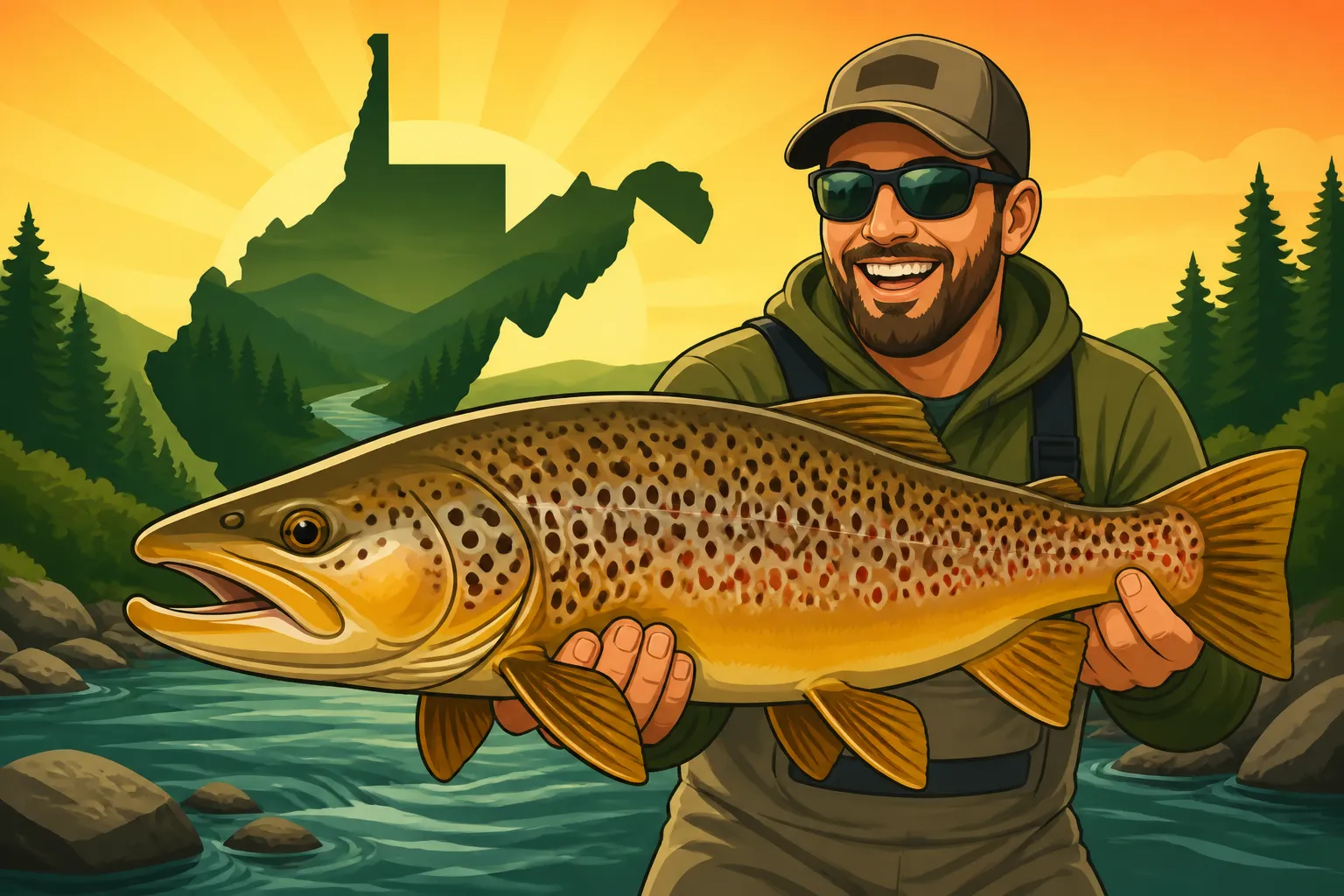
While the West Virginia Division of Natural Resources (WVDNR) doesn't always publicize the exact catch details or locations of every state record, the tales of these monster fish ripple through the angling community. Imagine the sheer excitement and disbelief of pulling in a brown trout that weighs in at a whopping 17 pounds, 14.72 ounces, and measures 31.75 inches long! That's the current state record for brown trout, a fish caught in the South Branch of the Potomac River. This wasn't just a big fish; it was a true leviathan, a testament to the incredible potential of West Virginia's waters. For many, this record isn't just a number; it's a beacon, proving that those elusive, massive brown trout are indeed swimming in our rivers, waiting for the right moment and the right angler. The fact that a fish of this caliber was caught in the South Branch highlights the immense value of our larger river systems in producing incredible wild and holdover trout.
The Angler Behind the Catch
Often, the story behind the record is as fascinating as the fish itself. While specific details about the angler who caught this particular record brown trout are not widely available to the public, imagine the scenario: a dedicated angler, perhaps spending countless hours on the water, honing their craft, learning the river's secrets. They likely used heavy-duty tackle, perhaps a robust spinning rod or a sturdy fly rod capable of handling such a powerful fish. Picture the intense battle, the line screaming, the rod bent double, and the heart-pounding moments as the fish lunged and darted in the strong current. Landing a fish of this size is a monumental achievement, demanding not just skill but also sheer determination and a bit of luck. Whether it was on a perfectly presented streamer pattern, a large crankbait, or a well-placed live bait, the angler's persistence paid off in a way most only dream of. For those pursuing their own trophy, remember that patience and persistence are key, along with having the right gear on hand. A quick check on Amazon for heavy leaders or strong hooks before your trip can make all the difference.
Verifying a Potential Record
If you're lucky enough to hook into a brown trout that feels like it could be a contender, knowing the proper procedure for record verification is absolutely crucial. The WVDNR has strict guidelines to ensure fair and accurate record keeping. First and foremost, if you think you have a potential record, keep the fish alive if possible, or at least preserve it properly on ice. You’ll need to get it officially weighed on a certified scale, typically at a grocery store or bait shop that has one, and witnessed by at least two people not related to you. Length and girth measurements are also required, often taken by a WVDNR official who will also verify the species. There are forms to fill out, and sometimes a photograph is needed. It’s a process designed to protect the integrity of the state records, ensuring that every record-breaking catch is legitimate. Before you even cast a line, it's a good idea to familiarize yourself with the WVDNR's specific rules, as fishing without proper knowledge can lead to issues. This includes understanding the West Virginia Fishing Regulations Explained which cover everything from licenses to fish handling.
Understanding Brown Trout Growth and Habitat in West Virginia
Brown trout, unlike their rainbow and brook trout cousins, have a reputation for being somewhat enigmatic. They can be incredibly wary, live a long time, and often grow to impressive sizes, making them a prized catch. Understanding what makes them tick is key to finding a trophy.
What Makes Brown Trout Grow So Big?
Several factors contribute to a brown trout reaching trophy dimensions. Primarily, genetics play a role – some fish are simply predisposed to grow larger. However, the biggest driver is often an abundant food supply. Young brown trout start on insects, but as they grow, they become opportunistic predators, shifting their diet to include larger prey like baitfish (minnows, sculpins), crayfish, frogs, and even small rodents or other trout. Waters that offer a rich larder of these high-protein meals allow browns to pack on the pounds. Longevity is another crucial factor; brown trout can live for many years in ideal conditions, giving them more time to grow. Cold, clear water with a consistent flow and plenty of deep pools, undercut banks, and submerged cover provides the perfect environment for these fish to thrive without expending too much energy. They're excellent at finding prime lies where they can ambush prey and remain hidden from predators. This combination of rich food, long life, and protective habitat is the recipe for a true giant.
Prime West Virginia Waters for Trophy Browns
West Virginia boasts several fantastic waters known for their potential to hold large brown trout. These aren't always the easiest places to fish, but they offer the best chance at a monster. Large river systems with good populations of forage fish and cooler water are prime candidates. The South Branch of the Potomac River, where the state record was caught, is certainly one such area. Its size, depth, and diverse ecosystem allow brown trout to grow unhindered. Tailwater fisheries, which are river sections immediately downstream from dams, also often provide ideal conditions. The consistent cold-water releases from deep reservoirs create stable temperatures, which can be critical for brown trout survival and growth, especially during hot summer months. Areas of the Elk River Trout Fishing are known to produce impressive holdover browns, as are certain sections of the Cranberry River Fly Fishing and even some wild trout strongholds like Shavers Fork Brook Trout Fishing, though the brook trout themselves are smaller, the rich ecosystem can foster large browns as well. These waters offer a mosaic of habitats, from riffles and runs to deep, dark pools, all essential for a thriving brown trout population. While West Virginia is famous for its stocked trout, the biggest browns are often wild or naturalized holdovers that have spent years evading anglers.
Factors Limiting Brown Trout Size
Even in prime habitat, several factors can limit a brown trout's ability to reach trophy size. One of the most significant is water temperature. Brown trout prefer colder water, generally thriving when temperatures are below 68°F. Extended periods of high water temperatures, especially during summer droughts, can stress or even kill larger trout. Habitat degradation, such as siltation from erosion, pollution, or the removal of riparian vegetation (which provides shade and bank stability), can severely impact a stream's ability to support big fish. Fishing pressure is another major factor; highly accessible waters often see their larger, more vulnerable fish removed, leaving less time for them to reach record proportions. Finally, the availability of large prey is crucial. If a stream primarily supports small insects, brown trout may still grow, but they are unlikely to reach the truly massive sizes seen in waters rich with baitfish and crayfish. The balance of these elements is what ultimately determines a fishery's potential for trophy browns.
Strategies for Targeting West Virginia's Giant Brown Trout
Successfully targeting big brown trout isn't about luck; it's about understanding their behavior, knowing where they live, and presenting the right offering with precision and patience. These are intelligent, wary fish that demand respect and a thoughtful approach.
Techniques for Big Browns
When it comes to big brown trout, you often have to "think big." Forget tiny dry flies and small nymphs, at least for the most part. Trophy browns are meat-eaters, and your presentations need to reflect that.
- Streamer Fishing: This is arguably one of the most effective methods for enticing large browns. Streamers imitate baitfish, crayfish, and even small trout, which are staple foods for big browns. Whether you're casting large articulated streamers on a fly rod or ripping big minnow-imitating plugs on a spinning rod, the goal is to trigger their predatory instincts. Focus on varying your retrieve, from slow strips to aggressive jerks, and make sure your flies or lures are getting down to where the fish are holding. Fly Fishing for Trout in West Virginia offers great foundational advice, but for big browns, you'll need to scale up your flies and tackle considerably.
- Large Nymphs and Bottom Rigs: While less flashy, dead-drifting large stonefly nymphs, worm patterns, or even sculpin imitations along the bottom can be deadly. These fish often hug the streambed, and a natural drift of a substantial meal can be irresistible. For spinning anglers, a Carolina rig with a live minnow or a large soft plastic bait imitating a crayfish can also be very effective. The key is presenting it naturally in the fish's feeding lane.
- Crankbaits and Swimbaits: For anglers using conventional tackle, larger crankbaits, jerkbaits, and swimbaits are essential. These lures can cover a lot of water and imitate the larger prey items big browns key on. Look for lures with natural patterns and colors that mimic local baitfish. Think about the types of lures you'd use for species like Muskie; big browns often want similar substantial meals. A search on Amazon for "heavy duty crankbaits" or "trout swimbaits" will give you an idea of the sizes and styles that work.
Reading the Water for Trophy Lies
Big brown trout are masters of efficiency. They're not going to be in fast, turbulent water constantly fighting the current. Instead, they seek out "trophy lies" – spots where they can hold with minimal effort, remain hidden, and have easy access to passing food.
- Deep Pools: These are classic spots. Large browns will often hang in the deepest part of a pool, especially if there's structure.
- Undercut Banks: A brown trout's best friend. These offer overhead cover from predators, shade, and a perfect ambush point for anything drifting downstream. Cast tight to these banks, letting your lure or fly tumble underneath.
- Logjams and Boulder Fields: Any significant structure that breaks the current and offers concealment is a potential home for a big brown. These areas provide current breaks where fish can rest and hide.
- Current Seams: The transition zone between fast and slow water is a superhighway for food. Big browns will often sit just out of the main current, waiting for an easy meal to drift by. Look for eddies behind large rocks or logs. Stealth is paramount when approaching these areas; big browns are incredibly wary and will spook easily.
Essential Gear for Targeting Trophy Browns
You can't bring a knife to a gunfight, and you certainly can't bring ultralight panfish gear to a battle with a 10-pound brown trout. Appropriate tackle is critical.
- Rods and Reels: For fly anglers, a 6 or 7-weight rod with a strong backbone is usually ideal for slinging large streamers and fighting powerful fish. Pair it with a reliable reel with a smooth drag system. Spinning anglers will want a medium-heavy rod, perhaps 6'6" to 7'6" long, capable of casting heavier lures and absorbing the shock of a hard-fighting fish. A reel with a good drag and decent line capacity is a must. Check out Best Gear for West Virginia Trout Fishing for a general overview, but then specifically seek out gear rated for larger fish.
- Lines and Leaders: Strong line is non-negotiable. For fly fishing, a weight-forward line designed for streamers will help with casting. Leaders should be robust, typically 0X-2X for streamers, or even stronger if you're targeting truly giant fish in heavy cover. Fluorocarbon leaders are excellent for their invisibility and abrasion resistance. For spinning gear, 8-12 lb test fluorocarbon or monofilament is a good starting point, with a heavier fluorocarbon leader if you're in clear water or fishing near snags.
- Hooks and Terminal Tackle: Ensure your hooks are sharp and strong enough to handle a big fish without straightening. If you're using lures, consider upgrading the stock treble hooks to stronger, sharper versions. A quality landing net with a rubberized mesh is crucial for safely landing and releasing big fish, minimizing harm to their scales and slime coat. You can find excellent options for all these on Amazon, from specialized nets to heavy-duty hooks and quality line.
Conservation and the Future of West Virginia's Trophy Trout
Landing a trophy brown trout is a truly unforgettable experience, but it's vital that we also play our part in protecting these incredible fish and their habitats for future generations of anglers. The pursuit of giants must go hand-in-hand with responsible angling practices.
Catch and Release Practices for Big Browns
When you're dealing with a large, old brown trout, their survival after release is paramount. These fish represent years, sometimes a decade or more, of growth and are vital to maintaining the gene pool for large fish in a given system. Practicing proper catch and release is not just a good idea; it's an ethical imperative.
- Minimize Fight Time: Use appropriate tackle to bring the fish in as quickly as possible, reducing exhaustion.
- Keep the Fish Wet: Keep the fish in the water as much as you can. If you need a photo, get it quickly and hold the fish horizontally with both hands, supporting its belly. Never hold a large fish vertically by the jaw.
- Wet Hands: Always wet your hands before touching the fish to protect its protective slime coat.
- Quick Unhooking: Use forceps or pliers to remove the hook gently and quickly. Barbless hooks make this process much easier and are highly recommended.
- Adequate Recovery: Once unhooked, hold the fish gently in the current, facing upstream, until it can swim away strongly under its own power. Don't just toss it back; make sure it's revived. West Virginia Catch and Release Rules for Trout provide more detailed guidance on safe handling.
Habitat Protection and Management
The health of West Virginia's brown trout populations, especially the trophy-sized ones, is directly tied to the health of their habitat. The WVDNR works tirelessly on habitat improvement projects, but individual anglers and conservation groups also play a huge role. Projects like planting riparian buffers to provide shade and reduce erosion, removing blockages to fish migration, and advocating for clean water policies all contribute to a thriving ecosystem. Supporting organizations that focus on stream restoration and water quality is a direct way to ensure that our brown trout have the cool, clean, and complex habitats they need to grow large and healthy. Responsible land use around our waterways is also critical; what happens on the land directly impacts the water.
Balancing Angler Desire with Sustainability
The allure of a trophy brown trout is powerful, but it’s crucial to balance this desire with the need for sustainable fisheries. Many of West Virginia's prime brown trout waters have special regulations in place, such as artificial lures only, catch-and-release only, or specific length limits. These regulations are designed precisely to protect larger fish, allowing them to grow to trophy sizes and reproduce, thus contributing to a healthy population. It's important for every angler to know and respect these rules. Always check the latest West Virginia Fishing Regulations Explained before heading to a specific body of water. By understanding Brown Trout Habits in West Virginia Streams and respecting the regulations set forth by the WVDNR, we ensure that the next generation of anglers can also experience the thrill of pursuing and hopefully, landing their own legendary West Virginia brown trout. This commitment to conservation ensures that the tales of monster browns continue for years to come.
| Water Body | Type | Key Features | Primary Food Sources | Best Seasons |
|---|---|---|---|---|
| South Branch Potomac | River | Large, deep pools; varied structure | Baitfish, Crayfish, Insects | Spring, Fall |
| Elk River Tailwater | Tailwater | Consistent cold water; diverse insect hatches | Sculpins, Insects, Minnows | Year-round |
| Cranberry River | River | Wild sections; boulder gardens; deep pockets | Stoneflies, Baitfish, Crayfish | Spring, Fall |
| New River Gorge | River | Large smallmouth habitat; deep rocky pools | Baitfish, Crayfish, Hellgrammites | Spring, Fall |
| Shavers Fork | River | High elevation; diverse insects; woody debris | Large Insects, Small Baitfish | Spring, Fall |
| Cheat River | River | Diverse sections; good structure; varying flows | Baitfish, Crayfish, Insects | Spring, Fall |
Disclaimer
This article is for general informational purposes only and does not constitute professional advice. Laws, prices and regulations vary by location and change over time. Consult a qualified professional for guidance on your specific situation.