What flathead catfish eat
When you think about catfish in West Virginia, it's easy to picture them as bottom-dwelling scavengers, ready to gobble up anything that crosses their path. While that's true for some of their whiskered cousins, the flathead catfish is a whole different creature entirely. These magnificent fish are true apex predators of our rivers and lakes, and understanding their unique dietary preferences is the absolute cornerstone of successfully targeting them. This guide will dive deep into what flathead catfish eat, helping you think like a flathead and improve your chances of landing one of these powerful behemoths.
The Flathead Catfish: A Hunter, Not a Scavenger
Let's clear up a common misconception right off the bat: flathead catfish are not primarily scavengers like channel catfish or blue catfish. While they might occasionally pick up an easy meal, their entire biology is geared toward actively hunting and ambushing live prey. They have broad, flattened heads (hence the name!) with eyes positioned on top, perfect for lurking in cover and looking up for an unsuspecting meal. Their mouths are large and powerful, designed to engulf struggling fish. This fundamental difference in feeding behavior is crucial for any angler hoping to tangle with a big flathead in West Virginia.
You won't find flatheads routinely nosing around for dead bait on the bottom in the same way you would other catfish species. They prefer fresh, lively offerings, which means your approach to bait selection needs to be entirely different. If you've been struggling to catch flatheads, a shift in your understanding of their diet is probably the missing piece of the puzzle. They are incredibly opportunistic hunters, but that opportunity almost always involves a living, breathing meal.
Primary Food Sources for West Virginia Flatheads
The diet of a flathead catfish is largely dictated by what live prey is abundant and easily accessible in its environment. In West Virginia's diverse waterways, from the large expanses of the Ohio River to the rocky stretches of the New River or the deeper pools of Cheat Lake, flatheads have a smorgasbord of options. However, certain species are definitely at the top of their menu.
Small Fish and Panfish
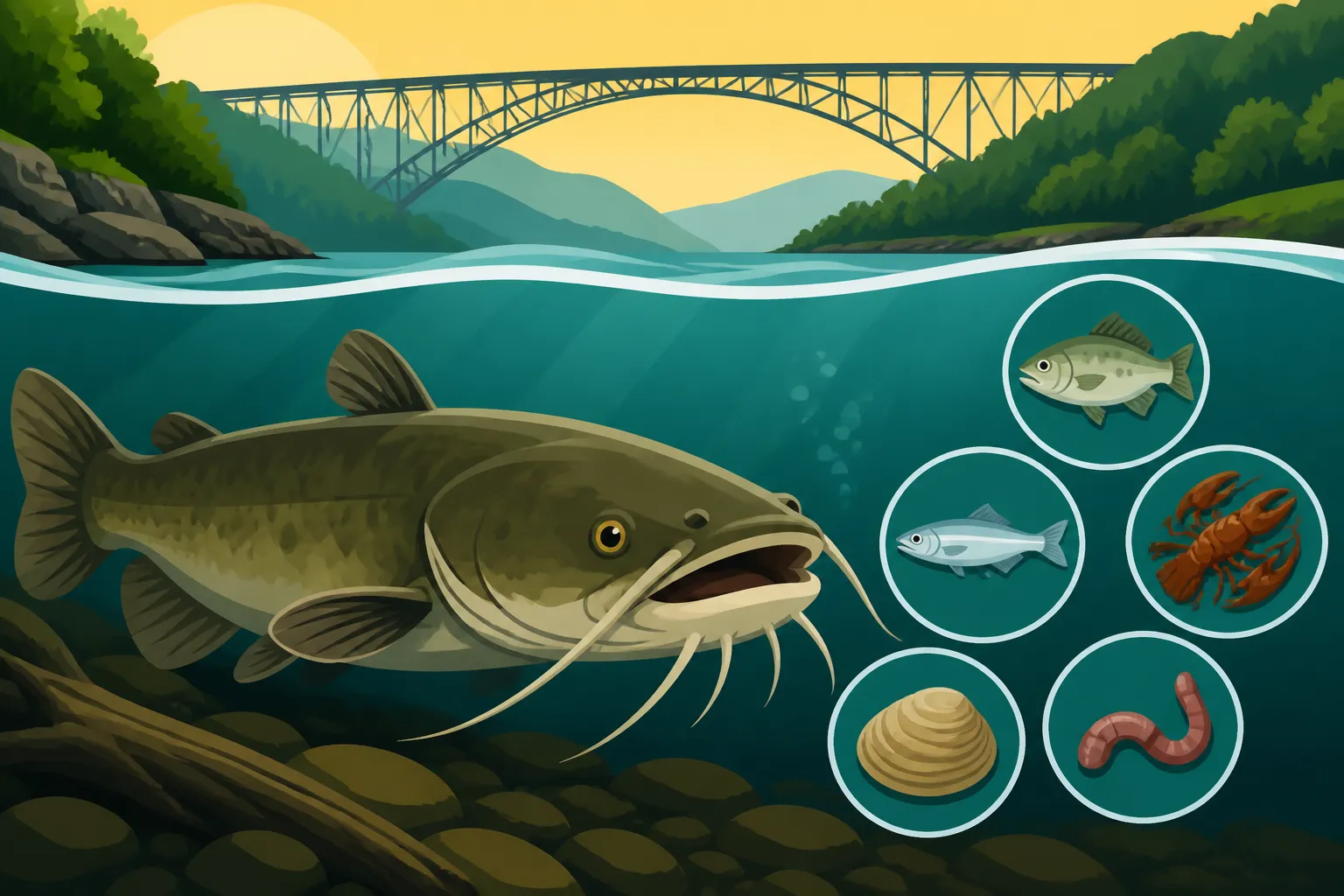
Flathead catfish are incredibly efficient predators of smaller fish. They'll often lurk near structure – like fallen trees, rock piles, or bridge pilings – waiting for schools of baitfish to pass by. When the opportunity strikes, they explode from cover, engulfing their prey with surprising speed and power. These aren't dainty eaters; they want a substantial meal.
Some of their absolute favorites include:
- Sunfish (Bluegill, Green Sunfish, Rock Bass): These panfish are abundant in many West Virginia waters and provide a perfect, meaty snack for flatheads. Their relatively slow swimming speeds and willingness to hang around cover make them easy targets. You'll find plenty of Bluegill Habits in West Virginia Ponds and Rock Bass in West Virginia Streams that flatheads love.
- Suckers (White Suckers, Creek Chubs): These bottom-dwelling fish are often found in similar habitats to flatheads and are another readily available food source. Their elongated bodies offer a good mouthful.
- Bullheads: While also a type of catfish, smaller bullheads can become prey for larger flatheads, especially when they're present in high numbers.
- Other Baitfish: Depending on the specific waterway, flatheads will also feast on various minnow species, shad, and even smaller carp. Anywhere these baitfish congregate, you can bet a hungry flathead isn't far behind.
The key here is that flatheads are targeting fish that are easy to ambush but still offer significant nutritional value. They aren't chasing down the fastest or most elusive fish in the river; they're looking for an efficient meal that fits comfortably into their wide maw.
Crayfish
While fish make up the bulk of their diet, crayfish are another important food source for flathead catfish, particularly for smaller to medium-sized individuals. Crayfish are bottom-dwellers, and flatheads will definitely root them out of their hiding spots when the opportunity arises. They provide a crunchy, protein-rich meal, and during certain times of the year, like after a molt when their shells are soft, they become even more appealing.
You might be surprised to find crayfish remains in the stomach of a flathead, especially if you've primarily thought of them as fish-eaters. This just goes to show their opportunistic nature within their predatory framework. Anywhere you find a healthy population of crayfish, you're likely to find flatheads foraging for them as well. Many anglers who target flatheads will incorporate crayfish patterns into their lure selection, or even use live crayfish as bait, recognizing their importance in the flathead diet.
Frogs and Other Amphibians
Occasionally, flatheads will also consume frogs, especially if they are close to the water's edge or fall into the water. This is less common than fish or crayfish but can certainly happen, particularly in areas with dense shoreline vegetation. While not a primary food source, it speaks to their willingness to eat whatever live prey presents itself within their strike zone. A frog splashing near a submerged log might just be too tempting for a waiting flathead to resist.
Dietary Shifts with Size and Season
Just like humans, a flathead catfish's diet isn't static. It changes as they grow and as the seasons shift, influencing the availability and behavior of their prey. Understanding these changes can help you adjust your fishing tactics for better success.
Size Matters: From Bugs to Big Fish
When flatheads are small, just fingerlings or juveniles, their diet consists primarily of aquatic insects, worms, and tiny crustaceans. They are still developing their predatory instincts and growing quickly, so they need easily catchable, energy-rich foods. As they grow larger, however, their diet rapidly transitions.
- Juvenile Flatheads: Think insect larvae, small worms, leeches, and very small minnows. They're still learning the ropes of being a predator.
- Medium Flatheads (e.g., 5-20 pounds): This is where fish really become the dominant part of their diet. They'll actively hunt panfish, suckers, and smaller baitfish. Crayfish also play a significant role.
- Trophy Flatheads (20+ pounds): These are the true river monsters, and they need substantial meals to maintain their massive size. Their diet almost exclusively consists of live fish – often larger specimens like bigger suckers, substantial panfish, and even other catfish or rough fish that fit into their cavernous mouths. A flathead in the 40-pound range isn't going to expend energy chasing down a single minnow; it's looking for a meal that will last. This is why you'll often hear about anglers using very large live baits for trophy flatheads.
The larger the flathead, the larger the bait it will prefer. It’s an energy efficiency equation for them – why chase ten small minnows when one big sucker will provide the same energy with less effort?
Seasonal Influences on Diet
The calendar plays a big role in what's available and what flatheads are most actively pursuing.
- Spring: As water temperatures rise, flatheads become more active after a period of slower metabolism in colder water. This is often a time of intense feeding, especially pre-spawn. Baitfish are also becoming more active and moving into shallower areas. Crayfish are shedding their shells, making them a soft and easy meal.
- Summer: This is peak feeding season. Flatheads are consistently hunting, often moving into deeper, cooler holes during the day and migrating into shallower feeding flats or current breaks at night. Abundant schools of baitfish are their primary target. Night fishing during summer is incredibly effective for these nocturnal hunters. You might find our guide on Night Fishing Techniques for West Virginia Lakes helpful here.
- Fall: As water temperatures begin to drop, flatheads enter a "fattening up" phase before winter. They feed aggressively, trying to store as much energy as possible. This can be an excellent time to target them with larger baits, as they're looking for big, calorie-rich meals. Prey fish are also schooling up more tightly, creating easy opportunities for flatheads.
- Winter: Flatheads become much less active in cold water. Their metabolism slows down significantly, and they often hold in deep holes or slower current areas. While they don't stop eating entirely, their feeding windows are much shorter and less frequent. Catching them in winter can be challenging, but it's not impossible if you can find their wintering grounds and present a bait directly to them.
Why Live Bait is King for Flatheads
Given their aggressive, predatory nature, it should come as no surprise that live bait is overwhelmingly the most effective way to catch flathead catfish. You can spend all day soaking cut bait or stink baits, and while you might catch other catfish species, a big flathead is unlikely to show interest. They're looking for that struggling, vibrating, swimming meal.
The Irresistible Appeal of Live Prey
A live baitfish, hooked properly to allow it to swim naturally, sends out distress signals and vibrations that flatheads are exquisitely tuned to detect. Their lateral lines are highly sensitive, picking up even subtle movements in the water. The scent of a distressed baitfish, combined with its visual presence, creates an irresistible target for a hungry flathead. This is why anglers often go to great lengths to acquire and maintain healthy, lively bait.
Using artificial lures for flatheads is extremely rare and generally ineffective, precisely because they lack the natural movement and life-like qualities that trigger a flathead's predatory strike. This isn't to say it's impossible, but it's certainly not the primary method for these selective eaters.
Top Live Baits for West Virginia Flatheads
When it comes to selecting your live bait, think about what flatheads naturally prey upon in your chosen fishing spot. Matching the hatch, so to speak, is always a good strategy.
Here are some of the most popular and effective live baits for flathead catfish in West Virginia:
- Live Bluegill and Sunfish: Hands down, these are top contenders. They're tough, lively, and a natural food source. A 4-6 inch bluegill is perfect for medium to large flatheads. You can often catch these small panfish yourself with a simple hook and worm or a tiny jig.
- Live Suckers: White suckers or creek chubs, again, are excellent choices, especially in river systems. They're hardy and swim well, attracting attention.
- Live Shad: If your waterway has a good population of gizzard shad, these can be dynamite. They're soft-rayed and have a strong scent.
- Live Minnows/Chubs: For smaller flatheads, or if you're just looking for general catfish action that might include a flathead, large shiners or creek chubs can be effective.
- Live Crayfish: Especially in certain seasons or for smaller flatheads, a lively crayfish can be a game-changer.
Keeping your live bait healthy and active is paramount. A good bait bucket with an aerator is an absolute necessity. You can find excellent options for bait aerators and durable bait buckets on retailers like Amazon, making it easy to keep your minnows or sunfish kicking all day (or night) long.
Essential Gear for Live Bait Fishing
Since live bait is so crucial, you need the right gear to present it effectively and handle the powerful strike of a flathead.
- Heavy Rod and Reel: Flatheads hit hard and fight dirty, often trying to get into snags. You need a stout rod with a strong backbone and a reel capable of handling heavy lines and big fish.
- Strong Line and Leader: Braided line in the 50-80 lb test range is common, paired with a heavy monofilament or fluorocarbon leader to provide some abrasion resistance around rocks and logs.
- Circle Hooks: These are highly recommended for flatheads, as they promote jaw hooking, which is much better for the fish's survival if you plan to release it. Sizes from 7/0 to 10/0 are common, depending on your bait size. Make sure you have a good supply; many anglers stock up on these and other terminal tackle through online retailers like Amazon.
- Heavy Weights: To hold your live bait in current, you'll need significant lead. Sinker weights from 2-8 ounces or even more are typical, depending on the current strength.
- Bait Knife and Cutting Board: While flatheads prefer live bait, having a knife can be useful for preparing other baits if you're targeting other species alongside them, or if you need to dispatch a baitfish humanely. You can find quality fillet knives and cutting boards designed for anglers, often reviewed positively on Amazon.
Flathead Catfish and the Ecosystem
Understanding what flathead catfish eat isn't just about catching them; it also gives us insight into their role in the aquatic ecosystem. As top predators, they help regulate populations of smaller fish, including panfish and some rough fish. This natural predation helps maintain a healthy balance in West Virginia's waterways.
Their preference for live fish means they play a different role than, say, a channel catfish that might be more involved in scavenging and nutrient cycling from dead organic matter. Flatheads are lean, mean, hunting machines, and their presence indicates a healthy forage base in the water. Protecting their habitat and ensuring a robust population of their natural prey is essential for keeping these impressive fish thriving in our rivers and lakes.
| Preferred Prey Type | Examples in West Virginia | Habitat | Fishing Tip |
|---|---|---|---|
| Small Fish/Panfish | Bluegill, Sunfish, Suckers, Chubs, Shad | Near submerged cover (logs, rocks), current breaks, shallow flats at night | Use live versions of these fish as bait; fish near structure. |
| Crayfish | Various crayfish species | Rocky bottoms, under logs and debris, slower current areas | Can be an occasional meal, especially for smaller flatheads; live crayfish can be effective bait. |
| Amphibians | Frogs | Near dense shoreline vegetation, calm water near banks | Less common, but opportunistic. Keep bait close to shorelines. |
Whether you're fishing the expansive Ohio River Fishing Guide for West Virginia Anglers or a smaller stream, remember to always think "live bait" when it comes to flatheads. They are a powerful, rewarding species to target, and by understanding their diet, you're well on your way to becoming a more effective flathead angler. Good luck out there, and tight lines!
Disclaimer
This article is for general informational purposes only and does not constitute professional advice. Laws, prices and regulations vary by location and change over time. Consult a qualified professional for guidance on your specific situation.