Common carp size and habits in West Virginia rivers
You know, when many folks think about fishing in West Virginia, their minds often jump straight to a feisty smallmouth bass on the New River or a beautiful brook trout in a mountain stream. But there's another incredible fish that swims our waters, one that's often misunderstood and underestimated: the common carp. Many anglers might dismiss them as trash fish, but I'm here to tell you that's a mistake. This guide is all about setting the record straight, giving you a deep dive into the typical size you can expect to encounter and the fascinating habits of common carp in our beloved West Virginia rivers.
The Misunderstood Giants of West Virginia Rivers: Common Carp
It's easy to dismiss common carp. They’ve got a reputation, one that often paints them as muddy-tasting bottom-feeders that don't belong in our pristine waters. But let's take a moment to really understand what we're talking about here. These fish are incredible survivors and offer some of the most challenging and rewarding fights an angler can ask for, especially when you hook into a true river monster.
What Exactly is a Common Carp?
First off, let's talk about what a common carp actually is. Scientifically known as Cyprinus carpio, these fish aren't native to North America. They were introduced here, originally from Europe and Asia, back in the 19th century with the idea that they'd be a great food source. Well, they certainly adapted, and then some! They quickly established themselves in river systems across the continent, including right here in West Virginia.
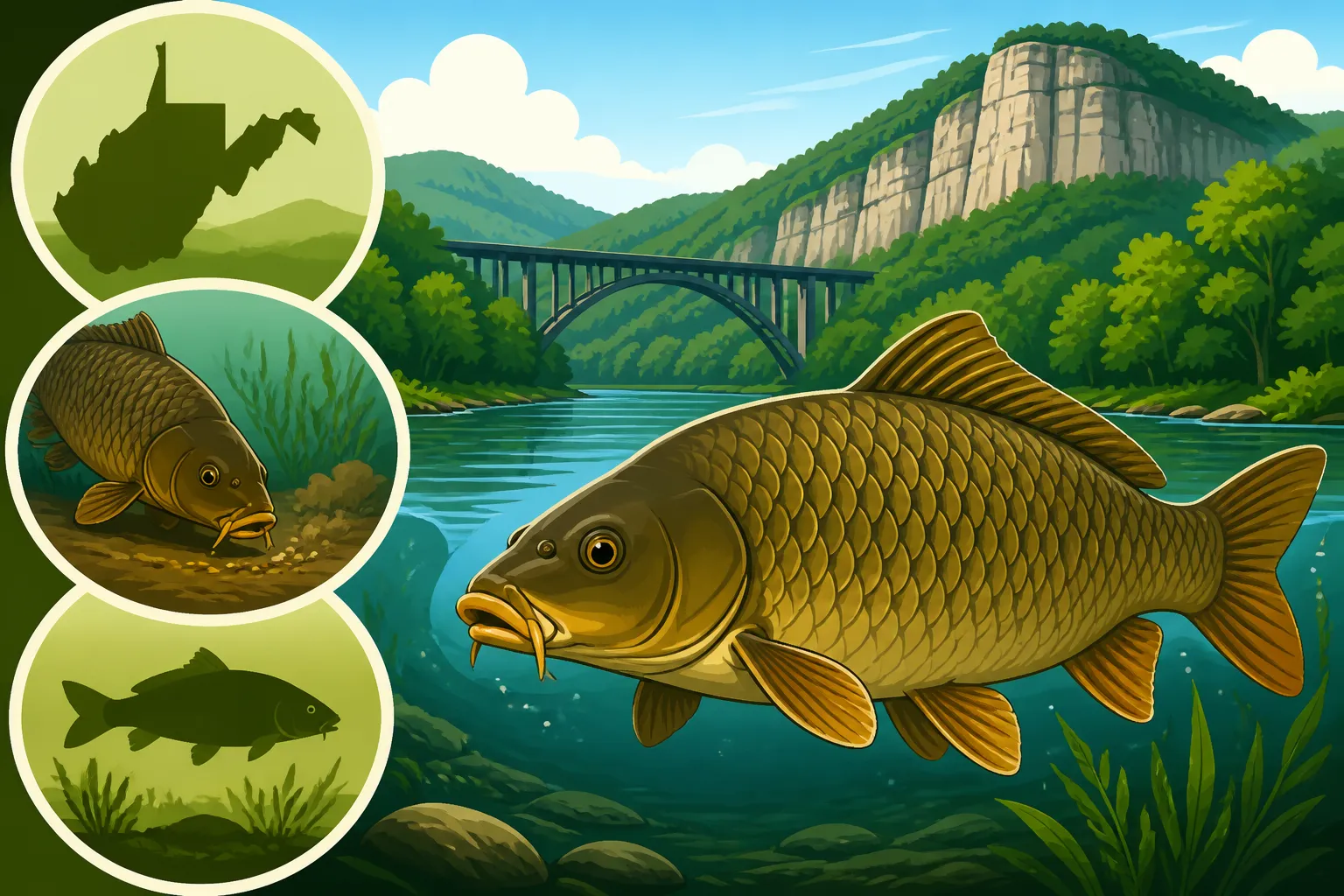
Physically, common carp are quite distinctive. They have large, heavy scales, a long dorsal fin, and perhaps their most recognizable feature: two pairs of prominent barbels (whisker-like appendages) near their mouth, which they use to forage along the bottom. Their body color can range from olive-brown to golden-yellow on their sides, fading to a lighter belly. It's important not to confuse them with native species like the various buffalo fish or suckers, which lack those distinctive barbels and have different mouth structures. The common misconception about them always tasting muddy usually comes from fish caught in stagnant, poor-quality water; a carp from a clean, flowing West Virginia river can be surprisingly good table fare if prepared correctly.
Common carp possess an impressive suite of adaptations that have allowed them to flourish in such diverse environments. They're incredibly hardy, able to tolerate a wide range of water temperatures, from near freezing to quite warm. They can also handle varying oxygen levels and turbidity, meaning they can thrive in murky water where other species might struggle. This resilience is a big part of why they’re so widespread and can be found in almost every major river system in our state, from the mighty Ohio to the smaller tributaries.
Why Common Carp Thrive in West Virginia's Diverse Waters
West Virginia’s river systems, with their mix of fast-flowing riffles, deep pools, and slower, nutrient-rich sections, provide an ideal habitat for common carp. Their omnivorous diet is a huge advantage. They'll root around in the bottom sediments for insect larvae, worms, crustaceans, and mollusks, but they're not above munching on aquatic plants or even feasting on seeds, berries, and small fish if the opportunity arises. This flexibility means they rarely go hungry, even when specific food sources are scarce.
Their reproductive strategy also plays a significant role in their success. Common carp are prolific spawners, with females capable of laying hundreds of thousands of eggs in a single season. They typically spawn in shallow, weedy areas in late spring or early summer when water temperatures are just right. The eggs adhere to aquatic vegetation, and once hatched, the fry grow rapidly. This combination of adaptability, dietary flexibility, and high reproductive success ensures that common carp populations remain robust throughout West Virginia’s diverse aquatic landscapes, making them a consistent presence for anglers seeking a powerful fight.
Unpacking the Size: How Big Do Common Carp Get in West Virginia?
Now, let's get down to the brass tacks that often intrigue anglers the most: size. When you think of a fish that puts up a serious fight, carp might not be the first thing that comes to mind for everyone, but they absolutely should be. These fish can get big, and they use every ounce of that size to their advantage when you hook into them.
Average Sizes and What to Expect on Your Line
When you're fishing for common carp in West Virginia rivers, the "average" size can actually be quite impressive. Most anglers regularly encounter fish in the 5 to 15-pound range, which already presents a formidable challenge on standard bass or catfishing gear. These fish are stocky, powerful, and will put a deep bend in your rod. Their broad sides catch the current, turning them into aquatic sails that pull with incredible force.
However, it's not uncommon to tie into carp that push well beyond this average. Fish in the 20 to 30-pound bracket are caught every season, particularly in our larger river systems like the Ohio River or the lower Kanawha. These are truly magnificent specimens, long-bodied and deep-flanked, often measuring over 30 inches in length. Factors like food availability, the age of the fish, and the specific river system they inhabit all play a role in their growth. Rivers with abundant food sources and less fishing pressure tend to produce larger, older fish. Don't be surprised if you're targeting a modest 10-pounder and suddenly find yourself in a tug-of-war with something that feels like a submerged log.
Chasing the State Record and Trophy Carp Potential
West Virginia certainly holds its share of true trophy carp. While I can't give you exact numbers or the specific weight of the current state record, rest assured that specimens pushing into the 40-pound range and even heavier have been caught in our waters. These are the fish that turn casual carp anglers into dedicated fanatics, willing to spend hours patiently waiting for that one, unforgettable bite. Imagine reeling in a fish that's almost as long as your arm and as thick as a small barrel – that's the kind of trophy potential West Virginia rivers offer.
Chasing these larger fish often means seeking out specific types of water. Deep, slow-moving pools with plenty of submerged structure or soft, muddy bottoms where they can root for food are prime locations. Areas downstream from agricultural runoff or urban centers, where food sources are plentiful, can also be hotspots for big carp. For those serious about targeting these giants, specialized carp tackle, often found on Amazon, becomes less of a luxury and more of a necessity. This includes heavy-duty rods, large-capacity reels, and robust lines designed to withstand the brutal runs and powerful headshakes of a genuinely enormous fish. Successfully landing one of these river monsters is a badge of honor in the angling community and a testament to the surprising fighting prowess of the common carp.
| Feature | Common Carp | Smallmouth Buffalo | Common Sucker (e.g., White Sucker) |
|---|---|---|---|
| Barbels | 2 pairs, prominent around mouth | Absent | Absent or very small |
| Mouth | Protrusible, downturned, designed for bottom feeding | Subterminal, somewhat puckered | Subterminal, fleshy, often with thick lips |
| Scales | Large, heavy, distinct | Large, heavy, distinct | Smaller, numerous |
| Dorsal Fin | Long, with a serrated ray at front | Long, without a serrated ray | Shorter, without a serrated ray |
| Body Shape | Deep-bodied, stout | More streamlined, sometimes humped back | Elongated, cylindrical |
| Coloration | Olive to golden-brown, lighter belly | Silver to bronze | Dark olive to brown back, lighter sides and belly |
| Habitat | Wide range, often tolerant of turbid water | Slower currents, deep pools, clear to murky water | Clear, cool streams and rivers, sometimes lakes |
The Daily Rhythms: Common Carp Habits in West Virginia Rivers
Understanding the habits of common carp is absolutely key if you want to successfully target them. They aren't just random swimmers; they have preferred hangouts, feeding times, and seasonal movements, just like any other fish. Learning these patterns will significantly improve your chances of getting one on the end of your line.
Where and When to Find Them: Habitat and Seasonal Movements
Common carp are truly masters of adaptation when it comes to habitat. In West Virginia rivers, you'll most often find them in slow-moving sections, deep pools, and backwater eddies where the current isn't too strong. They absolutely love areas with plenty of submerged structure like fallen trees, brush piles, or large rocks, as these spots offer both cover and a rich foraging ground. Weed beds are another prime location, providing both food and shelter. Think about those wider, slower bends in the river or the deep holes below a swift shoal – those are classic carp haunts. You might also find them near bridge abutments or lock and dam structures where current creates eddies and food funnels through.
Their presence shifts with the seasons. In the warmer months, as river temperatures rise, carp will often move into shallower areas, sometimes even cruising near the surface in search of food. This is when you might see them "tailing" in very shallow water, their tails breaking the surface as they root for bugs and vegetation on the bottom. As fall progresses and water cools, they tend to retreat to deeper, more stable water, congregating in the deepest pools of the river system. Winter sees them become less active, hunkering down in these deep holes, but they can still be caught by persistent anglers. West Virginia Fishing Seasons by Month can give you a broader idea of how different species move throughout the year.
The late spring and early summer are also significant for their spawning habits. During this period, when water temperatures reach their optimal range, carp move into very shallow, often vegetated areas to spawn. It's not uncommon to see large numbers of carp splashing and rolling in shallow water during this time, creating quite a spectacle. While they might be preoccupied with spawning, they can still be caught, though many anglers choose to let them do their thing undisturbed during this critical reproductive phase.
Feeding Behavior and What Attracts Them
Common carp are primarily bottom feeders, and their downturned, protrusible mouths are perfectly designed for this. They use those distinctive barbels to detect food items buried in the sediment, sucking them up along with mud and debris, then filtering out the edible bits. This is why baits presented on the bottom are so effective. However, to call them only bottom feeders would be inaccurate. They are opportunists and will readily feed at all levels of the water column, especially if they sense an easy meal. I've personally seen them slurp dog biscuits right off the surface like giant goldfish, which tells you a lot about their adaptable nature!
Their senses of smell and taste are incredibly acute, far more developed than their eyesight, especially in murky river water. This is why scented baits and chumming can be so effective. They're attracted to a wide array of natural and artificial scents, from the sweet aroma of corn to the pungent smell of cheese or specific carp-attracting flavors. While their natural diet consists of insects, worms, and plant matter, they are incredibly receptive to introduced food sources. It's often frustrating for anglers who think of carp as indiscriminate eaters only to find them incredibly selective about what they will take. You might have a dozen different baits with you, and they'll only touch one. This pickiness is part of the challenge and reward of carp fishing! For other bottom-dwelling species, you might check out Bottom Fishing for Catfish in West Virginia Rivers.
Angling for Carp: Dispelling Myths and Embracing the Fight
Let's be honest: for a long time, carp fishing didn't get the respect it deserved in North America. But in West Virginia, a growing number of anglers are discovering the thrill of hooking into these powerful fish. It's a fantastic way to spend a day on the river, offering a unique blend of patience, skill, and pure adrenaline. Forget the old notions; these aren't just slow, muddy fish. They're true fighters.
Gear Up: Rods, Reels, and Rigs for River Carp
If you're serious about battling West Virginia river carp, you'll want to move beyond your ultralight trout setup. These fish demand sturdy gear. A medium-heavy to heavy spinning or baitcasting rod, typically 7 to 10 feet long, is ideal. The longer rod provides better casting distance for reaching those deep river channels and offers more leverage when fighting a powerful fish in current. Couple that with a robust reel that has a smooth, reliable drag system and a decent line capacity. Trust me, when a 20-pound carp decides to make a run in river current, you'll be thankful for that drag.
Line strength is another critical factor. Many experienced carp anglers opt for 15-20 pound test monofilament or braided line. Monofilament offers a bit more stretch, which can be forgiving during sudden runs, while braided line provides superior strength-to-diameter ratio and excellent sensitivity. I personally like braided line with a fluorocarbon leader for abrasion resistance in rocky riverbeds. As for terminal tackle, you'll need strong, sharp hooks, usually in sizes from 2 to 6, designed for maximum penetration and holding power. Heavy weights, often 1-3 ounces or more, are essential to keep your bait anchored in the current. You can find a vast selection of these specialized carp tackle items, from rods to rigs, on Amazon at competitive prices, making it easier than ever to get properly equipped. Don't forget a large, soft-mesh landing net – a regular bass net just won't cut it for a big river carp. For a general guide to various fishing equipment, consider reading Best Tackle Box Setup for West Virginia Anglers.
Baits and Techniques That Really Work
When it comes to baits, common carp have some definite favorites. The old standbys are still incredibly effective: canned sweet corn (often flavored with various extracts), dough balls (homemade or store-bought), and boilies. Boilies, in particular, are specialized carp baits, usually made from a mixture of milk proteins, egg albumen, and various flavors, cooked into hard, round balls. They come in an endless array of flavors and colors, and serious carp anglers often experiment extensively to find what works best in a particular river system. You can even find ready-made boilie assortments on Amazon if you're looking to start exploring this effective bait.
Beyond the bait itself, technique is paramount. Carp fishing is often a game of patience. Cast your bait to a likely spot, let it settle on the bottom, and then wait. Many anglers employ "hair rigs," which present the bait next to the hook rather than directly on it, allowing the fish to suck in the bait without immediately feeling the hook. Chumming, or pre-baiting an area with a scattering of corn, boilies, or other attractants, can draw carp into your fishing spot and keep them there. Remember to use enough weight to keep your bait stationary, especially in flowing water. When you get a bite, it can range from a subtle tap to a screaming run, so keep your rod secure and be ready to react! Successfully catching and releasing a large river carp is incredibly satisfying, and handling these fish with care, especially their sensitive mouths, is crucial to ensure they swim away healthy.
Disclaimer
This article is for general informational purposes only and does not constitute professional advice. Laws, prices and regulations vary by location and change over time. Consult a qualified professional for guidance on your specific situation.