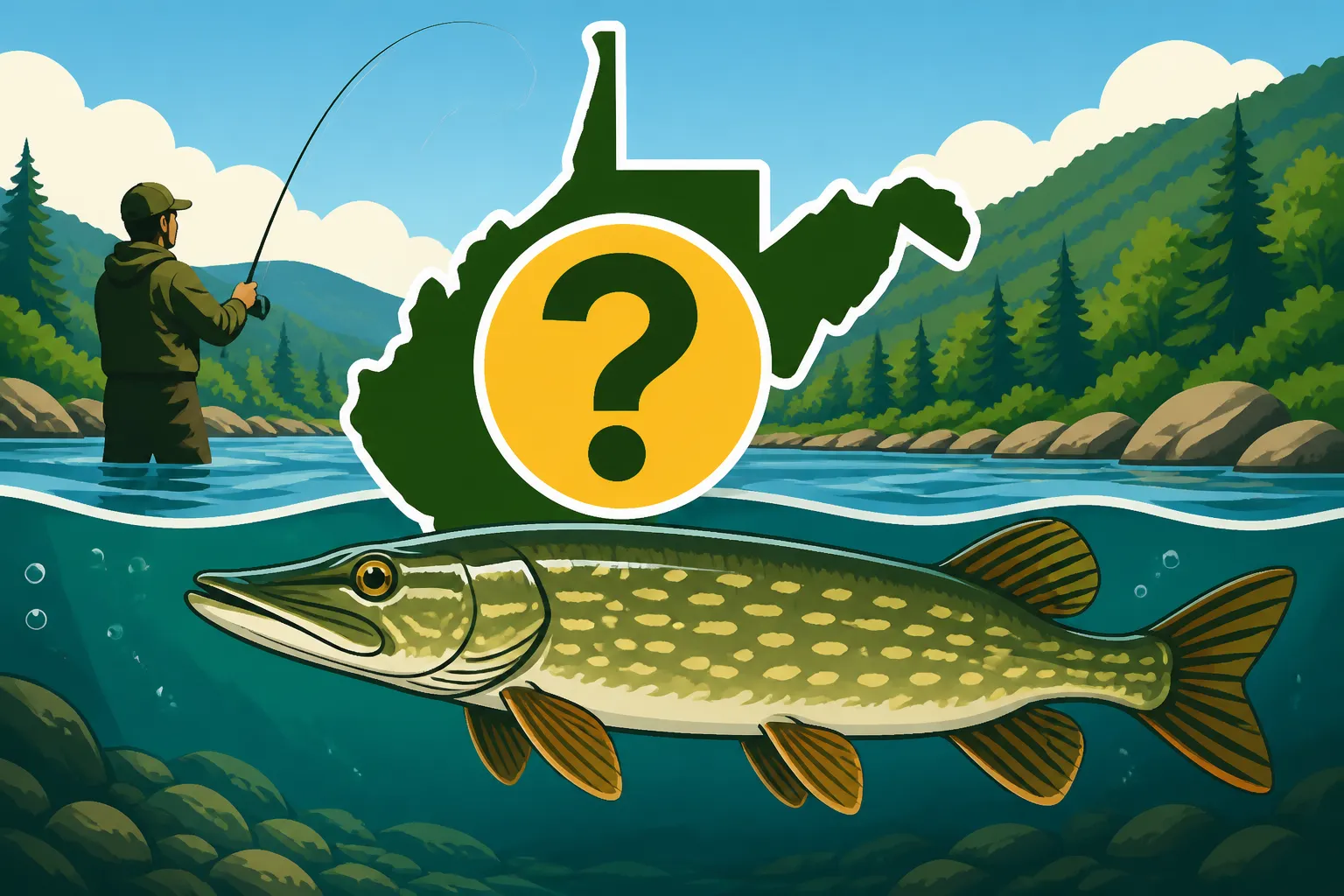
Do West Virginia Rivers Have Northern Pike?
It's a question many West Virginia anglers have pondered, especially after seeing photos of those toothy, torpedo-like fish from up north: "Do West Virginia rivers actually have Northern Pike?" It's easy to get confused, especially with our own abundance of a very similar, equally exciting predator, the muskellunge. If you've ever found yourself wondering if that long, slender fish you just saw dart past your kayak was a pike or something else, you're in the right place. This guide is going to clear up the mystery once and for all, helping you understand what kind of toothy critters truly call our beautiful mountain state home.
The Elusive Northern Pike in West Virginia Waters
There's something incredibly captivating about the image of a Northern Pike: that sleek, muscular body, those menacing teeth, and the way they ambush prey with explosive speed. It's no wonder anglers from all over are drawn to them. For those of us living and fishing in West Virginia, it's natural to wonder if we have these impressive predators lurking in our own waterways. The simple answer, generally speaking, is no, not in any significant, established, or native population in our rivers. However, the confusion is perfectly understandable, and it often stems from a similar, truly iconic fish we do have in abundance.
What Exactly is a Northern Pike?
Before we dive into their presence (or lack thereof) in West Virginia, let's get a clear picture of what a Northern Pike is. Esox lucius, commonly known as the Northern Pike, is a freshwater predatory fish found widely across the Northern Hemisphere. They're characterized by their elongated, cylindrical bodies, a duckbill-shaped snout, and a mouth full of sharp, backward-pointing teeth. Their coloration typically ranges from dark green to olive, with lighter, irregular bean-shaped spots or streaks along their sides. The dorsal and anal fins are set far back on the body, close to the tail, which is deeply forked. This fin placement is a classic adaptation for their ambush predator lifestyle, allowing for powerful bursts of speed.
Pike are known for inhabiting clear, vegetated waters, often lurking in weed beds or submerged timber, waiting for an unsuspecting fish, frog, or even a duckling to swim by. They're a thrilling catch for anglers in their native range, prized for their aggressive strikes and powerful fights. They can grow to impressive sizes, often exceeding 20 pounds, making them a true trophy fish in places like Canada, the Great Lakes region, and parts of the northern U.S.
Why the Confusion with Muskellunge?
Now, here's where the plot thickens for West Virginia anglers. The Northern Pike has a very close cousin, the muskellunge (Esox masquinongy), or "muskie" as we fondly call them here in the Mountain State. Muskies are also long, toothy, ambush predators, and they are native and thriving in many of our rivers and lakes. It’s easy to see why someone might confuse the two. Both fish belong to the same Esox family, sharing that distinctive elongated body, pointed snout, and formidable set of teeth. They both have similar ambush tactics and can grow to truly enormous sizes, often even larger than Northern Pike.
However, there are crucial differences. While we'll delve deeper into identification later, the main points of confusion lie in their general appearance. Both have that powerful, predatory look, and if you only get a quick glimpse or aren't familiar with the subtle distinctions, it's very easy to mistake one for the other. Many an angler has excitedly reported catching a "pike" in West Virginia, only to realize later, perhaps after looking at a picture, that they'd actually landed one of our magnificent native muskies.
Are Northern Pike Native to West Virginia?
This is the core of the question, and understanding the native ranges of these fascinating fish is key to unraveling the mystery. While we might wish they were, the reality for Northern Pike in West Virginia is a bit more nuanced than for their muskie cousins.
Historical Presence and Native Range
Northern Pike are typically found in the cooler waters of the northern United States, Canada, Europe, and Asia. In North America, their native range extends south into states like Minnesota, Wisconsin, Michigan, and through parts of the Great Lakes basin. They prefer temperate climates and can tolerate a wide range of water conditions, but they truly thrive in cold-to-cool environments with ample aquatic vegetation for cover.
West Virginia, with its Appalachian mountain streams, warmer low-elevation rivers, and deep reservoirs, does not fall within the generally accepted native range of the Northern Pike. Our aquatic ecosystems are largely dominated by other species, including trout in our colder headwaters and smallmouth bass, walleye, and, of course, muskellunge in our larger rivers. There's no historical evidence to suggest a widespread, naturally occurring population of Northern Pike in West Virginia's waters. Occasionally, you might hear a rumor or a local legend about a "pike" caught in a farm pond or an isolated lake, but these are typically isolated incidents, often involving introductions (sometimes illegal) or misidentifications.
Reports and Misidentifications
It's common for anglers to report catching a "pike" in West Virginia, but almost without exception, these reports turn out to be either a muskellunge or, less commonly, a chain pickerel. Chain pickerel (Esox niger) are another member of the Esox family, smaller than both muskie and pike, and they are native to some of our state's waters, particularly in the eastern panhandle and some southern drainages. They have a distinctive chain-like pattern on their sides, which helps differentiate them, but they still possess that classic elongated, toothy profile.
The vast majority of "pike" sightings in West Virginia are, in fact, muskellunge. Our state has a fantastic muskie fishery, with some truly world-class fish. These magnificent predators are often mottled or barred, but some can have a much more uniform, greenish coloration that, from a distance or to an untrained eye, could easily resemble a Northern Pike. It's a testament to the thrilling fishing we have here that anglers are often catching one of the most exciting freshwater game fish in North America, even if they sometimes call it by the wrong name. We're proud of our Muskie Fishing in West Virginia and the incredible opportunities it presents.
The True Apex Predator of West Virginia Rivers: The Mighty Muskie
Forget the Northern Pike for a moment; West Virginia has its own legitimate freshwater leviathan: the muskellunge. This incredible fish is not just present; it thrives in many of our waterways and is a legitimate trophy species that draws anglers from far and wide.
The King of West Virginia Waters
The muskellunge holds a special place in the hearts of West Virginia anglers, and for good reason. They are the undisputed apex predators of our larger river systems and impoundments. Known for their sheer size, incredible power, and notoriously finicky behavior, catching a muskie is often considered the ultimate freshwater angling challenge. Unlike the Northern Pike, muskies are native to West Virginia, having called our rivers home for centuries. The West Virginia Department of Natural Resources (WVDNR) actively manages and enhances muskie populations through stocking programs and careful regulations, ensuring that these magnificent fish continue to be a cornerstone of our state's angling heritage.
Landing a muskie requires dedication, patience, and often, specialized gear. They are powerful fighters, making explosive runs and headshakes that can test even the most experienced angler and the most robust fishing tackle. Many anglers spend countless hours pursuing these elusive fish, enduring the "fish of a thousand casts" reputation, only to have their efforts rewarded with an unforgettable battle. It's a truly unique experience to have one of these freshwater giants smash your lure or fly, and it’s an experience that defines a certain type of angler in our state.
Where to Find West Virginia Muskies
West Virginia offers exceptional muskie fishing in several key locations. The New River, for example, is famous for its healthy muskie population and often produces trophy-sized fish. Anglers on the New River Muskie Fishing grounds can expect to challenge some truly impressive specimens. The Kanawha River, another major waterway, also boasts a strong muskie fishery, particularly in its lower stretches. The Monongahela River and its tributaries, like the Tygart Valley River and West Fork River, are also strongholds for these elusive predators.
Beyond the major rivers, several of our larger lakes and reservoirs provide excellent muskie habitat. Stonewall Jackson Lake is widely recognized as a premier muskie destination, managed specifically for trophy muskies with strict catch-and-release regulations. Other notable muskie lakes include Burnsville Lake, Sutton Lake, and Bluestone Lake. The Little Kanawha River Muskie Fishing is another hotspot, known for its productive waters. When targeting muskies, anglers often focus on areas with submerged cover, such as fallen trees, weed beds, and rock piles, especially near deeper water transitions. These are classic ambush points where a muskie can lie in wait. Always be sure to check the Muskie Regulations in West Virginia Waters before you head out, as limits and sizes can vary by waterbody.
Differentiating Your Catches: Pike vs. Muskie vs. Pickerel
Knowing the difference between these three members of the Esox family is crucial for any angler. Not only does it help you correctly identify your catch (and perhaps win a friendly debate at the boat ramp!), but it’s also important for adhering to specific regulations that apply to each species. Misidentifying a fish can lead to inadvertently violating length or creel limits.
Key Identification Features
While they share a similar body plan, Northern Pike, muskellunge, and chain pickerel have distinct features that, once you know what to look for, make identification fairly straightforward. The most reliable characteristics are the scale patterns on their cheek and gill covers, as well as their body markings.
Let's break it down:
- Northern Pike: Typically have scales completely covering their cheek and the upper half of their gill cover. Their body usually features light, bean-shaped spots or streaks against a darker background. Their tail is often more rounded or less pointed on the lobes compared to a muskie.
- Muskellunge: In contrast, muskies have scales only on the upper half of their cheek and the upper half of their gill cover. Their lower cheek and gill plate are bare. Their body markings vary widely but are generally dark spots, bars, or vertical stripes on a lighter background. Some muskies can be very light with faint markings, leading to the "clear muskie" designation. The tail lobes of a muskie tend to be more pointed than a pike's.
- Chain Pickerel: These smaller cousins have scales completely covering both their cheek and their entire gill cover. Their most distinctive feature is a prominent, dark chain-like or reticulated pattern on their sides. They also have a distinct dark, vertical bar or "teardrop" mark below each eye. Pickerel rarely grow larger than a few pounds, making them much smaller than adult pike or muskies.
Here’s a handy table to help you keep them straight:
| Feature | Northern Pike | Muskellunge | Chain Pickerel |
|---|---|---|---|
| Cheek Coverage | Fully scaled | Upper half scaled | Fully scaled |
| Gill Cover Coverage | Upper half scaled | Upper half scaled | Fully scaled |
| Body Markings | Light, irregular bean-shaped spots on dark bg | Dark spots, bars, or vertical stripes on light bg | Dark, chain-like pattern on light bg |
| Snout Shape | Duckbill-shaped | Duckbill-shaped | Duckbill-shaped |
| Tail Lobes | Often more rounded | Typically pointed | Rounded to slightly pointed |
| Teardrop Below Eye | Absent | Absent | Distinct dark bar, often prominent |
| Typical Adult Size | 5-25 lbs (can be larger) | 10-50+ lbs (can be much larger) | 1-5 lbs |
Why Correct Identification Matters
Knowing your Esox species isn't just a fun fact; it's vital for responsible angling and conservation. West Virginia has very specific regulations for muskellunge, including length limits and daily creel limits, which are designed to protect these slow-growing, trophy-sized fish. For instance, muskies often have a much higher minimum length limit than other species, and many anglers practice catch and release for all muskies. You can find detailed information in the West Virginia Bag and Possession Limits by Species.
If you were to mistakenly identify a muskie as a pike (which has no specific regulations in WV since it's not an established species) or a pickerel, you might inadvertently keep an undersized muskie, which could result in a citation and, more importantly, harm the ongoing efforts to maintain our fantastic muskie fishery. Proper identification ensures you're fishing legally and contributing to the health of our aquatic ecosystems. Always consult the latest West Virginia Fishing Regulations Explained before heading out, as rules can change.
What to Do If You Think You Caught a Northern Pike
Okay, so you've reeled in what you think might be a Northern Pike in West Virginia. Given their rarity here, it's a moment that could spark genuine excitement and curiosity. But before you start calling the local news, there are a few responsible steps to take.
Documenting Your Catch
The first thing to do, if you're truly unsure, is to carefully document your catch. Take clear photos, especially focusing on those key identification features we just discussed: the cheek and gill cover scale patterns, the body markings, and the tail shape. Get multiple angles if you can. A photo next to a ruler or measuring tape is also incredibly helpful for estimating size.
If you can, try to count the pores on the underside of the jaw, which can also be an identification clue (muskies typically have 6-9, pike usually 4-5, pickerel often 4). However, this can be difficult and isn't always a primary differentiator for casual identification. The scale patterns are usually much easier to discern from a good photograph. If you truly believe you have a Northern Pike, or any unusually marked fish that doesn't fit the typical muskie or pickerel description, consider reporting it to the West Virginia Division of Natural Resources (WVDNR). They are always interested in unusual catches and can help confirm identification, which is vital for understanding fish populations and any potential accidental introductions. You might also want to share your photos on reputable fishing forums or social media groups dedicated to West Virginia fishing; experienced anglers can often offer quick and accurate identifications.
Responsible Angling
Regardless of what you think you've caught, always prioritize the health of the fish. These are powerful, toothy predators, so handling them requires care. Use a strong landing net, and if possible, keep the fish in the water while you're taking photos. If you need to bring it aboard, use a cradle or a large, rubberized net to minimize harm. Always use long-nosed pliers to remove hooks carefully, especially if the fish has swallowed the bait deep.
Given the rarity of Northern Pike in West Virginia, and the fact that most "pike" catches here are actually valuable muskies, practicing catch and release is highly recommended, especially if you're not planning to eat the fish or are unsure of its identity. Muskies are slow-growing and vital to our state's fishery, so releasing them to fight another day ensures continued angling opportunities for everyone. If you're releasing a large fish, make sure it's fully revived before letting it go. Hold it gently in the water, supporting its belly, until it can swim strongly away. There are many great products available on Amazon like long-handled release tools or specialized muskie landing nets that can make this process safer for both you and the fish. Following these steps ensures you're a responsible steward of West Virginia's incredible aquatic resources, no matter what toothy predator you encounter.
Disclaimer
This article is for general informational purposes only and does not constitute professional advice. Laws, prices and regulations vary by location and change over time. Consult a qualified professional for guidance on your specific situation.