What water temperature smallmouth bass prefer
One of the most common frustrations for anglers across West Virginia is understanding why those feisty smallmouth bass seem to vanish or change their behavior from one day to the next. It often comes down to one crucial, yet frequently overlooked, factor: water temperature. This comprehensive guide will pull back the curtain on the preferred thermal zones for smallmouth bass, helping you predict their movements and feeding patterns in our beautiful Mountain State waters.
The Ideal Thermal Zone for West Virginia Smallmouth Bass
Smallmouth bass, with their aggressive strikes and powerful fights, are a favorite among West Virginia anglers, especially in our crystal-clear rivers and deep, rocky lakes. But unlike some other species that tolerate a wider range, smallmouth are particularly sensitive to water temperature. Understanding their thermal comfort zone is like having a secret weapon in your tackle box. It dictates everything from where they hold to how actively they feed.
The Sweet Spot: Peak Activity Temperatures
Smallmouth bass are cold-blooded creatures, meaning their body temperature mirrors that of their surrounding water. This direct correlation means that water temperature directly impacts their metabolism, energy levels, and ultimately, their willingness to chase a lure. While they can survive in a wider range, their absolute peak activity, where they are most aggressive and feed most readily, falls within a fairly narrow band.
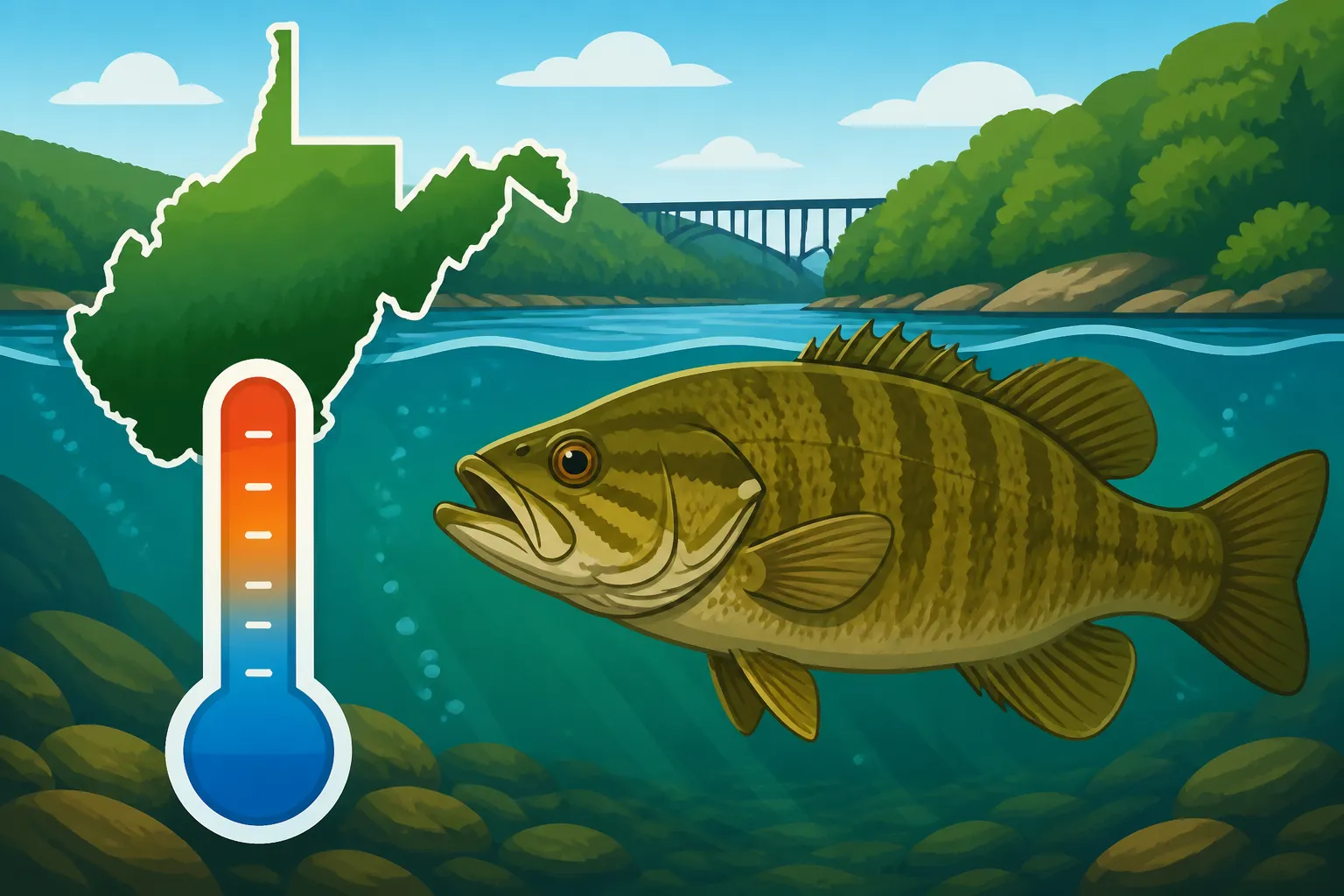
Generally, smallmouth bass are most comfortable and active when water temperatures range from about 60 to 70 degrees Fahrenheit. This is often referred to as their "sweet spot" or optimal feeding range. When the water hits these temperatures, their metabolism is high, they digest food efficiently, and they're constantly on the prowl for their next meal. You'll find them holding in areas that offer both foraging opportunities and some degree of current or structure. This prime temperature range is when many anglers report their best days on the water, with fish hitting everything from topwater lures to jigs.
How Temperature Influences Metabolism and Feeding
Think of water temperature as the smallmouth bass's internal thermostat. When the water is too cold, their metabolism slows dramatically. They become sluggish, requiring less food and moving less to conserve energy. It's like us trying to run a marathon on a freezing winter day – we can do it, but we're going to be less efficient and much slower. Conversely, when the water gets too warm, especially above 80 degrees Fahrenheit, smallmouth can become stressed. Their oxygen demands increase, and the water's dissolved oxygen levels tend to drop, creating a double whammy of discomfort.
In these extreme conditions, smallmouth often seek out cooler, more oxygenated water, drastically reducing their feeding windows. This is why knowing the preferred temperature range isn't just about finding active fish, but also about understanding why they're active or inactive. When the water is just right, they're energetic, chase prey with gusto, and are more likely to strike out of aggression or hunger. When it's too far outside this range, they become much more selective, often requiring slower presentations and perfect timing.
Understanding Thermal Refuges
West Virginia's diverse waterways, from the New River to Cheat Lake, offer various thermal conditions. Smallmouth bass are incredibly adept at finding specific microclimates within these larger bodies of water, especially when conditions aren't ideal. These spots are called "thermal refuges." In the summer heat, this might mean moving to deeper pools, the shaded side of cliffs, areas with cool springs feeding in, or the tailwaters below a dam where colder water is released. These locations offer a break from the scorching surface temperatures, allowing them to remain comfortable and less stressed.
Conversely, in colder months, thermal refuges might be slightly deeper, darker bottoms that retain heat a bit better, or areas where current is minimal, allowing them to conserve energy. For example, in a major river system like the New River, smallmouth might push into deeper channels or large bedrock crevices during extreme temperatures. Pay attention to these environmental cues; if you know the water temperature is outside the optimal range, think about where a smallmouth would go to find relief. This knowledge is crucial for How to Catch Smallmouth Bass in West Virginia Rivers effectively throughout the year.
Seasonal Water Temperature Changes and Smallmouth Movement
The Mountain State experiences four distinct seasons, and with each transition comes a significant shift in water temperature. These changes directly dictate where smallmouth bass will be holding and how aggressively they'll feed, making seasonal knowledge an indispensable tool for any angler.
Spring Warm-up: Pre-Spawn and Spawning Behaviors
As winter's chill finally gives way to the warmth of spring, West Virginia's rivers and lakes begin to thaw and heat up. This is a critical time for smallmouth bass. When water temperatures first start to climb into the low 50s Fahrenheit, smallmouth begin to shake off their winter lethargy and move towards shallower areas in search of food. This is the pre-spawn period, and fish are hungry, trying to pack on calories before the rigors of spawning. You'll find them congregating in bays, coves, and slower-moving sections of rivers where the sun can penetrate and warm the water more quickly.
The true magic happens when temperatures reach the mid-50s to low 60s Fahrenheit. This is prime spawning time for smallmouth bass. Males will move onto shallow flats, gravel beds, and sandy bottoms, often near submerged timber or large rocks, to build their nests. They become incredibly territorial and aggressive, striking at anything that approaches their beds. While it can be tempting to target these bedded fish, many anglers practice catch-and-release during this sensitive time to protect future generations. After spawning, which usually occurs when water temperatures are firmly in the low 60s, both male and female smallmouth will be exhausted but quickly recuperate and resume feeding. This is when understanding smallmouth bass spawning season in West Virginia becomes vital.
Summer Heat: Seeking Cooler Waters
West Virginia summers can bring intense heat, and while smallmouth love warm water, there's a limit. As water temperatures climb above 70-75 degrees Fahrenheit, smallmouth activity often slows down significantly during the hottest parts of the day. When the mercury pushes into the high 70s or even 80s, they'll actively seek out cooler, more oxygenated water. This might mean retreating to deeper pools, sitting tight against structure that provides shade, or moving into the faster, more turbulent sections of rivers where the water is naturally cooler and more oxygenated.
During these hot spells, early mornings, late evenings, and even night fishing can be incredibly productive, as surface temperatures cool and fish become more comfortable moving and feeding. You might find them suspended over deeper structure in lakes or tucked into the shadows of big boulders in rivers. Focus on areas where cool springs enter a system, or below dams where colder water is released. Best Baits for Smallmouth Bass on the New River in summer will often include deep-diving crankbaits or jigs presented slowly.
Fall Cool-down: Feeding Frenzies
Fall is often considered a favorite season for smallmouth bass fishing in West Virginia, and for good reason. As ambient air temperatures drop and the water begins to cool from its summer highs, smallmouth kick into overdrive. When water temperatures fall back into the 60s and high 50s Fahrenheit, their metabolism is high, and they sense the approaching winter. This triggers an aggressive feeding binge as they try to put on as much weight as possible to survive the leaner, colder months.
You'll find them actively chasing baitfish in shallower water, often in the same areas they were found in the spring pre-spawn. They become less shy and more willing to strike a wider variety of lures. This is a prime time for throwing big topwater lures, spinnerbaits, and crankbaits. As the water continues to cool into the low 50s, they will start to transition to deeper wintering holes, but the feeding impulse remains strong. Many of West Virginia's Best Fishing Rivers in West Virginia truly shine during this autumn period.
Winter Chill: Slow and Deep
When West Virginia's water temperatures drop below 45-50 degrees Fahrenheit, smallmouth bass enter their winter patterns. Their metabolism slows to a crawl, and they become far less active. They typically move to the deepest, most stable water they can find – deep pools, channel swings, and large rock formations in rivers, or deep structure near drop-offs in lakes. These areas offer consistent temperatures that fluctuate less than shallower water, allowing them to conserve energy.
Feeding windows during winter are very short, and strikes can be incredibly subtle. You'll need to present lures slowly and directly to them. Jigs, blade baits, and subtle soft plastics fished vertically or with a very slow retrieve are often the most effective. While it's a challenging time to fish, dedicated anglers can still find success by understanding these deep-water holding patterns and exercising extreme patience. Remember that West Virginia Fishing Seasons by Month truly dictates the techniques you should employ.
| Season | Water Temperature Range (Fahrenheit) | Smallmouth Behavior & Location | Recommended Techniques |
|---|---|---|---|
| Winter | Below 45-50°F | Deep, slow, inactive; seek stable temps | Jigs, blade baits, slow retrieve |
| Early Spring | 45-55°F | Moving shallower, pre-spawn feeding | Jigs, crankbaits, suspend over structure |
| Spawning | 55-62°F | Males on beds, aggressive & territorial | Soft plastics, jigs (careful release) |
| Late Spring/Early Summer | 62-70°F | Active feeding, recovering from spawn | Topwater, crankbaits, spinnerbaits |
| Summer Peak | 70-78°F | Seeking cooler, deeper water; early/late active | Deep diving lures, jigs, night fishing |
| Late Summer/Early Fall | 65-75°F | Active feeding, chasing baitfish | Topwater, crankbaits, reaction baits |
| Fall Turnover | 55-65°F | Aggressive feeding binge, bulking up | Spinnerbaits, swimbaits, jerkbaits |
Reading the Water: Practical Tips for Anglers
Knowing what water temperature smallmouth bass prefer is just the first step. The real art lies in applying that knowledge on the water. This means being equipped to measure temperatures, understanding how to adjust your approach, and recognizing the subtle differences between river and lake systems.
Essential Gear: Thermometers and Fish Finders
You can't effectively chase temperature-sensitive fish if you don't know the temperature! A quality water thermometer is an angler's best friend. Many portable fish finders now come with built-in temperature gauges that read surface temperatures, which is a good starting point. However, a separate, submersible thermometer can give you readings at various depths, which is crucial, especially in lakes or deep river pools where thermal stratification can occur. You can find reliable waterproof thermometers on platforms like Amazon that clip easily to your vest or tackle bag.
Beyond thermometers, a good fish finder is invaluable for identifying depth, structure, and even baitfish schools, all of which are related to temperature. On a place like Summersville Lake, a fish finder can help you pinpoint those cooler, deeper ledges where smallmouth might be holding in summer. Look for models with clear sonar displays that can mark individual fish or schools of bait. For anglers exploring Best Fish Finders for West Virginia Lakes, investing in a high-quality unit will pay dividends.
Adjusting Lure Presentation and Location
Once you have a handle on the water temperature, you can tailor your approach.
- Cold Water (Below 50°F): Think slow, subtle, and deep. Smallmouth are lethargic, so they won't chase much. Present jigs, blade baits, or slow-rolling grubs right in their face. Focus on deep holes, current breaks, and vertical structure where they can conserve energy. Your retrieve should be painstakingly slow, sometimes barely perceptible.
- Optimal Water (60-70°F): This is go-time! Smallmouth are aggressive and willing to chase. This is when you can throw a wide array of lures: topwater poppers and walking baits, crankbaits, spinnerbaits, tubes, and jigs. They'll be more spread out, looking for food in current seams, eddies, rock piles, and submerged timber. Don't be afraid to experiment with faster retrieves and more erratic presentations.
- Warm Water (Above 75°F): Fish will seek shade, depth, and current. Focus your efforts during low-light hours. Look for shady banks, deep humps, main lake points, or areas with inflowing cooler water. Presentation should be a bit slower than optimal conditions, but you can still get reaction strikes with a well-placed jig or a deep-diving crankbait. Sometimes, a subtle finesse approach is best when the fish are stressed.
Understanding these nuances in presentation based on temperature is key to success, whether you're fishing the New River or any of West Virginia's other fantastic smallmouth waters.
River vs. Lake Temperature Dynamics
It's important to remember that river and lake systems behave differently regarding temperature.
- Rivers: Water temperatures in rivers tend to fluctuate more quickly with air temperature changes and are often more homogenous from top to bottom due to constant flow. Current also plays a significant role, providing oxygen and sometimes a thermal break. In hot weather, look for smallmouth in faster, more oxygenated riffles and runs, or in the deep pools carved out by current. Conversely, in very cold weather, they'll often retreat to the slowest, deepest pools where current is minimal, conserving precious energy. For those tackling New River Smallmouth Bass Fishing, understanding current's impact on temperature is paramount.
- Lakes/Reservoirs: Lakes, especially deeper ones like Summersville Lake or Stonewall Jackson Lake, experience thermal stratification. This means layers of water form with different temperatures. The warmer, lighter water sits on top (epilimnion), while colder, denser water is at the bottom (hypolimnion). During summer, smallmouth will often suspend or hold near the thermocline – the transitional layer where temperature changes most rapidly – because it offers a balance of cooler water and sufficient oxygen. In winter, they'll often be in the deeper parts of the lake where temperatures are most stable. A quality fish finder can actually show you the thermocline, which is a huge advantage.
Beyond Temperature: Other Factors Influencing Smallmouth
While water temperature is undeniably a critical factor in understanding smallmouth bass behavior, it's never the only factor. A truly successful angler takes a holistic approach, considering several other environmental elements that work in conjunction with temperature to dictate where and how these fantastic fish will behave.
Current, Structure, and Cover
Even if the water temperature is ideal, smallmouth bass won't just be aimlessly cruising. They are highly structure-oriented fish. They gravitate towards features that offer ambush points, protection from current, and shelter from predators. In rivers, this means rock piles, boulders, submerged timber, ledges, and current seams. The current itself can influence where fish hold; even in optimal temperatures, a smallmouth might sit in a current break behind a large rock, expending less energy while waiting for prey to drift by. On the New River, identifying these key structural elements, often carved by the relentless flow, is as important as knowing the temperature.
In lakes, structure includes points, humps, drop-offs, submerged roadbeds, brush piles, and even docks. Cover, such as lily pads, overhanging trees, or thick weed beds, provides shade and ambush opportunities, especially in warmer water. So, while temperature might tell you what depth to fish, structure and cover tell you exactly where to cast your lure within that depth. Think about how these elements combine: a deep, shady rock pile in optimum temperature water is a smallmouth haven.
Forage Availability and Predation
Smallmouth bass are opportunistic predators, and their movements are heavily influenced by the presence of their prey. If the water temperature is perfect, but there's no baitfish, crayfish, or insect activity in an area, the smallmouth won't stick around for long. Conversely, even if the temperature isn't absolutely ideal, a strong concentration of baitfish or a prolific insect hatch can draw smallmouth into less comfortable waters for a feeding frenzy.
In West Virginia, crayfish are a primary food source for smallmouth, so understanding where these crustaceans live (rocky bottoms, gravel) can lead you to actively feeding bass. Best Baits for Smallmouth Bass on the New River often mimic crayfish or local baitfish. Fish will follow schools of shad or herring in larger reservoirs. Similarly, smallmouth are prey themselves, especially when younger. They'll often utilize cover and structure to hide from larger predators like muskie or even ospreys, especially in areas with clearer water.
Weather Patterns and Barometric Pressure
The weather above the surface can have a significant impact below it. Rapid changes in weather, such as an approaching cold front or a sudden thunderstorm, can affect fish behavior even if the water temperature hasn't had time to adjust. Barometric pressure, which is the weight of the atmosphere, is believed to affect the fish's swim bladder, influencing their comfort level and willingness to feed.
Before a cold front moves in, when barometric pressure is falling, fish often become very active and feed aggressively. They sense the change and try to feed before conditions worsen. After a cold front passes and high pressure settles in, the fishing can become tough. Fish often move deeper, become lethargic, and strikes can be few and far between. While you can't control the weather, being aware of these patterns, alongside water temperature, allows you to anticipate smallmouth behavior and adjust your tactics accordingly. Keeping an eye on the forecast is just as important as checking the water temperature before heading out on any West Virginia fishing adventure.
Disclaimer
This article is for general informational purposes only and does not constitute professional advice. Laws, prices and regulations vary by location and change over time. Consult a qualified professional for guidance on your specific situation.