Is the Brook Trout West Virginia’s State Fish?
Oh, the brook trout! It’s a question near and dear to the hearts of so many West Virginia anglers, especially those of us who cherish the wild beauty of our mountain streams. There’s something truly special about these vibrant, elusive fish, and it’s no wonder people often wonder about their official status. This guide is here to settle the question once and for all, diving deep into why the brook trout holds such a unique place in the Mountain State, where you can find them, and how to respectfully pursue them.
The Brook Trout: A Mountain State Icon
When you picture a quintessential West Virginia fish, chances are the image conjured is that of a brook trout. With their dazzling colors, feisty spirit, and preference for pristine, cold headwater streams, they truly embody the wild, untamed nature of our state. But is this beloved fish truly our official state fish?
The Official Designation
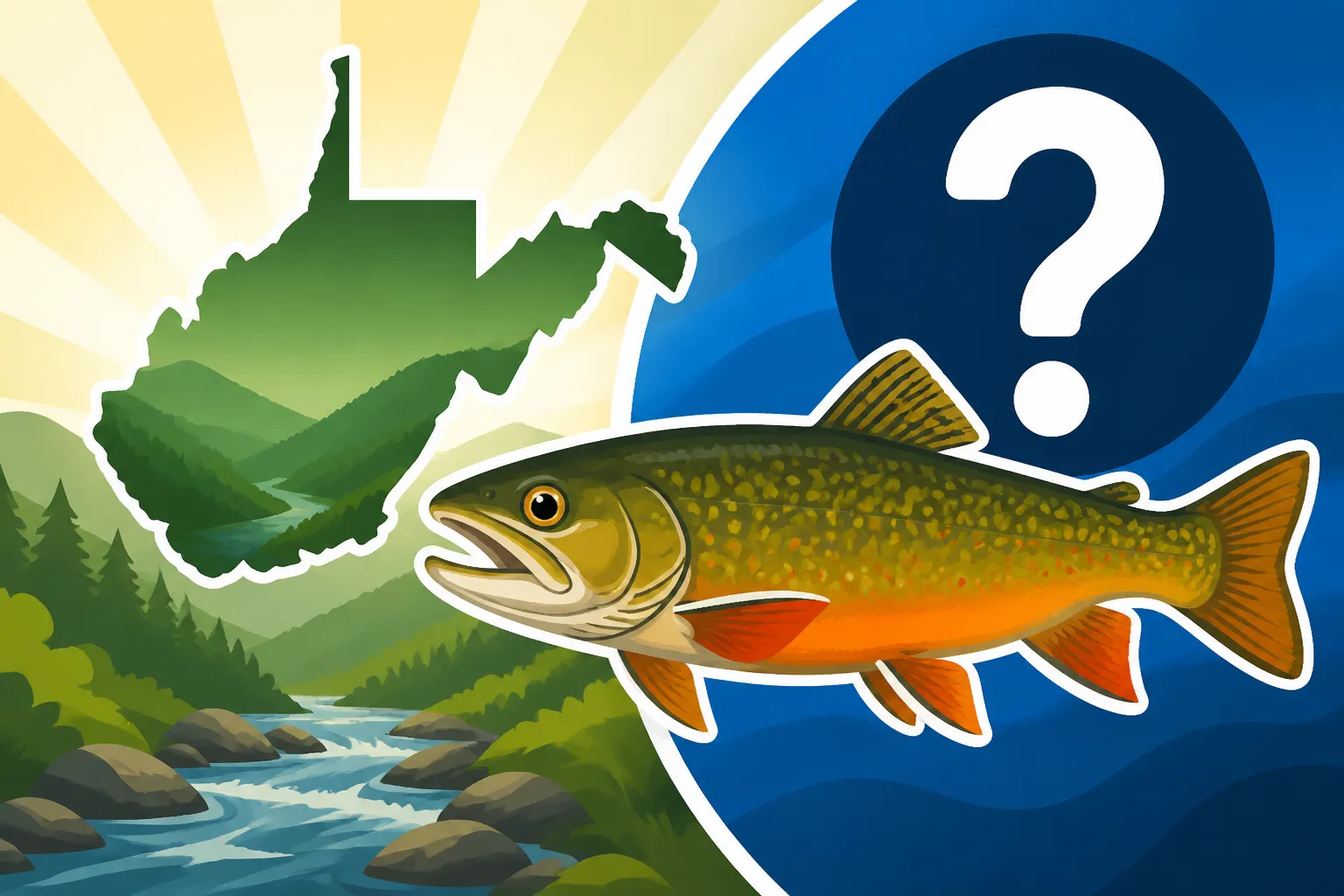
Yes, indeed it is! The Brook Trout ( Salvelinus fontinalis) was officially designated as West Virginia's State Fish many moons ago. This wasn't just a random choice; it was a deeply meaningful one that recognized the brook trout's historical presence, ecological importance, and cultural significance within our borders. Unlike many other species that have been introduced, brook trout are truly native to West Virginia, having thrived in our mountain waters for thousands of years. They are a living testament to the health and purity of our highest elevation streams, serving as a biological indicator of clean, cold water. Their designation speaks volumes about our state's commitment to preserving its natural heritage and the wild places that define us. When you hold a native brook trout in your hand, you're not just holding a fish; you're holding a piece of West Virginia history.
Distinguishing Features of the Brook Trout
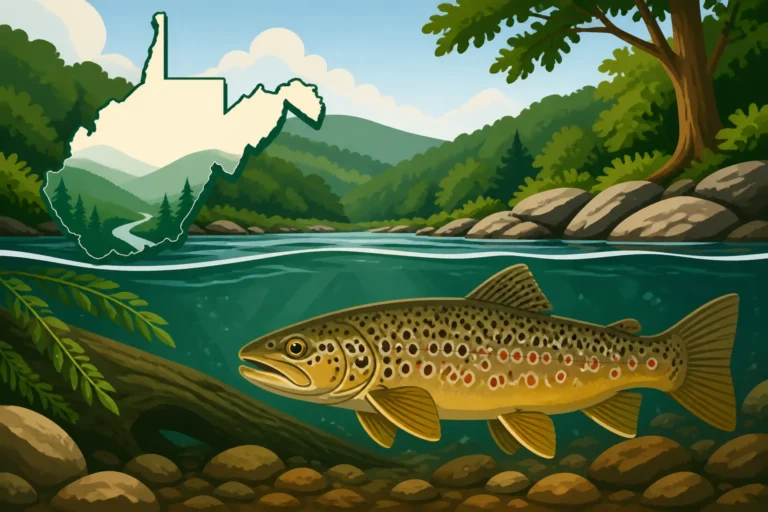
Identifying a brook trout can be a bit tricky, especially when you're used to seeing other trout species like rainbows or browns. However, once you know what to look for, their unique beauty truly stands out. Native brook trout, often called "speckled trout" by old-timers, boast a stunning palette of colors. Their backs are usually dark, often a mottled olive or greenish-brown, with distinctive worm-like markings that we call "vermiculations." These squiggly patterns are a dead giveaway. Their sides are dotted with pale, yellowish spots and, crucially, vibrant red spots surrounded by a bluish halo. These "haloed spots" are a key identifier.
Their lower fins—the pectoral, pelvic, and anal fins—often have a striking white leading edge, followed by a black stripe, and then a reddish or orange hue. This tripartite fin coloration is another characteristic to look for. And let's not forget their bellies, which can range from white to a brilliant orange or red, especially in spawning males. They also have a relatively broad head and a deep body, making them a very distinct fish. If you're ever in doubt while admiring a catch, look for those worm-like patterns on the back, the haloed red spots, and the white-edged fins. You can find more detail in our Trout Species Identification Guide for West Virginia.
| Feature | Brook Trout (Salvelinus fontinalis) | Rainbow Trout (Oncorhynchus mykiss) | Brown Trout (Salmo trutta) |
|---|---|---|---|
| Back/Upper Body | Dark olive/green with distinctive wavy "vermiculations" (worm-like patterns) | Dark spots over greenish-blue/silvery back, no vermiculations | Dark spots over brownish-gold back, sometimes with red spots, no vermiculations |
| Side Spots | Pale yellow spots, often with red spots surrounded by blue halos (key identifier) | Numerous small dark spots, sometimes a pink or red lateral stripe | Dark spots on sides and gill covers, sometimes red/orange spots with pale halos |
| Tail Fin | Square or slightly forked, often mottled with dark spots | Slightly forked, typically covered in small dark spots | Square or slightly forked, usually fewer spots than rainbows |
| Lower Fins | White leading edge, then a black stripe, then red/orange | Clear or slightly dusky, no distinct white edge or black stripe | Clear or yellowish, no distinct white edge or black stripe |
| Belly Color | White to brilliant orange/red (especially males) | White to silvery, sometimes pinkish | White to yellowish, often with golden hues |
| Native Status | Native to West Virginia | Introduced (native to Pacific drainages) | Introduced (native to Europe) |
Native vs. Stocked Brook Trout
It's important to understand that not all brook trout are created equal in West Virginia. We have both native (or wild) brook trout populations and stocked brook trout. The native brookies are the true gems, descendants of fish that have inhabited these waters for millennia. They are smaller, more brightly colored, and incredibly wary, having survived and reproduced entirely on their own in the wild. These fish are a testament to healthy ecosystems and resilient genetics. Finding a stream with a thriving native brook trout population is like discovering a piece of unspoiled wilderness. Where brook trout still live wild in West Virginia can give you an idea of some of these special places.
Stocked brook trout, on the other hand, are raised in hatcheries and released into various streams and lakes to provide additional angling opportunities. While they are the same species, they often look a bit different – usually larger, paler in color, and less wary of anglers due to their hatchery upbringing. They serve a valuable purpose in our state's fisheries management, allowing more people to experience the joy of catching a brook trout without impacting fragile wild populations. However, it's those wild, native fish that truly capture the spirit of West Virginia's angling heritage and are the reason the brook trout holds its esteemed position.
Where Brook Trout Thrive in West Virginia
West Virginia is truly a paradise for brook trout, boasting countless miles of pristine streams and rivers that flow through rugged mountains and dense forests. Understanding where these fish prefer to live is key to finding them.
Prime Habitats for Native Brooks
Native brook trout are incredibly particular about their living conditions. They are coldwater fish, meaning they absolutely require clean, clear, and very cold water to survive and thrive. This is why you'll primarily find them in the headwaters of mountain streams, often at higher elevations, particularly within the Monongahela National Forest and other protected wilderness areas. These streams are typically characterized by dense canopy cover from trees, which keeps water temperatures consistently low, even during the summer months. What water temperature trout need to survive is a critical factor for these fish.
You'll often find these streams tumbling over rocky beds, with plenty of riffles, runs, and deep pools formed by fallen trees, undercut banks, and large boulders. These features provide essential cover from predators and strong currents, as well as crucial foraging grounds. They feed on aquatic insects, small terrestrial insects that fall into the water, and even tiny minnows or crustaceans. Look for areas with lush riparian vegetation, indicating a healthy ecosystem that supports the entire food chain these fish rely upon. The more wild and remote a stream feels, the higher your chances of encountering native brook trout.
Special Regulation Waters
To protect our precious native brook trout populations, many streams in West Virginia have specific regulations in place. These "special regulation waters" are managed to preserve the quality of the fishing experience and the health of the fish. You might find sections that are strictly catch-and-release, fly-fishing-only, or have reduced creel limits or specific tackle restrictions. These rules are crucial for ensuring that future generations can also enjoy the thrill of catching a wild brook trout.
For instance, some pristine streams might be designated as "Native Brook Trout Catch and Release" areas. This means you can fish for them, but you absolutely must release them unharmed. Always check the current West Virginia Fishing Regulations Summary before heading out to any stream, as rules can change. Understanding and respecting these regulations is not just about avoiding a fine; it's about being a responsible steward of our natural resources and protecting the very fish that define our state. You can learn more about these specific rules in West Virginia special regulation trout streams.
Conservation Efforts and Challenges
While West Virginia's brook trout populations are incredibly special, they face significant challenges. Habitat degradation, primarily from historic logging practices, mining, and development, has impacted many streams. Sedimentation can smother spawning beds, and warmer water temperatures due to climate change or loss of streamside cover can be lethal to these cold-water species. Competition from introduced species like rainbow and brown trout, which are often more aggressive and tolerant of slightly warmer water, also poses a threat to native brooks in some areas.
Thankfully, there are ongoing conservation efforts. Organizations like Trout Unlimited, along with the West Virginia Division of Natural Resources (WVDNR), are actively working on stream restoration projects. This includes planting trees along stream banks to provide shade and stabilize soil, removing old culverts that block fish passage, and improving water quality. These efforts are vital for ensuring that the brook trout, our state fish, continues to thrive in its native habitat for years to come. Supporting these initiatives, even through simple actions like practicing catch and release or purchasing a conservation stamp, makes a real difference. West Virginia's West Virginia's Conservation Stamp, Explained helps fund these crucial efforts.
Fishing for West Virginia's State Fish
Catching a native brook trout in West Virginia is an experience unlike any other. It’s not just about the fish; it’s about the journey into the wild, the quiet solitude of the mountains, and the satisfaction of outsmarting a truly wild creature. These aren't the eager stocked fish you find in wider rivers; native brookies demand stealth, precision, and a light touch.
Techniques and Tactics
When it comes to targeting brook trout, subtlety is your best friend. These fish live in small, intimate streams, often densely canopied, and are incredibly wary of anything unusual. Loud noises, heavy footsteps on the bank, or a clumsy presentation will send them darting for cover.
Fly fishing is perhaps the most iconic and effective method. Small, delicate presentations with dry flies, nymphs, or even tiny streamers can be incredibly productive. For dry flies, think small attractor patterns like an Adams, Elk Hair Caddis, or Royal Wulff, especially in sizes 14-20. When the fish aren't looking up, small pheasant tail nymphs, Hare's Ear nymphs, or a simple Copper John in sizes 16-22 drifted naturally through pools and riffles can entice a strike. For a more aggressive approach, tiny woolly buggers or muddler minnows can sometimes work wonders. You'll want to focus on casting accuracy and soft landings, as presentation is paramount. Our Fly Fishing for Trout in West Virginia guide offers a deeper dive into these techniques.
If fly fishing isn't your style, ultralight spinning gear can also be very effective. Use tiny inline spinners (like a #0 or #1 Mepps or Panther Martin) or small spoons. Natural baits such as worms or small crickets, presented on a tiny hook with minimal weight, can also be irresistible to brook trout, though many anglers prefer artificials to minimize impact on wild populations. Whatever your method, approach streams quietly, stay low, and try to cast from a position that keeps you out of the fish's direct line of sight.
Essential Gear for Brook Trout Anglers
You don't need a massive amount of gear to chase brook trout, but having the right tools makes a huge difference. For fly fishing, a lightweight, short fly rod – typically a 6' to 7'6" rod in a 2- to 4-weight – is ideal for navigating tight quarters and presenting small flies delicately. Pair it with a matching fly reel and a floating fly line. A tapered leader (7.5 to 9 feet) ending in a light tippet (4X to 6X) will ensure your flies drift naturally.
For spinning, an ultralight spinning rod (4'6" to 5'6") with a small spinning reel spooled with 2-4 pound test monofilament or fluorocarbon line is perfect. Lightweight wading boots with good grip are essential for navigating slippery stream beds, and breathable chest waders will keep you comfortable in cold water. A small tackle vest or sling pack is handy for carrying your flies, lures, leaders, and other essentials. You can find many excellent options for these on Amazon, from reliable brands that cater to the needs of dedicated trout anglers. Don't forget a pair of polarized sunglasses to cut glare and help you spot fish or structure, and a hat for sun protection. For more gear recommendations, check out Best Gear for West Virginia Trout Fishing or Best Fly Rods for West Virginia Trout Streams.
Catch and Release Best Practices
Because native brook trout populations are so precious, practicing catch and release is highly encouraged, if not mandated, in many brook trout streams. The goal is to minimize stress and ensure the fish can return to the water unharmed to continue their life cycle.
Here are some key tips:
- Handle Fish as Little as Possible: Try to keep the fish in the water as you unhook it.
- Wet Your Hands: Always wet your hands before touching a fish to protect its delicate slime coat, which is its primary defense against disease.
- Use Barbless Hooks: Crushing the barb on your hook or using hooks specifically designed without barbs makes unhooking much faster and easier, causing less damage to the fish. Many artificial lures and flies come with barbless options, or you can use small pliers to pinch down the barb on a standard hook.
- Use a Soft Net: If you need a net, choose one with rubber or knotless mesh to protect the fish's fins and scales.
- Revive Gently: If the fish seems sluggish, hold it gently upright in the water, facing into the current, until it can swim away on its own. Never throw a fish back into the water.
By following these simple guidelines, you're not just practicing responsible angling; you're actively contributing to the conservation of West Virginia's state fish. For more detailed instructions on how to properly release fish, refer to our guide on West Virginia Catch and Release Rules for Trout.
Beyond the Brook Trout: Other Iconic West Virginia Fish
While the brook trout holds the esteemed title of West Virginia's State Fish, our waters are rich with a diverse array of other incredible game fish that draw anglers from all over. It’s worth acknowledging these other species, as they too offer unique and thrilling fishing experiences across our beautiful state.
Rainbow and Brown Trout
Beyond the native brook trout, West Virginia also boasts thriving populations of rainbow trout and brown trout. These species, though not native, are widely stocked by the WVDNR to create fantastic fishing opportunities in many of our rivers, streams, and lakes. Rainbow trout are known for their distinctive pinkish stripe along their sides and their acrobatic fights once hooked. They adapt well to a variety of waters, from large tailwaters to smaller stocked streams, and are a favorite target for bait, lure, and fly anglers alike.
Brown trout, originally from Europe, are renowned for their cunning and often grow to larger sizes, making them a trophy fish for many. They are incredibly wary, often preferring to hide in deep, dark pools or undercut banks. Their coloration can vary, from golden brown to olive, often with distinct dark spots, some with reddish halos. Brown trout can be a challenging but highly rewarding catch. While brook trout reign supreme in pristine headwaters, rainbows and browns provide incredible fishing throughout many other parts of the state, ensuring that trout fishing remains a major draw. For help telling them apart, check out Trout Species Identification Guide for West Virginia.
Smallmouth Bass and Muskie
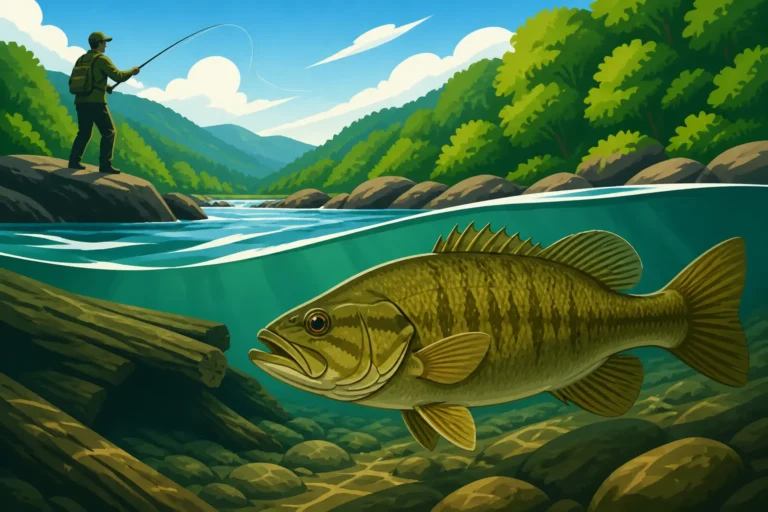
West Virginia's rivers are legendary for their smallmouth bass fishing. These bronzebacks are fierce fighters, known for their powerful runs and aerial acrobatics. Rivers like the New River, South Branch Potomac, and the Greenbrier are considered world-class destinations for smallmouth, offering anglers a chance to hook into truly trophy-sized fish. They thrive in rocky, current-laden rivers, feeding on crawfish and baitfish, and provide incredible action, particularly during the warmer months. Chasing smallmouth on a clear, flowing river is an experience every angler should have. You can find more targeted information in our Smallmouth Bass Fishing in West Virginia article.
Then there's the muskie – "the fish of 10,000 casts." These apex predators are the undisputed kings of many of our larger rivers, including the New River, Kanawha, and Little Kanawha. Muskie are elusive, powerful, and notoriously difficult to catch, but landing one is considered the ultimate angling achievement for many. Their sheer size and aggressive nature make them a thrilling target, often requiring specialized heavy-duty gear and immense patience. West Virginia is truly one of the best places in the country to pursue these magnificent fish. To learn more about targeting these giants, read our Muskie Fishing in West Virginia guide. While brook trout represent the delicate wildness of our mountains, species like smallmouth and muskie embody the raw power and challenge that West Virginia's larger waterways offer.
Disclaimer
This article is for general informational purposes only and does not constitute professional advice. Laws, prices and regulations vary by location and change over time. Consult a qualified professional for guidance on your specific situation.