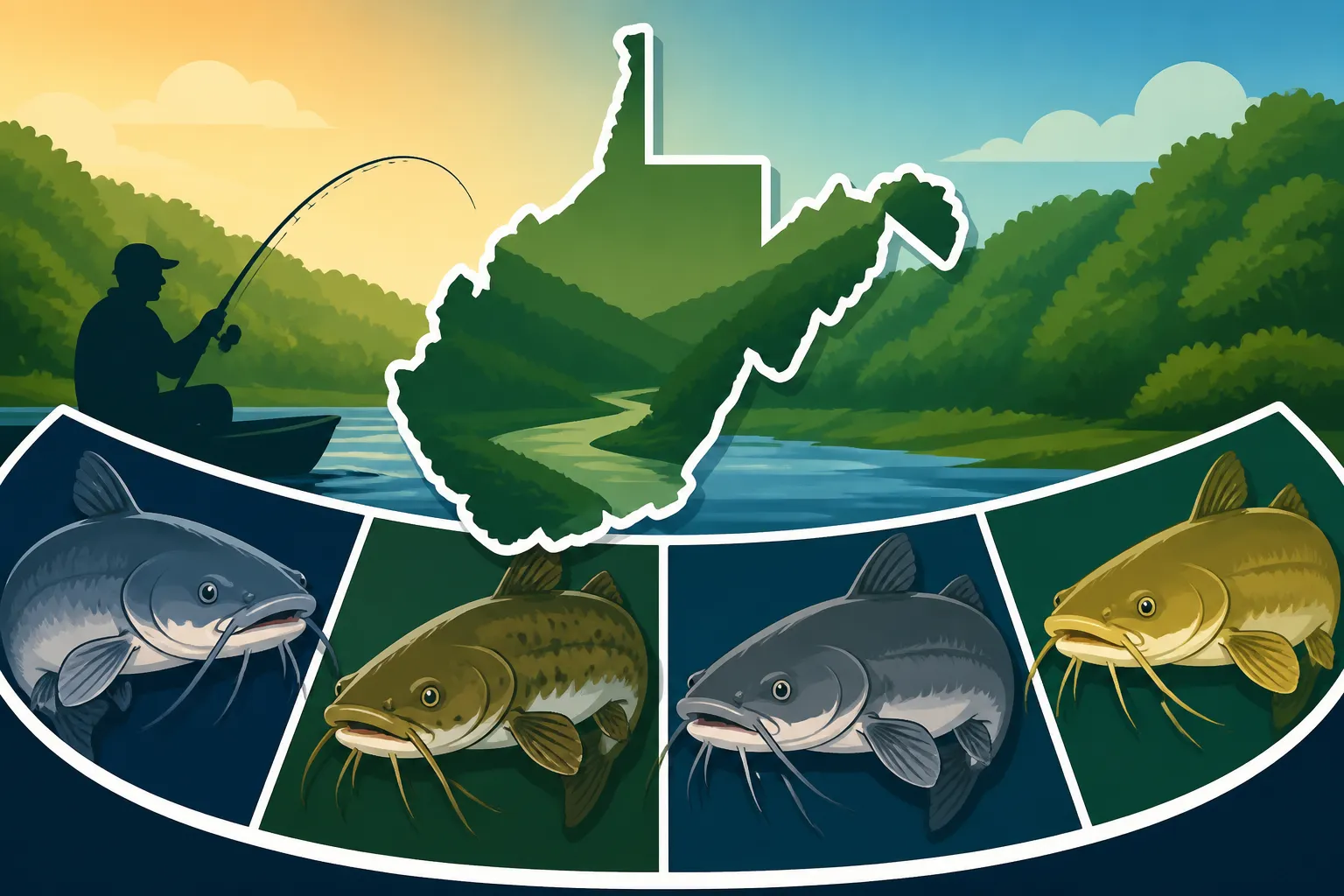
Catfish Species Identification Guide for West Virginia
There's nothing quite like the unmistakable tug of a catfish on your line in a West Virginia river or lake. But once that whiskered beauty breaks the surface, have you ever paused and wondered exactly which kind of catfish you've just landed? It's a common conundrum, even for seasoned anglers! With several distinct species calling our Mountain State waters home, knowing how to tell them apart isn't just a matter of curiosity; it can be crucial for understanding regulations, improving your fishing strategy, and appreciating the diverse aquatic life around us. This guide is here to unravel that mystery, providing clear, practical tips to help you confidently identify the various catfish species swimming in West Virginia.
The Big Three: Channel, Flathead, and Blue Catfish
When most folks talk about catfish in West Virginia, their minds usually jump to these three heavy hitters. They’re the most popular targets for anglers seeking a thrilling fight and some delicious table fare. While they all share that iconic whiskered face, each has unique characteristics that, once you know them, make identification a breeze.
Channel Catfish: The Widespread Favorite
Ah, the channel cat! If you've ever fished a warmwater lake or a slow-moving river in West Virginia, chances are you've encountered one of these speckled beauties. They are, without a doubt, the most widely distributed and commonly caught catfish in our state. Their popularity stems from their aggressive feeding habits and their willingness to bite on a huge variety of baits, making them accessible even for novice anglers.
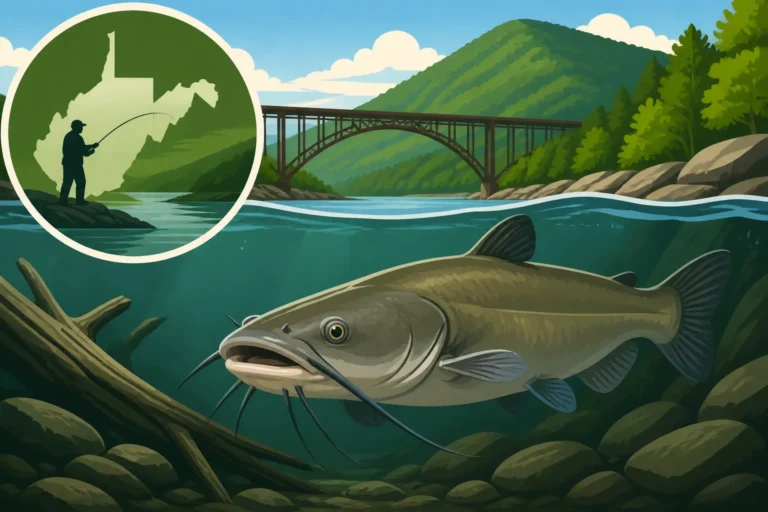
Identifying a channel catfish is usually straightforward once you know what to look for. Their most distinctive feature is often their tail fin, which is deeply forked, almost like a swallow's tail. Their body coloration can vary quite a bit depending on the water clarity and diet, ranging from olive-green to bluish-grey on the back, fading to silvery-white on the belly. Younger channel cats, and sometimes even larger ones from clearer waters, will often have small, dark spots scattered along their sides, giving them a dappled appearance. If you're looking for gear or guides on identification, a quick search on a platform like Amazon might yield some helpful field guides or laminated species identification cards that can be a real lifesaver on the water.
Beyond their appearance, channel cats are known for their relatively sleek, streamlined bodies, which hint at their active lifestyle. They're opportunistic feeders, patrolling the bottom and mid-water columns for anything from insects and crustaceans to small fish and decaying organic matter. You'll find them in a huge range of West Virginia waters, from major rivers like the Kanawha and Ohio to countless smaller lakes and ponds. Understanding their habits can definitely boost your chances of success, and we've got more tips on that in our Channel Catfish Habits in West Virginia Rivers guide.
Flathead Catfish: The River Monster
If the channel cat is the widespread favorite, the flathead is truly the river monster. These powerful, predatory fish are a different beast altogether, preferring larger river systems and growing to truly impressive sizes. Catching a flathead is often a lifetime achievement for many anglers, requiring heavy tackle and a good deal of patience and skill. They're less common than channel cats but make up for it with their sheer size and brute strength.
The name "flathead" gives away their most obvious identifying feature: a distinctly broad, flattened head, especially noticeable from above. Unlike the channel cat, the flathead's tail fin is only slightly notched, not deeply forked, and sometimes appears almost square or rounded. Their coloration tends towards mottled browns and yellows, often described as a "calico" pattern, which provides excellent camouflage against rocky or woody river bottoms. They lack the distinct spots that often adorn channel cats. Their lower jaw usually protrudes slightly beyond the upper jaw, another helpful ID clue.
Flatheads are ambush predators, often holding tight to submerged logs, rock piles, or undercut banks, waiting for unsuspecting prey to swim by. They have a strong preference for live bait, especially sunfish, suckers, or other small baitfish. You'll find these solitary giants primarily in our larger rivers, like the Ohio River and its major tributaries, where ample structure and a steady food supply allow them to grow to trophy proportions. Targeting these fish is a unique challenge, and our Flathead Catfish in the Ohio River guide dives deeper into where and how to pursue them.
Blue Catfish: The Ohio River Giant
While not as historically prevalent or widely distributed in West Virginia as channel or flathead catfish, blue catfish are an important species, particularly in the Ohio River. These fish are known for their potential to grow to enormous sizes, often surpassing even flatheads in average weight, making them a true trophy species for many anglers. Their presence is largely confined to the lower reaches of major river systems, especially the Ohio River, though they can occasionally be found in the lower portions of larger tributaries.
The blue catfish earns its name from its characteristic slate-blue or silvery-blue coloration on its back and sides, fading to a white belly. A key identifying feature is its deeply forked tail, much like a channel catfish, but generally more pronounced. What sets them apart from channel cats, besides their typical lack of spots (though very young blues can sometimes have faint mottling), is their often humped back, particularly in larger specimens, and a noticeably straighter anal fin margin compared to the channel catfish's more rounded or curved one. Their head is also somewhat more conical and less flattened than a flathead's, but not as sleek as a channel cat's.
Blue catfish are primarily consumers of fish, clams, mussels, and crayfish, and they often school in deeper sections of rivers. They prefer areas with current and can be found near channels, humps, and submerged structure. Because they can grow so large, they require robust tackle. While not native to all West Virginia waters, their impressive size potential in places like the Ohio River makes them a species every angler should be able to identify. For more on this, check out our piece Are There Blue Catfish in West Virginia?.
Beyond the Big Three: Other Catfish Species
While the Channel, Flathead, and Blue catfish get most of the attention from anglers, West Virginia's waters are also home to a couple of smaller, but equally interesting, catfish species. These often overlooked fish are usually caught incidentally while targeting other species, but they are still an important part of our aquatic ecosystem.
Bullheads: The Smaller but Feisty Cousins
Bullheads are the compact, often overlooked relatives of the larger catfish species. Don't let their smaller size fool you; they can still put up a surprisingly spirited fight on light tackle, and they're quite good to eat too! In West Virginia, you'll most commonly encounter the Brown Bullhead, though Black and Yellow Bullheads are also present. These fish are incredibly adaptable and can thrive in a wide range of habitats, from murky ponds to slow-moving streams.
The primary distinguishing feature of bullheads, separating them from the larger catfish, is their tail fin. Unlike the deeply forked tails of channel and blue cats, or the slightly notched tail of a flathead, bullheads have a square or slightly rounded tail fin that is not forked at all. Their bodies are stout and somewhat stocky. Coloration varies by species: Brown Bullheads are typically mottled brown to yellowish-brown, Black Bullheads are darker, often greenish-black with a yellowish belly, and Yellow Bullheads live up to their name with yellowish-olive backs and bright yellow bellies. They also have dark barbels, though the number and length can vary slightly. You'll also notice their mouths tend to be smaller and more downturned than their larger cousins.
Bullheads are notorious bottom feeders, scavenging for insects, worms, small crustaceans, and plant matter. They are quite tolerant of poor water quality and low oxygen levels, which is why you'll often find them in ponds and sluggish backwaters where other fish might struggle. They make excellent targets for young anglers due to their abundance and readiness to bite on simple baits like worms or corn. If you're looking for some beginner-friendly fishing, many local bait shops or even larger retailers like Bass Pro Shops or Cabela's carry basic rod and reel combos perfectly suited for bullhead fishing, and you can often find them on Amazon too!
Madtoms: The Tiny, Often Overlooked Species
Madtoms are the smallest members of the catfish family found in West Virginia. These fascinating little fish are rarely targeted by anglers due to their diminutive size, typically only a few inches long. They are often encountered by researchers or those turning over rocks in stream beds, rather than caught on a hook and line. Despite their size, they are an important part of the aquatic food web, serving as a food source for larger fish.
Madtoms share the general catfish body plan—no scales, barbels around the mouth, and pectoral and dorsal fins with a spine. However, their small size is the most immediate identifier. Their tails are typically rounded or slightly emarginate (slightly notched), not deeply forked. Perhaps their most unique and often overlooked feature is a venomous spine in their pectoral and dorsal fins. While not dangerous to humans, a poke can deliver a mild, bee-sting-like sensation, hence the "mad" in their name. Their coloration usually consists of mottled browns and grays, helping them blend in with the rocky or silty bottoms where they live.
These shy, nocturnal fish prefer clear, shallow streams and rivers with rocky or gravelly bottoms, where they can hide under rocks and debris. They feed primarily on aquatic insects and other small invertebrates. Several species of madtoms exist in West Virginia, often named for subtle differences in their appearance or where they were first discovered, such as the Northern Madtom or the Mountain Madtom. While you're unlikely to specifically fish for them, knowing they exist adds another layer to our state's rich aquatic biodiversity.
Key Identification Features
When you're trying to figure out which catfish you've just caught, a few specific anatomical features will be your best friends. Focusing on these details will help you make a positive identification, even if the fish is covered in mud or thrashing in the net.
Tail Shape and Fin Characteristics
The tail, or caudal fin, is arguably the most reliable indicator when distinguishing between the major catfish species.
- Deeply Forked Tail: This is the hallmark of the Channel Catfish and the Blue Catfish. Imagine a "V" shape cut deep into the tail fin. Blue catfish often have an even deeper fork than channel cats, and their lobes can be more pointed.
- Slightly Notched / Squared Tail: The Flathead Catfish has a tail that is only slightly notched, appearing almost straight or even rounded at the end. It's definitely not deeply forked.
- Rounded / Straight Tail: All Bullhead species (Brown, Black, Yellow) have a rounded or straight-edged tail. There is no fork whatsoever. The tiny Madtoms also typically have rounded or slightly emarginate tails.
Beyond the tail, take a look at the anal fin—the fin on the underside of the fish, behind the anus. Channel catfish often have a more rounded or curved margin to their anal fin, while blue catfish tend to have a straighter, longer anal fin with more rays. This can be a subtle but helpful distinction for those trickier "is it a small blue or a big channel?" moments.
Body Coloration and Markings
While coloration can vary with water conditions, diet, and even individual fish, it provides important clues, especially when combined with other features.
- Channel Catfish: Often bluish-grey to olive-green on the back, fading to white. The most distinctive markings are the small, dark spots scattered on their sides, particularly on younger fish and those from clearer waters. These spots can sometimes fade on larger, older individuals or those from very turbid environments.
- Flathead Catfish: Typically mottled brown, olive, and yellow, creating a "calico" or camouflaged pattern. They generally lack the distinct spots of channel cats. This irregular, blotchy pattern helps them blend in with the woody debris they prefer.
- Blue Catfish: Characterized by a uniform slate-blue or silvery-blue back and sides, lightening to white on the belly. They do not have spots (except for very faint mottling on juveniles, which can cause confusion with channel cats). Their color is usually more monochromatic than the other two large species.
- Bullheads: Vary by species but generally darker. Brown bullheads are mottled dark brown/yellow, black bullheads are dark green/black, and yellow bullheads are yellowish-olive. All bullheads tend to have a more uniform body color than flatheads and lack the spots of channel cats or the distinct blue of blue cats.
Head Shape, Mouth, and Barbels
The head offers some of the most dramatic differences, particularly between the "big three."
- Flathead Catfish: As the name suggests, a distinctively broad, flattened head when viewed from above. Their lower jaw usually protrudes past the upper jaw. Their eyes are relatively small.
- Channel Catfish: A more streamlined, somewhat conical head that isn't particularly flattened or broad. Their jaws are typically even, or the upper jaw might slightly protrude.
- Blue Catfish: A head that is intermediate between the channel and flathead—it's not as dramatically flat as a flathead's, but can be broader than a channel's. Their upper jaw usually protrudes slightly. Look for a possible humped back just behind the head, especially on larger blues.
- Bullheads: They have relatively large heads for their body size, but not flattened like a flathead. Their mouth is usually smaller and somewhat downturned.
All catfish species possess barbels, those whisker-like sensory organs around their mouths, but their coloration can be a subtle clue. Channel, flathead, and blue catfish typically have dark barbels, while yellow bullheads often have noticeably lighter, yellowish barbels, which can be another good way to tell them apart from other bullhead species. You can find detailed anatomical diagrams and visual guides on many outdoor publications or even in books available on Amazon to help cement these distinctions.
Where You'll Find Each Species in West Virginia
Knowing the physical characteristics is one thing, but understanding the preferred habitats of each catfish species in West Virginia can give you a huge advantage. Location, after all, is often the first clue in identification!
Preferred Habitats for Channel and Flathead
These two are the most widespread of the larger catfish, but they often have distinct preferences within their shared territories.
-
Channel Catfish: These adaptable fish are truly everywhere! You'll find them thriving in the warm waters of virtually every major river system in West Virginia, including the New, Kanawha, Greenbrier, and the mighty Ohio River. They also populate countless smaller rivers, large creeks, and most of our impoundments and state park lakes. They're generalists, comfortable in moderate current, deeper holes, along channel edges, and in areas with scattered cover like submerged brush or rip-rap. Their willingness to inhabit a wide variety of environments makes them the most commonly encountered catfish species. You might find them cruising sandy flats or hiding out in a brush pile, always on the lookout for an easy meal. For a deeper dive into where they roam, explore our Best Catfish Lakes in West Virginia and Best Catfish Rivers in West Virginia guides.
-
Flathead Catfish: Flatheads are much more particular about where they set up shop. They are truly big-river fish, preferring large, slow-moving rivers with plenty of deep water, strong currents, and abundant heavy cover. The Ohio River is a prime flathead habitat in West Virginia, as are the lower reaches of major tributaries like the Kanawha and the New River (especially below Kanawha Falls). These solitary predators love to hide out in logjams, under massive root balls of fallen trees, in deep scour holes, or within extensive rock formations. They are less common in smaller streams or static lake environments. If you're fishing a shallow, clear mountain stream, you're highly unlikely to encounter a flathead. They are the kings of the dark, woody cover in our larger waterways.
Bullhead Hotspots and Madtom Niches
These smaller catfish prefer different environments than their larger cousins, often occupying specific niches.
-
Bullheads: These hardy fish are incredibly tolerant and widespread, but they truly excel in waters that might be less appealing to other game fish. You'll find bullheads in almost any pond, small lake, slow-moving creek, or the backwaters of larger rivers. They prefer softer bottoms—muck, mud, and silt—and are often abundant in areas with dense aquatic vegetation. They can also tolerate lower oxygen levels and murkier water than many other species. This makes them a fantastic target for bank fishing in local ponds or for kids just starting out, as they're often readily available close to shore. They're a common catch in many of West Virginia's community fishing ponds and smaller impoundments.
-
Madtoms: These tiny catfish are far more specialized in their habitat. They are predominantly found in relatively small, clear streams and rivers with cool, well-oxygenated water and rocky or gravelly bottoms. They are benthic, meaning they live on the bottom, and are experts at hiding under stones, leaf litter, and woody debris. They are typically nocturnal and highly cryptic, making them very difficult to observe. While not a target for anglers, their presence is often an indicator of good water quality in smaller stream systems across the state, particularly in the mountain regions. You might stumble upon them if you're Wading Techniques for West Virginia Trout Streams and carefully turning over rocks.
Common Misidentifications and How to Avoid Them
Even with all the distinguishing features, certain situations can still lead to confusion, especially with juvenile fish or those caught in atypical environments. Knowing the most common mix-ups can save you a headache and ensure you're following the right regulations.
Separating Young Blues from Channels
This is perhaps the most frequent identification challenge, particularly when you're looking at smaller fish. Young blue catfish and channel catfish share a very similar body shape and, crucially, both have deeply forked tails.
The key differences to look for are subtle:
- Spots: Young channel catfish almost always have distinct black spots on their sides. While very young blue catfish can occasionally show faint mottling, it's rarely as defined as the spots on a channel cat. If you see clear, dark spots, it's a channel cat. If it's a uniform blue-gray with no spots, it's leaning towards a blue.
- Anal Fin: Look closely at the anal fin. Blue catfish tend to have a straighter margin on their anal fin, which also appears longer and has more rays (count them if you're patient, often 30-35 for blues vs. 25-29 for channels). Channel cats usually have a more rounded or curved anal fin margin.
- Head Shape: While both have conical heads, blue cats often have a more sloped forehead and the upper jaw usually slightly protrudes. Channel cats' jaws are often equal or the upper jaw is only slightly longer.
- Body Profile: Even at smaller sizes, blue catfish often have a slightly more robust or "humped" appearance behind the head compared to the sleeker channel catfish.
If you're still unsure, especially if you're in a waterbody known to have both species like the Ohio River, it's always best to assume it's a channel cat if there's any spotting, or if it doesn't clearly exhibit the blue cat's straighter anal fin and distinct blue-gray color.
Distinguishing Bullheads from Small Catfish
Another common mix-up involves confusing a larger bullhead with a small channel or flathead catfish. The primary distinction here is the tail fin.
- Tail Fin is King: The absolute clearest way to tell them apart is the tail. If the tail is deeply forked, it's a channel or blue catfish. If it's slightly notched to almost square, it's a flathead. If it's rounded or completely straight, it's a bullhead. There's no exception to this rule.
- Barbels: Bullheads often have darker barbels, sometimes even black, which can be useful when trying to differentiate between bullhead species (Yellow Bullheads often have lighter barbels).
- Body Shape: Bullheads have a more stout, stocky body compared to the more streamlined channel cats or the more robust, but still elongated, flatheads. Their heads, while large for their body size, are not as distinctly flattened as a flathead's.
Always start with the tail fin. If it's not forked, it's a bullhead. This simple rule will solve most of your identification dilemmas right on the spot. Carrying a small, laminated field guide, perhaps one you ordered from Amazon, can be a fantastic way to quickly reference these features when you're out on the water.
Why Accurate Identification Matters
Beyond the satisfaction of knowing exactly what you've caught, being able to accurately identify catfish species has some very real, practical implications for anglers in West Virginia. It's not just about bragging rights; it's about responsible angling and maximizing your success.
Understanding Regulations and Limits
This is perhaps the most critical reason for accurate identification. West Virginia has specific West Virginia Bag and Possession Limits by Species, and these limits often vary significantly between catfish species. For instance:
- Daily Bag Limits: The number of fish you can legally keep in a single day can differ between channel, flathead, and blue catfish.
- Minimum Size Limits: Some species might have minimum length requirements, meaning you have to release any fish under a certain size. This is particularly common for larger predatory fish to protect juvenile populations.
- Possession Limits: This refers to the total number of fish you can have in your possession, whether in your livewell, cooler, or at home.
Imagine mistakenly identifying a protected size flathead as a channel cat and keeping it. That could lead to a fine or other penalties. Conversely, you might be releasing fish you're legally allowed to keep because you misidentified it. Always consult the current West Virginia Fishing Regulations Explained summary, often available as a PDF online, to ensure you're compliant. Regulations are put in place to ensure sustainable fishing for everyone, so doing your part by knowing your fish is essential.
Targeting Specific Species for Better Success
Each catfish species has its own habits, preferred baits, and ideal fishing conditions. When you can identify which species is likely present in a particular body of water, and then confirm it through your catches, you can tailor your approach for much greater success.
- Bait Selection: Channel catfish are famously opportunistic, taking everything from stink bait and chicken livers to worms and cut bait. Flatheads, on the other hand, have a strong preference for live bait. If you're consistently catching flatheads, sticking with live sunfish or suckers will likely yield better results than a gob of chicken liver. Blue catfish also often respond well to fresh cut bait.
- Location and Presentation: Knowing the species helps you choose where to cast. If you're targeting flatheads, you'll focus on heavy, submerged cover in deep river channels. For channel cats, you might spread your baits across a wider area, including shallower flats and channel edges. Bullheads are often found in stagnant, mucky areas. Different species require different presentations, from anchoring close to snags for flatheads to drifting cut bait for blues in deeper holes, or simply casting a worm under a bobber for bullheads.
- Tackle Choice: The size and power of the fish you're targeting should dictate your tackle. A heavy-duty catfish rod and reel with strong braided line is essential for battling a giant flathead or blue cat in current. For channel cats, a medium-heavy setup is usually sufficient. And for bullheads, a light spinning rod and reel is perfectly fine. Matching your gear to the species helps ensure a successful catch and release (if desired) without breaking your equipment or unnecessarily stressing the fish.
By mastering catfish identification, you transform from a general angler into a strategic one, able to adapt to what the water offers and consistently improve your catch rate for the specific species you're after.
Catfish Identification at a Glance
To help you quickly distinguish between the most common catfish species in West Virginia, here's a handy table summarizing their key features:
| Feature | Channel Catfish | Flathead Catfish | Blue Catfish | Bullhead Catfish |
|---|---|---|---|---|
| Tail Fin | Deeply forked (V-shaped) | Slightly notched, nearly square or rounded | Deeply forked (often more pronounced than Channel) | Rounded or straight (never forked) |
| Body Color | Olive-green to bluish-grey; often dark spots | Mottled brown/yellow ("calico" pattern), no spots | Uniform slate-blue or silvery-blue, no spots | Varied (brown, black, yellow); no spots |
| Head Shape | Streamlined, conical | Broad, distinctly flattened | More conical than Flathead, often with humped back | Relatively large for body, not flattened |
| Jaws | Jaws usually even, or upper slightly protrudes | Lower jaw protrudes beyond upper | Upper jaw usually protrudes slightly | Smaller, often downturned |
| Anal Fin | Rounded/curved margin, 25-29 rays | Rounded margin, 14-17 rays | Straight margin, 30-35 rays | Rounded margin, 15-27 rays (species dependent) |
| Typical Habitat | Widespread; rivers, lakes, ponds, moderate current | Large rivers, deep holes, heavy woody cover, strong current | Large rivers (esp. Ohio), deep channels, current | Ponds, small lakes, sluggish creeks, muddy/vegetated |
This table provides a quick reference, but remember that variations can occur. Always consider multiple features when identifying your catch!
Disclaimer
This article is for general informational purposes only and does not constitute professional advice. Laws, prices and regulations vary by location and change over time. Consult a qualified professional for guidance on your specific situation.