Best drift speed for trolling walleye crankbaits
Trying to dial in that perfect drift speed for trolling walleye crankbaits can feel like a guessing game, leaving you wondering why some days the fish bite like crazy and other days it's just crickets. It's a common frustration, especially with West Virginia's diverse waters, where currents and conditions are always changing. This guide is here to unravel the mystery, giving you the knowledge and practical tips to consistently present your crankbaits at the ideal speed to entice more walleye into striking.
Why Drift Speed Is Your Walleye Crankbait's Best Friend (or Foe!)
Let's be honest, we've all been there: out on the lake or river, convinced we're doing everything right, only for the walleye to ignore our offerings. Often, the culprit isn't your lure choice, or even your spot, but rather the speed at which you're presenting that crankbait through the water. For walleye, speed is absolutely critical because it directly influences how your lure performs and, more importantly, how the fish perceive it.
Think about it from a walleye's perspective. These fish are often opportunistic feeders, but they can also be notoriously finicky. A crankbait is designed to mimic a wounded baitfish, darting and wobbling in a way that triggers a predatory response. The speed at which it moves dictates that action. Too fast, and the lure might blow out, lose its natural wobble, or simply zoom past a hesitant walleye before it has a chance to react. Imagine a buffet line – if the food whizzes by too quickly, you can't grab anything! Conversely, too slow, and your crankbait might look lifeless, fail to achieve its designed depth, or simply not cover enough water to encounter active fish. It's a delicate balance, and getting it right can mean the difference between a memorable day on the water and a frustrating skunking.
Another key factor is that walleye are often temperature and light sensitive. On bright, sunny days, or in warmer water, they might be more aggressive and willing to chase a faster-moving bait. But when the water cools down, or during low-light conditions, their metabolism slows, and they prefer a slower, more deliberate presentation – something easy to catch without expending too much energy. Understanding this fundamental relationship between speed, lure action, and fish behavior is the first step toward mastering walleye trolling.
The Goldilocks Zone: Finding the Right Drift Speed for Walleye Crankbaits in West Virginia
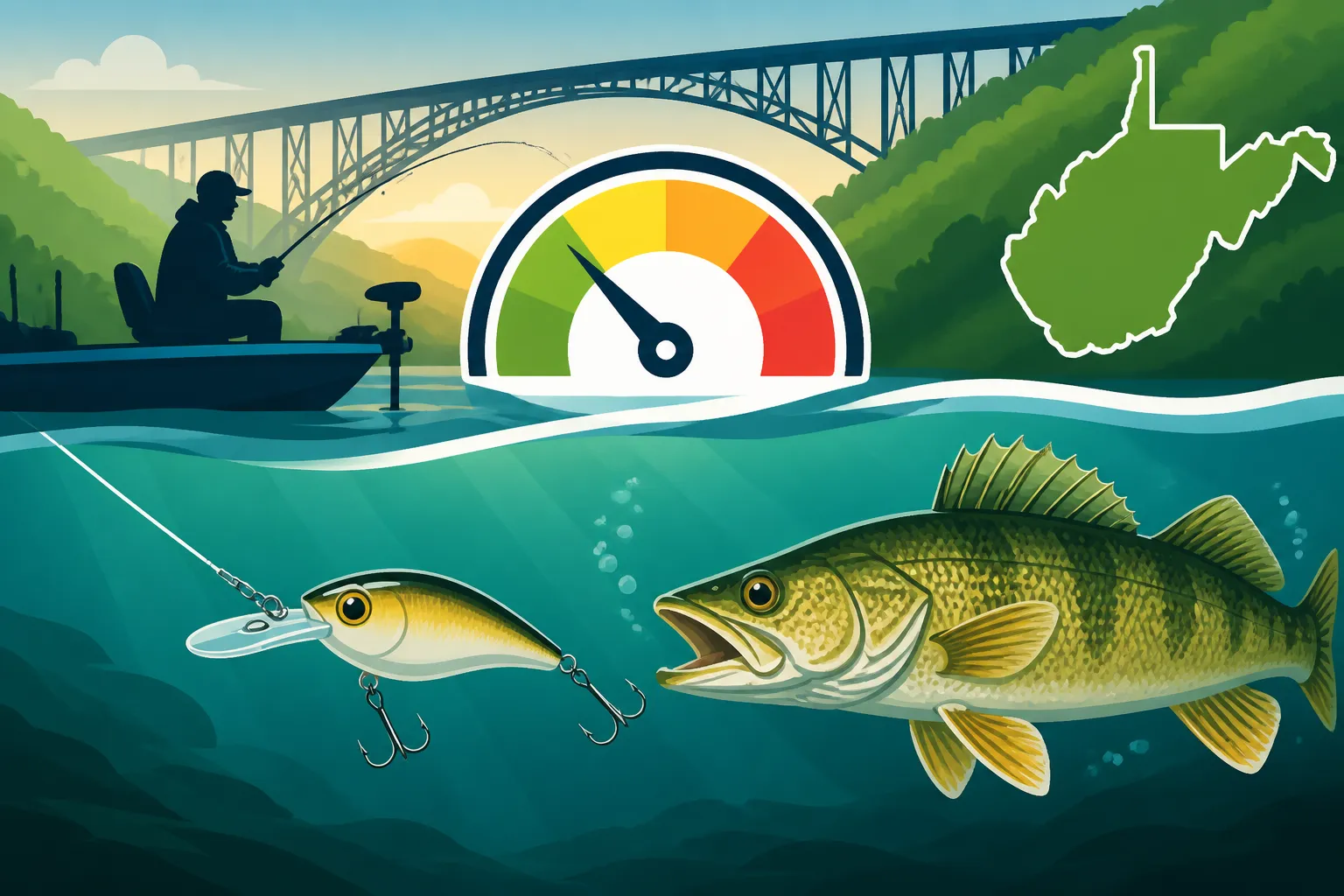
There's no single magic number for the "best" drift speed, but rather a range that you'll adjust based on various factors. Generally, when trolling walleye crankbaits in West Virginia, you'll want to aim for a speed between 1.0 and 2.5 miles per hour (mph). This is your starting point, your sweet spot, your "Goldilocks Zone" where everything usually feels just right. However, many variables will influence where you should be within that range, or even slightly outside it.
Water Temperature and Fish Mood
One of the biggest indicators for how fast or slow you should be trolling is the water temperature and, by extension, the general mood of the walleye.
- Cold Water (Below 50°F / 10°C): In the early spring or late fall, when West Virginia's lakes and rivers are chilly, walleye are often more lethargic. Their metabolism is slower, and they're less inclined to chase a fast-moving bait. During these times, you'll want to lean towards the lower end of the speed spectrum, often between 1.0 and 1.5 mph. A slow, steady wobble that stays in their strike zone for longer periods is key. Think of a struggling baitfish, barely moving – that's the presentation you're trying to mimic. This is particularly relevant when walleye are holding tight to structure in deep holes or along ledges.
- Moderate Water (50-65°F / 10-18°C): This is often prime walleye territory. As the water warms, fish become more active and willing to chase. Here, speeds in the 1.5 to 2.0 mph range are often highly effective. Your crankbait will have a lively, enticing action, and you'll cover more water, increasing your chances of finding active fish. This temperature range covers much of the spring, early summer, and fall fishing seasons across our beautiful state.
- Warm Water (Above 65°F / 18°C): In the peak of summer, when surface temperatures soar in places like Summersville Lake or Bluestone Lake, walleye can still be caught, but they might seek deeper, cooler water. However, if they are active, they can be quite aggressive. Speeds from 2.0 to 2.5 mph, or even slightly higher in certain situations, can trigger reaction strikes. The walleye are chasing faster-moving baitfish, so your presentation should match that intensity. Don't be afraid to experiment with faster speeds when the fish are fired up.
Crankbait Type and Action
Not all crankbaits are created equal, and their design heavily influences their optimal speed.
- Tight-Wobble vs. Wide-Wobble: Some crankbaits have a very subtle, tight wobble, while others have a wider, more aggressive swagger. Generally, tight-wobbling baits (like some Rapala Shad Raps or Berkley Flicker Shads) often perform well at slightly slower speeds, maintaining their action without blowing out. Wide-wobbling baits (like some Storm Wiggle Warts or Livingston Lures) can sometimes handle higher speeds, using that aggressive action to displace more water and draw attention.
- Lip Size and Dive Curve: The size and angle of a crankbait's lip dictate its dive depth and how much water it "grabs." Lures with larger, more aggressively angled lips are designed to dive deeper and might have a harder pull at higher speeds. You need to ensure the lure is still running true and not spinning out. If you're having trouble getting your crankbait to run at its advertised depth, adjusting your speed is often the first thing to check.
- Size and Profile: A larger crankbait might require a bit more speed to get its full action, especially if it's got a bulky profile. Smaller baits, mimicking juvenile baitfish, might be more effective at slower, more subtle speeds. It's all about matching the hatch and how those baitfish move naturally.
You can often find recommendations for optimal trolling speeds printed on the packaging or product descriptions of various crankbaits. It's a good starting point, but always verify on the water.
Wind, Current, and Boat Control
West Virginia's rivers, like the Ohio River or the New River, and even larger lakes, can have significant currents and wind. This is where "drift speed" gets tricky. Your boat's speed over ground (SOG) might be very different from your lure's speed through the water (STW). Walleye react to the lure's speed through the water.
- Current: If you're drifting with the current, your boat's SOG will be faster than your STW if you're not using a motor. If you're moving against the current, your SOG will be slower. You need to compensate with your trolling motor or main engine to achieve the desired STW. For example, if the current is 1 mph, and you want your lure moving at 1.5 mph STW, you'll need to troll at 2.5 mph SOG upstream or 0.5 mph SOG downstream (if you can maintain control).
- Wind: Wind can push your boat around, making it hard to maintain a consistent speed and direction. Using a bow-mount trolling motor to "pull" your boat rather than a transom motor to "push" it often provides better control, especially in windy conditions. Drift socks are also invaluable tools for slowing down your drift and stabilizing your boat in windy or strong current situations. You can find a wide variety of drift socks on platforms like Amazon, and they can make a huge difference in your ability to maintain that critical constant speed.
The goal is to maintain a consistent speed for your lure, regardless of what your GPS says your boat is doing. This requires constant vigilance and adjustment.
Mastering Your Drift: Techniques and Tools for Consistent Speed
Achieving and maintaining that perfect drift speed requires a combination of good technique and the right gear. It's not just about setting a speed and forgetting it; it's an active process.
Tools for Precision Speed Control
- GPS Unit with Speedometer: This is non-negotiable for trolling. Most modern fish finders and chartplotters (even some portable ones you can find on Amazon) come with GPS capabilities that display your speed over ground (SOG). This is your primary way to monitor your speed. While it doesn't show speed through water, it's the best reference point for adjustments.
- Trolling Motor: Whether it's an electric bow-mount or a small kicker motor, a good trolling motor is essential. It allows for fine-tuned adjustments, helping you compensate for wind and current. Many modern electric trolling motors offer GPS spot-lock and cruise control features, which are absolute game-changers for maintaining a precise speed and course. If you're serious about trolling, investing in a quality electric trolling motor with these features will drastically improve your success.
- Drift Socks / Trolling Bags: These fabric parachutes are deployed in the water to create drag, slowing your boat down, especially in windy conditions or when fishing larger bodies of water like Tygart Lake. They also help stabilize your boat, preventing it from weather-vaning. Using one or two, depending on your boat size and wind conditions, can help you maintain those crucial slower speeds (1.0-1.5 mph) much more effectively than just relying on motor power.
- Engine RPM Gauge / Troll Plate: If you're using your main outboard or inboard for trolling, an RPM gauge is vital for consistency. A troll plate can also be mounted to your outboard to help slow the boat down to optimal trolling speeds without fouling spark plugs from running too low on the RPMs.
The "S-Turn" Technique
This is a classic trolling maneuver that's incredibly effective for walleye, especially when you're still trying to dial in the perfect speed or when fish are scattered.
As you troll in a straight line, make gradual, sweeping S-turns with your boat. What does this do?
- Inner Rods Slow Down: The crankbaits on the inside of the turn will slow down, dropping deeper and presenting a slower, more enticing wobble.
- Outer Rods Speed Up: The crankbaits on the outside of the turn will speed up, rising slightly in the water column and exhibiting a faster, more aggressive action.
By constantly varying your speed and depth this way, you're presenting your lures in multiple ways simultaneously. Often, one side of the boat will start getting all the bites, immediately telling you whether the walleye are responding better to a faster or slower presentation on that particular day. Pay close attention to which rod gets hit!
Reading Your Rod Tips
Your rod tip is your direct connection to what your lure is doing. When trolling crankbaits, watch those tips!
- Consistent Vibration: A healthy, consistent vibration or "wiggle" on the rod tip indicates your crankbait is running true and has its intended action.
- No Vibration / Erratic Action: If your rod tip stops vibrating, or starts twitching erratically, it could mean your lure has fouled with weeds, picked up debris, or you're simply going too fast and the lure is "blowing out" and losing its action. Reel in and check.
- Subtle Changes: Pay attention to subtle changes in the vibration. Sometimes a slight increase or decrease in speed can change the vibration just enough to trigger a bite.
Beyond the Numbers: Reading the Water and the Fish
While the speed ranges and techniques are great starting points, the most successful walleye anglers in West Virginia are those who can adapt. Fishing is rarely a static endeavor, and conditions can change rapidly.
Observe and Adapt
- Start with a Range: Begin trolling somewhere in the middle of your target range, say 1.8 mph. Run multiple lines with different crankbaits, or the same crankbait at slightly different depths.
- Watch Your Electronics: Your fish finder is your window into the underwater world. Are you marking fish? Are they suspended or tight to the bottom? If you're marking fish but not getting bites, it's time to experiment with speed. Try slowing down by 0.2 mph increments, then speeding up. Often, even a subtle change is all it takes. For example, if you're fishing a deep reservoir like Summersville Lake, your fish finder might reveal walleye holding at specific depths, which can influence your lure selection and ideal trolling depth.
- The First Bite is Gold: When you get a bite, note everything: what speed were you going? What crankbait was it? What depth? What direction was your boat moving? Replicate those conditions as closely as possible. If you were making an S-turn, did the bite come on the inside (slower) or outside (faster) of the turn? This information is invaluable.
- Consider Water Clarity: In clearer waters, like some sections of the Elk River or Cranberry River, walleye might be more wary. A slightly slower, more subtle presentation might be more effective. In stained or turbid waters, a faster speed with a crankbait that displaces a lot of water can help fish locate your lure.
Factors Beyond Speed
While speed is paramount, it’s part of a larger equation for walleye success.
- Depth Control: Your crankbait's dive curve is affected by speed, line type, and length of line out. Knowing How deep to troll for walleye at Tygart Lake or other specific bodies of water will involve careful management of all these factors. Using line counter reels is almost a necessity for precise depth replication when trolling.
- Lure Color: Don't forget color! Walleye can be very particular about it. Have a range of colors, from natural baitfish patterns to bright "firetiger" or "chartreuse" patterns for different light conditions and water clarity. Sometimes, even the best speed with the wrong color won't get bites.
- Leader Material: If you're fishing clear water and walleye are being spooky, a fluorocarbon leader can make a huge difference in presentation and invisibility. While you’ll often find excellent pre-made leaders, you can also get spools of fluorocarbon line from Amazon and tie your own.
- Seasonality: Remember that walleye behavior changes throughout the year. Walleye Spawning Season in West Virginia will see different patterns than summer feeding binges. Adjust your speed and presentation accordingly.
Mastering the drift speed for trolling walleye crankbaits in West Virginia is a journey of continuous learning and adaptation. But by understanding the core principles, utilizing the right tools, and paying close attention to what the fish are telling you, you'll be well on your way to more consistent success and filling your livewell with those delicious Mountain State walleye.
| Factor | Lower Speed (1.0-1.5 mph) | Mid Speed (1.5-2.0 mph) | Higher Speed (2.0-2.5+ mph) |
|---|---|---|---|
| Water Temperature | Cold (below 50°F), Early Spring/Late Fall | Moderate (50-65°F), Spring/Early Summer/Fall | Warm (above 65°F), Mid-Summer |
| Fish Mood/Activity | Lethargic, Negative, Post-front, Deep | Neutral to Active, Searching, Feeding | Aggressive, Chasing bait, Reactionary |
| Crankbait Action | Subtle, Tight Wobble, Deep Divers | Balanced, Versatile, Most Crankbaits | Aggressive, Wide Wobble, Flashy, Shallow Runners |
| Water Clarity | Clear, Spooky Fish | Moderate | Stained/Turbid, Low Light |
| Target Depth | Deeper water (slower speed helps dive deeper) | Mid-range | Shallower water (faster speed keeps lure higher) |
| Wind/Current Impact | Use drift socks to achieve / troll against current | Adjust frequently with trolling motor | Compensate for opposing wind/current |
Disclaimer
This article is for general informational purposes only and does not constitute professional advice. Laws, prices and regulations vary by location and change over time. Consult a qualified professional for guidance on your specific situation.