Best line for muskie fishing in rocky rivers
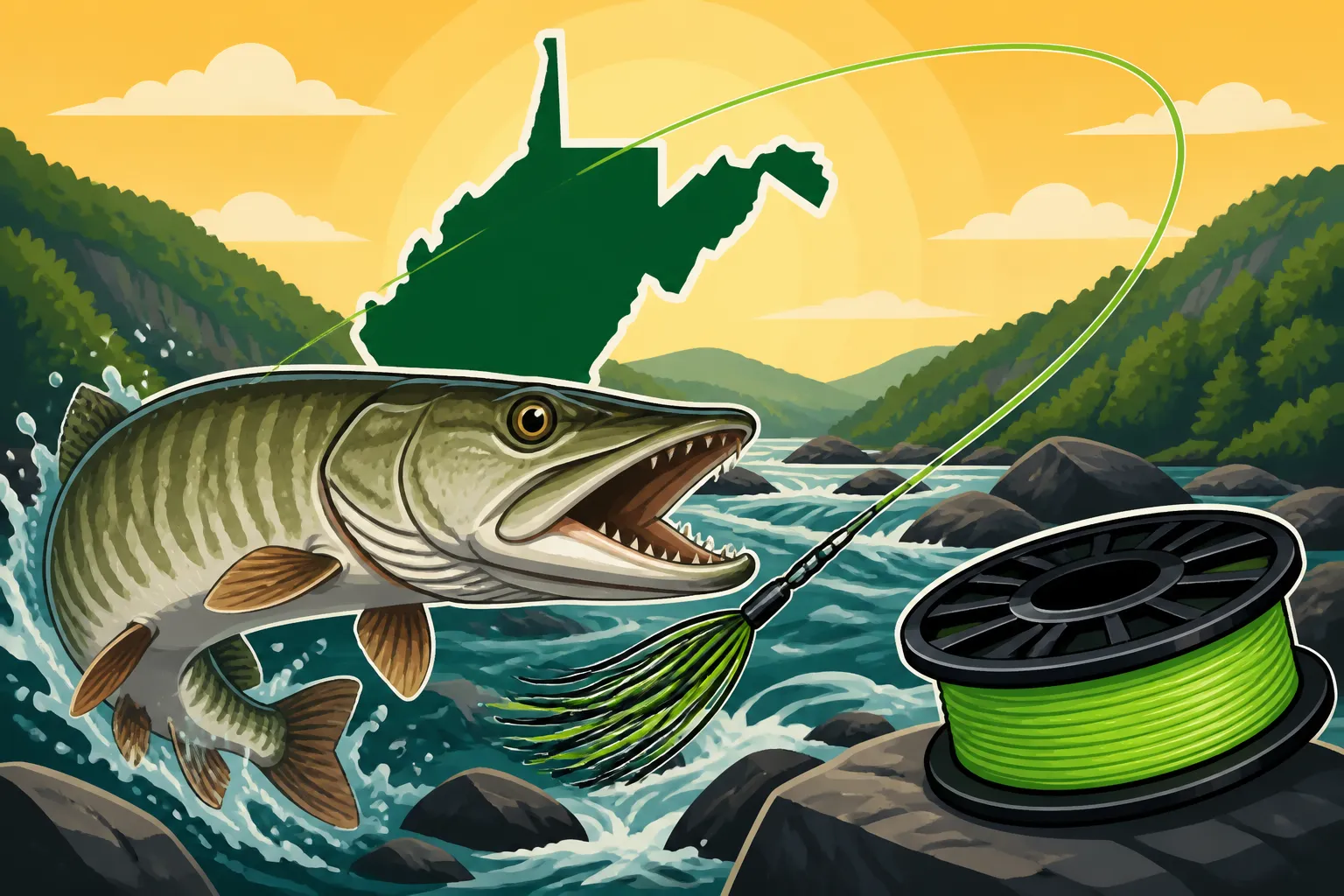
Fishing for muskie in West Virginia's rocky rivers can be incredibly rewarding, but it's also a brutal test for your fishing line. The constant abrasion from jagged rocks, submerged timber, and the sheer power of a fighting muskie often leads to heart-wrenching break-offs right when you're closest to landing that fish of a lifetime. This comprehensive guide will dive deep into the best line choices and strategies to help you conquer these tough conditions and keep more muskie hooked, even in the most unforgiving stretches of water that our beautiful state has to offer.
Understanding the Unique Challenges of West Virginia's Rocky Muskie Rivers
Before we even talk about specific lines, it’s crucial to truly grasp what we’re up against when we chase muskie in places like the New River, the Kanawha, or even the wilder sections of the Little Kanawha. These aren't your typical, sandy-bottomed lakes. West Virginia's rivers are rugged, unforgiving, and designed to challenge every piece of your gear.
The Relentless Abrasive Nature of River Structure
West Virginia's muskie rivers are defined by their rugged, rocky bottom structures and banks. We're talking about everything from large, car-sized boulders to sharp shale ledges and countless gravel beds. When you're casting big muskie lures or, more importantly, when a muskie makes a blistering run, your line is constantly coming into contact with these abrasive surfaces. It's not just a matter of if it will fray, but when. A minor nick or rub can quickly turn into a critical weakness, especially under the extreme pressure of a fighting muskie. Imagine your line scraping across a barnacle-covered rock or a sharp piece of slate during a hard run – it's a recipe for disaster with the wrong line. This isn't like fishing in a clear, sandy-bottomed lake; the environment here is actively trying to cut your line.
Beyond the natural rock, many of these rivers also feature submerged timber, old bridge pilings, and other man-made structures that can be just as unforgiving. A muskie might dive straight into a downed tree limb, and if your line isn't up to the task, you're left with a lost fish and a lot of frustration. It takes a truly resilient line to stand up to the relentless abuse these environments dish out, especially considering the power these fish possess.
The current itself, particularly in larger rivers like the New River, adds another layer of complexity. It pushes your line against obstacles, increasing the friction and stress. When you're trying to work a large bait through a boulder-strewn section, you're fighting the current, the structure, and the potential for a monster strike all at once. Every component of your setup needs to be able to handle this multi-faceted challenge, from your rod to your reel, and especially your line.
The Explosive Power of a West Virginia Muskie's Fight
West Virginia muskie are legendary for their size and their brutal, unforgiving fights. These aren't dainty fish; they're apex predators built for explosive power and endurance. When a muskie hits your lure, it's often a jarring strike, followed by powerful head shakes, blistering runs, and aerial acrobatics. They will use the current to their advantage, often diving into heavy cover or rock fields the moment they feel the hook. This is where your line truly gets tested. You can learn more about How to Catch Muskie in West Virginia to appreciate the fight.
Imagine hooking into a 40-inch muskie near a submerged rock pile on the New River. It's not going to just swim calmly to the net. It's going to dive, pull, and try to wrap your line around every available obstruction. The sheer force they exert can snap weaker lines or pull hooks free if there's any compromise in your connection. You need a line that can absorb tremendous shock and withstand the constant grinding action as the fish thrashes.
Furthermore, these fish often make last-ditch efforts right at the boat or kayak, leading to violent lunges. This moment, when the fish is boatside, is statistically when many big muskie are lost. A strong, abrasion-resistant line gives you a fighting chance to control these surges and guide the fish into a Best Landing Net for Muskie. You can find muskie well into the trophy size in our waters, so be prepared for a fight of a lifetime!
The Heartbreak and Costs of Line Failure
Losing a trophy muskie because of a snapped line is one of the most disheartening experiences in fishing. It's not just the lost fish, which is painful enough; it's also the lost lure. Muskie lures aren't cheap. High-quality bucktails, glide baits, or swimbaits can cost a pretty penny, and seeing one disappear with a broken line is a financial sting on top of the emotional one. Imagine losing that new custom painted crankbait you just bought on Amazon because your line couldn't handle a sharp rock!
Beyond the immediate costs, line failure can also lead to frustration and a lack of confidence in your gear. You spend hours, days, sometimes weeks, targeting these elusive fish, often waiting for that single, aggressive strike, only for a weak link in your setup to let you down. This can take away from the enjoyment of the sport. Investing in the right line, maintaining it, and understanding its limitations is paramount to ensuring your time on the water is rewarding, not frustrating.
Ultimately, the goal for many Muskie Fishing in West Virginia anglers is to land that fish, admire it, get a quick photo, and release it safely. Line failure not only costs you the fish and the lure but can also leave a lot of line and tackle in the water, which isn't great for the environment or other anglers. Choosing the right line is an investment in successful catches, sustainable fishing, and peace of mind on the water.
Main Line Options: Braided Line Reigns Supreme for West Virginia Muskie
When equipping your reel for muskie fishing in West Virginia's rocky rivers, your main line choice is arguably the most critical decision. This isn't the place for compromises.
Why Braided Line is the Undisputed King for Muskie
When it comes to muskie fishing in rocky West Virginia rivers, braided line is almost universally recommended by seasoned anglers. Its key advantage lies in its incredible strength-to-diameter ratio and, most importantly, its superior abrasion resistance compared to monofilament. While no line is completely impervious to sharp rocks, braided line, with its woven strands, can withstand far more rubbing and scraping before it compromises. Brands like PowerPro, Sufix, and Berkley offer excellent braided lines that stand up well to the abuse of river fishing. You can often find great deals on larger spools of these trusted brands on Amazon.
Another huge benefit of braided line is its lack of stretch. This zero-to-low stretch property provides unmatched sensitivity, allowing you to feel every bump, tic, and subtle change in your lure's action as it navigates through rocky bottom. More importantly, when a muskie strikes, that lack of stretch means a direct, immediate transfer of power to your hookset, translating into much better hook penetration, especially with large, stiff muskie hooks. This is absolutely crucial for landing these hard-mouthed fish.
Furthermore, braided line casts incredibly well, especially with the large, heavy lures typically used for muskie. Its thinner diameter for a given strength means less wind resistance and often longer, more accurate casts, which can be a game-changer when you're trying to hit specific pockets or submerged structure. It also handles current better than thicker monofilament, reducing bow in your line and maintaining a more direct connection to your lure, giving you more control over your presentation.
When Monofilament Might Still Have a Place (and Its Drawbacks)
While braided line is king, there are niche scenarios where monofilament still gets some use, primarily by anglers looking for a bit of stretch in their system or for specific topwater presentations. The stretch in mono can act as a shock absorber, which can be beneficial if you're worried about ripping hooks out of a fish's mouth, but for muskie, the benefits are generally outweighed by the drawbacks, especially in our rough river environments.
The major drawbacks for muskie fishing in rocky rivers are significant. Monofilament has terrible abrasion resistance compared to braid. A few rubs against a sharp rock or a log can quickly sever it, leading to heartbreaking break-offs. Its thicker diameter also means more drag in the water, less sensitivity, and typically shorter casting distances with heavy lures. For the powerful, aggressive strikes of a muskie and the harsh river environment, monofilament simply isn't robust enough as a main line.
Some anglers might use monofilament as a short leader for specific lure actions or subtle presentations, but even then, it's a risky proposition for muskie given their formidable teeth and the abrasive surroundings. For the main line, especially when targeting trophy Best Muskie Waters in West Virginia in these challenging environments, sticking with braided line is the safest and most effective choice.
Choosing the Right Pound Test for Braided Line
Selecting the appropriate pound test for your braided line is crucial for balancing strength, castability, and stealth. For muskie fishing in rocky West Virginia rivers, most anglers opt for braided line in the 65 to 100 lb test range.
65-80 lb Test: This is a good starting point for many muskie anglers. It offers excellent knot strength, good abrasion resistance, and still allows for decent casting distance with typical muskie lures. It's versatile enough for most river situations and a solid choice for those new to serious muskie fishing. It's often enough to handle a big fish, but you need to be mindful of heavy cover and aggressive runs into structure.
80-100 lb Test: For anglers specifically targeting trophy muskie in the heaviest cover, or in extremely rocky, fast-current areas, bumping up to 80 or even 100 lb test braid provides an extra layer of security. While it's slightly thicker and might reduce casting distance marginally, the added peace of mind when a huge fish dives into a submerged tree or rock pile is often worth it. This higher pound test also handles the stress of large, hard-pulling lures better over extended periods. Remember to consult Best Line Weight for Muskie Fishing for more detailed insights.
It's a balance. Too light, and you risk break-offs. Too heavy, and you might sacrifice some casting performance and feel. However, for muskie in these conditions, erring on the side of heavier is generally a good idea. Remember, the stated pound test for braid often relates to its breaking strength, which is significantly higher than monofilament of the same diameter. You want enough backbone to turn a muskie away from trouble without worrying about your line snapping. Considering the cost of lures and the effort put into a day of fishing, sacrificing a few yards on a cast for bomb-proof line strength is usually a wise trade-off.
The Indispensable Role of Leader Material
Even with the toughest braided main line, you absolutely cannot fish for muskie without a robust leader. This isn't an optional accessory; it's a fundamental component of your muskie fishing setup.
Understanding the Need for Leaders Beyond Your Main Line
Even with the toughest braided main line, you absolutely cannot fish for muskie without a robust leader. Why? Two main reasons: first, a muskie's teeth are incredibly sharp and numerous, designed to slice through flesh and bone. Your braid, no matter how strong, will be no match for a muskie's dental work. Second, leaders provide an extra layer of abrasion resistance right at the lure, where it's most likely to come into contact with structure during the retrieve or a fish's fight.
Muskie leaders are not like bass leaders. They need to be significantly stronger and often made of different materials. Using the wrong leader material or an improperly tied leader is another common point of failure that will lead to lost fish and expensive lures. Never skimp on your leaders; they are literally the last line of defense between you and a trophy. Many anglers tie their own, while others prefer commercially available leaders that can also be found on platforms like Amazon.
The choice of leader material often comes down to balancing strength, abrasion resistance, and sometimes visibility. You're trying to fool a wary predator while protecting your main line from its formidable mouth and the rough environment. Understanding the pros and cons of each material is crucial for making the right choice for your fishing conditions and style.
Fluorocarbon Leaders: When and Why to Use Them
Fluorocarbon has become a very popular leader material for muskie, especially in clearer water situations or when fish are pressured. Its primary advantages are its near-invisibility underwater, its good abrasion resistance (though not as good as wire), and its stiffness, which helps prevent fouling with large lures. For muskie, you're looking for heavy-duty fluorocarbon, typically in the 80 to 150 lb test range.
Pros of Fluorocarbon:
- Low Visibility: It refracts light similar to water, making it very difficult for fish to see, which can be an advantage for spooky muskie in clear river sections.
- Good Abrasion Resistance: While not steel, heavy fluorocarbon can handle quite a bit of abuse from rocks and muskie teeth before failing, offering a strong secondary defense.
- Stiffness: The inherent stiffness helps prevent large, fast-moving baits from tangling with the main line during a cast or retrieve, which is a common frustration with big lures.
- Knot Strength: When tied correctly (using knots like the Albright or FG knot to braid, and a good loop knot to the lure), it provides reliable strength and a secure connection.
Cons of Fluorocarbon:
- Cost: Quality heavy fluorocarbon can be expensive, making frequent replacement a budget consideration.
- Abrasion vs. Wire: It will still fail faster than steel wire against truly sharp teeth or extremely abrasive structure, offering less absolute protection than wire.
- Knot Tying: Requires careful knot tying and often more bulky knots compared to crimping wire, which can be a point of weakness if not done perfectly.
Fluorocarbon is a fantastic choice for open water, subtle presentations, or when targeting muskie that might be more leader-shy. Just make sure you're using a heavy enough test and inspecting it frequently, especially after a fish encounter or a snag.
Wire Leaders: The Ultimate Protection Against Muskie Teeth
For the ultimate protection against a muskie's razor-sharp teeth, especially when fishing in situations where a bite-off is a real concern, wire leaders are indispensable. These are typically made from stainless steel, titanium, or other alloys, and they come in various forms: single-strand wire, multi-strand wire, and even coated versions. This is particularly important under West Virginia Fishing Regulations Explained which prioritize catch and release for many trophy species, as a quick, clean release is dependent on a strong, reliable setup.
Pros of Wire Leaders:
- Maximum Bite-Off Protection: Nothing beats wire for preventing a muskie from cutting your line. It's essentially immune to their teeth, offering unparalleled peace of mind.
- Durability: Wire leaders can withstand repeated abuse from fish and structure without compromising integrity, making them a long-lasting option.
- Reliability: Properly crimped wire leaders are extremely reliable and generally maintenance-free during a fishing trip (unless bent or kinked), requiring less on-the-water attention.
Cons of Wire Leaders:
- Visibility: Wire is more visible than fluorocarbon, which could theoretically deter some extremely wary fish, though muskie are often not that particular, especially in stained or darker river waters.
- Stiffness/Kinking: Some single-strand wires can be prone to kinking if bent too sharply, requiring immediate replacement. Multi-strand and titanium options are much more resistant to this.
- Weight: Some heavy wire leaders can add a bit of weight, potentially affecting lure action, though usually minimally with large muskie baits.
Many anglers prefer pre-made wire leaders with quality swivels and snaps for convenience. When you're fishing in murky water, aggressive muskie aren't going to care much about a visible leader anyway, and the peace of mind knowing you won't get bitten off is priceless. For those looking for Best wire leader for muskie fishing, titanium leaders offer a great balance of strength, kink resistance, and durability.
Leader Length and Connection Methods
The length of your muskie leader is an important consideration. Generally, leaders for muskie fishing range from 12 inches to 36 inches, or even longer for specific applications like glide baits where you want to keep the lure away from your main line during the "figure eight" at the boat. A good starting point for most river applications is around 18-24 inches. This length provides enough protection from both the fish's teeth and potential abrasion points near the lure, without being excessively long and cumbersome for casting.
When connecting your leader to your main braided line, strong, low-profile knots are essential. The Albright knot and the FG knot are two of the most popular and reliable choices for connecting braid to a heavier mono or fluoro leader. For wire leaders, crimps are often preferred for their strength and neatness, though some specialized knots can be used with certain wire materials. Always ensure your knots are tied correctly and tested thoroughly before making your first cast.
At the lure end, a strong, high-quality snap swivel or solid ring is critical. This allows for quick lure changes and prevents line twist, which can be a major issue with muskie lures that have rotating components like bucktails. Don't skimp on these terminal components – a cheap snap can bend open and cost you a fish, especially when you're fishing the Best Fishing Rivers in West Virginia known for producing trophy muskie.
Here's a quick comparison of common leader materials for muskie fishing:
| Feature | Fluorocarbon Leader (80-150 lb test) | Multi-Strand Wire Leader (e.g., Titanium, Steel) | Single-Strand Wire Leader (Steel) |
|---|---|---|---|
| Bite-Off Protection | Good (heavy test) | Excellent | Excellent |
| Abrasion Resistance | Good (heavy test) | Excellent | Good (but kinks easily) |
| Visibility | Low (near invisible) | Moderate (can reflect light) | Moderate (can reflect light) |
| Kink Resistance | High (if not tied too tightly) | Excellent | Poor (very prone to kinking) |
| Stiffness | Moderate to High (helps prevent tangles) | Moderate | High (can affect lure action if too heavy) |
| Knot Tying/Connections | Knots (e.g., Albright, FG) or Crimps | Crimps (recommended) | Haywire Twist (or Crimps for specific types) |
| Cost | Moderate to High | High | Low to Moderate |
| Best For | Clear water, wary fish, slightly more natural lure action | General purpose, maximum protection, aggressive fish | Specific applications, sometimes for pike; less common for muskie due to kinking |
Maximizing Line Life and Performance in Tough Conditions
Having the right line is only half the battle. To truly succeed in West Virginia's challenging muskie rivers, you need to be diligent about line care and maintenance. This proactive approach will save you heartache and help you land more fish.
The Absolute Importance of Regular Inspection and Retie Practices
No matter how good your line or leader is, fishing in rocky West Virginia rivers means constant wear and tear. This is why regular inspection and proactive reties are non-negotiable for serious muskie anglers. Every time you finish a fishing spot, or even every few casts if you're hitting heavy cover, run your fingers up and down the last few feet of your main line and especially your leader. Feel for any nicks, frays, or rough spots. Even a slight imperfection can be a major weak point that will fail under pressure.
If you feel anything suspicious, don't hesitate: cut off the compromised section and re-tie your leader or re-tie your lure directly if you're using a short leader. It's far better to sacrifice a few feet of line than to lose a trophy muskie and an expensive lure. This might seem tedious, but it's a habit that will pay off tremendously. Imagine hooking into a big muskie after hours of casting, only to have your line part ways because of a tiny nick you didn't bother to check. The regret stings, and it's completely avoidable.
It's also a good practice to re-tie your main knot (leader to braid) at the beginning of each fishing day, or after landing a particularly hard-fighting fish. Even the best knots can weaken under extreme stress. Taking these few minutes ensures your connections are as strong as possible, giving you the confidence to fish aggressively in pursuit of those elusive fish throughout the West Virginia Fishing Season Dates and Closures.
Dealing with Fraying, Nicks, and the Inevitable Damage
Fraying and nicks are an unavoidable reality when fishing for muskie in rocky rivers. Braided line, while abrasion resistant, can still fray, especially if it's repeatedly dragged over sharp edges. When you notice significant fraying in a section of your main line, it’s best to cut out that section. If it's too much to simply cut and re-tie, consider respooling your reel or at least adding backing to fill the spool after cutting out a long damaged section.
For leaders, the rules are even stricter. A nick or kink in a fluorocarbon leader means it's time to replace it immediately. For wire leaders, a severe kink is also a death sentence for its integrity and reliability. Always carry extra leader material or pre-made leaders with you. Many anglers will purchase bulk spools of fluorocarbon or titanium leader material on Amazon to save money, allowing them to replace leaders frequently without worry.
Don't try to "make do" with a compromised line or leader. The one time you decide to push it is usually the time a big muskie will strike, and you'll be left with nothing but regret. Proactive replacement and diligent inspection are key components of successful muskie fishing in these demanding environments. Remember, you want your gear to be the strongest link in the chain, not the weakest.
Proper Spooling, Storage, and Overall Line Management
The life of your line starts even before it hits the water. Proper spooling is critical. Overfilling your reel can lead to tangles, wind knots, and reduced casting distance. Underfilling can impact drag performance and limit your casting range. Ensure your line is spooled evenly and tightly. If you're using braided line, putting a small amount of mono backing on first can prevent the braid from slipping on the spool.
Storage also plays a significant role in line longevity. Avoid leaving reels exposed to direct sunlight for extended periods, as UV rays can degrade line over time. When storing reels for the off-season, consider removing the line if it's been heavily used, or at least peeling off the top layers that see the most exposure. Keep your reels in protective cases or bags to prevent accidental damage to the line.
Finally, think about your overall line management while fishing. Avoid unnecessary snags by paying attention to your casts and retrieve. Use appropriate retrieve speeds for your lures to prevent excessive line twist. By treating your line with care from the moment it's spooled until the end of the season, you'll ensure it performs at its best when that West Virginia muskie of a lifetime decides to strike. This includes checking your Best Rod setup for New River muskie regularly to ensure the guides are smooth and not causing any premature wear on your line.
Disclaimer
This article is for general informational purposes only and does not constitute professional advice. Laws, prices and regulations vary by location and change over time. Consult a qualified professional for guidance on your specific situation.