Best crappie lakes in West Virginia
There’s nothing quite like the thrill of reeling in a slab crappie, especially when you’re fishing in West Virginia. But let’s be honest, finding those consistent crappie hotspots can sometimes feel like searching for a needle in a haystack, leaving many anglers frustrated and empty-handed. This comprehensive guide is here to cut through the guesswork, diving deep into the Mountain State's premier crappie lakes, detailing their unique characteristics, and offering proven strategies to help you fill your cooler with these delicious panfish.
The Allure of Crappie Fishing in West Virginia
Crappie, whether black or white, are truly a beloved species among West Virginia anglers, and for good reason. They’re plentiful, put up a decent fight on light tackle, and are absolutely fantastic on the dinner table. What's not to love? But beyond just their culinary appeal, crappie offer a fantastic fishing experience that’s accessible to everyone, from seasoned veterans to families with young children. Understanding their habits is the first step to consistently finding them.
Understanding Crappie Habits and Preferred Habitat
Crappie are masters of structure, and knowing what kind of structure they prefer is key to successful fishing. These fish are gregarious, meaning they love to hang out in schools, often around submerged cover. This could be anything from fallen trees and brush piles to old roadbeds, rock piles, or even artificial fish habitats deployed by the West Virginia Division of Natural Resources (WVDNR). They also tend to favor areas with slower current or still water, making lakes and larger river backwaters prime territory.
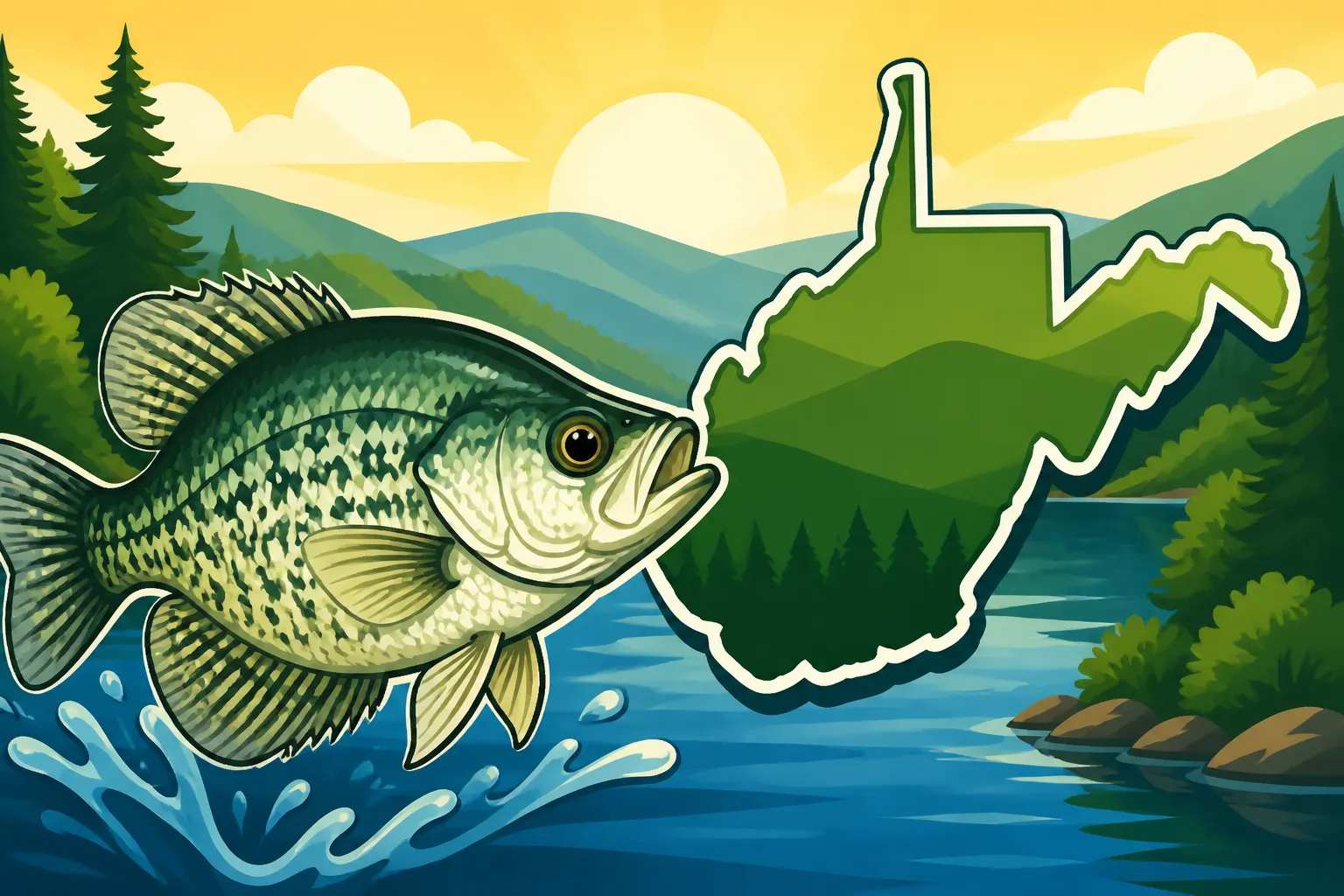
Black crappie, identifiable by their irregular blotchy patterns and typically 7-8 dorsal spines, often prefer clearer water with more vegetation. White crappie, with their distinct vertical bars and 5-6 dorsal spines, are generally more tolerant of turbid or murky water and can be found in a wider range of habitats, including large rivers and impoundments. In West Virginia, you'll often encounter both species, sometimes even in the same lake. For more detail on telling them apart, check out our guide on Black Crappie vs White Crappie Identification. These fish are also sensitive to light, often moving deeper or seeking dense cover during bright daylight hours, becoming more active during low light conditions like dawn, dusk, or even at night. Their diet primarily consists of smaller baitfish and insects, so presenting lures or baits that mimic these food sources is usually a winning strategy.
What Makes a Lake a Top Crappie Destination?
Not all lakes are created equal when it comes to crappie fishing. A truly outstanding crappie lake typically possesses a few key attributes. Firstly, an abundance of varied structure is paramount. Crappie need places to hide from predators, ambush prey, and escape harsh sunlight. This includes natural elements like timber, rock formations, and aquatic vegetation, as well as man-made structures like docks, bridge pilings, and fish attractors. Secondly, a healthy forage base is crucial. Lakes teeming with shad, minnows, and insect larvae will support a robust crappie population. Without ample food, crappie won't grow large or numerous.
Water clarity also plays a role, as mentioned earlier. While white crappie tolerate murkier conditions, many anglers find better success and larger fish in waters with at least moderate clarity. Lastly, consistent stocking or a strong natural reproduction rate ensures the population remains healthy and provides ample opportunities for anglers. The WVDNR does a fantastic job managing many of the state's fisheries, including crappie, often implementing regulations and habitat projects to enhance crappie populations. You can often find great information on specific lake conditions and population health through their website or by talking to local bait shop owners who are usually a treasure trove of knowledge.
Premier Crappie Lakes Across West Virginia
West Virginia boasts several fantastic lakes that consistently produce excellent crappie fishing. While conditions can vary year-to-year and season-to-season, these spots are generally recognized as top-tier destinations for anyone looking to target crappie.
Summersville Lake: The Mountain State's Crappie Gem
Summersville Lake, nestled in Nicholas County, is arguably one of West Virginia’s most famous lakes, and for good reason. It’s not just a breathtakingly beautiful reservoir with sheer cliffs and crystal-clear water; it's also a phenomenal crappie fishery. Known for its deep, clear waters, Summersville Lake provides excellent habitat for both black and white crappie, though black crappie tend to thrive particularly well here. The lake’s extensive submerged timber, especially in the upper reaches of the Gauley River arm, creates countless crappie hideouts.
Anglers often target crappie in Summersville around these submerged trees and brush piles, as well as along steep rocky bluffs and deep creek channels. During the cooler months, especially late fall and winter, crappie will often move to deeper water, sometimes congregating around underwater humps and ledges. As spring approaches, they'll push into shallower coves and feeder creeks for spawning, making them more accessible to bank anglers. Many local guides and experienced anglers use advanced sonar to pinpoint these schools, and if you’re looking for a guided experience, platforms like FishingBooker can connect you with local experts who know the lake inside and out. The sheer size of Summersville, at over 2,700 acres, means there's always a new spot to explore, offering a lifetime of crappie fishing adventures.
Burnsville Lake: A Structure-Rich Crappie Haven
Located in Braxton County, Burnsville Lake is another must-visit destination for crappie enthusiasts. This 968-acre flood control reservoir is known for its incredibly rich underwater structure, making it a crappie paradise. Unlike some other clearer lakes, Burnsville often has a moderate stain to its water, which can make crappie less wary and more aggressive. The lake features numerous coves, creek channels, and extensive standing timber that was left when the lake was impounded, providing endless cover.
Many anglers find success by focusing on the old river channel, particularly where it winds through submerged timber. Brush piles, both natural and those added by the WVDNR, are also magnets for crappie. In spring, the shallower coves and areas near the mouths of feeder creeks become prime targets as crappie move in to spawn. During summer and winter, the fish tend to drop into deeper parts of the lake, relating to timber edges or pronounced channel breaks. Spider rigging with multiple rods, presenting jigs or minnows at various depths, is a popular and effective technique here. When fishing these timber-rich environments, choosing the right jig weight is critical to getting your bait to the strike zone without constant snagging; our guide on Best Jig Weight for Crappie at Burnsville Lake offers great insights.
Tygart Lake: A Northern West Virginia Gem
Up in Taylor and Barbour Counties, you’ll find Tygart Lake, a 1,750-acre reservoir that offers some fantastic crappie fishing, particularly for white crappie. Tygart Lake is often overlooked by anglers from the southern part of the state, but it consistently produces good numbers and sizes of crappie. This lake is characterized by its steep banks, rocky points, and a deep main channel that snakes through the impoundment.
Crappie in Tygart Lake tend to relate heavily to the drop-offs along the old river channel and points that extend into deeper water. There’s also significant submerged brush and laydowns in many of the lake’s coves and arms, especially after water levels fluctuate. During the spring spawn, look for crappie congregated in the shallower, warmer waters of the creek arms and protected coves. As the water warms in summer, they’ll retreat to deeper, cooler sections, often suspended over structure or along thermo-clines. Winter crappie fishing can also be productive here, with fish schooling tightly near deep structure. Using electronics to scan for schools of baitfish and crappie can drastically increase your success rate on Tygart, helping you pinpoint those crucial underwater features.
Effective Strategies for Catching Crappie in West Virginia
Knowing where the crappie are is only half the battle; the other half is knowing how to catch them! Crappie fishing involves a blend of technique, patience, and adapting to the specific conditions of the day.
Seasonal Tactics for Consistent Success
Crappie behavior changes dramatically with the seasons, mainly driven by water temperature and their spawning cycle. Understanding these shifts is crucial for year-round success.
- Spring (Pre-Spawn & Spawn): This is arguably the most popular time for crappie fishing. As water temperatures rise into the 50s Fahrenheit, crappie move into shallower coves and protected bays to prepare for spawning. They often stage in 8-15 feet of water before moving into just a few feet for the actual spawn when temperatures hit the high 50s to low 60s. During the pre-spawn, they are aggressively feeding, making them easier to catch. Small jigs (1/32 to 1/16 ounce) tipped with minnows or soft plastics are deadly. Focus on brush piles, docks, and submerged logs in these shallower areas. Our guide on Best Techniques for Pre-Spawn Crappie delves into this in detail, and you can also find more specific advice in our article, Best Time to Fish for Crappie in Spring.
- Summer: Once the spawn is over and water temperatures soar, crappie typically retreat to deeper, cooler waters. They'll often suspend over deep creek channels, congregate around deep timber, or hug the bottom along ledges and humps. This is when a good fish finder becomes invaluable. Trolling jigs or minnows at specific depths, or vertical jigging over submerged structure, are highly effective methods. Think 15-30 feet of water, sometimes even deeper. Night fishing can also be incredibly productive in summer, as crappie move shallower to feed under the cover of darkness, often attracted to lights.
- Fall: As water temperatures begin to cool in autumn, crappie often go on a feeding frenzy to bulk up for winter. They'll become more active, moving into shallower to mid-depth ranges (10-20 feet) as baitfish also migrate. This is a great time to cover water, casting small crankbaits or slowly trolling jigs along channel edges and points. Look for schools of baitfish on your electronics, as crappie won't be far behind.
- Winter (Ice Fishing & Open Water): If the lakes freeze thick enough, ice fishing for crappie can be a blast. Crappie will often school tightly in deep basins, around deep brush, or along channel breaks. Small jigs, often tipped with a grub or wax worm, are jigged vertically through holes. In lakes that don't freeze completely, or during milder winter days, crappie can still be caught by targeting deep structure, similar to late fall, but with slower presentations.
Essential Gear and Techniques for West Virginia Crappie
You don’t need a ton of fancy gear to catch crappie, but having the right tools for the job can make a huge difference.
- Rods & Reels: Light to ultralight spinning rods (5 to 7 feet long) paired with small spinning reels (500 to 1000 size) are perfect. They allow for sensitive presentations and make even small crappie feel like a trophy. For those who prefer, small baitcasting setups can also be used, especially for "spider rigging" (using multiple rods to cover a wide area from a boat).
- Line: 4 to 6 lb test monofilament or fluorocarbon line is usually sufficient. Some anglers prefer braided line for its sensitivity, often with a fluorocarbon leader for stealth.
- Baits & Lures:
- Minnows: Live minnows are a classic crappie killer. Hooked through the lips or back, they can be fished under a bobber, tight-lined, or trolled.
- Jigs: Small marabou jigs, tube jigs, curly tail grubs, and soft plastic minnow imitations (like Bobby Garland's, Mister Twister, or Panfish Assassin) are incredibly versatile. Colors like chartreuse, white, black/chartreuse, and pink are often very effective. The weight of the jig (1/32 to 1/8 oz) depends on depth and current. For a deep dive into using jigs, our guide on Jigging for Crappie in West Virginia Lakes is an excellent resource.
- Small Crankbaits: In fall and early spring, tiny crankbaits can entice aggressive crappie, especially when trolled or cast along structure.
- Techniques:
- Bobber Fishing: A simple and effective method, especially for shallower crappie. Set your bobber to suspend your minnow or jig just above known structure.
- Vertical Jigging: Dropping a jig directly over crappie schools found on your electronics. This is deadly for deep, schooled fish.
- Spider Rigging: From a boat, using multiple rods extended from the bow, each with a different jig or minnow presentation, allows you to cover a wide swath of water and pinpoint the preferred depth and bait. This is a fantastic way to locate crappie when they are scattered.
- Casting & Retrieving: For active crappie in shallower water, simply casting a jig or a small spinnerbait and retrieving it slowly can be very effective.
Remember that patience and persistence are your best friends when targeting crappie. Experiment with different depths, retrieve speeds, and lure colors until you find what they're hitting on that particular day. Sometimes a subtle change can make all the difference.
Maximizing Your Crappie Fishing Experience
Crappie fishing isn't just about catching fish; it's about enjoying the entire experience. From understanding regulations to finding expert assistance, there are many ways to enhance your time on the water.
Regulations, Conservation, and Responsible Angling
Before you even cast a line, always familiarize yourself with the current West Virginia fishing regulations. The WVDNR sets daily creel limits and sometimes size limits for crappie to ensure healthy populations for future generations. For example, the statewide daily creel limit for crappie is 30, with no minimum size limit, but these can change or vary in special regulation waters. It's always best to consult the most current WVDNR Fishing Regulations Summary. You can find more information on specific species limits in our article, West Virginia Bag and Possession Limits by Species.
Practicing responsible angling means more than just following the rules. If you're planning to keep fish, only take what you'll realistically eat. Crappie are delicious, but overharvesting can negatively impact local populations. When releasing crappie, handle them gently with wet hands, and try to minimize their time out of the water, especially larger "slab" crappie which are important for reproduction. Consider carrying a measuring tape and small scale if you like to track your catches without necessarily keeping them.
Finding Local Hotspots and Expert Guidance
While this guide covers some of the best crappie lakes, local knowledge is always invaluable. Don’t hesitate to strike up conversations at local bait and tackle shops; these folks live and breathe fishing and often have up-to-the-minute reports on what's biting and where. Online fishing forums and social media groups dedicated to West Virginia fishing can also be great resources for gathering intel and connecting with other anglers.
If you’re new to a lake or want to fast-track your learning, consider hiring a local fishing guide. Guides not only know the prime locations but also the subtle nuances of presentation and technique that come with years of experience on specific bodies of water. Websites like FishingBooker can be an excellent resource for finding experienced crappie guides in West Virginia, allowing you to book an outing with someone who specializes in these panfish and knows the lake’s current patterns. A guided trip can transform your understanding of a lake and its crappie population in just a single day.
Below is a quick overview of some of West Virginia's top crappie lakes:
| Lake Name | County | Primary Crappie Species | Key Features | Best Seasons | Typical Depth Fished (feet) |
|---|---|---|---|---|---|
| Summersville Lake | Nicholas | Black & White | Deep, clear water, submerged timber, rocky bluffs | Spring, Fall, Winter | 10-40 |
| Burnsville Lake | Braxton | Black & White | Extensive submerged timber, creek channels, brush | Spring, Summer, Fall | 8-30 |
| Tygart Lake | Taylor/Barbour | White | Steep banks, rocky points, deep channel, brush | Spring, Fall | 10-35 |
| Bluestone Lake | Summers | Black & White | Muddy flats, brush piles, river channel | Spring, Fall | 5-25 |
| East Lynn Lake | Wayne | Black & White | Standing timber, coves, old roadbeds | Spring, Fall | 8-25 |
West Virginia offers a fantastic array of opportunities for crappie anglers, from the scenic depths of Summersville Lake to the timber-rich waters of Burnsville. With the right knowledge, gear, and a bit of patience, you're well on your way to enjoying some of the best crappie fishing the Mountain State has to offer. Whether you’re a local or planning a trip, these lakes are sure to deliver memorable days on the water.
Disclaimer
The information provided in this guide is for general informational purposes only and should not be considered legal advice regarding fishing regulations. Fishing regulations, season dates, and license requirements are subject to change. Always consult the official West Virginia Division of Natural Resources (WVDNR) website or their current printed regulations summary before engaging in any fishing activities. Adherence to all local, state, and federal laws is the responsibility of the angler.