Dolly Sods area trout streams
The Dolly Sods Wilderness Area, perched high in West Virginia's Allegheny Mountains, holds a special, almost mystical allure for anglers. However, it's not always easy to figure out where to start, what to expect, or how to approach fishing in such a unique and often challenging environment. Many an enthusiastic angler has arrived, only to feel overwhelmed by the vastness and the sheer ruggedness of the terrain. This guide aims to cut through that confusion, providing a comprehensive look at the incredible trout streams that flow through Dolly Sods, what makes them so special, and how you can have a rewarding experience chasing their elusive, wild inhabitants.
The Unique Appeal of Dolly Sods for Trout Anglers
Dolly Sods isn't your typical West Virginia fishing destination. Forget the heavily stocked, easily accessible streams found in many state parks. Here, you're stepping into a high-elevation plateau with an ecosystem more akin to Canada than the rolling Appalachian foothills. This unique landscape, sculpted by wind, ice, and time, creates a challenging yet incredibly rewarding environment for those seeking wild trout.
Understanding the Dolly Sods Ecosystem
The Dolly Sods Wilderness spans parts of Randolph and Tucker counties, encompassing nearly 17,400 acres within the Monongahela National Forest. Its elevation, ranging from 2,600 to over 4,100 feet, means colder temperatures and a shorter growing season, leading to a distinct flora and fauna. The plateau is characterized by stunted red spruce, heath barrens, and expansive bogs, often giving it a treeless, windswept appearance. This harsh environment isn't for the faint of heart, but it's precisely these conditions that foster pristine, cold-water streams.
The bedrock here, primarily Pottsville sandstone, contributes to the acidic soil and water conditions that brook trout thrive in. The streams are generally small, often narrow and boulder-strewn, carving their way through dense rhododendron thickets or open grassy meadows. The water is exceptionally clear, sometimes stained a light tea color from tannins, but always cold, even in the height of summer. This means fewer competing fish species, less human impact due to the remote access, and a healthier habitat for West Virginia's native state fish. For anyone serious about finding the true wild experience, Dolly Sods offers a slice of unspoiled nature that's increasingly rare.
The Allure of Wild Trout
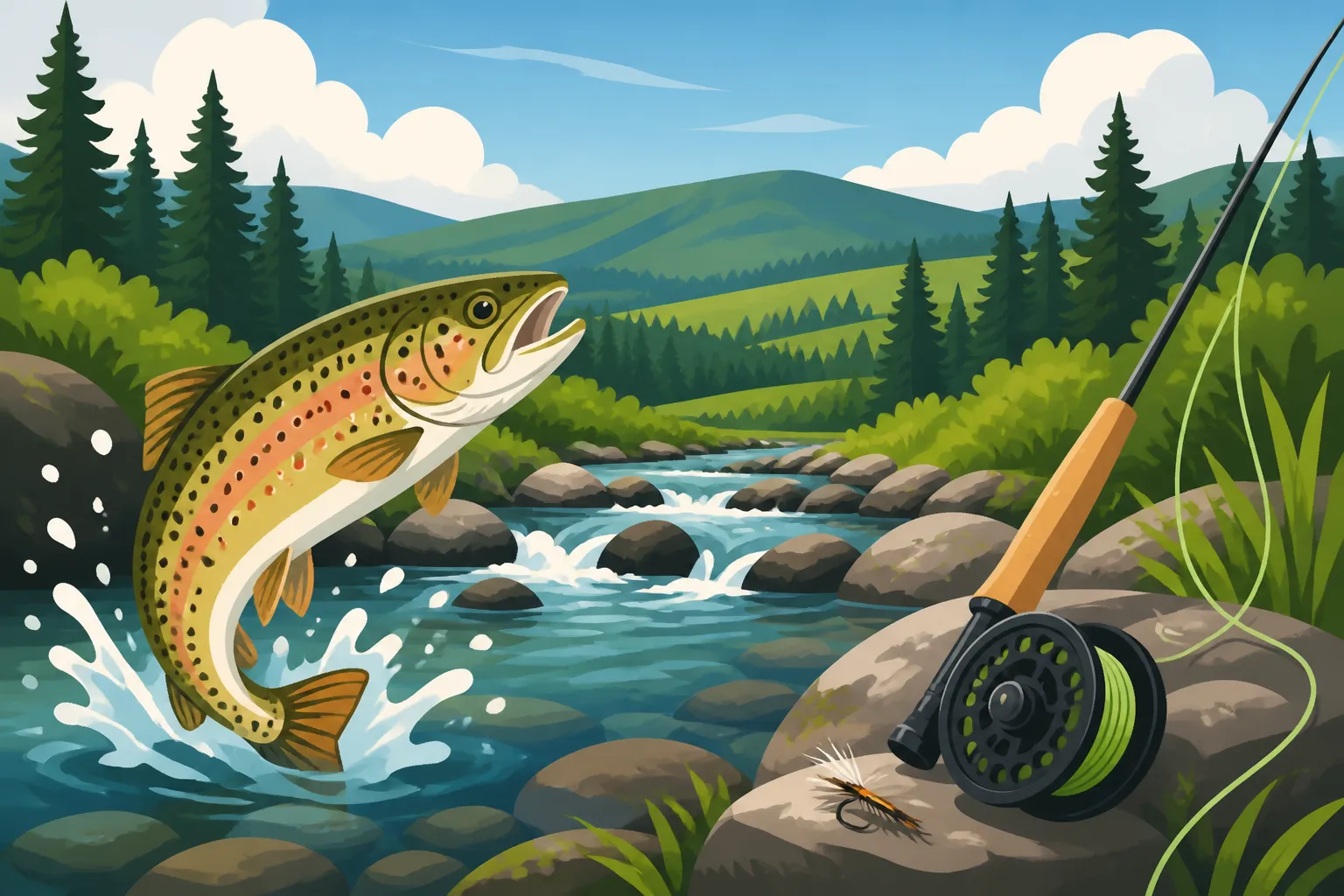
What truly draws anglers to Dolly Sods isn't necessarily the size of the fish, but their wildness. These aren't hatchery-raised trout accustomed to hand-outs; they are direct descendants of fish that have survived and thrived in these waters for millennia. Primarily, you'll be targeting brook trout – the beautiful, jewel-toned native species that West Virginia holds so dear. You can learn more about this special fish in our guide on Brook Trout: West Virginia's Native and State Fish.
Catching a wild brook trout from Dolly Sods is an experience that transcends mere sport. Each fish is a testament to resilience, often displaying vibrant colors, a feisty fight despite their smaller stature, and an intrinsic beauty that only nature can craft. They are often smaller than their stocked cousins, typically ranging from 6 to 10 inches, but their aggressive takes and the challenge of stalking them in these clear, tight waters make every catch feel like a trophy. The pure, unadulterated nature of the experience – hiking through rugged terrain, navigating dense cover, and finally spotting a flash of color in an untouched pool – is what makes Dolly Sods truly special. It's a place where you can disconnect from the modern world and connect with angling's purest form.
Prime Trout Streams in the Dolly Sods Wilderness
While the entire Dolly Sods area is a network of small, cold streams, a few stand out as prime targets for trout anglers. It’s important to remember that "prime" here often means challenging, requiring effort to access and navigate, but offering immense rewards. These are not waters where you'll find crowds, especially once you venture beyond the immediate trailheads.
Red Creek and Its Tributaries
Red Creek is arguably the most famous and accessible of the Dolly Sods streams. It flows through the heart of the wilderness area, eventually emptying into the Cheat River. The creek itself is a beautiful freestone stream, characterized by a series of riffles, runs, and small plunge pools. Its banks can be heavily vegetated with rhododendron and laurel, making casting a challenge in many sections, but also providing excellent cover for the resident brook trout.
The upper sections of Red Creek, particularly those within the wilderness boundary, hold healthy populations of wild brook trout. Access is typically via one of the numerous hiking trails that crisscross Dolly Sods, such as the Rohrbaugh Plains Trail or the Dobbin House Trail. While some sections are easier to reach, don't expect a leisurely stroll; even the "easy" trails involve significant elevation changes and rugged footing. The water clarity is usually excellent, so stealth and a cautious approach are key. When planning your trip, you might find it helpful to look into guided options, especially if you're new to remote backcountry fishing; platforms like FishingBooker sometimes feature local guides who specialize in these challenging environments and can help you navigate the trails and find the best fishing spots. These streams are a true test of your fly fishing skills, but the rewards are unparalleled.
The North Fork of the Red Creek
A significant tributary to Red Creek, the North Fork offers another excellent opportunity for wild trout. It flows through a slightly different landscape, often less open than parts of the main stem, with denser forest cover. This can make for even more challenging access and casting, but also means fewer anglers. The North Fork is known for holding a good density of brook trout, often nestled in small pockets and undercuts formed by fallen timber and rocks.
To reach the North Fork, you'll generally be hiking from the Red Creek Campground area or accessing via the Forest Road 70, which borders parts of the wilderness. Expect to do some bushwhacking, particularly if you want to explore beyond the immediate trail intersections. The fishing here is intimate, requiring precise casts and a willingness to get wet and climb over obstacles. Don't be surprised if your efforts are rewarded with a vivid 8-inch brook trout that looks like it's been painted by hand. These smaller tributaries often protect the most robust populations of native fish, undisturbed by the pressures of more accessible waters.
Other Notable Small Streams and Beaver Ponds
Beyond Red Creek and its North Fork, Dolly Sods is crisscrossed by countless smaller unnamed tributaries and small creeks that feed into the larger systems. Many of these are barely more than trickles, but even the smallest seeps and feeder streams can hold surprising numbers of tiny, yet feisty, brook trout. Exploring these requires a true sense of adventure and a good topographic map, as many are not marked on standard hiking maps.
Furthermore, the plateau is home to numerous beaver ponds. These still, dark waters, often surrounded by thick vegetation, can be incredible havens for larger wild brook trout. The beavers create deep pools and abundant food sources, allowing trout to grow to impressive sizes for the area – sometimes exceeding 10-12 inches. Fishing these ponds can be tricky, often requiring casting through brush or from overgrown banks, but the patient angler can be greatly rewarded. A stealthy approach, short casts, and often weighted nymphs or small streamers are effective here. Remember to always respect wildlife and their habitats, including active beaver lodges.
Here’s a quick overview of some Dolly Sods streams:
| Stream Name | Primary Species | Typical Size (inches) | Accessibility | Fishing Pressure | Notes |
|---|---|---|---|---|---|
| Red Creek (Upper) | Wild Brook Trout | 6-10 | Moderate to Difficult | Low to Moderate | Classic freestone, rhododendron-lined banks |
| North Fork Red Creek | Wild Brook Trout | 5-9 | Difficult | Very Low | Densely forested, intimate, technical fishing |
| Beaver Ponds (various) | Wild Brook Trout | 6-12+ | Difficult (bushwhacking) | Very Low | Productive for larger fish, stealth is key |
| Smaller Tributaries | Wild Brook Trout | 4-8 | Very Difficult | Extremely Low | Tiny fish, but plentiful and truly wild |
Essential Gear and Techniques for Dolly Sods Trout Fishing
Fishing in Dolly Sods is not about heavy gear or flashy presentations. It's about being nimble, stealthy, and adapting to the unique demands of a high-country wilderness. Think light, functional, and durable.
Recommended Gear for Backcountry Fishing
When venturing into Dolly Sods, less is often more, but what you bring needs to be reliable. A lightweight, packable setup is crucial for navigating the rugged trails and dense vegetation.
- Rod and Reel: For fly fishing, a short (6'6" to 7'6"), lightweight (2-4 weight) fly rod is ideal. This allows for precise casting in tight quarters, often under heavy canopy or between rhododendron branches. Pair it with a simple click-and-pawl or small disc drag reel. If you prefer spin fishing, an ultralight spinning rod (4'6" to 5'6") with a small reel spooled with 2-4 lb test line is perfect. The mantra here is finesse; these fish spook easily. You can find more specific recommendations for Best Fly Rods for West Virginia Trout Streams in our detailed guide.
- Waders and Boots: While full chest waders might seem appealing for warmth, many anglers opt for wet wading in warmer months with quick-drying pants or shorts. The frequent climbing over obstacles and hiking can be cumbersome in full waders. If you do wade, sturdy wading boots with good ankle support are non-negotiable for navigating slippery rocks and uneven stream beds. Felt soles can offer superior grip on wet rocks, but rubber soles are more versatile for hiking. Our guide on Best Waders for West Virginia Trout Streams offers further insight.
- Tackle Selection:
- Flies: Focus on smaller patterns. For dry flies, think small Parachute Adams, Elk Hair Caddis, stimulators, and various ant or beetle patterns (sizes 14-20). For nymphs, Pheasant Tails, Hare's Ears, and Prince Nymphs (sizes 14-18) are very effective. Small streamers like Woolly Buggers (black or olive, sizes 10-12) can also entice larger brookies, especially in deeper pools or beaver ponds.
- Spin Baits: Tiny spinners (e.g., Panther Martins, Mepps Aglias size 0-1) in natural colors (black, brown, silver) are excellent. Small jigs (1/32 to 1/16 oz) with grub tails in white, black, or olive can also be deadly. Small spoons like Kastmasters or Little Cleos (1/16 oz) are also good choices for covering water.
- Essentials: A good backpack for water, snacks, a first-aid kit, a headlamp, and rain gear is vital. Weather in Dolly Sods can change rapidly. Don't forget a map and compass or a reliable GPS device, as cell service is spotty to nonexistent. A small, soft net for catch and release is also recommended.
Effective Techniques for Wild Brook Trout
Wild brook trout in Dolly Sods are cunning and easily spooked. Your approach needs to be calculated and patient.
- Stealth is Paramount: These fish live in crystal clear water and are incredibly wary. Approach stream banks slowly, staying low and out of sight as much as possible. Avoid wearing bright clothing. Cast from downstream whenever feasible, keeping your shadow off the water.
- Short, Accurate Casts: The dense overhead cover and tight quarters mean long, sweeping casts are often impossible. Practice roll casts, bow-and-arrow casts, and other short-game techniques. Accuracy is more important than distance. You can master these skills by exploring resources like Dry Fly Fishing West Virginia Mountain Streams.
- Target Structure: Brook trout love cover. Look for fish in pocket water behind boulders, under submerged logs, in undercut banks, and at the head and tail of small pools. Any anomaly in the stream bed is a potential hiding spot.
- Drift and Presentation: For both fly and spin fishing, a natural, drag-free drift is crucial. Wild trout are accustomed to natural food sources, and anything unnatural will be ignored. For fly anglers, this often means mending your line to achieve a perfect drift. Spin anglers should cast slightly upstream and retrieve just fast enough to impart action without pulling the lure unnaturally through the current.
- Euro Nymphing and Tenkara: These techniques are particularly well-suited for the tight, often turbulent waters of Dolly Sods. They allow for precise depth control, excellent strike detection, and minimal false casting in cramped spaces. If you're looking to dive deeper into specialized techniques, our guide on How to euro nymph a mountain freestone stream could be a great resource.
- Be Patient and Persistent: You might hike for a while before finding a good stretch of fishable water, or you might cast several times into a promising spot before a trout decides to strike. The rewards in Dolly Sods come to those who are patient and willing to put in the effort.
Navigating Regulations and Conservation
Fishing in Dolly Sods isn't just about catching fish; it's about preserving a precious resource. Adhering to regulations and practicing responsible angling are more important here than almost anywhere else.
West Virginia Fishing Regulations in Dolly Sods
The Dolly Sods Wilderness is managed by the Monongahela National Forest, and as such, falls under West Virginia's statewide fishing regulations, but often with some critical nuances. It is absolutely essential to consult the current West Virginia Fishing Regulations Summary, available from the West Virginia Division of Natural Resources (WVDNR), before your trip. This will provide the most up-to-date information on limits, seasons, and any special regulations that apply to specific streams within or near the wilderness area. A good starting point for general information is our article on West Virginia Fishing Regulations Explained.
Generally, Dolly Sods streams are managed for wild trout. This means they are often subject to catch-and-release rules or significantly reduced creel limits, especially for brook trout, to protect the delicate populations. A West Virginia fishing license is always required for anyone 15 years and older. You can learn more about securing your license in our West Virginia Fishing License Guide for 2026. In West Virginia, if you plan to fish for trout, you will also need to purchase a trout stamp, even if you are practicing catch and release. This is an important distinction often missed by anglers, and you can find more information about it in West Virginia Trout Stamp Cost for Residents and Nonresidents.
Always check for:
- Specific Stream Regulations: Some streams might have "catch and release only" or "single hook, artificial lures only" rules.
- Season Dates: While many wild trout waters are open year-round, it's vital to confirm. Our West Virginia Fishing Season Dates and Closures guide can help with general season knowledge.
- Gear Restrictions: Pay close attention to any restrictions on bait, lures, or hook types.
- Access Rules: While Dolly Sods is generally open for public access, be aware of any temporary closures or restrictions related to timber operations, prescribed burns, or wildlife management.
Practicing Leave No Trace and Catch and Release
The pristine nature of Dolly Sods is a direct result of its remoteness and the respectful actions of its visitors. Practicing Leave No Trace principles is crucial to keeping it that way.
- Pack It In, Pack It Out: Everything you bring into the wilderness, including trash, food scraps, and fishing line, must be packed out.
- Stay on Trails: Minimize your impact by sticking to marked trails. If you must go off-trail, disperse your travel to avoid creating new paths or damaging fragile vegetation.
- Respect Wildlife: Observe wildlife from a distance and never feed animals. Store food securely to prevent attracting scavengers.
- Camp Responsibly: If camping, choose established sites 200 feet from water sources and dispose of human waste properly.
- Catch and Release Best Practices: Given the precious nature of wild brook trout populations, catch and release is highly encouraged, even if not strictly mandated. Learn proper handling techniques:
- Minimize Handling: Keep the fish in the water as much as possible.
- Wet Hands: Always wet your hands before touching a fish to protect its slime coat.
- Barbless Hooks: Crimp down barbs on your hooks for easier, less damaging removal.
- Quick Release: Release the fish as quickly as possible. If it's lethargic, hold it gently facing upstream in the current until it swims away on its own.
- For a deeper dive into responsible angling, check out our guide on West Virginia Catch and Release Rules for Trout.
By following these guidelines, you ensure that future generations of anglers can experience the magic of Dolly Sods and its incredible wild trout streams, just as you have. It's a wilderness experience unlike any other in West Virginia, and one truly worth protecting.
Disclaimer
Fishing conditions and regulations in West Virginia can change. Always consult the latest West Virginia Division of Natural Resources (WVDNR) official regulations and advisories before planning your trip. The information provided in this guide is for general informational purposes only and should not be considered legal advice.