Best kayak fishing on the Greenbrier River
The Greenbrier River in West Virginia is a true gem, but for many kayak anglers, the sheer length and diverse character of the river can make planning a trip feel overwhelming. You’re left wondering where to put in, what to expect, and what gear you truly need to make the most of this incredible waterway. This guide is here to cut through that confusion, offering a comprehensive look at how to successfully navigate and fish the Greenbrier River from a kayak.
Unveiling the Greenbrier River: A Kayak Angler's Dream
There's something truly special about the Greenbrier River, a feeling you just don't get on many other waterways. It's a place where the sounds of civilization often fade, replaced by the gentle ripple of current, the call of an osprey, or the splash of a rising fish. For kayak anglers, this river offers an unparalleled experience, blending incredible fishing opportunities with stunning natural beauty.
The Unique Character of the Greenbrier River
Unlike many West Virginia rivers that are paralleled by busy roads or dotted with towns, the Greenbrier River maintains a wonderfully wild and secluded feel for much of its course. Flowing over 160 miles, it's one of the longest free-flowing rivers in the eastern United States, meaning no dams impede its natural flow. This lack of impoundments contributes to its pristine water quality and diverse aquatic life. The river carves its way through mountains, forests, and charming small towns, offering a constantly changing backdrop. You'll paddle past towering sycamores, shaded bluffs, and long stretches of undeveloped shoreline, making it easy to forget you're just hours from major cities.
One of the biggest draws for kayak anglers specifically is the relative absence of large motorboats, particularly in the upper and middle sections. This means less commotion on the water, fewer waves to contend with, and a more peaceful fishing environment. The currents are generally mild to moderate, making it accessible for a wide range of paddling skills, though some sections do have swift chutes and riffles that demand attention. Its flow is largely influenced by rainfall, and the river can fluctuate from a gentle glide to a powerful torrent. It’s important to check current conditions before you head out, as explained in our guide to Best Time of Year to Fish in West Virginia.
Target Species: Smallmouth Bass, Muskie, and Panfish Potential
While the Greenbrier offers a variety of fish, a few species truly stand out for the kayak angler. These are the fish that define the Greenbrier experience and provide endless excitement.
The Mighty Smallmouth Bass
The Greenbrier is absolutely legendary for its smallmouth bass fishing. These bronze beauties thrive in the river's rocky, current-swept environment, growing to impressive sizes and fighting with unmatched vigor. You'll find them holding in classic river structure: eddies behind large boulders, current seams, ledges, submerged logs, and gravel bars. They're aggressive predators, making them a fantastic target for both conventional and fly anglers. Catching a three-pound Greenbrier smallmouth on light tackle from a kayak is an experience that will stick with you forever. If you're looking for deeper insights into how to target these fish, check out our guide on How to Catch Smallmouth Bass in West Virginia Rivers.
The Elusive Muskie
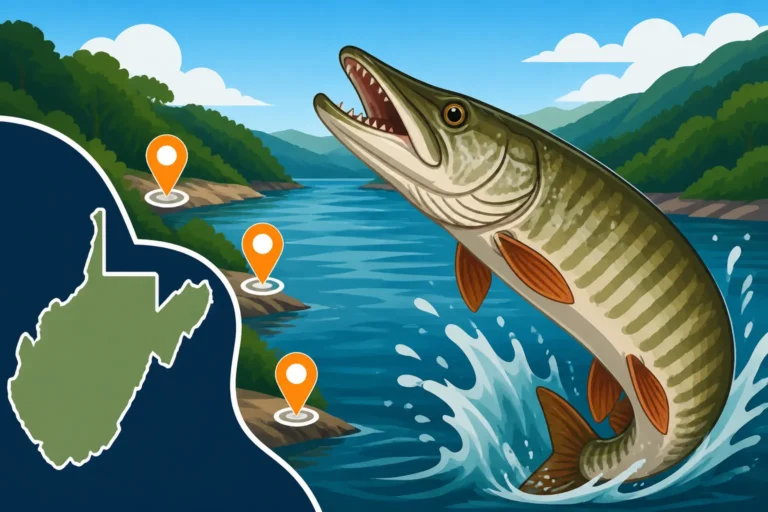
For those who crave a challenge, the Greenbrier River also holds a healthy population of muskie. These "fish of a thousand casts" are apex predators that demand patience, specialized gear, and a bit of luck. While you won't catch them as frequently as smallmouth, the reward of hooking into a Greenbrier muskie is immense. They often lurk in deeper pools, around large laydowns, or where feeder creeks enter the main river. Kayak anglers have an advantage in quietly approaching these areas without spooking the wary fish. Our article on Muskie Fishing in West Virginia offers some fantastic tips for pursuing these giants.
Panfish and Other Species
Don't overlook the incredible panfish opportunities the Greenbrier provides. Rock bass, often called "redeyes," are abundant and offer consistent action, especially in rocky areas. You'll also encounter various sunfish species, and in the slower, deeper pools, channel catfish can be found. In the colder, upper reaches, especially towards the headwaters near Durbin, you might even encounter wild or stocked trout, particularly in the spring. These smaller species are perfect for younger anglers or anyone looking for steady bites between targeting bigger game.
Navigating the Greenbrier: Prime Kayak Fishing Stretches and Access
The Greenbrier River is vast, and different sections offer distinct experiences, challenges, and fishing opportunities. Knowing where to launch and what to expect on your float is crucial for a successful kayak fishing trip. Remember, access points can sometimes be primitive, requiring a bit of grit, but that's part of the adventure!
Upstream Adventures: Durbin to Marlinton
This upper section of the Greenbrier, roughly from Durbin down through Cass and towards Marlinton, is often characterized by narrower channels, faster currents, and more pronounced riffles and runs. The water here is generally colder and clearer, especially in the spring, making it excellent for early-season smallmouth and even some trout action.
- Durbin to Cass: This stretch is quite remote and offers a genuine wilderness feel. It's smaller water, sometimes requiring some wading or dragging during lower flows. While not typically a muskie hotspot, smallmouth bass are present, and the potential for wild brook trout or stocked rainbows near Durbin exists. Access points are limited and often involve short carries.
- Cass to Marlinton: As the river flows south, it gradually widens, but still maintains a relatively intimate feel. The currents remain consistent, providing a good drift for kayak anglers. Marlinton itself is a key hub, offering several public access points and often serving as a popular put-in or take-out spot. This section is prime smallmouth water, with plenty of rocky structure, small ledges, and current breaks. You'll find numerous islands and braids, creating excellent fishing seams. This area is also popular for folks who want to explore using a local guide service, and you can often find experienced outfitters through platforms like FishingBooker that specialize in these upper Greenbrier floats.
Classic Floats: Marlinton to Renick
The middle Greenbrier, stretching from Marlinton down past the small towns of Hillsboro and Frankford to Renick, represents the classic Greenbrier smallmouth fishing experience. This is where the river truly comes into its own for kayak anglers, offering a fantastic balance of excellent fishing, manageable currents, and relatively easy access.
- Marlinton to Hillsboro: This float is a favorite among many. The river here offers a mix of longer pools and well-defined riffles. Structure like large boulders, gravel bars, and woody debris is abundant, creating perfect ambush points for smallmouth. Access points are generally good, with some designated public areas. It’s a great stretch for a full day's float.
- Hillsboro to Frankford/Renick: As you continue downstream, the river slowly widens further, but the character remains consistent with great smallmouth habitat. This area sees a bit more agricultural land along the banks, but still retains its wild charm. Renick is another crucial access point, often used for take-outs for longer floats originating upstream. These stretches are perfect for honing your river fishing techniques, allowing for a good mix of drifting and actively working shorelines and structure. This segment is also a great place to investigate local outfitters on sites like FishingBooker if you're looking for guided trips that provide all the necessary gear and local expertise.
Downstream Exploration: Renick to Alderson and Beyond
Below Renick, the Greenbrier River continues its journey, passing through the town of Lewisburg's area and eventually emptying into the New River near Hinton. This lower section tends to be wider, deeper, and slower in many areas, though still punctuated by lively riffles. It's a fantastic stretch for those looking for bigger water and increased muskie potential, alongside the ever-present smallmouth.
- Renick to Alderson: This can be a longer float, often spanning multiple days if you want to thoroughly fish it. The river here has more substantial pools and deep bends, which are prime muskie territory. Look for large areas of downed timber, rock bluffs, and significant current breaks. Smallmouth are still plentiful, especially around the faster water and riffles. Alderson is a key take-out point, offering good public access.
- Alderson to Hinton (Confluence with the New River): This is the widest and deepest section of the Greenbrier. The currents become noticeably gentler as it approaches its confluence with the New River, especially closer to Hinton. While still good for smallmouth, this area sees an increase in other species common to the New River, and the muskie potential is very real. Access here is generally good due to the proximity to larger towns, but also means potentially more recreational boat traffic, though still minimal compared to true lake fishing. If you're planning a trip, be sure to check the West Virginia Fishing Regulations Explained for any specific rules related to these lower stretches or the New River itself.
| Greenbrier River Section | Typical Characteristics | Primary Fish Species | Ideal Kayak Angler Skill Level | Key Considerations |
|---|---|---|---|---|
| Durbin to Marlinton | Narrower, faster currents, colder, more remote | Smallmouth, Trout, Rock Bass | Intermediate to Advanced | Limited access, potential for shallow water drags |
| Marlinton to Renick | Balanced flow, excellent structure, good access | Smallmouth, Rock Bass, occasional Muskie | Beginner to Intermediate | Classic river fishing, popular floats |
| Renick to Alderson | Wider, deeper pools, strong smallmouth, muskie potential | Smallmouth, Muskie, Catfish, Panfish | Intermediate | Longer floats, increased muskie challenge |
| Alderson to Hinton | Widest, deepest, slower, confluence with New River | Smallmouth, Muskie, Catfish, Hybrids | Beginner to Intermediate | Potential for more recreational traffic, big water feel |
Equipping Your Expedition: Essential Gear and Techniques for Success
Getting out on the Greenbrier in a kayak is an amazing experience, but having the right gear and understanding a few key techniques can elevate your trip from good to unforgettable. It’s not just about what you catch, but how comfortably and safely you enjoy the river.
Choosing the Right Kayak and Rigging for the River
When it comes to kayak fishing the Greenbrier, stability and maneuverability are often more important than pure speed. The river has plenty of current, rocks, and occasional shallow spots that require nimble handling.
- Sit-on-Top vs. Sit-in: For most Greenbrier fishing, a sit-on-top kayak is highly recommended. They offer greater stability, making it easier to stand and cast (especially helpful for muskie fishing), and are much easier to re-enter if you happen to capsize in the current. Their open deck also provides ample space for tackle management. Sit-in kayaks can work, particularly in the calmer, deeper sections, but they offer less mobility and are harder to manage if you take on water. If you’re serious about kayak fishing, investing in a purpose-built fishing kayak designed for stability is a game-changer. Our guide to Best Kayaks for West Virginia Fishing can offer more specific recommendations.
- Length and Width: A kayak in the 10-12 foot range often strikes a good balance between maneuverability and tracking. Wider kayaks (32-36+ inches) offer superior stability, which is invaluable when casting or fighting a fish in current.
- Rigging for the River: Keep your rigging simple and secure. Rod holders (flush mount or track-mounted) are essential for hands-free paddling and safely storing rods while moving. A good anchor system, often a small grapnel anchor with a trolley system, allows you to hold position in current, but make sure it’s easily releasable in an emergency. Dry bags are crucial for protecting electronics, extra clothes, and snacks from splashes or an unexpected swim. Think about how to secure your tackle boxes and gear so they don't float away if you flip.
Rods, Reels, and Lure Strategies for Greenbrier Fish
The Greenbrier's diverse fishery means you'll want a versatile tackle setup, but with a focus on durability to handle strong fish and rocky environments.
- Smallmouth Bass Setup: For smallmouth, a medium-light to medium power spinning rod (6'6" to 7'0") paired with a 2500-3000 size spinning reel spooled with 8-10 lb braided line and a fluorocarbon leader (6-8 lb) is a fantastic all-around choice. This setup offers sensitivity for finesse presentations but enough backbone to handle a strong river smallmouth. For lures, classic river smallmouth baits shine: small crankbaits (especially crawfish patterns), tube jigs, Ned rigs, spinnerbaits, and topwater poppers or walk-the-dogs in low light. Check out our deep dive on Best Tackle for West Virginia Smallmouth Bass for even more specifics.
- Muskie Setup: Muskie fishing demands heavier gear. A stout casting rod (7'6" to 9'0" heavy power) with a high-quality baitcasting reel capable of handling heavy lines (50-80 lb braided) is essential. You'll need a heavy fluorocarbon or wire leader (80-130 lb) to prevent bite-offs. Large inline spinners, crankbaits, jerkbaits, and soft plastic swimbaits are standard muskie fare. Remember, catching a muskie is often about commitment and making repetitive casts to high-percentage areas. If you're just starting out, consider an all-inclusive trip through FishingBooker where guides often provide all the necessary heavy muskie tackle.
- Panfish Setup: For rock bass and other panfish, a simple ultralight spinning combo with 4-6 lb monofilament or braided line is perfect. Small inline spinners, tiny jigs (1/32 to 1/16 oz) tipped with a small plastic grub, or even a simple worm under a bobber will get plenty of action. This lighter setup is also great for catching smaller smallmouth and exploring the quieter eddies.
Safety First: Navigating Currents and Hazards
Safety on a river, especially from a kayak, is paramount. The Greenbrier, while generally docile, can present unexpected challenges.
- Personal Flotation Device (PFD): Wear your PFD! It’s not just a good idea, it's often legally required in West Virginia for certain conditions or age groups. Our article on Life Jacket Requirements for West Virginia Boaters covers the specifics. A well-fitting PFD can save your life in strong currents or if you take an unexpected spill.
- Wading Staff and Footwear: Even from a kayak, you'll likely want to get out and wade to fish certain spots or pull your boat over shallow riffles. Sturdy wading boots with good ankle support and felt or rubber soles are crucial for navigating slippery rocks. A wading staff provides additional balance and stability in current.
- Reading the Water: Learn to read river currents, identifying eddies, current seams, riffles, and submerged hazards. Always scout ahead, especially in unfamiliar sections. Know how to ferry your kayak across currents safely and how to approach rapids or swift chutes. If a section looks too risky, don't hesitate to portage around it. Always keep an eye on the weather and be aware of changing water levels; flash floods can occur quickly, especially after heavy rains.
- Communication and Emergency Gear: Always let someone know your float plan, including put-in, take-out, and estimated time. Carry a charged cell phone in a waterproof case, a whistle, a small first-aid kit, and enough water and snacks for your trip. For added security, a local outfitter found on FishingBooker can provide invaluable local knowledge and emergency contacts.
Maximizing Your Experience: Planning and Etiquette for Greenbrier Kayak Fishing
A successful Greenbrier River kayak fishing trip involves more than just casting a line. Thoughtful planning, understanding the river's moods, and practicing responsible outdoor etiquette will ensure a memorable and enjoyable adventure for everyone.
Seasonal Considerations and Optimal Water Conditions
The Greenbrier River offers fishing opportunities year-round, but each season brings different conditions and target species. Optimal water conditions are key to both safety and success.
- Spring (March-May): This is prime time for trout in the upper reaches and for prespawn smallmouth bass throughout the river. Water levels are typically higher due to snowmelt and spring rains, which means faster currents. The water is often cold, so dress in layers and be prepared for chilly conditions. This can be an excellent time for aggressive smallmouth as they feed heavily before spawning. However, very high water can make fishing difficult and even dangerous.
- Summer (June-August): As temperatures rise, the smallmouth fishing really heats up. Water levels typically drop, making wading easier in many sections. This is a fantastic time for topwater action in the mornings and evenings. Muskie are also active. Be mindful of warm water temperatures which can stress fish, especially trout in the headwaters. Mornings and evenings are often the most productive. The middle and lower sections are generally more accessible during typical summer flows.
- Fall (September-November): Many consider fall to be the absolute best time for trophy smallmouth and muskie on the Greenbrier. Water temperatures cool, and fish become very active, feeding aggressively before winter. The crowds thin out, and the autumn foliage along the banks is breathtaking. Water levels are usually stable, offering excellent floating conditions.
- Winter (December-February): While challenging, winter fishing can yield some large smallmouth in deeper pools. Muskie are also present but require slow, deliberate presentations. Ice formation is rare on the main stem but can occur in slower backwaters. Bundle up, as temperatures can be frigid.
Always check the local river gauges and weather forecasts before heading out. The Greenbrier is free-flowing, so its level can change rapidly after heavy rainfall. High, muddy water is generally poor for fishing and potentially unsafe for kayaking. Ideal conditions usually involve stable or slowly dropping water levels after a rain event, with good clarity.
Logistics Made Easy: Shuttles and Trip Planning
One of the biggest hurdles for river kayak fishing is the shuttle. Since you're typically putting in at one point and taking out at another downstream, you need a plan for getting your vehicle from the put-in to the take-out.
- Two-Vehicle Shuttle: The most common method involves two vehicles. You drop your kayaks and gear at the put-in, drive one vehicle to the take-out, leave it there, and then drive back to the put-in in the second vehicle. After your float, you load your kayaks onto the first vehicle at the take-out, and then drive back to retrieve the second vehicle. This requires planning but is cost-effective if you're fishing with a partner.
- Single-Vehicle with Bicycle/Hitchhiking: For the truly adventurous, you can leave your vehicle at the take-out, then bicycle (if practical) or hitchhike back to your put-in. This is less common but can work for shorter floats.
- Commercial Shuttle Services: For many Greenbrier River sections, especially around popular towns like Marlinton, local outfitters offer shuttle services for a fee. This is often the most convenient option, as it saves you time and hassle. A quick online search for "Greenbrier River kayak shuttle" or checking with local tackle shops and guide services (many of which are listed on platforms like FishingBooker) will usually yield several options. Booking a shuttle in advance is always a good idea, especially during peak season.
- Float Duration: Be realistic about how much ground you can cover in a day. A general rule of thumb for casual fishing floats is 1-2 miles per hour, depending on current and how much you stop to fish. Plan your put-in and take-out points accordingly to avoid being caught on the water after dark.
Preserving the Greenbrier: Leave No Trace Principles
The Greenbrier River's wild character is a precious resource, and it's up to all of us to protect it. Practicing Leave No Trace principles is fundamental to preserving the river for future generations of anglers.
- Pack It In, Pack It Out: This is the golden rule. Everything you bring onto the river, you must take off. This includes all trash, food scraps, and fishing line. Consider bringing a small trash bag specifically for your refuse.
- Respect Wildlife: Observe wildlife from a distance and avoid disturbing them. This includes nesting birds, deer, and other creatures that call the river corridor home.
- Fish Responsibly: Practice catch-and-release, especially for larger smallmouth and muskie, as these are vital to maintaining healthy populations. Handle fish gently, minimize their time out of water, and use proper de-hooking tools. Be aware of West Virginia Bag and Possession Limits by Species and any special regulations that apply to specific sections of the Greenbrier, such as specific slot limits or bait restrictions.
- Be Considerate of Other Users: The Greenbrier is enjoyed by anglers, paddlers, swimmers, and riverside landowners. Share the river respectfully, maintain reasonable distances, and minimize noise. If you're floating through private land, stay on the water and avoid trespassing.
- Minimize Campfire Impacts: If you're planning an overnight float and building a fire, use existing fire rings where available, keep fires small, and ensure they are completely extinguished before leaving. Better yet, consider using a camp stove for cooking to minimize impact.
By adhering to these principles, you're not just ensuring your own enjoyable trip, but contributing to the long-term health and beauty of the incredible Greenbrier River.
Disclaimer
The information provided in this guide is for general informational purposes only and is subject to change. Fishing regulations, license requirements, and river conditions can vary. Always consult the latest West Virginia Division of Natural Resources (WVDNR) regulations and local authorities before planning your trip. Exercise caution and prioritize safety when on the water.