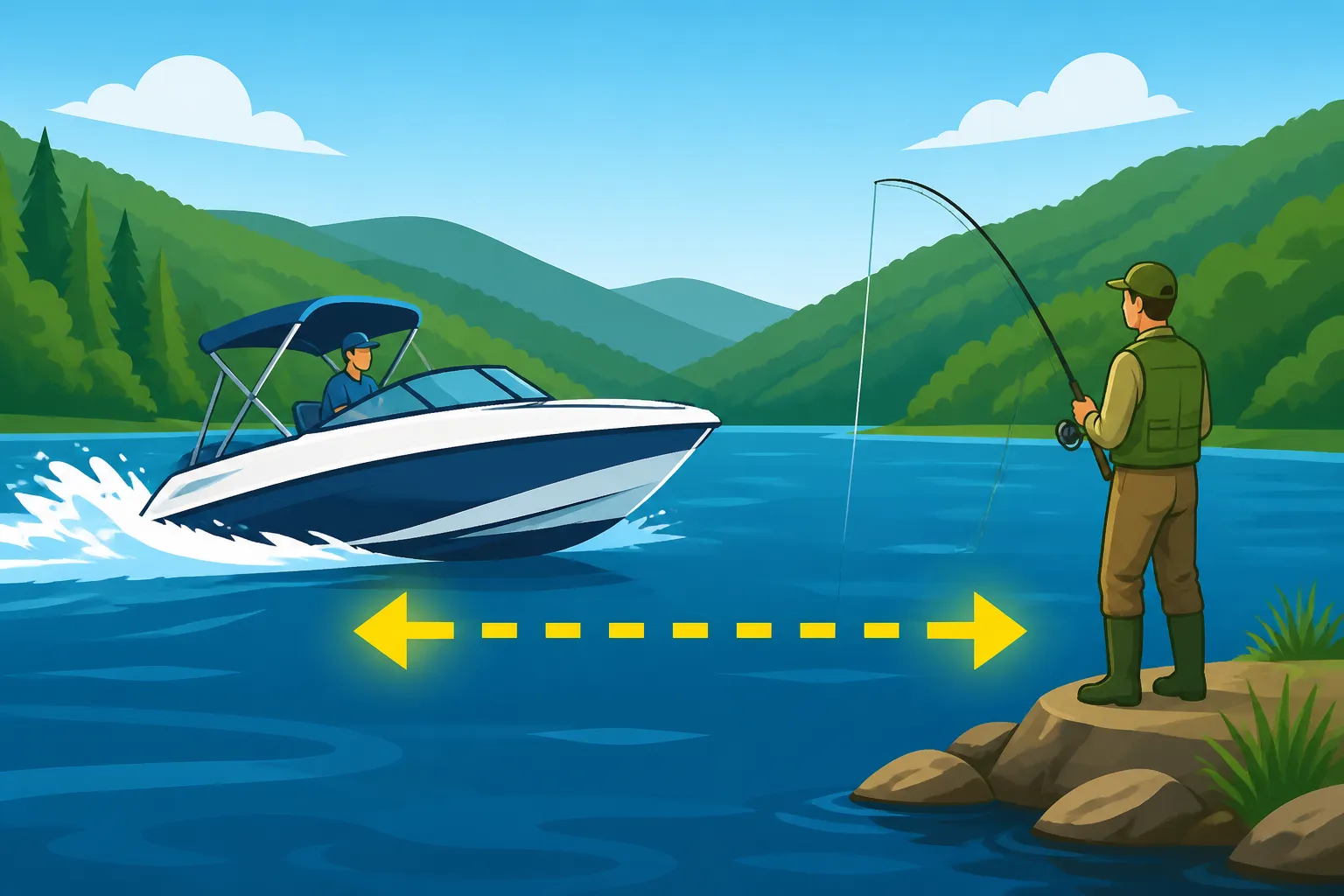
Legal distance for a boat passing an angler in West Virginia
It's happened to all of us: you're out on a peaceful West Virginia lake or river, enjoying a quiet day of fishing, when suddenly a boat zooms by, leaving a massive wake that tosses your line, rocks your small craft, and generally shatters the tranquility. This isn't just annoying; it can be downright dangerous and can ruin a fishing trip. Understanding the rules for how boats should pass anglers is crucial for everyone on the water, and this guide will break down what you need to know to ensure safe and respectful coexistence.
Understanding West Virginia's Boating and Fishing Etiquette Laws
Navigating West Virginia's beautiful waterways is a shared experience, and whether you're trolling for walleye or casting for smallmouth bass, you're bound to encounter other recreational users. The state has put regulations in place to help everyone enjoy their time safely and respectfully, and that includes specific guidelines for how boaters should interact with anglers. It’s not always about a hard-and-fast numerical distance, but often about the principle of "reasonable and prudent" operation.
The Legal Framework for Boater-Angler Interactions
West Virginia law doesn't explicitly state, "Thou shalt pass an angler at X feet." Instead, it relies on a broader framework of safe boating practices designed to prevent interference and ensure safety. The key regulation to keep in mind is West Virginia Code § 20-7-19, which covers the reckless or negligent operation of boats. This code emphasizes that no one should operate a motorboat in a manner that "intentionally or unnecessarily interferes with the safe and lawful operation of any other vessel or with any person fishing, or swimming, or engaged in any other lawful activity upon the waters of this state."
What does "unnecessarily interfere" actually mean in practice? It means avoiding actions that would disrupt an angler's ability to fish safely and effectively. This often comes down to the wake your boat creates and the distance you maintain. While there might not be a single number plastered on every dock, the spirit of the law, combined with general safe boating principles, strongly suggests giving anglers ample room. Think about it from the angler's perspective: a large wake can snag lines, push a kayak into hazards, or even swamp smaller boats. Respecting their space isn't just good manners; it's a legal expectation that contributes to a positive outdoor experience for everyone. For a deeper dive into overall regulations, check out our guide on West Virginia Boating Laws for Anglers.
Why These Regulations Matter for Everyone
These regulations aren't just there to be bureaucratic hurdles; they're fundamentally about safety and preserving the peace of the outdoors. From a safety perspective, a boat creating a large wake too close to a smaller fishing vessel, a kayaker, or even a shore angler can be genuinely dangerous. The wake can cause instability, leading to capsizing or anglers falling overboard. In colder months, this can quickly turn into a life-threatening situation. It's a real frustration when you're trying to enjoy a peaceful moment, and someone else's disregard for the rules puts you at risk.
Beyond safety, there's the element of fish disturbance. Many fish species, particularly sensitive ones like trout, are easily spooked by sudden movements, loud noises, and boat shadows. A boat roaring through an area can send fish scattering, making it harder for anglers to find and catch them. This impacts everyone's ability to enjoy the resource. Moreover, the peace and quiet are a huge part of why many of us go fishing. The constant roar of engines and crashing wakes can destroy that tranquil experience, leading to unnecessary conflicts and animosity between different groups of water users. By adhering to these guidelines, boaters show respect not only for other people but also for the natural environment and the fish populations we all cherish.
Specific Distance Requirements and "No Wake" Zones
When it comes to the nitty-gritty of how close is too close, West Virginia's rules often revolve around the concept of "no wake" speed in specific areas. While a hard numerical distance for passing an active angler in open water isn't always codified, understanding the "no wake" rule is your best guide for respectful and legal operation.
The "Legal Distance" in Practice
While the West Virginia Code doesn't give a universal "pass an angler at X feet" rule, it does require boats to operate at a "slow, no wake speed" under certain circumstances. Crucially, this applies when you are within 100 feet of any vessel that is not underway, as well as docks, piers, or persons in the water (swimmers). When an angler is actively fishing from a stationary boat, a kayak, or even from shore, they often fall under the "not underway" or "person in the water" (if wading) categories in spirit.
Therefore, the 100-foot "no wake" zone serves as an excellent practical guideline for passing anglers. This isn't just a suggestion; it’s the standard for responsible boating in these situations. A "no wake" speed means exactly what it sounds like: operating your boat at the slowest possible speed necessary to maintain steerage, ensuring your boat creates minimal to no wake behind it. If you're creating a noticeable wake, you're going too fast.
Think about the implications of a large wake: it can rock a small johnboat dangerously, disturb a fly angler's delicate cast, or even cause gear to spill overboard. A proper "no wake" ensures that your passage is as unobtrusive as possible. If you're approaching an angler, reducing your speed well in advance is a sign of courtesy and compliance.
Here's a quick reference table for safe boating distances in common scenarios:
| Scenario | Recommended/Legal Distance (Minimum) | Boating Speed Expectation | Rationale |
|---|---|---|---|
| Passing a stationary fishing vessel | 100 feet | Slow, No Wake Speed | Legal requirement for vessels not underway; prevents interference and swamping. |
| Passing an angler wading/swimming | 100 feet | Slow, No Wake Speed | Legal requirement for persons in the water; prevents injury and disturbance. |
| Passing a dock or pier | 100 feet | Slow, No Wake Speed | Legal requirement; prevents damage to property and injury to people. |
| Approaching another moving vessel | Reasonable & Prudent | Safe Speed for Conditions | Avoids collision; general safe boating practice. |
| Operating in crowded fishing areas | Give Ample Room | Adjust Speed Accordingly | Good etiquette; minimizes conflict; prevents spooking fish. |
For more details on navigating around other vessels, you can review our article on Operating a Boat Near an Angler in West Virginia.
Navigating "No Wake" Areas and Their Impact on Anglers
Beyond the 100-foot rule, West Virginia has designated "no wake" zones in various locations. These are often clearly marked with signs, typically near marinas, public access points, designated swimming areas, and sometimes in narrow sections of rivers or specific coves on lakes. It's crucial for boaters to be aware of these signs and adhere to them without exception. These zones are established for high-traffic or sensitive areas precisely because a wake could pose a significant risk or disturbance.
For anglers, these "no wake" zones are a blessing. They provide areas where you can fish with a greater sense of security and peace, knowing that boat traffic should be minimal in terms of disturbance. If you're fishing in one of these zones, you have a reasonable expectation that passing boats will respect the "no wake" rule, and you shouldn't hesitate to report violations if they are egregious or persistent. Conversely, if you're boating through such an area, it's your responsibility to slow down before entering the zone and maintain that slow speed until you are well clear. This requires vigilance and a good understanding of your location on the water, perhaps with a reliable GPS or mapping app downloaded from Amazon on your phone.
The ripple effect (pun intended!) of "no wake" compliance is huge. It ensures that everyone, from the family taking their first kayak out on Summersville Lake to the seasoned fly fisherman on the Cranberry River, can enjoy their time on the water without undue stress or danger.
Consequences of Violating Boater-Angler Rules and Promoting Harmony
Disregarding boating regulations, especially those designed to protect other water users like anglers, isn't just rude—it carries real consequences. More importantly, everyone can contribute to making West Virginia's waters safer and more enjoyable for all.
Potential Penalties for Non-Compliance
Operating a boat recklessly or negligently, including intentionally or unnecessarily interfering with anglers, is a serious offense in West Virginia. If a West Virginia Natural Resources Police Officer observes a violation, you could face penalties. These can range from fines to more severe consequences, depending on the nature and severity of the offense. For instance, a conviction for reckless or negligent operation could lead to fines, and in some cases, even suspension of your boating privileges. Imagine having your season cut short because you couldn't be bothered to slow down!
The specific fines can vary, but generally, boating violations fall under misdemeanor offenses, with initial fines typically ranging from $20 to $100 or more, plus court costs. Repeated offenses, or actions that lead to property damage or personal injury, will naturally result in much steeper penalties, including significantly higher fines and longer suspensions. It's simply not worth the risk. Just like driving a car, operating a boat comes with a responsibility to know and follow the law. If you're unclear on the rules, it's always best to err on the side of caution. Ignorance of the law is rarely an excuse that holds up. If you're concerned about what might happen, our guide on Fishing Without a License in West Virginia: Penalties offers a glimpse into how seriously the state takes its outdoor regulations.
Tips for Both Boaters and Anglers to Coexist Peacefully
Harmony on the water doesn't just happen; it requires conscious effort from everyone. Here are some practical tips for both boaters and anglers to ensure a positive experience for all:
For Boaters:
- Slow Down Early: When you see anglers ahead, reduce your speed well in advance. Don't wait until you're right on top of them. This shows respect and gives you time to assess the situation.
- Maintain Distance: Always aim for at least 100 feet when passing stationary anglers. If in doubt, give them more space. Wide berths are always appreciated.
- Observe and Anticipate: Look for visual cues. Is an angler actively casting? Are there multiple lines in the water? Is their boat small and easily rocked? Adjust your path and speed accordingly. Consider having a good pair of binoculars on board, easily found on Amazon, to spot activity from afar.
- Be Mindful of Noise: Loud music or excessive engine revving can disturb wildlife and other people trying to enjoy nature.
- Educate Yourself: Make sure you're familiar with all West Virginia Fishing Regulations Explained and boating laws, including specific "no wake" zones on the waters you frequent. Consider taking a boating safety course; it makes you a more confident and considerate operator. Our article on the West Virginia Boater Education Certificate Requirement can provide more insight.
- Give a Friendly Wave: A simple gesture of acknowledgment can go a long way in fostering goodwill.
For Anglers:
- Increase Visibility: Especially in smaller boats or kayaks, make yourself as visible as possible. Wear bright clothing, use reflective tape, and consider a safety flag. You can find excellent safety flags for kayaks and small boats on Amazon.
- Know Your Location: Be aware of navigation channels and common boat traffic patterns. While you have a right to be there, choosing less trafficked areas or times can enhance your experience.
- Signal if Necessary: If a boater seems unaware, a polite wave or a gentle blast of an air horn (available from Amazon) can alert them to your presence and request they slow down.
- Be Patient: Sometimes boaters simply don't see you, or they might be new to the water. A little patience and understanding can defuse potential conflict.
- Secure Your Gear: Always ensure your tackle boxes, rods, and other equipment are secured, especially if you anticipate passing boat traffic. It’s better to be prepared for a rogue wake than to lose your favorite lure.
- Understand Boating Traffic: While boaters should be courteous, remember that some areas are designated for faster travel. Knowing the local rules can prevent frustration. For instance, Life Jacket Requirements for West Virginia Boaters are important for everyone's safety, including anglers in small boats.
By working together and understanding each other's needs, we can all make West Virginia's rivers and lakes a more harmonious place to enjoy the great outdoors.
Disclaimer
The information provided in this guide is for general informational purposes only and does not constitute legal advice. While we strive to be accurate and up-to-date, regulations can change. Always consult the official West Virginia Department of Natural Resources (WVDNR) boating and fishing regulations or a legal professional for the most current and authoritative information.