Is West Virginia Walleye Season Open Year-Round?
One of the biggest head-scratchers for any angler planning a trip to the Mountain State is figuring out what's in season and what's not. It can feel like you need a law degree just to understand the fishing regulations sometimes, especially when you're targeting a prized species like walleye. If you've been wondering if you can chase those elusive 'eyes all year long in West Virginia, you've come to the right place. This comprehensive guide will clear up any confusion about walleye season and dive deep into everything you need to know for successful, legal walleye fishing throughout the year.
Understanding West Virginia Walleye Regulations
When it comes to fishing regulations, West Virginia strives to keep things as straightforward as possible for many popular species, but it's still easy to get caught up in the details. For walleye, specifically, the rules are generally quite favorable for consistent angling opportunities.
The Year-Round Reality for Walleye
Let's cut right to the chase: yes, the walleye season in West Virginia is generally open year-round. This is fantastic news for dedicated walleye anglers because it means you don't have to wait for a specific date on the calendar to pursue these tasty fish. Unlike some states or certain species that have strict opening and closing dates tied to spawning cycles or population management, West Virginia typically allows continuous recreational fishing for walleye.
This continuous season reflects the West Virginia Division of Natural Resources (WVDNR)'s approach to managing sustainable fish populations while maximizing recreational access. However, just because the season is open doesn't mean it's a free-for-all. Far from it! While you can fish for walleye any day of the year, it's absolutely critical to understand that other regulations, such as minimum size limits and daily creel limits (also known as bag limits), are still very much in effect. These limits are the primary tools the WVDNR uses to ensure the long-term health and abundance of walleye populations across the state. They protect young fish, allow mature fish to reproduce, and prevent overharvesting, so it's vital to know them inside and out. For a comprehensive overview, you'll want to check out the official West Virginia Fishing Regulations Explained document from the WVDNR.
Key Regulations Beyond the Calendar
While the year-round open season is a welcome constant, the daily and possession limits are what truly dictate how you can keep and enjoy your walleye catches. These regulations can vary slightly by specific water bodies, so always double-check, but here are the general statewide guidelines that apply to most waters.
The standard daily creel limit for walleye in West Virginia is eight fish per day. This means you can keep up to eight walleye caught within a single 24-hour period. Beyond the daily limit, there's also a minimum size limit of 15 inches. This is a crucial regulation designed to protect juvenile walleye, allowing them to grow to maturity and spawn at least once before being harvested. It ensures that future generations of walleye are abundant for everyone to enjoy.
It's also worth noting that specific boundary waters, like the Ohio River, might have slightly different rules due to interstate agreements. For instance, on the Ohio River, there's an aggregate daily limit for walleye and sauger, which are often found together. Always check the specific regulations for the body of water you intend to fish, as ignoring these can lead to hefty penalties. You can find detailed numbers and more information on West Virginia Walleye Daily and Possession Limits.
To help you keep these numbers straight, here's a quick summary of the primary walleye regulations in West Virginia:
| Regulation Type | Statewide Rule (Most Waters) | Ohio River Aggregate (Walleye/Sauger) |
|---|---|---|
| Open Season | Year-Round | Year-Round |
| Daily Creel Limit | 8 Walleye | 10 Walleye/Sauger (aggregate) |
| Minimum Size Limit | 15 inches | 15 inches |
Remember, these are the general rules, and regulations can change. It's always your responsibility as an angler to be aware of the most current rules published by the WVDNR.
Walleye Spawning and Seasonal Considerations
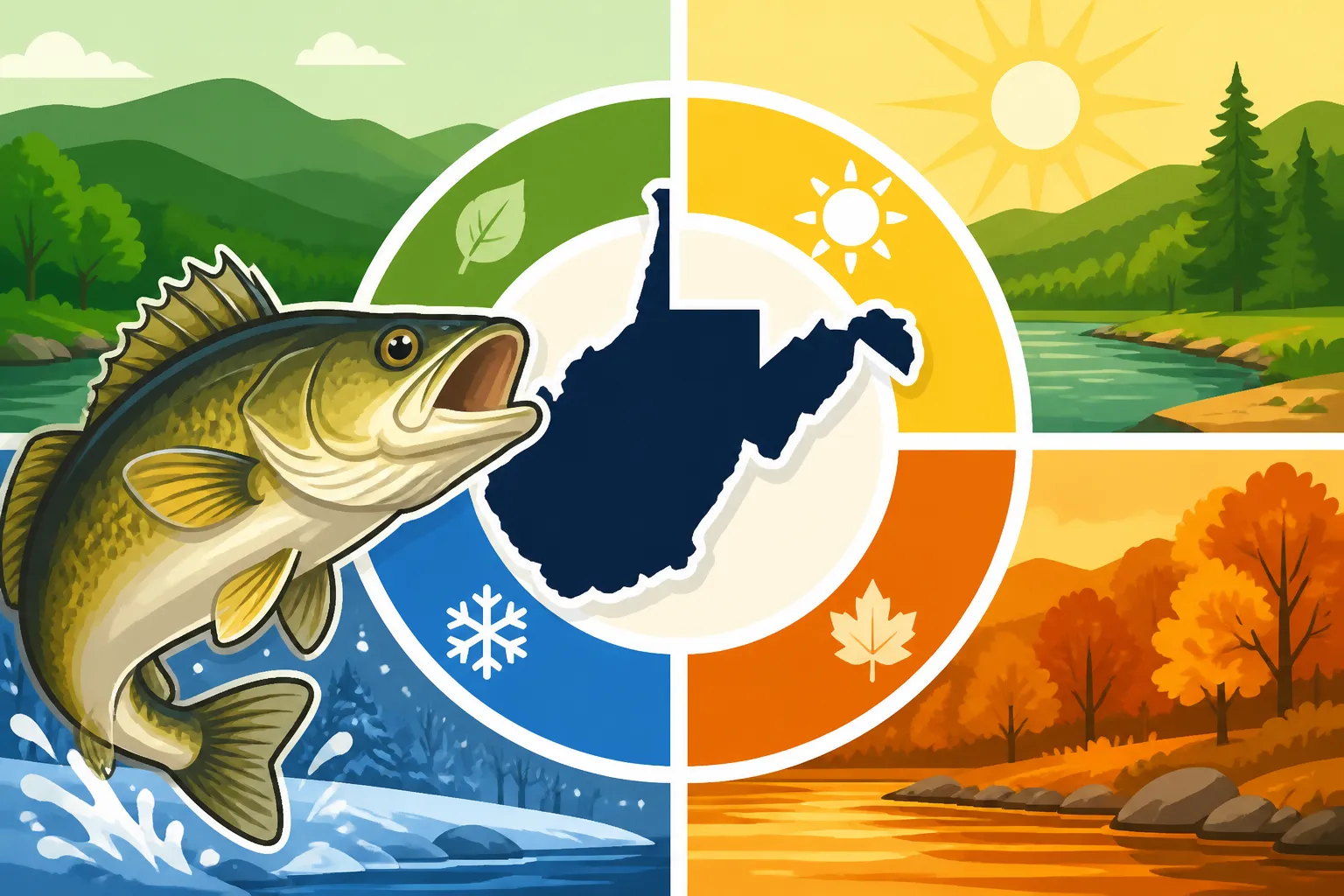
Even though the walleye season in West Virginia is open all year, the fish themselves certainly don't behave the same way every month. Understanding their natural cycles, especially their spawning habits, can significantly influence your fishing success and help you adapt your tactics.
Walleye Spawning in West Virginia Waters
Walleye are cold-water fish, and their spawning ritual is a key event in their annual life cycle. In West Virginia, walleye typically spawn in late winter to early spring, usually when water temperatures rise into the 40s Fahrenheit. This often occurs around March or April, but it can fluctuate depending on the specific lake or river and the prevailing weather patterns. They seek out shallow, rocky areas, shoals, or river current breaks to deposit their eggs.
During the pre-spawn period, walleye will often concentrate in these staging areas, making them somewhat predictable targets. However, during the actual spawn, they can become less interested in feeding, making them a bit harder to entice with traditional baits. Post-spawn, as they recover from the rigors of reproduction, they'll often move to deeper feeding grounds. Knowing this helps you understand where to find them and how their feeding behavior might shift. While there aren't specific closures for walleye spawning in West Virginia, responsible angling during this sensitive time means handling fish with care, especially if you plan to release them. For more on this critical period, check out our guide on Walleye Spawning Season in West Virginia.
Seasonal Best Times for Walleye Fishing
Since the season is open year-round, you've got options! But to be truly successful, you'll want to align your efforts with when walleye are most active and catchable. There are definitely prime periods to consider:
- Early Spring (Pre-Spawn & Post-Spawn): This is often considered one of the best times. Walleye are hungry and aggressive as they prepare for or recover from spawning. They'll be found shallower than usual, often near rocky points, tributary mouths, and current breaks. Jigs tipped with minnows or plastics, along with shallow-running crankbaits, can be incredibly effective.
- Summer: As waters warm up, walleye typically move to deeper, cooler water. This is when trolling with crankbaits or crawler harnesses becomes popular, targeting main lake humps, deep points, and thermoclines. Finding their preferred depth is key, and a good fish finder from brands like Garmin or Humminbird, often available on Amazon, can be a huge asset.
- Fall: Another fantastic time to target walleye as they start to feed heavily in preparation for winter. They'll often move shallower again during low light conditions or cloudy days, but can also be found in deeper areas relating to schooling baitfish. Jigging spoons, blade baits, and deep-diving crankbaits work well.
- Winter (Ice Fishing): For those brave enough to venture onto the ice, walleye can be caught through the hard water. Vertical jigging with spoons, small jigs, or even tip-ups set with live minnows can be productive, especially during low light hours.
Understanding these seasonal shifts in behavior and location is crucial. While the fish are always there, they're not always in the same mood or in the same spot. Staying informed about conditions throughout the year will make your trips much more rewarding. For a broader look at fishing opportunities, explore our articles on Best Time of Year to Fish in West Virginia and West Virginia Fishing Seasons by Month.
Where to Find Walleye and Local Exceptions
Knowing that you can fish for walleye year-round is great, but that doesn't tell you where to go. West Virginia offers a variety of fantastic walleye fisheries, from sprawling reservoirs to mighty rivers.
Top Walleye Waters in West Virginia
West Virginia is home to several premier walleye destinations where you'll have a good chance of connecting with these toothy critters. Each location offers a slightly different experience and set of challenges:
- Summersville Lake: This massive reservoir in Nicholas County is consistently one of the state's top walleye producers. Its deep, clear waters, abundant forage, and extensive rocky structure make it ideal walleye habitat. Anglers here often have success trolling deep-diving crankbaits or jigging spoons on main lake humps and points. You can learn more in our dedicated guide to Summersville Lake Walleye Fishing.
- Tygart Lake: Located near Grafton, Tygart Lake is another excellent walleye fishery, known for producing good numbers of fish, including some impressive trophy-sized specimens. Its deep channels and submerged timber provide ample cover. Trolling with various baits, especially crankbaits, is a popular and effective method here. Our Tygart Lake Fishing Guide has more tips.
- Cheat Lake: Up near Morgantown, Cheat Lake is a long, narrow impoundment that offers good walleye fishing, particularly in its deeper sections. It can be a bit more challenging due to boat traffic and fluctuating water levels, but persistence often pays off.
- Ohio River: The venerable Ohio River, forming West Virginia's western border, is a powerhouse for many species, including walleye and its close cousin, the sauger. Fishing the Ohio often involves targeting tailwaters below dams, major current breaks, and deep holes. You'll find a different dynamic here compared to lakes, with current playing a major role in fish location and presentation. Be sure to consult our Ohio River Fishing Guide for West Virginia Anglers for detailed advice.
These locations represent the cream of the crop for walleye fishing in West Virginia. Each of them, like most other waters in the state, adheres to the year-round walleye season, making them accessible whenever you feel the urge to cast a line. For a general overview of targeting this species throughout the state, check out our Walleye Fishing in West Virginia article.
Special Regulations or Considerations
While the year-round season and general bag/size limits apply to most walleye waters, it's always wise to remember that fishing regulations can sometimes have localized exceptions. These are rare for walleye in West Virginia, which largely operates under a statewide framework for this species. However, it's not unheard of for temporary closures or specific rules to be implemented for various reasons, such as during a lake draw-down for dam maintenance, a special WVDNR research project, or a local fishing tournament that might have its own specific rules.
Always, always make it a habit to check the most current regulations summary published by the WVDNR before you head out. You can typically find this information on their official website, often as a downloadable PDF, or pick up a physical copy wherever fishing licenses are sold. This is your ultimate source for any last-minute changes or hyper-local rules that might apply to your chosen fishing spot. Don't just rely on what you heard last year!
Beyond the walleye-specific rules, always remember the absolute necessity of a valid West Virginia fishing license. Even with a year-round season, fishing without a proper license is a surefire way to turn a fun day into a costly one. Make sure yours is up to date! Our West Virginia Fishing License Guide for 2026 can help you sort out your licensing needs. And for general regulation clarity, our guide to Reading the West Virginia Fishing Regulations Summary is a must-read.
Gear and Tactics for Year-Round Walleye Success
Having an open season means you can fish whenever you want, but successful walleye fishing throughout the year requires more than just showing up. It means having the right gear and adapting your tactics to the changing seasons and fish behavior.
Essential Gear for Walleye Anglers
Walleye aren't generally tackle busters, but they do have specific preferences and can be finicky. A versatile gear setup will serve you well for year-round pursuits:
- Rods and Reels: A medium-light to medium-action spinning rod, typically 6'6" to 7' in length, paired with a matching spinning reel (size 2500-3000) is a great all-around choice. This setup offers enough sensitivity for detecting subtle walleye bites and enough backbone to handle a good-sized fish. For trolling or heavier presentations, a medium-heavy baitcasting setup might be preferred.
- Line: Most anglers opt for 8-10 lb test monofilament or fluorocarbon main line, or a braided line with a fluorocarbon leader. Braided line offers excellent sensitivity and casting distance, while fluorocarbon is nearly invisible underwater and abrasion-resistant, making it ideal for clear waters and rocky bottoms.
- Lures and Baits: This is where seasonal adaptation really comes in.
- Jigs: From 1/8 oz to 3/4 oz, tipped with live minnows, soft plastic grubs, or paddle tails, jigs are incredibly versatile year-round. You can find a wide array of jig styles and colors on Amazon, allowing you to stock up for any condition. For specific recommendations, check out our guide on the Best Jigs for West Virginia Walleye.
- Crankbaits: Deep-diving, shallow-running, lipless – crankbaits are walleye staples, especially for trolling or covering water. Colors and diving depths will vary by season and water clarity.
- Crawler Harnesses: Especially effective in warmer months when trolling, these rigs typically feature multiple hooks dressed with beads and spinner blades, trailing a live nightcrawler.
- Live Bait: Minnows, nightcrawlers, and leeches (where legal) are often irresistible to walleye, fished under a bobber, on a slip-sinker rig, or tipped on a jig.
- Other Essentials: Don't forget a sturdy landing net (walleye have sharp teeth!), pliers or forceps for hook removal, a good cooler for your keepers, and appropriate foul-weather gear.
Adapting Your Approach Throughout the Year
The beauty of a year-round walleye season is the opportunity to learn and master different techniques. But it means you can't be a one-trick pony.
- Spring Fling: As water temperatures creep into the 40s and 50s, walleye become very active in shallower areas for spawning. Focus on jigging with live minnows or paddle tails near rocky points, dam rip-rap, or tributary inflows. Early morning and late evening are often prime times.
- Summer Deep Dive: When the sun beats down and water temperatures rise into the 60s and 70s, walleye retreat to the cooler, deeper parts of lakes. This is prime time for trolling deep-diving crankbaits or crawler harnesses over submerged humps, ledges, and channels. Using electronics to locate baitfish and structure is vital.
- Fall Feeding Frenzy: Autumn brings a renewed vigor to walleye as they bulk up for winter. They can be found moving between deep and shallow water, often relating to schools of baitfish. Vertical jigging with spoons or blade baits over deep structure, or casting medium-diving crankbaits along main lake points, can be very effective. It’s wise to keep a variety of baits in your tackle box, readily available from retailers like Amazon.
- Winter Ice Tactics: If the ice is safe, winter offers a unique opportunity. Walleye tend to hold tight to structure in deeper basins. Vertical jigging small spoons, Rapala Jigging Raps, or small jigs tipped with a minnow head through the ice are popular methods. Tip-ups set with larger live minnows can also produce big fish. Always prioritize ice safety!
Remember, while the season doesn't close, walleye behavior does change dramatically with the seasons. Being prepared to adapt your lure choice, presentation, and fishing depth is the key to consistent success in West Virginia's excellent walleye fisheries.
Disclaimer
The information provided in this article is for general guidance only. Fishing regulations, season dates, and limits can change. It is the responsibility of every angler to consult the most current official West Virginia Division of Natural Resources (WVDNR) fishing regulations before engaging in any fishing activity. Always prioritize safety and adherence to local laws.