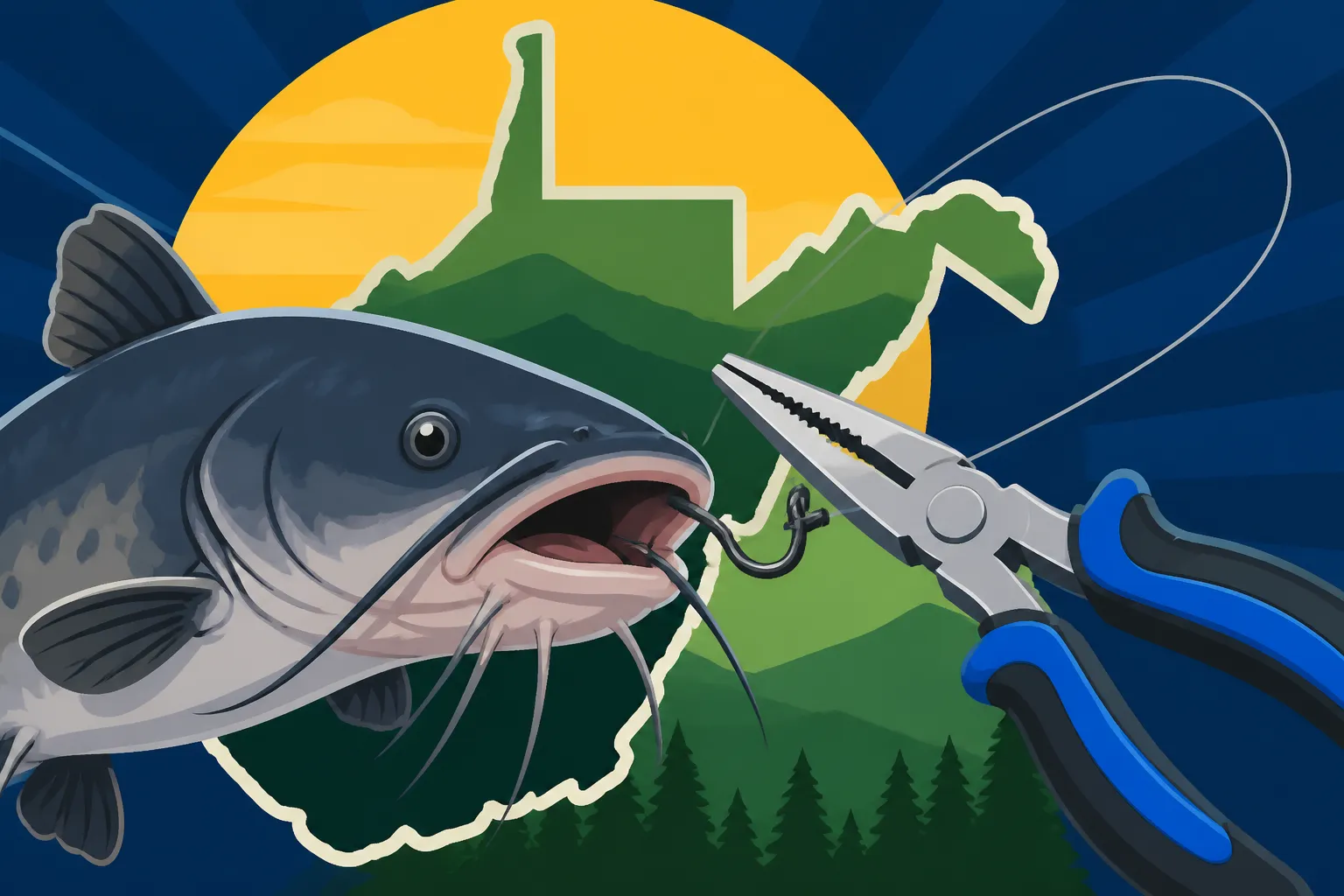
Best pliers for unhooking catfish
There's nothing quite like the thrill of feeling that powerful tug on your line, setting the hook, and battling a tenacious catfish in the waters of West Virginia. Whether you're pulling a channel cat from the Ohio River or wrestling a flathead from the Kanawha, the satisfaction is immense. But then comes the moment of truth: unhooking that feisty, often slime-covered, and sometimes deeply hooked beast. This guide is all about equipping you with the right tools and knowledge to make unhooking catfish a safe, efficient, and less stressful experience for both you and your catch, ensuring you get back to fishing faster.
Why Regular Pliers Just Won't Cut It for West Virginia Catfish
Many anglers, especially those new to the dedicated pursuit of catfish, might think any old pair of pliers will do the trick. You might have a trusty pair from your workshop or a multi-tool tucked away in your tackle box, but I’m here to tell you, from years of experience on West Virginia's rivers and lakes, that cutting corners here can lead to frustration, injury, and unnecessary harm to the fish. Catfish are unique, and their physical attributes demand a specialized approach when it comes to hook removal.
The Catfish Challenge: Spines, Slime, and Deep Hooks
Imagine this scenario: you've just landed a decent channel catfish at Summersville Lake. It's putting up a good fight even in the net. As you reach for it, you realize its pectoral and dorsal fins are locked out, bristling with sharp, serrated spines. These aren't just for show; they can deliver a painful puncture wound, sometimes even carrying a mild anticoagulant or bacterial load that makes them sting and swell. On top of that, catfish are incredibly slimy. That slick coating is a natural defense, but it makes them incredibly hard to get a firm, safe grip on, especially when they're flopping around.
Now, consider the hook. Catfish, with their scavenging nature and powerful suction feeding, often swallow baits deeply. That means the hook might not be in the lip or corner of the mouth, but far down in the gullet. Trying to extract a deeply embedded hook with short, stubby household pliers is not only nearly impossible but also incredibly dangerous. You risk cutting yourself on the fish's teeth (yes, they have them!), getting finned, or worse, tearing up the fish's delicate internal organs, making a successful release unlikely. This is where specialized tools become not just a convenience, but a necessity. Angler safety and fish welfare should always be top priorities, and the right pliers are your first line of defense.
The Limitations of Everyday Tools
Let's talk about those general-purpose pliers you might be tempted to use. Your standard needle-nose pliers from the garage, while having a somewhat long nose, often lack the strength and reach needed for a truly stubborn, deeply set hook in a strong fish. Their grips might be uncomfortable, or worse, slippery when wet or covered in fish slime. Trying to get a good purchase on a hook buried deep in a catfish's throat with a short pair of pliers means you’re getting your hand dangerously close to those spines and that thrashing head.
Beyond just the functional aspect, consider the material. Most household pliers aren't designed for constant exposure to water, especially not the murky, sometimes corrosive, environments found in some West Virginia fishing spots. They'll rust quickly, becoming stiff and ineffective, or even worse, contaminating the water if coatings flake off. Their jaws might be too blunt to effectively grip a small hook or too weak to twist out a larger one. You'll end up fighting the tool as much as the fish, prolonging the unhooking process, which is stressful for the fish and increases its chances of not surviving release. For serious Catfish Fishing in West Virginia, you need gear that’s up to the task.
Essential Features of the Best Catfish Unhooking Pliers
When you're out there on the water, battling a stubborn catfish, you need tools that perform reliably and safely. The best pliers for unhooking catfish aren't just any pliers; they are purpose-built instruments designed to handle the unique challenges these fish present. Investing in a quality pair will save you headaches, prevent injuries, and most importantly, contribute to the health and survival of your catch.
Length and Reach: Getting to Those Deep Hooks
This is arguably the most critical feature when it comes to catfish. As we discussed, channel cats and especially flatheads, which can grow to impressive sizes in West Virginia's major river systems like the Ohio River, tend to engulf baits. A hook can easily end up far down their throat. Shorter pliers simply won't cut it. You need a pair with long handles and slender jaws, typically ranging from 8 to 12 inches in total length, sometimes even longer for extreme cases.
Think about it: that extra reach allows you to keep your hands and fingers well clear of the fish's formidable spines and sharp gill plates while still providing the necessary leverage to grip and remove the hook. For a particularly large flathead that has taken a bait aggressively, a 12-inch pair of pliers can be a game-changer. It means less stress for you, less thrashing for the fish, and a quicker, safer release. When you're dealing with the incredible power of a large flathead from the Flathead Catfish in the Ohio River, you'll appreciate every extra inch of plier length.
Grip and Durability: Holding On Tight
Once you've reached the hook, you need to be able to hold onto it securely and apply the necessary force to remove it. This is where grip and durability come into play.
- Material Matters: Look for pliers made from high-quality, corrosion-resistant materials. Stainless steel is a popular choice, often with additional coatings to enhance rust protection, which is crucial for tools exposed to water and fish slime. Carbon steel pliers might also be used, but they absolutely must have a robust anti-corrosion coating to withstand the elements found while How to Catch Catfish in West Virginia Lakes. Cheaper metals will rust quickly, making the pliers stiff, hard to operate, and potentially weakening the tool.
- Handle Ergonomics: The handles themselves should be comfortable to hold, even when wet or slimy. Non-slip grips made of rubber or textured plastic are ideal. Some high-end fishing pliers feature ergonomic designs that fit naturally in your hand, reducing fatigue during extended unhooking sessions.
- Spring-Loaded Design: Many quality fishing pliers are spring-loaded. This means the jaws automatically stay open, making one-handed operation much easier. When you're trying to cradle a struggling fish with one hand and manipulate pliers with the other, a spring-loaded design is a blessing.
- Built to Last: Catfish hooks, especially those used for larger specimens, can be stout. Your pliers need to be able to withstand the twisting and pulling required to dislodge a deeply set hook without bending, breaking, or having their jaws misalign. Check reviews on sites like Bass Pro Shops or Amazon for durability notes from other anglers. You don't want your pliers failing on you when you've got a trophy Channel Catfish Habits in West Virginia Rivers on the line.
| Feature | Description | Why it Matters for Catfish |
|---|---|---|
| Length | Total length, especially jaw length | Reaches deep-set hooks, keeps hands clear of spines and gills |
| Material | Stainless steel, coated carbon steel | Corrosion resistance, durability in wet environments |
| Grip | Non-slip, ergonomic handles | Secure hold even when wet/slimy, reduces hand fatigue |
| Jaw Design | Fine tips, strong cutters, de-barbing ability | Precise hook manipulation, cutting line/hooks if needed |
| Spring-Loaded | Jaws open automatically | Easier one-handed operation, quicker hook removal |
| Leverage | Handle-to-jaw ratio | Allows for powerful, controlled force to remove stubborn hooks |
Jaw Design: Barb Removal and Hook Straightening
The working end of your pliers – the jaws – is just as important as the length and material. The design of these jaws determines how effectively you can interact with the hook.
- Fine Tips vs. Robust Jaws: For smaller hooks or those just barely inside the mouth, pliers with finer, more pointed tips can be advantageous for precision. They allow you to grab the bend of the hook or even the barb itself. However, for larger, stouter hooks often favored for big catfish, you'll need more robust jaws that won't twist or flex under pressure. Some pliers offer a hybrid design, with strong bases that taper to finer tips.
- De-barbing Capability: Many modern fishing pliers, especially specialized hook removers, have a small notch or textured area near the hinge that can be used to crimp down the barb of a hook. De-barbing your hooks before you start fishing is an excellent practice for quick, humane releases, but if you forgot, a good pair of pliers can help in a pinch. Remember, a de-barbed hook comes out much easier, causing less damage to the fish.
- Integrated Cutters: A truly versatile pair of fishing pliers will often include a set of sharp, hardened cutters. While your primary goal is to remove the hook intact, there are times, especially with deeply swallowed hooks that are impossible to retrieve safely, when cutting the hook is the only option. Strong cutters can snip through stout treble hooks or heavy gauge wire. This saves the fish from potentially fatal internal damage and allows for a quicker release. If you're Bottom Fishing for Catfish in West Virginia Rivers and they are really inhaling the bait, these cutters can be a lifesaver for the fish.
Types of Pliers Best Suited for Catfish Anglers
With the unique challenges posed by West Virginia catfish, it's clear that generic tools won't cut it. Thankfully, the fishing gear industry has evolved, offering several types of pliers specifically designed to meet the demands of anglers. Knowing the differences between them can help you select the perfect tool for your particular fishing style and the size of catfish you typically pursue.
Long-Nose Pliers: The Workhorse for Most Situations
When most anglers think of fishing pliers, they're probably picturing a good set of long-nose pliers, sometimes also called needle-nose pliers. These are the versatile utility knife of fishing tools, and for good reason. They are absolutely indispensable for a variety of tasks beyond just unhooking catfish.
For catfish, their primary advantage is, of course, their extended reach. A quality pair of 8-to-11-inch long-nose pliers can effectively reach hooks that are moderately deep, keeping your fingers safe from those sharp pectoral and dorsal fins. They offer decent leverage for twisting and pulling hooks, and their relatively fine tips allow for precise manipulation, whether it's pinching a barb or gently guiding a hook out of a delicate area of the fish's mouth.
Pros:
- Versatility: Excellent for unhooking, crimping split shot, tuning lures, cutting light leader, and general tackle adjustments.
- Reach: Good for hooks that aren't too deeply swallowed, keeping hands away from danger.
- Precision: Finer tips allow for delicate work.
Cons:
- Limited Power: While good for most hooks, they might struggle with very large, stout hooks or those set extremely deep in tougher mouth parts.
- Durability Varies: Cheaper models can bend or rust quickly. Always opt for stainless steel or well-coated carbon steel.
A solid pair of long-nose pliers is a foundational piece of equipment for any serious angler, whether you're targeting catfish or chasing smallmouth bass. You'll find a wide range of options at retailers like Bass Pro Shops, many of which are designed with the specific demands of fishing in mind, often featuring corrosion-resistant finishes and ergonomic grips.
Heavy-Duty Fishing Pliers/Hook Removers: For the Toughest Jobs
When you're consistently catching larger catfish, especially flatheads or trophy channel cats that are notorious for swallowing baits whole, you'll want to step up to a heavy-duty pair of fishing pliers or a dedicated hook remover. These tools are built with brute strength and maximum leverage in mind, specifically engineered to tackle the most challenging unhooking scenarios.
These pliers typically feature even longer handles and often thicker, more robust jaws than standard long-nose pliers. They prioritize power over extreme finesse, designed to grip a large hook firmly and apply significant force to dislodge it. Many come with built-in heavy-duty cutters capable of snipping through tough wire hooks, a critical feature when a hook is completely inaccessible or too difficult to remove without causing severe damage to the fish. Imagine a huge flathead from the Kanawha River Fishing Spots that has inhaled a whole shad – these are the pliers you want in your hand.
Pros:
- Superior Power: Designed for maximum leverage and strength, ideal for large, deeply swallowed, or stubborn hooks.
- Enhanced Safety: The extra length keeps your hands very far from danger.
- Integrated Cutters: Often include powerful cutters that can snip heavy-gauge hooks, a fish-saving feature in extreme situations.
Cons:
- Less Precision: Jaws might be thicker, making them less ideal for very small hooks or delicate tasks.
- Bulkier: Can be larger and heavier to carry than standard pliers.
While they might not be needed for every panfish you catch, if you’re serious about targeting bigger catfish, a pair of heavy-duty hook removers is an indispensable tool. Look for brands known for their robust construction and corrosion resistance. Amazon offers a plethora of options, but reading reviews from other anglers is crucial to ensure you're getting a tool that stands up to real-world use. Think of these as the Best Landing Net for Muskie equivalent for hook removal – built for big, tough fish.
Specialized Bent-Nose Pliers: Accessing Awkward Angles
Sometimes, a hook isn't just deep; it's also lodged at an awkward angle, making straight-jawed pliers less effective. This is where specialized bent-nose pliers shine. Their jaws are angled, often at 45 or 90 degrees, allowing you to approach a hook from a different perspective and get a better grip in tight spaces.
Bent-nose pliers can be particularly useful when a hook is embedded along the side of the mouth, under a gill plate (though extreme care must be taken here), or in other difficult-to-reach spots. The angle of the jaws can provide the necessary clearance to maneuver around anatomical obstructions, giving you a cleaner line of attack on the hook. This can be vital for minimizing the amount of tearing or damage to the fish's mouth or throat tissue.
Pros:
- Access Awkward Angles: Excellent for hooks set in difficult-to-reach positions.
- Reduced Fish Damage: Can allow for a more precise, less invasive hook removal.
- Improved Visibility: The bend can sometimes give you a better view of the hook.
Cons:
- Less Versatile: Not as general-purpose as straight long-nose pliers; you might still need a straight pair for other tasks.
- Learning Curve: Takes a little practice to get used to the angled approach.
Many anglers might carry both a straight long-nose and a bent-nose pair of pliers, especially when fishing for species like catfish that have a tendency to swallow hooks. This ensures you're prepared for whatever hook placement you encounter. For general fishing, you might be looking for Best Gear for West Virginia Trout Fishing, but for specific species like catfish, specialized tools like these really make a difference.
Proper Technique for Safe Catfish Unhooking
Having the right tools is only half the battle; knowing how to use them effectively and safely is just as crucial. When unhooking a catfish, your primary goals should always be angler safety, minimizing stress to the fish, and ensuring a quick, clean release to maximize its survival chances.
Prioritizing Angler and Fish Safety
Unhooking a catfish, especially a larger one, can be a wrestling match if you're not prepared. These fish are powerful, and their defense mechanisms are formidable.
- Preparation is Key: Before you even bring the fish into the boat or onto the bank, have your pliers, a heavy-duty fishing glove (thick leather or cut-resistant material is best), and a sturdy landing net or lip gripper ready. If you’re planning on releasing, consider a measure board and camera within easy reach. The quicker you can handle the fish, the better.
- Secure the Fish: This is paramount for both your safety and the fish's. For smaller catfish, you can often grip them firmly behind the head, being very careful to avoid the pectoral spines. For larger fish, a sturdy landing net is a must. If you have a lip gripper (often called a fish grip), it can be an excellent tool to secure the fish by its lower jaw, keeping its body away from yours and giving you better control. However, use lip grippers judiciously on larger fish, supporting their weight, as hanging a heavy fish solely by its jaw can cause damage.
- Wear Protective Gear: Those catfish spines are no joke. Always wear a thick glove on the hand you'll use to hold or steady the fish. Many anglers wear two gloves for maximum protection. This not only protects against spines but also improves your grip on a slimy, thrashing fish.
- Locate the Hook: Carefully examine the fish's mouth and throat to locate the hook. If it's visible and accessible, that's great. If it's deep, you'll need the length and precision of your specialized pliers.
- Steady and Extract: With your pliers, grasp the bend of the hook firmly. If the hook is barbed and you plan on releasing the fish, gently twist the hook to back it out. Avoid jerking or tearing. If the hook is deeply swallowed and cannot be removed without causing severe damage, this is when those integrated cutters come into play. Snip the line as close to the hook as possible. A fish can often survive with a small hook corroding away inside it, especially if it's not in a vital organ, better than it can survive extensive internal tearing from forced removal. This is a tough call, but often the most humane option for deep-hooked fish.
- Minimize Air Exposure: Fish, especially those intended for release, should be out of water for the shortest time possible. Oxygen deprivation is stressful. Work quickly, efficiently, and have everything ready to go.
- Support for Release: When releasing the fish, gently place it back in the water, supporting its belly until it swims off strongly. For larger fish, you might need to hold them upright in the water for a minute or two, allowing water to flow over their gills, until they regain their strength and can swim away under their own power. Understanding West Virginia Fishing Regulations Explained regarding catch and release, especially for certain species or waters, is also important here.
Caring for Your Pliers and Your Catch
Just like any other piece of valuable fishing gear, your unhooking pliers will perform best and last longest with proper care. A little maintenance goes a long way.
- Rinse After Use: After each fishing trip, especially if your pliers have been exposed to fish slime, bait, or muddy river water, give them a thorough rinse with fresh water. This is crucial for preventing corrosion, even with stainless steel models.
- Dry and Oil: Once rinsed, dry your pliers completely. A light coating of a corrosion-inhibiting oil or silicone spray can further protect moving parts and prevent rust, particularly in humid climates like West Virginia. Pay attention to the pivot points and any cutters.
- Store Properly: Keep your pliers in a dry place, away from other tackle that might cause scratches or dents. Many fishing pliers come with a sheath or lanyard, which can be great for quick access and protection.
- Sharpen Cutters (If Applicable): If your pliers have integrated cutters and you use them frequently, they might eventually dull. Some high-quality pliers allow for replacement cutters or can be sharpened, extending the life of the tool.
By taking these steps, you ensure your pliers are always ready for action when that next big catfish strikes. Remember, responsible angling includes not only having the right gear, but also knowing how to use and maintain it, all while prioritizing the well-being of the fish. This approach is beneficial whether you are fishing for catfish late at night, a common activity for Night Fishing Techniques for West Virginia Lakes, or during the day.
This commitment to proper technique and gear care aligns with the spirit of stewardship that keeps West Virginia's waters healthy and teeming with life for all anglers.
Disclaimer
This article is for general informational purposes only and does not constitute professional advice. Laws, prices and regulations vary by location and change over time. Consult a qualified professional for guidance on your specific situation.