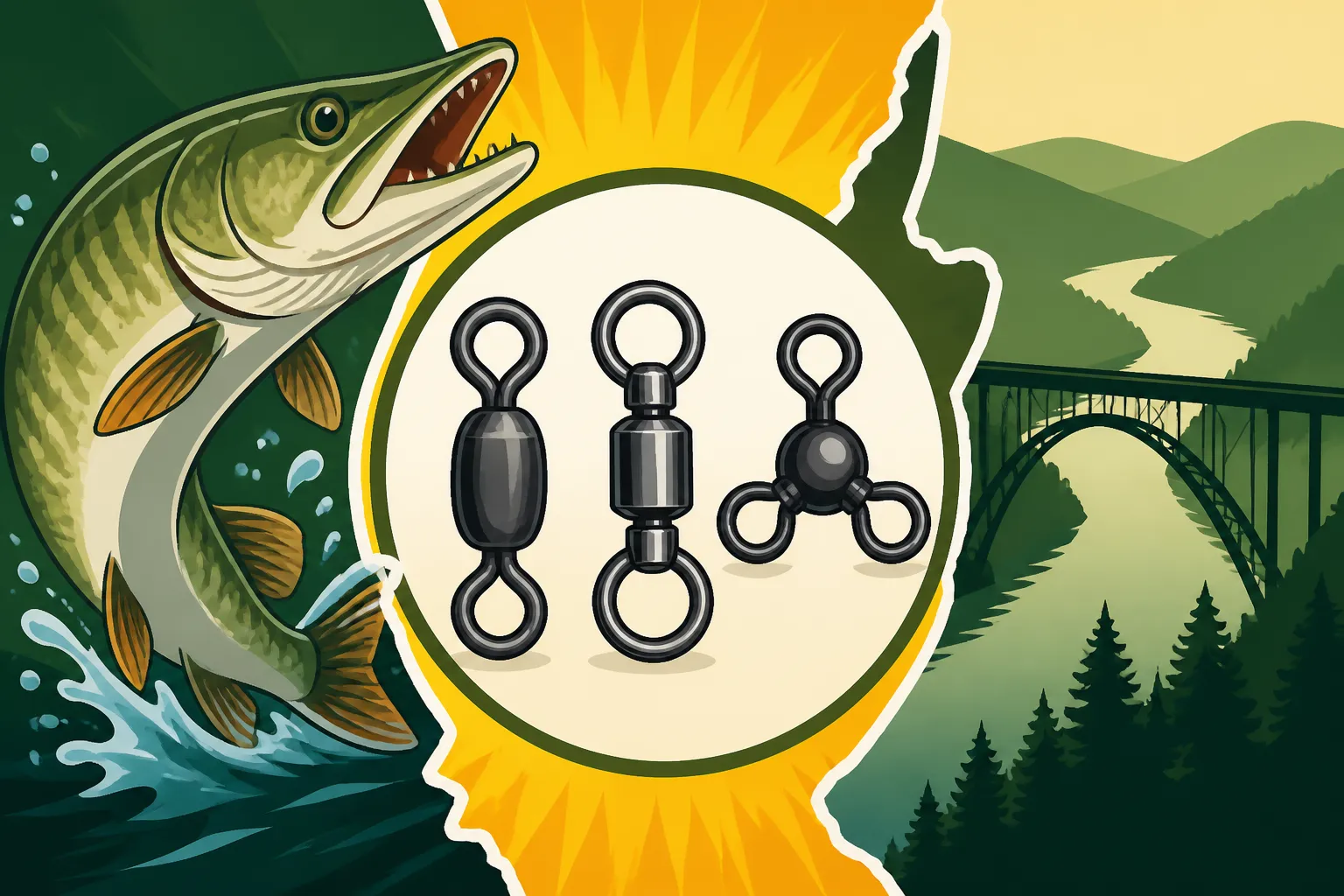
Best swivel type for muskie leaders
If you've spent any time at all chasing the elusive muskie across West Virginia's incredible waterways, from the New River to the Little Kanawha, you know the heartbreak of a lost fish or, even worse, a lost and expensive lure. Often, the culprit isn't your casting or retrieve, but a weak link in your leader system – specifically, the wrong swivel. This guide is dedicated to helping you understand the different types of swivels and how to choose the best one to keep your line tangle-free and your lures secure when that monster muskie strikes.
Why Swivels Are Non-Negotiable for Muskie Leaders
Muskie fishing isn't for the faint of heart, and neither is the gear. These apex predators don't just eat your lure; they violently shake their heads, roll, and twist during a fight. Without the right swivel, your line can quickly become a tangled mess, leading to weakened connections and, ultimately, lost fish and gear. It's a fundamental piece of the puzzle that often gets overlooked, yet it plays a monumental role in your success.
Taming the Twist: Line Management is Key
Imagine casting a large bucktail spinner for muskie, a lure specifically designed to spin and pulsate through the water to attract strikes. Now, imagine doing that hundreds of times a day. If your leader doesn't have a high-quality swivel, that constant spinning action will quickly twist your main fishing line. This isn't just an annoyance; a twisted line loses its strength, becomes prone to tangles, and can even damage your reel's components over time. A reliable swivel acts as a rotational buffer, absorbing that spin and keeping your main line in prime condition.
Furthermore, when a muskie slams a lure, especially a large jerkbait or glide bait, it can tumble violently in the water, adding even more rotational stress to your line. Without a swivel, your main line would immediately begin to coil, creating memory and compromising its integrity. Investing in a quality swivel is an investment in the longevity of your line and the efficiency of your retrieve.
Preventing Break-offs and Lost Lures
Muskies have an unparalleled ability to find the weakest point in your setup. Their powerful jaws, sharp teeth, and incredible fighting prowess mean that every component of your leader system is tested to its limits. A swivel that isn't up to the task can twist under pressure, causing friction and heat that weakens the line or leader material. Worse yet, a cheap, poorly constructed swivel can simply bend open or break entirely during a fight, leading to an instant, heartbreaking separation from your trophy fish and your valuable lure.
Many muskie lures, especially custom bucktails or large wooden baits, can be quite expensive. Losing one due to a faulty swivel is a tough pill to swallow. A good swivel provides a strong, reliable connection point between your main line (or heavy shock leader) and your wire or fluorocarbon bite leader, ensuring that the energy of the fight is distributed properly and the lure stays attached to your line. Think of it as a critical shock absorber for your entire setup.
The Muskie's Violent Fight
If you've ever hooked into a true West Virginia muskie, you know it's not a gentle tug-of-war. These fish are notorious for their explosive runs, head shakes, and acrobatic jumps. They'll roll in the line, try to scrape you off on submerged timber, or dive into heavy cover. All of this intense, erratic movement creates incredible torque and strain on your entire fishing system, particularly on the connection points.
A high-quality swivel is designed to mitigate these forces by allowing your leader and lure to rotate independently from your main line. This freedom of movement reduces the leverage the fish has against your line, making it harder for them to create enough tension or twist to cause a break-off. It's an essential piece of specialized gear that allows you to confidently battle these freshwater giants without constantly worrying about your connections. For more on what these fish are like, check out Muskie Fishing in West Virginia.
Understanding Different Swivel Types for Muskie
When you walk into a store like Bass Pro Shops or browse online on Amazon for fishing tackle, you'll see a dizzying array of swivels. For muskie fishing, however, you need to be very selective. Not all swivels are created equal, and some are far better suited for the rigors of muskie angling than others. Let's break down the common types and their suitability.
Barrel Swivels: The Basic Workhorse
Barrel swivels are perhaps the most common and recognizable type of swivel. They consist of two rings joined by a barrel-shaped body that allows for rotation. They are simple, generally inexpensive, and effective at preventing line twist to some degree.
However, for muskie fishing, standard barrel swivels often fall short. Their rotation isn't as smooth under heavy load as other types, meaning they can still allow some twist to transfer to your main line, especially with fast-spinning bucktails. They also tend to be bulkier for their breaking strength compared to more specialized swivels, which might be a minor concern for stealth in clear water. While they might be fine for lighter applications or as part of a leader system where other components handle the primary twist, they're generally not the first choice for the critical connection to your lure for muskie.
Crane Swivels: A Step Up in Performance
Crane swivels offer a significant upgrade from basic barrel swivels, and many muskie anglers find them to be a solid, economical choice. Their design features a sleeker, more streamlined profile and typically offers smoother rotation than barrel swivels. This improved rotation is crucial when you're throwing lures that generate a lot of spin, or when a muskie decides to put on an aerial display of rolls and head shakes.
Crane swivels are generally stronger for their size compared to barrel swivels, and their more compact design reduces bulk, making for a slightly more discreet connection. They are widely available and come in a variety of robust materials and finishes. Many anglers use crane swivels effectively, especially if they are regularly inspecting and replacing them. They offer a good balance of performance, strength, and cost for many West Virginia muskie scenarios.
Ball Bearing Swivels: The Gold Standard for Serious Anglers
If you're serious about muskie fishing and want the absolute best performance in terms of line twist prevention and durability, ball bearing swivels are the way to go. These swivels incorporate tiny stainless steel ball bearings within their housing, which allows for incredibly smooth, friction-free rotation even under immense pressure. This superior design virtually eliminates line twist, no matter how aggressively your lure spins or how violently a muskie fights.
The smooth action of ball bearing swivels also means less wear and tear on your line and leader materials, extending their lifespan. They are often made from high-quality, corrosion-resistant metals, making them incredibly strong and reliable. The trade-off, however, is that ball bearing swivels are significantly more expensive than barrel or crane swivels. For many muskie anglers, though, the peace of mind and performance boost is well worth the investment, especially when attaching costly lures or targeting a trophy fish. When assembling a top-tier muskie leader, such as those recommended in Best Wire Leader for Muskie Fishing, a ball bearing swivel is often the preferred choice.
Snap Swivels and Interlocks: Convenience vs. Security
Snap swivels combine a swivel (often a barrel or crane type) with a snap clip, allowing for quick and easy lure changes. Interlock snaps are a specific type of snap that offers a bit more security than a standard clip. The convenience factor is undeniable when you're on the water and want to switch lures quickly, which happens often in muskie fishing as you try to "figure out" the fish.
However, many seasoned muskie anglers avoid using snap swivels directly connected to their lures. The snap mechanism, no matter how robust it seems, introduces another potential point of failure. A muskie's violent head shakes can pry open a snap, or the snap can wear down over time and weaken. If you must use a snap, opt for heavy-duty, high-quality interlock snaps made for muskie, and inspect them meticulously after every few fish or hard strikes. For ultimate security, many prefer a solid ring connection with a split ring on the lure, avoiding a snap altogether at the lure connection point, using the swivel higher up on the leader.
Key Factors When Choosing Your Muskie Swivel
Beyond the basic type, there are several other critical considerations when selecting a swivel for your West Virginia muskie adventures. Overlooking these details can turn a promising day into a frustrating one.
Material and Strength: Durability Matters
Muskie fishing demands robust gear. Swivels should be made from high-strength, corrosion-resistant materials. Stainless steel is a popular choice due to its durability and resistance to rust, which is important even in freshwater, especially if you're fishing consistently. Pay close attention to the stated breaking strength (often measured in pounds) of the swivel. Always choose a swivel with a breaking strength that matches or exceeds the breaking strength of your main line and leader, and preferably, one that significantly overmatches it. You want the swivel to be the strongest link in that part of your setup, not the weakest.
Consider the force exerted by a powerful muskie – it's far greater than just the static weight. A swivel needs to withstand sudden shocks and prolonged, intense pressure. Don't skimp on quality here; a few extra dollars for a top-tier, heavy-duty swivel can save you a lot of heartache and expense down the road. Some brands specialize in producing incredibly strong yet compact swivels, designed specifically for big game fishing.
Size and Profile: Stealth vs. Stoutness
While you need strength, you also don't want a massive, clunky swivel that screams "danger" to a wary muskie or interferes with the action of your lure. The goal is to select the smallest possible swivel that still provides the necessary strength and smooth rotation. A smaller profile reduces visibility, which can be a factor in clear water conditions or when targeting finicky fish.
However, never sacrifice strength for size. It's a delicate balance. A good rule of thumb is to choose a swivel that is appropriately sized for your overall leader setup. If you're using heavy fluorocarbon or wire leaders, a slightly larger, beefier swivel will look more natural within that system than a tiny one. Conversely, if you're fishing lighter presentations (though "light" is a relative term in muskie fishing!), a more compact swivel might be desirable. Remember, a muskie is attacking the lure, not necessarily inspecting your hardware, but minimizing unnatural elements is always a good strategy.
Connections: Crimps, Knots, and Sleeves
How you connect your swivel to your leader material is just as important as the swivel itself. For wire leaders, crimps or sleeves are typically used, providing a very strong and clean connection. Ensure you're using the correct size crimp for your wire and a proper crimping tool to avoid creating weak points. Many muskie anglers will use double crimps for added security.
If you're connecting a heavy fluorocarbon leader, a strong knot designed for large diameter lines, such as a Palomar knot or an improved Clinch knot, is essential. Take your time when tying these knots, moisten the line before cinching, and pull them tight gradually to avoid weakening the line. Regardless of the connection method, regularly inspect your crimps, knots, and leader material for any signs of fraying, bending, or damage. A single nick can compromise the entire setup. For ideas on what line to use, check out Best Line Weight for Muskie Fishing.
Brand Reputation and Quality Control
When it comes to muskie fishing, trust in your gear is paramount. Certain brands have built a reputation for producing high-quality, reliable swivels that stand up to the abuse of muskie fishing. While specific brand names might change in popularity over time, look for those known for their big-game fishing tackle. Companies that specialize in saltwater gear often produce freshwater muskie components that are equally bombproof.
Reading reviews, asking experienced muskie anglers, and even physically inspecting swivels at a tackle shop can give you a good idea of their quality. A good swivel should have smooth, even rings, no rough edges, and perfectly free rotation. Be wary of unbranded or extremely cheap swivels; saving a dollar or two on a swivel isn't worth losing the fish of a lifetime or a valuable lure. You can often find reputable brands for sale at places like Bass Pro Shops or online through retailers like Amazon, making it easier to compare and choose.
Practical Applications and Rigging Tips
Now that we've covered the different types and critical factors, let's talk about putting it all together for your next West Virginia muskie expedition. The right swivel in the right place can make all the difference.
When to Use Which Swivel
The choice of swivel often depends on the specific lure you're throwing and the overall setup.
- For Bucktails and Inline Spinners: This is where ball bearing swivels truly shine. Their superior anti-twist capabilities are unmatched and will keep your main line from coiling, even after hundreds of casts with aggressively spinning blades. Place a heavy-duty ball bearing swivel at the connection point to your wire or fluorocarbon leader, then connect your lure to the leader via a solid ring and split ring, or a heavy-duty interlock snap if you absolutely must use one.
- For Jerkbaits and Glide Baits: While these lures don't necessarily spin, a muskie's violent head shakes and rolls can still create significant torque. A high-quality crane swivel or a ball bearing swivel will provide the necessary free movement to prevent line twist and reduce the fish's leverage. The key here is strength and smooth action during the fight.
- For Trolling Baits: If you're trolling large crankbaits or other lures that might have a slight wobble or spin, a ball bearing swivel is again highly recommended. The continuous pressure and potential for a fish to roll make smooth rotation crucial for preventing line twist over long periods.
It's a good practice to standardize your swivel choice if possible, opting for the highest quality you can afford. This simplifies your rigging and ensures consistent performance across your tackle. Always ensure your swivel's breaking strength is appropriate for the lure's weight and the potential size of the muskie you're targeting.
Inspecting and Replacing Your Swivels
Swivels, especially those subjected to the forces of muskie fishing, are consumable items. They don't last forever, and neglecting to inspect them regularly is a common mistake that leads to lost fish. After every few outings, or certainly after every muskie hook-up, take the time to carefully examine each swivel in your leader system.
Look for:
- Deformation: Are the rings bent or stretched? Is the body of the swivel showing any signs of stress?
- Corrosion: Even stainless steel can corrode over time, especially if not rinsed after use. Any rust or pitting indicates a weakened swivel.
- Roughness/Grinding: Does the swivel still rotate smoothly? If it feels gritty, grinds, or sticks, the internal mechanism (or the barrel itself) is compromised.
- Wear: The areas where the rings meet your leader material can wear down over time due to friction.
If you notice any of these issues, replace the swivel immediately. It's a small price to pay to avoid the regret of a lost trophy. Keep a supply of spare, high-quality swivels in your tackle box, readily available for replacement.
Building a Reliable Muskie Leader
Your swivel is just one part of your overall leader system, but it's a critical component. A typical muskie leader consists of a main line, a heavy shock leader (often braid), a robust wire or heavy fluorocarbon bite leader, and then the swivel connected to the lure. The swivel's placement can vary; some prefer it directly to the lure, while others put it between sections of their leader, using a solid ring to connect to the lure. For detailed information on constructing these essential components, refer to our guide on Best Muskie Gear for West Virginia Rivers.
Consider this table for a quick comparison of swivel types for muskie fishing:
| Swivel Type | Primary Benefit | Anti-Twist Performance | Strength-to-Size Ratio | Cost | Best For |
|---|---|---|---|---|---|
| Barrel Swivel | Simplicity, Low Cost | Fair | Moderate | Low | Light applications, general purpose |
| Crane Swivel | Improved Rotation, Good Strength | Good | Good | Medium | Versatile muskie fishing, good value |
| Ball Bearing | Superior Rotation, Ultimate Durability | Excellent | Excellent | High | Heavy spinning lures, trophy muskie, demanding conditions |
| Snap Swivel | Quick Lure Changes | Varies by swivel type | Moderate | Medium | Use with caution; not recommended for direct lure connection for muskie |
Ultimately, a well-constructed leader with the right swivel is your best defense against the power and unpredictable nature of a muskie. Don't underestimate this small but mighty piece of tackle. It's the unsung hero that keeps your bait in the water and those magnificent fish coming to the net. Happy fishing, and may your swivels spin freely!
Disclaimer
This article is for general informational purposes only and does not constitute professional advice. Laws, prices and regulations vary by location and change over time. Consult a qualified professional for guidance on your specific situation.