Best two-handed rod for winter steelhead-style swinging
If you're an angler in West Virginia, you've probably heard the mystique surrounding two-handed rods and the art of "steelhead-style swinging." It conjures images of wild, chrome-bright fish in pristine rivers, a scene often associated with the Pacific Northwest or Great Lakes. But wait, we don't have steelhead in West Virginia, right? Well, not exactly, but the principles of efficient casting, powerful fish fighting, and deep water presentation absolutely transfer to targeting some of our larger, harder-fighting species during the colder months. This guide will delve into what makes a two-handed rod ideal for certain winter fishing scenarios in West Virginia, helping you select the right setup to tackle bigger fish in challenging, cold-water conditions.
Understanding the "Steelhead-Style Swinging" for West Virginia Waters
The idea of "swinging" a fly is an art form, a dance between current, line, and presentation. It's about letting your fly sweep across the river, mimicking a baitfish or insect moving naturally with the flow, enticing a strike from a waiting fish. While true anadromous steelhead aren't swimming up our West Virginia rivers, the fundamental techniques of using a two-handed rod to cast big flies, cover vast stretches of water, and present offerings deep in cold currents are incredibly effective for other challenging species right here at home.
Why Two-Handed Rods in West Virginia?
Many anglers initially scoff at the idea of bringing a long, two-handed rod to West Virginia. They might picture our smaller mountain streams or tight casting conditions. However, this misses the point of where these rods truly shine. Imagine standing on the bank of a swollen river in winter, trying to reach that deep, dark seam on the far side where you just know a big fish is holding. A single-handed rod, no matter how skilled the caster, often struggles with the distance, the heavy lines, and the large, weighted flies needed to get down to that depth.
This is where a two-handed rod, often called a Spey rod or switch rod, becomes a game-changer. Its extra length and the leverage provided by casting with two hands allow for incredible casting distances with minimal effort, especially in tight quarters where a traditional backcast isn't possible. You can execute elegant roll casts or Spey casts, keeping most of your line on the water, launching heavy setups with ease. Beyond casting, the added length gives you superior line control, mending line over complex currents, guiding your fly through a perfect swing. And once you hook into something substantial, that same length and backbone translate into immense fish-fighting power, cushioning runs and putting the brakes on a hard-pulling fish without over-stressing your tippet. It's about efficiency, control, and ultimately, a more effective and enjoyable winter fishing experience, especially when battling winter's chill and heavier flows.
Adapting the Technique for West Virginia Species
So, if no steelhead, then what are we targeting with this specialized gear? The beauty of the "steelhead-style" approach is its versatility. In West Virginia, this technique translates remarkably well to two primary categories of fish: large trout and predatory warmwater species like muskie and hybrid striped bass.
For trout, think about those robust rainbows and browns that get stocked in our larger rivers and tailwaters, or even some of the wilder, older holdovers. Places like the Elk River tailwater or sections of the Cranberry River, especially during winter when flows can be higher and water colder, hold some truly impressive trout. A two-handed rod allows you to efficiently cover wide runs, get heavy sink tips and larger streamers down to depth, and present them slowly to lethargic winter trout. You're not just casting small nymphs; you're swinging baitfish imitations or larger stonefly patterns that can trigger an aggressive strike from a substantial fish. For muskie, often referred to as "the fish of 10,000 casts," the ability to cover water quickly and efficiently with large flies is invaluable. Rivers like the New River, the Little Kanawha, or the Ohio River can hold true monsters. A two-handed setup, especially a heavier one, can launch massive muskie flies with less fatigue than repetitive single-handed casting, allowing you to sustain your effort for longer and increase your chances of encountering one of these apex predators. Some anglers also find success using these setups for large hybrid striped bass in lakes such as Summersville Lake or Sutton Lake, particularly when these fish are keying on larger baitfish in deeper water. It's all about matching the presentation to the fish's habits and the environmental conditions, and the two-handed approach offers unique advantages in these scenarios.
Key Principles of Swinging in Cold Water
Swinging a fly in cold water for winter fish demands a slightly different mindset than summer fishing. The overarching theme is often "slow and deep." Fish in cold water are generally less active, their metabolism slowed, meaning they're less likely to chase a fast-moving meal.
First, depth is paramount. Cold water is denser, and fish often seek the thermal stability of deeper pools and runs, or hold tight to the bottom structure to conserve energy. This means you need to get your fly down quickly and keep it there throughout the swing. This is where heavy sink tips (T-material tips are common) and weighted flies become essential. A two-handed rod helps you cast these heavy setups without excessive effort. Second, slow presentation is key. Your fly should drift and swing at a pace that an unenthusiastic fish can easily intercept. Often, this means casting slightly upstream and allowing the current to dictate a slow, natural arc downstream. Mending your line effectively with the long rod allows you to control this speed, either slowing it down with an upstream mend or speeding it up with a downstream mend if needed. Third, reading the water becomes even more critical. Look for classic holding water: current seams, eddies behind large rocks, deep pools, and transitions from fast to slow water. These are the places where a resting winter fish will often lie in wait. Understanding Best Techniques for High Water Conditions and how water temperature impacts fish behavior will greatly inform your strategy. The subtle tug of a fish in cold water can be incredibly light, so maintaining a connection to your fly and feeling for any unnatural resistance is crucial. It's a meditative process, watching the line swing, feeling the current, and anticipating that sudden, electrifying pull.
Essential Characteristics of a Winter Swinging Rod
Choosing the right two-handed rod for winter steelhead-style swinging in West Virginia isn't just about picking the longest stick you can find. It's about a careful balance of length, power, action, and durability, all tailored to the specific challenges of cold-water angling and the species you're pursuing. The rod is your primary tool, and selecting wisely will make a huge difference in your success and enjoyment.
Rod Length and Line Weight Considerations
When we talk about two-handed rods, length is often the first thing that comes to mind. These rods typically range from 11 to 15 feet, with switch rods (designed for both single and two-handed casts) usually on the shorter end (10-12 feet) and Spey rods being longer. For West Virginia winter swinging, especially on our larger rivers like the New or the Ohio, a longer rod (12 to 14 feet) can be highly advantageous. The extra length provides superior line control over complex currents, allows for longer casts to reach distant holding lies, and acts as a huge lever when fighting strong fish in heavy flows. However, for slightly smaller rivers or when you anticipate tighter casting conditions, a 10-11 foot switch rod might be a better choice, offering a compromise between two-handed power and single-handed versatility.
The line weight of the rod is equally critical. This isn't your typical 5-weight trout rod. For muskie, you're looking at robust rods in the 9- to 12-weight range, capable of launching massive, wind-resistant flies and battling fish that can exceed 50 inches. For larger trout in tailwaters, a 6- to 8-weight two-handed rod offers plenty of power for heavy sink tips and large streamers, while still providing some finesse. The key is to match the rod's line rating to the grain weight of the Spey or switch line you intend to cast, not necessarily the standard AFTMA single-handed line rating. This balance ensures efficient casting and prevents overloading or underloading the rod. For more on specific rod choices for different species, you might find Best Fly Rods for West Virginia Trout Streams or Best Rods for West Virginia Rivers useful, though this particular focus is on the two-handed approach.
Rod Action and Materials for Cold Conditions
The "action" of a fly rod refers to where it bends under load. For winter swinging, especially with heavy lines and big flies, a rod with a medium-fast to fast action is often preferred. These rods typically bend more in the top half or third, providing the power needed to punch out heavy sink tips and large flies into a headwind, a common challenge in winter. A faster action also offers quicker line speed and better sensitivity, which can be crucial for detecting subtle takes from cold-water fish. However, too stiff a rod can be fatiguing and less forgiving. The "sweet spot" is a rod that loads deeply enough to feel the cast, but recovers quickly to deliver power.
In terms of materials, most modern two-handed rods are constructed from high-modulus graphite. Graphite offers an excellent strength-to-weight ratio, allowing for rods that are both powerful and relatively light, reducing casting fatigue over a long day. Look for rods from reputable manufacturers known for their durability, as winter fishing can be hard on gear. Some rods incorporate composite materials or reinforced sections to enhance strength. The finish and guides are also important: high-quality snake guides or single-foot guides with a slick coating will minimize ice buildup, a minor but annoying issue when fishing in freezing temperatures. Corrosion-resistant components are a must, as saltwater environments for steelhead have informed much of two-handed rod design, and these properties translate well to any harsh fishing conditions.
Handle Design and Comfort for Two-Handed Casting
When you're making hundreds of casts a day, especially with two hands, the ergonomics of the rod handle become incredibly important. A well-designed two-handed handle typically features a longer upper grip (often cork or a synthetic material) for your dominant hand, and a shorter, flared "bottom hand" grip (the 'butt' section below the reel seat) that provides leverage for the powerful lower hand during the cast.
The overall length and diameter of these grips should feel comfortable in your hands, allowing for a secure hold without cramping. Look for high-quality cork, which offers good grip even when wet and insulates well in cold weather. Synthetic grips can also be excellent, providing durability and consistent performance. The reel seat should be robust and secure, capable of holding a heavy Spey reel firmly in place. Many two-handed rods feature an up-locking reel seat, which positions the reel further up the blank, helping to balance the long rod. Proper balance is crucial for reducing fatigue; a well-balanced rod will feel lighter in hand and make casting more effortless. When checking out options online or at a local Bass Pro Shops, pay attention to the overall weight and balance point, as these contribute significantly to the rod's comfort and castability over extended periods. A rod that feels great for one or two casts might become a burden after several hours, so comfort is a paramount consideration for winter angling.
Pairing Your Rod with the Right Line and Reel
A two-handed rod is only as effective as the line and reel system it's paired with. This isn't like picking a standard weight-forward floating line for your single-handed trout rod; Spey and switch lines are a different beast entirely, designed to optimize the unique casting mechanics of these longer rods. Getting this combination right is crucial for achieving those effortless, long casts and perfect swings.
Skagit vs. Scandi Lines for West Virginia Swinging
The world of two-handed fly lines can seem daunting at first, but for winter swinging, you'll generally be choosing between two primary styles: Skagit and Scandi (short for Scandinavian) lines. Each has its strengths, making one more suitable than the other depending on your West Virginia winter fishing scenario.
Skagit lines are short, powerful, and heavy, designed to cast heavy sink tips and large, weighted flies with minimal effort. They excel in tight casting quarters where a full backcast is impossible, relying on efficient water-borne (Spey) casts. If you're targeting muskie with huge streamers, or want to dredge the deepest pools of a high-flowing river for lethargic trout, a Skagit system is often your best bet. The shorter head easily turns over big flies and gets them to depth quickly. The downside is that they are less delicate for presentation.
Scandi lines, on the other hand, are longer and more tapered, designed for more graceful, delicate presentations with longer leaders and smaller, unweighted or lightly weighted flies. They require a bit more space for their D-loop formation but offer superior feel and finesse. If you're fishing clearer tailwaters or targeting more wary trout where a subtle presentation is key, a Scandi line might be more appropriate. They cast beautiful loops and are often preferred for swinging traditional wet flies or smaller streamers.
For winter fishing in West Virginia, often characterized by higher flows and the need to get heavy flies deep, Skagit lines tend to be the workhorse. They handle heavy T-tips (tungsten sink tips) better, allowing you to quickly change sink rates to match conditions. You can find excellent Skagit lines from brands like Scientific Anglers or Rio, available through Amazon or Bass Pro Shops. It's often recommended to purchase a pre-made system that includes interchangeable tips, giving you maximum versatility on the water.
Here's a quick comparison of Skagit vs. Scandi lines:
| Feature | Skagit Lines | Scandi Lines |
|---|---|---|
| Primary Use | Heavy flies, sink tips, tight casting situations | Delicate presentations, longer leaders, smaller flies |
| Casting Style | Short, powerful D-loops, minimal backcast room | Graceful, longer D-loops, more open space |
| Fly Size | Large streamers, weighted nymphs (muskie/large trout) | Smaller streamers, wet flies, spey flies |
| Sink Tip Compatibility | Excellent, designed for various sink tips (T-11, T-14, T-17) | Limited, usually integrated or very light tips |
| Learning Curve | Generally easier for beginners to learn distance | Requires more finesse and timing |
| Ideal WV Scenario | Heavy flows (New River), deep pools, targeting muskie/large trout with big flies | Clearer water (Elk River), wary trout, smaller presentations |
Leader and Tippet Setups for Winter Presentations
Once you've chosen your main line, the leader and tippet setup completes the connection to your fly. For winter swinging, especially with a Skagit system, simplicity and strength are key.
With a Skagit line, you'll attach a heavy sink tip, typically made from T-material (e.g., T-11, T-14, T-17, referring to grains per foot). These tips vary in weight and length, allowing you to fine-tune your depth. After the sink tip, you'll usually have a short section of monofilament or fluorocarbon leader, typically 3-6 feet long. The primary purpose of this leader is to absorb shock and provide a stealthy connection to your fly. For muskie, a heavy fluorocarbon leader (20-40lb test) followed by a bite-proof wire leader is essential. For large trout, a 10-20lb fluorocarbon leader is often sufficient, providing both strength and abrasion resistance against rocks and debris often present in winter flows. Fluorocarbon is an excellent choice as it's nearly invisible underwater and sinks faster than monofilament.
With a Scandi line, you'd typically use a longer, tapered leader (9-12 feet) that matches the delicate presentation of the line. You might still add a short sink tip or polyleader if you need to get down, but generally, the emphasis is on a more subtle approach. Remember that cold water can make monofilament stiffer and more prone to memory, so consider high-quality fluorocarbon for your tippet sections. Ensuring your knots are strong and properly tied is always critical, but especially when you're swinging large flies for powerful fish in challenging conditions.
Reel Selection for Balance and Drag Performance
The reel on a two-handed rod isn't just a line holder; it's a critical component that contributes to the overall balance of the entire setup and provides the stopping power when you hook a big fish.
Firstly, balance is key. Because two-handed rods are so long, they can feel tip-heavy if the reel isn't appropriately weighted. A heavier reel often helps to counterbalance the rod, making it feel lighter in hand and reducing fatigue during casting. You want the reel to balance the rod roughly around the top of the upper grip, or slightly forward. This might mean selecting a reel that feels surprisingly large and heavy compared to what you'd typically use for a single-handed rod of the same line weight.
Secondly, drag performance is non-negotiable. Winter fish, while often sluggish, can still make incredibly powerful runs, especially muskie or large, aggressive trout. You need a reel with a smooth, consistent, and powerful drag system that can withstand long, sustained battles without faltering. Look for reels with sealed drag systems to protect them from water, grit, and freezing conditions. Large arbor reels are also beneficial, as they retrieve line quickly and help reduce line memory, which is a common issue with fly lines, especially in cold weather. While specific brands and models change, many reputable fly reel manufacturers offer reels specifically designed for Spey and switch rods. Checking reviews on platforms like Amazon or talking to specialists at Bass Pro Shops can help you find a robust reel that fits your budget and balances your chosen rod.
Where and When to Use This Setup in West Virginia
Now that we've covered the gear, let's talk about putting it into action. Knowing the right places and times to employ your two-handed rod for winter steelhead-style swinging in West Virginia is crucial for success. It's about maximizing your chances against the elements and targeting the fish when and where they're most vulnerable to this unique presentation.
Prime West Virginia Waters for Winter Swinging
While West Virginia is renowned for its smaller, intimate trout streams, the two-handed swinging technique truly shines on our larger rivers and tailwaters where covering vast amounts of water efficiently is an advantage. These are the arteries of our fishing system, often holding the biggest fish.
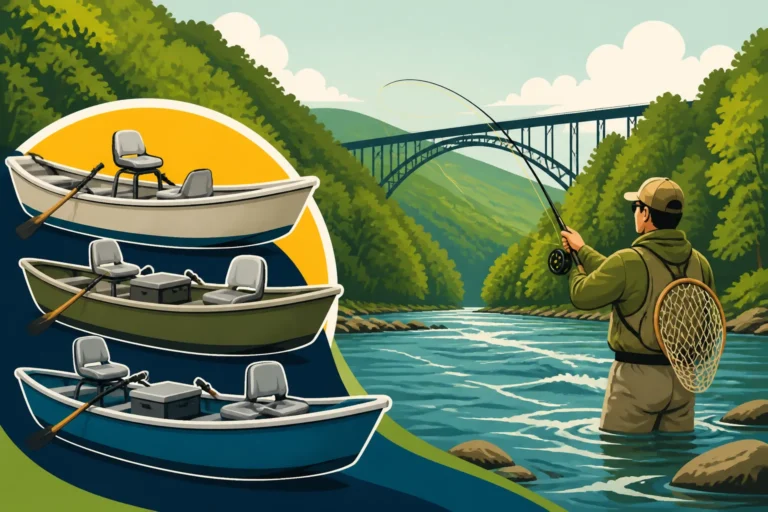
Larger Rivers: The New River is undoubtedly a prime candidate. Its vast expanse, deep pools, and diverse currents are perfect for swinging large flies for smallmouth bass (which can be surprisingly active in winter in deeper stretches) and, most notably, muskie. The New River also has sections within the New River Gorge National Park where you can explore its potential. Similarly, the Ohio River and its major tributaries like the Kanawha River offer expansive waters for muskie and even large catfish that might intercept a swinging fly. These rivers often have heavier flows in winter, which Skagit lines and two-handed rods are designed to handle, allowing you to present your fly to fish holding close to the bottom.
Tailwaters: Our cold-water tailwater fisheries, like the Elk River below Sutton Dam or the Gauley River below Summersville Dam (outside of whitewater release schedules), are also fantastic places to employ a two-handed rod for trout. These sections often maintain consistent cold temperatures and good flows throughout the winter, concentrating large rainbows, browns, and sometimes even golden rainbows. The longer reach of a two-handed rod allows you to effectively cover the wide, deep runs and seams that these larger trout often inhabit, especially when they're holding deep and feeding selectively. Elk River Trout Fishing offers some incredible opportunities for this technique.
Deep Pools: Regardless of the specific river, always look for deep, slow-moving pools, especially those with complex current seams or significant structure like submerged logs or large boulders. These are the winter holding lies where fish conserve energy and wait for an opportunistic meal. A two-handed rod excels at reaching these distant, deep pockets and keeping your fly in the strike zone for longer.
Target Species and Their Winter Habits
Understanding the behavior of your target species in winter is just as important as having the right gear. Fish are creatures of efficiency in cold water, and their habits reflect that.
Trout in Tailwaters: In places like the Elk River, trout will often hold in the deepest, slowest parts of runs and pools. Their metabolism slows down, so they're less likely to chase. A slowly swung streamer or weighted wet fly that drifts right into their holding lie can be irresistible. Focus on the transition zones between slow and fast water, or the deep troughs where current funnels food. Fly Fishing for Trout in West Virginia during these colder months often involves a slower presentation than in warmer seasons. They might take with a subtle "thump" rather than an aggressive tug, so stay attentive.
Muskie in Larger Rivers: Winter muskie fishing is not for the faint of heart, but it can produce some of the largest fish of the year. Muskie will often retreat to deeper, calmer areas, often near structural elements like rock ledges, sharp drop-offs, or log jams. They are still apex predators and will eat, but their feeding windows can be shorter and less frequent. The key is to put a large, slow-moving baitfish imitation right in front of them. The two-handed rod allows you to cast these big flies repeatedly and keep them in the strike zone longer. Muskie Fishing in West Virginia in winter requires patience, persistence, and the right tools for the job.
It's important to remember that fish activity can sometimes pick up during brief warm spells or periods of stable weather, even in winter. Pay attention to water temperature and weather patterns.
Safety and Practical Considerations for Winter Angling
Winter fishing in West Virginia, especially when wading larger rivers, presents unique safety challenges. Always prioritize your well-being.
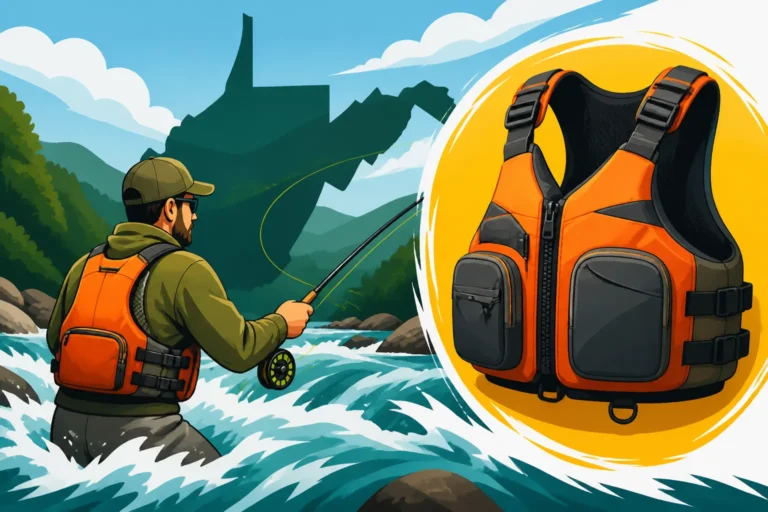
Wading Safety: Cold water is incredibly dangerous. Always wear appropriate chest waders, ideally insulated, and always wear a wading belt. Consider using a Best Wading Staff for Fast Current for added stability, as slick, icy rocks are common. If you're wading, know the river and its depths, and consider wearing a personal flotation device (PFD), especially on larger, faster flows like parts of the New River. Never wade alone, and always let someone know where you're going and when you expect to return.
Cold Protection: Layering is paramount. Wear moisture-wicking base layers, insulating mid-layers, and a waterproof/breathable outer shell. Insulated gloves, a warm hat, and hand warmers are essential. Frostbite can set in quickly. Keeping a thermos of a warm beverage can also do wonders for morale.
Accessibility: Winter can mean icy roads and limited access points. Check road conditions before you go. Some access roads to prime fishing spots might not be plowed or maintained. Always have a fully charged phone, extra batteries, and an emergency kit in your vehicle. West Virginia Fishing Season Dates and Closures can also impact where and when you can fish, so always check current regulations.
By carefully considering your gear, understanding fish behavior, and prioritizing safety, you can unlock some truly incredible winter fishing experiences in West Virginia with a two-handed rod. It's a challenging but deeply rewarding way to connect with the wild beauty of our mountain state, even in the coldest months.
Disclaimer
This article is for general informational purposes only and does not constitute professional advice. Laws, prices and regulations vary by location and change over time. Consult a qualified professional for guidance on your specific situation.