Best starter combo for a first-time angler
Stepping into the world of fishing in West Virginia can feel a bit overwhelming, especially when you're faced with endless options for rods, reels, and tackle. Many first-time anglers just want to get on the water without breaking the bank or feeling like they need an engineering degree to pick out gear. This guide will help you cut through the noise, explaining why a simple, well-chosen starter rod and reel combo is your absolute best bet for getting hooked on fishing in the Mountain State.
Why a Starter Rod and Reel Combo is Perfect for West Virginia Newcomers
When you're just dipping your toes into fishing, the sheer volume of gear available can be intimidating. Do you need a baitcasting reel? A fly rod? What length, what action, what power? It's enough to make anyone second-guess even starting. That's why a pre-matched rod and reel combo is such a godsend for beginners. These aren't just for kids; they're thoughtfully designed to take the guesswork out of pairing components, offering a balanced setup that's ready to hit most of West Virginia's diverse waters.
The Convenience Factor: Ready to Fish, Right Out of the Box
Imagine this: you've finally decided to give fishing a try, you head to the store or browse online, and you're met with walls of individual rods and reels. You might end up buying a heavy-duty rod perfect for muskie, but pair it with a tiny reel meant for panfish, and you've got a frustrating, unbalanced mess on your hands. A combo, on the other hand, comes as a harmonious unit. The rod's power and action are matched to the reel's size and line capacity, ensuring that everything works together as intended. This means less time worrying about technical specs and more time learning how to cast, retrieve, and (hopefully!) catch fish. You just need to add line and a few basic pieces of terminal tackle, and you're good to go. It truly simplifies that crucial first step onto the water.
Budget-Friendly Entry into the World of Angling
Let's be honest, fishing can be an expensive hobby if you let it. Buying a high-end rod and a top-of-the-line reel separately can easily cost hundreds, if not thousands, of dollars. For a first-timer who isn't even sure if they'll enjoy it, that's a huge commitment. Starter combos are specifically designed to be affordable. They offer decent quality and durability at a fraction of the cost of individual components, making them an accessible entry point. You can find excellent options that won't break the bank, leaving you more money for important things like your West Virginia Fishing License Guide for 2026 and, of course, plenty of bait! Many reputable brands, available at stores like Bass Pro Shops or online platforms like Amazon, offer fantastic value in their starter combos, ensuring you get a functional setup without having to mortgage the farm. This way, if fishing isn't quite your cup of tea, you haven't made a massive investment, but if you get hooked (pun intended!), you'll know what kind of gear you might want to upgrade to down the road.
Understanding Your Options: Spinning Combos for West Virginia Waters
While there are many types of fishing setups, for a true beginner in West Virginia, a spinning combo is almost always the answer. They are versatile, easy to use, and forgive a lot of the common mistakes new anglers make. This makes them perfect for chasing everything from trout in mountain streams to panfish in local ponds, and even smaller bass in our larger lakes and rivers.
Why Spinning Gear Reigns Supreme for Beginners
Spinning reels are incredibly intuitive to operate. Unlike baitcasting reels, which can be prone to frustrating "bird's nests" or backlashes if not cast correctly, spinning reels are much more forgiving. You simply open the bail, hold the line with your finger, cast, and then close the bail to start retrieving. This simplicity allows you to focus on learning casting mechanics, feeling bites, and fighting fish, rather than wrestling with your gear.
They're also incredibly versatile. A good medium-light or medium action spinning combo can handle a wide array of lures and baits, from small jigs and spinners to live worms and minnows. This means you don't need a specialized setup for every type of fish you might encounter in West Virginia's varied ecosystems. Want to try for brook trout in a small mountain stream? Your spinning combo can do it. Looking to catch some bluegill with your kids at a local pond? Perfect. Thinking of tossing some small crankbaits for bass at Summersville Lake? You're still in business. This adaptability makes them truly the Best Rod and Reel Combo for Beginners.
Rod Specifications: Length, Power, and Action Explained
Understanding a few key terms about your rod will help you choose the best starter combo. Don't worry, it's not as complicated as it sounds!
-
Length: For a general-purpose starter combo in West Virginia, a rod length between 6 and 7 feet is usually ideal.
- Shorter rods (6 feet or less): These are great for smaller streams with lots of overhead cover where you need to make precise, shorter casts. Think tight spots on a stocked trout stream.
- Longer rods (6.5 to 7 feet): These offer better casting distance and can handle slightly heavier lures. They're excellent for wider rivers like the Elk or fishing from shore on a lake. For many Best Shore Fishing Spots in West Virginia, a longer rod gives you that extra reach.
-
Power: This refers to how much force it takes to bend the rod. Common powers range from Ultralight to Heavy.
- Ultralight (UL): Super sensitive, perfect for tiny baits and small fish like panfish or smaller trout. You'll feel every nibble.
- Light (L): A great all-around choice for panfish, trout, and small bass. Still sensitive but with a bit more backbone than ultralight. This is often an excellent choice for a beginner's first rod.
- Medium-Light (ML): One of the most versatile choices. Can handle larger trout, crappie, and most average-sized smallmouth and largemouth bass you'll encounter.
- Medium (M): Good for slightly heavier baits and larger bass or catfish. Provides a good balance of sensitivity and power.
- For a starter, I'd strongly recommend Light or Medium-Light power. They offer a good balance for the most common fish in West Virginia without being too specialized.
-
Action: This describes where the rod bends when pressure is applied.
- Fast Action: The rod bends mostly in the tip section. This provides excellent sensitivity, allowing you to feel subtle bites, and quick hook sets. Great for artificial lures where you need to feel the bait's action.
- Moderate Action: The rod bends more in the upper half. This provides a softer bend, which is good for casting live bait (it won't rip the bait off the hook) and fighting fish that tend to pull hard, preventing hooks from tearing out.
- Slow Action: The rod bends throughout its entire length. These are typically found on fly rods or very specialized finesse spinning rods.
- For a beginner, a Moderate to Fast action is generally fine. Many all-purpose combos will lean towards moderate-fast, giving you a good blend of versatility. A moderate action is often more forgiving for casting, especially with live bait or lighter lures, while a fast action can offer a bit more control and sensitivity for working artificial baits.
Reel Size and Line Capacity: Matching Your Waters and Targets
The size of your spinning reel is often denoted by numbers like 1000, 2000, 2500, 3000, or 4000. These numbers generally correspond to the reel's physical size and its line capacity.
- 1000-2000 (or 10-20): These are smaller, lighter reels, perfect for ultralight or light rods. They're ideal for delicate presentations for trout and panfish. If you're planning on Best Gear for West Virginia Trout Fishing in smaller streams, a reel in this range will balance nicely with a lighter rod. The line capacity is lower, meaning you'll typically spool it with lighter line (4-6 lb test).
- 2500-3000 (or 25-30): This is often the sweet spot for a versatile beginner combo. These reels pair well with medium-light or medium rods and can hold enough 6-10 lb test line to handle most smallmouth and largemouth bass, larger trout, and crappie you'll encounter in West Virginia. This size offers a good balance of retrieve speed, casting distance, and fighting power for common catches.
- 4000 (or 40) and up: These are larger reels, typically for heavier rods, used for bigger fish like catfish or striped bass hybrids, or when fishing with heavier lines. While useful, they're probably more than a first-time angler needs for general purpose fishing.
When you buy a combo, the reel size will already be matched to the rod, which is the beauty of it! You'll likely find a 2500 or 3000 size reel on a 6.5-7 foot medium-light to medium rod, offering excellent all-around performance for most West Virginia fishing scenarios. Check the reel's spool for the recommended line weights and capacities; these will guide you on what line to buy.
Essential Tackle and Accessories for Your First West Virginia Fishing Trip
Once you have your rod and reel combo, you're not quite ready. Think of it like buying a car; it's great, but you still need gas, insurance, and maybe a map! The same goes for fishing. You'll need some basic tackle, a way to carry it, and a few safety items.
Building Your Basic Tackle Box: Hooks, Sinkers, Bobbers, and Baits
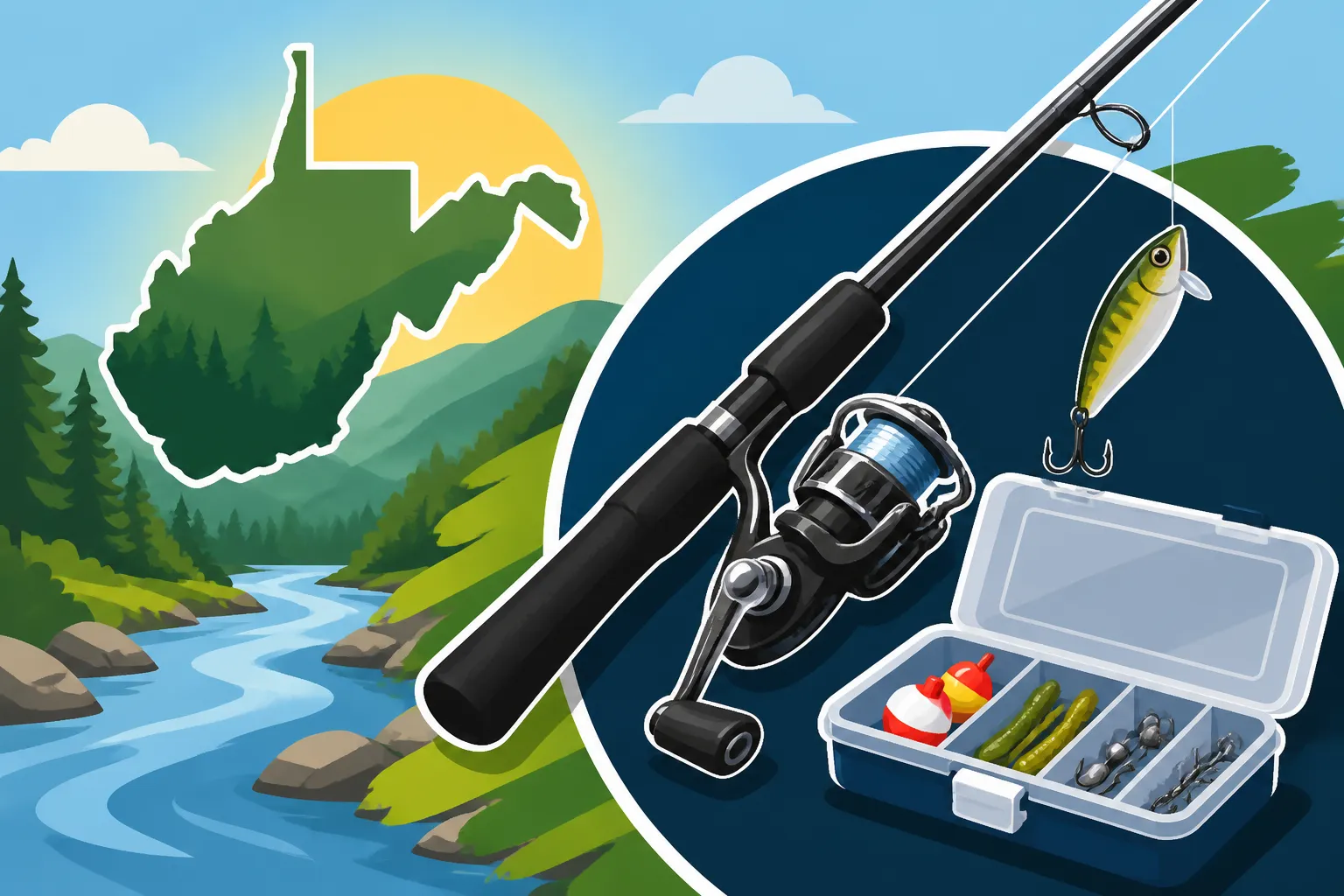
A small tackle box or a Best Tackle Bag for Bank Fishing is all you need to start. You don't need a thousand different lures. For a beginner, simplicity and effectiveness are key.
Here’s a breakdown of what to include:
-
Hooks: Start with a variety of sizes.
- Small hooks (size 10-14): Perfect for panfish (bluegill, crappie) and smaller trout. These are often used with worms or small pieces of corn/PowerBait.
- Medium hooks (size 6-8): Good all-around size for larger trout, crappie, and small bass.
- Larger hooks (size 1-2 or 1/0-2/0): For bigger bass or catfish.
- Consider both bait holder hooks (which have barbs on the shank to keep bait on) and worm hooks (for rigging plastic worms). Circle hooks are also great for beginners, especially for catfish, as they often result in fish being hooked in the corner of the mouth, making for easier release.
-
Sinkers (Weights): These help get your bait down to where the fish are.
- Split shot: Small, round weights you can pinch onto your line. Get an assortment of sizes. Great for adding just a little weight to a bobber rig or keeping a worm near the bottom in light current.
- Bullet weights: Tapered weights, often used for Texas-rigging plastic worms for bass.
- Egg sinkers or Walking Sinkers: Good for bottom fishing for catfish, as the line can slide through, allowing the fish to pick up the bait without feeling the weight immediately.
- Start with an assortment of split shot and perhaps a few small egg sinkers.
-
Bobbers (Floats): These are fantastic for beginners, especially when targeting panfish or trout in calm waters. They keep your bait at a specific depth and signal when a fish bites by dipping or moving.
- Red and white clip-on bobbers: Classic and easy to use.
- Slip bobbers: A bit more advanced but allow you to fish deeper waters without needing a really long leader. A small stopper knot on your line sets the depth.
-
Swivels: Small metal devices that prevent your line from twisting, especially when using spinning lures. A small pack of barrel swivels or snap swivels (which allow for quick lure changes) is handy.
-
Lures: While live bait is often easiest for beginners, having a few simple lures can be fun.
- Inline spinners (e.g., Mepps, Rooster Tail): Effective for trout and smallmouth bass. Get a few in different colors (silver, gold, black, chartreuse).
- Small jigs (1/16 oz to 1/8 oz): With soft plastic bodies (grubs, curly tails) can catch almost anything. White, chartreuse, and black are good starting colors. These are excellent for Best Tackle for Panfish.
- Soft plastic worms or creatures: Rigged on a small hook with a bullet weight, these are bass magnets.
-
Bait: Don't overthink it!
- Live worms (nightcrawlers or red wigglers): The universal bait. Everything eats a worm.
- PowerBait or similar dough baits: Especially effective for stocked trout. Look for bright colors. Best Bait for Opening Day Trout in West Virginia often involves these types of baits.
- Corn: Believe it or not, corn is a fantastic bait for panfish and trout, especially in heavily stocked waters.
Safety and Comfort: The Non-Negotiables for a Great Day Out
Fishing is supposed to be fun and relaxing, but it’s still important to be prepared for the elements and potential hazards.
- Fishing License: This is non-negotiable. If you're 15 years or older, you need one. You can typically get one easily online through services like WVhunt.com or at many local bait shops and retailers. Read up on West Virginia Fishing License Age Requirements and make sure you're legal.
- Pliers/Forceps: Essential for removing hooks from fish, especially if they've swallowed the hook a bit deep. This protects both you (from getting hooked) and the fish (for safe release).
- Sun Protection: Hat, sunglasses (polarized sunglasses are amazing for seeing into the water!), and sunscreen. West Virginia sun can be intense, even on cloudy days.
- Bug Spray: Depending on the season and location, mosquitoes and gnats can make a peaceful day miserable.
- Water and Snacks: Stay hydrated, especially during warmer months. Fishing takes energy!
- First-Aid Kit: A small kit with bandages, antiseptic wipes, and pain relievers can handle minor cuts, scrapes, or hook pokes.
- Appropriate Clothing: Dress in layers. West Virginia weather can change quickly. Waterproof rain gear is always a good idea to have on hand.
- Map/Navigation: If you're exploring new spots, a physical map or reliable GPS on your phone can be vital. Many New River Gorge Fishing Guide resources will highlight specific access points that can be tricky to find without guidance.
Getting Started: Setting Up and Finding Your First West Virginia Fishing Spot
You've got your combo, your basic tackle, and your license. Now for the exciting part: putting it all together and heading out! Don't let the idea of setting up your gear intimidate you; it's simpler than you think.
Spooling Your Line and Tying Basic Knots
Most starter combos don't come with line already on the reel, so this will be your first task.
- Choose Your Line: For a versatile beginner setup, a good quality monofilament fishing line in 6-10 lb test is perfect. Monofilament is inexpensive, easy to tie, and has some stretch, which can be forgiving for new anglers. Many combos will have a recommended line weight printed on the rod blank or reel.
- Spooling the Reel: This is best done with a helper. Have your friend hold the spool of new line with a pencil or dowel, allowing it to spin freely. You'll tie the end of the line to the reel's spool (using an arbor knot or simple overhand knot), close the bail, and then reel in the line under slight tension. Make sure the line is coming off the spool in the same direction it's going onto your reel to prevent twisting. Fill the spool until it's about 1/8 inch from the edge; don't overfill!
- Tying Basic Knots: You only need a couple of knots to start:
- Improved Clinch Knot: This is your go-to knot for tying hooks, swivels, and lures to your fishing line. It's strong and relatively easy to learn. Practice it a few times at home with a piece of string.
- Palomar Knot: Another excellent, strong knot, particularly good for braided line (if you ever graduate to that), but also works well with mono. It's a bit different to tie, but very reliable.
- There are tons of YouTube videos and diagrams available that can walk you through these knots step-by-step. Don't leave for the water without practicing these first!
Where to Cast Your First Line in the Mountain State
West Virginia is truly a fishing paradise, offering incredible opportunities for beginners. Start simple, close to home, and where success is more likely.
- Stocked Trout Waters: The West Virginia Division of Natural Resources (WVDNR) regularly stocks numerous lakes, ponds, and streams across the state with rainbow and golden rainbow trout. These waters are often easily accessible and provide excellent opportunities for beginners to catch fish. You can find the West Virginia Trout Stocking Hotline and Schedule to plan your trip around recent stockings. Many state parks and public access sites will have designated fishing areas.
- Local Ponds and Community Fishing Lakes: These smaller bodies of water, often found in parks or wildlife management areas, are perfect for targeting sunfish (bluegill, crappie) and sometimes smaller bass. They're usually easy to navigate, often have amenities like piers or bank access, and the fish are typically abundant and willing to bite a simple worm under a bobber. Check out some resources on Best Shore Fishing Spots in West Virginia for ideas near you.
- Calm River Sections: While some of West Virginia's rivers can be fast and challenging, many have calmer sections, especially in tributaries or slower pools, that are great for beginners. The Greenbrier River, for example, has many easily accessible stretches for smallmouth bass and panfish. Focus on areas with slower currents, eddies, or structure like downed trees.
- Fishing with Friends or Family: One of the best ways to learn is by going with someone more experienced. They can help you with casting, knot tying, and identifying good fishing spots. Plus, it's just more fun!
Remember, the goal for your first few trips is to enjoy the outdoors, learn the basics of your gear, and hopefully feel the tug of a fish on your line. Don't worry about catching a record-breaker right away. The Mountain State has endless opportunities for anglers of all skill levels, and with a good starter combo, you're well on your way to becoming a seasoned West Virginia angler.
| Rod Power Recommended | Ideal Reel Size | Recommended Line (Mono) | Primary Target Species | Example Waters in WV |
|---|---|---|---|---|
| Ultralight | 1000-2000 | 4-6 lb | Panfish, Small Trout | Small ponds, tiny creeks, stocked trout waters |
| Light | 2000-2500 | 6-8 lb | Trout, Crappie, Bluegill, Smaller Bass | Stocked streams, community lakes, slow river pools |
| Medium-Light | 2500-3000 | 6-10 lb | Bass (Smallmouth/Largemouth), Larger Trout, Walleye | Larger lakes (e.g., Summersville), medium-sized rivers (e.g., Elk, New) |
| Medium | 3000-4000 | 8-12 lb | Larger Bass, Catfish, Hybrid Stripers | Bigger rivers (e.g., Kanawha), larger reservoirs |
Disclaimer
This article is for general informational purposes only and does not constitute professional advice. Laws, prices and regulations vary by location and change over time. Consult a qualified professional for guidance on your specific situation.