Best Sunglasses for Sight Fishing Clear Rivers
There's nothing quite as frustrating as standing on the bank of a beautiful West Virginia river, knowing the fish are there, but simply not being able to see them. That relentless glare bouncing off the water's surface can turn what should be an exciting visual hunt into a squinting match, leaving you guessing where your next cast should land. This guide is here to cut through that glare, literally, by helping you understand and choose the best sunglasses specifically designed for sight fishing our incredible clear rivers.
Why Sunglasses Are Absolutely Essential for Sight Fishing in West Virginia
You might think a cheap pair of sunglasses is enough to cut down on brightness, but for sight fishing, you need much more. We're talking about a tool that significantly enhances your ability to locate fish, read the river, and protect your eyes during long days on the water. It's not just about looking cool; it's about gaining a critical advantage.
Cutting Through Glare and Seeing Deeper
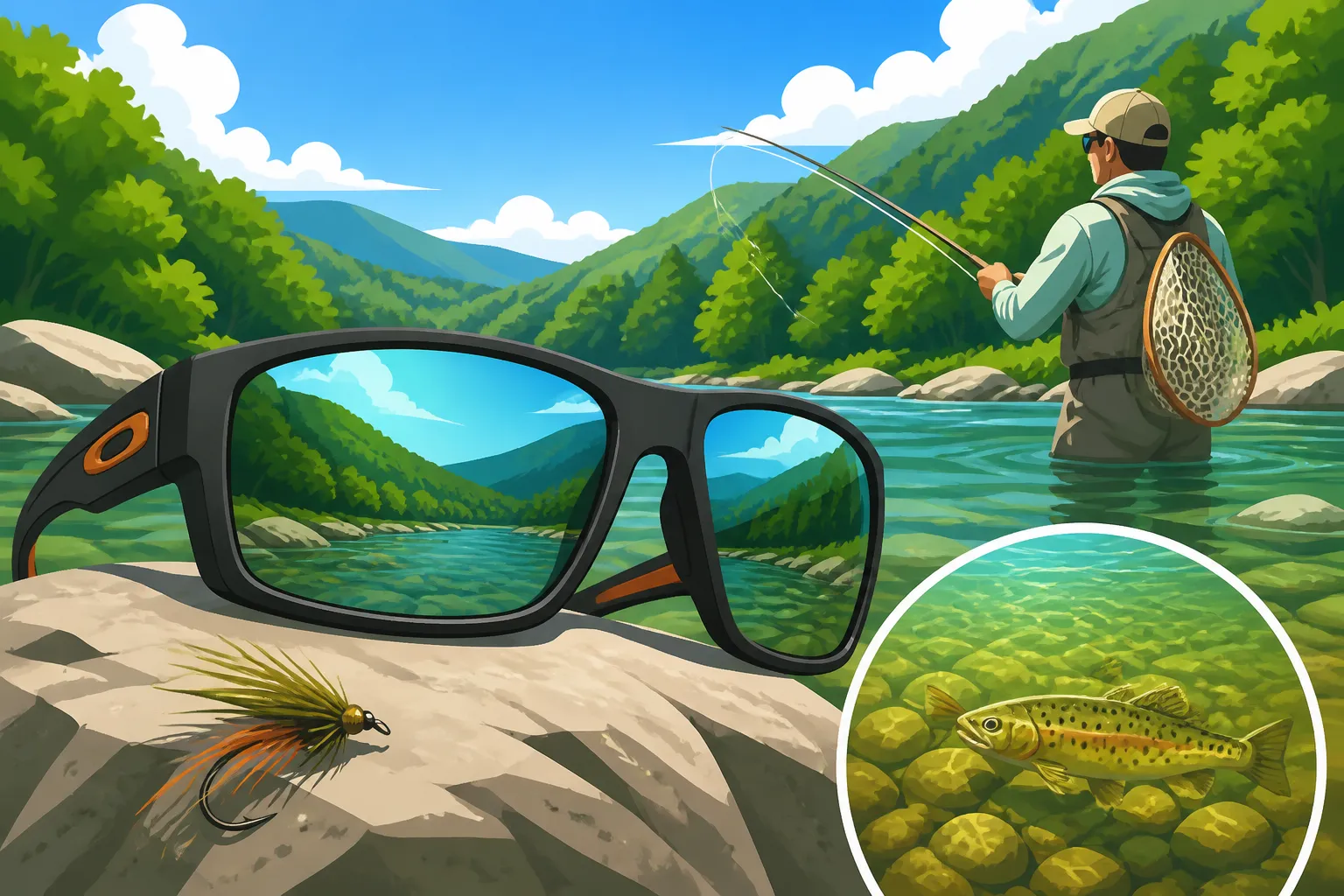
Imagine trying to spot a subtle flash of a smallmouth bass in the current of the New River, or the faint outline of a brown trout holding in the clear waters of the Elk River. Without the right sunglasses, the water surface is often a shimmering, reflective mirror. That intense glare, caused by sunlight hitting the water at an angle, effectively creates a barrier between your eyes and what's beneath. Properly polarized sunglasses are designed specifically to filter out this horizontal glare, allowing you to "see through" the surface tension. It's like turning on a superpower that reveals submerged rocks, fallen logs, weed lines, and, most importantly, the fish themselves. This ability to spot structure and fish at greater depths and distances means more accurate casts and a much higher chance of success. It transforms your fishing experience from blind casting to a more strategic, visual pursuit.
Eye Protection from UV Rays and Hazards
Beyond the obvious advantage of seeing fish, good fishing sunglasses offer crucial protection for your eyes. Our West Virginia sun, even on partially cloudy days, emits harmful ultraviolet (UV) radiation that can lead to long-term eye damage, including cataracts and macular degeneration. High-quality fishing sunglasses come with UV protection built into the lenses, often blocking 100% of UVA and UVB rays. Think about all those hours you spend outdoors, especially with the sun reflecting off the water – that's a double whammy for your eyes. Moreover, when you're casting, wading, or navigating brushy banks, your eyes are vulnerable to physical hazards. A stray fly, a snapping branch, or a hook whipping back can cause serious injury. Robust lenses, often made from impact-resistant materials like polycarbonate, act as a physical shield, providing an essential layer of safety that generic eyewear simply can't match.
Reducing Eye Strain for Longer Days
Spending hours staring at the water, squinting against the sun, takes a toll. Even if you don't realize it, the constant effort to filter out glare and process visual information leads to eye fatigue. This can manifest as headaches, blurred vision, and general discomfort, cutting your fishing day short and diminishing your enjoyment. The right pair of sunglasses actively reduces this strain by doing the hard work for your eyes. By eliminating glare and enhancing contrast, they allow your eyes to relax and focus more effectively. This means you can stay out on the water longer, maintain your concentration, and enjoy the experience without the nagging discomfort of tired eyes. When you're trying to How to Catch Smallmouth Bass in West Virginia Rivers all day, comfort and clear vision make all the difference.
Understanding Polarization and Lens Colors
When it comes to fishing sunglasses, not all lenses are created equal. The two most critical factors are polarization and lens color, each playing a distinct role in how well you can see beneath the water's surface in our clear mountain streams.
The Magic of Polarization: How It Works
Polarization is the absolute non-negotiable feature for any serious angler. Without it, your sunglasses are just tinted lenses. So, how does this magic work? When sunlight hits a flat surface like water, it scatters in all directions. Some light travels vertically, allowing you to see objects, but a significant portion bounces horizontally, creating that blinding glare we all know and hate. Polarized lenses have a special chemical filter that's designed to absorb these horizontal light waves while allowing vertical light waves to pass through. Think of it like a tiny venetian blind for your eyes. This selective filtering dramatically reduces the surface glare, making the water appear transparent and allowing you to literally see through the reflections. Without polarization, you'd still be battling the shimmer, making it nearly impossible to spot a subtle rise or a trout darting under a log. It’s what transforms a bright, reflective surface into a window to the underwater world.
Lens Color Deep Dive: What Works Best Where
Choosing the right lens color is almost as important as having polarization, as different tints excel in different light and water conditions. It's not about fashion; it's about optimizing your vision for the specific environment.
- Amber/Brown/Copper: These are arguably the most versatile and popular lens colors for freshwater fishing, especially in West Virginia's rivers. They excel in a wide range of conditions, from bright sun to moderate cloud cover. These warm tints enhance contrast, making it easier to distinguish fish from their surroundings, especially against sandy or rocky bottoms. They're fantastic for spotting smallmouth bass on the New River Smallmouth Bass Fishing or trout in a riffle. If you could only have one pair, a good amber or copper lens is usually the safest bet for our local waters.
- Gray/Green: Gray lenses offer true color perception and are best suited for extremely bright, sunny conditions where you need maximum light reduction without color distortion. Think open lakes or wide rivers under a high noon sun. They’re less about enhancing contrast and more about reducing overall brightness and glare. Green lenses are often a variation that combines the glare reduction of gray with some contrast enhancement, making them a good option for a mix of bright and partly cloudy conditions, often preferred for inshore saltwater but still effective in some bright freshwater scenarios.
- Yellow/Rose: These lighter tints are specifically designed for low-light conditions, such as early morning, late evening, or heavily overcast days. They significantly brighten your field of vision and enhance contrast in dim light, which can be invaluable when trying to pick out a dark shadow against a dark bottom. However, they are generally not suitable for bright conditions as they don't block enough light and can cause eye strain.
- Blue Mirror/Green Mirror: These are typically gray or copper/amber base lenses with a mirror coating applied to the outside. The mirror coating reflects more light, reducing visible light transmission (VLT) and offering extra glare protection. Blue mirrors are often paired with gray bases and are excellent for extremely bright, open water, like offshore fishing, but can also be useful on large, clear rivers on blindingly sunny days. Green mirrors are often paired with copper or brown bases, making them very popular for freshwater, enhancing contrast while providing superior glare reduction.
Consider the typical conditions you'll encounter on your favorite stretch of the South Branch Potomac or the Cranberry River. Do you mostly fish on bright, sunny days, or do you prefer the softer light of dawn and dusk? Matching the lens color to these conditions will make a huge difference.
Material Matters: Glass vs. Polycarbonate
The material of your lenses impacts clarity, durability, and weight, all crucial factors for anglers.
- Glass Lenses: Often touted as offering the absolute best optical clarity, glass lenses provide virtually distortion-free vision. This superior clarity can be a significant advantage when you're trying to pick out subtle details underwater. However, glass is heavier than polycarbonate and, while highly scratch-resistant, it can shatter upon heavy impact, posing a safety risk. For those who prioritize pristine vision and are willing to sacrifice a bit of weight and impact resistance, glass is an excellent choice. Many premium brands offer glass options.
- Polycarbonate Lenses: This material is the workhorse of sports optics. Polycarbonate is significantly lighter than glass, making sunglasses more comfortable for extended wear. More importantly, it's highly impact-resistant, making it a safer choice, especially for active anglers or those wading slippery rivers. While not quite as optically perfect as glass, modern polycarbonate lenses have come a long way in reducing distortion and maintaining excellent clarity. They are also generally more affordable. For most West Virginia anglers, the combination of lighter weight, excellent clarity, and superior impact resistance makes polycarbonate a very practical and popular choice.
Here's a quick comparison of popular lens colors and their best uses for West Virginia fishing:
| Lens Color | Best Light Conditions | Best Water Conditions | Primary Benefit | Typical Base Color |
|---|---|---|---|---|
| Amber/Copper | Bright to Partly Cloudy | Clear to Slightly Stained Rivers | High Contrast, Depth | Brown/Red |
| Gray | Very Bright, Full Sun | Open Water, Large Rivers | True Color, Glare Reduction | Black |
| Green Mirror | Bright to Moderate Sun | Clear Rivers, Varied Structure | Glare Reduction, Contrast | Copper/Amber |
| Yellow/Rose | Low Light, Overcast, Dawn/Dusk | Shady Areas, Murky Water | Brightens, Enhances Contrast | Yellow/Pink |
| Blue Mirror | Extremely Bright, Intense Sun | Open Water, Large Lakes | Maximum Glare Protection | Gray |
Key Features to Look For in Fishing Sunglasses
Beyond polarization and lens color, several other features can dramatically impact the performance, comfort, and longevity of your fishing sunglasses. Don't overlook these details; they can make a real difference in your angling success and enjoyment.
Frame Design and Fit: Comfort is King
You'll be wearing these glasses for hours on end, often in dynamic conditions. A comfortable, secure fit is paramount.
- Wraparound Style: For fishing, a wraparound frame design is highly recommended. These frames curve around your face, providing maximum coverage. This not only blocks peripheral glare that can sneak in from the sides but also offers superior protection from wind, spray, and errant hooks. Less light getting in means better vision.
- Lightweight Materials: Frames made from lightweight, durable materials like nylon, TR90, or proprietary composites reduce pressure points and prevent fatigue on your nose and ears. Look for flexible frames that can withstand a bit of bending without snapping, which is inevitable when you're active on the water.
- Rubberized Grips: Many quality fishing sunglasses feature rubberized nose pads and temple tips. These are crucial for keeping your glasses securely in place, even when your face is sweaty or wet. There's nothing worse than constantly pushing your sunglasses back up your nose or having them slip off when you lean over to net a fish. Brands like Costa Del Mar and Maui Jim often excel in ergonomic designs with excellent grip.
- Vented Frames: Some frames incorporate small vents to prevent fogging, especially important when moving from a cold boat into warmer air, or when you're exerting yourself. Fogged lenses are useless lenses, so this can be a real game-changer.
- Fit for Your Face: Everyone's face is different. If possible, try on several pairs to ensure a snug but not tight fit. Glasses that are too loose will slide; too tight, and they'll cause discomfort. Pay attention to how the frame rests on your nose and ears, and whether the lenses are close enough to your face to prevent light leakage without touching your eyelashes. Many specialty outdoor retailers like Bass Pro Shops will have a good selection to try on.
VLT Visible Light Transmission Explained
VLT, or Visible Light Transmission, is a percentage that indicates how much light passes through a sunglass lens. Understanding VLT helps you choose lenses appropriate for different light conditions.
- Low VLT (8-18%): Lenses with a low VLT are very dark and are designed for extremely bright, sunny conditions. These are ideal for those blinding summer days on open water or very wide, exposed rivers where the sun is relentless. Blue mirror and some very dark gray or green lenses typically fall into this category. They effectively reduce eye strain in intense light.
- Medium VLT (18-30%): This range is considered versatile and works well for a mix of bright and partly cloudy conditions. Most amber, copper, and green mirror lenses fall here, offering a good balance of glare reduction and contrast enhancement for general purpose fishing, especially in varying West Virginia river environments.
- High VLT (30% +): Lenses with a higher VLT are lighter and allow more light to pass through. These are best for low-light situations like early mornings, late evenings, heavy overcast days, or fishing in heavily shaded areas. Yellow or rose-tinted lenses will be in this range, designed to brighten your vision rather than significantly dim it.
Consider the typical light levels you fish in. If you're a fair-weather angler who always seeks bright sunshine, a lower VLT is key. If you're out at dawn and dusk, or often fish on cloudy days, a higher VLT will serve you better.
Hydrophobic and Oleophobic Coatings
These fancy-sounding coatings are incredibly practical and will make your fishing life much easier.
- Hydrophobic Coatings: These coatings repel water. When water splashes onto a hydrophobic lens, it beads up and rolls off rather than smearing. This is invaluable when you're splashing around, dealing with rain, or even just sweat. Clear vision is maintained, and you spend less time wiping your lenses.
- Oleophobic Coatings: These repel oils and smudges. They prevent natural oils from your skin, sunscreen, or fish slime from sticking to the lens, making them much easier to clean. Fingerprints wipe away with less effort, leaving you with a clearer view.
Having both of these coatings significantly improves visibility and reduces maintenance, allowing you to focus on fishing rather than struggling with dirty lenses. Many reputable sunglass brands include these as standard features on their fishing-specific models.
Matching Your Sunglasses to West Virginia's Clear River Conditions
West Virginia's rivers offer a diverse range of fishing experiences, from wide, open stretches to narrow, shaded mountain brooks. The optimal sunglasses will vary depending on the specific conditions you're facing. Understanding these nuances can help you pick the perfect pair for your next adventure on waters like the New River Gorge or the Elk River.
Bright Sun on Shallow Riffles
Imagine a brilliant summer day on the South Branch Potomac, where the sun is high and intense, beating down on shallow, clear riffles. This is where glare is at its absolute worst, and being able to spot trout or smallmouth holding in the current requires maximum glare reduction.
- Lens Choice: For these conditions, you'll want a lens that combines strong polarization with a lower Visible Light Transmission (VLT). A dark amber, copper, or green mirror lens with a brown/copper base is often the top choice. These colors enhance contrast against the bright, rocky bottoms common in West Virginia's clear rivers, making it easier to pick out subtle movements or the distinct shape of a fish. The mirror coating provides an extra layer of glare protection by reflecting a significant portion of the incoming light.
- Why it works: The intense sunlight hitting the shallow, agitated water creates a shimmering surface that's almost impossible to see through without powerful polarization. The specific tint helps you differentiate fish from the bright, mottled riverbed. For example, trying to spot a trout in the fast, clear current of the Shavers Fork on a sunny afternoon would be a futile exercise without a lens that cuts this glare efficiently and enhances the fish's outline. When you're trying to nail down Fly Fishing for Trout in West Virginia in these conditions, clear vision is paramount.
Cloudy Days and Low Light Conditions
Not every fishing day is a bluebird day. West Virginia often delivers overcast skies, misty mornings, or late evenings when the light is dim. These conditions present a different challenge: maximizing available light while still eliminating what little glare might exist.
- Lens Choice: When the sky is heavily overcast, or you're fishing at dawn or dusk, a yellow or rose-tinted lens with a higher VLT (allowing more light through) can be incredibly effective. While these might not be as dark as your sunny-day pair, their primary function is to brighten your field of vision and significantly boost contrast. Even on cloudy days, there's often enough diffused light to create subtle glare, especially on calm water.
- Why it works: These lighter tints help to "punch through" the flat, dull light of an overcast day. They make shadows more distinct and can help illuminate fish that might otherwise blend into the subdued surroundings. For example, trying to spot crappie in the shadows of a submerged tree on Burnsville Lake during an overcast morning requires a lens that maximizes contrast in dim light. Similarly, for Best Techniques for Low Clear Water Conditions where fish might be spooky, having that enhanced vision in lower light gives you an edge.
Dealing with Deep Pools and Shady Banks
West Virginia rivers like the Greenbrier often feature a mix of sun-drenched stretches and deep, shaded pools or banks overhung with dense foliage. These varying light conditions within a single stretch of river can make choosing sunglasses tricky.
- Lens Choice: For these mixed conditions, a versatile amber, copper, or light green mirror lens (with a moderate VLT) is usually your best bet. These colors offer a good balance: they're dark enough to handle the brighter spots, but their contrast-enhancing properties also help in the lower light of shaded areas.
- Why it works: The challenge here is the dynamic shift in light. As you move from bright sun into deep shade, a very dark lens might make it too dim to see, while a very light lens won't cut the glare in the sun. A mid-range amber or copper lens provides enough versatility to adapt without constantly switching glasses. You need to be able to peer into the dark recesses under an undercut bank for a lurking muskie and then scan an open riffle just moments later. Having polarized lenses that adapt to these shifts is key. When fishing the intricate structures of rivers, the ability to see clearly into varying light levels is a huge asset.
Specific River Examples: New River, South Branch Potomac, Elk River
Let's put this into a West Virginia context.
- New River: Known for its vast, powerful flows and a mix of wide-open stretches and deeper, canyon-like sections, the New River demands robust optics. For the bright, sunny days and open water, especially if you're targeting smallmouth bass on the New River Smallmouth Bass Fishing, a darker copper or green mirror lens with excellent glare reduction will be your ally. The intense sunlight on this expansive river requires significant VLT reduction. If you're deep in the gorge on an overcast day, a lighter amber might be more beneficial to penetrate the shadowed areas.
- South Branch Potomac: This river is famous for its clear, wadable waters and excellent smallmouth and trout fishing. It often has a mix of open fields and treelined banks. For the predominantly clear conditions and varying light, an amber or copper lens is a fantastic all-around choice. Its ability to enhance contrast makes spotting fish against the often gravelly or rocky bottom very effective. You'll be using this to pick out fish against the bottom in clear, shallow sections, and its versatility handles both sunny and partly cloudy conditions well.
- Elk River: Especially the famed tailwater section, the Elk River is often clearer and colder, with a strong focus on trout. Many anglers here prefer Fly Fishing for Trout in West Virginia and require keen eyesight. An amber or rose lens is often favored for its contrast-enhancing properties, particularly useful for spotting subtle trout movements in clear, moving water. On extremely bright days, a copper or light green mirror might be better, but for general trout fishing, especially if you're Euro nymphing, the contrast of amber can't be beat.
Consider the time of year and day you plan to fish, as well as the specific characteristics of the river. Having one versatile pair, perhaps an amber/copper, is a great start. But serious anglers might benefit from having a second pair with a different lens color for specific low-light or extremely bright conditions.
Care and Maintenance for Longevity
Investing in a good pair of fishing sunglasses is like investing in any other piece of critical gear – to make them last and perform their best, you need to take care of them. Neglecting your sunglasses can quickly lead to scratched lenses, loose frames, and diminished performance, turning a valuable tool into a frustrating hindrance.
Proper Cleaning Techniques
It might seem obvious, but there's a right way and a wrong way to clean your lenses. Grabbing the tail of your shirt or wiping them with a dry, abrasive cloth is a surefire way to scratch those precious coatings.
- Rinse First: Always start by rinsing your lenses under cool, fresh water. This is critical for dislodging any larger particles of dirt, dust, sand, or salt (if you've been on brackish waters) that could act like sandpaper when you wipe.
- Use the Right Solution: For a thorough cleaning, use a dedicated lens cleaning spray or a mild soap (like dish soap) diluted with water. Apply a small amount to the lenses and gently rub with your fingertips.
- Soft Cloth is Key: Dry your lenses with a clean, soft microfiber cloth. These cloths are designed to trap dirt without scratching the lens surface. Avoid paper towels, tissues, or rough fabrics, as their fibers can be surprisingly abrasive.
- Don't Forget the Frame: Wipe down the frame as well, especially the nose pads and temple tips, where sweat and grime can accumulate. This helps maintain the frame's integrity and prevents unpleasant odors.
- Avoid Harsh Chemicals: Never use window cleaner, ammonia-based cleaners, or other harsh chemicals, as these can strip away protective coatings on your lenses.
A little bit of consistent, gentle care goes a long way in preserving the clarity and longevity of your lenses. If you've been on a dusty trail to access a remote section of the New River Gorge Fishing Guide, make sure to rinse off that grit before wiping.
Storage and Protection
How you store your sunglasses when you're not wearing them is just as important as how you clean them.
- Hard Case is Best: Always store your sunglasses in a hard case when they're not on your face or hanging securely. This protects them from being crushed, stepped on, or rattling around and getting scratched by other items in your bag or boat.
- Soft Pouch for Quick Access: Many sunglasses come with a soft microfiber pouch. This is great for an immediate, gentle wipe and for protecting them inside a hard case, but don't rely on it as the sole protection against impacts. It's also handy if you quickly stash them in your Best Tackle Bag for Bank Fishing for a short hike.
- Keep Them Off Your Head: While it's convenient, resting your sunglasses on top of your head can stretch the frame, causing them to lose their snug fit. It also exposes the lenses to hair products and oils, making them dirtier. Plus, they're much more likely to fall off and get damaged.
- Avoid Extreme Temperatures: Leaving your sunglasses on the dashboard of a hot car can cause lens coatings to degrade, frames to warp, or glue to loosen. Extreme cold can also make frames brittle. Always store them in a temperate environment.
- Secure Retainers: For active fishing, especially on West Virginia's rivers where a sudden splash or quick movement can send your shades overboard, a retainer strap is a wise investment. Companies like Chums and Croakies offer various styles that keep your glasses securely around your neck, preventing accidental loss. This is especially true if you're navigating rapids in a Best Kayak for the New River.
Recognizing When It's Time for a New Pair
Even with the best care, sunglasses don't last forever. Knowing when to replace them can save you frustration and ensure you're always fishing with optimal vision.
- Deep Scratches: While minor surface scratches are annoying, deep scratches that interfere with your line of sight are a clear sign it's time for new lenses or a new pair. These can distort vision, cause eye strain, and compromise overall performance.
- Delaminating Coatings: If you notice your lenses starting to peel, bubble, or show signs of the polarized or mirror coating separating, their effectiveness is severely compromised. This often appears as cloudy or blurry spots that won't clean off.
- Loose or Broken Frames: A frame that no longer fits securely, constantly slips, or has broken hinges might be repairable, but often it's a sign that the structural integrity is failing. A wobbly pair of glasses is distracting and unreliable.
- Outdated Technology: Sunglass technology, especially regarding lens coatings and materials, continues to improve. If your current pair is very old, you might be missing out on significant advancements in clarity, durability, and UV protection.
- Diminished Performance: If you find yourself squinting more, experiencing more eye strain, or struggling to see fish where you once could, it might be that your current sunglasses are no longer performing as they should. Over time, UV protection can degrade, or minor, unnoticeable damage can accumulate, reducing their effectiveness.
Remember, your sunglasses are a vital piece of fishing gear. Treating them with respect ensures they'll continue to provide that crucial advantage on the water for many seasons to come. When it's time for a refresh, check out the latest models online at Amazon or your local Bass Pro Shops for a wide selection.
Disclaimer
This article is for general informational purposes only and does not constitute professional advice. Laws, prices and regulations vary by location and change over time. Consult a qualified professional for guidance on your specific situation.