Best Landing Net for Muskie
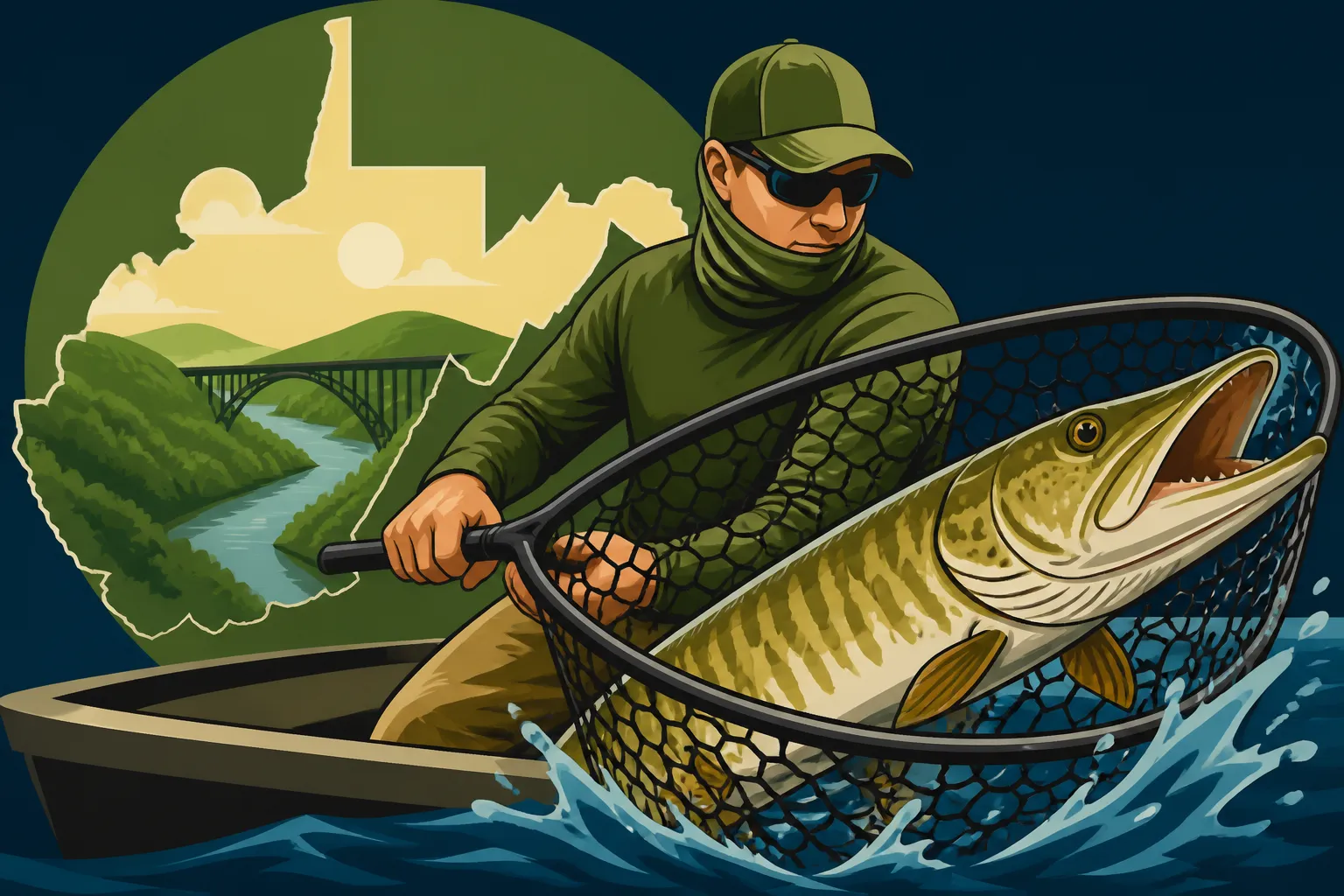
There are few things as heart-wrenching in the angling world as battling a colossal muskie, getting it boatside, and then watching it slip away because you simply don't have the right equipment to bring it aboard. It's a truly frustrating experience, often leaving you replaying the moment and wondering what could have been. This guide is here to ensure that when you connect with that fish of a thousand casts on West Virginia's legendary waters, you're fully prepared to land it safely and efficiently, focusing specifically on finding the best landing net for muskie fishing.
Why a Specialized Muskie Net is Non-Negotiable
When you're chasing muskie, you're not just fishing; you're hunting one of the apex predators of our freshwater systems. These are powerful, toothy, and often massive fish that demand respect and the right tools. Trying to subdue a muskie with a standard bass or trout net is like bringing a butter knife to a sword fight – it simply won't work, and it can be dangerous for both you and the fish.
The Sheer Size and Power of a Muskie
West Virginia is home to some incredible muskie fishing, with anglers frequently encountering fish in the 40-inch class and occasionally pushing into the 50-inch range. A muskie of that size isn't just long; it's thick, incredibly muscular, and surprisingly heavy. Imagine trying to net a fully grown German Shepherd that's thrashing violently, and you're getting close to the challenge. Their sheer weight and powerful tail kicks can easily overwhelm a flimsy net frame, bending the hoop or snapping the handle in an instant.
Moreover, a muskie's fighting spirit doesn't magically vanish once it's near the boat. Often, these fish will make one last, explosive run, or head shake violently, trying to throw the hook. If your net isn't substantial enough to withstand this, you risk the fish breaking free, taking your lure with it, or worse, injuring itself by repeatedly crashing against the boat or shallow water. Having a net that can completely engulf the fish is paramount, allowing you to control its movements and bring it into the boat without undue stress.
Protecting Both Angler and Fish: Safety First
Muskie are often called "fish of 10,000 teeth" for good reason. Their mouths are packed with razor-sharp canines, and their gill plates can be equally dangerous, capable of inflicting serious cuts. Trying to grab a large, thrashing muskie by hand is an invitation to the emergency room. A proper muskie net acts as a critical barrier, protecting your hands, arms, and other exposed skin from those formidable defenses.
Beyond angler safety, using the correct net is vital for the health and survival of the muskie, especially since many anglers practice catch and release for these magnificent creatures. Flimsy or incorrect netting can strip a muskie of its protective slime coat, damage its delicate fins, or even injure its eyes. Standard nylon nets with knots are particularly notorious for causing such damage, as hooks get tangled and require excessive handling to free the fish. A fish-friendly net minimizes stress and injury, significantly increasing its chances of survival once released back into the waters of places like the Little Kanawha River or the New River.
Durability and Longevity: Investing in the Right Tool
Chasing muskie isn't a cheap endeavor. The specialized rods, reels, and often oversized lures all represent a significant investment. Your landing net should be no different. A cheap, poorly constructed net simply won't stand up to the rigors of muskie fishing. Think about the strain: the weight of a water-logged 30-pound fish, the force of its thrashing, the repeated exposure to water, sunlight, and the occasional knock against a boat gunwale or river rock.
A quality muskie net is built with heavy-duty materials – robust aluminum frames, strong yolks, and durable handles. It's an investment that pays dividends over many seasons, enduring countless battles and ensuring that when that trophy fish finally comes to the boat, your net is up to the task. Skimping on this essential piece of gear often leads to premature failure, leading to more frustration and ultimately, more cost in replacing inadequate equipment.
Key Features to Look for in a Muskie Landing Net
Choosing the right muskie net isn't just about picking the biggest one you can find. There are specific design elements and materials that distinguish a truly effective muskie net from something that might work for smaller species. Understanding these features will empower you to make an informed decision and select a net that will serve you well on West Virginia's Best Muskie Waters in West Virginia.
Net Dimensions: Hoop Size and Handle Length
The size of the net's hoop is perhaps the most critical factor. You need a hoop that is large enough to comfortably encompass the entire head and a significant portion of the muskie's body. A common mistake is using a net where the fish's tail hangs out, allowing it to kick and potentially escape or injure itself against the net's rim. Look for hoop dimensions that are at least 30 inches wide by 36 inches long, or even larger for serious trophy hunters. The net's depth is equally important; it should be deep enough to cradle the fish without allowing it to jump out. A depth of 36 to 48 inches is a good starting point.
The handle length is the second half of the dimension equation. Muskie often make last-ditch efforts to stay away from the boat, and a short handle makes landing them incredibly difficult, especially if you're fishing from a larger boat. An extendable handle is almost a necessity, allowing you to adjust the reach from a compact storage size to a generous length of 6 to 10 feet or more. This extra reach gives you the leverage and distance needed to smoothly guide a green fish into the net, minimizing frantic thrashing boatside. For kayak anglers or those in smaller vessels, a slightly shorter but still extendable handle might be more practical for maneuverability.
Netting Material: Coated, Knotless, and Fish-Friendly
The material of the net itself is paramount for fish health. Traditional knotted nylon netting, while strong, is a huge no-go for muskie. The knots can scrape off the fish's protective slime layer, which is its first line of defense against disease. They can also damage fins and eyes, and worst of all, hooks get hopelessly tangled, making hook removal a nightmare and prolonging the fish's time out of the water.
The ideal material is a rubberized or rubber-coated nylon mesh, or even full rubber mesh. These materials are much gentler on the fish's scales and slime coat. They reduce fin damage significantly and, crucially, they are "hook-resistant." Hooks slide right out of the smooth, coated material, making for quick, stress-free hook removal. This means less handling time for the muskie, a faster release, and a much higher survival rate. When considering a net, always prioritize one with a coated, knotless, large-mesh bag to ensure the well-being of these magnificent fish.
Construction and Frame Strength: Built to Last
The overall construction and frame strength are what hold everything together when you're battling a true monster. Muskie nets need to withstand immense pressure. The frame itself should be made from heavy-gauge aluminum tubing or a similarly robust composite material. Inspect the connection points where the hoop meets the handle (the "yoke") – these are often weak points on lesser nets. Look for solid, reinforced connections, often with heavy-duty rivets or bolts, rather than flimsy welds.
For nets with extendable handles, the locking mechanism is key. It needs to be incredibly secure, able to hold the handle firmly in place even under the stress of a heavy, struggling fish. Cam-lever locks or robust push-button systems are generally preferred over twist-locks, which can sometimes slip. The entire net should feel solid and substantial in your hands, without any flex or wobble. Remember, this isn't just a tool; it's a safety device for both you and the fish, so invest in one built to endure the abuse that Muskie Fishing in West Virginia can dish out.
Types of Muskie Nets and Their Best Use Cases
Just as there are different ways to fish for muskie, there are various styles of landing nets, each with its own advantages depending on your fishing platform and preferred method. Understanding these types can help you narrow down your choice to the net that best fits your West Virginia angling adventures, whether you're navigating a broad lake or a flowing river.
Boat-Mounted Nets: Stability and Accessibility
For anglers primarily fishing from larger boats on expansive lakes like Summersville Lake, Cheat Lake, or even the wider stretches of the Ohio River, a boat-mounted net often makes the most sense. These nets are typically designed with large hoops and long, sturdy handles, but their key advantage is their immediate accessibility. They can often be stored in a dedicated holder or laid out on the deck, ready for action at a moment's notice. The sheer size of these nets ensures that once a muskie is within reach, a single, decisive scoop is usually all it takes.
The stability offered by a larger boat means you have a solid platform to work from, allowing you to maneuver the net more effectively. While they can be a bit bulky to store, especially if you have limited deck space, the confidence of having a massive, robust net always at the ready is invaluable when that big muskie surfaces. Brands often make models specifically designed for boat storage, sometimes with collapsible handles or hoops that fold down for easier stowing. Many serious muskie anglers will tell you that sacrificing a little deck space for a reliable, oversized net is a small price to pay for securing that trophy.
Extendable Handle Nets: Versatility for River and Lake
Perhaps the most popular and versatile option, extendable handle nets strike a great balance between reach and storage. These nets feature a handle that telescopes out, allowing you to go from a compact storage length to a much longer reach – often 6 to 10 feet – in a matter of seconds. This adjustability makes them ideal for a wide range of fishing scenarios, from mid-sized boats on Stonewall Jackson Lake to smaller jon boats or even kayaks navigating the currents of the New River or the Little Kanawha.
The ability to adjust the handle length is particularly useful when you're fishing with varying crew sizes or in different conditions. If you're alone, you might prefer a shorter, more manageable length for a quicker scoop. With a partner, one person can handle the boat or rod while the other extends the net to its full length for maximum reach and control. When not in use, they can be collapsed and stored more easily than a fixed-length boat net, fitting into rod lockers or along gunwales. When selecting one, pay close attention to the quality of the locking mechanism on the handle, as this is where cheaper models often fail under the strain of a powerful muskie.
Large Hoop Nets: The Classic Choice
Beyond the extendable handles, the core feature remains the large hoop itself. A net with a substantial, fixed large hoop is often the most reliable for sheer scooping power, assuming you have the storage space. These classic designs prioritize a wide and deep opening, ensuring that even the most girthy muskie can be fully enveloped. The frame of such a net is typically a single, solid piece of aluminum or composite, eliminating potential failure points found in collapsible or extendable mechanisms.
While perhaps less "modern" or versatile than their telescoping counterparts, these nets excel in their primary function: landing big fish. They are simple, strong, and when chosen correctly, virtually indestructible under normal fishing conditions. Many traditional muskie anglers swear by these fixed-hoop designs, valuing their unwavering reliability. The main considerations with these nets are storage – they can be quite long and wide – and making sure the handle length is appropriate for your typical fishing situation. For consistent boat fishing where space isn't a premium, a dedicated, large-hoop net is a fantastic choice.
Here's a quick comparison of common muskie net features:
| Feature Category | Detail | Ideal for Muskie Net | Why it Matters |
|---|---|---|---|
| Hoop Size | Width x Length (inches) | 30"x36" to 40"x48" | Needs to fully enclose large, thrashing muskie to prevent escape and injury. |
| Net Depth | Depth (inches) | 36" to 48" | Cradles the fish, prevents jumping out, and keeps it submerged for release. |
| Handle Length | Extended Length (feet) | 6 to 10+ feet | Provides necessary reach for landing fish boatside, especially from larger vessels or with powerful runs. |
| Netting Material | Type of Mesh | Rubber or Rubber-Coated | Protects fish's slime coat and fins, prevents hook tangles, and aids quick release. |
| Frame Material | Construction | Heavy-Gauge Aluminum | Withstands immense force and weight of large muskie without bending or breaking. |
| Handle Type | Fixed vs. Extendable | Extendable often preferred | Offers versatility in reach and easier storage, suitable for various boat sizes and situations. |
| Locking Mechanism | Extendable Handle Lock | Cam-Lever or Push-Button | Ensures handle remains securely extended under load. |
Best Practices for Landing and Handling Muskie with Your Net
Having the best muskie net in the world is only half the battle. Knowing how to use it effectively and handle the fish properly once it's in the net is crucial for both your safety and the muskie's well-being. Muskie are delicate despite their fierce appearance, and every interaction should be geared towards a quick and successful release.
The Art of the Scoop: Timing and Technique
Landing a muskie is often a team effort, but even solo, precise timing and technique are paramount. The goal is to minimize the fish's time thrashing boatside. As the muskie nears the boat and shows signs of tiring, try to lead it towards the net head-first. A common mistake is trying to net a muskie tail-first, which often results in the fish seeing the net and making a powerful, escaping kick.
With the muskie oriented head-first, submerge the net deeply in the water, well ahead of the fish. Guide the muskie over the hoop, and in one swift, deliberate motion, scoop upwards and forwards, ensuring the entire fish, including its tail, enters the net. Once netted, lift the hoop just enough to get the fish's head out of the water, but ideally, keep as much of its body submerged as possible. This minimizes stress and air exposure. If you're fishing on the New River, this might mean briefly bringing your boat into shallower, calmer water if possible to facilitate an easier landing. Remember, calm and controlled movements are key; frantic thrashing by the angler only spooks the fish further.
Post-Landing Protocol: Quick Hook Removal and Release
Once the muskie is securely in the net, the clock starts ticking. The less time it spends out of the water, the better its chances of survival. Before you even think about lifting the fish into the boat, have your hook removal tools ready. Long-nosed pliers, de-hookers, and especially bolt cutters are essential. Muskie hooks are often large and can be deeply embedded, and bolt cutters allow for quick snips of the hook points, making removal much faster and safer for the fish.
Keep the muskie in the water as much as possible while removing hooks. If you must bring it into the boat for a quick photo, ensure you have a large, wet measuring board or a padded mat to lay it on. Never lay a muskie on a dry, hard, or abrasive surface. Minimize its time out of the water to mere seconds for a picture, then immediately return it to the net, still largely submerged. For measurements, consider using a net with a built-in measuring cradle or a flexible measuring tape along the bottom of the net, if possible. The less the fish is handled directly, especially by its delicate gill plates or eyes, the better. Familiarize yourself with West Virginia's Muskie Regulations in West Virginia Waters to ensure you're compliant with any specific handling requirements.
Net Maintenance: Keeping Your Gear Ready
Your muskie net is an investment, and like any other piece of critical fishing gear, it requires proper maintenance to ensure its longevity and readiness. After each fishing trip, especially if you've landed a fish, thoroughly rinse your net with fresh water. This removes any fish slime, dirt, weeds, or potential contaminants. Pay particular attention to the netting material, ensuring all debris is cleared.
After rinsing, allow the net to air dry completely before storing it. Storing a wet net can lead to mildew, unpleasant odors, and can degrade the netting material over time. Regularly inspect the net for any signs of wear and tear: check the frame for bends or cracks, ensure the handle extension mechanism is working smoothly, and look for any tears or frayed sections in the netting. A small tear can quickly become a large one, especially when a powerful muskie is thrashing in it. Addressing these issues promptly will ensure your net is always ready for the next "fish of a thousand casts" and prolong its useful life significantly. This simple routine is a critical part of being a responsible and prepared muskie angler.
Where to Find Your Ideal Muskie Net in West Virginia and Beyond
So, you're ready to upgrade your muskie landing game and protect those precious fish. The next step is finding the right net. While the world of online shopping offers immense convenience, sometimes seeing and feeling the gear in person makes all the difference, especially for something as critical as a muskie net.
Local Outdoor Retailers: Hands-On Experience
For many anglers, there's no substitute for visiting a physical store, especially when it comes to specialized gear. Local outdoor retailers in West Virginia, or even larger chains like Bass Pro Shops in nearby areas, often carry a selection of muskie-specific landing nets. The advantage here is simple: you can physically handle the nets. You can extend the handle, test the locking mechanism, feel the weight and balance, and examine the netting material firsthand. This allows you to get a real sense of its durability and how it might perform on the water.
Talking to the staff can also be invaluable. Many employees at these stores are experienced anglers themselves and can offer insights into different brands, models, and features based on local fishing conditions and personal experience. They might even have recommendations tailored to the specific types of muskie waters you frequent in West Virginia, whether that's the current of the Kanawha River or the open waters of a reservoir. While the selection might not be as vast as online, the ability to physically inspect and receive expert advice is a huge plus.
Online Marketplaces: Selection and Convenience
The internet has revolutionized how we shop for fishing gear, and online marketplaces like Amazon offer an unparalleled selection of muskie nets from various manufacturers. Here, you'll find everything from entry-level options to high-end, purpose-built nets from specialized brands. The convenience of browsing from your home, comparing specifications side-by-side, and reading customer reviews can be incredibly helpful in making an informed decision.
When shopping online, pay meticulous attention to the product descriptions, focusing on the hoop dimensions, handle length, netting material (always look for rubberized or coated knotless mesh!), and the overall construction materials. Customer reviews often provide real-world insights into the net's performance, durability, and any potential quirks. While you can't physically touch the net, the sheer breadth of options means you're more likely to find a net that perfectly matches your specific needs and budget, and you can often have it delivered right to your door, ready for your next West Virginia Muskie Fishing in West Virginia adventure.
Budgeting for a Quality Muskie Net
Let's be realistic: a quality muskie net is an investment, and it will likely cost more than a generic trout or bass net. However, think of it as an essential tool that protects both your valuable time on the water and the health of the fish you're targeting. The cost of a muskie net can vary quite a bit depending on factors like brand, materials, size, and whether it features an extendable handle or specialized components.
You'll find nets ranging from more budget-friendly options to premium models designed for serious tournament anglers. Generally, the higher-end nets will feature stronger frames, more durable and fish-friendly netting, and more reliable locking mechanisms for extendable handles. It's often worth stretching your budget a bit for a net that you can trust to perform when that muskie of a lifetime is boatside. Consider the longevity and the peace of mind it offers; a well-chosen muskie net will last you for many seasons, preventing heartbreaking losses and ensuring responsible catch and release practices. Don't forget that a quality net is just one piece of the puzzle; make sure you're also equipped with the right Best Lures for Muskie Fishing in West Virginia to attract those elusive giants!
Disclaimer
This article is for general informational purposes only and does not constitute professional advice. Laws, prices and regulations vary by location and change over time. Consult a qualified professional for guidance on your specific situation.