Best Tackle Box Setup for West Virginia Anglers
There's nothing quite as frustrating as showing up at your favorite West Virginia fishing spot, eager to cast a line, only to realize your tackle box is a chaotic mess. You spend precious minutes untangling hooks, digging for the right lure, or worse, finding a crucial piece of terminal tackle missing entirely. This guide is here to rescue you from that organizational nightmare, walking you through how to set up the best tackle box for the diverse waters and species found across the Mountain State, ensuring your next outing is smooth, efficient, and much more enjoyable.
The Foundation: Choosing the Right Tackle Box or Bag
Before you even think about what goes into your tackle storage, you need to pick the right vessel. The sheer variety out there can be overwhelming, from classic cantilever boxes to modern soft-sided bags, and each has its place depending on how and where you fish in West Virginia. Understanding the fundamental differences and what truly suits your angling style is the first critical step to a well-organized setup.
Hard vs. Soft Tackle Storage: Pros and Cons
When it comes to tackle storage, the age-old debate between hard-sided boxes and soft-sided bags continues. Each offers distinct advantages and disadvantages, making the "best" choice highly dependent on your personal fishing habits, the type of West Virginia waters you frequent, and even how you transport your gear.
Hard-sided tackle boxes, like those classic green or orange cantilever models many of us grew up with, offer unparalleled durability and protection. They're typically made from rigid plastics, providing a sturdy shell that can withstand being bumped, dropped, or stacked with other gear in a truck bed or jon boat. The rigid compartments are fantastic for keeping hooks, weights, and hard baits like crankbaits separated and secure, preventing them from tangling or getting crushed. For anglers who value long-term organization and a dedicated spot for every item, especially for specific lure types, a good hard box is a reliable choice. However, they can be bulky, and their fixed compartments might not always adapt to your ever-changing lure collection.
On the other hand, soft-sided tackle bags have surged in popularity, offering incredible versatility and portability. These bags, often made from rugged denier fabric, usually come equipped with multiple transparent utility boxes (often referred to as 3600 or 3700 series trays, depending on size) that allow you to customize your internal layout. This modularity means you can quickly swap out trays for different fishing trips – one for bass, one for trout, one for muskie – without having to reorganize your entire collection. Soft bags are also generally lighter and easier to carry, making them ideal for bank fishing, kayaking, or hiking to those remote streams. Brands like Bass Pro Shops offer a wide range of these adaptable bags. Their main drawback might be less rigid protection for fragile items if not packed carefully, and zippers can sometimes snag or fail over time if not maintained.
Here's a quick comparison to help you weigh your options:
| Feature | Hard-Sided Tackle Box | Soft-Sided Tackle Bag |
|---|---|---|
| Durability | Excellent against crushing, drops | Good, but less rigid protection |
| Protection | Rigid shell protects contents from impact | Depends on material, padded compartments help |
| Organization | Fixed compartments, can be limiting | Modular utility boxes, highly customizable |
| Portability | Can be bulky, awkward to carry | Lighter, often shoulder straps or backpack styles |
| Water Resistance | Often good, but not fully waterproof | Varies, some have waterproof bases or covers |
| Versatility | Less adaptable to different trip types | High, easy to swap trays for different species |
| Best For | Boat fishing, long-term storage, heavy gear | Bank fishing, kayak, hike-in spots, diverse trips |
Ultimately, many West Virginia anglers find themselves owning both types. A large hard box might live in the garage or boat for bulk storage, while a smaller soft bag is packed with specific gear for a day trip to the New River for smallmouth or a hike into a mountain stream for trout. Don't feel you have to commit to just one; embrace the strengths of each to build a truly comprehensive system.
Sizing Up Your Needs: From Bank to Boat
Just like choosing the type of tackle storage, selecting the right size is paramount to an efficient setup. What works for a quick evening trip to a local pond certainly won't cut it for a full day of serious muskie hunting on the Little Kanawha River, or an extended weekend camping and fishing adventure. It all boils down to assessing the scope and duration of your typical fishing excursions in West Virginia.
For those spontaneous trips or when you're hitting the bank of a river or small pond, a compact and lightweight setup is key. Think small, single-tray boxes or a lightweight soft bag with just one or two utility trays. These are perfect for carrying just the essentials: a handful of lures, some hooks, sinkers, and pliers. You don't want to be lugging a behemoth of a box when you're walking a mile upstream to that perfect trout run. These smaller, specialized kits can also serve as a "grab-and-go" option for when you just have an hour or two to wet a line.
If your adventures lean more towards full-day excursions, especially from a boat on larger impoundments like Summersville Lake or Bluestone Lake, then a larger, more comprehensive system becomes necessary. Multi-tray cantilever boxes or larger soft bags capable of holding four to six utility trays are excellent choices. These allow you to carry a wider array of lures, terminal tackle, and tools, catering to multiple species or changing conditions throughout the day. You'll have room for different sizes of crankbaits, various soft plastic presentations, and specialized gear for everything from bass to walleye. The key here is enough capacity without becoming an unwieldy monster.
Finally, for the dedicated angler who tackles everything from float trips on the Greenbrier River to deep-water reservoir fishing, a modular system often proves most effective. This involves a larger main tackle bag or box that serves as a "mothership," holding multiple smaller, organized utility trays. You can then quickly grab specific trays – maybe your "bass jig tray" or "trout spinner tray" – to customize your loadout for each trip. This approach is highly efficient, allowing you to scale your tackle down for minimalists outings or scale it up for maximum versatility. Many experienced anglers curate separate trays for specific species or even specific techniques, making it easy to grab exactly what they need without rummaging. Best Tackle for West Virginia Smallmouth Bass or Best Gear for West Virginia Trout Fishing often requires specific, dedicated storage.
Essential Tools for Every West Virginia Angler
Beyond the hooks and lures, a well-equipped tackle box needs a core set of tools. These aren't just conveniences; they're absolute necessities for angler safety, fish care, and simply making your time on the water more productive. Without these fundamental items, you'll find yourself struggling with knots, risking injury, or potentially harming the fish you intend to release.
Cutting and Unhooking Essentials
Having the right tools to deal with line, hooks, and fish safely and efficiently is paramount. Fumbling with a stubborn hook or trying to bite through braided line can ruin a good fishing moment and even lead to injury.
First and foremost, a good pair of fishing pliers is indispensable. Look for needle-nose pliers, preferably with a split-ring opener tool built into the jaws, and a comfortable grip. These are your workhorses for a multitude of tasks: removing hooks from fish (especially important for deeper-set hooks to minimize damage), crimping split shot, opening split rings to change out treble hooks on lures, and even cutting heavier leader material. Many anglers keep two pairs: a standard 6-inch pair for most tasks and a longer, more robust pair for muskie or catfish, where reaching into a larger, toothy mouth is a necessity. Make sure they’re made of corrosion-resistant material, especially if you fish the Ohio River where they might get wet often.
Next up, you absolutely need a reliable way to cut your fishing line. While many pliers include a cutting feature, dedicated line clippers or a small pair of braid scissors are often superior, especially for advanced lines. Braid scissors, with their serrated edges, are a godsend for neatly cutting braided line without fraying, which can be a real headache with standard cutters. Keep them sharp and easily accessible, perhaps on a lanyard around your neck or clipped to your vest. This ensures quick knot tying and efficient lure changes, saving precious time when the fish are biting. Trying to break braid with your teeth is a recipe for a bad day, and dull cutters will only make you curse.
Finally, for fish care and angler safety, consider a specialized hook remover. While pliers work for many situations, a dedicated hook remover, especially a longer one for deep-hooked fish or species with sharp teeth, allows for quick, gentle removal without putting your fingers near danger. This is especially crucial for catch-and-release fishing, as it minimizes stress and injury to the fish, increasing their chances of survival. Always prioritize the fish's well-being, and having the right tools makes that a lot easier. And on the topic of safety, a small, waterproof first-aid kit with bandages, antiseptic wipes, and pain relievers should be in every angler's bag – because sooner or later, a hook will find your finger.
Measurement and Documentation
Beyond the immediate tasks of cutting and unhooking, a well-rounded tackle box includes tools for responsible angling and preserving memories. These items help you stay compliant with West Virginia's fishing regulations and allow you to revisit your triumphs later.
A reliable tape measure is a non-negotiable item, particularly when fishing waters with specific length limits. West Virginia has detailed regulations for various species, from trout to bass to muskie, and knowing the legal size is critical. Whether you're targeting smallmouth bass on the New River where a slot limit might apply or checking the legal length for walleye, a flexible, waterproof tape measure helps you adhere to the rules and avoid penalties. Many come with self-adhesive options you can attach to your boat or kayak, or a simple roll-up fabric tape works well in a tackle bag. It’s not just about compliance; it’s about understanding the health of the fish you’re catching.
For those who enjoy tracking their catches or are in pursuit of a personal best, a small, portable digital scale can be a valuable addition. While not strictly necessary for every trip, it's incredibly satisfying to weigh a particularly impressive catch before release. These scales are compact, run on batteries, and provide accurate readings, allowing you to document your trophy fish with precision. Just be sure to handle the fish gently and return it to the water quickly after weighing. Remember to check West Virginia's state record information if you think you've caught something truly exceptional!
Last but not least, in this digital age, your camera or smartphone has become an essential "tool" for documentation. Capturing photos of your catches, the beautiful West Virginia scenery, or moments with fishing buddies adds another layer of enjoyment to the experience. Ensure your phone is protected in a waterproof case or bag, especially when on the water. A quick, clear photo can help identify a species for others, commemorate a special day, or simply let you relive the excitement. Always remember to prioritize the fish's health during photo ops – wet hands, quick snaps, and prompt release are key.
Terminal Tackle: The Small but Mighty Components
Terminal tackle refers to all the small but crucial components at the very end of your fishing line. These are the unsung heroes that connect your line to your lure or bait, provide weight, or prevent line twist. Without a well-organized selection of quality terminal tackle, even the most expensive rod and reel combo or the fanciest lures won't catch you a thing. Getting these right is about precision and adaptability.
Hooks: Sizes, Types, and Applications
Hooks are, quite literally, the point of connection between you and the fish. Having a diverse selection of sizes and types is not merely about preference; it's about matching the hook to the bait, the lure, and the target species to maximize your chances of a solid hookset and successful landing, while also ensuring proper fish care.
The classic J-hook, in various forms like Aberdeen, O'Shaughnessy, or baitholder, is a staple. Aberdeen hooks, with their thin wire, are excellent for panfish or live bait, as they are less likely to kill bait and can often be bent to free snags. Baitholder hooks, with their barbs on the shank, are perfect for keeping worms or other soft baits in place. These are ideal for general fishing, especially for species like trout, bluegill, or catfish where you might be using natural baits. Keep a range of sizes, from tiny size 10 for small trout streams to larger 2/0 for channel catfish.
Circle hooks have gained immense popularity, particularly for bait fishing and catch-and-release, and for good reason. Designed to hook fish in the corner of the mouth as the line tightens, they significantly reduce gut-hooking, which is fatal for many fish. If you’re targeting species like catfish, walleye, or even larger trout with natural baits, making the switch to circle hooks is a responsible choice. They require a different technique – no hard "setting" the hook, just a steady retrieve – but their benefits for fish survival are undeniable. Many anglers now rely solely on circle hooks for their live bait and cut bait presentations in West Virginia.
Then there are worm hooks (or "EWG" – Extra Wide Gap – hooks) and treble hooks. Worm hooks are designed specifically for rigging soft plastic baits, allowing for weedless presentations crucial for fishing around submerged cover for largemouth bass or jigging in rocky areas for smallmouth. Treble hooks, with their three points, are typically found on hard baits like crankbaits and spinnerbaits, or used for snagging (where legal). While effective, trebles can be harder on fish, so some anglers opt to replace them with single hooks on their lures for better fish care. Having a variety of hook sizes – from tiny #12 for a small trout fly to a beefy 5/0 EWG for a creature bait – ensures you’re ready for any situation you encounter in West Virginia waters.
Weights, Sinkers, and Swivels
These tiny components often go unnoticed until you desperately need them, but they play a monumental role in how your bait or lure presents itself in the water. Properly deploying weights, sinkers, and swivels can mean the difference between getting a bite and watching your bait simply drift by ignored.
Weights and sinkers are essential for getting your bait or lure to the desired depth and keeping it there, especially in current. Bullet weights, typically used with Texas rigs for soft plastics, slide freely on the line, allowing the plastic to move naturally while providing enough weight for casting and penetrating cover. Split shot weights are small, pinch-on weights perfect for adding minimal weight to light lines, often used when drifting worms or powerbait for trout in streams. Egg sinkers are round, egg-shaped weights that slide freely on the main line, commonly used for Carolina rigs or bottom fishing for catfish, allowing the fish to pick up the bait without feeling the resistance of the weight. You’ll want a range of sizes, from tiny 1/32 oz split shot for Fly Fishing for Trout in West Virginia to heavy 1 oz or more egg sinkers for current on the Ohio River.
Swivels are crucial for preventing line twist, which can weaken your line and make casting a nightmare. Barrel swivels are the simplest type, effective for preventing twists when using inline spinners or when fishing with live bait that tends to spin. Snap swivels combine a swivel with a snap clip, making it incredibly fast and easy to change lures without having to re-tie your knot every time. This is a huge time-saver, especially when you're experimenting with different baits to find what the fish are hitting. Ball bearing swivels are the premium option, offering superior rotation and durability, especially important when fishing for fast-spinning species like trout or when using larger, torquey muskie lures.
By having a well-organized assortment of these items, you can quickly adjust your presentation to the depth, current, and conditions you encounter. Misplaced weights or rusty swivels can lead to frustration and lost fish, so it’s worth investing in quality and keeping them meticulously organized in small, labeled compartments within your tackle box. Many anglers use small, clear containers, easily found on Amazon, to keep these tiny items sorted by size and type.
Leaders and Line
While your main fishing line might be spooled on your reel, having a variety of leader materials and spare line in your tackle box is fundamental for adapting to different fishing scenarios and protecting your main line. The right leader can make your bait more appealing, resist abrasion, or absorb shock, directly impacting your success.
Fluorocarbon leader material is a game-changer, especially in the clear waters often found in West Virginia's mountain streams or on highly pressured lakes. Fluorocarbon is nearly invisible underwater due to its refractive index being similar to water, making it ideal for wary fish like trout and smallmouth bass. It's also highly abrasion-resistant, a huge benefit when fishing around rocks, submerged timber, or mussels. Many anglers tie a fluorocarbon leader (typically 4-10 lb test for trout and bass) to a braided main line. This setup offers the sensitivity and strength of braid with the stealth of fluorocarbon. You can find excellent spools of various strengths at Bass Pro Shops or online. Consider different pound tests for different applications; a lighter 4lb test for finicky trout, and a heavier 10-12lb test for strong New River smallmouth. For more details, check out Best Fluorocarbon Line for Clear River Water.
Monofilament leader, while not as invisible as fluorocarbon, is still highly effective and has its own advantages. It's more stretchy than fluorocarbon, which can be beneficial when fighting hard-striking fish, as the stretch acts as a shock absorber, preventing hooks from tearing out. Monofilament is also generally more affordable and easier to tie knots with. It's a great choice for topwater presentations where its buoyancy is an asset, or for general bait fishing where line visibility isn't as critical. Keeping a spool of heavier monofilament, say 15-20 lb test, can be useful for leader material when targeting muskie, as it provides a bit of stretch for their powerful runs, though wire leaders are often preferred for their sharp teeth.
Finally, always have a small spool of spare main line, or at least enough to re-spool a reel if you experience a major backlash or snag that strips a significant portion of your line. Accidents happen, and being able to quickly re-spool with fresh line means your fishing day isn't cut short. Depending on your primary target species, this might be a small spool of your preferred monofilament, fluorocarbon, or braid. Best Line Weight for Muskie Fishing is vastly different from what you'd use for panfish, so plan your spares accordingly. Having these options allows you to rig up effectively for various conditions, ensuring you’re always presenting your bait or lure in the most advantageous way possible.
Lures and Baits: Tailoring to West Virginia Species
West Virginia boasts an incredible diversity of fish species, each with its own preferred forage and habitat. A truly effective tackle box isn't just full of lures; it's full of the right lures, specifically chosen to entice the fish you're targeting in the particular waters you're fishing. Generic approaches often lead to generic results, so tailoring your selection is key.
Bass Fishing Arsenal (Smallmouth & Largemouth)
West Virginia is a fantastic state for bass fishing, with both smallmouth and largemouth thriving in various environments. Your tackle box needs a specialized section dedicated to these aggressive fighters, packed with lures that mimic their natural prey and provoke strikes.
For smallmouth bass, especially in rivers like the New River or the South Branch Potomac, mimicking crawfish and baitfish is paramount. Crankbaits, especially those in crawfish patterns or natural baitfish colors, are incredibly effective when retrieved along rocky bottoms or around current breaks. Small spinnerbaits with willow or Colorado blades are also excellent for covering water and triggering reaction strikes. Soft plastics are non-negotiable: tubes (often in greens, browns, and pumpkinseed colors), grubs, and finesse worms rigged on jig heads or drop shots are deadly for finicky river smallmouth. Topwater lures like poppers and walking baits can provide exhilarating action during low-light conditions or calm mornings. Check out How to Catch Smallmouth Bass in West Virginia Rivers for more in-depth strategies.
Largemouth bass, on the other hand, are often found in the weedier, warmer waters of West Virginia's lakes and ponds. Here, your arsenal should shift slightly. Larger spinnerbaits, often with skirts that provide more bulk, excel at fishing around submerged vegetation. Soft plastic creature baits, bulky worms (like Senkos), and jigs with trailers are perfect for pitching into heavy cover or flipping around docks and laydowns. Topwater frogs and buzzbaits shine over lily pads and matted vegetation, calling up explosive strikes. For both species, having a variety of colors that match local forage (greens, browns, watermelon, black-and-blue) and water clarity is essential. Don't forget vibrating jigs or chatterbaits, which can be incredibly versatile for both largemouth and smallmouth in varying conditions.
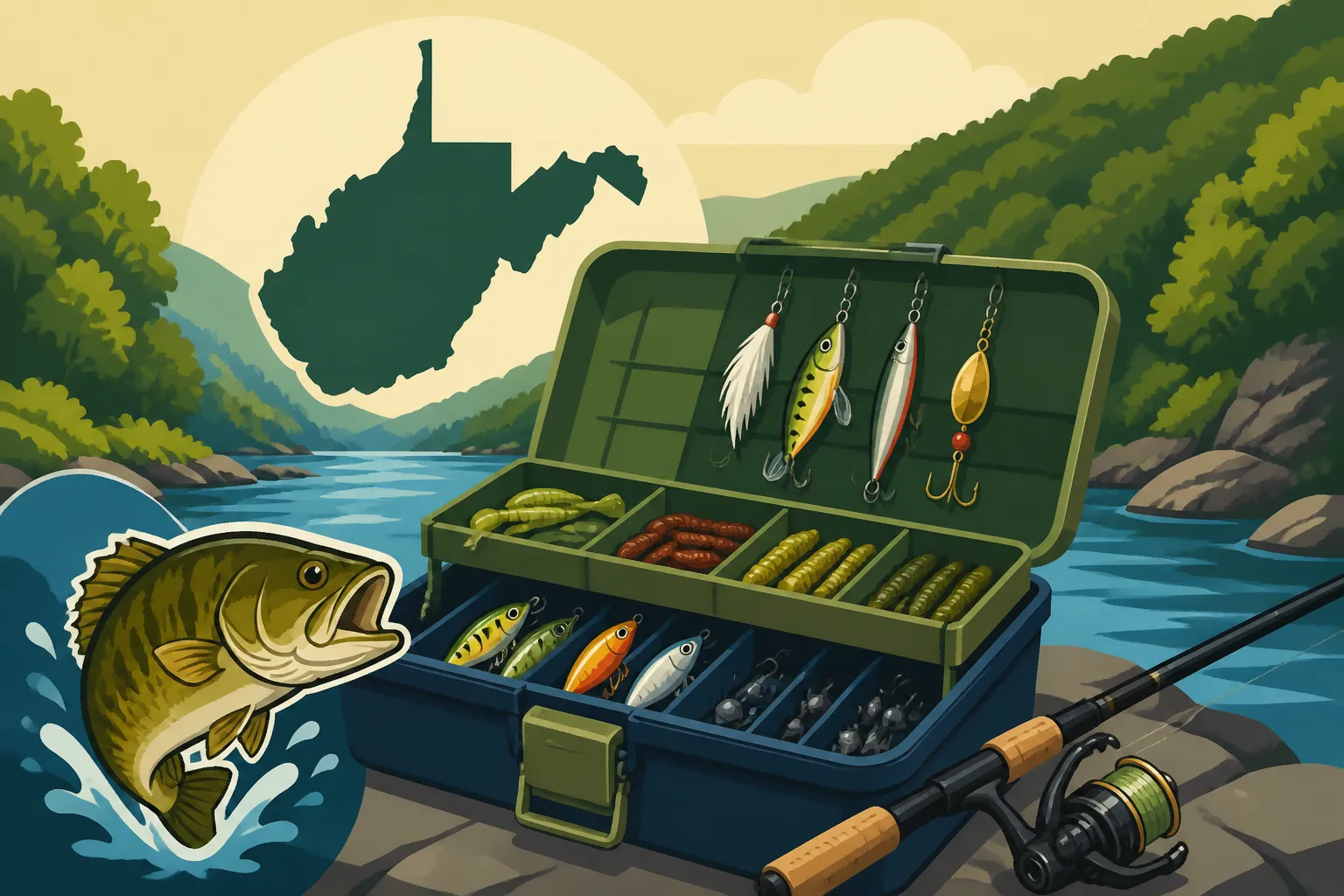
Consider organizing these lures into dedicated utility boxes. One box could be for hard baits (crankbaits, topwaters), another for jigs and trailers, and a soft-plastic binder for all your worms and creature baits. This keeps everything tidy and allows for quick changes as you adapt to what the bass are hitting. Having a selection of terminal tackle, like bullet weights, EWG hooks, and fluorocarbon leaders, organized alongside your bass lures will ensure you’re always rigged correctly for these exciting fish.
Trout & Panfish Favorites
West Virginia is renowned for its excellent trout fishing, particularly its extensive stocking program and beautiful wild trout streams. Alongside trout, panfish like bluegill and crappie offer accessible and fun fishing for anglers of all ages. Your tackle box should reflect this, with an array of smaller, enticing offerings.
For trout, especially in stocked streams and impoundments, classic baits and lures are often the most effective. Small inline spinners (like Mepps, Rooster Tail, or Panther Martin), typically in sizes 0 to 2, are perennial favorites. Their flash and vibration are irresistible to freshly stocked rainbows and even holdover trout. Small spoons, such as Kastmasters or Little Cleos, also work wonders with their darting action. Live bait, particularly worms or corn, and prepared baits like PowerBait (in various colors and forms) are incredibly effective, especially right after stockings. For fly anglers, a separate fly box with essential patterns for Fly Fishing for Trout in West Virginia would be critical, including nymphs, dry flies, and streamers. Make sure your trout section includes appropriate small split shot, light monofilament or fluorocarbon leaders (2-6 lb test), and small hooks (size 8-14).
Panfish like bluegill, sunfish, and crappie are often less discerning but respond well to subtle presentations. For bluegill and sunfish, tiny jigs (1/32 to 1/16 oz) tipped with a small piece of worm, a Berkley Gulp! Alive! minnow, or a soft plastic grub are deadly. Small spinners and even flies (poppers, small nymphs) are also excellent. For crappie, small tube jigs, grub jigs, or tiny minnow-imitating soft plastics fished under a bobber or slowly retrieved around brush piles and submerged timber are very productive. Live minnows are a classic crappie killer. The key for panfish is to keep your tackle light; ultralight rods and reels with 2-4 lb test line make the fight more exciting and allow for better presentation of these small baits. Having these small, enticing options readily available ensures you can turn a slow bass day into a fun panfish outing.
Muskie and Walleye Specifics
Chasing muskie and walleye in West Virginia is a specialized pursuit that demands a completely different set of gear, both in terms of size and quantity. These elusive and hard-fighting fish require dedication, and your tackle box needs to be equipped for the challenge.
Muskie, often called the "fish of 10,000 casts," demand large, robust lures that can withstand their incredible power and razor-sharp teeth. Your muskie box needs a collection of oversized bucktail spinners, massive crankbaits (some reaching over a foot in length), large jerkbaits, and substantial swimbaits. Colors and patterns often mimic local forage like suckers, shiners, or even other panfish. Because these lures are so large and expensive, they often require dedicated, deeper utility trays or specialized soft-sided muskie bags that can accommodate their bulk. You’ll also need heavy-duty snaps, swivels, and a selection of heavy-gauge wire or fluorocarbon leaders designed to withstand their bite. A long pair of hook removers and sturdy pliers are non-negotiable for safe handling. For more detailed information, look up Muskie Fishing in West Virginia and Best Muskie Gear for West Virginia Rivers.
Walleye, on the other hand, are often called "eye of the tiger" for their keen eyesight and preference for low light. They are often found in deeper, cooler waters of lakes like Stonewall Jackson Lake or Tygart Lake, and in the larger rivers. Your walleye tackle should include a variety of jigs (1/8 to 1/2 oz) in colors like chartreuse, white, or orange, often tipped with a minnow or a soft plastic grub. Crankbaits that dive to various depths are also crucial for trolling or casting, mimicking shad or small baitfish. Crawler harnesses, consisting of a snelled hook rig with beads and a spinner blade, are incredibly effective when tipped with a nightcrawler and trolled slowly. Blade baits and vertical jigging spoons can also be deadly when walleye are holding tight to structure. Organization is critical here; keeping jigs sorted by weight and color, and crankbaits by diving depth, will save valuable time on the water.
Given the size and cost of muskie and walleye specific lures, a highly organized system is key. Many anglers dedicate entire large utility trays or even specialized bags just for these species, often purchased from dedicated fishing retailers like Bass Pro Shops or online through Amazon. This ensures that when you're targeting these prized fish, you have every presentation option at your fingertips, ready to entice a strike.
Organization Hacks for Optimal Efficiency
Having all the right gear is one thing, but if it's jumbled into a messy tackle box, you're not maximizing your potential on the water. A well-organized tackle setup isn't just about neatness; it's about efficiency, quick access, and protecting your investment. Think of it as your mobile command center – everything should have its place and be easy to find, even when the fish are biting hard.
Compartmentalization: Trays, Bins, and Dividers
The backbone of any efficient tackle box setup is intelligent compartmentalization. Simply throwing everything into one large compartment is a recipe for tangled lines, rusty hooks, and endless frustration. Modern tackle storage solutions are designed to prevent this, and utilizing them effectively is a game-changer.
Clear utility boxes, often generically referred to as Plano-style trays (though many brands produce them), are the gold standard for organizing lures and terminal tackle. These come in various sizes (e.g., 3600, 3700 series) and feature adjustable dividers. This adjustability is key; you can create custom-sized compartments for everything from small hooks and swivels to medium-sized crankbaits and jigs. The clear plastic allows you to see exactly what’s inside without opening every box, saving precious time. Many soft-sided tackle bags are built specifically to hold multiple stacks of these trays, making it easy to swap them out for different species or fishing trip types.
Within these trays, further refinement can be achieved by grouping similar items together. All your small hooks in one section, all your split shot in another, and all your creature baits in their own dedicated compartments. Labeling these trays, either with a permanent marker on the outside or small adhesive labels, takes organization to the next level. Imagine needing a specific size of jig head: instead of rummaging, you glance at your labeled trays and grab the "Jig Heads 1/4oz" box. This level of precision eliminates guesswork and fumbling, especially when conditions are changing rapidly or the bite is hot. Best Tackle Box Setup for West Virginia Anglers often means a system of these trays within a larger bag.
Even for larger items, consider using smaller, transparent bins within larger compartments. This prevents items from sliding around and mixing. For example, a large top compartment of a hard box could hold a couple of smaller clear bins for larger pliers, a measuring tape, and a small first-aid kit. The goal is to create a visual inventory of your gear, making it effortless to locate exactly what you need when you need it most. This systematic approach also helps you quickly assess what you’re running low on before your next trip.
Specialized Storage for Soft Plastics and Jigs
Soft plastics and jigs, while incredibly effective, present their own unique organizational challenges. If stored improperly, soft plastics can warp, melt together, or leak oil onto other tackle, while jigs can become a tangled mess of skirts and hooks. Addressing these specifics with dedicated storage solutions is vital.
For soft plastics – your worms, creature baits, swimbaits, and tubes – traditional utility trays aren't always ideal. The plasticizers in some soft plastics can react with the tray material, leading to melting or degradation. A far better solution is to keep them in their original resealable bags. To organize these bags efficiently, specialized soft plastic binders or soft-sided bags with clear, zippered pockets are excellent. These binders allow you to flip through your soft plastic collection like a book, easily selecting the desired color and style without rummaging. You can group them by type (worms, lizards, craws) or by color. Brands like Bass Pro Shops and many options on Amazon offer these types of dedicated storage solutions, often designed to fit perfectly into larger tackle bags. This not only preserves the integrity of your baits but also keeps any scent or oil contained.
Jigs, especially those with silicone skirts (like bass jigs or crappie jigs), are notorious for tangling. Their hooks can snag other items, and their skirts can become compressed and damaged if crammed into small, tight compartments. The best way to store jigs is in dedicated jig boxes, which feature individual slots or compartments for each jig. These boxes keep the skirts from being crushed and prevent the hooks from tangling. Some even have foam inserts where you can peg the hooks, ensuring they stay perfectly separated. Organizing jigs by weight, color, or intended application (e.g., "flipping jigs," "swim jigs," "finesse jigs") will make your life much easier on the water.
By investing in and utilizing these specialized storage options, you not only keep your soft plastics and jigs in prime condition but also gain lightning-fast access to them. This means less time wasted untangling and more time casting, which translates to more fish in the net. An organized angler is a confident angler, and these small investments in specialized storage pay dividends in convenience and effectiveness.
The "Go-To" Small Kit: Ready for Anything
Even with a meticulously organized main tackle box or bag, there are always those times when you just need a minimal, grab-and-go setup. This is where a small, "go-to" kit becomes invaluable for any West Virginia angler. It's not about carrying everything; it's about carrying enough for spontaneous trips or specific, targeted outings.
Think of this kit as your essential "everyday carry" for fishing. It might be a small, single-tray tackle box, a compact sling pack, or even a fanny pack specifically designed for fishing. The key is its portability and its ability to hold a carefully curated selection of universal or highly effective baits for common West Virginia species. This kit is perfect for: a quick stop at a roadside trout stream, an impromptu bank fishing session at a local pond, or a stealthy approach to a creek when you don't want to haul your entire boat setup.
What goes into this kit? Focus on versatility. A few inline spinners (sizes 1-2) for trout and panfish. A couple of small crankbaits or tube jigs for bass. A handful of hooks (J-hooks and EWG), split shot, and a small spool of leader material (fluorocarbon in 6-8 lb test is a great all-around choice). Don't forget the absolute essentials: a small pair of pliers/line clippers and a measuring tape. The idea is to have enough variety to catch something, without being bogged down by options. For example, if you're hiking to a remote location to target brook trout, your "go-to" might consist of even smaller specialized items.
This small kit also serves as an excellent emergency backup or a way to test new waters without committing your main tackle. If you're exploring a new access point on the Tygart Valley River or trying a different area of Summersville Lake, a compact kit allows you to quickly assess the fishing without overpacking. It forces you to be strategic about your lure selection, often leading to a deeper understanding of what truly works. Many anglers find themselves grabbing this smaller kit more often than their larger, more comprehensive setups, simply because of its sheer convenience and efficiency.
Maintaining Your Tackle and Gear
A tackle box setup isn't a "set it and forget it" kind of deal. Proper maintenance is crucial for prolonging the life of your gear, preventing rust and degradation, and ensuring everything is in top working order when you hit the water. Neglecting these steps can lead to frustrating equipment failures and wasted money.
Post-Trip Care and Cleaning
The work doesn't stop when you leave the water. What you do with your tackle immediately after a fishing trip can significantly impact its longevity and performance, especially after exposure to West Virginia's diverse conditions.
First, always make it a habit to open your tackle box or bag and let it air out after every trip. Moisture is the enemy of metal components, leading to rust on hooks, swivels, and lure hardware. If you've been fishing in the rain, waded through muddy waters, or had a splashy day on the boat, it's even more critical. Remove any wet items, especially soft plastic bags that might have water trapped inside, and allow them to dry completely. A damp soft plastic bag can trap humidity, ruining not just the plastics but also promoting rust on nearby metal. You might even find a stray worm or minnow that needs to be removed!
For lures and terminal tackle that have been used, especially in muddy or silty rivers like parts of the Kanawha or Ohio River, a quick rinse with fresh water is a good practice. Pay particular attention to lures with treble hooks, as mud or grit can accumulate in the hook gaps. After rinsing, ensure they are thoroughly air-dried before returning them to your tackle box. For items like pliers or line clippers that get wet frequently, a light spray of corrosion inhibitor or a wipe with an oily rag can prevent rust from forming. Even the best quality gear, like those from Bass Pro Shops, will succumb to rust if neglected.
Finally, inspect your hooks. If any hooks are bent, dull, or show signs of rust, they need immediate attention. Bent hooks should be replaced, as they are severely weakened. Dull hooks can be sharpened with a small hook file or sharpener, ensuring you maintain optimal hook penetration. Rusty hooks should be replaced immediately; a rusty hook is a weak hook and will likely fail when you need it most. By taking these few extra minutes after each trip, you'll ensure your tackle remains in peak condition, ready for your next West Virginia adventure.
Seasonal Inventory and Replenishment
Just as you prepare your fishing license for the new year (don't forget to check West Virginia Fishing License Guide for 2026!), your tackle box also needs a thorough seasonal overhaul. This isn't just about cleaning; it's about strategic planning to ensure you're fully stocked and ready for the specific challenges and opportunities each season brings in West Virginia.
At the end of a major fishing season (e.g., fall for bass, winter for ice fishing, spring for trout), or at least once a year, dedicate time to a full tackle box inventory. Empty out each utility tray and compartment. This is the perfect opportunity to properly clean everything, dry it, and check for any hidden damage or rust you might have missed during quick post-trip cleanings. Discard any old, brittle soft plastics or severely damaged lures that are beyond repair. This decluttering process frees up space and ensures you're not carrying dead weight.
As you go through your inventory, create a replenishment list. What hooks are you running low on? Did you burn through all your favorite soft plastic colors? Are your preferred jig weights depleted? This is where you identify what needs to be restocked. Consider the upcoming seasons: if spring trout season is approaching, ensure you have plenty of PowerBait, small spinners, and light leader material. If you're planning on chasing muskie in the fall, verify your large bucktails and heavy leaders are in order. This proactive approach prevents that last-minute scramble for essential gear right before a big trip. Shopping online at Amazon or making a trip to Bass Pro Shops can help you get everything you need.
It's also a good time to inspect your fishing lines. Even if they're on your reels, line degrades over time from UV exposure, abrasion, and stress. Consider re-spooling your reels with fresh line, especially if it's been a year or two. Check your knots on stored rigs – re-tying them ensures maximum strength. By taking this systematic approach to maintenance and replenishment, you're not just organizing your tackle; you're setting yourself up for consistent success and minimizing frustrating gear failures throughout the year.
Beyond the Box: Accessories for a Successful Trip
While your tackle box holds the core fishing gear, a truly successful and comfortable day on the water in West Virginia requires a few extra items that enhance your experience and ensure your safety. These accessories often get overlooked until you desperately need them.
Safety and Comfort Items
Fishing should be enjoyable, and a big part of that is staying safe and comfortable, regardless of the unpredictable Mountain State weather or unexpected incidents. Don't let a sunburn or a nasty bug bite ruin your day.
Sunscreen is non-negotiable, especially when spending hours on the water where UV rays reflect off the surface. Apply it liberally and frequently, even on cloudy days. A wide-brimmed hat also offers excellent protection for your face, ears, and neck. These small preventative measures go a long way in preventing painful sunburns and long-term skin damage. Bug spray, particularly one effective against ticks and mosquitoes, is another must-have, especially when fishing in wooded areas or during dawn/dusk hours. West Virginia’s beautiful outdoors also comes with its share of creepy crawlies, and being prepared means less itching and more focus on fishing.
As mentioned earlier, a compact first-aid kit is an absolute non-negotiable. Hooks find fingers, minor cuts happen, and headaches can strike at the least opportune moments. Your kit should contain bandages, antiseptic wipes, pain relievers, and any personal medications you might need. Being prepared for minor injuries means you can quickly address them and continue fishing safely. And speaking of safety, a good pair of polarized sunglasses is more than just a comfort item. They significantly reduce glare off the water, allowing you to see deeper into the water to spot structure, fish, or even submerged hazards. This not only aids in finding fish but also improves safety, especially when wading rocky streams. For wading, you might also consider Best Wading Staff for Fast Current.
Personal Gear and Hydration
Staying hydrated and having appropriate personal gear can make or break a long day of fishing, particularly in West Virginia's varied climates. Don't underestimate the importance of these basic comforts.
Always, always carry enough water. Dehydration can creep up on you, especially during hot summer days or when you're exerting yourself by wading or hiking. A reusable water bottle or a small cooler with extra drinks is essential. Pairing this with some energy-rich snacks – granola bars, trail mix, fruit – ensures you maintain your stamina throughout the day. Nothing saps the enjoyment out of fishing like feeling lightheaded or getting "hangry" on the water. For longer trips, consider a small, easily accessible cooler that fits well in your boat or kayak.
West Virginia weather can change in an instant, often from sunny skies to sudden downpours. Having appropriate rain gear is therefore incredibly important. A lightweight, packable rain jacket that can be stowed in your tackle bag or a small dry bag will save you from getting soaked and miserable. Brands like Columbia or similar high-performance outdoor gear available on Amazon offer excellent protection without being overly bulky. Check out Best Rain Gear for West Virginia Anglers for more specifics. Depending on the season, layers of clothing are also wise; it can be chilly in the morning and warm up quickly, or vice-versa. Being able to add or shed layers allows you to adapt to temperature fluctuations and stay comfortable. Remember, a comfortable angler is a more focused and ultimately more successful angler.
Disclaimer
This article is for general informational purposes only and does not constitute professional advice. Laws, prices and regulations vary by location and change over time. Consult a qualified professional for guidance on your specific situation.