West Virginia catch and release trout waters
There's nothing quite like the thrill of feeling a strong tug on your line, knowing a beautiful trout is fighting on the other end. But for many of us, the joy isn't just in the catch, it's in the careful release, ensuring that vibrant fish gets to swim another day and grow even bigger. Navigating the specific rules and understanding which waters are designated for catch and release in West Virginia can sometimes feel a bit like trying to read a fish's mind, but this guide is here to clear the waters for you.
Understanding West Virginia's Catch and Release Trout Waters
When you hear "catch and release," it might seem straightforward – you catch a fish, you let it go. However, in West Virginia, and in fishing conservation in general, it's far more nuanced, especially when it comes to our precious trout populations. These designated waters aren't just about personal choice; they're about strict regulations designed to protect and enhance specific fisheries, often aiming for trophy-sized fish or the preservation of wild, naturally reproducing populations.
The Philosophy Behind Catch and Release Designations
The primary goal of West Virginia's catch and release trout waters is to create sustainable, high-quality fishing experiences. Instead of focusing on harvesting fish for the dinner plate, the emphasis shifts to the pursuit of larger, healthier trout that can grow to impressive sizes and continue to spawn, contributing to the stream's overall vitality. This philosophy is deeply rooted in the idea that some waters are so special, or so fragile, that they require an extra layer of protection beyond standard bag limits.
Think of it like this: if every angler kept every trout they caught from a popular, but limited, stretch of river, it wouldn't be long before that section was depleted. By mandating catch and release, the West Virginia Division of Natural Resources (WVDNR) ensures that these fish remain in the system, providing countless opportunities for other anglers to enjoy the thrill of the fight. It's a true long-term investment in our angling heritage, fostering a population of smarter, more challenging fish that have seen a few lures in their day. These waters often become havens for experienced anglers seeking that true trophy trout, knowing that the likelihood of encountering larger, mature fish is significantly higher.
How They Differ from General Regulation Waters
The biggest difference between a general regulation trout stream and a designated catch and release water is, quite obviously, the legal obligation to return all caught fish to the water unharmed. But it doesn't stop there. Many of West Virginia's special regulation catch and release waters also impose additional restrictions, which can include:
- Tackle Restrictions: You might find "fly fishing only" sections, or areas where only artificial lures with a single, barbless hook are permitted. This is to minimize injury to the fish, as flies and artificials tend to cause less damage than bait, and barbless hooks are far easier to remove.
- No Bait: Live bait, or even scented artificial baits, are often prohibited. The idea here is that fish tend to swallow bait deeper, leading to higher mortality rates, even with careful release. Artificials, especially with single hooks, are usually hooked in the mouth, making for a quick and clean release.
- Specific Seasons: While many trout waters have set seasons, catch and release sections might have extended seasons or even be open year-round for trout, precisely because the fish aren't being removed from the population. Always double-check the current West Virginia Fishing Season Dates and Closures to be sure.
These specialized rules are put in place not to make fishing harder, but to make it better for everyone in the long run. They protect the resource, allowing trout to thrive and grow, offering a more challenging and ultimately more rewarding experience for those who venture out.
Why Catch and Release is Essential in West Virginia
The mountains and valleys of West Virginia offer some truly spectacular trout fishing, from pristine high-elevation streams harboring native brook trout to larger rivers stocked with rainbows and browns. Maintaining the health and abundance of these fisheries is a delicate balance, and catch and release plays a critical role in preserving these natural treasures for generations to come. It’s not just a nice idea; it’s a cornerstone of sustainable angling in the Mountain State.
Protecting Wild Trout Populations
West Virginia is home to precious wild trout populations, particularly our state fish, the brook trout. These native fish thrive in the coldest, cleanest headwater streams, and their survival depends heavily on minimal human impact. Wild trout reproduce naturally, and unlike stocked trout, they haven't been raised in a hatchery. They are often smaller, but incredibly feisty and perfectly adapted to their unique environments.
Catch and release regulations in these sensitive wild trout waters are absolutely vital. By ensuring that every wild trout caught is carefully returned, we allow them to continue their natural lifecycle, contribute to the gene pool, and maintain the delicate balance of their ecosystems. This practice helps prevent overfishing, which could quickly decimate a wild population that doesn't have hatchery support to fall back on. It preserves the genetic integrity and hardiness of these fish, ensuring that the next generation of West Virginia brook trout is just as vibrant and resilient as the last. For anglers who truly appreciate the natural heritage of our state, targeting these wild trout for sport and then releasing them is a profound act of conservation.
Enhancing Angling Quality and Trophy Opportunities
Beyond protecting wild populations, catch and release zones are instrumental in cultivating "trophy" fisheries. When fish are consistently released, they have the chance to grow larger, often reaching sizes that would be much rarer in waters where harvesting is common. Imagine hooking into a brown trout that's been caught and released several times – that fish is smart, powerful, and offers an incredible challenge.
These larger, more experienced fish contribute significantly to the overall quality of the angling experience. They're not just bigger; they're often more elusive, requiring refined techniques and greater skill to entice. This creates a challenging and rewarding pursuit that many anglers actively seek out. Areas like certain sections of the Cranberry River Fly Fishing area are famous for this very reason, offering the chance to hook into truly exceptional trout that have grown large over many seasons. The presence of these larger fish acts as a magnet for serious anglers, boosting fishing tourism and providing unforgettable outdoor adventures without depleting the stock. It’s a win-win: anglers get better fishing, and the fish get to live long, healthy lives.
Supporting Sustainable Fishery Management
The WVDNR meticulously manages West Virginia's fisheries to ensure long-term health and sustainability. Catch and release regulations are a powerful tool in their arsenal. By designating certain waters for catch and release, the WVDNR can manage fish populations more effectively, especially in areas with high angling pressure or limited natural spawning success.
For example, in waters that are regularly stocked with trout, allowing catch and release ensures that a higher percentage of stocked fish survive beyond the initial "opening day" frenzy. This provides sustained angling opportunities throughout the season, rather than a rapid depletion of fish. It also complements other management strategies, such as habitat restoration projects or stocking programs. The data collected from these catch and release areas, often through angler reports or biological surveys, helps the WVDNR make informed decisions about future stocking numbers, habitat improvements, and adjustments to West Virginia Fishing Regulations Explained. It’s a dynamic process, and angler compliance with catch and release rules is a vital component of its success, directly contributing to the future of fishing in West Virginia.
Identifying West Virginia's Designated Catch and Release Trout Waters
Knowing where you can or must practice catch and release for trout in West Virginia is crucial. The state has several notable waters, and sections of rivers, that fall under these special regulations. Always remember that regulations can change, so consulting the most current West Virginia fishing regulations is your ultimate source of truth.
Prominent Catch and Release Locations
West Virginia boasts a few gems when it comes to dedicated catch and release trout fisheries. These areas are specifically managed for quality trout fishing and often come with additional tackle restrictions.
One of the most renowned is the Cranberry River. This iconic river, particularly the section within the Monongahela National Forest, has a significant portion designated as "Fly Fishing Only" and "Catch and Release." It's a challenging but incredibly rewarding fishery, famous for its large brown trout and healthy populations of rainbows. Anglers here use artificial flies only, often with barbless hooks, to minimize stress on the fish. You can learn more about its specific rules in our guide to Cranberry River Fly Fishing.
Another significant location is parts of the Elk River, particularly the tailwater section below Sutton Dam. This area, known for its consistent cold water releases, provides prime habitat for trout. While not entirely catch and release, certain stretches often have special regulations for trout, including length limits and specific tackle requirements that encourage release. Our Elk River Trout Fishing guide can offer more precise details on its zones.
Other waters with special regulations, which often include elements of catch and release or reduced harvest, include sections of Shavers Fork and Dry Fork in the Monongahela National Forest, particularly those managed for wild brook trout or trophy brown trout. These streams often have length limits or require artificial lures with single barbless hooks. The goal in these smaller, more delicate streams, such as those discussed in Shavers Fork Brook Trout Fishing, is often to protect native populations and promote larger, self-sustaining wild fish.
Using the West Virginia Fishing Regulations Summary
The best way to stay up-to-date and understand all the specific regulations for West Virginia's catch and release trout waters is to consult the official West Virginia Fishing Regulations Summary. This document, published annually by the WVDNR, is the angler's bible.
You can usually find a PDF version of the latest summary on the WVDNR website. It typically includes:
- A "Special Regulations Waters" section: This is where you'll find a detailed list of all waters with rules that differ from the general statewide regulations. This section explicitly states which waters are catch and release, fly fishing only, artificial lures only, or have unique size and creel limits.
- Maps and diagrams: Often, the summary will include maps or descriptions that clearly delineate the boundaries of special regulation sections within a larger river system. This is crucial because a river might be catch and release in one stretch and open to general harvest just a few miles upstream or downstream.
Make it a habit to download and review the summary before each fishing season, or any time you plan to visit a new body of water. Not only will it keep you compliant with the law, but it will also help you understand the nuances of each unique fishery. Ignoring these rules can lead to significant penalties, so it's always worth the time to read through the West Virginia Fishing Regulations Summary.
| Catch & Release Water | Primary Species | Key Regulations (example) | Notable Features |
|---|---|---|---|
| Cranberry River (Upper) | Brown, Rainbow | Fly fishing only, Catch & Release | Wilderness setting, Trophy potential |
| Elk River (Tailwater) | Rainbow, Brown | Artificial lures, Barbless hooks, 14-inch minimum (some sections) | Consistent cold water, High fish density |
| Shavers Fork (Upper) | Brook Trout (Wild) | Artificial lures, Barbless hooks, Catch & Release | Native trout, Scenic mountain stream |
| Dry Fork (Certain sections) | Brown, Brook | Artificial lures, Catch & Release | Remote access, Challenging wading |
Note: This table provides examples. Always check the current WVDNR regulations for the most up-to-date and specific rules for each water body.
Best Practices for Responsible Catch and Release Trout Fishing
Catching a trout is only half the battle; ensuring its healthy release is equally, if not more, important, especially in waters managed specifically for this purpose. Even if you're fishing in a general regulation water and choose to release your catch, following these best practices drastically increases the fish's chances of survival. It’s about being a good steward of the resource and respecting the incredible creatures we pursue.
Minimizing Stress and Injury to Fish
The goal of catch and release is to get the fish back into the water as quickly and with as little harm as possible. Every second a fish is out of water, or struggling excessively, increases its stress and reduces its survival rate.
- Use the Right Gear: Choose a rod and reel setup that can handle the size of fish you expect to encounter. Overly light tackle can prolong the fight, exhausting the fish to the point of no return. A medium-light to medium action rod is often appropriate for many West Virginia trout streams. For example, a proper Best Gear for West Virginia Trout Fishing setup will make a huge difference.
- Land Fish Quickly: While tempting to let a trout run, try to bring it in as efficiently as possible. Avoid dragging the fight out. Keep the rod tip high and maintain steady pressure.
- Wet Your Hands: Always wet your hands thoroughly before touching a fish. Dry hands remove the protective slime coat (mucus layer) that guards against infections and parasites. This slime coat is critical for a fish's health, and its removal is one of the most common causes of post-release mortality.
- Keep Fish in Water: If possible, unhook the fish while it's still in the water. If you must remove it, do so for the absolute minimum amount of time required to remove the hook and snap a quick photo (if desired). Never let a fish flop around on rocks, dirt, or boat decks; this causes severe damage.
- Support the Fish: When holding a fish, especially larger ones, support its full body weight horizontally. Avoid holding it vertically by the jaw or tail, which can damage its internal organs and spine. Cradle it gently, using one hand under the belly and the other at the base of the tail.
- Avoid Squeezing: Never squeeze a fish. This can damage internal organs, even if there are no visible external injuries.
Recommended Tackle and Tools
Having the right tools can make all the difference in ensuring a successful release. Investing in a few key items will significantly improve a trout's chances.
- Barbless Hooks: These are non-negotiable for serious catch and release. Barbless hooks slide out easily, often with just a flick of the wrist, causing minimal tissue damage. You can buy hooks that are already barbless, or you can pinch down the barb on a regular hook with a pair of pliers. Many experienced anglers purchase a bulk pack of barbless hooks from retailers like Amazon for their fly tying and lure modifications.
- Forceps or Pliers: A good pair of long-nosed forceps or needle-nose pliers is essential for quickly and safely removing hooks, especially if they're deeply set. Make sure they have a good grip and are easy to operate with one hand.
- Rubber Mesh Net: A landing net with soft, knotless rubber or silicone mesh is far superior to traditional knotted nylon nets. The rubber mesh protects the fish's delicate fins and slime coat, preventing scales from being scraped off. It also prevents hooks from getting tangled, making for a much faster release. Our guide on the Best Landing Net for Trout goes into more detail on why this is so important.
- Bait Restrictions: When fishing in catch and release waters, remember that live or scented baits are typically prohibited. Stick to artificial lures and flies as specified by the regulations. If you're using flies, having a selection of appropriate Fly Patterns for West Virginia Trout Streams will ensure you're compliant and effective.
Proper Release Techniques
Once the hook is out, the final step is ensuring the fish swims away strong.
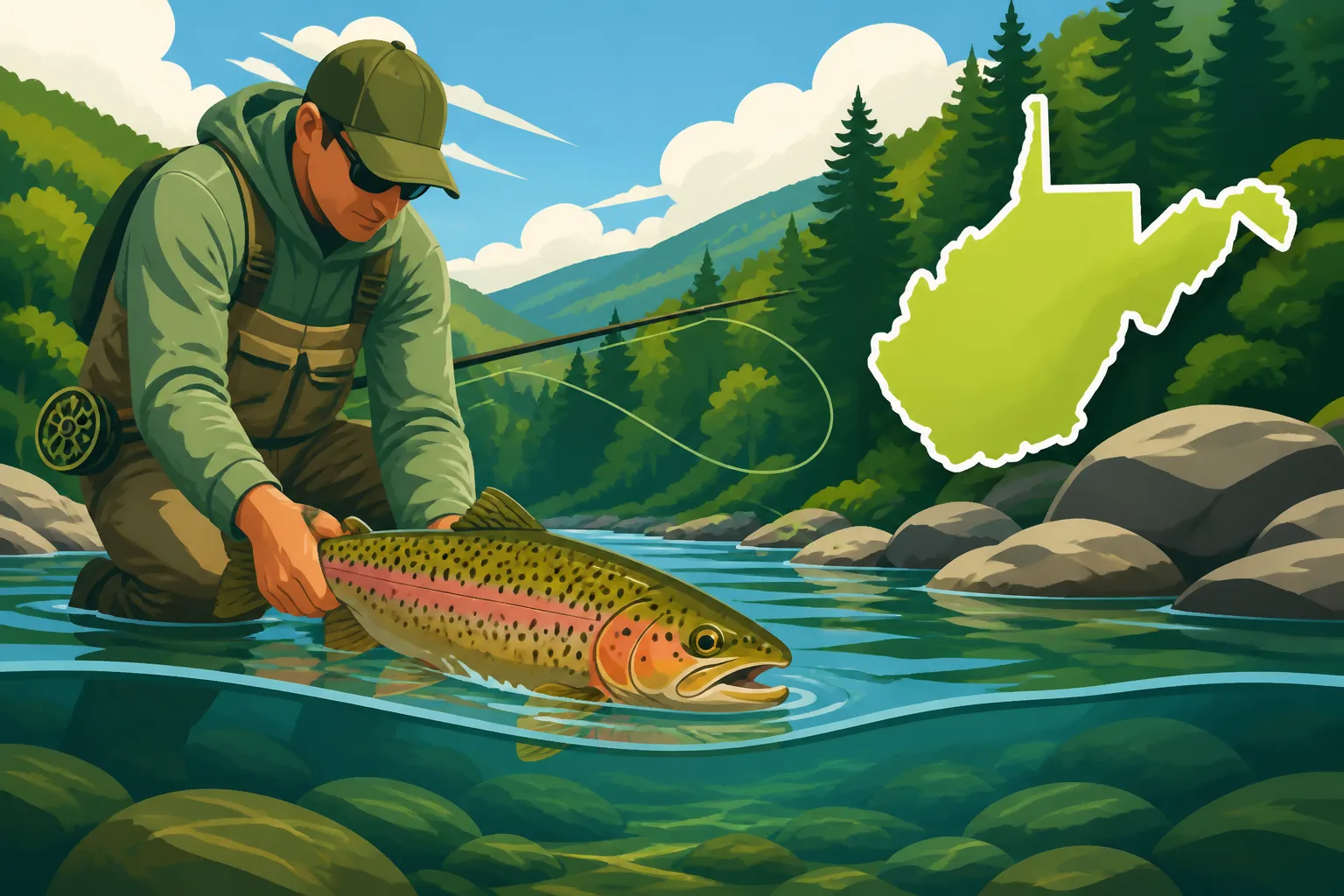
- Revive If Necessary: If the fish seems sluggish or disoriented, hold it gently upright in the water, facing upstream into the current. This allows oxygenated water to flow over its gills. Don't move it back and forth aggressively; let the natural current do the work. The fish will tell you when it's ready by trying to swim away.
- Don't Toss: Never throw or drop a fish back into the water. Gently place it back in, allowing it to swim off on its own power.
- Observe: Take a moment to watch the fish swim away. If it struggles or surfaces, you may need to try reviving it again. A healthy release means the fish actively swims out of sight.
By adopting these practices, you're not just adhering to regulations; you're actively contributing to the health and vibrancy of West Virginia's remarkable trout fisheries, ensuring that these waters continue to offer exceptional angling for years to come.
Disclaimer
Please note that fishing regulations, including those for catch and release waters, can change annually. While this guide provides comprehensive information, it is crucial to consult the most current West Virginia Fishing Regulations Summary published by the West Virginia Division of Natural Resources (WVDNR) before planning any fishing trip. Always verify specific rules regarding tackle, seasons, and creel limits for the particular body of water you intend to fish. Compliance with all state and local regulations is the responsibility of the angler.