Best bait for opening day trout in West Virginia
Opening day for trout season in West Virginia is a tradition many of us cherish, but let's be honest, it can also be a bit of a scramble. You've heard all the advice, you've seen the pictures, but sometimes the fish just aren't biting like you hoped. It's frustrating to be out there in the cold, wondering if you picked the wrong bait. This guide is here to cut through the confusion and help you choose the very best baits for opening day trout, ensuring you have a successful and enjoyable start to the season.
Understanding Opening Day Trout Behavior
When the official trout season kicks off, typically in early spring, West Virginia waters are bustling with activity. But what often gets overlooked in the excitement is how the trout themselves are behaving. They're not all the same, and their recent experiences, combined with the chilly water temperatures, dramatically influence what they're willing to bite. Understanding these nuances is your first step toward picking the right bait and technique.
The Difference Between Freshly Stocked and Holdover Trout
You'll encounter two main types of trout on opening day: the freshly stocked and the elusive holdovers. They are like night and day in terms of their feeding habits and wariness.
- Freshly Stocked Trout: These are the fish the West Virginia Division of Natural Resources (DNR) has recently introduced into the streams and lakes. They've spent their lives in hatchery raceways, fed on pellets, and are generally quite naive. When they're first released, they're often disoriented, a little stressed, and not quite sure what to make of their new wild environment. They're still programmed to eat, but their instincts for natural forage are underdeveloped. This makes them relatively easy targets, especially in the first few days after stocking. They often respond well to baits that are familiar in shape or scent, or simply highly visible. Think about what they've been eating – small, uniform pellets. This hatchery conditioning plays a huge role in why certain artificial baits are so effective for them. They're still in that "eat what's available" mindset, which is a big advantage for anglers.
- Holdover Trout: These are the fish that survived from previous stockings, sometimes even over the winter. They've adapted to the wild, learned to forage for natural insects, crayfish, and smaller fish, and have become incredibly wary. They've seen hooks and lines before, and they've learned to avoid anything that looks or feels unnatural. Catching a holdover trout is a different game entirely. You need a more subtle approach, a presentation that mimics natural food items, and often a lot more patience. They won't just gobble down anything; they're looking for realism and often a specific type of food that fits their current diet. Targeting these fish requires a shift in mindset and often a more refined technique, often outlined in guides like Best Techniques for Early Spring Trout.
The Realities of Cold Water Fishing
Early spring in West Virginia means cold water. While beautiful, those crisp mountain streams and chilly lake waters have a direct impact on trout metabolism. Fish are cold-blooded, so their activity levels are directly tied to water temperature.
- Slower Metabolism, Slower Bites: In cold water (typically below 50°F or 10°C), trout metabolism slows down significantly. They don't need to eat as much, and they're less inclined to chase down a fast-moving meal. Their movements are more sluggish, and they'll often hold in deeper, slower pools or behind structure to conserve energy. This means your presentation needs to be slow, deliberate, and often right on their nose. A bait that's darting around too quickly might be ignored or even spook them. Think about offering them a meal that requires minimal effort to obtain.
- Impact on Water Clarity: Early spring can also bring snowmelt and heavy rains, which can churn up rivers and streams, making the water murky. In these conditions, trout rely more on their lateral line (to detect vibrations) and their sense of smell. Brightly colored baits or those with strong scents can be incredibly effective when visibility is low. Conversely, in crystal clear, cold water, a natural presentation with a subtle bait becomes paramount. It's a constant balancing act between visibility, scent, and natural appeal. Keeping an eye on the West Virginia Fishing Regulations Explained can sometimes offer clues about typical conditions during specific seasons.
The Essential Baits for Opening Day Trout
With an understanding of how trout behave in cold, early spring waters, we can now dive into the specific baits that consistently produce results on opening day. It's a mix of artificial marvels and natural wonders, each with its place in your tackle box.
Scented Dough Baits: The PowerBait Phenomenon
Scented dough baits, particularly Berkley PowerBait, have become almost synonymous with opening day trout fishing in West Virginia, and for good reason. They are incredibly effective for freshly stocked trout.
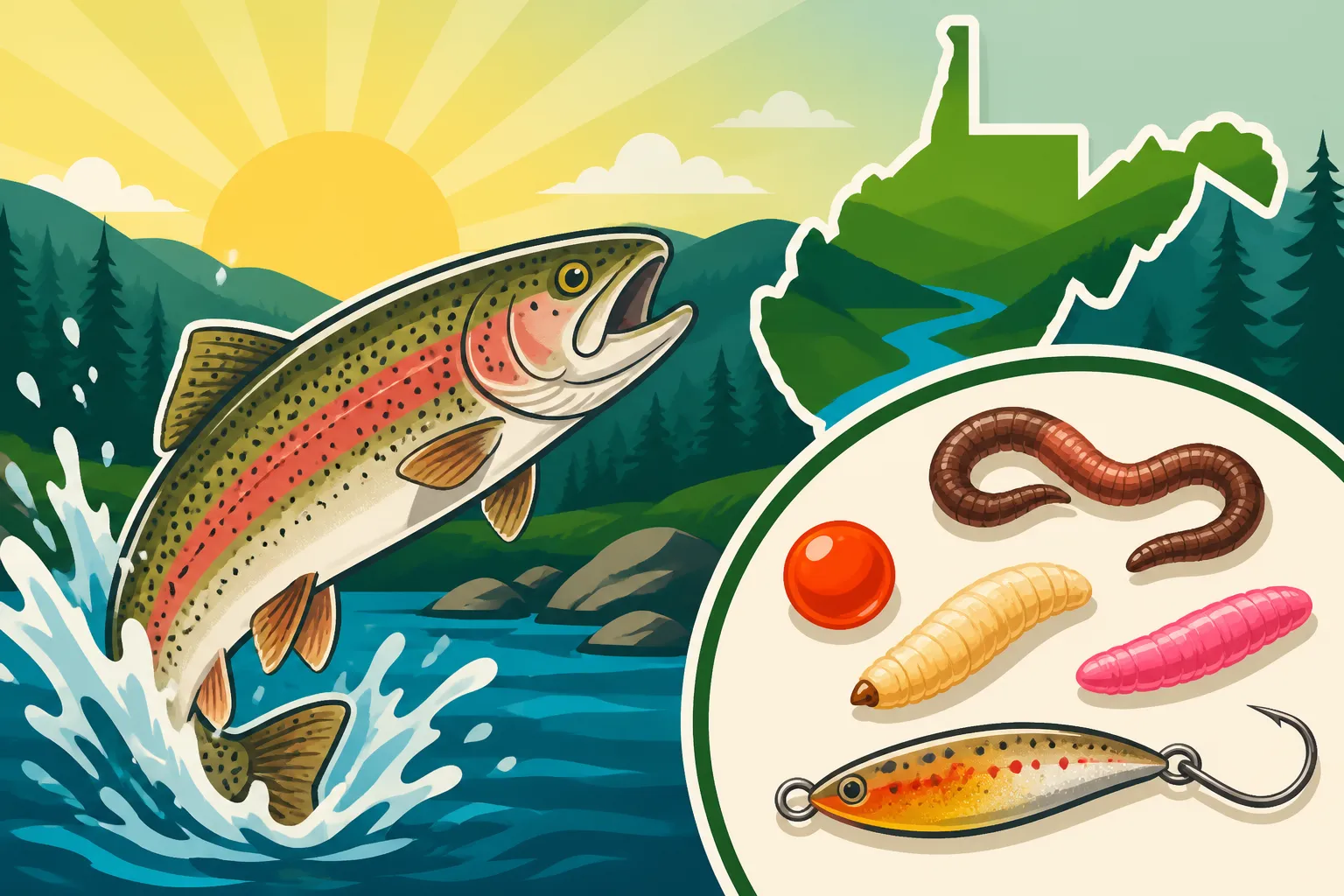
- Why They Work Wonders: The magic of PowerBait lies in a few key features. First, the strong scent acts as a powerful attractant, drawing in disoriented stocked trout who are often relying heavily on their sense of smell. Second, many PowerBait varieties are buoyant, meaning they float off the bottom, keeping your bait visible and suspended just above any debris or mud. This is crucial because trout often feed slightly off the bottom. Third, the vibrant, often unnatural colors (think neon green, fluorescent orange, or bright pink) are highly visible in turbid or cold water, grabbing the attention of curious or less-wary fish.
- Types and Textures: You'll find PowerBait in several forms:
- PowerBait Dough (Jars): This is the classic, pliable dough that you mold onto your hook. It comes in a dizzying array of colors, from single hues like chartreuse and rainbow to multi-color swirls. The consistency allows you to create different shapes and sizes to match the conditions or the trout's mood. Many anglers will find a fantastic selection and competitive pricing for various PowerBait options on Amazon.
- PowerBait Nuggets/Pellets: These are pre-formed, small, pellet-like baits, often designed to mimic the hatchery food trout are accustomed to. They're less messy than dough and can be quicker to rig.
- PowerBait Eggs: These are soft, egg-shaped baits, either single or in clusters, resembling salmon or trout eggs, a natural food source for many trout. They're often buoyant and come in bright, enticing colors.
- Rigging for Maximum Effectiveness: The key to PowerBait is to use a small treble hook (sizes 14-18 are common) or a small single hook. Mold the dough around the hook, ensuring the hook point is fully covered but still exposed enough to set. Use a very light leader (2-4 lb test monofilament or fluorocarbon) and a minimal amount of split shot or a small sliding sinker about 12-24 inches above your hook. The goal is to allow the buoyant PowerBait to float freely just off the bottom, presenting it naturally to cruising trout. Experiment with different colors; sometimes a subtle white or a flashy neon green makes all the difference on a given day.
Live Baits: Worms, Minnows, and Mealworms
While PowerBait dominates for stocked trout, live baits bring a natural appeal that can often tempt even the wariest holdovers. They offer natural movement, scent, and texture that artificials sometimes can't replicate.
- Red Worms and Nightcrawlers: The humble worm is arguably the most universal bait, and it's a stellar choice for opening day trout.
- Why They Work: Worms emit natural scents that attract fish, and their wiggling action is irresistible. They are a natural food source for wild and holdover trout, but even stocked trout will readily take them.
- Rigging: For smaller red worms, thread the entire worm onto a small hook (size 10-14), leaving the ends free to wiggle. For larger nightcrawlers, use a piece about 1-2 inches long, making sure the hook is well hidden. You can fish them on the bottom with a small weight or under a bobber in slower sections. This natural, subtle approach is often excellent for more finicky fish.
- Minnows: For targeting larger, more aggressive trout, especially the holdovers that have been feeding on baitfish, live minnows can be deadly.
- Why They Work: They provide a realistic profile, natural movement, and a strong scent trail, mimicking a distressed baitfish.
- Rigging: Hook a small minnow (1-2 inches) lightly through the lips or just behind the dorsal fin with a small, sharp hook (size 8-10). Use a bobber to keep it suspended, or a very light split shot to allow it to drift naturally in slower currents or pools. Crucial Note: Always check the current West Virginia Fishing Regulations Explained for rules on using live minnows in specific waters, as restrictions can apply to prevent the spread of disease or invasive species.
- Mealworms and Waxworms: These smaller, protein-packed larvae are fantastic for enticing finicky trout or those looking for a smaller, more delicate meal.
- Why They Work: They have a natural appearance and subtle movement, and trout find them very tasty. They are often a go-to when trout are ignoring larger baits.
- Rigging: Hook a mealworm or waxworm through one end on a very small hook (size 16-18). They can be fished solo, in a cluster, or tipped on a tiny jig. Their small profile makes them perfect for presenting to trout holding in clear, slow-moving water.
Small Artificial Lures: Spinners and Spoons
While many anglers gravitate towards bait on opening day, don't overlook the effectiveness of small artificial lures, especially when the trout become a bit more active or you need to cover a lot of water.
- Spinners: Flash and Vibration: Inline spinners like Rooster Tails, Panther Martins, and Mepps are classic trout catchers.
- Why They Work: The spinning blade creates flash and vibration in the water, mimicking a fleeing baitfish or a struggling insect, which can trigger a predatory strike.
- Types and Colors: Keep sizes small, typically 1/32 to 1/8 ounce. Gold, silver, black, and chartreuse are perennial favorites. Some have dressed treble hooks with hackle or bucktail, adding extra appeal.
- Retrieve: Cast upstream or across current and retrieve just fast enough to get the blade spinning. Vary your retrieve speed and depth until you find what the fish prefer. They're excellent for targeting trout holding in riffles and runs.
- Spoons: Flutter and Dart: Small casting spoons like Kastmasters or Little Cleos offer a different action.
- Why They Work: Their unique shape gives them a fluttering, darting action on the retrieve or fall, imitating a wounded baitfish. They also cast a good distance, allowing you to reach fish in larger pools or across wider streams.
- Sizes and Colors: Again, stick to small sizes (1/16 to 1/4 ounce). Silver, gold, and colors with a touch of blue or red are usually effective.
- Retrieve: A steady retrieve with occasional twitches or pauses can be deadly. You can also let them sink and jig them vertically in deeper holes. Both spinners and spoons are great "searching" lures, helping you locate active fish when you're unsure where they're holding.
Strategic Approaches for a Productive Day
Having the best baits is only half the battle. Knowing how to use them effectively and where to find the fish is just as crucial for a successful opening day.
Locating the Fish: Reading the Water and Stocking Intel
You can have the best bait on the planet, but it won't do you any good if you're not putting it in front of fish. Finding trout, especially on opening day, requires a bit of detective work.
- Consult the DNR Stocking Schedule: Your absolute best resource for locating freshly stocked trout is the West Virginia DNR's stocking schedule. You can often find this information via the West Virginia Trout Stocking Hotline and Schedule or their website. Knowing which specific streams or lakes were stocked recently gives you a massive advantage. Don't be afraid to travel to a freshly stocked water body.
- Read the Water for Holding Lies: Once you're at the water, look for prime trout habitat. Trout, especially in cold water, will seek out areas where they can conserve energy and find food.
- Pools and Eddies: These are classic trout hangouts, offering slower currents and deeper water where fish can rest and ambush prey.
- Current Breaks: Look for large rocks, fallen trees (laydowns), or bends in the stream that create areas of slower current. Trout will sit in these "cushions" out of the main flow.
- Deeper Holes: Trout will often stack up in the deepest parts of a stream or lake during cold weather.
- Overhanging Cover: Undercut banks, dense brush, or low-hanging tree branches provide shade and security. Don't neglect these spots, even if they look challenging to cast into.
- Observe and Adapt: Pay attention to what other successful anglers are doing, but also be willing to explore. Sometimes the best spots are just a little further upstream or downstream from the crowds. This exploratory mindset is a key part of having a great fishing experience.
Experimentation is Key: Don't Be Afraid to Switch It Up
Opening day is rarely a "one-and-done" bait scenario. What worked for one angler, or even for you an hour ago, might not be working now.
- Vary Your Bait Color and Type: If you're not getting bites with chartreuse PowerBait, switch to rainbow, or try a piece of a red worm. If bait isn't producing, tie on a small spinner. Trout can be surprisingly picky, and their preferences can change throughout the day, influenced by light conditions, water clarity, and even their mood. Many anglers will stock up on a variety of colors and bait types from places like Amazon to ensure they have options.
- Adjust Your Depth and Retrieve: Are you fishing too high in the water column? Too low? If you're using PowerBait, try adjusting your split shot to let it float a little higher or lower. With lures, experiment with faster or slower retrieves, or letting the lure sink deeper before starting your retrieve. For river fishing, sometimes just letting your bait drift a bit further downstream before reeling in makes all the difference. This "try everything" mentality is vital to success, as described in guides like How to Catch Trout Right After Stocking in West Virginia.
- The "First 15 Minutes" Rule: A good rule of thumb: if you haven't had a bite in a particular spot after 10-15 minutes of trying different presentations and baits, it's probably time to move to a new spot or radically change your approach. Don't stubbornly stick to a technique that isn't producing.
Rigging for Success: Light Line, Small Hooks, and Proper Weights
Your tackle setup can make a huge difference in how effectively your bait is presented and how many fish you actually bring to hand.
- Light Line is Your Friend: Trout, especially in clear, cold water, can be very line-shy. Using light fishing line, typically 4-6 lb test monofilament for your main line, and a lighter leader (2-4 lb test fluorocarbon or monofilament) is crucial. Fluorocarbon is nearly invisible underwater, making it an excellent choice for a leader material. The lighter line allows your bait to drift more naturally and makes it harder for the fish to detect your presence.
- Small Hooks Match the Bait and Mouth: Resist the urge to use hooks that are too large. Trout have relatively small mouths, and a large hook can deter them or lead to missed hooksets. Match your hook size to your bait:
- PowerBait/Mealworms: Size 14-18 treble or single hooks.
- Worms: Size 10-14 single hooks.
- Minnows: Size 8-10 single hooks.
Ensure your hooks are sharp; a dull hook will result in lost fish.
- Minimal Weight for Natural Presentation: The goal is to get your bait to the trout's depth without it looking like it's dragging a cinder block.
- Split Shot: Small, removable split shot weights are excellent for fine-tuning depth. Place them about 12-24 inches above your hook.
- Sliding Sinkers: A small egg sinker or slip sinker can be effective, especially with PowerBait, as it allows the fish to pick up the bait without feeling the weight immediately, which often leads to better hooksets.
- No Weight (Free-Drifting): In very slow-moving or still water, sometimes no weight at all, allowing your bait to simply free-drift, is the most natural and effective presentation. This is particularly true for streams where trout are accustomed to small insects drifting with the current.
Beyond the Bait: Crucial Opening Day Considerations
While bait selection is paramount, a truly successful and enjoyable opening day involves more than just what you put on your hook. West Virginia's spring weather and specific regulations demand your attention.
Dressing for West Virginia's Unpredictable Spring Weather
Spring in the Mountain State can be beautiful, but it's also famously unpredictable. You might start your day with sunshine and end it with sleet. Being prepared for anything is key to staying comfortable and focused on fishing.
- Layering is Non-Negotiable: The best strategy is to dress in layers. Start with a moisture-wicking base layer, add insulating layers (fleece or wool are great), and top it off with a waterproof and windproof outer shell. This allows you to shed or add clothing as temperatures fluctuate throughout the day.
- Protect Your Extremities: A warm hat, gloves, and thick socks are vital. You lose a lot of body heat through your head and extremities. Cold hands make rigging bait and tying knots a miserable experience.
- Waders and Waterproof Boots: Even if you plan to bank fish, waterproof footwear is essential. The ground can be muddy, and you might need to step into shallow water to retrieve a snagged line or land a fish. If you plan to wade, investing in quality chest waders and wading boots will keep you dry and warm, letting you access more prime fishing spots. Consider reading up on Best Waders for West Virginia Trout Streams for specific recommendations. Remember, getting cold and wet will cut your fishing day short, and nobody wants that on opening day.
Navigating Regulations and Licensing Requirements
It can't be stressed enough: knowing and adhering to West Virginia's fishing regulations is not just about avoiding fines, it's about being a responsible angler and contributing to the health of our fisheries.
- Your License and Trout Stamp: Before you even leave the house, double-check that your fishing license is current. If you plan to fish for trout, you'll also need a valid trout stamp. These are mandatory and support the stocking programs we all enjoy. A comprehensive guide like West Virginia Fishing License Guide for 2026 or Trout Stamps and Trout Fishing Rules in West Virginia can provide all the details. Don't risk a penalty for fishing without a license in West Virginia, it's just not worth it.
- Bag and Possession Limits: Be aware of the daily creel limits for trout, and any special regulations for the specific stream or lake you're fishing. Some waters have different limits or even catch-and-release-only sections. The West Virginia Bag and Possession Limits by Species will provide the specifics. Ignorance of the law is no excuse, so always check the current regulations summary provided by the West Virginia DNR.
- Special Regulation Waters: Certain streams or sections of rivers in West Virginia have unique rules regarding tackle, bait, or catch limits. Always consult the official West Virginia Fishing Regulations booklet (available online or from license vendors) to confirm any special regulations for your chosen fishing spot. This diligence ensures you're fishing legally and ethically. If you're thinking about catch and release, be sure to understand the specific West Virginia Catch and Release Rules for Trout.
Practicing Patience and Respect for Fellow Anglers
Opening day for trout often means crowded waters, especially at popular stocking locations. A little patience and common courtesy go a long way in making the day enjoyable for everyone.
- Give Space: Try to give other anglers a reasonable amount of space. Don't cast over someone else's line or crowd into their fishing spot. There's plenty of water for everyone.
- Be Courteous: A friendly wave or a quick chat can enhance the experience. Most anglers are happy to share tips or even help if you're snagged.
- Leave No Trace: Pack out everything you pack in. Dispose of all trash, including old fishing line, hooks, and bait containers, properly. Let's keep West Virginia's beautiful waters clean for future generations. Respecting the environment and your fellow anglers contributes to a positive and long-lasting tradition of trout fishing in West Virginia.
| Bait Type | Pros | Cons | Best Conditions / Target |
|---|---|---|---|
| PowerBait Dough | Strong scent, buoyant, various colors | Can be messy, less natural appeal for wary fish | Freshly stocked trout, still water, cold water |
| Live Worms | Natural, universal appeal, subtle movement | Can be messy, requires care, may attract panfish | All trout, especially holdovers, moving water |
| Live Minnows | Attracts larger trout, natural movement | Regulations vary, needs aeration, can be expensive | Aggressive trout, holdovers, deeper water |
| Small Spinners | Cover water, flash and vibration | Requires active fish, can spook wary trout | Active stocked trout, moving water, searching |
| Small Spoons | Good for casting distance, fluttering action | Can tangle easily, less effective in very slow water | Active stocked trout, lakes/ponds |
| Mealworms/Waxworms | Natural, small profile, good for picky fish | Fragile, can be hard to keep on hook | Finicky trout, small streams, cold water |
Disclaimer
The information provided in this guide is for informational purposes only and is not a substitute for official regulations. Always consult the current West Virginia Division of Natural Resources fishing regulations booklet or website before engaging in any fishing activities. Fishing conditions and regulations can change, and it is the angler's responsibility to stay informed.