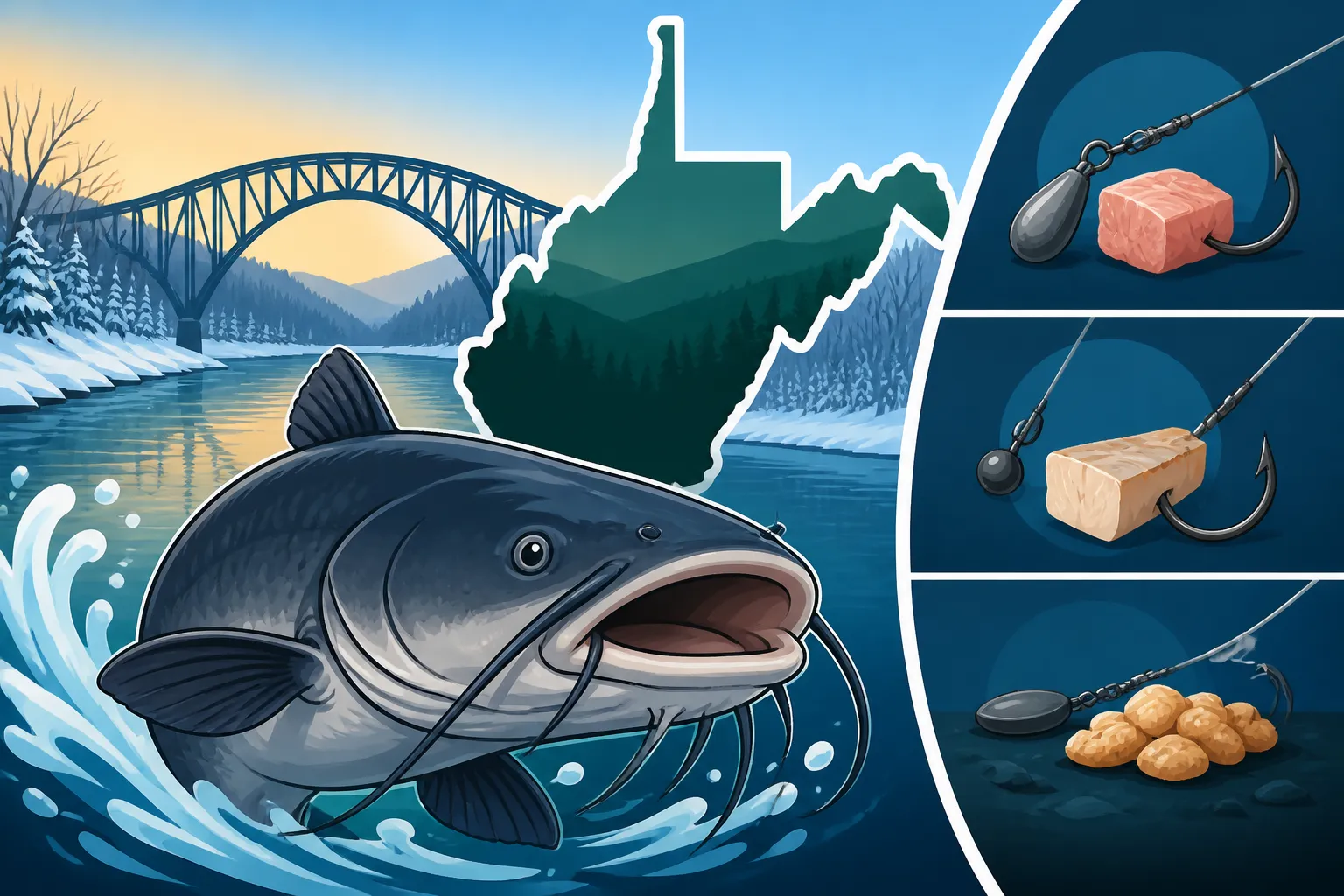
Best Techniques for Winter Catfish
Many anglers pack away their catfish gear as soon as the leaves start to turn, assuming that the cold weather sends these whiskered bottom dwellers into an unreachable hibernation. This misconception leads to a lot of missed opportunities, because winter catfishing in West Virginia isn't just possible, it can be incredibly rewarding for those who understand how to adapt. This comprehensive guide will delve into the specific techniques, gear, and strategies that will help you successfully target catfish even when the temperatures plummet, turning your winter blues into a fantastic fishing adventure.
Understanding Winter Catfish Behavior
When the water temperatures drop, catfish don't just disappear; they simply change their habits. Unlike their summer frenzy, winter catfishing requires a more nuanced approach, understanding their sluggish metabolism and where they seek refuge from the cold. It's a game of patience and precision, very different from the fast-paced action of warmer months.
Where Catfish Go When It Gets Cold
As the mercury falls, catfish become much less active. Their metabolism slows down significantly, meaning they don't need to eat as often or expend as much energy. They'll seek out the warmest, most stable water they can find, which is typically in deeper sections of rivers and lakes. Think about large, deep holes in rivers, often found near bends, submerged structures, or drop-offs. In lakes, they'll often stack up in the deepest basins, near old creek channels, or adjacent to significant submerged cover like timber or rock piles. These areas provide thermal refuge and a sense of security.
For example, on a river like the Kanawha or Ohio, you might find flathead catfish hunkering down in scour holes just below dams or deep pockets in major river bends, often nestled among submerged logs or rock formations. Channel catfish, while often more widespread, will also gravitate towards deeper, slower-moving water, congregating in large schools. The key is to find these wintering holes where they expend minimal energy. It's not about finding active hunters, but rather locating their cold-weather living rooms.
How Metabolism Affects Feeding
A sluggish metabolism means catfish are less inclined to chase down prey. They're looking for an easy meal, something that presents itself directly in their strike zone with minimal effort required on their part. This is a critical point that dictates bait choice and presentation. Aggressive casting and retrieving techniques that work in summer are usually ineffective. Instead, a slow, deliberate approach that keeps your bait in one place for extended periods is paramount.
Imagine a flathead in 45-degree water: it's not going to chase a lively bluegill all over the riverbed. It wants that bluegill to drift right into its mouth, or perhaps bump it on the nose. This means using heavier weights to keep your bait pinned down in the target zone, and being prepared for extremely subtle bites. Sometimes, a winter bite feels less like a tug and more like a slight increase in pressure, or a gentle "thump" that barely registers. Paying close attention to your rod tip becomes even more important than usual.
Essential Gear for Cold Weather Catfishing
Winter catfishing is not the time to skimp on gear, both for your comfort and for your success. The cold can be relentless in West Virginia, and being properly equipped makes all the difference between an enjoyable outing and a miserable one.
Rods, Reels, and Line Choices
For winter catfishing, you'll want a medium-heavy to heavy action rod, typically in the 7 to 9-foot range, with a sensitive tip. The robust backbone is necessary to handle larger fish and heavier weights, while the sensitive tip helps detect those incredibly subtle winter bites. A fiberglass or composite rod can often provide a good balance of power and sensitivity. Many anglers find reliable options for these setups on Amazon.
Match your rod with a sturdy baitcasting reel capable of holding a good amount of heavy line. A smooth drag system is essential, especially when battling a large flathead in cold conditions where fish fight harder and longer. When it comes to line, braided line in the 30-80 pound test range is a popular choice due to its sensitivity and strength. The lack of stretch in braid transmits those faint winter bites directly to your hand. However, some anglers prefer a heavy monofilament or fluorocarbon main line for its abrasion resistance and shock absorption, especially in snag-filled environments. A fluorocarbon leader can be a great addition to either setup, providing excellent abrasion resistance and low visibility in clear winter waters. If you're looking for the Best Fishing Rods for West Virginia Rivers, consider options that can handle heavy lines and weights.
Cold Weather Apparel
Staying warm and dry is non-negotiable when winter catfishing. Hypothermia is a serious risk, and being uncomfortable will quickly sour your experience. Layering is the name of the game. Start with a good moisture-wicking base layer (merino wool or synthetic are excellent choices). Add an insulating mid-layer, such as a fleece or down jacket, and top it off with a waterproof and windproof outer shell. Don't forget insulated waders if you plan on wading, or heavy-duty snow pants if bank fishing.
Warm, waterproof boots are crucial, preferably rated for sub-zero temperatures. Neoprene gloves or mittens are also essential for keeping your hands functional, perhaps even fingerless gloves for dexterity when tying knots, with a warmer pair over top. A warm hat that covers your ears is also a must, as a significant amount of body heat is lost through your head. A hot thermos of coffee, tea, or cocoa isn't just a luxury; it can be a vital comfort. Look for high-quality Best Rain Gear for West Virginia Anglers to ensure you stay dry during unexpected winter precipitation.
Top Winter Catfishing Baits and Rigs
The slower metabolism of winter catfish means they're looking for high-calorie, easy-to-digest meals. Your bait and rig presentation need to cater to this less active feeding behavior.
Bait Preferences
Unlike summer when catfish might hit just about anything, winter fishing often calls for specific, potent baits.
- Cut Bait: This is often king for larger channel catfish and flatheads. Fresh cut pieces of oily baitfish like shad, bluegill, or carp release a strong scent trail that can attract sluggish catfish from a distance. The key is freshness. Pre-frozen cut bait works, but fresh is always better if you can get it. Cut the bait into chunks roughly 1-2 inches in size.
- Live Bait: For trophy flatheads, live bait is almost always the preferred option, even in winter. Small bluegill, sunfish, or creek chubs are excellent choices. Hook them through the back or lips to keep them lively but allow them to swim naturally. Remember, a sluggish flathead isn't going to chase, so your live bait needs to be presented directly in its face.
- Prepared Baits and Worms: While often associated with warmer weather, strong-smelling prepared baits (like punch baits or blood baits) can sometimes entice channel catfish in slightly warmer winter water. Large nightcrawlers or chunks of garden worms, especially when paired with a scent enhancer, can also be effective for channel catfish. For specific advice on different species, check out Channel Catfish Habits in West Virginia Rivers.
It's all about scent and presentation. Catfish rely heavily on their sense of smell, especially when vision is limited in deeper, colder water. A table of common winter catfish baits could look like this:
| Bait Type | Target Species (Primary) | Key Advantage | Best Presentation |
|---|---|---|---|
| Fresh Cut Bait | Channel Catfish, Flathead | Strong scent, high calorie | Bottom rig, static, in deep holes |
| Live Bait | Flathead Catfish | Natural appeal, irresistible | Free-lined or under a float (if applicable) |
| Nightcrawlers | Channel Catfish | Accessible, natural | Bottom rig, fished slowly |
| Prepared Bait | Channel Catfish | Intense scent trail | Sponge hooks, fished directly on bottom |
Effective Winter Rigs
Simplicity and effectiveness are key for winter catfish rigs.
- Santee Cooper Rig: This is a fantastic rig for keeping your cut bait slightly off the bottom, preventing it from getting buried in muck while still allowing its scent to disperse. It's essentially a Carolina rig with a float (often a small pegged cork or foam float) placed 6-12 inches above your hook. The float lifts the bait just enough to make it more visible and accessible to lethargic catfish.
- Carolina Rig (Slip Sinker Rig): A classic for a reason. This rig allows a catfish to pick up the bait and run without feeling the resistance of the weight. Use an egg sinker or no-roll sinker (2-4 ounces, depending on current) on your main line, followed by a bead, then a barrel swivel. Tie a 12-24 inch fluorocarbon or heavy mono leader to the swivel, and then your hook. This rig is perfect for presenting cut bait or worms directly on the bottom in deeper holes.
- Three-Way Swivel Rig: Ideal for presenting bait in moderate currents or over snags. Tie your main line to one eye of a three-way swivel. To the second eye, tie a short leader (6-12 inches) with a heavy weight. To the third eye, tie a longer leader (18-36 inches) with your hook and bait. This rig allows the bait to drift slightly off the bottom, giving it a more natural presentation while keeping the weight securely on the bottom.
Regardless of the rig, use sharp, stout circle hooks (size 5/0 to 9/0 depending on target species and bait size). Circle hooks are excellent for catch and release, as they typically hook in the corner of the fish's mouth, and they are very effective for patient winter bites where the fish might just mouth the bait for a while.
Prime Locations for Winter Catfish in West Virginia
Knowing where to fish is just as important as how to fish, especially when catfish are concentrated in specific wintering areas. West Virginia offers a variety of waters, each with unique opportunities.
Deep River Channels
West Virginia's larger rivers, like the Ohio River or the Kanawha River, are prime spots for winter catfishing. These rivers often have significant depth, slower currents in specific sections, and an abundance of structure where catfish can congregate.
- Ohio River: The Ohio River is renowned for its diverse catfish population, including massive flatheads and blue catfish, alongside numerous channel cats. In winter, focus on the deepest holes found in major bends, below dams, and near the mouths of tributaries. Look for areas with significant current breaks, such as behind large rocks, submerged timber, or deep ledges. The locks and dams create excellent scour holes where catfish will stack up. Anglers targeting Flathead Catfish in the Ohio River will find these areas particularly productive.
- Kanawha River: Similar to the Ohio, the Kanawha River offers deep sections, especially downriver from Charleston. Focus on deep pools, channel swings, and areas with submerged cover. The warmer discharge from power plants, if accessible and legal to fish, can sometimes create localized feeding opportunities by attracting baitfish and, subsequently, catfish.
When fishing these big rivers, remember that depth is your friend. Use a fish finder to locate schools of baitfish, as catfish won't be far behind. Often, a steep drop-off into a deep hole is exactly what you're looking for.
Productive Lake Basins
While rivers are excellent, don't overlook West Virginia's larger impoundments for winter catfishing. Lakes that don't entirely freeze over, or those with significant deep zones, can hold impressive numbers of winter catfish.
- Summersville Lake and Bluestone Lake: These large reservoirs have extensive deep water and old river channels that make ideal wintering grounds. Catfish will often move to the deepest parts of the lake, congregating in the original creek beds or near major submerged structures. For example, in Summersville Lake, focusing on the main lake basin near the dam or deep creek channels can be very productive. At Bluestone Lake, the extensive lower lake basin and points with quick access to deep water are key.
- Other Deep Lakes: Other deep impoundments such as Stonewall Jackson Lake or Tygart Lake can also hold winter catfish, particularly if they have significant thermoclines that hold stable temperatures in deeper water. Look for humps, submerged islands, and old roadbeds that offer depth changes and cover. Remember to consult local regulations for specific lakes, as some may have different rules for winter access or bait use. You can find more general information about various spots in the state through our Best Fishing Lakes in West Virginia guide.
Using electronics to identify structure and fish congregations is invaluable on lakes. Look for tight schools of fish near the bottom, often nestled into depressions or against underwater features.
Safety Considerations for Cold Weather Angling
Winter catfishing is not without its risks. The enjoyment of a successful trip can quickly turn into a dangerous situation if you're not prepared for the elements. Your personal safety and preparedness should always be the top priority.
Hypothermia Prevention
Hypothermia, a dangerous drop in body temperature, is the primary concern when fishing in cold weather. As mentioned, layering is crucial for staying warm. Always wear more clothes than you think you'll need, as conditions can change rapidly. Avoid cotton next to your skin, as it loses its insulating properties when wet. Opt for wool or synthetic materials.
- Stay Dry: This is paramount. If you get wet, whether from rain, snow, or splashing water, change into dry clothes immediately if possible. A good set of waterproof outer layers is essential. Even sweating can lead to hypothermia, so dress in layers that you can adjust to avoid overheating.
- Stay Hydrated and Fed: Eating calorie-rich foods and staying hydrated helps your body produce heat. Bring warm drinks in a thermos.
- Tell Someone Your Plans: Always inform someone of your fishing location and expected return time. This is critical in case of an emergency. Consider carrying a fully charged cell phone in a waterproof case, but remember that cell service can be spotty in remote areas of West Virginia.
Ice and Water Safety
While much of West Virginia's winter catfishing is done on open water, ice can form quickly in shallower coves or on smaller impoundments. If you venture out onto the ice, extreme caution is necessary.
- Never Trust the Ice: Ice thickness can vary dramatically, even on the same body of water. A minimum of 4 inches of clear, solid ice is generally recommended for walking, but this is a guideline, not a guarantee. Ice color and texture can indicate strength (clear ice is strongest, cloudy or slushy ice is weaker).
- Bring Safety Gear: If ice fishing, always carry ice picks, a rope, and a spud bar to test ice thickness as you go. Never fish alone on the ice. For those interested in hardwater pursuits, our Best Ice Fishing Gear for West Virginia article can provide more detailed insights.
- Cold Water Immersion: Even if you're not planning to ice fish, the risk of cold water immersion is present for anyone fishing near water in winter. If you fall in, the shock of cold water can cause involuntary gasping, leading to drowning. Always wear a life jacket, even when bank fishing. Have a plan for self-rescue or buddy rescue. This is not the time to take chances.
Advanced Winter Catfishing Strategies
Once you've mastered the basics, there are a few advanced strategies that can significantly increase your success rate for winter catfish. These involve refining your presentation, understanding the subtle nuances of a cold-weather bite, and using technology to your advantage.
Slow and Steady Presentations
The adage "less is more" truly applies to winter catfishing. Overworking your bait or moving it too frequently can actually spook lethargic fish.
- Long Soaks: Plan for extended periods with your bait in the water. Catfish might take a long time to even notice your bait, and even longer to commit to eating it. It's not uncommon for a successful winter catfish bite to come after an hour or more of the bait sitting motionless. This is why multi-rod setups (where legal) can be beneficial, allowing you to cover more ground with baits sitting still.
- Minimal Movement: If you feel the need to move your bait, do so subtly. A gentle lift and drop, or a slow drag of just a few feet, is usually sufficient. The goal is to nudge the bait enough to release more scent or change its immediate position without making it seem like it's trying to escape. Imagine trying to tempt a lazy house cat—you don't throw the toy, you just wiggle it slightly.
- Scent Enhancement: In winter, enhancing your bait's scent can be a game-changer. Commercial scent attractants can be sprayed or smeared onto your cut bait or worms. You can also inject oils (like shad oil or menhaden oil) directly into your cut bait to create a more lasting scent plume. This extra boost of attractant can help draw in catfish that are not actively cruising for food.
Utilizing Electronics Effectively
A good fish finder or sonar unit isn't just for summer; it's an indispensable tool for winter catfishing, helping you pinpoint those elusive deep-water congregations.
- Mapping Deep Structure: Use your unit's GPS and mapping capabilities to identify deep holes, creek channels, submerged humps, and significant drop-offs. Mark these waypoints for future reference. Many units come pre-loaded with detailed lake maps, or you can create your own custom maps. For information on finding fish, explore Best Fish Finders for West Virginia Lakes.
- Locating Fish and Bait Balls: Once you're on a promising spot, use your sonar to scan for fish. Catfish in winter often appear as distinct arcs or blobs near the bottom, sometimes tightly grouped. Crucially, look for baitfish schools. Catfish will rarely be far from a reliable food source, even if they're not actively feeding. Seeing baitfish on your screen is a strong indicator that predatory fish are in the vicinity, perhaps just below the bait.
- Temperature Readings: Pay attention to your unit's water temperature gauge. Even a difference of one or two degrees can influence where catfish decide to hold. Sometimes, a slightly warmer pocket of water (perhaps due to an inflow or deep spring) can concentrate fish. This information helps refine your search to the most thermally stable areas.
Patience and Persistence
Ultimately, winter catfishing demands a different kind of patience. The bites will be fewer and far between compared to summer, but the rewards can be substantial. Winter often produces some of the largest catfish, as bigger fish tend to be more resilient to the cold and are found in these deeper, protected areas.
- Don't Give Up: It's easy to get discouraged when you haven't had a bite in a couple of hours and your fingers are numb. But remember, that next cast could be the one that lands a trophy. Often, a specific window of activity, perhaps related to a slight temperature change or a shift in current, can trigger a bite.
- Move if Necessary (But Thoughtfully): If you've spent a significant amount of time in a prime spot with no success, don't be afraid to move. However, don't just randomly cast. Use your electronics to find another deep-water sanctuary or a different piece of structure. Sometimes, moving just a short distance along a deep ledge can put you right on top of a school of fish.
- Focus on the Big Picture: Winter catfishing is as much about enjoying the solitude and unique challenge as it is about catching fish. The peacefulness of a cold, quiet West Virginia river or lake can be a refreshing escape. The satisfaction of outsmarting a cold-weather catfish makes every numb finger and long wait worthwhile. For general knowledge, remember to always check the West Virginia Fishing Regulations Explained before heading out.
Disclaimer
Fishing inherently carries risks, including but not limited to injury or death. Always prioritize safety, understand local regulations, and be aware of weather and water conditions. The information provided in this guide is for informational purposes only, and anglers should exercise their own judgment and discretion on the water.