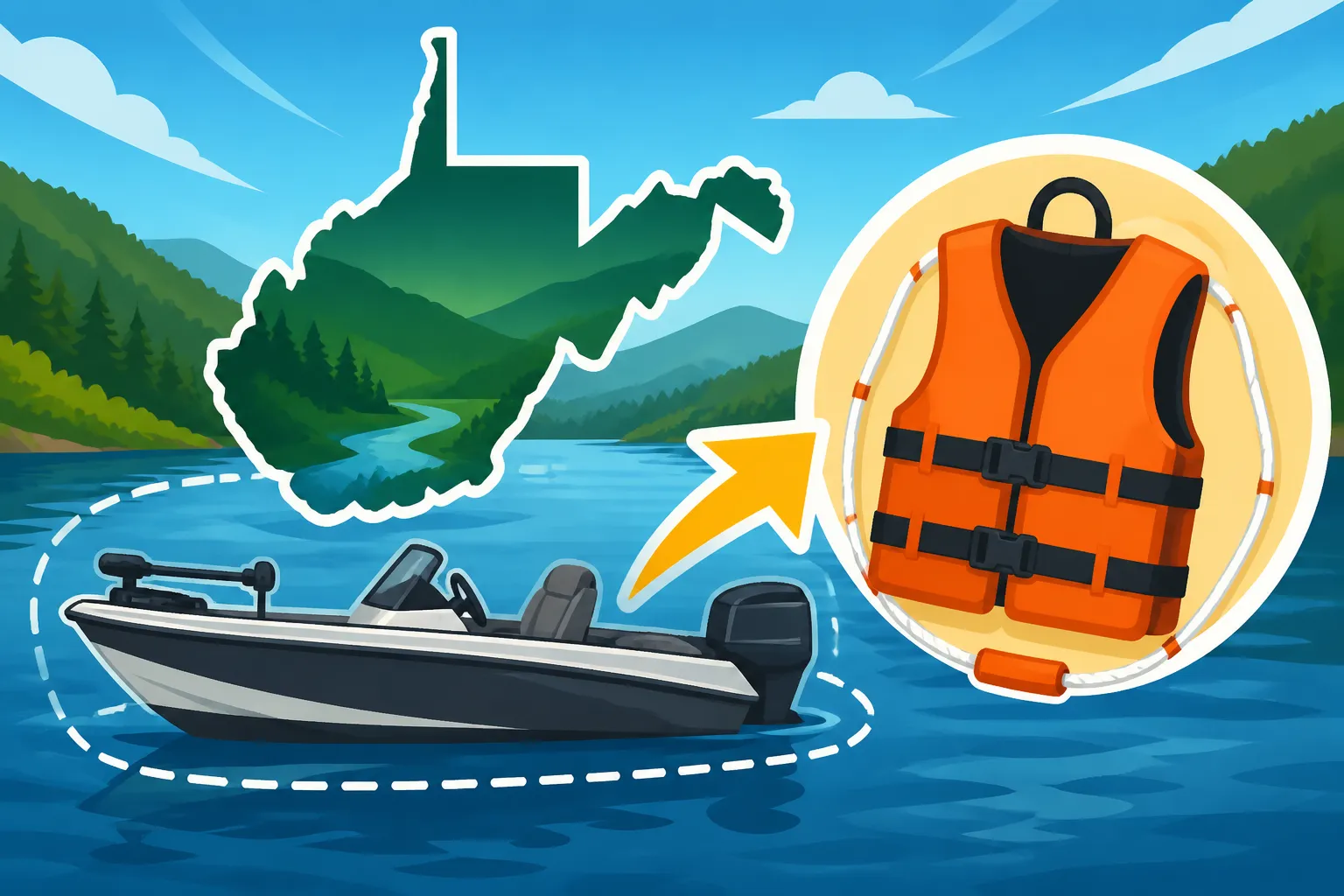
Boat size that requires a throwable life jacket in West Virginia
Navigating the myriad of boating regulations can feel like a labyrinth, especially when you're just trying to enjoy a peaceful day on West Virginia's beautiful rivers and lakes. One common point of confusion for many anglers and recreational boaters revolves around life jackets – specifically, when you need to have a throwable life jacket on board, not just the wearable ones. It's a critical safety item that can save a life, and understanding the precise rules is essential for compliance and peace of mind, which is exactly what this guide aims to unravel for you.
Understanding West Virginia's Life Jacket Laws: Beyond Just Wearing Them
When we talk about life jackets, most people immediately think of the vests you wear, and rightly so – they're incredibly important. However, West Virginia boating laws, aligning with federal regulations, have a specific requirement for additional safety gear: a throwable Personal Flotation Device (PFD). This isn't just a suggestion; it's a legal mandate designed to offer an immediate lifeline to someone who unexpectedly finds themselves in the water, often when a wearable PFD isn't readily accessible or has come off.
The Core Requirement: What the Law Says
So, let's cut to the chase: Any recreational boat that is 16 feet in length or longer must carry at least one Type IV (throwable) PFD on board. This is a non-negotiable rule in West Virginia, mirroring the U.S. Coast Guard requirements. It doesn't matter if your boat is an open fishing boat, a pontoon, a cabin cruiser, or a sailboat – if it measures 16 feet or more from bow to stern, you need that throwable device.
Now, you might be thinking, "What about smaller boats?" This is where it gets a little less complex. Boats under 16 feet in length, including canoes, kayaks, and stand-up paddleboards, are not required to carry a throwable device. However, this doesn't mean it's a bad idea. In fact, seasoned paddlers and small boat enthusiasts often keep one handy, especially on rivers with strong currents or colder waters. While it's not legally mandated for them, the wisdom of having an extra layer of safety, just in case, cannot be overstated. For a broader overview of the essential gear, you might want to check out our guide on West Virginia required boat safety equipment checklist.
It's also crucial to remember that this throwable device is in addition to the requirement of having one wearable PFD (Type I, II, III, or V) for every person on board, and specifically, children under 13 must wear their PFDs at all times when the vessel is underway. The throwable device is for emergency rescue, not for general wear.
Why a Throwable Device is Crucial
Imagine this scenario: you're out on Sutton Lake, enjoying a beautiful summer day. Suddenly, someone leans too far over the side to net a fish or retrieve a hat and tumbles into the water. Maybe they hit their head, or perhaps they're just not a strong swimmer and the current is stronger than anticipated. In this moment, every second counts. If they don't have a wearable PFD on, or if it came off during the fall, a throwable device becomes their best chance.
Trying to maneuver a boat back to a person in the water, especially in windy conditions or strong currents, can be incredibly challenging and time-consuming. A throwable PFD, like a cushion or a ring buoy, can be deployed almost instantly. You can toss it directly to the person, giving them something to grab onto and helping them stay afloat while you or another boat makes a retrieve. This immediate aid can prevent panic, conserve energy, and significantly increase the chances of a successful rescue. It’s a tool for rapid response, designed to bridge that critical gap until a more stable rescue can be executed. It's just one piece of the larger puzzle when it comes to Life Jacket Requirements for West Virginia Boaters.
Defining "Boat Size" and Vessel Types
The specific measurement of your boat is what dictates the throwable PFD requirement. It’s not about how many people you carry or what kind of engine you have, but simply the length of the vessel itself. This can sometimes be confusing, especially for new boat owners or those who are used to smaller craft.
Measuring Your Vessel for Compliance
The "length" of your recreational boat, for the purpose of these regulations, refers to the straight-line distance from the forward-most part of the boat (the bow) to the after-most part of the boat (the stern), excluding any protruding parts like bowsprits, swim platforms, or outboard motor brackets. Essentially, you're measuring the hull itself.
Most boat manufacturers will list the "length overall" (LOA) in their specifications, which typically aligns with this measurement. If you're unsure, or if you've purchased a boat second-hand and the documentation isn't clear, you can easily measure it yourself with a tape measure. Run the tape from the tip of the bow, straight along the centerline, to the very back of the main hull. This measurement determines if you cross that 16-foot threshold. For instance, a 15-foot, 11-inch boat is exempt, but a 16-foot, 0-inch boat is not. This precise measurement is also critical for things like West Virginia Boat Registration Requirements.
Exemptions and Special Cases
As mentioned, boats under 16 feet are generally exempt from the throwable PFD requirement. This includes:
- Canoes and Kayaks: Regardless of length, these human-powered vessels typically don't need a throwable PFD, though, as a veteran angler, I’d still strongly recommend one, especially if you're venturing into rougher waters or colder seasons. For those interested in padding on the water, we have a helpful guide on Best Kayaks for West Virginia Fishing.
- Stand-up Paddleboards (SUPs): These are also considered vessels and require a wearable PFD, but not a throwable device.
- Personal Watercraft (PWCs): While thrilling, PWCs have their own specific PFD requirements (usually a Type I, II, III, or V that is worn by the operator and passengers), but they are not required to carry a throwable device.
It's important to differentiate between federal and state laws. West Virginia generally aligns with US Coast Guard standards for safety equipment, but it's always wise to briefly review the most current WVDNR regulations summary each year, as minor nuances can sometimes arise. Your safety is paramount, and ensuring you're up to date is part of being a responsible boater. For more detailed insights into all boating rules, our resource on West Virginia Boating Laws for Anglers is a great read.
Choosing the Right Throwable Device for Your Boat
Once you've determined that your boat needs a throwable PFD, the next step is choosing the right one and knowing how to properly stow it. This isn't just about ticking a box; it's about having a functional, ready-to-use piece of safety equipment.
Types of Throwable Devices
The US Coast Guard and West Virginia regulations typically specify a Type IV PFD. There are two main categories of Type IV devices you'll commonly encounter:
- Ring Buoys (Life Rings): These are the classic, donut-shaped devices. They're often seen on larger vessels or at public docks. They're excellent for throwing long distances and are easy for someone in the water to hold onto. Many come with a line attached, which can be useful for retrieval.
- Boat Cushions (Throwable Cushions): These are probably the most common Type IV PFDs found on recreational boats. They are square or rectangular, designed to be sat on, but are also buoyant enough to support a person's head and shoulders above water. They are usually brightly colored (orange or yellow) for high visibility. They are compact and often serve a dual purpose as seating.
When choosing, consider durability and visibility. Faded, torn, or waterlogged devices are ineffective and won't pass inspection. You can find a wide variety of Coast Guard-approved throwable devices on platforms like Amazon, making it easy to compare options and read reviews from other boaters. Look for sturdy materials that can withstand exposure to sun and water, and always make sure it clearly states "Type IV PFD" and "USCG Approved."
Here's a quick comparison of common throwable PFDs:
| Feature | Ring Buoy | Throwable Cushion |
|---|---|---|
| Shape | Ring/Donut | Square/Rectangular |
| Primary Use | Emergency throwing, often with a line | Emergency throwing, dual purpose as seat |
| Visibility | High (often brightly colored) | High (often brightly colored) |
| Storage | Can be bulky, often mounted | Compact, can be stowed easily |
| Buoyancy | Excellent | Good |
| Ease of Grasp | Very easy to grasp and hold | Easy to hold onto |
| Cost | Varies, generally comparable | Varies, generally comparable |
Where to Stow Your Throwable Device
This is critical. A throwable PFD is only effective if it's immediately accessible in an emergency. It cannot be stowed away in a locked compartment, buried under a pile of gear, or wrapped in a tarp. It needs to be in an open area where anyone on board can grab it and toss it to someone in the water without delay.
Think about high-traffic areas on your boat or places where someone might accidentally fall overboard. Common locations include:
- On the deck: Secured but not tied down, perhaps under a seat or against a railing.
- Near the helm: Often clipped to a convenient spot.
- In an open compartment: Such as a console storage area that is not latched or covered.
The goal is to eliminate any barrier to quick deployment. If you have to spend precious seconds fumbling, it defeats the purpose. Regularly check its location, especially before you head out, to ensure it hasn't been accidentally moved or covered. This quick check should be part of your routine pre-departure inspection, right alongside ensuring you have enough fuel and that your registration is current.
Staying Compliant and Safe on West Virginia Waters
Being a responsible boater means more than just having the right equipment; it’s about maintaining it and understanding the nuances of the law to ensure maximum safety for everyone on board.
Regular Checks and Maintenance
Just like your engine or your fishing gear, your throwable PFD needs attention. Here's what to look for:
- Physical Condition: Is it faded, torn, or punctured? A damaged PFD will not provide adequate buoyancy. Check for mildew or rot, especially if it's been stored in a damp area.
- Buoyancy: While you can't test its full buoyancy without getting it wet (and ideally having someone try to float with it), you can check for excessive waterlogging, which can reduce its effectiveness. A heavy, waterlogged cushion won't throw well and won't float as effectively.
- Accessibility: As discussed, regularly ensure it's in a spot where it can be quickly deployed. Don't let it become a permanent seat cushion that never sees the light of day. Rotate it, clean it, and make sure it's ready for action.
Considering the diverse conditions of West Virginia's waterways, from calm lakes to swift rivers like the New River Gorge National Park, having reliable safety gear is non-negotiable. You can often find replacement covers or new, durable throwable cushions from marine supply stores or through online retailers like Amazon, ensuring your safety gear is always in top condition.
Common Misconceptions to Avoid
There are a few myths or misunderstandings that often trip up boaters regarding throwable PFDs:
- "My boat is only just 16 feet, so it doesn't count." Nope, 16 feet and over means you need it. There's no grace area.
- "I have plenty of wearable life jackets, so a throwable isn't necessary." As we covered, they serve different, equally critical functions. Wearable PFDs are for wearing; throwable PFDs are for reaching those who unexpectedly enter the water without one.
- "I can just use a spare boat cushion." Only if that spare cushion is specifically designated and approved as a Type IV PFD by the US Coast Guard. A regular seat cushion won't cut it.
- "It's just for show during inspections." While marine patrols do check for compliance, the primary purpose is genuine safety. Don't view it as a hoop to jump through, but as a potential life-saver.
- "My kayak is 16 feet, so I need one." This one's tricky. Remember the specific exemption for canoes, kayaks, and similar human-powered craft. However, if you add a motor, it might shift its classification, so always clarify with the WVDNR if you've modified your vessel.
Understanding these points helps ensure you're not only compliant but genuinely prepared for unexpected situations on the water. For any questions about specific vessel types or compliance, the West Virginia Boater Education Certificate Requirement courses often cover these topics in detail and are a fantastic way to brush up on all boating safety.
At the end of the day, West Virginia's requirements for a throwable life jacket on boats 16 feet or longer are designed to make our waters safer for everyone. It's a small investment in a piece of equipment that could one day make all the difference. Stay safe out there, and enjoy those wild and wonderful West Virginia waterways!
Disclaimer
Please remember that boating regulations can change. While every effort has been made to provide accurate and up-to-date information, it is always the boater's responsibility to consult the latest official West Virginia Division of Natural Resources (WVDNR) regulations and U.S. Coast Guard requirements before heading out on the water. This guide is for informational purposes only and should not be considered legal advice.