Best streamer color for muddy water trout
There's nothing quite as disheartening for a trout angler as rounding the bend of your favorite West Virginia stream only to find it's turned into a churning, muddy torrent after a heavy rain. That crystal-clear water you were dreaming of is now thick and opaque, making you wonder if any fish could possibly see your carefully selected fly. But don't despair! Muddy water doesn't mean the fishing is over; it just means it's time to adjust your strategy, especially when it comes to streamer colors. This guide will walk you through the best streamer colors and techniques to make those murky waters productive for trout in the Mountain State.
Understanding How Trout See (And Don't See) in Murky Conditions
When your favorite trout stream, perhaps the Williams River or the Cranberry, suddenly transforms into a chocolate milkshake, it can feel like all hope is lost for a successful day of fly fishing. But here's the thing: trout are incredibly adaptable creatures, and while their primary sense of sight might be severely hampered in turbid water, they have other finely tuned senses that come into play. Understanding this shift in perception is the first step to choosing the right streamer colors and presentations.
Why Muddy Water is Such a Challenge for Anglers and Trout Alike
Imagine trying to navigate a dense fog with your eyes closed – that's a bit what it's like for a trout in muddy water. The suspended sediment dramatically reduces light penetration, making it incredibly difficult for fish to see their prey, or for us to even spot them. For us anglers, it means we can't rely on visual cues like rising fish, subtle takes, or even seeing our fly in the water. This lack of visual information is a major frustration because so much of fly fishing is inherently visual. We’re used to observing the water, reading the seams, and watching for the tell-tale flash of a fish. When that’s taken away, it feels like we’re casting blind. It's easy to just pack up and go home, convinced there's no point in fishing in such conditions.
Beyond just sight, muddy water can also carry a lot of debris – leaves, twigs, even whole branches – which can snag your line, foul your fly, and generally make casting and presentation a nightmare. The increased current associated with runoff can also displace fish, push them into different holding lies, or make them expend more energy just to stay put. It's a whole new ball game, and it demands a complete shift in tactics and mindset.
How Trout Adapt: The Role of the Lateral Line, Scent, and Vibration
Just because trout can't see doesn't mean they're entirely helpless. Far from it! They rely heavily on their other senses, particularly their lateral line system. This remarkable sensory organ runs along both sides of a fish's body and detects minute changes in water pressure, vibrations, and movements. Think of it like a built-in sonar system. A streamer pulsing through muddy water isn't just a blur; it's a distinct disturbance that the trout's lateral line can pick up, even from a distance. The bigger or more erratic the vibration, the more likely a trout is to detect it. This is why certain types of streamers, those with a lot of movement or a bulky profile, become so much more effective when the water is off-color.
Beyond vibration, scent also plays a more crucial role. While trout aren't bloodhounds, they do possess a keen sense of smell, particularly for things like distress chemicals from prey, or the natural odor of their food sources. In extremely turbid water, a streamer that offers a strong scent profile can be the difference between a missed opportunity and a solid hookup. This can be natural scents from materials like rabbit fur or marabou, or even artificial scents applied to your fly. Finally, trout often become more opportunistic in muddy water. They're less likely to chase down a fast-moving, elusive meal and more likely to strike at something that presents itself as an easy, substantial target. They’re conserving energy, and they’re looking for a meal that practically swims into their mouths.
The Power of Silhouette and Contrast in Low Visibility
When light penetration is poor, the concept of color changes dramatically. A bright yellow streamer might look vibrant in clear water, but in muddy water, it can just disappear. Instead, what becomes paramount is the streamer's silhouette and contrast against the available light, however dim. Think of it this way: even on a heavily overcast day, you can still make out the dark outline of a tree against the slightly brighter sky. Trout experience something similar.
A dark-colored streamer – black, dark brown, purple – creates a strong, distinct silhouette against whatever faint light penetrates the water, or even against the lighter bottom if the fish is looking down. This silhouette is easier for the trout's lateral line to detect and provides a clearer target when they do get a visual cue. It’s not about reflecting light, but about absorbing it and creating a stark profile. This is why the "color" black, which is technically the absence of reflected light, can be so incredibly effective in dark water. It stands out by not standing out. It creates a solid, unmistakable shape that screams "prey!" to a lateral line-dependent trout. The key is to make your offering as easy as possible for a trout to detect, and a strong, dark silhouette is often the best way to do that.
The Go-To Streamer Colors for Murky West Virginia Waters
Alright, let's talk brass tacks. When the New River or the Shavers Fork looks more like coffee than prime trout habitat, what colors should you be reaching for in your fly box? It's not as simple as "bright colors always work" or "dark colors always work." It's about understanding why certain colors are effective in specific murky scenarios and having a diverse selection ready.
Black and Dark Browns: The Classic Choice for Strong Silhouettes
When in doubt, go dark. Black and dark brown streamers are arguably the most consistently effective colors for muddy water trout, and for good reason. As we discussed, they create the most pronounced silhouette against the murky backdrop, making them highly visible to a trout's lateral line system and whatever limited vision they might still have. Imagine a fish looking up at a dark fly silhouetted against a slightly brighter water surface – it just pops.
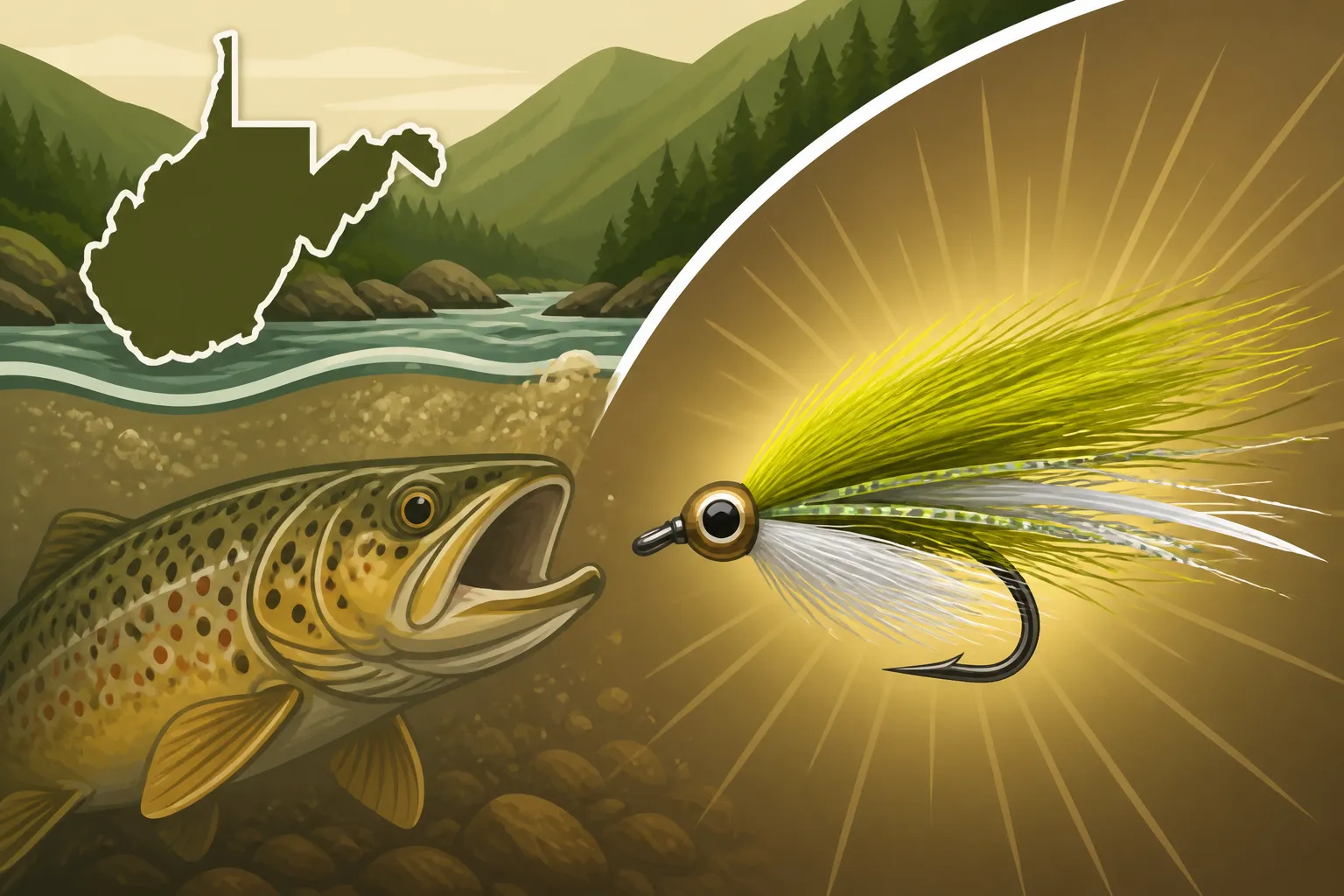
Classic patterns like a black Woolly Bugger, a dark brown Sculpin, or even a Black Conehead Muddler Minnow are absolute staples. These patterns not only offer that crucial dark profile but often incorporate materials like chenille, rabbit strips, or marabou that pulsate and move enticingly in the water, adding to their vibrational signature. I’ve had countless days on the Cranberry River where a simple black Woolly Bugger fished slowly through turbid water was the only thing that got a strike. These colors imitate a wide range of natural prey items that trout key in on, even when they can barely see them: leeches, dark sculpins, or even crayfish that have been washed out by high water. They're reliable, they're versatile, and every West Virginia trout angler should have a healthy supply of them. You can find excellent quality dark streamers and tying materials at places like Bass Pro Shops or through online retailers on Amazon.
Purples and Blues: The Unexpected Depth Charges
This might surprise some anglers, but purple and deep blue streamers can be absolute dynamite in muddy water, particularly when there's a hint of sunlight trying to break through the clouds or the water isn't completely opaque. There's a theory that these colors retain their visibility at greater depths or in low light better than some others, appearing as strong, dark forms to fish. While not as universally accepted as black, many experienced anglers swear by purple for off-color conditions.
Think about a purple-hued Woolly Bugger, or even patterns incorporating subtle blue flash materials. These can mimic juvenile fish or even some larger aquatic insects. I've heard stories from folks fishing the lower Gauley River during high water flows who had incredible success with purple patterns when nothing else was working. It's often the "surprise" color that really shines when the fish are pressured or just not reacting to the standard fare. Don't be afraid to experiment with deep plum or royal blue variations; you might just unlock a secret weapon for those challenging days.
Chartreuse and Bright Greens: When Attractor Colors Get the Job Done
Now, here's where we shift gears from natural imitation to pure attraction. While dark colors create silhouettes, bright "hot" colors like chartreuse and electric green are designed to scream for attention. These colors don't rely on silhouette; they rely on their ability to stand out and reflect whatever ambient light is available, even if it's minimal. They're often called "attractor" patterns because they're meant to irritate, provoke, or simply be impossible to ignore.
When is chartreuse your best friend? When the water is exceptionally muddy, almost "chocolate milk" consistency, and you feel like the fish just can't see anything. In these conditions, a small, bright flash of chartreuse or a fluorescent green can often be the only thing that registers. These colors are particularly effective for recently stocked trout, which are often less wary and more opportunistic than wild trout. They're programmed to strike at something that looks like an easy meal or simply something that moves erratically and draws attention. Think about using a chartreuse Woolly Bugger or a small, bright green streamer. It's a "Hail Mary" sometimes, but it can be incredibly effective when everything else fails. Just be prepared for some aggressive strikes!
Orange and Yellow: Flashy, High Visibility Options for Extreme Turbidity
Similar to chartreuse, bright oranges and yellows fall into the high-visibility, attractor category. These colors are fantastic when the water is truly dingy and you need a fly that shouts "here I am!" They don't try to imitate anything specific; rather, they exploit the trout's instinctive curiosity and predatory urges.
A bright orange or yellow streamer, perhaps with some added flash, can be invaluable. These colors often work best in faster, turbulent water where the fly is moving quickly and needs to catch a fish's eye (or lateral line) in a split second. Patterns like yellow or orange marabou streamers, or even a brightly colored Zonker, can create a fantastic pulsating action in the water, which, combined with the vibrant color, can trigger aggressive strikes. While you might not reach for these first on a clear-water day, they absolutely earn their spot in your fly box for those post-rain, high-water adventures on streams like the Elk River or the Tygart Valley. Remember, sometimes in muddy water, it’s not about tricking the fish, it’s about making sure they know you’re there.
Here's a quick reference table for muddy water streamer colors:
| Streamer Color | Primary Advantage in Muddy Water | Ideal Conditions / When to Use It | Common Patterns (Examples) |
|---|---|---|---|
| Black / Dark Brown | Strong, distinct silhouette | Heavily turbid water, low light, imitating leeches/sculpins | Woolly Bugger, Sculpin, Muddler Minnow |
| Purple / Deep Blue | Good depth visibility, "mystery" color | Moderately turbid water, some ambient light, surprising effectiveness | Purple Woolly Bugger, Streamer with blue flash |
| Chartreuse / Bright Green | High contrast, strong attractor | Very murky water, freshly stocked trout, provoking strikes | Chartreuse Woolly Bugger, Glo-Bug Streamer |
| Orange / Yellow | Extreme visibility, flashy attractor | Exceptionally muddy water, fast currents, aggressive fish | Orange/Yellow Marabou Streamer, Zonker |
Beyond Color: Factors That Make Streamers Effective in Muddy Water
While streamer color is a crucial piece of the puzzle, it's certainly not the only factor that dictates success in murky West Virginia waters. Trout are using all their senses, and a truly effective streamer capitalizes on more than just visual appeal. Think of it as building a multi-sensory experience for the fish.
Size and Profile: Making Your Presence Known
In clear water, a subtle, perfectly matched baitfish imitation can be key. In muddy water? Not so much. Here, you want your streamer to be a billboard, not a whispered suggestion. This means often going with a larger size than you might typically use. A bigger fly moves more water, creates a stronger disturbance, and presents a more substantial target for a trout to hone in on with its lateral line.
Beyond just length, consider the profile of the streamer. A "full-bodied" fly, perhaps with a lot of marabou, rabbit fur, or hackle, will push more water and appear larger than a thin, sparse pattern of the same length. Think about how a big, bushy streamer like a Sex Dungeon or a heavier-dressed Woolly Bugger moves compared to a slim Tying Streamer. That extra bulk translates directly into more vibration and a more distinct presence in the water. Remember, in these conditions, you're trying to appeal to a trout that can barely see, so making your fly feel and sound bigger can be a game-changer. Don't be afraid to go up a hook size or two and choose patterns that truly have some meat to them.
Vibration and Action: The Language of the Lateral Line
This is perhaps the single most important factor after color when dealing with muddy water. Since sight is diminished, a streamer's ability to create vibrations and enticing movement in the water becomes paramount. The trout's lateral line is listening, and you want your fly to be screaming "food!"
Materials like rabbit strips, marabou, and soft hackle are fantastic because they breathe and pulsate even with minimal current or retrieve. Articulated streamers, which have multiple segments, are also incredibly effective as they create a snake-like, undulating motion that sends strong vibrations through the water. Even patterns with rubber legs can add to the overall sensory appeal, providing subtle wiggles and twitches that fish can detect. When you retrieve your streamer, think about how to maximize this action. A jerky, stop-and-go retrieve, or a slow swing that allows the materials to truly flex and flow, will be far more effective than a dead-drift that might just disappear into the murk. The key is to make your streamer feel alive, even if it can't be clearly seen.
Weight and Sink Rate: Getting Down to Where the Fish Are
Muddy water often goes hand-in-hand with higher, faster currents. This presents a new challenge: getting your streamer down to the fish. Trout, especially larger ones, will often move to the bottom or into slower, deeper pockets during high, turbid flows to conserve energy and avoid the main current. If your streamer is simply washing over their heads, even the perfect color and action won't matter.
This means you'll likely need heavier streamers than usual. Flies with tungsten beads, lead wraps, or coneheads are excellent choices. You might also need to add extra weight to your leader, such as split shot, or use a sinking fly line. When selecting your Best Gear for West Virginia Trout Fishing, consider a setup that can handle heavier flies and potentially additional weight. The goal is to get your streamer into the strike zone – that specific depth where the fish are holding – and keep it there for as long as possible. Don't be afraid to over-weight slightly; it's easier to lighten up if needed than to constantly struggle to get your fly down. On larger rivers like the New River, where depths can vary wildly, managing your sink rate is absolutely critical.
Scent: A Subtle but Powerful Advantage
While not always considered a primary factor in fly fishing, scent can provide a subtle yet powerful advantage, especially in extremely low visibility conditions. Think about it: if a trout can't see your fly and is relying heavily on its lateral line, adding a natural or artificial scent can be the final piece of the puzzle that triggers a strike.
Many fly anglers will apply a small amount of commercially available fish attractant to their streamers. These come in various forms, often mimicking the scent of baitfish, crawfish, or natural prey items. You don't need to douse your fly; a small dab on the absorbent materials of your streamer, like marabou or rabbit fur, can disperse slowly in the water and create a scent trail that a trout can follow. While some purists might scoff at adding scent to flies, in challenging conditions like heavy mud, it's another tool in your arsenal to help trout locate your offering. Every little bit of sensory input helps when visibility is zero, and scent can offer that final confirmation to a hesitant fish.
Putting It All Together on the Stream: Tactics for Muddy Water Trout
You've got your dark, bulky, vibrating, and perhaps scented streamer. Now, how do you effectively fish it in those churning, muddy West Virginia waters? It's not just about the fly itself; it's about how you present it and where you choose to cast. Patience and precision are even more important when you can't see what's happening beneath the surface.
Retrieval Techniques: Slow and Intentional is Key
Forget the fast, flashy retrieves you might use in clear water to mimic darting baitfish. In muddy water, trout are rarely going to chase down a quickly moving meal. Instead, you need to slow things down dramatically. Your retrieve should be deliberate, intentional, and focused on maximizing the streamer's inherent action and vibration.
A slow, steady strip with occasional pauses can be incredibly effective. During the pause, the materials of your streamer will collapse and then expand again when you resume stripping, creating a "breathing" motion that fish can detect. Erratic twitches and short, sharp strips can also work, but keep the overall pace slow. Think about how a disoriented or injured baitfish might behave – slow, struggling, and easy prey. If you're swinging a streamer in current, allow it to hang and pulsate through likely holding lies before retrieving it slowly. Remember, the trout are using their lateral line, so consistent vibration and a slow-moving target are more likely to get their attention than a blur that zips by too quickly. You might not feel the subtle tugs you're used to; often, a muddy water strike is a solid thump or a sudden heaviness on the line.
Targeting Structure: Where Trout Hide When the Water is High and Muddy
When rivers blow out and turn muddy, trout don't just disappear. They seek refuge from the main current and the disorienting sediment. This usually means they'll tuck into areas of reduced flow and abundant cover. Understanding these holding lies is critical, as casting aimlessly into the main current is often a waste of time.
Look for seams where faster, muddy water meets slower, clearer eddies. The trout will often be positioned right on the edge of that seam, waiting for food to wash into their holding zone. Deeper pools, especially those with large boulders, submerged logs, or undercut banks, become prime real estate. The structure breaks up the current, providing a comfortable place for fish to hold without expending too much energy. Tributary mouths, where clearer water from a smaller stream enters the main, muddy river, can also be hotspots. How to Fish a Tailwater in West Virginia can offer similar insights on how currents and structure concentrate fish. Fish these areas thoroughly, making multiple casts and varying your retrieve. The trout will be tight to the bottom and tight to cover, so you need to get your streamer right into their living room.
Gear Considerations: Robustness and Readiness
Fishing in muddy, high water often requires a slightly more robust setup than your typical clear-water trout rig. You'll be throwing larger, heavier flies, and potentially fighting stronger fish in challenging conditions.
Consider a slightly heavier fly rod, perhaps a 6-weight, if your usual is a 4 or 5. This will make casting those bulky streamers much easier and provide more backbone for fighting fish in current. A stronger tippet is also advisable; since visibility is low, the trout aren't going to be as leader-shy. You might go up a size or two, from a 4x to a 3x or even 2x, especially if you're targeting bigger fish like the trophy browns found in some of West Virginia's renowned streams. A good quality pair of Best Waders for West Virginia Trout Streams and sturdy wading boots are essential, as you'll likely be navigating slippery, uneven bottoms. Make sure your landing net is robust enough for potentially larger fish and has a rubberized mesh to protect them if you're practicing West Virginia Catch and Release Rules for Trout. You can find excellent selections of Best Fly Rods for West Virginia Trout Streams and other essential gear, often with helpful reviews, from reputable online sources like Amazon or at your local Bass Pro Shops.
Patience and Persistence: The Angler's Mindset
Perhaps the most crucial "tactic" for muddy water is simply cultivating the right mindset: patience and persistence. It's easy to get frustrated when you can't see your fly, you're snagging on debris, and you're not getting immediate results. But those moments when a big trout absolutely hammers your streamer in ugly water are some of the most rewarding.
Don't be afraid to spend extra time working a single promising spot. Make multiple casts from different angles, varying your retrieve and sink rate. Often, it takes repeated presentations for a fish to finally detect your offering and decide to strike. Trust your instincts and the principles of muddy water fishing. The fish are there, they're still eating, and with the right approach, you can turn a seemingly hopeless day into a memorable success. So next time the forecast calls for rain, don't put away your rods; just pull out your dark and bright streamers and get ready to tackle the challenge.
Disclaimer
This article is for general informational purposes only and does not constitute professional advice. Laws, prices and regulations vary by location and change over time. Consult a qualified professional for guidance on your specific situation.