Best circle hook size for catfish
Oh, the eternal quest for the perfect setup, isn't it? There's nothing quite as frustrating as feeling a strong tug, reeling in with anticipation, only to find your bait gone and no fish to show for it. Or worse, struggling to unhook a fish that’s swallowed the hook deep, leaving you worried about its survival. When it comes to chasing those whiskered beauties—our beloved catfish here in West Virginia—the right hook can make all the difference, not just for your success rate but for the fish too. This guide is all about finding that sweet spot: the best circle hook size to make your West Virginia catfish adventures more productive and conservation-minded.
Understanding Circle Hooks for Catfish in West Virginia
Let's be honest, for years, many of us just grabbed whatever J-hook was handy for catfish. And sure, they work, but they often come with their own set of headaches. Circle hooks entered the scene as a bit of a revolution, especially for those of us who care deeply about the health of our fisheries.
Why Circle Hooks are a Game Changer for Catfish Anglers
Circle hooks aren't just a fad; they're a genuinely effective tool, especially when you're targeting catfish in our diverse West Virginia waters. Think about it: our rivers and lakes are home to channel catfish, flathead catfish, and even some impressive blue catfish, particularly in the larger impoundments and along the Ohio River. Each species, and frankly, each individual fish, deserves to be treated with respect, and that's where circle hooks truly shine.
The biggest benefit, and one that resonates deeply with responsible anglers, is the significant reduction in gut-hooking. With traditional J-hooks, fish often swallow the bait and hook whole, leading to difficult and often fatal removals. Circle hooks are designed to hook in the corner of the fish's mouth almost every single time. This means less stress on the fish, easier release, and a much higher survival rate for those you choose to let go. For anyone participating in Catfish Fishing in West Virginia with a mind for conservation, this is paramount.
Beyond conservation, circle hooks actually improve your hookup ratio, once you get the hang of them. No more frantic, wrist-snapping hook sets! The design does the work for you, which means you can often put your rod in a holder, relax, and wait for the rod tip to bend into a nice arch. It's a more relaxed style of fishing that still delivers solid results, and for many of us, that's a huge plus after a long week.
The Anatomy of a Circle Hook and How it Works
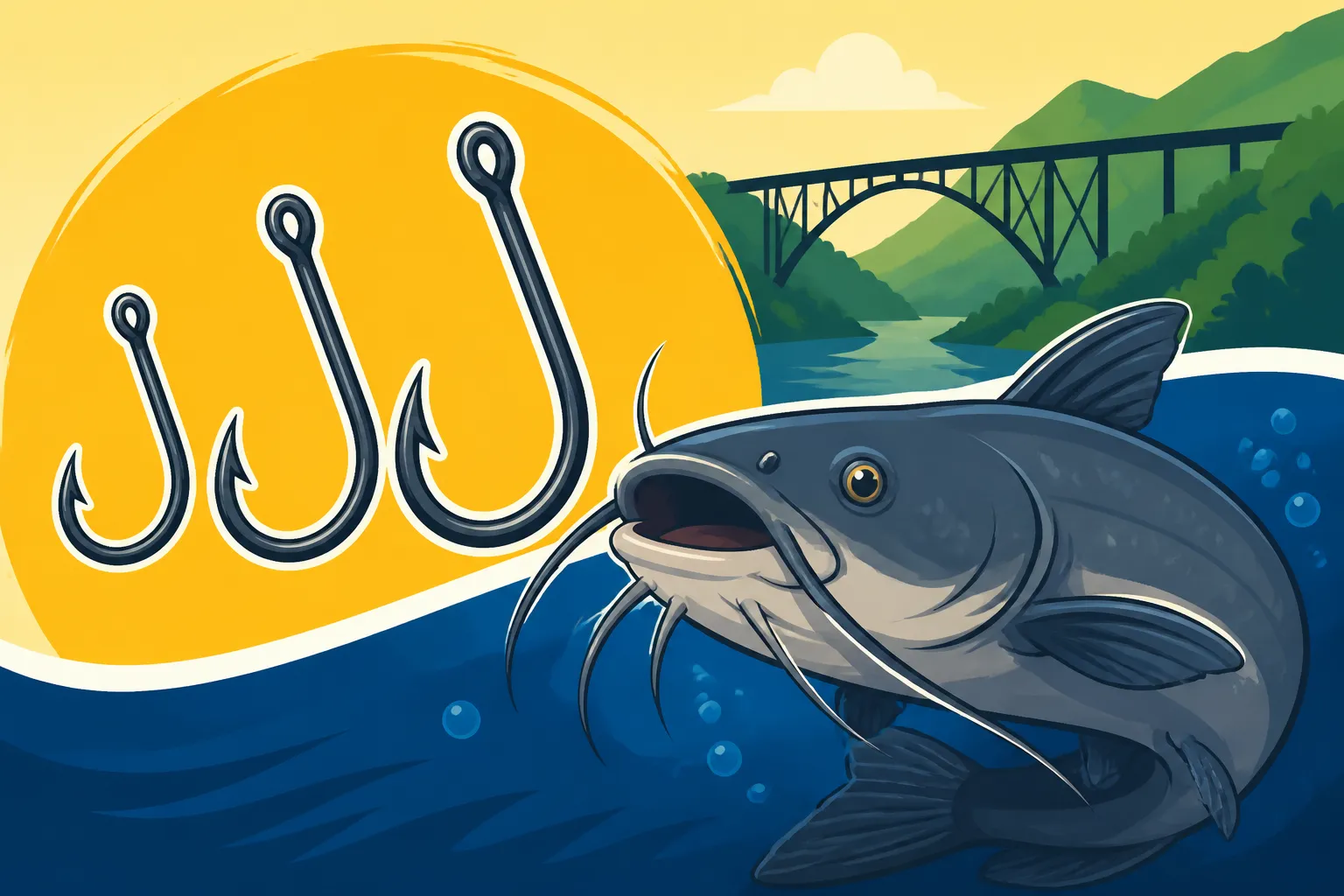
A circle hook is pretty distinctive looking compared to a standard J-hook. Instead of a straight shank and a point that sweeps backward, the point of a circle hook is designed to point inward, back towards the shank. It forms a round or oval shape where the point and barb are parallel to the shank. This unique design is the secret sauce to its effectiveness.
When a catfish takes your bait with a circle hook, it typically swallows the entire assembly. As the fish swims away and the line tightens, the hook is pulled out of the fish's throat or stomach. Because of its inward-pointing design, the hook usually slides to the corner of the mouth, rotates, and sets itself firmly in the tougher, bony cartilage of the jaw. This means you rarely hook a fish in the soft, delicate parts of its throat or gills.
The key to making this magic happen is resisting the urge to "set" the hook like you would with a J-hook. That instinct to rear back and drive the point home? You need to suppress it. Instead, you simply let the fish take the bait, let the line come tight, and then gently reel in, maintaining steady pressure. The fish's own movement and the tension in your line will do all the work. It’s a subtle but crucial shift in technique that, once mastered, will make you a believer in circle hooks.
Factors Influencing Your Circle Hook Size Choice
Now that we know why circle hooks are so great, the big question is, "Which size do I actually need?" This isn't a one-size-fits-all answer, because West Virginia's catfish opportunities are so varied. The best size depends heavily on what kind of catfish you're after, and what you're putting on the hook.
Target Catfish Species and Size
This is probably the most critical factor. Are you hoping to fill a cooler with eater-sized channel catfish, or are you dreaming of a monster flathead from the Ohio River that could smash the state record? Different fish mean different mouths and different fighting styles, and your hook needs to be appropriately matched.
For Channel Catfish, which are abundant in most West Virginia lakes and rivers, you're usually dealing with fish anywhere from a pound up to ten or fifteen pounds. Their mouths aren't massive, and they'll readily take a variety of baits. If you're targeting average channels, a medium-sized circle hook will be your bread and butter. Too big, and they might not get it in their mouth properly; too small, and a larger channel might swallow it deeper than intended, defeating some of the purpose of the circle hook. You'll want something that allows the bait to be presented naturally but still has enough gap to catch the corner of the jaw effectively.
Flathead Catfish, on the other hand, are a different beast entirely. These powerful predators can grow to immense sizes in rivers like the New, Kanawha, and especially the Ohio. They have much larger, wider mouths than channel cats and prefer live baits. If your goal is to land a trophy flathead, you absolutely need a significantly larger, heavy-duty circle hook. A small hook will simply get lost in their cavernous mouths or bend under the strain of their incredible power. Matching the hook size to the potential size of the fish and the bait you’re using is non-negotiable here.
If you're fishing areas where Blue Catfish might be present—larger waters or interconnected river systems—you'll again lean towards larger hooks. Blue cats can rival flatheads in size and power, and they also have big mouths. While Channel Catfish Habits in West Virginia Rivers might suggest one hook size, targeting a truly gargantuan blue cat could require stepping up even further. Always think about the biggest fish you might encounter, not just the average.
Bait Type and Size Considerations
The bait you're using goes hand-in-hand with your target species. A tiny piece of chicken liver demands a different hook than a frisky 8-inch live sunfish.
If you're using smaller cut baits or stink baits for channel catfish – things like shrimp, hot dogs, chicken liver, or small chunks of shad – you'll want a hook that's proportional to that bait. The bait should cover the point, but not overwhelm the hook's gap, allowing it to still rotate and find the corner of the mouth. If the bait is too big relative to the hook, it can impede the hook's ability to turn and set itself properly.
For live bait, especially when you're after flatheads or bigger channels, the hook size becomes even more critical. The hook needs to be large enough to hold your live bluegill, sunfish, or shad securely without killing it, while also leaving enough of the hook exposed to set properly. You typically hook live bait lightly through the back or lips. The hook gap needs to be wide enough so that when the baitfish is attached, the actual point of the circle hook isn't buried or blocked by the bait's body. A common mistake is using a hook that's too small for the live bait, which can lead to missed fish because the point can't clear the bait to find purchase.
Water Conditions and Presentation
While less directly influential on size compared to species and bait, water conditions and how you plan to present your bait can subtly guide your choice. In strong currents, like those found in the main channels of the Ohio or Kanawha rivers, you might opt for a slightly heavier gauge circle hook, even if the size number is similar, just for added strength and to prevent it from straightening under pressure if you hook into a true beast.
Also, consider snag potential. If you're fishing in incredibly rocky or brush-filled areas, a stout, strong hook is your friend, as it's less likely to bend or break if it gets snagged on the bottom. While the primary goal is not to get snagged, having confidence in your gear, especially the hook, allows you to fish more aggressively in prime catfish habitat. This is especially true when you're bottom fishing for catfish in West Virginia rivers, where snags are an almost inevitable part of the experience.
Recommended Circle Hook Sizes for West Virginia Catfish Species
Okay, let's get down to some concrete recommendations. Remember, these are starting points, and personal preference, brand variations, and specific bait choices will always play a role. But this will give you a solid foundation for your West Virginia catfishing arsenal.
Channel Catfish Hook Sizes
For the ubiquitous and delicious channel catfish that populate so many of our lakes and streams, you're generally looking at hooks in the 1/0 to 5/0 range.
- 1/0 to 2/0 Circle Hooks: These are excellent for smaller channels, say up to 5 pounds, especially when using smaller baits like chunks of hot dog, corn, or shrimp. They're also great if you're targeting panfish in the same areas and don't want to exclude smaller cats. If you're after good eating-sized fish and using small pieces of cut bait, this is a perfect starting point.
- 3/0 to 4/0 Circle Hooks: This is your sweet spot for general-purpose channel cat fishing. This size range handles the average 3-10 pound channel cat beautifully and works well with slightly larger cut baits like shad fillets, chicken liver, or larger chunks of prepared stink bait. These hooks provide a good balance of strength and size for the majority of West Virginia channel cat scenarios. Many anglers find the 4/0 to be a fantastic all-around option for How to Catch Catfish in West Virginia Lakes.
- 5/0 Circle Hooks: If you're specifically targeting bigger channels, perhaps in a river system where they grow larger, or using slightly bigger live baits (like small minnows or worms) for them, a 5/0 can be effective. It provides a bit more strength and gap for bigger mouths and baits.
Flathead Catfish Hook Sizes
When you're chasing flatheads, you need to think big. These fish are powerful, and their mouths are designed to engulf prey. You'll typically be using live bait, so the hook needs to accommodate that.
- 6/0 to 8/0 Circle Hooks: This range is your starting point for serious flathead fishing. If you're using live bluegills or sunfish in the 4-6 inch range, a 6/0 or 7/0 circle hook will often be just right. It provides enough gap to keep the bait lively and enough strength to handle a good flathead. Remember, these hooks are generally much more robust than a 6/0 channel cat hook might be, so don't be fooled by the number alone; consider the gauge of the wire.
- 9/0 to 12/0 Circle Hooks: For truly monster flatheads, or if you're using larger live baits (like 7-10 inch suckers or shad), these larger hooks are essential. A 10/0 or 12/0 might seem huge when you first look at it, but when a 30-pound-plus flathead inhales a big live bait, that extra size and strength is what will keep you connected. Fishing the deeper holes and strong currents of the Ohio River Fishing Guide for West Virginia Anglers demands this kind of heavy-duty tackle.
Blue Catfish (where applicable) and Trophy Catfish Hook Sizes
While not as widespread as channel or flathead catfish, blue catfish are expanding their range, and certain areas, especially the Ohio River, can hold impressive specimens. These fish grow incredibly large, often exceeding flatheads in average size in areas where they thrive.
- 8/0 to 15/0 Circle Hooks: For blue cats and truly trophy-sized fish of any species, you need to go big. An 8/0 or 10/0 is a good starting point for medium-sized blue cats, but if you're targeting the truly enormous specimens, stepping up to a 12/0 or even a 15/0 circle hook is not uncommon. These massive hooks can handle large chunks of cut bait (whole shad, carp fillets) or even smaller whole baitfish. You'll want to ensure your entire rig—rod, reel, line, and hook—is up to the task of battling a potential record-breaking fish.
Here's a quick summary table to help visualize these recommendations:
| Target Species | Typical Size Range (lbs) | Preferred Bait Type | Recommended Circle Hook Size Range |
|---|---|---|---|
| Channel Catfish | 1-15 | Cut bait, stink bait, worms, small live bait | 1/0 – 5/0 |
| Flathead Catfish | 10-60+ | Live bait (bluegill, shad, suckers) | 6/0 – 12/0 |
| Blue Catfish (Trophy) | 20-100+ | Large cut bait, large live bait | 8/0 – 15/0 |
Remember, the "size" can vary by brand, so always look at the actual hook gap and wire thickness.
Tips for Using Circle Hooks Effectively in West Virginia
Getting the right hook size is half the battle; the other half is knowing how to use it. Circle hooks demand a slightly different approach than the old J-hook mentality, but once you master it, you'll wonder why you ever did it differently.
The "Don't Set the Hook" Rule and Proper Engagement
This is the golden rule of circle hook fishing, and it's probably the hardest habit to break for seasoned anglers. With a traditional hook, when you feel a bite, your instinct is to forcefully lift the rod, or "set the hook," to drive the point home. If you do this with a circle hook, you'll likely pull the bait right out of the fish's mouth without ever getting a good hookup.
Instead, when you see your rod tip start to bend, or feel that distinctive pull on your line, simply let the fish take the bait. Give it a moment to fully commit and swim off. Once the line comes tight and you feel the weight of the fish, simply start reeling. Don't lift, don't jerk. Just steadily reel, letting the rod load up naturally. The hook will slide into the corner of the fish's mouth and set itself. You'll feel a solid, consistent resistance, and then you'll know you're in business. It feels counter-intuitive at first, but trust the hook's design! Maintaining this steady pressure is key, not just for the initial hook-set but throughout the fight.
Rigging Your Baits on Circle Hooks
Proper bait presentation with a circle hook is crucial for its self-setting mechanism to work. The general principle is to ensure the hook point and barb are exposed or can easily become exposed once the fish takes the bait.
For cut bait, like a piece of shad or a chunk of chicken liver, you typically want to thread the hook through the bait once or twice, leaving the entire curve and point of the hook exposed. Don't wad the bait up and bury the hook point deep inside; that will prevent it from rotating and setting properly. If you're using a large piece of bait, consider a larger hook so that the bait doesn't completely engulf the hook's working parts. For something like chicken liver, which can be mushy, you might want to use a bait holder-style circle hook with barbs on the shank to keep it from sliding off.
When using live bait, such as a bluegill for flatheads, you have a couple of common options. You can hook the baitfish lightly through the lips, from the bottom lip up through the top. This allows the bait to swim naturally and leaves the hook completely exposed. Alternatively, you can hook the baitfish lightly just behind the dorsal fin, being careful to avoid the spine. Again, the goal is for the hook to be as unimpeded as possible. Always check that the baitfish can still swim freely and that its body isn't blocking the hook's ability to pivot. When you're using strong, active live bait for Flathead Catfish in the Ohio River, a robust hook and careful rigging are absolutely essential.
Where to Source Quality Circle Hooks
Finding reliable, strong circle hooks is pretty straightforward these days, thankfully. You want hooks that are sharp, strong, and made from good quality wire that won't bend or snap under pressure from a big West Virginia cat.
Most major sporting goods stores, like Bass Pro Shops, will have a dedicated section for catfish tackle, and you'll find a wide array of circle hooks in various sizes and strengths there. Their staff can also be a great resource for local recommendations. Don't be shy about asking questions! They often have specific knowledge about what works best in nearby waters.
Of course, online retailers are another fantastic option for selection and convenience. Amazon carries a huge range of fishing tackle, including circle hooks from pretty much every major brand. You can easily compare sizes, read reviews, and get hooks delivered right to your door. Just make sure you're buying from reputable brands known for their quality hooks; cheap, flimsy hooks are a recipe for disappointment, especially when you finally get that trophy fish on the line. I always recommend having a few different sizes on hand for Best Bait for Channel Catfish in Summer or for those surprise encounters with bigger fish.
Conclusion
Choosing the best circle hook size for catfish in West Virginia isn't about guesswork; it's about making informed decisions based on the species you're targeting, the size of your bait, and the conditions you're fishing in. By understanding the nuances of hook sizes from 1/0 for those eager channel cats all the way up to 15/0 for a true blue or flathead behemoth, you'll drastically improve your chances of a successful hookup. More importantly, you'll be practicing responsible angling, ensuring that every fish you encounter has the best chance of survival, whether you keep it for dinner or release it to fight another day. So go ahead, rig up some circle hooks, head out to your favorite West Virginia fishing spot, and enjoy the thrill of the chase, knowing you're well-prepared for whatever bites!
Disclaimer
This article is for general informational purposes only and does not constitute professional advice. Laws, prices and regulations vary by location and change over time. Consult a qualified professional for guidance on your specific situation.