Best rod for float fishing the New River
Float fishing the New River in West Virginia is an experience unlike any other, but it presents its own unique set of challenges. Between the powerful currents, the endless submerged rock gardens, and the potential for a monster smallmouth or even an elusive muskie to grab your lure, choosing the right fishing rod isn't just about personal preference—it's about equipping yourself for battle. This guide will walk you through everything you need to consider to select the best rod for a successful and enjoyable float fishing adventure on the legendary New River.
Understanding the Unique Demands of New River Float Fishing
The New River isn't your average placid lake or gentle stream. It's an ancient, powerful waterway carving its way through mountains, presenting a dynamic environment that truly tests your gear. You can go from calm, deep pools to raging rapids and back again in a single float trip, and your rod needs to be able to handle it all.
Navigating Currents and Obstacles
When you're float fishing, whether in a drift boat, raft, or kayak, you're constantly moving, often at the mercy of the current. This means you need a rod that can cast accurately and quickly to specific seams, eddies, and structure before you drift past them. You’ll be slinging lures at submerged boulders, fallen trees, and rocky ledges, where big smallmouth bass love to ambush their prey. A rod that's too short or too whippy will make precise casting a nightmare, leading to frustration and fewer bites. Imagine trying to drop a lure into a tiny pocket behind a rock while the current is pulling your boat at a steady pace – that requires some serious control.
Beyond casting, fighting fish in strong current adds another layer of complexity. A smallmouth in the New River feels twice its size when it's battling against the flow. Your rod needs enough backbone to turn that fish away from snags and bring it to the boat efficiently, minimizing stress on both the fish and your tackle. Having a rod that loads up properly and distributes the fight throughout the blank is crucial to prevent hooks from pulling or line from snapping under pressure.
Target Species and Lure Versatility
While the New River is famous for its incredible smallmouth bass fishing, it's also home to other hard-fighting species like walleye, channel catfish, and, for the truly dedicated, muskie. A versatile rod that can handle a range of lure types is often preferred for float fishing, as you might switch from throwing topwaters and crankbaits to soft plastics and jigs throughout the day. You don't want to carry five different rods in your drift boat, especially if space is limited.
Consider the different techniques you'll employ. Will you be primarily casting spinnerbaits and topwater plugs to shoreline cover, or will you be bouncing jigs and tubes along the bottom in deeper runs? Some anglers might even want to try their hand at larger swimbaits in hopes of tangling with a New River muskie. The ideal rod will allow you to present a variety of these baits effectively, giving you the best chance to adapt to changing conditions and target different species. This versatility makes your float trip more enjoyable and productive, allowing you to maximize your time on the water without constantly re-rigging different rods.
Key Rod Characteristics for New River Float Fishing Success
Selecting the perfect rod involves a balancing act of several factors. Each characteristic plays a vital role in how the rod performs on the water, impacting your casting, sensitivity, and fish-fighting ability.
Rod Length: The Reach and Control Factor
For float fishing on the New River, rod length is a critical consideration. You're typically casting from a boat or kayak, and a longer rod, generally in the 6'6" to 7'6" range, offers several distinct advantages. The extra length provides better casting distance, which can be crucial when you need to reach distant eddies or shorelines as your boat drifts by. It also gives you superior line control, allowing you to mend your line over currents, keep it off the water, and steer fish away from snags. Imagine a big smallmouth diving under a submerged log – a longer rod gives you the leverage to pull its head up and out.
However, there's a trade-off. Overly long rods (8 feet or more) can be cumbersome in tighter quarters, especially if you're fishing from a smaller kayak or trying to cast under overhanging branches. The sweet spot for many New River float anglers often falls in that 7-foot range, offering a great balance of casting power, line management, and maneuverability. Think about the space you'll have in your chosen watercraft and the type of cover you'll be targeting. A slightly shorter rod might be more comfortable for close-quarters pitching around docks or tight banks, but for covering water and controlling your line in moving current, longer is generally better. Best rod length for New River smallmouth bass delves deeper into specific length recommendations for bass.
Rod Power: The Backbone for Big Fish
Rod power refers to the amount of force it takes to bend the rod, or its "lifting power." For the New River, you generally want a rod with a Medium (M) to Medium-Heavy (MH) power rating. A Medium power rod is incredibly versatile, capable of handling a wide array of bass lures, from lighter crankbaits to jigs, and offers a good fight with average-sized smallmouth. It allows for solid hooksets without tearing the hook out of the fish's mouth.
If you're specifically targeting larger smallmouth, or if muskie are a distinct possibility in your float section, a Medium-Heavy rod offers more backbone. This extra power is essential for driving hooks into tougher mouths, pulling big fish out of heavy current, and controlling powerful runs. It gives you the confidence to cast larger lures and tackle bigger fish without feeling under-gunned. Avoid ultra-light or light power rods unless you're specifically targeting panfish or smaller trout in calmer sections, as they simply won't have the muscle needed for the New River's main attractions.
Rod Action: Sensitivity and Hookset
Rod action describes where the rod bends when pressure is applied. It dictates sensitivity and how quickly the rod recovers after a cast or hookset. For float fishing, a Fast or Moderate-Fast action is usually preferred.
- Fast Action: A fast action rod bends mostly in the top third of the blank. This provides excellent sensitivity, allowing you to feel subtle bites even in current. It also offers a quick, powerful hookset, which is crucial when fishing with single hooks (like those on jigs or Texas-rigged plastics) or when you need to react instantly to a strike. The rapid recovery makes for precise, repetitive casting.
- Moderate-Fast Action: This action bends more into the middle of the rod. It offers a good balance between sensitivity and a more parabolic bend. This can be beneficial when throwing treble hook baits like crankbaits or topwaters, as the slightly slower bend acts as a shock absorber, preventing fish from tearing off. It also excels for casting a wider range of lure weights.
For overall versatility on the New River, a moderate-fast action often strikes the best balance, allowing you to fish a variety of baits effectively while maintaining good sensitivity and fighting power. However, if you're a jig specialist, a fast action rod will give you that extra edge in feeling the bottom and detecting light bites.
Recommended Rod Types and Setups
Once you understand the fundamental rod characteristics, it’s time to consider the different types of rods and how they might best fit your New River float fishing style. The choice often comes down to personal preference and the specific techniques you plan to employ.
Spinning Rods: Versatility and Ease of Use
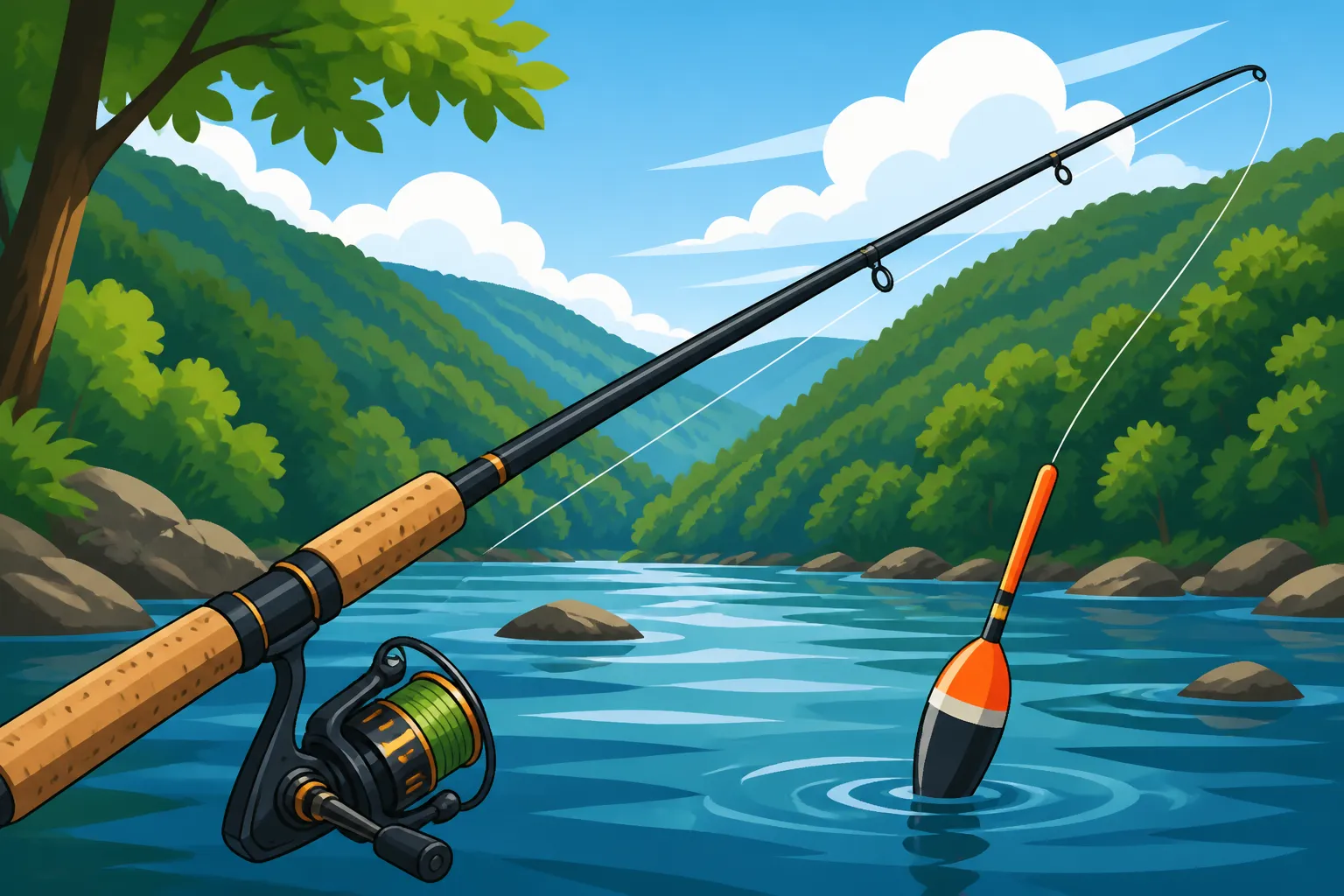
Spinning rods are often the go-to choice for many anglers, especially when starting out or when versatility is key. They are generally easier to cast, particularly with lighter lures or in windy conditions, making them very forgiving for accuracy in a drifting boat. For the New River, a 7' to 7'4" Medium to Medium-Heavy power spinning rod with a fast or moderate-fast action will be an excellent all-around option.
A good spinning setup would pair this rod with a 2500- or 3000-series reel. Best spinning reel size for river smallmouth can provide more detail on selecting the right reel. Spool it with 10-15 lb braided line, tied to a 6-10 lb fluorocarbon leader. This combination offers great casting distance, sensitivity, and enough strength to handle the hard-fighting smallmouth of the New River. You can effectively throw everything from small crankbaits and soft plastics to spinnerbaits and even lighter topwaters. Many anglers find reliable and durable options for spinning setups at local fishing stores or through online retailers like Amazon and Bass Pro Shops.
Baitcasting Rods: Power and Precision
For anglers who prefer baitcasting gear, the New River offers plenty of opportunities to leverage their advantages. Baitcasting rods, when properly matched with a reel, provide superior power and control, especially with heavier lures and when fishing in heavy cover. They offer more direct contact with the line, leading to incredible sensitivity and stronger hooksets. A 6'10" to 7'4" Medium-Heavy power baitcasting rod with a fast action is a popular choice for New River float fishing.
Pair this rod with a high-quality baitcasting reel with a gear ratio suitable for your preferred techniques—a moderate ratio (around 7.1:1) is versatile for many applications. Spool it with 15-20 lb fluorocarbon line or 30-40 lb braided line with a fluorocarbon leader of similar breaking strength. This setup is ideal for pitching jigs and creature baits into submerged wood, bombing larger crankbaits, or even throwing smaller muskie baits if you're feeling ambitious. While there's a steeper learning curve for casting a baitcaster, the precision and power they offer are unmatched once you get the hang of it, especially for experienced anglers looking to hone their craft on a river like the New.
Comparing Rod Types for New River Float Fishing
Here's a quick comparison to help you visualize the strengths of each rod type for New River float fishing:
| Feature | Spinning Rod | Baitcasting Rod |
|---|---|---|
| Ease of Use | Easier for beginners, less backlash | Steeper learning curve, prone to backlashes |
| Casting Accuracy | Excellent with lighter lures, good for skip casting | Excellent with heavier lures, powerful pitching |
| Sensitivity | Very good, especially with braid | Excellent, direct line contact |
| Power/Leverage | Good, especially in MH power | Superior, excels with heavy cover and big fish |
| Lure Weight Range | Excels with lighter lures, versatile | Excels with heavier lures, precise control |
| Cost | Generally more affordable entry points | Can be more expensive for high-performance setups |
| Best For | All-around versatility, lighter baits, open water | Heavy cover, large baits, big fish, precision power |
Ultimately, the "best" rod setup depends on your personal comfort level, fishing style, and the specific fish and conditions you expect to encounter on your New River float trip. If you're planning to target muskie, for instance, you'll need a much heavier setup than if you're solely focused on smallmouth, as detailed in Best Muskie Gear for West Virginia Rivers.
Essential Line and Lure Considerations for Your Rod
Having the right rod is only half the battle; pairing it with appropriate line and lures is crucial for maximizing its performance on the New River. The interplay between your rod, line, and bait greatly influences casting distance, sensitivity, and your ability to hook and land fish.
Line Choices to Complement Your Rod
For New River float fishing, your line choice should prioritize strength, abrasion resistance, and casting performance. The river's rocky bottom and abundant snags are notorious for fraying and breaking lines, so durability is key.
- Braided Line: Many anglers start with braided line as their main line, especially with spinning setups. It offers incredible strength-to-diameter ratio, no stretch (for maximum sensitivity and powerful hooksets), and excellent casting distance. For spinning gear, 10-15 lb test braid is common. For baitcasters, 30-40 lb test braid provides the backbone needed for bigger fish and heavier cover. The only downside is its visibility, which is why a leader is almost always used.
- Fluorocarbon Leader: Regardless of whether you use braid or mono as your main line, a fluorocarbon leader is highly recommended for New River fishing. Fluorocarbon is nearly invisible underwater, extremely abrasion resistant, and offers good knot strength. For smallmouth, a 6-10 lb fluorocarbon leader is a great choice, typically connected to your main line with a blood knot or an FG knot. This leader provides the stealth needed in the often clear waters of the New River, especially on sunny days. Best Fluorocarbon Line for Clear River Water offers more insight into this essential component.
- Monofilament Line: While not as popular as braid or fluorocarbon for main lines on the New, monofilament still has its place. Its stretch can be advantageous for treble hook baits, as it helps prevent hooks from pulling out. It's also generally more forgiving for beginners. A 10-12 lb monofilament might be considered for a spinning setup if you're primarily throwing crankbaits and topwaters. However, its lower abrasion resistance compared to fluorocarbon and braid means you'll need to check your line frequently for nicks and abrasions. Best Line Weight for Muskie Fishing also details line considerations for larger species.
Lure Pairings for Optimal Rod Performance
Your chosen rod's power and action will dictate which lures it handles best. Matching the lure weight to the rod's specifications is crucial for efficient casting and proper lure action.
- Medium Power Rods: These rods excel with a wide range of bass lures, including 1/4 to 1/2 oz spinnerbaits, smaller crankbaits (like square bills or lipless cranks), topwater poppers and walking baits, and finesse jigs or Texas-rigged plastics in the 1/8 to 3/8 oz range. The rod's moderate power allows for good lure presentation without overpowering the bait.
- Medium-Heavy Power Rods: Stepping up in power allows you to comfortably throw heavier baits. Think 3/8 to 3/4 oz jigs, larger creature baits, bigger spinnerbaits (3/4 oz and up), deep-diving crankbaits, and even lighter muskie bucktails or swimbaits if you're on the hunt for the river's toothy critters. The added backbone helps drive larger hooks home and maintain control of these heavier presentations.
When you’re out on the New River, observe what the fish are keying in on and adjust your lure selection accordingly. Having a versatile rod that can handle a variety of these options means you're prepared for whatever the river throws at you. You might start the day with topwater lures and then switch to jigs as the sun gets higher and the fish move deeper. Don't forget to check out articles like Best Baits for Smallmouth Bass on the New River for specific lure recommendations.
Care and Maintenance for Your New River Rod
A quality fishing rod is an investment, especially one destined for the rigors of float fishing on the New River. Proper care and maintenance will ensure your rod performs flawlessly for years to come and withstands the bumps, splashes, and grit that come with river adventures. Neglecting your gear can lead to premature wear, reduced performance, and even breakage at the worst possible moment.
Cleaning After Each Trip
It might seem tedious after a long day on the water, but a quick rinse of your rod and reel is paramount. The New River, like many rivers, carries fine sediment and grit that can get into reel mechanisms, foul rod guides, and abrade your line.
After each float trip:
- Rinse thoroughly: Use a gentle stream of fresh water (not high-pressure) to rinse your rod from tip to butt. Pay special attention to the reel seat, guide feet, and all guide rings.
- Wipe down the blank: Use a soft cloth or sponge to gently wipe down the entire rod blank, removing any dirt, algae, or grime.
- Clean the reel seat: Make sure to clean the threads and hood of the reel seat, as this area often collects sand and grit, which can damage your reel foot over time.
- Air dry: Allow your rod to air dry completely before storing it. Never put a wet rod into a rod sleeve or case, as this can trap moisture and lead to mildew or corrosion, especially on metal components.
This simple routine takes just a few minutes but will significantly extend the life and performance of your rod. Think of it as putting your tools away clean after a tough day's work.
Inspecting Guides and Components
Before and after every trip, take a moment to carefully inspect your rod's components. This quick check can prevent major headaches on the water.
- Rod Guides: Run a cotton swab or a piece of an old nylon stocking around the inside of each guide ring. If it snags, you likely have a cracked or chipped guide. A damaged guide will rapidly fray and weaken your line, leading to unexpected break-offs. Replacing a guide is a relatively simple and inexpensive fix compared to losing a trophy fish because of a bad guide.
- Reel Seat: Ensure the reel seat still tightens securely and holds your reel firmly in place. Loose reels can lead to poor casting, reduced sensitivity, and even lost reels if they vibrate free during a cast. Check for any cracks or wobbles in the seat.
- Rod Blank: Inspect the entire rod blank for any nicks, deep scratches, or stress fractures, especially near ferrules (where multi-piece rods connect) or where the blank meets the handle. Even minor damage can compromise the rod's integrity and lead to a catastrophic break under pressure.
- Handle and Cork: Check the cork or EVA foam handle for any damage or excessive wear. While mainly cosmetic, a damaged handle can affect your grip and comfort.
Addressing these issues proactively will ensure your rod is always in top fighting condition, ready to tackle the next big smallmouth or muskie the New River has to offer. A well-maintained rod is a reliable companion on the water.
Disclaimer
This article is for general informational purposes only and does not constitute professional advice. Laws, prices and regulations vary by location and change over time. Consult a qualified professional for guidance on your specific situation.