Blind Angler Fishing License Exemption in West Virginia
Navigating the world of fishing licenses and regulations can feel like deciphering a cryptic code, and for anglers with specific needs, it often presents an even greater challenge. No one wants to spend their precious time on the water worried about paperwork. This comprehensive guide is designed to cut through the confusion, specifically detailing West Virginia's provisions for blind anglers, ensuring you understand how to obtain your free fishing license and what it means for your time enjoying the Mountain State's beautiful waters.
Navigating West Virginia's Fishing License Landscape
For many of us who love to cast a line in West Virginia, buying an annual fishing license is just part of the routine. You head to the local sporting goods store, or hop online, and get your permit. But for some, particularly those who face unique challenges, the system has provisions designed to ensure everyone can enjoy the peace and thrill of fishing. It's about making our incredible natural resources accessible to all.
The Standard Requirement for Most Anglers
Generally speaking, if you're 15 years old or older and want to fish in West Virginia's public waters, you need a valid fishing license. This isn't just a revenue thing for the state; it's how the West Virginia Division of Natural Resources (WVDNR) funds critical conservation efforts, fish stocking programs, habitat restoration, and enforcement. Whether you're a resident or just visiting, there's typically a license requirement. Residents generally pay less, of course, and there are various options from annual to multi-day permits. It can be a bit of a headache sometimes trying to figure out which one you need, especially if you're also looking into combination licenses or dealing with different age brackets. You might find it helpful to look into the general requirements laid out in a guide like West Virginia Fishing License Age Requirements or explore all the possibilities in Free and Discounted Fishing License Options in West Virginia. It’s a foundational piece of information that every angler needs to understand before they even think about dipping a line.
Imagine you've just moved to West Virginia and are eager to explore its fishing opportunities. Your first thought, quite rightly, is probably, "What license do I need, and how much is it going to cost me?" This is the hurdle everyone faces. The state wants to ensure that everyone contributes, in some way, to the stewardship of its natural beauty. For most, it's a straightforward purchase. But for those with disabilities, the WVDNR recognizes that sometimes, a different approach is needed to foster participation rather than create barriers.
The Purpose Behind Special Provisions and Exemptions
The idea of special provisions, like a free license for blind anglers, isn't about giving anyone an unfair advantage. It's about equity and ensuring that physical challenges don't completely prevent someone from enjoying a beloved pastime. West Virginia, like many other states, understands that the benefits of outdoor recreation, particularly fishing, extend far beyond just catching fish. It's about mental well-being, connection to nature, social engagement, and a sense of accomplishment. Without these exemptions or special licenses, some individuals would simply be unable to participate due to financial or logistical barriers related to their disability.
These provisions are rooted in a broader commitment to inclusivity. The WVDNR strives to make fishing accessible to as many people as possible, recognizing the diverse needs of its residents. While the majority of anglers purchase standard licenses, these specialized options ensure that the spirit of outdoor recreation is truly for everyone. It demonstrates a thoughtful approach to conservation that includes human factors, making sure that those who want to experience the state's incredible fishing, regardless of their circumstances, have a clear path to do so. This approach allows individuals with specific challenges to participate in a meaningful way, fostering a lifelong connection to West Virginia’s wild and wonderful waters.
West Virginia's Free Permanent Fishing License for Blind Residents
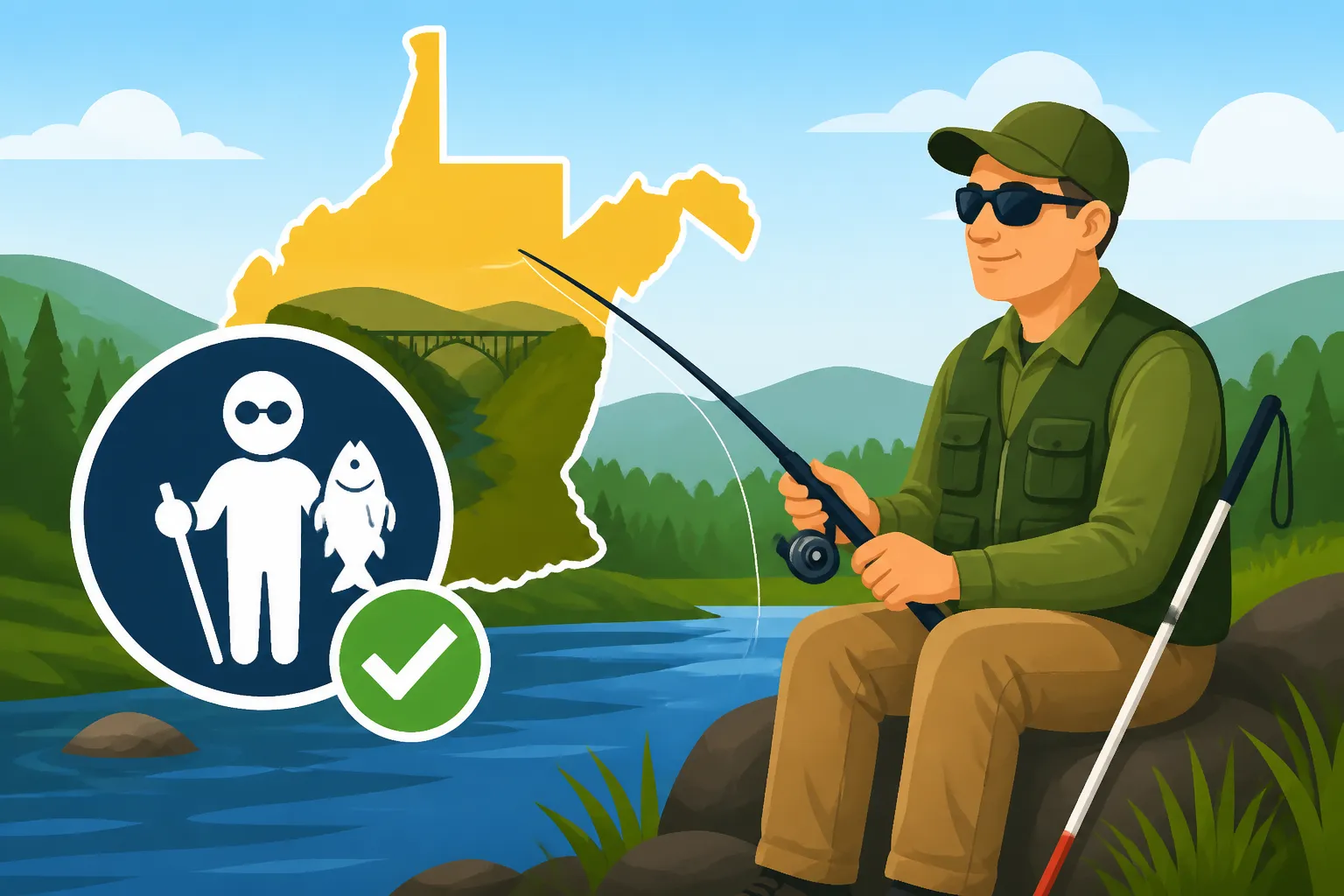
Now, let's talk about the specific provision that brings us here: the free permanent fishing license for blind residents of West Virginia. This isn't a complex loophole or a temporary measure; it's a clear, established part of state law designed to support its citizens. It's a testament to West Virginia's commitment to making outdoor recreation accessible.
Defining "Blindness" Under WV Law for Eligibility
The West Virginia Code is quite specific when it comes to who qualifies for this particular license. According to West Virginia Code 20-2-33, any resident who is "totally blind" is eligible, upon application to the Director of the Division of Natural Resources, to be issued a permanent fishing license free of charge. But what exactly does "totally blind" mean in this context? Generally, it refers to individuals who have no perception of light or who have visual acuity of 20/200 or less in the better eye with the use of corrective lenses, or a visual field of 20 degrees or less. This definition typically aligns with the legal definition of blindness used for other state and federal programs.
It's not just a casual self-declaration; there's a specific standard. The WVDNR needs a clear, professional assessment to grant this valuable license. This ensures that the program is properly administered and reaches those for whom it was intended. If you or someone you know believes they meet this criterion, understanding this legal definition is the crucial first step. It avoids confusion and streamlines the application process, ensuring that the necessary medical documentation can be prepared correctly right from the start.
The Application Process and Required Documentation
Applying for this free permanent fishing license involves a few steps to verify eligibility. The WVDNR doesn't make it overly complicated, but they do require official documentation. Typically, you'll need to provide certification of your total blindness. This usually comes in the form of a statement from a licensed ophthalmologist or optometrist, or a similar official document from a state agency dedicated to serving individuals who are blind. This verification confirms that you meet the legal definition.
Once you have this medical certification, you'll need to fill out a specific application form provided by the WVDNR. This form will ask for your personal details, proof of residency, and, of course, the attached certification of blindness. It's important to be thorough and accurate with all the information. The best approach is to contact the WVDNR directly or visit their official website to get the most current application forms and instructions. They can guide you through the exact process, ensuring all your paperwork is in order. It might feel like a bit of a bureaucratic hurdle, but once completed, this license grants you the freedom to fish the beautiful waters of West Virginia for a lifetime, without worrying about annual renewals or fees. You'll join a community of anglers who appreciate the state's efforts to make fishing a possibility for everyone, regardless of their visual impairment.
Your Free License in Hand: What to Know While Fishing
So, you've successfully navigated the application process and received your free permanent fishing license. That's fantastic! But the journey doesn't quite end there. Knowing what to do with it and how to ensure you're always in compliance while enjoying your time on the water is just as important.
Displaying Your Valid License and Proof of Eligibility
Even though your license is free, it's still a valid legal document, and you need to treat it as such. When you're out fishing, you must have your license with you. This is crucial for proving to a conservation officer that you are legally authorized to fish. While the physical license itself will state that it's a permanent fishing license, it’s also a good idea to carry a copy of the official documentation that confirmed your total blindness, especially when you first get the license, just in case there are any questions. It’s always better to be over-prepared than under-prepared when it comes to regulations.
The WVDNR typically issues physical licenses, but increasingly, digital options are becoming available and accepted. You might be able to keep a digital copy on your phone or tablet, but check the latest WVDNR guidelines on Printing or Carrying a Digital Fishing License in West Virginia to ensure it's permissible and easily accessible. The goal is simple: if a conservation officer asks to see your license, you should be able to present it promptly. This shows respect for the law and the officers who uphold it, making for a smooth and pleasant interaction. Having everything ready means you can focus on the fishing, not on potential administrative issues.
Fishing with a Sighted Companion: Rules and Best Practices
Many blind anglers enjoy fishing with a sighted companion, whether it's a friend, family member, or a guide. This partnership can greatly enhance the experience, providing assistance with baiting hooks, casting, navigating shorelines, or identifying fish species. The good news is that your sighted companion does need their own valid West Virginia fishing license if they are participating in the act of fishing (e.g., holding a rod, casting, retrieving). Your free license only covers you, the blind angler.
However, if your companion is solely assisting you without actively fishing themselves (for example, just helping you get to the spot, untangling lines, or preparing your bait without touching a rod themselves), they typically would not need a license. It’s a fine line sometimes, so err on the side of caution. It's always best practice for any accompanying individual who might even remotely participate in the angling process to have their own license. This clarity prevents any potential misunderstandings with conservation officers and ensures everyone is legally compliant. This way, you and your companion can relax and enjoy the shared experience, knowing all the rules are being followed.
Essential Resources and Support for Blind Anglers
Even with your free license in hand, you might have questions or need further assistance. The WVDNR and various community organizations are valuable resources that can help make your fishing experience even better. Don't hesitate to reach out!
Connecting with the West Virginia DNR for Information
The West Virginia Division of Natural Resources is your primary source for all fishing-related information. Their website is a treasure trove of regulations, stocking schedules, and contact information. If you have specific questions about your blind angler license, other exemptions, or any aspect of fishing in the state, reaching out to the WVDNR headquarters or your local district office is always the best course of action. They have staff dedicated to answering these queries and ensuring that everyone understands the rules.
You'll find detailed explanations of various fishing regulations in resources like West Virginia Fishing Regulations Explained and can even download the annual summary. Taking the time to review the official regulations is always a smart move. They often provide clarity on specific scenarios that might arise, helping you stay informed and compliant. Their phone numbers are readily available online, and often, a quick call can clear up any confusion much faster than trying to interpret legal jargon on your own. Engaging directly with the DNR shows initiative and ensures you're getting information straight from the source.
Finding Accessible Fishing Locations and Community Programs
West Virginia has made significant strides in creating more accessible outdoor recreational opportunities, including fishing. Many state parks and public fishing areas feature handicap-accessible fishing piers, paved paths, and other amenities designed to accommodate individuals with disabilities. These locations are fantastic for blind anglers, offering easier access to the water and often a safer, more predictable environment. Look for these designated spots as you plan your outings. A great place to start looking for these locations would be a resource like Handicap-accessible fishing piers in West Virginia.
Beyond physical access, there are often community programs and non-profit organizations dedicated to adaptive outdoor recreation. These groups might offer guided fishing trips, specialized equipment, or simply connect you with other anglers who share similar experiences. A quick online search or inquiry with the WVDNR can often point you towards these local resources. For instance, some organizations might have specialized rod holders or casting aids that can be incredibly helpful. Exploring locations like those highlighted in the West Virginia State Park Fishing Guide can also reveal parks that are particularly well-suited for accessible fishing experiences. These programs and accessible spots are invaluable for fostering a supportive community and making fishing truly enjoyable for everyone.
Beyond the License: Adhering to All Other Fishing Regulations
While your free permanent fishing license is a wonderful benefit, it's absolutely crucial to remember that it exempts you only from the license fee. All other fishing regulations in West Virginia still apply. The fish don't care if you have a free license; they still need to be protected according to state rules!
Understanding Bag Limits, Size Restrictions, and Seasons
Every species of fish in West Virginia has specific rules designed to manage its population and ensure sustainable fishing for future generations. This includes bag limits (how many fish of a certain species you can keep in a day), possession limits (how many you can have on hand at any given time), and size restrictions (minimum or maximum lengths for fish you keep). For example, you might be allowed to keep a certain number of trout, but they all have to be over a specific length. These rules can vary by species and even by specific water body, so it’s never a one-size-fits-all situation.
It's your responsibility as an angler to know and follow these rules. This means staying up-to-date on the current regulations, which are published annually by the WVDNR. You can often find a comprehensive overview in guides like West Virginia Bag and Possession Limits by Species or check specific dates in West Virginia Fishing Season Dates and Closures. Disregarding these rules, even unintentionally, can lead to fines and penalties. It’s important to treat every fishing trip as an opportunity to practice responsible angling, which includes careful handling of fish you intend to release and accurate measurement of those you keep. Staying informed is a sign of respect for the resource and fellow anglers.
The Importance of Special Stamps and Designated Water Rules
This is where things can get a little tricky, so pay close attention. Even with a free permanent fishing license, you might still need to purchase certain special stamps or permits if you plan to fish in specific ways or for particular species. The most common example is the West Virginia Trout Stamp. If you intend to fish for trout in designated trout waters, or if you harvest trout anywhere, a valid trout stamp is typically required in addition to your base fishing license, regardless of whether that license was free or purchased. The language of the law often specifies "a valid fishing license and a trout stamp," meaning the two are separate requirements.
Similarly, some waters have very specific "Special Regulation Waters in West Virginia" rules that go beyond the general statewide guidelines. These could include catch-and-release-only sections, artificial lures-only restrictions, or different size and creel limits. You might also find unique regulations on boundary waters like the Ohio River. Always consult the official WVDNR regulations summary for these details. Information like that found in Trout Stamps and Trout Fishing Rules in West Virginia will be indispensable for understanding these additional requirements. It’s easy to overlook these extra layers of regulation, but doing so could lead to a citation. Being aware of these nuances ensures a truly compliant and worry-free fishing experience.
| Regulation Type | General Angler Requirement | Blind Angler Requirement (WV Resident) | Notes |
|---|---|---|---|
| Base Fishing License | Required (Purchased) | Required (Free Permanent License) | Documentation of total blindness needed for application. |
| West Virginia Trout Stamp | Required (Purchased) | Required (Purchased) | Separate from base license; covers designated trout waters/harvest. |
| Conservation Stamp | Required (Purchased) | Required (Purchased) | Often tied to base license; funds conservation. |
| Bag & Possession Limits | Apply to all | Apply to all | Species-specific limits still enforced. |
| Size Limits | Apply to all | Apply to all | Minimum/maximum lengths for harvested fish still enforced. |
| Season Dates | Apply to all | Apply to all | Specific opening/closing dates for certain species still apply. |
| Special Water Rules | Apply to all | Apply to all | Catch-and-release, artificial lures only, etc., still in effect. |
Enhancing Your Fishing Experience: Gear and Planning Tips
Having your license and understanding the rules is fundamental, but let's talk about making your actual time on the water as enjoyable and successful as possible. A little bit of thoughtful planning and the right gear can make all the difference.
Recommended Gear for an Accessible Angling Adventure
While fishing often relies on sight for casting and presentation, many aspects can be adapted or enhanced with the right equipment. For instance, quality reels with distinct audible clicks for drag settings can be incredibly helpful. Rods that provide good tactile feedback when a fish bites are also excellent choices. Simple things, like a tackle box with clearly organized compartments that you can learn by touch, can speed up bait and lure changes. Many companies, including those found on platforms like Amazon, offer innovative fishing tools that can assist with tasks like knot tying or hook removal, making them easier and safer for blind anglers. Consider ergonomic handles on tools for a more secure grip.
If you enjoy bait fishing, using pre-rigged leaders can save a lot of time and frustration. Look for lines that are easy to tie and handle, or perhaps explore different line colors for easier distinction if you have any residual vision. When thinking about Best Gear for West Virginia Trout Fishing, for example, you'd consider rods with sensitive tips and reels that offer smooth, consistent drag. Also, practical items like a good pair of waterproof gloves can improve grip and protect your hands, regardless of your vision. The key is to think about how each piece of gear interacts with your senses and choose items that enhance your experience through touch and sound.
Planning Your Trip for Safety and Enjoyment
Safety should always be your top priority, especially when fishing. When planning a trip, particularly to a new location, it’s vital to consider the environment. If you're fishing alone, choose familiar spots with predictable terrain. If you're with a companion, discuss safety measures beforehand and let them know any specific needs you might have. Always let someone know where you're going and when you expect to return. Mobile phones are essential for emergencies, and there are many apps that offer navigation assistance and even weather alerts that can be invaluable.
Consider the type of fishing you want to do. Bank fishing at an accessible pier or a calm lake can be much more straightforward than navigating a rocky riverbank. Locations found in the Best Shore Fishing Spots in West Virginia guide can offer great starting points. Research the access points, parking, and any potential hazards before you go. The WVDNR provides detailed maps and descriptions of many public fishing areas. If you plan to wade, a sturdy wading staff is a must for maintaining balance and feeling out the riverbed. Companies available on Amazon offer excellent, robust wading staffs that fold up for easy transport. Even something as simple as a designated spot on your vest for frequently used items can make fishing much more efficient and enjoyable. With a little forethought and preparation, you can ensure your fishing trips are both safe and incredibly rewarding.
Disclaimer
The information provided in this guide is intended for general informational purposes only and does not constitute legal advice. Fishing regulations in West Virginia are subject to change. Always consult the official West Virginia Division of Natural Resources (WVDNR) website or their official publications for the most current and accurate regulations before engaging in any fishing activities.