Best life jacket for whitewater fishing
Anglers drawn to the thrilling rush of West Virginia’s whitewater rivers know that these waters offer some of the most exciting fishing opportunities imaginable. However, the very characteristics that make these rivers so exhilarating – the swift currents, challenging rapids, and often cold, unpredictable conditions – also demand a serious approach to safety gear. Simply grabbing any old life vest you have lying around for a placid lake day just isn't going to cut it when you're navigating the powerful flow of the New River or pitching lures in the Gauley’s eddies. This guide is dedicated to helping you understand why a specialized life jacket is not just a good idea, but an absolute necessity for whitewater fishing, and how to choose the one that will keep you safe and comfortable.
Why Your Everyday Life Vest Won't Cut It for West Virginia's Whitewater
Many of us have a collection of life jackets or PFDs (Personal Flotation Devices) stashed away for various water activities. There’s the bulky orange Type I vest for offshore boating, the sleek Type III for kayaking on a calm lake, and maybe some inflatable options. But when you’re talking about fishing the roaring stretches of the Cheat River or navigating a drift boat through Class II rapids on the New, these standard vests fall short. The environment itself poses unique challenges that demand specific features from your PFD, going far beyond basic flotation.
The Dynamics of West Virginia's Wild and Wonderful Rivers
Think about the sheer power of a river like the New River Gorge, carving its way through ancient mountains. You’re not just dealing with flat water; you’re contending with strong, directional currents that can sweep you downstream quickly, powerful hydraulics that can pull you under, and submerged rocks and fallen trees that pose impact hazards. The water can be surprisingly cold, even in summer, increasing the risk of hypothermia if you take an unexpected swim. Plus, many of these prime whitewater fishing spots are remote, meaning help might not be readily available if an accident occurs.
In such an environment, an ill-fitting or under-equipped life vest can actually hinder your ability to self-rescue or be rescued. It might ride up, restrict your movement, or simply not provide enough buoyancy to keep you afloat in turbulent water, especially if you’re wearing heavy fishing waders or carrying gear. It's a completely different ballgame than fishing for panfish from a dock on a calm lake, and your gear needs to reflect that reality.
Understanding the Critical Need for Buoyancy and Impact Protection
When you find yourself unexpectedly in whitewater, the forces acting on your body are immense. A standard PFD, typically offering around 15.5 pounds of buoyancy, might be sufficient in calm conditions, but it could prove inadequate against strong currents trying to pull you down or push you into obstacles. Whitewater PFDs are designed with significantly more flotation, often upwards of 22 pounds, specifically to keep your head and shoulders well above the water in aerated, turbulent conditions where buoyancy is naturally reduced.
Beyond just staying afloat, there’s the very real danger of impact. Imagine being swept into a rock garden or against a downed tree. A standard vest offers minimal padding. Whitewater PFDs, however, are built with thicker, strategically placed foam panels that not only provide superior buoyancy but also absorb significant impact. This protection can be the difference between a minor bump and a serious injury. Don’t just think about staying on top of the water; think about protecting yourself from what’s in the water.
Essential Features to Look for in a Whitewater Fishing PFD
When you start browsing for a whitewater fishing PFD, you'll quickly notice that they look and feel different from other life vests. These distinctions are not aesthetic; they are born out of necessity for safety and functionality in demanding environments. You’re looking for a piece of gear that acts as both a flotation device and a tactical vest.
Buoyancy Ratings and Flotation Design for Maximum Safety
The PFD types you're most likely to encounter for whitewater fishing are Type III and, more commonly, Type V.
- Type III (Flotation Aid): While many general fishing vests are Type III, a specialized whitewater Type III will have higher inherent buoyancy (closer to 20 lbs) and a design focused on active use. The flotation is distributed to allow for maximum arm movement for paddling and casting, but still provides a comfortable, face-up flotation angle.
- Type V (Special Use Device): This is where many true whitewater and rescue PFDs live. They often have very high buoyancy ratings and include specialized features like quick-release harnesses, which are critical for swiftwater rescue. A Type V PFD can sometimes substitute for a Type III or Type II, but only if worn and used according to its label instructions. For serious whitewater fishing, a Type V designed for paddlers or swiftwater professionals offers the highest level of safety and functionality.
The key is not just the total buoyancy, but how that flotation is distributed. You want foam that is concentrated around your torso, providing core warmth and keeping your lungs above water, but with a low-profile design around the shoulders and arms to avoid restricting your range of motion.
Durability and Construction Materials Built for the Abuse
Whitewater environments are tough on gear. Your PFD will rub against boat seats, rocks, and trees. It will get wet, dry, and wet again. Cheap materials simply won't hold up. Look for PFDs constructed from heavy-duty fabrics like 400-500 denier Cordura nylon or ripstop nylon. These materials are highly resistant to abrasion, tears, and UV degradation.
Pay close attention to the stitching – it should be robust, reinforced in high-stress areas, and ideally bar-tacked or box-stitched. Zippers should be heavy-duty YKK or similar marine-grade, resistant to corrosion from water exposure. Buckles should be strong and secure, not flimsy plastic that could crack under pressure. This is an investment in your safety, and the quality of construction directly correlates to its reliability and lifespan.
Storage and Angler-Specific Features
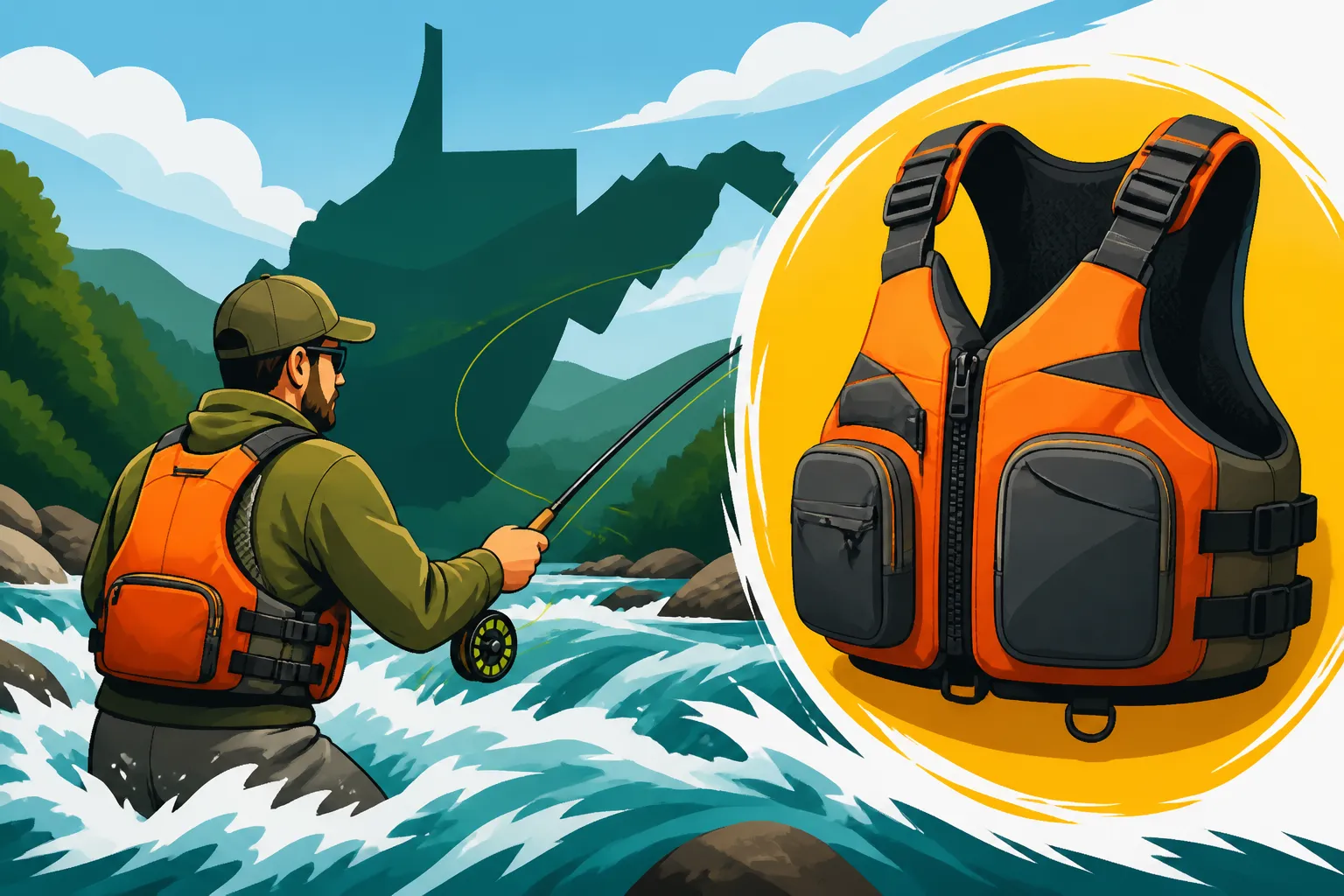
Just because it’s a whitewater PFD doesn’t mean it can’t cater to an angler’s needs. In fact, many modern designs integrate thoughtful features specifically for fishing. You’ll want ample pockets, ideally with secure closures like waterproof zippers or Velcro flaps, to store essential tackle like a small fly box, extra leaders, or your phone in a dry bag. Pockets should be easily accessible, even when you’re in a kayak or drift boat.
Look for attachment points such as D-rings, webbing loops, or Hypalon patches where you can securely clip retractors for nippers, hemostats, or even a small knife. Some PFDs include a dedicated knife sheath, which is a smart feature for cutting tangled line or in emergency situations. Bass Pro Shops and similar outdoor retailers often carry specialized PFDs from brands like NRS and Astral that blend whitewater safety with angler-friendly utility, making them perfect for fishing West Virginia's wild waters.
Rescue Features and Accessibility: Your Lifeline in an Emergency
This is perhaps the most critical difference between a casual life vest and a whitewater PFD.
- Quick-Release Harness: Many Type V whitewater PFDs incorporate a quick-release chest harness with a strong metal O-ring or D-ring on the back. This allows you to attach a tow tether for rescuing another boat or person, or to be tethered yourself in a rescue scenario. The quick-release mechanism is vital, allowing you to quickly detach if you become entangled.
- Grab Handles: Sturdy grab handles on the shoulders or back of the PFD are essential for someone else to easily pull you back into a boat or to shore.
- Reflective Tape and Bright Colors: High-visibility colors like yellow, orange, or lime green, combined with reflective SOLAS (Safety Of Life At Sea) tape, significantly increase your chances of being spotted in turbulent water or low-light conditions.
- Whistle: A marine safety whistle attached to your PFD is a simple but crucial signaling device that can alert others to your distress. Always ensure your PFD has one or attach one immediately.
Understanding West Virginia Boating Laws for Anglers is also important, as proper PFD usage is a key component of these regulations, especially the Life Jacket Requirements for West Virginia Boaters. While many regulations focus on recreational boating, the principles of safety apply universally on the water.
Finding the Perfect Fit and Ensuring Comfort on the Water
Even the most technologically advanced PFD is useless if it doesn't fit properly or is so uncomfortable that you don't wear it. This is particularly true for active pursuits like whitewater fishing, where you'll be casting, paddling, and moving around.
Sizing and Adjustability for Active Angling
A proper fit is paramount. Your PFD should fit snugly, almost like a second skin, without being overly restrictive. It should not ride up when you lift your arms, paddle, or make a casting motion. If it rides up, it means the PFD could potentially slip over your head in the water, rendering it ineffective.
Most quality whitewater PFDs offer extensive adjustability through multiple straps on the shoulders, sides, and waist. These straps allow you to fine-tune the fit to your specific body shape and account for different layers of clothing you might wear.
To test the fit:
- Put it on: Loosen all straps, put on the PFD, and then cinch the lower straps first, working your way up.
- Lift and pull: Have someone grab the shoulder straps and lift. If the PFD moves up past your ears, it’s too loose or too big.
- Move around: Mimic casting, paddling, and bending motions. Ensure there's no chafing or restriction.
Freedom of Movement and Ventilation
For anglers, casting is a big part of the game. Look for low-profile designs, especially around the shoulders and armpits, that won’t interfere with your backcast or forward cast. Many whitewater fishing PFDs feature cut-away armholes or articulated designs specifically for this purpose.
Ventilation is another key factor for comfort, especially during warmer months or strenuous paddling. PFDs with open sides, mesh backs (especially beneficial if you're in a kayak with a high seat back), or thinner foam panels can help prevent overheating and allow for better airflow. A well-ventilated PFD means you’re more likely to wear it consistently, which is always the safest option. When you're spending all day in a kayak trying to land a trophy smallmouth on the New River, comfort directly impacts your enjoyment and endurance.
Trying Before You Buy and Online Considerations
The best way to ensure a perfect fit is to try on several different models and brands in person. If you can, wear the typical layers you’d fish in – perhaps a base layer and a fishing shirt, or even light waders – to get the most accurate feel. Local outfitters or larger stores like Bass Pro Shops specializing in paddling and fishing gear are ideal for this. Their staff can often provide expert advice and help you adjust the PFD correctly.
If purchasing online, perhaps through a platform like Amazon, carefully consult the manufacturer's sizing charts, which often include chest measurements and weight ranges. Also, read customer reviews specifically mentioning fit and comfort for active use. Remember that while a great deal might be tempting, an ill-fitting PFD is a compromise on safety that you should never make.
Maintaining Your Whitewater Fishing PFD for Longevity
A high-quality whitewater fishing PFD is an investment, and like any critical piece of gear, it needs proper care to ensure it performs when you need it most. Neglecting maintenance can significantly shorten its lifespan and, more importantly, compromise its safety features.
Proper Cleaning and Storage Practices
After every trip, especially if you’ve been in saltwater (though most of West Virginia's fishing is freshwater, it’s good practice) or muddy conditions, rinse your PFD thoroughly with fresh water. Use a mild soap if needed to clean grime or fish slime. Crucially, allow your PFD to air dry completely in a well-ventilated area, out of direct sunlight. UV rays are notorious for degrading PFD fabrics and foam over time. Never store a wet PFD, as this can lead to mildew, unpleasant odors, and damage to materials.
When dry, store your PFD in a cool, dry place away from extreme temperatures and chemicals. Avoid compressing it tightly for long periods, as this can break down the foam cells and reduce buoyancy. Storing it flat or hanging it can help maintain its shape and flotation integrity.
Regular Inspection for Wear and Tear
Before each season, and periodically throughout the year, give your PFD a thorough inspection.
- Fabric and Stitching: Look for any rips, tears, fraying, or holes in the fabric. Pay close attention to seams and areas around buckles and zippers, as these are high-stress points. Even a small tear can compromise the integrity of the PFD.
- Straps and Buckles: Check all webbing straps for fraying or cuts. Ensure buckles click securely into place and show no signs of cracking or damage. Test all adjusters to ensure they hold tension.
- Zippers: Make sure zippers operate smoothly and fully close. Corroded or sticky zippers can be a hassle and might not hold up in an emergency.
- Buoyancy Test: If you're unsure about its flotation capabilities, you can perform a simple buoyancy test. Submerge the PFD in water to see if it floats strongly. If it seems waterlogged or doesn't float as robustly as it used to, it might be time for a replacement.
A PFD doesn't last forever. If you notice significant degradation, it's safer to replace it than to risk a critical failure on the water. Your life is worth more than the cost of a new vest. Consider this PFD as important as your Best Fishing Rods for West Virginia Rivers or your favorite tackle for How to Catch Smallmouth Bass in West Virginia Rivers – it's a tool that enables your passion safely.
Comparing PFD Types for Whitewater Fishing
To help clarify the differences between common PFD options and what makes a dedicated whitewater fishing PFD stand out, here's a quick comparison:
| Feature | Casual Fishing Vest (Common Type III) | Specialized Whitewater Fishing PFD (High-end Type III / Type V) |
|---|---|---|
| Primary Purpose | General flotation, comfort for light fishing | Max safety, flotation, impact protection in turbulent water, angler utility |
| Buoyancy Rating | Typically 15.5 lbs | Often 18-25+ lbs, designed for aerated water |
| Impact Protection | Minimal to none | Excellent, thick foam panels for body armor |
| Durability | Standard nylon, basic stitching | Heavy-duty Cordura/ripstop, reinforced stitching, marine zippers |
| Angler Features | Many pockets, tool loops | Strategic pockets, gear attachment points, knife sheath, hydration sleeve often included |
| Rescue Features | Basic grab handle (sometimes) | Quick-release harness, D-rings, strong grab handles, reflective accents |
| Fit & Mobility | Good, can be bulky, variable adjustability | Snug, low-profile, highly adjustable, designed for active movement |
| Visibility | Varies, often drab colors | Often bright colors, reflective tape |
| Typical Cost | Lower range | Higher range, reflects advanced safety features and materials |
Choosing the best life jacket for whitewater fishing isn’t just about complying with West Virginia Boating Laws for Anglers; it's about making a conscious decision to prioritize your safety when enjoying the state's most challenging and rewarding waters. Whether you're chasing muskie in the Gauley River or targeting smallmouth in the New River Gorge Fishing Guide, having the right PFD can mean the difference between a great day on the water and a preventable tragedy. Invest wisely, wear it always, and fish safely.
Disclaimer
This article is for general informational purposes only and does not constitute professional advice. Laws, prices and regulations vary by location and change over time. Consult a qualified professional for guidance on your specific situation.