How deep walleye go in summer
Summer in West Virginia can be absolutely stunning, with vibrant green forests and crystal-clear lakes, but for many walleye anglers, it presents a frustrating mystery. One day, you're catching them in shallower waters, and the next, they seem to vanish into thin air. This guide will pull back the curtain on one of the most common summer walleye challenges: figuring out how deep these elusive fish go, and more importantly, how you can consistently find and catch them when the mercury rises.
The Summer Walleye Conundrum: Why They Go Deep
As the long, warm days of summer settle over West Virginia, our lakes and larger rivers undergo significant changes beneath the surface. These changes directly influence where walleye choose to spend their time, often sending them to depths that might surprise an unprepared angler. It's not just a whim; there's some solid science and instinct driving their move.
Thermal Stratification and the Walleye's Comfort Zone
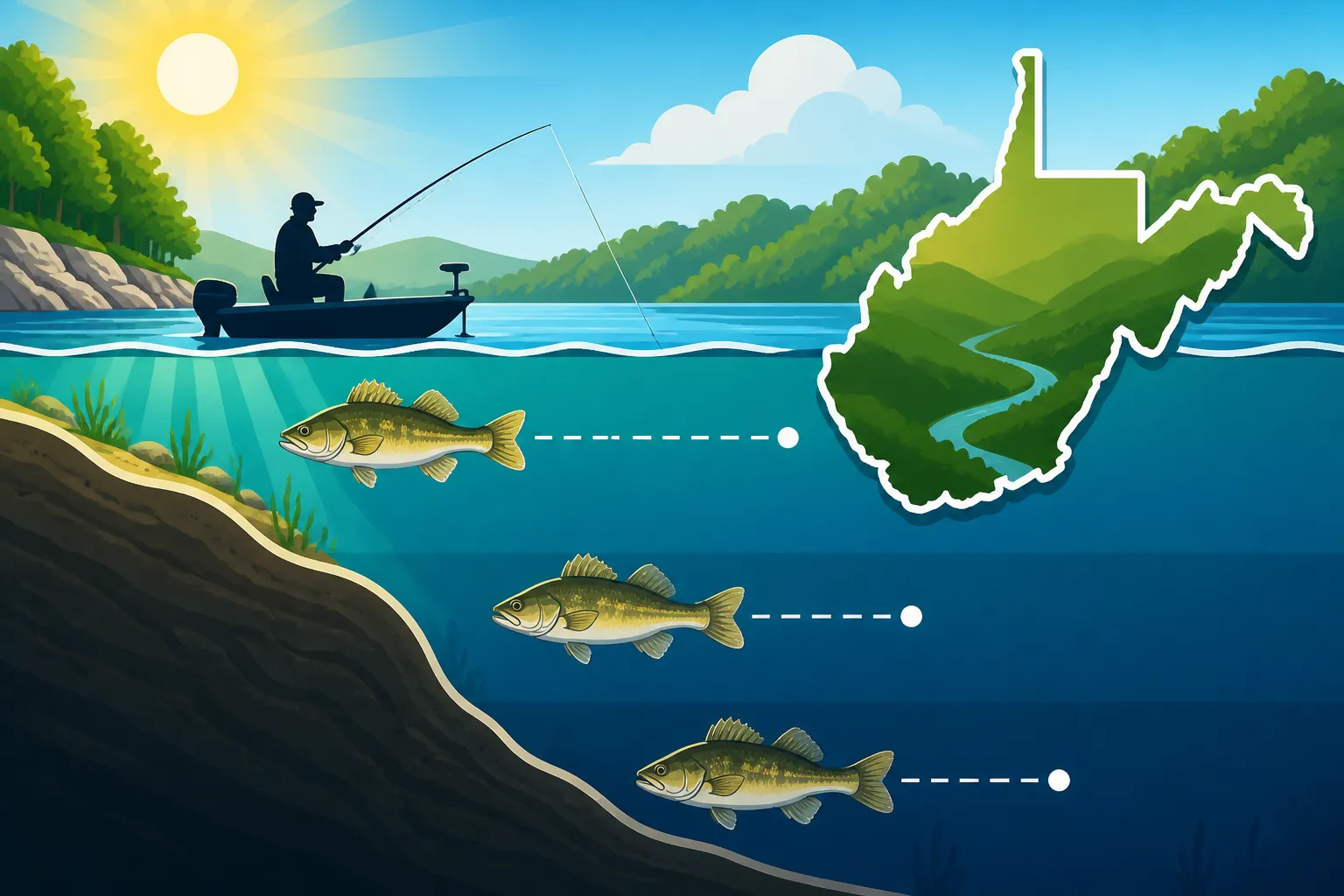
One of the biggest factors pushing walleye deep in the summer is a phenomenon called thermal stratification. Imagine a lake like a layered cake. As the sun beats down, the surface water warms up, becoming less dense. This warm water floats on top of the cooler, denser water below, creating distinct layers. We call these layers the epilimnion (warm top layer), the thermocline (a transitional zone where the temperature drops rapidly), and the hypolimnion (the cold, deep bottom layer).
Walleye are cold-water species, or at least cool-water species, that thrive in specific temperature ranges. They don't like it too hot, nor do they want it too cold and devoid of oxygen. During the summer, the epilimnion can become too warm and uncomfortable for them, especially in shallower lakes. They'll actively seek out that sweet spot, often right in or just below the thermocline, where the water is cooler but still has enough dissolved oxygen to support them comfortably. This zone offers them the perfect balance: a respite from the scorching surface heat and enough oxygen to be active hunters. Without understanding this natural process, you're essentially fishing blind in the wrong parts of the water column. Best Time of Year to Fish in West Virginia covers these seasonal shifts in more detail.
Forage Following: The Deep-Water Buffet
It's a simple truth in the fishing world: fish follow food. And in the summer, as walleye retreat to the cooler, oxygenated depths, so too do many of their preferred prey species. Baitfish like shad, alewives, and small perch are also sensitive to water temperature and oxygen levels. When the surface gets too warm, these baitfish schools will often descend into the thermocline or even deeper, seeking their own comfort zones and microscopic food sources.
Naturally, the walleye aren't far behind. If their primary food source is suspended at 30 feet, you can bet the walleye will be nearby, either slightly above, below, or right within those baitfish schools. This creates a deep-water buffet, where walleye can efficiently ambush their meals without expending too much energy in uncomfortable conditions. So, when you're looking for deep summer walleye, you're not just looking for walleye; you're often looking for their dinner plate, too. Knowing what walleye eat in West Virginia lakes can give you a real advantage when choosing your baits and lures.
Finding Walleye in West Virginia's Summer Depths
So, you understand why walleye go deep. Now, the real challenge is finding them in those vast underwater worlds. This isn't a task for guesswork; it requires technology and a keen understanding of underwater topography.
Interpreting Sonar: Your Underwater Eyes
Your fish finder becomes your absolute best friend when searching for deep summer walleye. It's your window into the submerged world, showing you not just depth, but also structure, baitfish, and those tell-tale arches that signify larger fish, hopefully walleye. Don't just look for fish marks; learn to interpret the entire screen.
- Reading the Thermocline: Many modern fish finders can clearly display the thermocline. It often appears as a distinct, hazy band on your screen. This is your primary target zone. Walleye will frequently be suspended right in this zone or just below it, especially if there's structure present. Knowing this depth range helps you target precisely.
- Locating Baitfish Schools: Look for dense clouds of smaller marks, which indicate baitfish. If you see larger arches near or within these clouds, you're on the right track. Walleye are predators, and they'll be where the food is.
- Identifying Structure: Sonar also reveals submerged points, humps, creek channels, old roadbeds, and brush piles. Walleye love to relate to structure, using it for ambush points and cover. Even if the thermocline is at 25 feet, a hump that rises to 20 feet from a 40-foot bottom can be a prime walleye holding spot.
- Bottom Composition: Some advanced units can even give you an idea of the bottom composition – whether it's soft mud, hard rock, or gravel. Walleye often prefer harder bottoms.
Investing in a good quality fish finder, which you can find a wide selection of on Amazon, is crucial for this type of fishing. Don't just set it and forget it; take the time to learn its features and how to read what it's telling you about the water column. Best Fish Finders for West Virginia Lakes provides a deeper dive into this essential gear.
Structure is Key: Beyond Just Depth
While depth is paramount in summer, it's rarely just about the number on your sonar. Walleye are still fish, and fish relate to structure. Think of submerged features as the underwater highways and neighborhoods where walleye live, feed, and travel.
- Main Lake Points and Humps: These are classic walleye magnets. As the main lake body stratifies, walleye will often gravitate to points and humps that extend into deeper water, especially if they have a sharp break. They can hold on the top or along the edges, moving up to feed and retreating to deeper, cooler water when inactive.
- Creek Channels and River Bends: In reservoirs formed from old river systems, the original creek or river channels offer excellent deep-water highways. Walleye will often suspend over these channels or relate to their edges. Sharp bends in these channels can be particularly productive.
- Submerged Timber and Brush Piles: These provide cover and ambush points. If you find deep timber that extends into the thermocline, it's a very likely spot for walleye.
- Roadbeds and Foundations: Old submerged roadbeds, bridge abutments, and building foundations can create unique deep-water structure that walleye will utilize. These often provide a harder bottom and a distinct change in the otherwise soft bottom of a lake.
The key is to combine your understanding of thermal stratification with these structural elements. Walleye won't just be randomly suspended at 30 feet; they'll be at 30 feet over a specific piece of structure that provides them a strategic advantage. Sometimes they'll be right on the bottom, other times suspended a few feet off it, especially if baitfish are present above the structure.
Targeting Deep Summer Walleye: Techniques and Gear
Once you've located these deep-water walleye, the next step is presenting your bait or lure effectively. This often means getting your offering down to specific depths and keeping it there, which requires specialized techniques and appropriate gear.
Trolling for Deep-Water Walleye
Trolling is arguably one of the most effective ways to cover water and present baits at precise depths for summer walleye. It allows you to systematically search contours, ledges, and open water where walleye might be suspended.
- Crankbaits: Deep-diving crankbaits are a staple for summer walleye. Look for models that are designed to dive into the 15-30+ foot range. The key is to match the crankbait's diving depth to the depth where you're marking fish or the thermocline. Experiment with different colors, but natural baitfish patterns, chartreuse, and perch colors are often reliable. Trolling Techniques for West Virginia Lake Walleye provides excellent insights into optimizing your troll.
- Crawler Harnesses: Live bait, particularly nightcrawlers on a crawler harness, is incredibly effective. To get these deep, you'll need to use inline weights, snap weights, bottom bouncers, or planer boards to get them to the desired depth. Often, a slow troll (around 1-1.5 mph) with a bottom bouncer dragging a crawler harness along the bottom or just above it is deadly. The blades on the harness provide flash and vibration, while the live bait offers irresistible scent and action.
- Lead Core Line: For truly deep presentations, many anglers turn to lead core line. This line has a lead core wrapped in a braided sheath, causing it to sink. The amount of line you let out, combined with your trolling speed and lure, dictates its depth. It takes some practice to master, but it's invaluable for reaching those deep suspended fish.
Vertical Jigging and Bottom Bouncing
Sometimes, walleye are tightly schooled on a specific piece of deep structure, or they might be less active and require a more direct presentation. This is where vertical jigging and bottom bouncing shine.
- Vertical Jigging: If you're marking fish directly below your boat, dropping a jig straight down can be incredibly effective. Heavy jigging spoons, blade baits, or even large soft plastic swimbaits rigged on heavy jig heads can be used. The key is to keep your bait directly beneath your transducer, interpreting your fish finder to see how the walleye react to your presentation. A lift-and-drop retrieve, sometimes with a pause, often triggers strikes.
- Bottom Bouncing: As mentioned with crawler harnesses, bottom bouncers are excellent for presenting live bait or even soft plastics near the bottom in deeper water, especially when drifting or slow trolling. They are designed to "bounce" along the bottom without snagging too much. Pair them with a short leader to a crawler harness or a plain hook with a minnow or leech. This is particularly effective when walleye are hugging the bottom contour on those deep points or humps. Best Jigs for West Virginia Walleye can help you select the right jig for this tactic.
Essential Gear for Deep-Water Walleye
Having the right equipment makes a huge difference when you're targeting fish in 20-40 feet of water.
- Rods and Reels: For trolling, you'll want medium-heavy rods with a moderate action to handle the heavier weights and deep-diving lures, and to absorb the shock of a strike. Line counter reels are almost a necessity for trolling, as they allow you to precisely repeat successful presentations by knowing exactly how much line you have out. For vertical jigging or bottom bouncing, a sensitive medium-light to medium power spinning or baitcasting rod will help you feel those subtle deep bites. You can find quality options for all these on Amazon.
- Line: Braided line is often preferred for deep-water fishing due to its low stretch, which provides excellent sensitivity for detecting subtle bites and a strong hookset from long distances. Use a fluorocarbon leader for abrasion resistance and invisibility, especially in clearer waters.
- Lures and Bait: Beyond the specific crankbaits and crawler harnesses mentioned, always have a variety of jigging spoons (like a Northland Buck-Shot Rattle Spoon or a Johnson Thinfisher), blade baits, and heavy jig heads (1/2 oz to 1 oz+) with soft plastics. Don't forget live bait: nightcrawlers, minnows, and leeches are perennial walleye favorites. How to rig a live minnow for walleye provides specific tips.
Key West Virginia Lakes for Summer Deep Walleye
West Virginia offers some fantastic opportunities for summer walleye fishing, with certain lakes and even parts of rivers providing excellent deep-water habitat. While conditions can vary, these locations are generally prime targets.
Summersville Lake: A Deep-Water Haven
Summersville Lake, often referred to as West Virginia's "Little Bahamas" for its incredibly clear, deep waters, is a prime example of a lake where walleye go deep in summer. This massive lake offers extensive depths, rocky bluffs, and numerous submerged points and humps. The thermocline here is well-defined, and walleye will often suspend or relate to structure in the 20 to 40-foot range during the warmest months.
Anglers targeting Summersville Lake walleye in summer should focus on the main lake body, particularly around the larger islands, prominent points, and submerged creek channels. Trolling deep-diving crankbaits or lead core with crawler harnesses is a popular and effective strategy here. Vertical jigging over deep humps that top out near the thermocline can also be very productive. The clear water here means your fluorocarbon leader becomes even more important for a stealthy presentation. Summersville Lake Walleye Fishing offers specific tactics for this gem.
Tygart Lake and Stonewall Jackson Lake: Other Productive Deep Spots
Tygart Lake, located in Grafton, is another excellent deep-water fishery for walleye. While it can get a bit stained, it still stratifies, and walleye will descend to cooler depths. Look for them around the deeper creek channels, submerged timber, and the main lake basin. Trolling is a good bet here, especially with baits that offer strong vibration or flash to cut through any murkier water. Knowing How deep to troll for walleye at Tygart Lake will be invaluable.
Stonewall Jackson Lake, known for its incredible bass fishing, also holds a healthy population of walleye that move deeper in summer. This lake features plenty of standing timber and deep-water structure for walleye to utilize. Focus on the main lake points, timber lines, and creek channels that run through the lake. Trolling and vertical jigging around these submerged features will be your best bet. Stonewall Jackson Lake Fishing has more details on tackling this lake.
The Ohio River: A Different Kind of Deep
While not a stratified lake, the Ohio River presents its own deep-water challenges and opportunities for walleye in summer. The "depth" here is more about current breaks, scour holes, and the deeper main channel itself. Walleye in the Ohio River will often tuck into the deeper parts of the channel, especially around structure that breaks the current.
- Dam Tailwaters: Below the numerous locks and dams on the Ohio River, walleye will congregate in deeper scour holes and eddy lines created by the powerful current. These areas provide current breaks and concentrate baitfish. Vertical jigging with heavy jigs or casting deep-diving crankbaits that can be worked against the current are effective tactics here.
- Main Channel and Tributary Mouths: Look for the deepest parts of the main channel, especially where it curves or meets a tributary. Walleye will often sit on the bottom in these deeper sections, waiting for food to drift by. Bottom bouncing or three-way rigging with live bait can be very productive. A good river boat is essential for navigating the currents and depths of the Ohio. Ohio River Fishing Guide for West Virginia Anglers will help you plan your trip.
Summarizing Summer Walleye Depth
To help visualize the general depths we're talking about, here's a handy table. Remember, these are averages and can shift based on specific lake conditions, weather, and the presence of baitfish.
| Water Body Type | Average Surface Temperature (Summer) | Typical Walleye Depth Range (Summer) | Key Factors Influencing Depth | Common Techniques |
|---|---|---|---|---|
| Deep Reservoirs | 75-85°F (epilimnion) | 20-40 feet (thermocline/hypolimnion) | Thermal stratification, oxygen levels, deep structure, baitfish schools | Trolling (crankbaits, crawler harnesses), Vertical jigging |
| Shallow Reservoirs | 78-88°F (epilimnion) | 15-25 feet (often near bottom/structure) | Weaker stratification, limited oxygen in deepest parts, structure | Trolling, bottom bouncing, casting deep cranks on breaks |
| Large Rivers | 70-80°F (variable) | 10-30 feet (current breaks, scour holes, main channel) | Current, structure, dissolved oxygen, baitfish concentration | Vertical jigging, bottom bouncing, three-way rigs, casting |
Ultimately, finding walleye in the summer depths of West Virginia requires patience, the right tools, and an understanding of their seasonal movements. Don't be afraid to go deep, trust your electronics, and experiment with different presentations. The reward of a feisty walleye at the end of your line, especially during the dog days of summer, is truly worth the effort!
Disclaimer
This article is for general informational purposes only and does not constitute professional advice. Laws, prices and regulations vary by location and change over time. Consult a qualified professional for guidance on your specific situation.