What is the state fish of West Virginia
It's a question many anglers ponder, especially when they first cast a line into West Virginia's beautiful, wild waters: what fish truly represents this incredible state? There are so many amazing species here, from the hard-fighting smallmouth bass to the elusive muskie, but only one holds the title of official state fish. This guide will take you on a journey to discover West Virginia's aquatic emblem, delve into its unique characteristics, and explore why it holds such a special place in the hearts of mountain state anglers.
Unveiling West Virginia's Aquatic Emblem: The Brook Trout
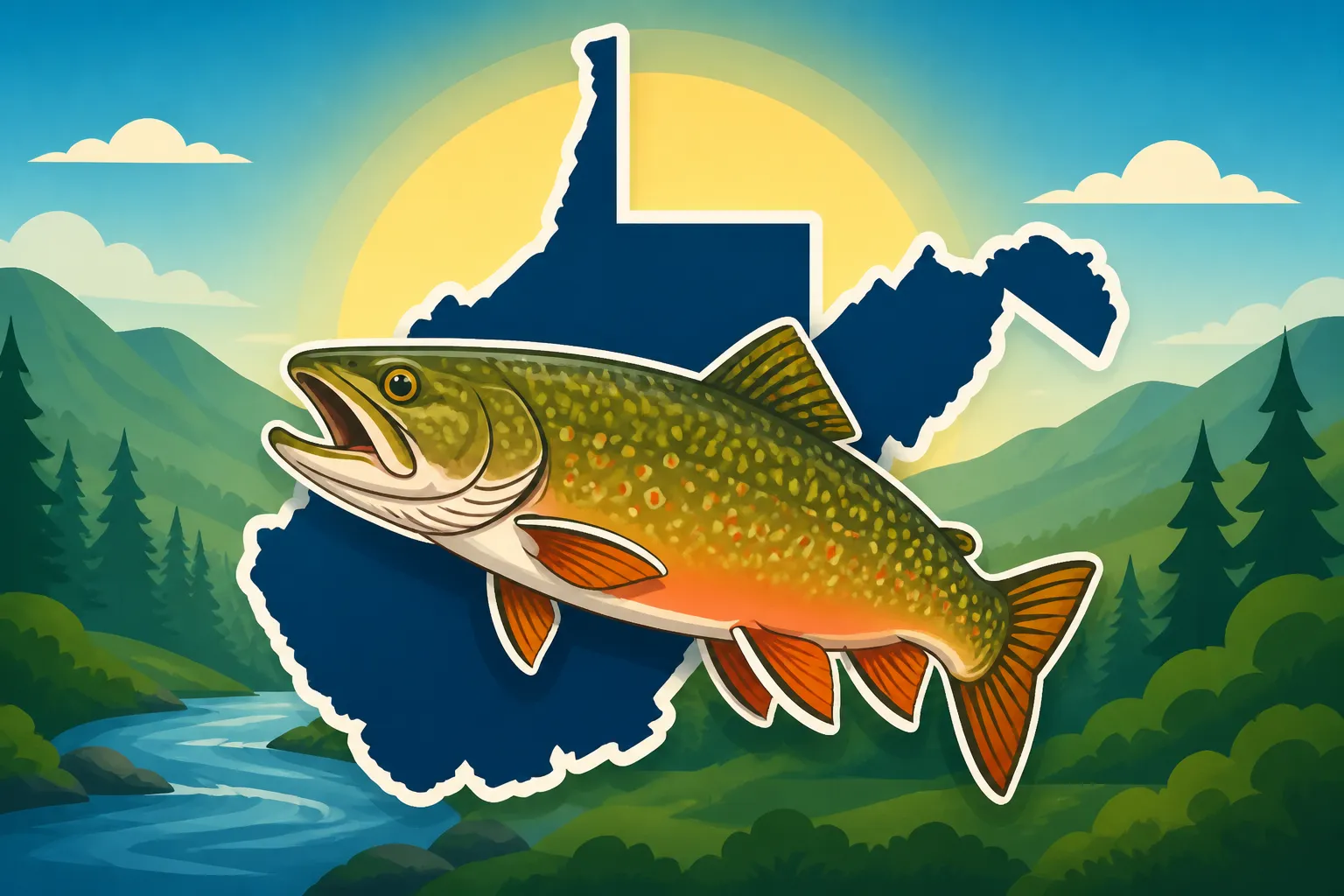
When you think of pristine, cold mountain streams, what fish comes to mind? For West Virginians, and indeed for anyone who appreciates truly wild fishing, the answer is often the brook trout. This vibrant, tenacious fish isn't just a pretty face in a clear stream; it's the official state fish, a living symbol of West Virginia's natural heritage and its abundant, crystal-clear headwater fisheries. Its designation isn't just about beauty, but about its historical significance and its role as an indicator of healthy ecosystems.
A Native Treasure: Why the Brook Trout Reigns Supreme
The brook trout, or Salvelinus fontinalis, isn't just a trout in West Virginia; it's the native trout. Unlike rainbow or brown trout, which were introduced from other regions, brook trout have called these mountain streams home for millennia. This makes them incredibly special, a true relic of the untouched wilderness that once covered much of Appalachia. Their presence is a testament to the pristine water quality and the untouched forest canopies that still exist in many of our state's higher elevations. Anglers often feel a profound connection when they catch a wild brook trout, knowing they are holding a direct descendant of the fish that swam these same waters centuries ago. It’s not just fishing; it’s a connection to history, a quiet nod to the past, and a hope for the future of our natural resources.
For many, there's a certain romanticism associated with pursuing these wild fish. They live in places that demand a hike, a bit of bushwhacking, and a deep appreciation for solitude. The reward isn't usually a trophy in terms of size, but a jewel-toned fish that perfectly embodies the rugged beauty of the mountains. It's easy to see why this species, with its deep roots in the state's natural history and its demand for clean, cold water, was chosen to represent West Virginia. If you're curious about their enduring presence, check out Native trout species found in West Virginia for more context.
Distinguishing the Brook Trout: Key Identification Features
One of the most common questions I hear from folks new to West Virginia fishing is how to tell the different trout species apart. It's true, when you’re out on the water, especially in a hurry, it can be tricky. But once you know what to look for, the brook trout stands out with its truly unique characteristics. These fish are absolute gems, often displaying a dazzling array of colors that are unlike any other trout species in our waters.
First, look for the distinctive wavy, worm-like markings on their backs and dorsal fins. These are called "vermiculations," and they're usually a pale olive or cream color against a darker, sometimes greenish-brown background. This pattern is a dead giveaway. Secondly, brook trout typically have vibrant red or orange spots along their sides, often surrounded by small, bluish halos. These spots are typically more pronounced towards the tail. Finally, and perhaps most strikingly, check out their fins. The lower fins – the pectoral, pelvic, and anal fins – will have bright white leading edges, followed by a black stripe, and then a reddish or orange tint. This "tri-color" fin pattern is a classic brook trout signature. Their belly can range from white to a deep, fiery orange or red, especially during spawning season.
Compared to rainbow trout, which usually have a pink or red stripe along their sides and small, uniform black spots all over their body and tail, brook trout are distinctly different. Brown trout, another introduced species, tend to have larger, fewer spots that are often dark with light halos, and they lack those vibrant white fin edges. Once you've seen a brook trout up close, you won't mistake it again. It's truly a distinctive fish, and understanding these features is key to appreciating this beautiful state fish. For a deeper dive into identifying all trout species, consider reading Trout Species Identification Guide for West Virginia.
Where the Brook Trout Thrives in West Virginia
Brook trout are not found just anywhere; they are specialists, preferring very particular environments. If you want to find them, you need to think cold, clear, and high. These fish are true cold-water dependents, requiring water temperatures that rarely exceed the mid-60s Fahrenheit. This means their prime habitat in West Virginia is typically found in the headwater streams of the Allegheny Mountains, where spring-fed creeks tumble down steep slopes, shaded by dense forest canopies.
Think of those small, intimate streams, often no wider than a cast, with plenty of riffles, runs, and deep pools formed by fallen logs and rocks. These streams are usually nestled within national forests, like the Monongahela National Forest, or other protected lands where logging and development are minimal. The dense tree cover keeps the water cool, and the undisturbed forest floor contributes leaf litter and insects, which form the base of the brook trout's diet. Sediment-free, oxygen-rich water is non-negotiable for these sensitive fish.
Their presence is an indicator of a healthy watershed, as they are one of the first species to disappear when water quality degrades or temperatures rise. While you might find stocked rainbow or brown trout in larger rivers and lakes, wild brook trout are almost exclusively found in these pristine, smaller tributaries. Exploring these remote corners of the state in search of them is an adventure in itself, often leading to breathtaking scenery and a profound sense of wilderness. If you’re looking for some ideas, Best Trout Streams in West Virginia offers some great places to start your adventure.
The Life and Times of West Virginia's Brook Trout
Understanding the brook trout isn't just about identifying it; it's about appreciating its entire existence within the delicate balance of our mountain ecosystems. These fish have evolved over millennia to thrive in some of the most challenging yet pristine environments, and their life cycle is intimately tied to the health of the streams they call home.
Understanding Their Habitat and Diet
Brook trout are creatures of habit and specific needs. Their ideal habitat is characterized by a series of interconnected elements that all work together to support their survival. First and foremost, as we discussed, is cold, clean, highly oxygenated water. This is usually maintained by spring inputs, dense forest cover that shades the stream from direct sunlight, and a gravel or cobble streambed that allows for good water flow and oxygenation. Beyond temperature, they need structural complexity – things like fallen trees, undercut banks, large boulders, and deep pools provide critical cover from predators, resting areas from strong currents, and ambush points for feeding.
Their diet is varied but heavily reliant on the invertebrate life found within and around the stream. Aquatic insects like caddisfly larvae, mayfly nymphs, and stonefly nymphs are staples. They'll also readily consume terrestrial insects that fall into the water, such as ants, beetles, and grasshoppers. Smaller brook trout might munch on plankton or tiny crustaceans, while larger ones (which are rare in these small streams) might opportunistically prey on smaller fish or salamanders. The health of the surrounding forest and the aquatic insect population directly correlates to the health and abundance of the brook trout. A robust riparian buffer, with plenty of native trees and shrubs, is crucial not just for shade but for providing that continuous supply of food and habitat.
Spawning Habits and Reproduction
The reproductive cycle of the brook trout is a fascinating and critical aspect of their biology, demonstrating their reliance on undisturbed stream environments. Unlike many other fish, brook trout are fall spawners in West Virginia. As the water temperatures begin to drop in late September and October, and the days grow shorter, the fish begin to prepare. Males develop hooked jaws and intensify their coloration, becoming even more vibrant as they compete for mates.
Females construct "redds," which are shallow depressions in the gravel beds of the stream, usually in areas with good groundwater upwelling that provides a constant flow of oxygenated water to the eggs. After the eggs are laid and fertilized, the female covers them with gravel, protecting them from predators and the elements. These eggs will then incubate throughout the winter, slowly developing in the cold water. The young "fry" typically hatch in late winter or early spring, emerging from the gravel to begin their lives in the same waters as their parents. The success of this process is entirely dependent on having clean, stable gravel beds, free from siltation, which can smother eggs, and consistent cold water flows. Human activities like logging or development near stream banks can severely impact this delicate process by causing erosion and sedimentation. Do Trout Reproduce Naturally in West Virginia Streams? dives deeper into this topic.
Conservation Efforts for West Virginia's Brook Trout
Protecting West Virginia's native brook trout populations is a paramount concern for many conservationists and anglers alike. These fish are a living barometer of our aquatic health, and their decline signals broader environmental issues. Conservation efforts generally focus on two main areas: habitat protection and habitat restoration. Protection involves safeguarding existing pristine brook trout waters from degradation, whether through stricter land-use regulations, acquiring conservation easements, or limiting development in critical watersheds. This also includes advocating for policies that maintain forest cover and prevent pollution runoff.
Restoration projects are often more hands-on. These can involve stabilizing eroding stream banks by planting native vegetation, which helps to filter runoff, provide shade, and contribute to the insect food base. Other projects might focus on removing old, impassable culverts and replacing them with fish-friendly designs to reconnect fragmented brook trout populations, allowing them to move freely to spawn or find thermal refuges during warm summer months. Sometimes, it involves installing in-stream structures like log vanes or rock deflectors to create better habitat complexity with deeper pools and more current diversity.
Angler participation is also a huge part of conservation. Practicing West Virginia Catch and Release Rules for Trout in native brook trout streams is crucial to ensure these populations remain viable. Many local and regional conservation groups are dedicated to these efforts, often relying on volunteer work and public awareness to achieve their goals. By understanding the brook trout's needs and supporting these initiatives, we can all play a part in ensuring this beautiful state fish continues to thrive for generations to come.
Fishing for West Virginia's State Fish: Tips and Ethics
Chasing wild brook trout in West Virginia's pristine mountain streams is an experience unlike any other. It’s not about the size of the fish you catch, but the beauty of the surroundings, the challenge of the pursuit, and the vibrant colors of these native jewels. It truly is a quintessential West Virginia angling adventure.
The Joy of Pursuing Native Brook Trout
There's a quiet thrill that comes with hiking into a remote gorge, the sound of rushing water growing louder with each step, knowing that you're about to cast for truly wild, native brook trout. This isn't your typical roadside stocked pond experience. These fish are wary, quick, and perfectly adapted to their environment. Success often hinges on stealth, presentation, and reading the water carefully. It's an intimate form of fishing, usually requiring light tackle and a gentle touch. Many anglers practice catch-and-release exclusively for these delicate fish, ensuring that they can continue to thrive and reproduce. The vibrant colors of a freshly caught brook trout, shimmering in the sunlight before being gently released back into its cold, clear home, leave an indelible memory.
The rewards extend beyond the fish itself. The journey often takes you through some of the most breathtaking, undeveloped parts of the state. You’ll find yourself immersed in nature, surrounded by towering trees, moss-covered rocks, and the symphony of the forest. It’s a chance to disconnect from the hustle and bustle and truly appreciate the tranquility of the wilderness. This kind of fishing fosters a deep respect for the environment and the precious resources we have.
Essential Gear for Brook Trout Anglers
When it comes to pursuing West Virginia's native brook trout, less is often more. You won't need heavy gear or a boat; in fact, the smaller and lighter your setup, the better. The key is subtlety and ease of movement, as you’ll often be casting in tight quarters or navigating dense rhododendron thickets.
For fly anglers, a short, ultralight fly rod (typically 2- or 3-weight, 6 to 7.5 feet long) is ideal. This allows for precise presentations of small dry flies, nymphs, or even tiny streamers in confined spaces. A simple click-and-pawl reel or even just a line wrapped around the handle is often sufficient, as these fish rarely strip line. Leaders should be light, around 4x to 6x tippet, to ensure a natural drift. You can find a fantastic selection of these specialized light fly rods and reels on platforms like Amazon, making it easy to assemble a perfect setup. For more detailed insights into this discipline, consider Fly Fishing for Trout in West Virginia.
Spinning enthusiasts will want an ultralight spinning rod and reel combo, typically a 5-foot to 6-foot rod paired with a small reel spooled with 4-pound test monofilament or fluorocarbon line. Small spinners, tiny spoons, or micro-jigs are excellent choices for lures. Live bait, like small worms or salmon eggs, can also be effective, fished under a tiny bobber or just free-drifted. Don't forget a small, soft-mesh landing net to protect the fish if you plan on photography and release. Again, for a comprehensive selection of ultralight spinning gear and tackle for these smaller fish, looking through trusted online retailers like Amazon can be very helpful. Remember, wading boots with good grip are essential for navigating slippery stream beds.
Here's a quick comparison of typical gear setups:
| Gear Type | Fly Fishing Setup | Ultralight Spinning Setup |
|---|---|---|
| Rod | 2-3 weight, 6-7.5 ft, fast or moderate action | Ultralight, 5-6 ft, fast action |
| Reel | Small, lightweight, click-and-pawl (basic) | Ultralight spinning reel (1000-2000 size) |
| Line | WF2F or WF3F fly line | 4 lb monofilament or fluorocarbon |
| Leader/Tippet | 7.5-9 ft, 4x-6x tippet | No leader, or small fluorocarbon leader for abrasion |
| Lures/Baits | Small dry flies (size 14-20), nymphs, micro-streamers | Micro-spinners (size 0-1), tiny spoons, 1/32 oz jigs, small worms, salmon eggs |
| Waders/Boots | Breathable chest waders, felt or rubber sole boots | Lightweight waders or wet wading gear, sturdy wading boots |
| Net | Small, soft-mesh landing net | Small, soft-mesh landing net |
| Other | Fly box, nippers, forceps | Small tackle box, pliers, line clippers |
For more general advice on what to pack, check out Best Gear for West Virginia Trout Fishing.
Regulations and Responsible Angling Practices
Fishing for brook trout, especially the native ones, comes with a responsibility to understand and adhere to West Virginia's specific regulations. These rules are in place to protect these vulnerable populations and ensure their long-term survival. Always consult the current West Virginia Fishing Regulations Summary (often found online or at license vendors) before heading out.
Many of the prime brook trout streams, particularly those with strong wild populations, are designated as "Special Regulation Waters." These areas often have stricter rules, such as mandatory catch-and-release only, single-hook artificial lure/fly only, or specific harvest limits and size restrictions that differ from general statewide regulations. Some streams might have "fly fishing only" sections. It's absolutely critical to know these rules for the specific stream you plan to fish. You might also need a Trout Stamps and Trout Fishing Rules in West Virginia in addition to your regular fishing license.
Beyond the regulations, practicing ethical angling is paramount. This includes:
- Catch and Release: As mentioned, many anglers choose to release all wild brook trout, given their precious nature and slow growth. If you do keep fish where permitted, ensure you know the West Virginia Bag and Possession Limits by Species for trout.
- Handle with Care: If you do plan to release, minimize handling time, keep the fish in the water as much as possible, use a net with a soft, knotless mesh, and avoid squeezing the fish. Wet your hands before touching them to protect their protective slime coat.
- Leave No Trace: Pack out everything you pack in. Respect private property, even if just walking along a stream bank. Park responsibly and avoid disturbing wildlife.
- Respect the Ecosystem: Be mindful of fragile streambank vegetation. Avoid wading unnecessarily through redds (spawning areas) during the fall and early winter.
Following these guidelines ensures that you're not only enjoying the bounty of West Virginia's natural resources but also actively contributing to their preservation. For a comprehensive overview of rules, refer to West Virginia Fishing Regulations Explained.
Beyond the Brook Trout: Other Iconic West Virginia Fish
While the brook trout proudly holds the title of West Virginia's state fish, it's important to remember that our state offers an incredible diversity of angling opportunities. From the roaring rivers to the sprawling reservoirs, there are many other species that captivate anglers and contribute to West Virginia's rich fishing heritage. Understanding these other fish helps paint a complete picture of the state's aquatic landscape.
Rainbow and Brown Trout: Stocked Beauties
While not native, rainbow trout and brown trout are incredibly popular game fish in West Virginia, forming the backbone of many of the state's recreational trout fisheries. Rainbow trout, with their iridescent stripe and spirited fights, are extensively stocked in lakes, rivers, and streams across the state by the West Virginia Division of Natural Resources (WVDNR). They are often the first fish many new anglers catch, providing exciting action in both cold and cool waters. Browns, originally from Europe, are known for their wariness, larger size potential, and more predatory nature. They thrive in many of the same waters as rainbows but often require a bit more skill and patience to catch. Many anglers enjoy pursuing "holdover" brown trout that have survived previous stockings and adapted to stream life, growing larger and warier over time. Both species offer different challenges and rewards, complementing the unique experience of fishing for native brook trout.
Smallmouth Bass and Muskie: River Legends
Beyond trout, West Virginia boasts some truly world-class warmwater fishing, particularly for smallmouth bass and muskie. The New River, for instance, is renowned nationwide for its incredible smallmouth bass fishing, offering anglers the chance to catch powerful, acrobatic bronzebacks in a stunning riverine setting. These fish are aggressive fighters, making them a favorite target for fly and conventional anglers alike. You can spend a lifetime learning their habits on rivers like the New, the Gauley, or the South Branch of the Potomac.
Then there's the muskie, often called the "fish of 10,000 casts." These predatory giants are the apex predators of many West Virginia rivers and lakes, including the New River, Kanawha River, and several other large impoundments. Pursuing muskie is an intense, gear-heavy endeavor that demands patience, dedication, and robust tackle. A muskie strike is unforgettable, and landing one of these toothy titans is a true accomplishment for any angler. These species, along with other popular fish like walleye, catfish, and crappie in the state's numerous lakes and larger rivers, truly make West Virginia a diverse and exciting destination for anglers of all stripes.
Disclaimer
This article is for general informational purposes only and does not constitute professional advice. Laws, prices and regulations vary by location and change over time. Consult a qualified professional for guidance on your specific situation.