Do West Virginia Lakes Have Striped Bass Hybrids?
There’s a common misconception among anglers new to West Virginia, or even some seasoned folks, that our beautiful mountain lakes might not hold certain types of sportfish you’d find in bigger, flatter states. Specifically, a lot of people wonder about striped bass hybrids – those powerful, hard-fighting fish that offer an incredible challenge. Well, let's dive deep into whether West Virginia lakes do, indeed, have striped bass hybrids, where you can find them, and what makes them such a unique and exciting target for local anglers.
Understanding Hybrid Striped Bass: What Exactly Are They?
Before we talk about where you can find them, it's really helpful to understand what a hybrid striped bass actually is. These aren't just some regular bass that got a little bigger; they're a fascinating blend designed by fisheries biologists to offer the best traits of two distinct species. It's a testament to how science can enhance our fishing experiences.
The Genetic Marvel: Striper x White Bass Cross
A hybrid striped bass, often affectionately called a "wiper" or "striper hybrid," is quite literally a cross between a striped bass (Morone saxatilis) and a white bass (Morone chrysops). Think of it like a mule in the animal kingdom – a sterile, robust offspring designed for specific purposes. This genetic mash-up results in a fish that grows faster than a pure white bass and is often more tolerant of varying water conditions and temperatures than a pure striped bass, which historically thrives in coastal estuaries or massive inland reservoirs. The idea behind creating them was to introduce a hard-fighting, fast-growing predator into waters that might not sustain pure stripers but could certainly handle something with similar characteristics.
These hybrids tend to grow quite large, offering an incredible fight on the end of a line, often exceeding the size of their white bass parent and rivaling smaller pure stripers. They retain the schooling behavior of both parent species, which means when you find one, you often find many! This makes for some exhilarating fishing action once you've located a productive area. They also have a reputation for being excellent table fare, providing delicious fillets for a post-fishing meal.
Why West Virginia Docks Them
So, why would the West Virginia Division of Natural Resources (WVDNR) invest in stocking these specific fish? It boils down to a few key reasons, all aimed at enhancing the angling opportunities and ecological balance in our state's waterways. West Virginia, with its stunning rivers and deep reservoirs, has a diverse range of aquatic habitats, but not all of them are ideal for every type of fish.
Hybrid striped bass are a fantastic addition because they fill a specific niche. They are incredibly effective predators, and by stocking them, the WVDNR can help manage forage fish populations, like shad, in larger lakes. This helps keep the ecosystem in balance and provides a thrilling top-tier predator for anglers to pursue. Plus, their hardiness means they can thrive in some of our larger, deeper impoundments where pure striped bass might struggle with temperature fluctuations or specific habitat requirements. They essentially offer a "big fish" experience without the specialized environmental needs of their purebred striped bass cousins.
Where to Find Hybrid Stripers in West Virginia Waters
Yes, West Virginia absolutely has lakes stocked with striped bass hybrids! While you won't find them in every pond or small impoundment, there are specific, larger bodies of water where these feisty fish have been successfully introduced and provide fantastic fishing opportunities. Knowing these key locations is half the battle when targeting hybrids.
Key Lakes and Reservoirs Known for Hybrids
When it comes to the Mountain State, two prominent lakes immediately come to mind for striped bass hybrids: Summersville Lake and Sutton Lake. These are large, deep reservoirs that offer the ideal habitat for these powerful fish.
Summersville Lake, often hailed as the "Little Bahamas of the East" for its stunning clear waters and towering sandstone cliffs, is a prime location. It's West Virginia's largest lake, offering plenty of open water for these schooling fish to roam. Anglers targeting Summersville will often find hybrids in deeper channels, around submerged points, and near the dam structure, especially during warmer months. They'll follow the baitfish, so keeping an eye on your sonar for schools of shad is key. The vastness of Summersville means you'll want to cover a lot of water, often by trolling or searching for surface boils when they push bait to the top. Check out our Summersville Lake Fishing Guide for more detailed information on this incredible fishery.
Sutton Lake, another significant reservoir, also boasts a strong population of hybrid stripers. While perhaps not as widely known for hybrids as Summersville, Sutton provides excellent opportunities, particularly given its abundant forage base. Similar to Summersville, you'll want to focus on open water, creek channels, and areas where baitfish congregate. The WVDNR works hard to maintain these populations, making these lakes a reliable destination for hybrid action. For more on this lake, see our Sutton Lake Fishing guide. It's worth remembering that these fisheries are managed, so you should always consult West Virginia Fishing Regulations Explained and West Virginia Bag and Possession Limits by Species before heading out.
The Stocking Program: How It Works
It's important to understand that the hybrid striped bass found in West Virginia lakes are there because of intentional stocking efforts by the WVDNR. These fish, being hybrids, are typically sterile and do not naturally reproduce in our waters. This means that the fishery is entirely sustained by regular stockings, a crucial piece of information for any angler hoping to find them year after year.
The WVDNR's stocking program involves raising hybrid striped bass in hatcheries from eggs obtained through controlled crosses of striped bass and white bass. Once they reach a certain size, usually fingerlings, they are transported and released into designated lakes. This strategic management ensures a consistent population for anglers to enjoy and helps balance the aquatic ecosystem by providing a top-tier predator. Without this ongoing effort, the hybrid fishery simply wouldn't exist. This continuous investment ensures that anglers have a shot at these exciting fish for years to come. For more specifics on where these fish are released, you might want to look at Which lakes get striped bass hybrid stockings.
Identifying and Catching West Virginia's Hybrid Stripers
So you're on the water, you've got a powerful fish on the end of your line, and it's putting up a serious fight. How do you know if it's a hybrid striper, a pure striped bass, or maybe just a really big white bass? And once you've got that figured out, what's the best way to consistently hook into these incredible fighters?
Telling a Hybrid From a Pure Striper or White Bass
This can be a bit tricky, especially when you're excited and the fish is thrashing! However, there are some key visual cues that can help you distinguish a hybrid striped bass from its parent species.
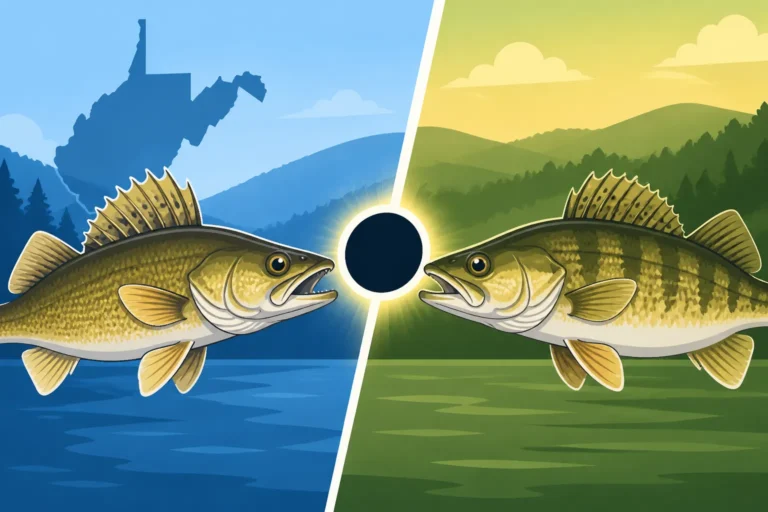
The most reliable indicator is usually the pattern of the lateral lines. Pure striped bass typically have solid, unbroken lateral lines running from gill to tail. White bass, on the other hand, usually have fainter, often broken lines, particularly towards the tail. Hybrid stripers will often display a mix: their lateral lines will be noticeably broken or interrupted, sometimes appearing as a series of dashes rather than solid stripes, especially below the lateral line.
Here's a quick comparison table to help you out in the field:
| Feature | Pure Striped Bass | Hybrid Striped Bass (Wiper) | White Bass |
|---|---|---|---|
| Body Shape | More elongated, torpedo-shaped | Deeper body than striper, more robust | Deeper body, more compressed laterally |
| Lateral Lines | Typically solid, distinct, and unbroken | Usually broken or interrupted, especially below | Often faint and broken, especially towards tail |
| Dorsal Fins | Two separate dorsal fins, with the first spiney | Two separate dorsal fins, with the first spiney | Two separate dorsal fins, with the first spiney |
| Pectoral Fin | Does not reach past nostril when laid forward | May reach past nostril when laid forward | Does not reach past nostril when laid forward |
| Overall Size | Can grow very large (20+ lbs in large systems) | Good size (5-15 lbs common, can be larger) | Smaller (1-3 lbs common) |
Another subtle difference can be in the body shape. Hybrids tend to be a bit "chunkier" or deeper-bodied than a pure striper of similar length, while still being more streamlined than a white bass. Getting familiar with these subtle differences will help you confirm your catch, especially when considering West Virginia Bag and Possession Limits by Species, as limits can vary slightly between species if they are present in the same waters.
Effective Techniques and Gear
Catching hybrid stripers is incredibly exciting because they hit hard and fight relentlessly. They are schooling fish, often found in open water or patrolling humps and points, especially where there's a good current or deep-water access.
One of the most popular and effective methods is trolling. This allows you to cover vast expanses of water in lakes like Summersville or Sutton. Deep-diving crankbaits, spoons, or umbrella rigs are excellent choices. Look for baitfish on your fish finder, and troll through those schools or along structures where hybrids might be ambushing them. Don't be afraid to experiment with different depths until you find where they are holding.
Casting is another fantastic technique, especially if you spot hybrids actively chasing bait on the surface – known as a "boil." When you see this, cast fast-moving lures like sassy shads, swimbaits, or topwater poppers right into the action. Retrieving them quickly will often trigger an aggressive strike. For gear, a medium-heavy spinning or baitcasting rod paired with a reel spooled with strong braided line (20-30 lb test) and a fluorocarbon leader (15-20 lb) is a great setup. You can find a good selection of durable fishing line and tackle on Amazon that will stand up to the power of these fish.
Live bait also works wonders. Large shiners, shad, or even bluegill (where legal) presented under a bobber or on a bottom rig can be irresistible to hungry hybrids. Position your boat near submerged structure or baitfish schools and let the current or wind drift your baits through potential holding areas. Whatever technique you choose, remember that these fish are strong, so make sure your knots are solid and your drag is set properly! Our guide on Best Techniques for Striped Bass Hybrids has even more in-depth advice.
Why Hybrid Stripers Matter to West Virginia Anglers
Beyond simply being another fish to catch, hybrid striped bass hold a special place in West Virginia's angling scene. They offer a unique blend of challenge, accessibility, and reward that makes them a favored target for many. Their presence in our lakes significantly enriches the overall fishing experience available in the state.
The Thrill of the Fight and Table Fare
Let's be honest, part of the joy of fishing is the battle, and hybrid stripers deliver in spades. When you hook into one of these fish, be prepared for a fight! They make powerful runs, pull hard, and don't give up easily. This makes them incredibly exciting to catch, providing a memorable experience whether you're a seasoned angler or a newcomer looking for a challenge. Their aggressive nature and formidable strength mean you'll need reliable gear, from a stout rod to strong line, to land them successfully. Many anglers appreciate the sheer athleticism of these fish, comparing their fighting spirit to that of their purebred striper cousins. If you're looking for an unforgettable tug-of-war, the hybrid striper is definitely a contender.
And after the fight, comes the feast! Hybrid striped bass are widely regarded as excellent eating fish. Their flesh is firm, flaky, and has a mild, clean flavor, especially when properly handled and cleaned. Whether you prefer them baked, grilled, fried, or pan-seared, they make for a delicious meal. Many anglers keep a few for the dinner table, making sure to respect the local regulations regarding size and creel limits. This combination of a thrilling fight and a tasty reward makes hybrid striper fishing a truly gratifying endeavor for many anglers across the state. You can find quality coolers and other fish care items for sale on Amazon to keep your catch fresh on the water.
Conservation and Management Efforts
The existence of a thriving hybrid striped bass fishery in West Virginia isn't by accident; it's the result of dedicated conservation and management efforts by the WVDNR. Because these fish don't naturally reproduce in our lakes, their populations are entirely dependent on continuous stocking programs. This means that responsible angling and adherence to regulations are paramount to ensuring this fishery remains robust for future generations.
It's absolutely crucial for all anglers to understand and follow the specific regulations for hybrid striped bass, which typically include daily creel limits and minimum size restrictions. These rules are in place to manage the harvest sustainably and protect the stocked populations. For example, knowing the West Virginia Fishing License Guide for 2026 is the first step, and then delving into specific species regulations is key. By respecting these limits and practicing responsible catch-and-release, particularly for larger fish, we help ensure that these powerful fighters continue to thrive. The WVDNR's ongoing research and monitoring of these populations also play a vital role, adapting stocking schedules and regulations as needed to maintain a healthy and exciting hybrid striper fishery for everyone. Remember, we're all partners in conservation when it comes to our shared natural resources.
Disclaimer
This article is for general informational purposes only and does not constitute professional advice. Laws, prices and regulations vary by location and change over time. Consult a qualified professional for guidance on your specific situation.