Carp Fishing in West Virginia
Many anglers in West Virginia often overlook carp, dismissing them as "trash fish" or bottom feeders not worth the effort. This perception is a real shame, as they are truly one of the most accessible, hardest-fighting, and rewarding fish species to target in our beautiful state. If you've been curious about the thrill of battling a true river monster or just want to expand your angling horizons beyond bass and trout, this comprehensive guide is for you. We're going to dive deep into everything you need to know about carp fishing in West Virginia, from identifying the different species to finding the best spots, mastering the techniques, and gearing up for success.
Why Carp Fishing in West Virginia is a Hidden Gem
Let's be honest, carp don't always get the respect they deserve in the angling world, especially here in West Virginia where trout and smallmouth bass tend to steal the spotlight. But if you've ever hooked into a big carp, you know they offer an incredible fight, often far exceeding what many other popular species can deliver. They are powerful, stubborn, and can really test your gear and your patience. Beyond the fight, carp are incredibly abundant and can be found in almost every major water system, making them an accessible target for anglers of all skill levels.
The Unrivaled Fight and Accessibility
The sheer power of a common carp pulling line off your reel is something every angler should experience. These fish are built like tanks, designed for navigating strong currents and rooting around in substrate, and they bring that strength to the fight. You won't find many fish that can make a drag sing quite like a 20-pound common carp in a river current. What's even better is their accessibility. You don't need to hike miles into the backcountry or own a fancy bass boat to find them. Carp thrive in many of our urban rivers, slow-moving creeks, and larger lakes, often right where you can cast from shore. This means less planning and more fishing, which is a huge plus for busy anglers.
Dispelling the "Trash Fish" Myth
The "trash fish" label is perhaps the biggest disservice to carp. This notion often stems from their bottom-feeding habits and sometimes muddy taste if not handled or prepared correctly. However, these fish are incredibly intelligent and wary, making them a true challenge to consistently catch. They have excellent senses, are easily spooked, and require thoughtful presentation and bait selection. It's a misconception that they'll just bite on anything; experienced carp anglers will tell you it's a nuanced game of strategy. As for edibility, smaller, younger carp from clean waters can actually be quite delicious when properly prepared, often smoked or fried. The bigger, older ones tend to get that "muddy" taste, but that's why many anglers choose to release them anyway, focusing on the sport.
An Opportunity for Year-Round Action
Unlike some species that become harder to find or legally target during certain seasons, carp offer a more consistent, almost year-round fishing opportunity in West Virginia. While their activity levels certainly fluctuate with water temperature, you can often find them feeding even into the colder months, making them a fantastic option when other species are sluggish or out of season. This reliability makes carp an ideal target for those days when you just need to feel a bend in your rod and hear the reel sing. Plus, the less pressure they receive from other anglers means less competition for prime spots.
Understanding West Virginia's Carp Species
West Virginia waters are home to a few different species of carp, but when most anglers talk about "carp fishing" with a rod and reel, they're typically referring to the common carp. It's important to know the differences, especially as some species have specific regulations or are considered invasive.
Common Carp: The Angler's Champion
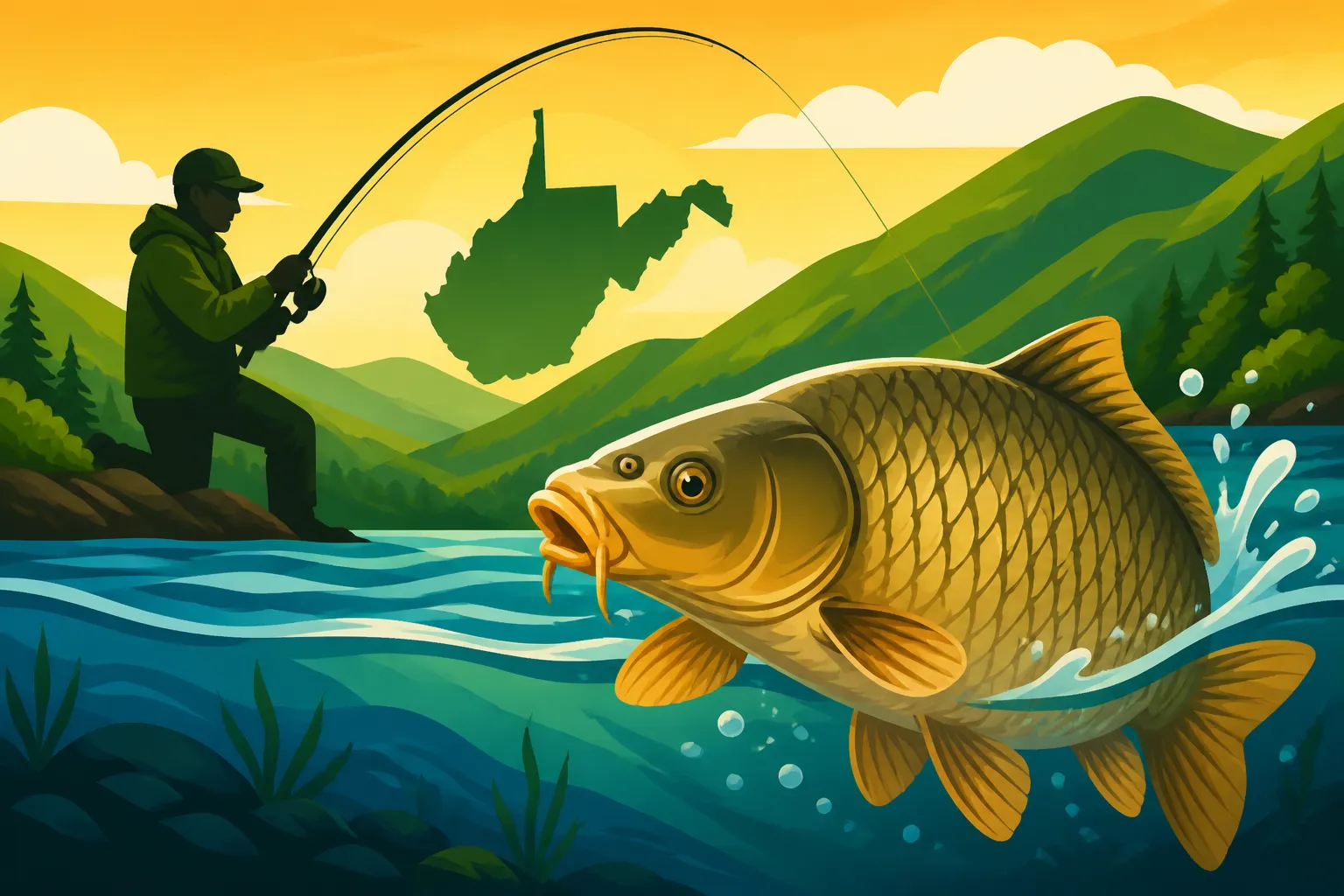
The common carp (Cyprinus carpio) is the bread and butter of carp fishing. These are the fish known for their incredible fighting power and impressive size. They have a distinctive, often golden-brown color, large scales, and two pairs of barbels around their mouth, which they use to forage for food on the bottom. Common carp thrive in a wide range of habitats, from slow rivers and large lakes to smaller ponds and reservoirs across West Virginia.
They are incredibly adaptable and can tolerate varying water conditions, making them prevalent in many areas. Their diet is diverse, consisting of aquatic insects, worms, crustaceans, small mollusks, and plant matter. This makes them responsive to a variety of baits, from simple corn to sophisticated boilies. These are the fish that will test your tackle and give you a thrill on the end of your line. You can learn more about their typical behavior and size in our guide on Common carp size and habits in West Virginia rivers.
Grass Carp: The Vegetarian and the Enigma
Grass carp (Ctenopharyngodon idella) are quite different from common carp. They are primarily vegetarians, consuming large amounts of aquatic vegetation. You'll often find these fish stocked in private ponds and even some public waters in West Virginia specifically for weed control. They have a more elongated, torpedo-shaped body, and unlike common carp, they lack barbels around their mouth.
The catch-and-release ethics surrounding grass carp can be a bit more complex. In many areas, especially where they've been stocked for vegetation management, there might be regulations regarding their harvest. Some waterways might require them to be immediately released to continue their job of eating weeds, while others might encourage harvest for management purposes. Always check the current West Virginia Fishing Regulations Explained before heading out, as rules can vary significantly by water body. They can also grow quite large, offering an exciting fight, but they are generally harder to catch on traditional baits designed for common carp due to their specialized diet.
Asian Carp: Invasive and Impactful
When people talk about "Asian carp," they're generally referring to a group of invasive species, primarily Bighead Carp (Hypophthalmichthys nobilis) and Silver Carp (Hypophthalmichthys molitrix), which have unfortunately made their way into some of West Virginia's larger river systems, particularly the Ohio River and its tributaries. These species are filter feeders, meaning they strain plankton from the water column, making them almost impossible to catch on traditional hook-and-line methods.
They are known for their rapid reproduction and ability to outcompete native fish species for food, posing a significant threat to aquatic ecosystems. Silver carp are particularly famous for their tendency to jump high out of the water when startled by boat motors, which can be a serious hazard for boaters. While they are technically carp, they are not typically targeted by recreational rod-and-reel anglers due to their feeding habits. Instead, commercial fishermen or bowfishing enthusiasts often target them as part of population control efforts. It's crucial to correctly identify these species and, if caught, understand the recommended handling, which often involves not returning them to the water to prevent further spread.
Where to Find Carp in West Virginia's Waters
West Virginia is blessed with an abundance of rivers, lakes, and ponds, many of which are prime habitats for carp. While they can be found nearly everywhere, certain types of water bodies and specific locations offer better opportunities for targeting these powerful fish.
Major Rivers and Their Backwaters
The larger river systems in West Virginia are absolute hotspots for common carp. Think about the big, slow-moving currents and extensive backwaters that provide plenty of food and shelter.
- Ohio River: This mighty river forms a significant portion of West Virginia's western border and is teeming with carp. Look for areas with slower currents, eddies, and stretches where tributaries flow in. The river's vastness means there's always a new spot to explore, and the bottom composition of mud, sand, and gravel holds abundant food sources for carp. Many anglers have success along its banks near cities like Wheeling, Parkersburg, and Huntington. For more details on this incredible fishery, check out our Ohio River Fishing Guide for West Virginia Anglers.
- Kanawha River: Another fantastic carp fishery, especially in its lower and middle sections. The Kanawha River offers a mix of urban and rural access, with plenty of slower pools and access points. Areas around Charleston and downstream often hold large numbers of carp. Like the Ohio, focus on areas with current breaks, deeper holes, and where you see slower, murky water. Our guide on Kanawha River Fishing Spots can offer more specific insights.
- Potomac River (Lower Sections): While the upper Potomac is famous for its smallmouth bass, the lower, wider, and slower sections, particularly where it starts to widen before flowing into the Chesapeake Bay, can hold good numbers of carp. Look for large flats, weed beds, and areas with muddy bottoms.
- Greenbrier River: While known for its smallmouth, the slower, deeper pools in the lower stretches of the Greenbrier River can also surprise you with some hefty carp, especially below major riffles or dams where food accumulates.
When fishing these rivers, key in on areas where agricultural runoff might introduce extra nutrients, leading to increased insect and plant life – a carp buffet! Also, don't overlook marinas, bridge pilings, and any structure that provides a current break.
Lakes and Reservoirs
Many of West Virginia's lakes and reservoirs also boast thriving carp populations. These stillwater environments allow carp to grow to impressive sizes, with less current to fight, though they can still be incredibly strong.
- Bluestone Lake: Located in southern West Virginia, Bluestone Lake is a large impoundment that holds a healthy population of common carp. The shallower coves and flats, especially those with muddy or silty bottoms and aquatic vegetation, are prime areas.
- Sutton Lake: Another good option, Sutton Lake has a diverse fishery, including a good number of carp. The lake's expansive shoreline provides ample opportunities for bank anglers to set up for carp.
- Other Large Lakes: Lakes like Summersville Lake, Tygart Lake, and Burnsville Lake, while often lauded for their bass or walleye, also have carp. Look for their presence in warmer, shallower sections, bays, and around submerged timber or weed lines. These spots are often detailed in guides like Best Fishing Lakes in West Virginia.
When fishing lakes, pay attention to wind-blown shorelines. The wind can push baitfish and other food sources to one side of the lake, creating a feeding frenzy for carp. Also, areas near boat ramps or popular swimming beaches (during off-hours) can be productive as carp habituate to leftover food scraps.
Ponds and Smaller Impoundments
Don't underestimate the smaller waters! Farm ponds, public fishing access ponds, and smaller municipal lakes throughout West Virginia often hold surprisingly large carp. These waters can offer less pressure and easier access for a quick outing. While they might not hold the sheer numbers of the big rivers, the carp here can be less wary due to less fishing pressure, making them a great target for beginners. Look for any pond with a relatively healthy ecosystem and some form of aquatic vegetation or muddy bottom. Always ensure you have permission to fish private ponds.
Essential Gear for West Virginia Carp Fishing
Carp fishing, especially for larger specimens, requires a bit more robust gear than your typical panfish or trout setup. You need equipment that can withstand powerful runs, handle heavy lead, and ultimately bring a strong fish to the net. Don't worry, you don't need to break the bank, but investing in a few key items will greatly improve your success and enjoyment.
Rods and Reels: Power and Capacity
When it comes to rods, think heavy. You'll want a medium-heavy to heavy power rod, typically 7 to 10 feet long, with a moderate to fast action. This length helps with casting heavier weights and provides leverage when fighting a strong fish. Fiberglass or composite rods are often preferred for their durability and forgiving action against powerful runs. For specific recommendations, our guide on Best Fishing Rods for West Virginia Rivers can offer insights into durable options that can handle large fish.
For reels, a large spinning reel or a baitrunner-style reel is ideal. A spinning reel should be in the 4000 to 6000 size range, offering plenty of line capacity and a smooth, strong drag system. Baitrunner reels (or free-spool reels) are particularly popular for carp fishing because they allow a carp to take line freely after a bite, preventing the rod from being pulled into the water, while still having the drag ready to engage with a turn of the handle. Many reputable brands offer excellent baitrunner options that you can often find on Amazon.
| Gear Type | Key Characteristics | Why it Matters for Carp |
|---|---|---|
| Rod | Medium-Heavy to Heavy power, 7-10 feet length | Handles heavy weights, provides leverage, absorbs runs |
| Reel | 4000-6000 size spinning or Baitrunner-style | High line capacity, strong, smooth drag, free-spool option |
| Main Line | 15-30 lb monofilament or braided | Abrasion resistance, strength, good knot retention |
| Leader | 20-40 lb fluorocarbon or specialized carp leader | Stealth, abrasion resistance against rough bottoms |
| Hooks | Size 2 to 8, wide gap, strong wire | Secure hooksets in tough mouths, prevents bending |
| Sinkers | 1-4 oz, flat, teardrop, or method feeders | Holds bait on bottom, casts far, delivers chum |
Line and Terminal Tackle: Strength and Stealth
Your main line needs to be strong and abrasion-resistant. Monofilament line in the 15-30 lb test range is a popular choice for its stretch, which helps absorb some of the carp's powerful runs. Braided line of similar breaking strength (20-40 lb test) offers superior sensitivity and casting distance, but its lack of stretch means you'll need a rod with a softer tip or a more carefully set drag. Whichever you choose, ensure it's fresh and in good condition.
For terminal tackle, you'll want sturdy hooks, typically wide-gap or circle hooks in sizes from a size 8 up to a 2 (smaller number = larger hook). These sizes are strong enough to handle a big carp's mouth and prevent bending out. Consider specialized carp hooks designed for hair rigs, which present the bait next to the hook, rather than directly on it. For leaders, a strong fluorocarbon leader (20-40 lb test) is excellent for its invisibility and abrasion resistance against rocky or mussel-laden bottoms. Alternatively, pre-tied carp leaders made from tough, braided material are readily available.
Sinkers will depend on the current and casting distance needed. Flat lead weights (1-4 oz) are great for keeping your bait stationary in current, while teardrop or pyramid weights are good for casting long distances in still water. Method feeders, which are designed to mold a ball of groundbait around the weight, are also highly effective, releasing a cloud of attraction around your hook bait.
Baits and Attractants: A Carp's Feast
Carp are omnivores with a keen sense of smell, making bait selection crucial. The good news is they respond to a wide array of readily available and often inexpensive baits. You can often stock up on many of these ingredients from your local grocery store or find specialty versions online through retailers like Amazon.
- Corn: A classic and highly effective carp bait. Canned sweet corn is readily available and carp absolutely love it. You can fish it directly on a hook, or combine several kernels on a hair rig. Many anglers also chum with corn to attract fish to their spot.
- Dough Balls/Pastes: Simple flour and water mixed with flavorings (like vanilla, anise, garlic powder, or even Kool-Aid) can create a highly attractive, moldable bait. Many commercial dough baits are also available.
- Boilies: These are perhaps the most popular specialized carp bait, especially among European-style carp anglers. Boilies are hard, round baits made from a mix of flours, binders, and flavorings, often boiled to make them durable. They come in an endless array of flavors (fruity, spicy, fishy) and sizes, designed to be fished on a hair rig.
- Worms and Nightcrawlers: While often associated with other species, carp will readily take a large nightcrawler, especially in murkier water or after a rain.
- Bread: Simple pieces of bread, either floated on the surface or balled up and sunk, can be very effective, particularly for surface-feeding carp.
- Pellets: Specialized carp pellets, often made from fishmeal, expand and break down in the water, releasing attractive scents. They can be used as hook baits or for chumming.
- Chum: This is crucial for consistent carp success. Broadcasting a mix of corn, bread, pellets, and chopped worms into your fishing area creates an irresistible scent trail, drawing carp in and encouraging them to feed. Just be mindful of local regulations on chumming.
For more ideas on effective attractants, some of the principles discussed in Best Catfish Bait for the Kanawha River can also apply, as both species are bottom feeders attracted to strong scents.
Accessories for the Dedicated Carp Angler
A few additional accessories can make your carp fishing experience much more enjoyable and successful:
- Rod Holders/Bank Sticks: Essential for holding your rod securely while you wait for a bite. Carp often give subtle indications before a full run, so a stable rod holder is key.
- Bite Alarms: These attach to your rod and line, emitting an audible and/or visual signal when a fish pulls line. They are incredibly useful, especially when fishing multiple rods or in low light conditions.
- Landing Net: A large, wide-mouthed landing net is critical for safely landing big carp. Look for nets with soft, knotless mesh to protect the fish's fins and scales, especially if you plan on catch and release. Our guide on Best Landing Net for Muskie emphasizes similar principles for handling large, delicate fish.
- Unhooking Mat: For catch and release, an unhooking mat provides a padded surface to place the fish on while you remove the hook and take photos, minimizing stress and injury to the fish.
- Buckets/Containers: For mixing chum, holding bait, or even a water bucket to keep fish wet on the mat.
Having the right gear, from sturdy rods to specialized baits, will make all the difference when you're targeting West Virginia's powerful carp.
Effective Techniques for Catching Carp in West Virginia
Carp fishing is often more about patience and presentation than constant casting. These are intelligent fish that can be wary, so understanding how to approach them and what techniques to employ will greatly increase your chances of success.
Bottom Fishing with Hair Rigs
The most common and arguably most effective technique for common carp is bottom fishing, particularly using a hair rig. A hair rig is a method of presenting the bait off the hook, tied to a short "hair" that extends from the shank. This allows the fish to mouth and suck in the bait without immediately feeling the hook, leading to better hookups as the fish attempts to expel the bait and hooks itself on the weighted line.
To set up a basic hair rig:
- Tie a strong carp hook to a length of fluorocarbon leader or braided carp leader material.
- Create a small loop on the tag end of the leader, forming the "hair."
- Thread your chosen bait (corn, boilies, pellets) onto the hair using a baiting needle, securing it with a small plastic "bait stop."
- Attach your leader to your main line using a strong knot (like a Palomar or uni knot) or a swivel.
- Add a lead sinker (1-4 oz, depending on current) above your leader. Some anglers prefer inline leads or lead clips for safety, allowing the lead to detach if the fish breaks the line.
Once your rig is ready, cast it out to a chosen spot, ideally where you've pre-baited with some chum. Allow the lead to sink to the bottom and tighten your line just enough to create a slight bow in the main line, keeping tension to detect bites. When a carp picks up the bait, it will often lead to a slow, steady pull on the rod tip, or your bite alarm will scream as the fish runs with the bait. This technique is similar in principle to Bottom Fishing for Catfish in West Virginia Rivers, as both target fish that feed on the bottom.
Chumming: Attracting and Holding Fish
Chumming is absolutely vital for consistent carp success, especially in larger rivers or lakes. The idea is to create a consistent food source in your chosen fishing spot, drawing carp in and keeping them there. This can be as simple as scattering handfuls of canned corn or soaked maize, or as elaborate as mixing up a complex groundbait (a mix of breadcrumbs, pellets, seeds, and attractants).
- Pre-Baiting: If you have the luxury of time, pre-baiting a spot for a few days before you fish can be incredibly effective. By consistently introducing food to a specific area, you train carp to associate that spot with an easy meal, making them less wary.
- During Your Session: Even if you can't pre-bait, regular, small amounts of chum throughout your fishing session will keep carp interested. Don't overdo it initially; a little and often is better than dumping a huge amount and potentially satiating the fish.
- Location, Location, Location: Place your chum in an area where carp are likely to patrol – along current seams, in deeper holes, near submerged structure, or on expansive flats.
Consistency is key with chumming. A well-chummed area can dramatically increase your catch rates, turning a slow day into an epic battle.
Other Effective Techniques
While bottom fishing with hair rigs is dominant, a few other techniques can be effective depending on the situation:
- Float Fishing (Surface Fishing): When carp are feeding on the surface, often in warmer weather or around vegetation, float fishing with bread or specialized floating boilies can be incredibly exciting. Use a sensitive float and light tackle, presenting a small piece of bread just below or on the surface. Watching a large carp slowly slurp down your bait is a sight to behold.
- Fly Fishing for Carp: This is a rapidly growing niche that offers a unique challenge. Carp, especially those found in clearer waters, can be targeted with flies that imitate crawfish, aquatic insects, or even bread crusts. It requires stealth, accurate casting, and often sight-fishing. It's a true test of an angler's skill but incredibly rewarding.
- Stalking: Instead of sitting and waiting, some anglers prefer to actively stalk carp, especially in shallower, clearer waters. This involves quietly moving along a bank, looking for feeding fish, and then carefully presenting a bait or fly. This method demands stealth and keen observation.
No matter the technique, patience and observation are your best friends when carp fishing. Pay attention to fish movements, bait presentation, and how the carp are reacting to your offerings. Sometimes a slight adjustment in bait, depth, or location can make all the difference.
Carp Care and Handling
Just like with any other fish, proper care and handling of carp are essential, whether you plan to release them or keep them for the table. These powerful fish can be surprisingly delicate, and a little effort goes a long way in ensuring their survival or quality.
Catch and Release Best Practices
Many carp anglers, particularly those targeting large specimen fish, practice catch and release exclusively. These big fish are often decades old and represent valuable genetics. To ensure their best chance of survival:
- Minimize Fight Time: While a long fight is fun, prolonged stress can be detrimental. Use appropriate gear, like a sturdy rod and reel with a good drag, to bring the fish in efficiently.
- Use a Large Landing Net: A net with soft, knotless mesh is crucial for safely scooping up a large carp without damaging its fins or scales. Avoid dragging the fish onto rocky banks.
- Unhooking Mat and Wet Hands: If you plan to take the fish out of the water for photos or unhooking, place it on a wet, padded unhooking mat. Always wet your hands before touching the fish to protect its protective slime coat.
- Quick Hook Removal: Have your unhooking tools (pliers, forceps) ready. If the fish is deeply hooked, consider cutting the line as close to the hook as possible rather than risking further injury trying to extract it.
- Support the Fish: When holding a large carp for a photo, always support its belly with one hand, especially if holding it horizontally. Avoid holding it by the jaw or gills.
- Rapid Release: Get the fish back into the water as quickly as possible. If it seems sluggish, hold it gently upright in the water until it regains its strength and swims off on its own. Releasing them gently near cover or in an area with less current can also help.
Practicing these methods shows respect for the fish and ensures future generations of anglers can enjoy the same thrilling battles.
Edibility and Preparation
The question of whether carp are good to eat is a common one, and the answer is often "it depends." Smaller, younger common carp, especially those from clean, flowing waters, can be quite palatable. Their flesh is firm and white, though it does have a distinct flavor that some describe as earthy. Larger, older carp, particularly those from murky, stagnant waters, tend to accumulate a muddy or "off" taste due to their diet and environment.
If you decide to keep a carp for the table:
- Bleed the Fish: Immediately after catching, bleed the fish by cutting the gills. This helps improve the flavor.
- Ice It Down: Get the fish on ice quickly to preserve freshness.
- Filleting and Preparation: Carp have a lot of small, Y-shaped bones. Filleting them correctly to remove these bones (often called "scoring" or "chevron filleting") is an art. Many choose to grind the meat for patties or smoke the fillets, which helps soften the bones. Frying, baking, or stewing are also popular methods.
- Local Advisories: Always check for any fish consumption advisories for the specific body of water you're fishing in West Virginia. Some waters may have advisories due to contaminants.
Our article, Are Carp Good to Eat from West Virginia Rivers?, delves deeper into the specifics of preparing carp and overcoming common misconceptions about their taste.
Regulatory Considerations
Before you head out, it's absolutely crucial to consult the current West Virginia Fishing Regulations Explained. Regulations can change, and they vary by species and water body.
- Common Carp: Generally, common carp are not subject to strict bag or possession limits in West Virginia, and anglers are often encouraged to harvest them. However, it's always wise to confirm this.
- Grass Carp: As mentioned, grass carp often have specific regulations. In some waters, they might be protected and require immediate release if caught, as they are part of a vegetation management program. In others, harvest might be allowed or even encouraged. Do not assume; always check!
- Asian Carp (Bighead/Silver Carp): If you happen to catch these invasive species, it is generally recommended not to release them back into the water to help prevent their spread. Check current West Virginia DNR guidelines for specific instructions on handling invasive species.
Being a responsible angler means not only knowing how to catch fish but also understanding and adhering to the rules and regulations designed to protect our natural resources.
Carp fishing in West Virginia offers a unique, challenging, and often overlooked angling experience. With the right knowledge, gear, and a bit of patience, you can unlock the thrill of battling these powerful fish in waters accessible to almost everyone. So grab your heavy tackle, some corn, and head out to one of West Virginia's many rivers or lakes – you might just discover your new favorite species to target. Don't forget that many specialized carp fishing items and bulk baits can be found easily online via a quick search on Amazon to get you started! For those looking for easy access, remember to consider spots listed in Best Bank Fishing Spots in West Virginia, as carp are frequently found close to shore. If you're looking to challenge yourself against a potential record-breaker, research the West Virginia State Fish Records by Species to see what kind of giants are out there!
Disclaimer
This article is for general informational purposes only and does not constitute professional advice. Laws, prices and regulations vary by location and change over time. Consult a qualified professional for guidance on your specific situation.