Channel Catfish Habits in West Virginia Rivers
There's nothing quite like the tug of a channel catfish on your line in a West Virginia river. These whiskered fighters are a staple for anglers across the state, but sometimes finding them, or understanding why they're biting (or not!), can feel like a mystery. This guide aims to pull back the curtain on the intriguing habits of channel catfish in our beautiful Mountain State rivers, helping you connect with these fantastic fish more consistently.
Understanding the Channel Catfish: West Virginia's Widespread Whiskered Wonders
Channel catfish are often the first species that comes to mind when you mention catfishing in West Virginia, and for good reason! They're incredibly widespread, adaptable, and offer a fantastic fight, whether you're targeting them for a fish fry or just for the thrill of the catch. But what truly makes these fish so successful and so much fun to pursue? It's all in their unique characteristics and behavior patterns.
What Makes a Channel Catfish Tick?
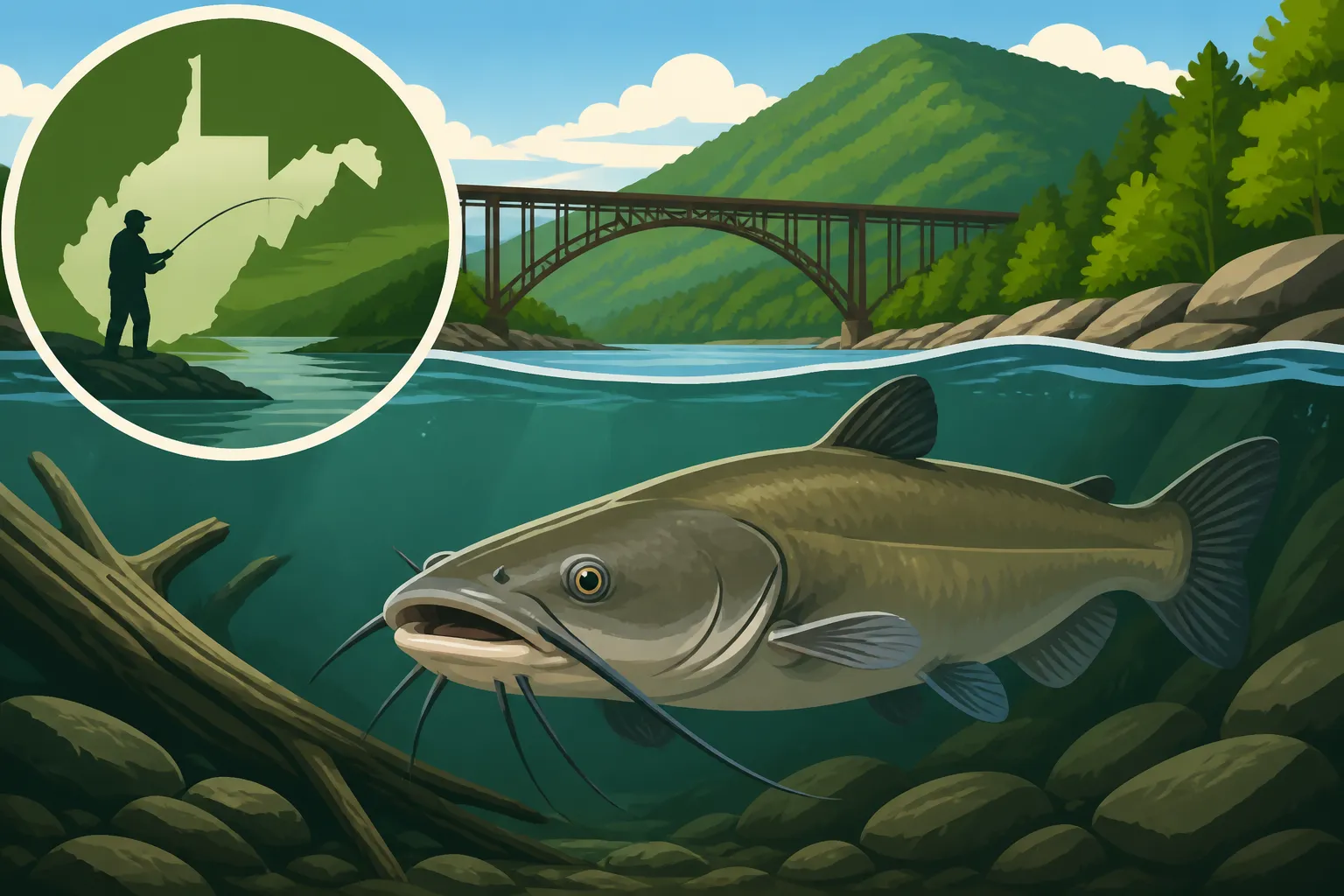
When you first lay eyes on a channel catfish, you'll notice a few key features that set them apart. Their body is typically sleek and torpedo-shaped, usually olive-brown to slate gray on top, fading to silvery-white on their belly. Younger fish, in particular, often sport distinctive dark spots along their sides, which tend to fade as they age. But perhaps their most defining characteristic is that deeply forked tail, a stark contrast to the rounded or square tails of some other catfish species. Then, of course, there are those prominent barbels—eight of them, to be precise—around their mouth. These aren't just for show; they're packed with chemoreceptors, acting like super-sensitive antennae that help the catfish "taste" and "smell" their environment, locating food even in murky waters or at night.
Their success across such a wide range of habitats in West Virginia rivers is a testament to their opportunistic feeding habits and incredible adaptability. Channel cats aren't picky eaters; they'll scavenge for decaying organic matter, but they're also active predators, feasting on insects, crawfish, mollusks, and smaller fish. This flexible diet means they can thrive wherever food is available, from the slow, silty backwaters to the faster-moving main channels. Their ability to tolerate a broad spectrum of water conditions, including varying temperatures and oxygen levels, further cements their status as one of our state's most resilient and ubiquitous game fish. It’s this combination of keen senses, diverse diet, and robust nature that makes them such a rewarding species for West Virginia anglers to target.
Channel Catfish vs. Their Catfish Cousins in WV Waters
While channel catfish are abundant, West Virginia rivers are also home to other fantastic catfish species, most notably the flathead catfish and, in some larger systems, the blue catfish. Knowing the differences is crucial, not just for identification, but also because their habits and preferred baits can vary significantly. The key to identifying a channel catfish almost always comes back to that deeply forked tail, which looks like a V-shape. No other common catfish in West Virginia has such a pronounced fork. Their overall body shape is also generally more slender than a flathead, and while young channels are often spotted, blue catfish typically aren't, and flatheads never are.
When comparing them to flathead catfish, the differences become quite striking. Flatheads are easily recognized by their broad, flattened heads (hence the name!) and a more squared-off, slightly notched tail, rather than deeply forked. Their coloration is usually mottled brown and yellow, offering excellent camouflage in the snaggy, woody cover they prefer. Unlike channel catfish, which are often thought of as scavengers, flatheads are primarily ambush predators that prefer live bait. You'll find them lurking in the heaviest cover—deep logjams, undercut banks, and rock piles—waiting for an unsuspecting meal to swim by. Blue catfish, which are found in some of our larger rivers like the Ohio and Kanawha, share the deeply forked tail of the channel cat but typically lack the spots, grow to much larger sizes, and have a distinctive hump on their back. If you're struggling to tell them apart on the bank, a quick reference to a Catfish Species Identification Guide for West Virginia can be incredibly helpful. Understanding these distinctions is not just academic; it directly influences where and how you might target each species, and what baits will prove most effective.
Prime River Habitats: Where Channel Cats Call Home in West Virginia
One of the great joys of fishing for channel catfish in West Virginia is their ubiquitous presence. From our mighty boundary rivers to smaller, intimate tributaries, these fish have found a way to thrive. However, within these diverse aquatic landscapes, they have definite preferences when it comes to specific habitat features. Knowing where to look is half the battle, and once you understand their preferred haunts, you'll start to see your catch rates improve significantly.
Locating Channel Catfish in Big Rivers
In the behemoth waterways like the Ohio River, the Kanawha, or even the lower stretches of the Monongahela, channel catfish thrive by utilizing specific structures and current breaks. They are not typically found fighting the strongest currents head-on, but rather seeking refuge from them while still benefiting from the food that the moving water brings. Think about those classic current breaks: the seams where fast water meets slow, just downstream of an obstruction, or the eddy lines behind bridge pilings, wing dams, or even large fallen trees. These areas concentrate baitfish and other forage, making them prime feeding grounds.
Deeper holes and depressions are also critical. In the big rivers, channel cats will often gravitate towards the deepest parts of a bend, or holes scoured out by strong currents. Submerged structures like brush piles, rock ledges, or old submerged debris provide both cover from predators and ambush points for their own feeding. Even navigation markers and buoys can create subtle current breaks that hold fish. The vastness of these rivers can be intimidating, but by focusing on these key features—current breaks, depth changes, and submerged cover—you can narrow down your search considerably. For more specific insights into these larger waterways, checking out an Ohio River Fishing Guide for West Virginia Anglers can give you an edge in understanding the nuanced structure.
Channel Catfish in Smaller Rivers and Tributaries
While the big rivers offer expansive habitats, West Virginia's countless smaller rivers and tributaries also boast healthy channel catfish populations. Here, the scale of the habitat changes, but the principles remain much the same: find cover, find current breaks, and find depth. In rivers like the Greenbrier, Elk, or the South Branch of the Potomac, channel catfish might not grow as gargantuan as some of their big-river cousins, but they are certainly present and eager to bite. They'll often tuck into deeper scour holes found on the outside bends of a river, where the current has eroded the bank and created a deeper pocket.
Undercut banks, formed by erosion and often shaded by overhanging trees, offer fantastic cover and a cooler retreat during warmer months. Logjams, fallen trees, and large root wads are equally attractive, providing both shelter and a buffet of insects and small fish that seek refuge there. These smaller rivers might present a more varied bottom composition, ranging from gravel and rock to sand and silt, and channel catfish will utilize it all. Look for areas where the river widens and slows, creating deeper pools, especially if there's any form of structure. Even small feeder creeks entering the main river can create subtle current changes and bring in food, making their mouths great places to explore. If you're planning a trip to one of these picturesque smaller waterways, a resource like the Greenbrier River Fishing Guide can help you pinpoint those promising catfish haunts.
The Hungry Habits: What and When Channel Catfish Eat
Understanding what channel catfish eat and when they prefer to eat it is paramount to consistent success. These aren't just bottom-dwelling scavengers; they're intelligent, opportunistic feeders with a highly refined sensory system designed for locating food in a variety of conditions. Tapping into their natural diet and feeding schedules will dramatically increase your chances of a productive outing.
A Diet of Opportunity: What They'll Strike At
Channel catfish truly embody the term "opportunistic feeder." Their incredible sense of smell, amplified by those eight sensitive barbels around their mouth, allows them to detect food from a considerable distance, even in dark or turbid water. They're not just waiting for a meal to drift into their mouths; they're actively searching for it. Naturally, their diet is incredibly varied, including insects and their larvae, crawfish, snails, mussels, small fish like minnows and shad, and even aquatic vegetation. They're also quite adept at scavenging on decaying organic matter, which is why "stink baits" are so famously effective.
When it comes to bait, this diverse diet gives anglers a lot of options. For those who prefer natural offerings, live or cut bait is hard to beat. Chicken livers, cut pieces of shad or sunfish, and good old nightcrawlers are perennial favorites. The key with these natural baits is often their strong scent. This is where artificial "stink baits," designed to mimic the odor of decaying food, truly shine. These come in various forms—dips, doughs, and pre-formed chunks—and can be incredibly effective, especially when fished on treble hooks or specialized bait holders. Many anglers find a lot of success exploring different options, and resources like Amazon offer a vast array of specialized catfish baits and bait enhancers. If you're specifically targeting the Kanawha, you might want to delve into a guide on the Best Catfish Bait for the Kanawha River for local preferences. The more potent and natural the scent, the better your chances of attracting a hungry channel cat from afar.
Seasonal Feeding Patterns and Best Times to Fish
Just like us, channel catfish's appetites fluctuate with the seasons and even the time of day. Their metabolism is highly influenced by water temperature, dictating when they're most active and when they might be more sluggish. Generally, the warmer months—late spring, summer, and early fall—are prime time for channel catfish. As river temperatures rise, their metabolism kicks into high gear, and they need to consume more food. This is when you'll find them most aggressively feeding.
During the scorching summer months, their feeding often shifts dramatically to the nighttime hours. As the sun sets and the water cools slightly, channel cats become much bolder, moving into shallower feeding flats and along river margins where they might be hesitant during bright daylight. This is also when they become particularly susceptible to highly scented baits. In the spring, after the spawn, they enter a post-spawn feeding frenzy, eager to replenish their energy stores. Fall sees them packing on weight for the leaner winter months, so they remain active until water temperatures drop significantly. Even in winter, they'll feed, but typically in deeper, slower pools, and often on much slower presentations. Understanding these seasonal shifts, and knowing that summer nights often provide the best action, is critical for maximizing your success. For a broader look at angling opportunities throughout the year, checking out the Best Time of Year to Fish in West Virginia can offer valuable context. Furthermore, paying attention to local weather patterns—especially those leading up to a storm or just after heavy rain when currents stir up food—can also lead to incredibly productive bites.
Spawning and Life Cycle: Ensuring Future Generations
The life cycle of a channel catfish, particularly their spawning habits, is a fascinating and often overlooked aspect of their behavior. Understanding this crucial period not only provides insight into their population dynamics but can also influence how and when you might target them, and how you should practice responsible angling. The drive to reproduce is a powerful force, and it shapes where these fish are found and how they behave for a significant portion of the year.
The Spawning Ritual
Channel catfish typically begin their spawning ritual when water temperatures in West Virginia rivers consistently reach the upper 60s to low 70s Fahrenheit, usually from late spring through early summer. This period can vary slightly from year to year depending on weather patterns and the specific river system. Unlike some fish that broadcast their eggs over open water, channel catfish are "cavity spawners." This means the male will seek out a secluded, dark, and protected spot to create a nest. These nests can be found under submerged logs, in rock crevices, inside muskrat runs, under undercut banks, or even in old tires or drainpipes that have found their way into the river. The male meticulously cleans the chosen site to prepare it for the eggs.
Once the nest is ready, the female deposits her adhesive eggs, and the male fertilizes them. What follows is a remarkable display of parental care: the male diligently guards the eggs, fanning them with his fins to provide oxygen and protect them from predators. After the eggs hatch into fry, the male continues to guard the young until they are free-swimming and able to fend for themselves. This entire process means that during the spawning and post-spawning period, male channel catfish can be particularly aggressive, often striking at anything that approaches their nest. While this can make them easier to catch, it's also a time when responsible catch-and-release practices are especially important to ensure the continuation of healthy populations.
Growth and Longevity in West Virginia Rivers
The growth rate and ultimate size of channel catfish in West Virginia rivers can vary considerably, influenced by factors such as food availability, water quality, and population density within a given waterway. In rivers with abundant forage and optimal conditions, channel cats can grow quite quickly. However, they generally do not reach the immense sizes seen in their blue catfish cousins, nor do they typically attain the sheer bulk of flathead catfish. A "trophy" channel catfish in many West Virginia rivers would be a fish weighing into the double digits, although larger specimens are certainly caught.
Their longevity also plays a role in their size. Channel catfish can live for a good number of years, sometimes well over a decade in ideal conditions. However, older, larger fish are often less common, having survived countless challenges including predation, environmental shifts, and angling pressure. While some rivers might consistently produce larger fish due to specific factors, the average channel cat you'll encounter will be a more modest, but still feisty, size. Factors like stream flow, temperature, and habitat availability during their early life stages can significantly impact how many fish survive to adulthood and how large they ultimately become. It's truly a testament to a river's health when you encounter an older, larger channel catfish. While specific numbers change, dedicated anglers are always chasing that next big catch, hoping to beat the West Virginia state record channel catfish weight.
Tackle and Techniques for River Channel Cats
Successfully catching channel catfish in West Virginia rivers doesn't require a mountain of specialized gear, but having the right tools and understanding effective techniques will definitely put more fish in your net. These fish are robust fighters, and river environments can be challenging, so investing in reliable equipment that can stand up to the task is a wise decision.
Essential Gear for River Catfishing
When it comes to essential gear, let's start with the rod and reel. For river channel cats, a medium-heavy to heavy action spinning or baitcasting rod, typically 7 to 9 feet in length, is a great choice. This length provides the leverage needed to cast heavier baits and sinkers, and the backbone to control strong fish in current. Pair that with a sturdy spinning reel in the 4000-6000 size range, or a baitcasting reel with a reliable drag system. The key here is durability and line capacity. For line, you'll want something stout. Monofilament lines in the 15-25 pound test range are popular for their stretch and abrasion resistance, which can be useful around submerged snags. Braided lines of similar breaking strength offer increased sensitivity and less stretch, allowing for better hooksets at a distance, though they can be less forgiving if snagged.
Hooks are another critical component. Circle hooks, ranging from 2/0 to 5/0, are highly recommended. They are incredibly effective for channel catfish because they are designed to hook fish in the corner of the mouth, leading to fewer gut hooks and making catch-and-release much safer for the fish. For sinkers, pyramid sinkers or no-roll sinkers are excellent choices for river fishing, as their shape helps them hold bottom better in current, preventing your bait from being swept downstream. Other essentials include a sturdy pair of pliers for hook removal, a good headlamp for night fishing, and a robust landing net. Many anglers find great deals and a wide selection of these items, from rods to specialized sinkers, on Amazon. For those just starting out, considering a well-balanced option like the Best Rod and Reel Combo for Beginners can simplify your initial setup.
Productive River Catfishing Techniques
Once you've got your gear dialed in, it's time to talk techniques. For river channel catfish, bottom fishing is by far the most popular and often the most effective method. A classic setup is the Carolina rig: simply slide an egg sinker (or appropriate river sinker) onto your main line, tie on a barrel swivel, then add an 18-36 inch leader of slightly lighter line (say, 10-20 lb mono or fluorocarbon), and finally your circle hook with bait. This rig allows the fish to pick up the bait without feeling the weight of the sinker immediately. Cast this rig into deeper holes, current seams, or near submerged structure and let it sit. For even heavier current, a three-way swivel rig can be effective, allowing you to attach a sinker on one dropper line and your baited hook on another.
Drift fishing can also be incredibly productive, especially if you're covering a lot of water from a boat or even slowly wading a wide flat. This involves casting your bait upstream and allowing the current to carry it naturally downstream, bouncing it along the bottom. This covers more ground and often intercepts actively feeding fish. If you're fishing in slower currents, or targeting specific submerged cover like a logjam, a simple bobber rig can also work. This keeps your bait suspended just off the bottom or at a specific depth where you've observed fish. For specific tactics tailored to larger rivers, understanding the Best rig for bottom fishing catfish on the Ohio River can provide detailed guidance. The key to all these techniques is to use enough weight to hold bottom, but not so much that your bait looks unnatural. Patience is a virtue, as channel cats often take their time to find and commit to a bait, but when they do, you'll know it!
Conservation and Responsible Angling for Channel Catfish
As anglers, we have a profound responsibility to protect and preserve the fisheries we enjoy. Channel catfish are a valuable resource in West Virginia's rivers, providing countless hours of recreation and food. Practicing good conservation habits isn't just about following the rules; it's about ensuring that future generations can experience the same joy of a bent rod and a fighting catfish that we do today.
Best Practices for Catch and Release
While channel catfish can be excellent table fare, there are many times when catch and release is the best option, whether you've caught a trophy, are just fishing for sport, or have already reached your limit. When you decide to release a fish, the goal is always to minimize stress and injury, giving it the best possible chance of survival. First and foremost, handle the fish as little as possible, and always with wet hands. Dry hands can remove the protective slime coat, leaving the fish vulnerable to disease. If you need to lift the fish, support its entire body, especially larger specimens, rather than just holding it by the jaw.
Using the right tools can make a huge difference. Investing in a good landing net with rubberized, knotless mesh will protect the fish's fins and slime coat much better than traditional knotted nylon nets; you can find excellent options on Amazon. If a fish is deeply hooked, it’s often better to cut the line as close to the hook as possible rather than trying to remove the hook, especially with circle hooks which usually dislodge over time. Always have a pair of long-nosed pliers or de-hooking tools readily available. When releasing, gently place the fish back into the water, headfirst if possible, and hold it upright until it swims away under its own power. Understanding these simple steps not only helps individual fish but also contributes to the overall health and sustainability of the channel catfish populations in our rivers. Always be mindful of the West Virginia Bag and Possession Limits by Species to make informed decisions about keeping or releasing.
Understanding Regulations and Sustaining the Fishery
Beyond individual catch-and-release practices, understanding and adhering to the broader fishing regulations set by the West Virginia Division of Natural Resources is absolutely essential for sustaining our channel catfish fisheries. These regulations are not arbitrary; they are based on scientific data and designed to manage fish populations, prevent overfishing, and maintain ecological balance. Daily creel limits and possession limits dictate how many fish of a particular species you can keep in a day or have in your possession. These limits can vary not just by species, but sometimes even by specific water bodies within the state, so always check the most current regulations for the river you plan to fish.
For channel catfish, the regulations typically allow for a generous harvest due to their robust populations, but staying within these bounds is crucial. Anglers also play a vital role in reporting any suspicious activity, such as poaching or environmental violations, to the proper authorities. By purchasing your fishing license and conservation stamps, you are directly contributing to the funding of fisheries management programs, stocking efforts, and habitat restoration projects that benefit channel catfish and all other aquatic life in West Virginia. Being a responsible angler means being an informed angler, and a good first step is always to review the comprehensive West Virginia Fishing Regulations Explained before heading out. Your actions, both on and off the water, collectively ensure that West Virginia's rivers remain vibrant and productive fishing destinations for many years to come.
Channel Catfish vs. Their Cousins: A Quick Comparison
| Feature | Channel Catfish | Flathead Catfish | Blue Catfish |
|---|---|---|---|
| Tail Shape | Deeply forked | Square to slightly notched | Deeply forked |
| Head Shape | Moderately rounded | Broad, flattened, shovel-like | Rounded, prominent hump on back (larger fish) |
| Body Coloration | Olive-brown to slate gray, often spotted (younger) | Mottled brown/yellow, dark patterns | Slate blue to silvery, unspotted |
| Typical Diet | Omnivorous, scavengers, opportunistic predators | Primarily live prey (fish, crawfish) | Omnivorous, fish, mussels, crawfish |
| Preferred Habitat | Deep holes, current breaks, varied cover, open water | Heavy cover (logjams, undercut banks), deep pools | Large rivers, deep channels, main current |
| Barbels | 8 (4 chin, 2 maxillary, 2 nasal) | 8 (shorter chin barbels) | 8 (chin barbels often longer than flathead's) |
| Size Potential | Moderate (common to 10-15 lbs, larger possible) | Large (common to 30-50 lbs, very large possible) | Very Large (common to 50+ lbs, record sizes huge) |
Disclaimer
This article is for general informational purposes only and does not constitute professional advice. Laws, prices and regulations vary by location and change over time. Consult a qualified professional for guidance on your specific situation.