Best Techniques for High Water Conditions
Anglers in West Virginia often face the unpredictable challenge of high water conditions, whether it's after a heavy rainstorm or during periods of increased snowmelt. This can turn your favorite fishing spot into a raging torrent or a murky, swollen expanse, leaving many wondering where the fish have gone and if it's even worth casting a line. This comprehensive guide is here to equip you with the knowledge and techniques to not only tackle these challenging conditions safely but also to find success when the waters rise.
The Challenges and Opportunities of High Water in West Virginia
High water can be a double-edged sword for West Virginia anglers. On one hand, it creates murky conditions, strong currents, and often pushes fish out of their usual haunts. On the other, it can concentrate baitfish, dislodge new food sources, and create unique ambush points for predatory fish. Understanding these dynamics is the first step to turning a potentially frustrating day into a memorable one.
What "High Water" Truly Means for Anglers
When we talk about "high water," it's not just about the water level being a bit higher than normal. It often encompasses several factors that drastically change the fishing environment:
- Increased Volume and Current: Rivers and streams swell, and the speed of the current picks up significantly. This makes it harder for fish to hold their positions and for anglers to present lures effectively. Casting becomes more challenging, and maintaining a drag-free drift in fly fishing is nearly impossible. For boaters, navigating can become dangerous.
- Turbidity (Murky Water): Heavy rains and runoff stir up sediment, turning clear water into a muddy, coffee-colored mess. This reduces visibility for both fish and angler, impacting how fish perceive baits and how well you can see structure.
- Temperature Fluctuations: Incoming runoff can drastically change water temperatures, sometimes rapidly. While a slight warming can activate fish, a sudden cold shock can put them off the bite.
- Debris: High water often carries a lot of debris – leaves, branches, logs, and even trash. This can foul lines, snag lures, and pose hazards for boats and waders.
Many anglers just pack up and head home when they see high, muddy water, feeling like it's a lost cause. But experienced folks know that high water isn't necessarily bad; it just requires a different strategy.
Why High Water Can Be Frustrating and Rewarding
It's completely understandable to feel a pang of disappointment when you arrive at your favorite stretch of the New River or a stocked trout stream to find it raging and brown. The conditions you've studied and practiced for might be entirely irrelevant. Trying to cast a tiny dry fly into a raging torrent for trout, for instance, is an exercise in futility. Your usual techniques might simply not work.
However, these frustrations often mask incredible opportunities. High water acts like a reset button for many aquatic systems. It flushes out new food, creates new holding lies, and can trigger aggressive feeding behaviors in certain species. For instance, increased current can push baitfish into predictable eddies and current breaks, making them easy targets for waiting predators. Larger fish, especially, can become more active, taking advantage of the reduced visibility to hunt more boldly. So, while it demands adaptation, the rewards can be substantial, often resulting in larger catches than on calm, clear days.
Prioritizing Safety When Fishing High Water
Before you even think about what lure to tie on, safety has to be your absolute top priority when fishing in high water conditions in West Virginia. The currents are stronger, the footing is more treacherous, and debris can become a serious hazard. No fish is worth risking your life.
Essential Gear for Navigating Swollen Waters
High water demands specific gear to keep you safe. Don't skimp on these items, as they could literally save your life.
- Personal Flotation Device (PFD): If you're wading in a swift river, kayak fishing, or operating any boat, a PFD is non-negotiable. Even strong swimmers can be quickly overwhelmed by powerful currents and submerged obstacles. A good quality, comfortable PFD like those found on Amazon, designed for fishing, will allow full range of motion while providing critical buoyancy. Remember that West Virginia Boating Laws for Anglers and specific Life Jacket Requirements for West Virginia Boaters are in place for a reason.
- Wading Staff: For river anglers, a sturdy wading staff provides a crucial third point of contact, helping you maintain balance against strong currents and test the depth and stability of the riverbed before you take a step. Retractable aluminum or carbon fiber staffs are lightweight and easy to carry.
- Proper Footwear: If wading, invest in high-quality wading boots with good ankle support and aggressive soles. Felt soles offer excellent grip on slimy rocks but can be slippery on mud or ice. Rubber soles with studs are a great alternative or complement. Make sure your waders fit well and aren't baggy, which can catch water and drag you down.
- Communication Device: A fully charged cell phone in a waterproof case or a VHF radio is vital, especially if you're fishing alone or in remote areas.
- First-Aid Kit: Accidents can happen quickly, so a basic first-aid kit with essentials for cuts, scrapes, and other minor injuries is always a good idea.
Understanding Water Levels and Current Strength
Before you even leave the house, check real-time water levels and flow rates for your target river or stream. Resources like the USGS water data site or local weather apps can provide invaluable information. Pay attention to:
- Gauge Heights: Compare current gauge heights to historical averages and flood stages. A river that's usually at 3 feet and is now at 8 feet is a very different beast.
- Cubic Feet Per Second (CFS): This measures the volume of water flowing. Higher CFS means stronger currents. Learn what CFS levels are safe for your preferred fishing style and target water. For instance, the New River at Fayetteville might be fishable by boat at 10,000 CFS, but deadly to wade.
- Trend: Is the water still rising, cresting, or beginning to fall? Rising water is generally more dangerous and often less productive than falling water.
Never assume a familiar spot is safe just because you've fished it a hundred times. High water completely alters the riverbed, creates new hydraulics, and can sweep away stable banks. Always err on the side of caution.
Safe Wading and Boating Practices
- Wading:
- Shuffle, Don't Step: When wading, shuffle your feet rather than lifting them high, which can cause you to lose balance.
- Face Upstream: Face the current, so if you do slip, your feet are downstream, reducing the risk of being pinned against an object.
- Know Your Limits: Never wade in water that's above your knees in strong current. If in doubt, don't go out.
- Buddy System: Always try to fish with a partner when wading in high water.
- Boating (Kayaks, Jon Boats, Drift Boats):
- Know Your Vessel's Limits: Understand what your boat, whether it's one of the Best Kayaks for West Virginia Fishing or a larger drift boat, can handle in terms of current and obstacles.
- Scout Ahead: If possible, scout the section of river you plan to fish from shore to identify hazards, strong rapids, or debris.
- Maintain Control: Always be aware of the current and how it's affecting your boat. Keep your bow pointed into the current when maneuvering or crossing.
- Anchor Safely: If anchoring, use a heavy-duty anchor system designed for river currents and always be prepared to release it quickly if necessary. Avoid anchoring in the main current where your boat could be swamped by debris.
Lure and Bait Selection for Turbid Conditions
When the water is high and murky, fish rely less on sight and more on their other senses – sound, vibration, and smell. Your lure and bait choices need to reflect this shift, grabbing their attention in ways a subtle, natural presentation simply can't.
Maximizing Visibility: Colors and Vibrations
In low-visibility water, you need to make your offering stand out.
- Color Choices: Bright, contrasting colors are your friends. Fluorescent hues like chartreuse, orange, and hot pink often perform exceptionally well. Darker colors, like black or purple, can also create a strong silhouette against a lighter sky, making them surprisingly visible in dark water. Avoid natural, subtle patterns that blend in; fish won't see them.
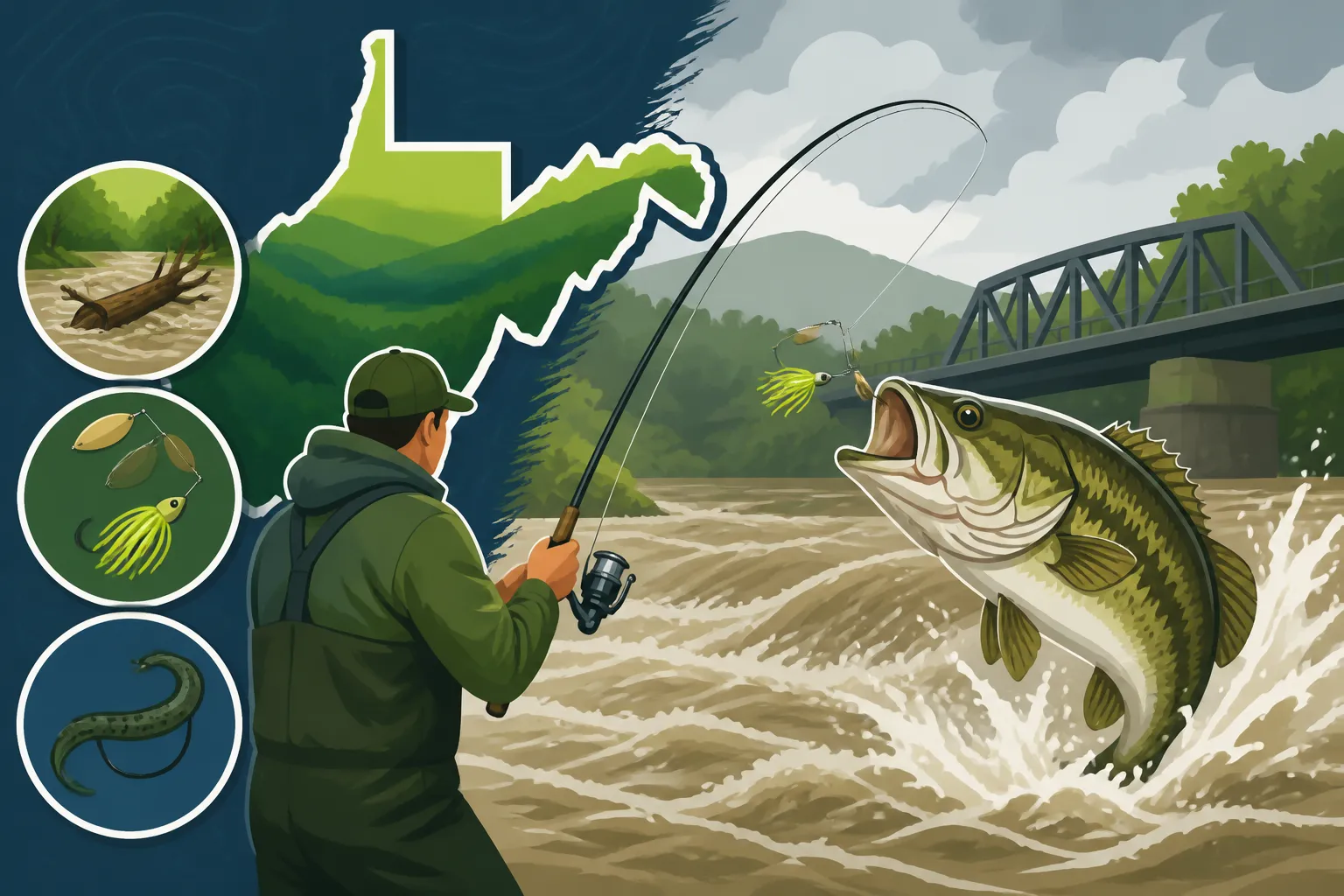
- Real-life Scenario: Imagine casting a bright chartreuse spinnerbait into the muddy Cheat River after a heavy rain. That flash and vibration can be seen and felt from a surprising distance, triggering a reaction strike from a smallmouth bass that might otherwise ignore a natural-colored crankbait.
- Vibration and Sound: Lures that displace a lot of water or create distinct noises are critical.
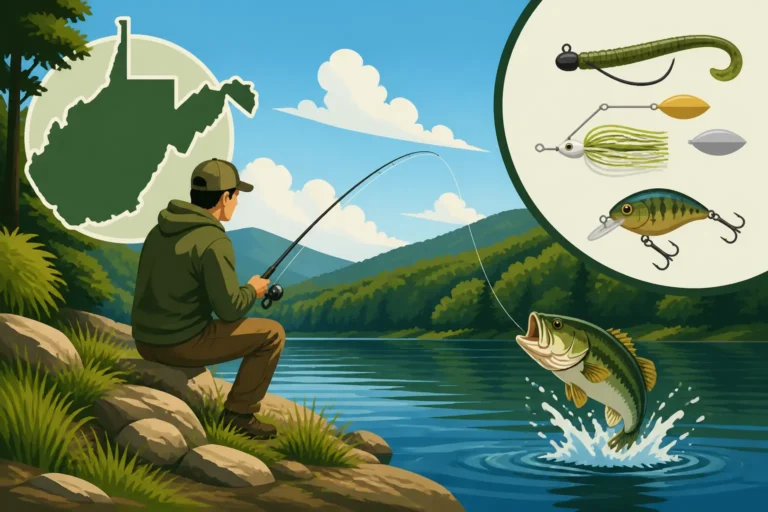
- Bladed Lures: Spinnerbaits, chatterbaits, and Colorado-bladed inline spinners create significant flash and vibration.
- Rattling Baits: Lipless crankbaits and certain jig heads with internal rattles produce sound that travels well through murky water.
- Topwater (sometimes): In very specific high-water scenarios, especially around slack water or flooded grass, a noisy topwater popper or buzzbait can draw fish up, relying purely on sound. This is less common in roaring main currents but effective in adjacent calmer pockets.
Choosing the Right Weight and Profile
High water means stronger currents, and you need to get your lure down to where the fish are holding and keep it there.
- Heavier Lures and Weights: Light lures will simply be swept away by the current. Opt for heavier jigs, larger spinnerbaits, or crankbaits with aggressive diving lips that can dig down. For live bait, use heavier sinkers to keep it near the bottom.
- Practical Application: If you're targeting walleye in a high Ohio River, a 1/2 oz jig that normally works well might need to be bumped up to a 3/4 oz or even 1 oz to reach the bottom and stay there long enough for a bite. You can find a wide selection of jig weights and other fishing tackle on Amazon.
- Compact Profiles: While you want vibration, sometimes a smaller, more compact profile can be beneficial in heavy current as it offers less resistance and stays down better. Think a bulky but heavy jig over a long, thin swimbait.
- Streamlined Designs: For lures that are meant to be retrieved, streamlined designs can help them cut through the water more efficiently without getting pushed up by the current. Crankbaits with narrow bodies and deep diving bills are good examples.
Live Bait Advantages in High Water
When artificial lures aren't cutting it, live bait can be an absolute game-changer in high water. The natural scent and subtle movements of live bait are incredibly effective when visibility is poor, and fish are relying on their sense of smell.
- Scent Trail: Live bait, whether it's a juicy nightcrawler, a lively minnow, or a gob of cut bait, releases a potent scent trail that fish can follow even in murky conditions. This is particularly effective for species like catfish or walleye.
- Natural Action: The natural, erratic movements of a live minnow struggling on a hook or a worm wriggling can trigger a strike even from a lethargic fish.
- Versatility: Live bait can be presented in many ways – on a simple slip-sinker rig, under a bobber in slack water, or even drifted naturally with the current (where legal and safe).
- Example: For targeting channel catfish in the Kanawha River after heavy rains, a big piece of cut shad or a wad of nightcrawlers fished on the bottom with a heavy weight will often outperform any artificial bait simply due to the scent. This technique is a staple for How to Catch Catfish in West Virginia Lakes and rivers.
Finding Fish in the Flood: Strategic Location Tactics
Fish don't just disappear when the water rises; they simply relocate to more favorable conditions. The key to success in high water is understanding where these "refuge" areas are and how to target them effectively. They're looking for relief from the strong current, better visibility, and easy access to food.
Identifying Current Breaks and Slack Water
The most crucial tactic in high water is finding current breaks and areas of slack water. These spots offer fish a chance to rest out of the main flow while still having access to food that's being swept past.
- Eddies: Look for swirling pockets of water downstream of major obstructions like large boulders, bridge pilings, or fallen trees. Fish will stack up in these eddies, waiting for food.
- Seams: The line where fast water meets slow water is called a seam. These are prime ambush points. Drift your bait or lure along these seams, paying close attention to the transition zone.
- Inside Bends: On river bends, the current is always slowest on the inside curve. These calmer areas can become temporary refuges.
- Obstructions: Any large structure that breaks the current, such as a rock pile, a bridge abutment, or a deep logjam, will create a calmer zone downstream. Approach these areas carefully to avoid snags, but know that fish will be holding tight to them.
- Real-life Application: On the Elk River, which is known for its trout, high water will often push fish into the slower-moving eddies behind large boulders or into the very edges of the river, out of the main force of the current. Targeting these spots with heavier nymph rigs, as you might learn in Fly Fishing for Trout in West Virginia, will be far more effective than trying to cast into the main flow.
Exploring Flooded Cover and Backwaters
High water expands the available habitat, often flooding areas that are typically dry. These newly inundated zones become temporary havens and feeding grounds.
- Flooded Grass and Bushes: Newly submerged vegetation provides excellent cover and a new source of insects and worms washed in from the banks. Largemouth bass, especially, love to patrol these areas.
- Backwaters and Side Channels: Areas completely off the main current flow, like oxbows, sloughs, or small side channels that only connect during high water, become calm oases. These can hold a surprising number of fish that have moved out of the main river.
- Marinas and Docks: In larger rivers or lakes with marinas, the sheltered water around docks, boat slips, and seawalls can provide a welcome break from the current and turbidity. Fish will often hold tight to these structures.
- Consider this: If you're fishing a lake like Summersville Lake after significant rainfall, the normal shoreline might be several feet underwater, flooding shoreline bushes. Pitching a jig or a Texas-rigged soft plastic into that flooded cover can yield impressive results from bass that have moved in to feed on displaced prey.
Focusing on Inflows and Structure Edges
While the main river might be a muddy mess, certain areas can offer a different picture.
- Tributary Inflows: Smaller tributaries that might be clearer than the main river can create a "mud line" where clear water meets murky water. Fish will often congregate along this line, taking advantage of the clearer water to hunt while still being close to the food sources being washed down the main river.
- Drop-offs and Ledges: Fish in high water will often gravitate towards defined structure that offers depth and a break from the current. Deep holes, ledges, and channels in lakes or larger rivers provide a comfortable place to hold.
- Man-made Structure: Bridge pilings, wing dams, old foundations, and rip-rap shorelines provide excellent current breaks and holding lies. These are often easier to identify and target than natural features in murky water.
- Pro Tip: For a species like walleye, which often hug the bottom, finding deep structure near current breaks in a high Ohio River can be crucial. Drifting jigs or heavy crankbaits along the edges of submerged rock piles or scour holes can put your bait right in front of them.
Species-Specific High Water Strategies
Different fish species react to high water in unique ways, and tailoring your approach to their specific behaviors will drastically improve your chances of success.
Trout Techniques for Swollen Mountain Streams
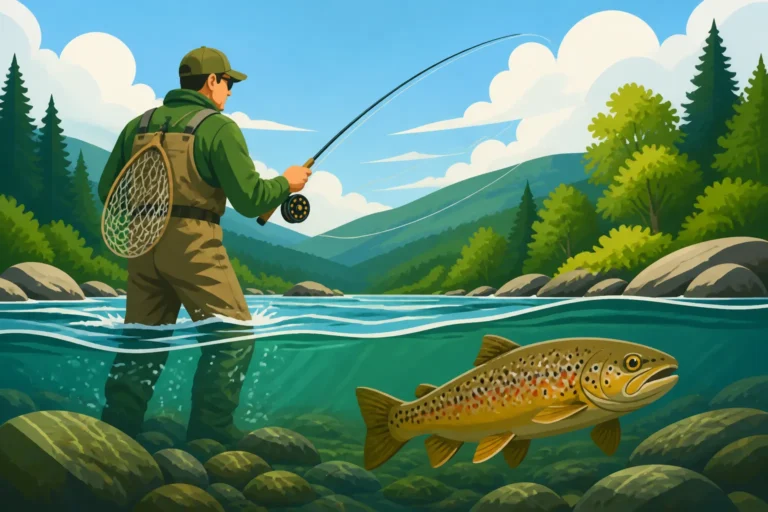
Trout in West Virginia's mountain streams, like those you'd find in the Best Trout Streams in West Virginia, are incredibly sensitive to changes in water flow and clarity. When the water swells and becomes murky, they generally seek refuge from the strong current and low visibility.
- Heavier Nymphs and Streamers: Forget small, delicate dry flies. Your best bet is to use heavy nymph rigs to get down quickly in the strong current. Patters like stoneflies, caddis larvae, and even worm imitations (San Juan Worms) are excellent choices. Streamers that imitate baitfish or crayfish, retrieved slowly, can also be very effective, especially if they have some flash or vibration.
- Targeting Deep Pockets and Eddies: Trout will move out of the main current and tuck into the deepest, slowest pockets behind boulders, logjams, or along the very edges of the river. Look for any areas that offer a significant reduction in current speed.
- Focus on Inflows of Clearer Water: If there's a smaller, clearer tributary entering the main stream, fish the confluence. Trout will often hold on the edge of the clearer water.
- Bait Fishing: For spin anglers targeting stocked trout, a weighted bait rig with PowerBait, corn, or worms can be highly effective. The scent will draw them in, and the heavier weight will keep your bait in the strike zone.
- Don't forget: Always check the West Virginia Fishing Regulations Explained, especially for trout waters, as some streams have special regulations, like catch-and-release only or fly-fishing-only sections.
Smallmouth Bass in Rising Rivers
Smallmouth bass are opportunistic predators and can be very active in high water, especially in rivers like the New River or South Branch Potomac. They use the reduced visibility to their advantage and ambush prey.
- Lures with Aggressive Vibration and Sound: As discussed, noisy, high-vibration lures are key. Spinnerbaits with large Colorado blades, lipless crankbaits, chatterbaits, and even large jigs with bulky soft plastic trailers work wonders. Colors like chartreuse, white, black, and orange are excellent.
- Concentrate on Current Seams and Slack Water: Smallmouth will hold along current seams, behind large rocks, and in eddies. Cast your lures upstream of these areas and allow them to wash naturally into the strike zone. Retrieve them slowly enough to stay in the zone but fast enough to maintain vibration.
- Look for Flooded Cover: As mentioned, flooded bushes, grass, and downed timber are prime targets. Pitching jigs, Texas-rigged soft plastics (like tubes or creature baits), or even weedless swim jigs into this cover can elicit aggressive strikes.
- Work the Banks: High water often pushes baitfish and other prey items close to the banks. Work your lures parallel to the shoreline, targeting any irregularity or cover.
- Essential reading: To truly master the river bronze-backs, dive into How to Catch Smallmouth Bass in West Virginia Rivers, which covers many of these techniques in detail.
Catfish and Walleye in High Lakes and Larger Rivers
These bottom-dwelling predators are often some of the best targets during high water, as they are less reliant on sight and more on scent and vibration.
- Catfish (Channel, Flathead):
- Heavier Bottom Rigs: Use substantial weights (1-4 ounces, depending on current) to keep your bait firmly on the bottom. A simple slip-sinker rig with a circle hook is often all you need.
- Strong Scented Baits: Cut bait (shad, bluegill, skipjack), chicken livers, and prepared stink baits are irresistible. The stronger the smell, the better in murky water.
- Target Deep Holes, Eddies, and Structure: Catfish will often hold in the deepest parts of eddies, behind major current breaks, or in deep holes and channels. Fish slowly and methodically, letting the scent spread.
- Walleye:
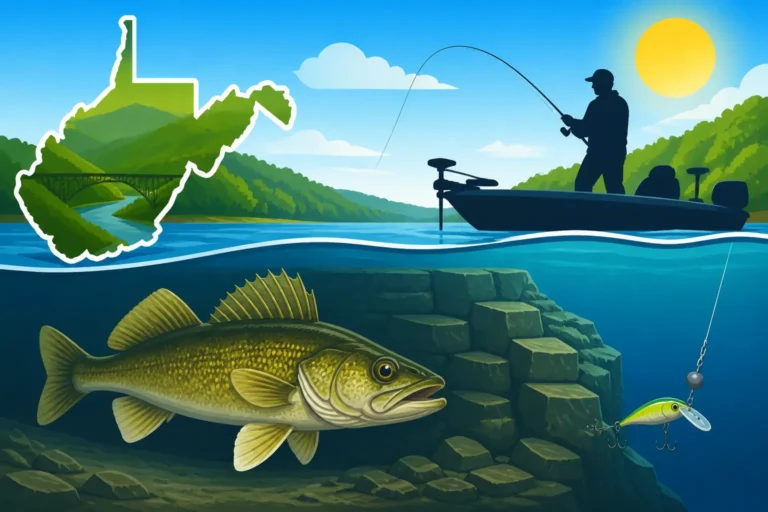
- Jigging and Trolling: In larger rivers like the Ohio or lakes like Tygart Lake, walleye will often move shallower during high water, especially if there's an inflow of food. Vertical jigging with heavy jigs tipped with minnows or soft plastics can be very effective in current breaks. Trolling large, deep-diving crankbaits along current seams or flooded flats can also produce.
- Vibrating Lures and Bright Colors: Similar to smallmouth, walleye respond well to lures that create a lot of vibration and come in bright, contrasting colors like firetiger, chartreuse, or orange.
- Structure-Oriented: Walleye will still relate to structure like humps, points, and channel edges, but they'll often be on the current-protected sides.
- For more in-depth knowledge: Learn How to Catch Walleye in West Virginia for specific tactics that apply to various water bodies.
After the Deluge: Fishing as Water Levels Recede
Just as high water demands specific techniques, so does the period immediately following, when the water begins to drop and clear. This transition phase can be incredibly productive, as fish readjust to their environment.
Reading the Dropping Water
As water levels recede, the river or lake changes again, and fish will often be on the move.
- Falling Water: As the water level drops, fish that moved into flooded areas will start to retreat back to their normal habitats. This can create feeding frenzies as they try to capitalize on remaining displaced food sources.
- Clearing Water: The murkiness will gradually give way to clearer water. This means fish will start relying more on sight again, and you can begin to transition back to more natural presentations, though some brightness and vibration can still be effective.
- New Structure Exposed: As the water drops, new gravel bars, rock piles, or logjams might become exposed or more accessible. These fresh features can become immediate holding lies.
Transitioning Your Tactics Post-Flood
Adjusting your approach as the water falls and clears is crucial for continued success.
- Follow the Fish: As the water drops, fish will move out of the temporary flooded cover and back towards the main channel or deeper structure. Follow these movements.
- Gradual Lure Changes: Start by incorporating more natural colors while still maintaining some vibration. For example, switch from a bright chartreuse spinnerbait to a white or natural shad pattern. Gradually reduce jig weights or use crankbaits with less aggressive dives.
- Increased Sight Fishing Opportunities: As the water clears, you'll be able to see more structure and potentially even fish. This opens up opportunities for sight-fishing with jigs, soft plastics, or even dry flies in trout streams. Investing in good polarized sunglasses (you can find many options on Amazon) is a game-changer here.
- Wadeable Waters Return: For trout anglers, the dropping and clearing water means many of West Virginia's prime trout streams become wadeable again, and the fish might be hungry after a period of high, swift water. Consider picking up some Best Waders for West Virginia Trout Streams for your next outing.
Fishing in high water conditions in West Virginia definitely presents a unique set of challenges, but with the right knowledge, preparation, and a focus on safety, it can lead to some truly exhilarating and productive fishing experiences. Don't let a swollen river deter you; embrace the challenge and discover the hidden opportunities!
Disclaimer
Fishing involves inherent risks, especially in high water conditions. This guide provides general information and techniques, but individual conditions and abilities vary. Always prioritize your safety, scout conditions thoroughly, wear appropriate safety gear, and comply with all West Virginia fishing regulations. The author and publisher are not responsible for any injuries or damages sustained while following the advice in this article. Always use your best judgment.