Plum Orchard Lake bass fishing guide
Navigating a new lake, or even a familiar one that seems to constantly challenge your fishing instincts, can be a real head-scratcher, especially when you're targeting elusive largemouth bass. Plum Orchard Lake in West Virginia might not always grab the headlines, but it's a gem with a solid bass population that offers fantastic opportunities for anglers willing to learn its secrets. This comprehensive guide is designed to peel back the layers of Plum Orchard Lake, helping you understand its unique characteristics and equipping you with the strategies you need to consistently hook into some great bass.
Understanding Plum Orchard Lake's Bass Fishery
Plum Orchard Lake, nestled in Fayette County, is a prime example of a West Virginia lake that offers a rewarding experience for bass anglers. It’s managed by the West Virginia Division of Natural Resources (WVDNR) and is known for its serene environment and healthy fish populations. But to really crack the code on its bass, you need to understand the lake itself.
Lake Characteristics and Habitat
Plum Orchard Lake is a relatively small, 202-acre impoundment that was originally created for flood control and recreation. This size makes it quite manageable, allowing anglers to cover a significant portion of the lake in a day. It has a maximum depth of about 40-45 feet, but much of its shoreline and coves are significantly shallower, offering plenty of prime bass habitat.
The lake's water clarity can vary throughout the year, but generally, it's considered to have moderate to clear water, especially in the main lake areas. After heavy rains, runoff can certainly muddy up certain coves, which is something to keep in mind as bass react differently to changes in water color. The structure in Plum Orchard Lake is diverse, providing a rich tapestry of hiding spots for bass. You'll find a mix of submerged timber, which are often the remnants of the trees that stood before the lake was impounded, especially in the deeper sections and along old creek channels. Rocky points and ledges are also prevalent, offering hard-bottom areas that attract crayfish and baitfish, which, in turn, attract bass. Additionally, various types of aquatic vegetation can be found, particularly in the shallower coves and flats. These weed beds are crucial ambush points for largemouth bass, especially during warmer months. The primary forage for bass in Plum Orchard Lake includes a healthy population of panfish like bluegill and crappie, as well as various baitfish. Understanding these habitat features is the first step in locating bass throughout the seasons.
Dominant Bass Species
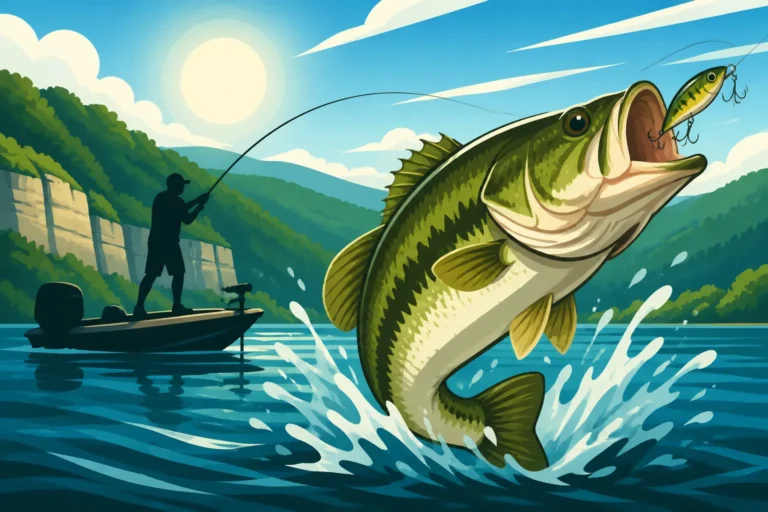
While West Virginia is home to both largemouth and smallmouth bass, Plum Orchard Lake is predominantly a largemouth bass fishery. These chunky green fish thrive in the lake's diverse cover and relatively fertile waters. Largemouth bass in Plum Orchard Lake exhibit good growth rates, and anglers frequently report catching fish in the 2-4 pound range, with larger specimens of 5 pounds or more showing up regularly.
The health of the bass population here is generally excellent, reflecting good management practices by the WVDNR. These largemouth are known for their aggressive strikes and powerful fights, making them a fantastic target for anglers of all skill levels. They primarily relate to cover, whether it's submerged timber, dense weed beds, or shaded docks, using these areas to ambush unsuspecting prey. Their robust presence means that with the right approach, you'll have ample opportunities to land quality fish. If you're specifically interested in the habits of these bucketmouths, diving into topics like "Largemouth Bass Fishing in West Virginia" can give you an even broader understanding of their behavior across different water bodies in the state.
Seasonal Bass Fishing Strategies for Plum Orchard Lake
One of the biggest challenges in bass fishing anywhere, including Plum Orchard Lake, is adapting to the ever-changing conditions throughout the year. Bass behavior is heavily influenced by water temperature, forage availability, and spawning cycles. Understanding these seasonal shifts is critical for consistent success.
Spring (Pre-spawn & Spawn)
Ah, spring! This is arguably one of the most exciting times to target largemouth bass on Plum Orchard Lake. As the ice melts (if it even forms, depending on the winter) and water temperatures begin to climb into the 50s and 60s Fahrenheit, bass move out of their deeper winter haunts and start migrating towards shallower water to feed heavily in preparation for spawning.
During the pre-spawn phase, usually from late March through April, bass will stage on points, creek channel bends, and transitions near deeper water that lead into shallower spawning coves. They are often incredibly aggressive, gorging on baitfish and crayfish. This is a fantastic time for lipless crankbaits, jerkbaits, and spinnerbaits in crawfish or baitfish patterns. Focus on areas that warm up first, such as north-facing banks or shallow, dark-bottomed coves. As temperatures inch into the low to mid-60s, the spawn begins, typically in May. Bass will move into the shallowest, protected areas – often around submerged brush, docks, or sparse vegetation in coves – to build their nests. During this time, they become very territorial. Sight fishing with soft plastics like wacky-rigged Senkos, creature baits, or jigs can be incredibly effective when you spot a bass on a bed. Remember to approach these areas quietly and respectfully, and if you hook a spawning fish, release it quickly and gently to minimize stress.
Summer (Post-spawn & Deep Water)
Summer fishing at Plum Orchard Lake can be both rewarding and challenging. After the spawn, bass will often move to slightly deeper water, especially as surface temperatures climb into the 70s and 80s. The post-spawn recovery period can see a temporary slowdown in feeding, but as they recover, they establish new patterns.
During the peak summer months, you'll find bass relating to deeper cover, like the tops and edges of submerged timber, humps, and channel swings. Early mornings and late evenings offer excellent opportunities for topwater lures like frogs fished over matted vegetation or walking baits along shaded banks and docks. As the sun gets high, bass will retreat to cooler, shadier depths. This is when deep-diving crankbaits, Carolina rigs, shaky heads, and football jigs worked slowly along ledges, points, and timber lines become incredibly effective. If you’re looking for detailed advice on how to deal with the intense summer heat, checking out articles like "When West Virginia trout streams get too warm to fish" can offer insight into how fish species react to rising water temperatures, even if it's for a different species. Don't be afraid to experiment with different depths and retrieve speeds until you find what they're biting.
Fall (Feeding Frenzy)
Just like in spring, fall offers another phenomenal opportunity for aggressive bass action on Plum Orchard Lake. As water temperatures begin to cool in September and October, largemouth bass start to feel the urgency to feed heavily, packing on weight before the lean winter months. This is often referred to as the "fall feeding frenzy."
During this time, bass will follow baitfish into shallower pockets and coves. The key here is to "match the hatch" – paying attention to the size and color of the local baitfish. Spinnerbaits, swimbaits, lipless crankbaits, and even topwater lures (especially on warmer fall days) can be incredibly productive. Focus on main lake points, channel swings, and areas where baitfish are congregating. The bass will be actively chasing and ambushing their prey. If you're fishing from a boat, covering water efficiently with search baits is a great strategy. Keep an eye on any schooling activity on the surface, as bass might be driving baitfish up from below.
Winter (Slow & Deep)
Winter bass fishing on Plum Orchard Lake, typically from December through February, requires a significant shift in strategy. With water temperatures dropping into the 40s, bass become much less active and their metabolism slows considerably. They'll generally move to their deepest, most stable wintering areas.
Look for bass congregated in deep channels, major creek bends, and around the most substantial submerged timber. These fish will be lethargic and won't chase lures far. The trick is to present baits slowly and precisely, right in front of their faces. Vertical presentations with spoons, blade baits, and jigging minnows can be deadly. Drop shots and slow-crawled football jigs are also excellent choices. The bites will often be subtle, feeling more like a slight weight than an aggressive strike. This is a time for patience and persistence. While it’s challenging, catching a hefty winter bass can be incredibly rewarding. If you're brave enough to venture out in the cold, consider reading "Ice Fishing in West Virginia" for general cold-weather fishing tips, even if you're not specifically ice fishing Plum Orchard.
Essential Gear and Tactics for Plum Orchard Lake Bass
Having the right tools for the job can make all the difference, and bass fishing on Plum Orchard Lake is no exception. From choosing the perfect lure to understanding how to approach the lake from different access points, optimizing your gear and tactics will significantly improve your chances of success.
Recommended Lures and Baits
Plum Orchard Lake's diverse habitat means a variety of lures will produce fish depending on the season and conditions. Here's a breakdown of some tried-and-true options:
- Soft Plastics: These are arguably the most versatile baits. Wacky-rigged Senkos are fantastic for covering shallow water or targeting spawning bass. Creature baits and brush hogs shine when Texas-rigged or Carolina-rigged around heavy cover like submerged timber or dense weeds. Plastic worms (e.g., Zoom Trick Worms, Berkley Power Worms) on a Texas rig or shaky head are always reliable for slow, methodical fishing. Colors like green pumpkin, junebug, and black/blue are consistent producers.
- Jigs: Football jigs are excellent for fishing deeper points and ledges, mimicking crawfish. Flipping/pitching jigs with a craw trailer are perfect for targeting bass in thick cover like brush piles or docks. Black and blue, green pumpkin, and brown are staple colors.
- Crankbaits: Lipless crankbaits are great search baits for covering water in spring and fall, especially around grass or sparse cover. Shallow-diving crankbaits in crawfish or baitfish patterns work well along rocky banks and shallower points. Deep-diving crankbaits are indispensable for summer bass relating to deeper structure.
- Spinnerbaits: Excellent for covering water and fishing around sparse cover in spring and fall, especially on cloudy days or in stained water. White, chartreuse, and white/chartreuse combinations are usually effective.
- Topwater Lures: Frogs, poppers, and walking baits (e.g., Heddon Super Spook, Lucky Craft Sammy) are incredibly exciting to use in warmer months, especially at dawn, dusk, or over matted vegetation.
- Swim Baits: Both soft and hard swimbaits can entice larger bass, especially when they are keying in on larger baitfish.
Remember, the most important thing is to experiment. If you're looking for more general guidance on baits for various species, an article like "Best Baits for Smallmouth Bass on the New River" might offer some transferable concepts about bait selection based on water type and target species, even though Plum Orchard is largely a largemouth lake.
Optimal Rods, Reels, and Line
Having the right rod and reel combo is crucial for maximizing your effectiveness and enjoyment on the water.
- Rods:
- Medium-Heavy Fast Action (6'10" – 7'4"): This is your workhorse for Texas rigs, jigs, spinnerbaits, and medium crankbaits. The backbone helps with hooksets and pulling fish out of cover, while the fast tip provides sensitivity.
- Medium Moderate Action (6'6" – 7'0"): Ideal for treble hook baits like crankbaits and topwater, as the softer action helps prevent hooks from pulling out.
- Heavy Fast Action (7'3" – 7'10"): For flipping/pitching heavy jigs or creature baits into thick cover, or for frogging over matted vegetation.
- Reels:
- Baitcasting Reels (6.4:1 to 7.3:1 gear ratio): Essential for most bass techniques. A slower gear ratio is good for crankbaits, while faster ratios are better for jigs, Texas rigs, and topwater where quick line retrieval is beneficial.
- Spinning Reels (2500-3000 size): Perfect for lighter presentations like shaky heads, drop shots, and wacky rigs, especially in clearer water where lighter line is necessary.
- Line:
- Fluorocarbon (12-20 lb): Great for sensitivity and invisibility, making it ideal for jigs, Texas rigs, and crankbaits.
- Monofilament (10-17 lb): Excellent for topwater due to its buoyancy and for crankbaits due to its stretch.
- Braided Line (30-65 lb): Superior for fishing heavy cover like matted vegetation (frogging) or thick timber (flipping). Use a fluorocarbon leader in clearer water.
Boat vs. Bank Fishing Access
Plum Orchard Lake offers decent access for both boat and bank anglers, which is a huge plus.
- Boat Fishing: The lake has a public boat launch, making it accessible for bass boats, jon boats, and kayaks. Kayak fishing is a particularly popular and effective way to navigate the lake's coves and quieter areas. If you're curious about suitable vessels, checking out articles like "Best Kayak for Lake Fishing in West Virginia" can provide insights into what models work well on similar bodies of water. Having a boat gives you the freedom to explore all areas of the lake, including those hard-to-reach pockets of cover where bass often hide. When boating, always be mindful of other anglers and adhere to all West Virginia Boating Laws for Anglers.
- Bank Fishing: There are numerous spots along the shoreline that offer good bank fishing opportunities, particularly around the public access areas and certain points. While you won't have the same mobility as a boater, careful observation and a patient approach can still yield excellent results. Focus on casting to visible cover, such as fallen trees or weed edges within casting distance. It’s a good idea to scout around to find less pressured spots. If you're new to the area or want to explore different options, sometimes booking a local guide through platforms like FishingBooker can really jumpstart your success and show you the prime spots, whether from shore or boat.
Here's a quick table summarizing key gear and tactics:
| Season | Primary Lure Types | Key Techniques | Target Areas |
|---|---|---|---|
| Spring | Jerkbaits, Lipless Crankbaits, Spinnerbaits, Jigs, Wacky Rigs | Search bait, slow roll, sight fishing | Points, creek channel bends, shallow spawning coves |
| Summer | Deep Crankbaits, Topwater (AM/PM), Carolina Rigs, Jigs, Soft Plastics | Early/late topwater, deep cranking, slow presentations | Deep timber, humps, ledges, shaded docks, matted vegetation |
| Fall | Spinnerbaits, Swimbaits, Lipless Crankbaits, Topwater | Fast retrieves, covering water, matching the hatch | Main lake points, channel swings, baitfish schools |
| Winter | Spoons, Blade Baits, Jigging Minnows, Drop Shots, Football Jigs | Vertical jigging, slow crawls, precise presentations | Deep channels, major creek bends, heavy submerged timber |
Navigating Regulations and Conservation at Plum Orchard Lake
Fishing is a privilege, and with that comes the responsibility of understanding and respecting the rules designed to protect our natural resources. West Virginia, through the WVDNR, has specific regulations for different water bodies, and Plum Orchard Lake is no exception.
Plum Orchard Lake Specific Regulations
While the general statewide regulations for largemouth and smallmouth bass in West Virginia apply, it's always critical to double-check for any lake-specific rules that might be in place for Plum Orchard Lake. For example, some lakes might have special slot limits or different daily creel limits that deviate from the standard "West Virginia Bag and Possession Limits by Species."
As of the current regulations, Plum Orchard Lake generally follows the statewide bass regulations which typically include a combined daily creel limit of six bass (largemouth and smallmouth combined), with a minimum length limit. However, regulations can change, and it's essential to consult the most current "West Virginia Fishing Regulations Explained" summary provided by the WVDNR. You can usually find this information on the official WVDNR website or by picking up a physical copy wherever fishing licenses are sold. This is also where you'd find detailed information on obtaining a "West Virginia Fishing License Guide for 2026," which is a mandatory step before casting your line. Additionally, if you plan to keep any fish, ensure you understand the "West Virginia Catch and Release Rules for Trout" and other species, as best practices often apply broadly to all fish for their health.
Conservation Practices
Beyond simply following the rules, true anglers are also dedicated conservationists. Practicing responsible catch and release, especially for larger breeding-size bass, helps maintain a healthy fishery for future generations.
Here are some key conservation practices:
- Handle Fish with Care: If you plan to release a fish, minimize its time out of the water. Use wet hands to handle fish, and support their body weight horizontally. Avoid gripping them by the jaw vertically, especially larger bass, as this can damage their internal organs.
- Barbless Hooks: Consider using barbless hooks, or crimping down the barbs on your hooks. This makes hook removal much easier and less traumatic for the fish.
- Respect the Habitat: Avoid littering, and be mindful of your impact on the shoreline and aquatic vegetation. Pack out everything you pack in.
- Report Violations: If you witness any poaching or blatant disregard for fishing regulations, don't hesitate to report it to the WVDNR. This helps protect the resource for everyone.
By understanding Plum Orchard Lake, adapting your strategies to the seasons, using the right gear, and practicing good conservation, you're not just fishing; you're becoming a more skilled and responsible angler. And who knows, you might even find yourself booking a trip with a local guide through FishingBooker to explore even more of West Virginia's amazing fishing opportunities!
Disclaimer
The information provided in this guide is for general informational purposes only and should not be considered legal advice. Fishing regulations, seasons, and licensing requirements are subject to change by the West Virginia Division of Natural Resources (WVDNR). Anglers are solely responsible for checking and complying with all current state and local fishing regulations before engaging in any fishing activities. Always prioritize safety and environmental responsibility.